
Game review
Pocket Idler: Fishing Pond
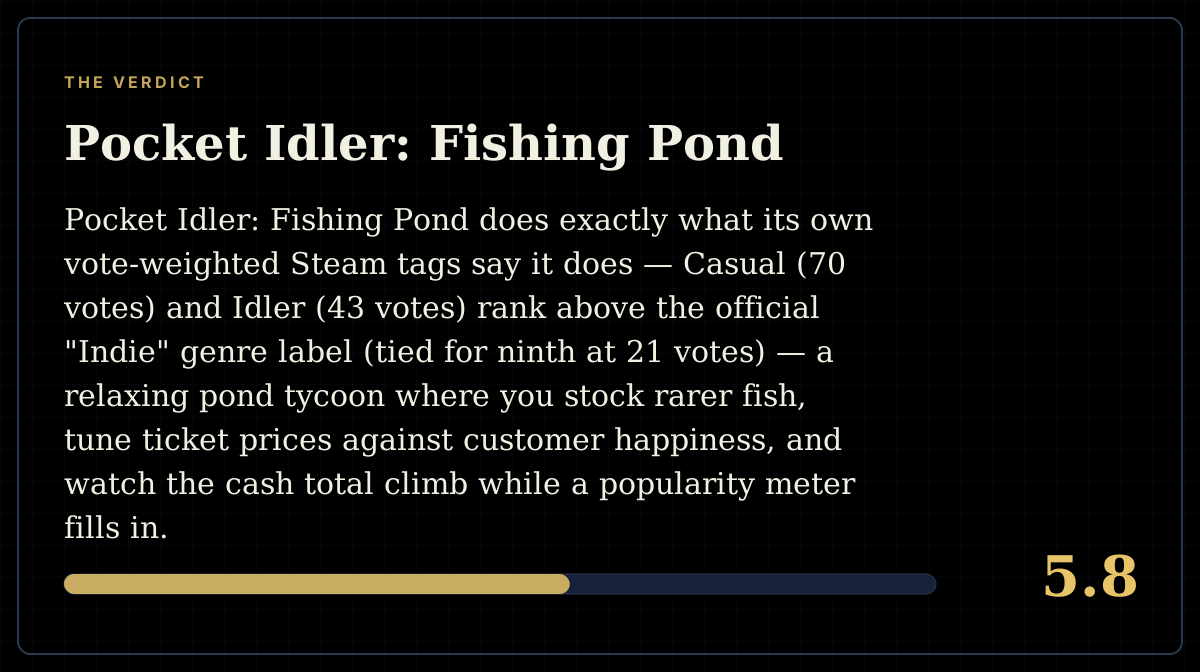
5.8 / 10
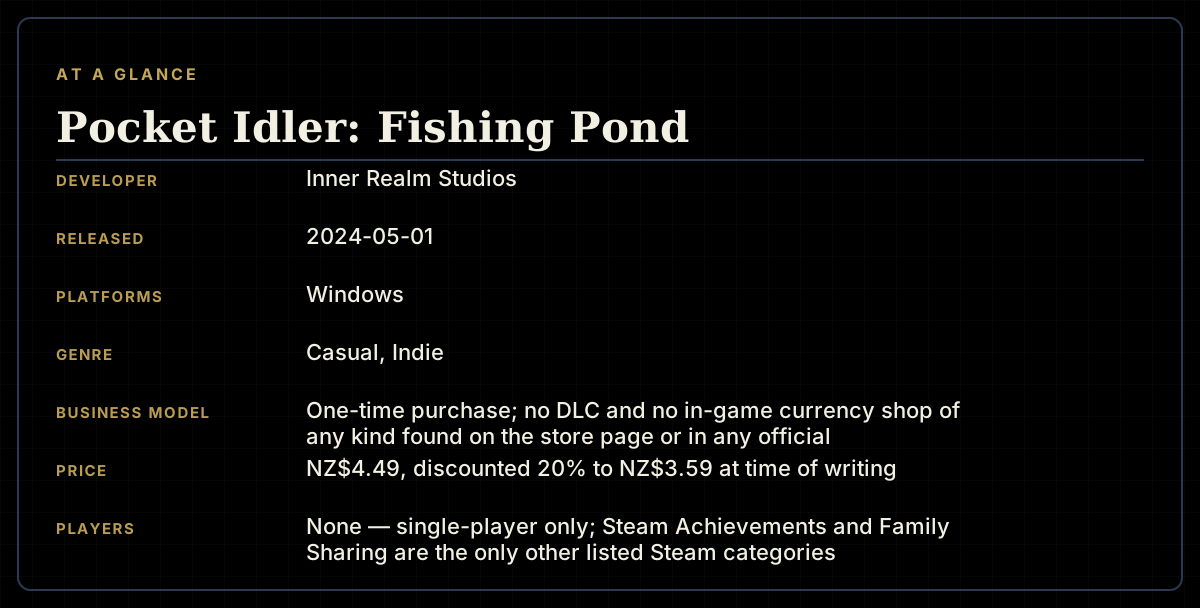
- Developer
- Inner Realm Studios
- Publisher
- Inner Realm Studios
- Released
- 1 May 2024
- Platforms
- Windows
- Genre
- Casual, Indie
- Monetisation
- One-time purchase; no DLC and no in-game currency shop of any kind found on the store page or in any official screenshot
- Players
- None — single-player only; Steam Achievements and Family Sharing are the only other listed Steam categories
The short version
Pocket Idler: Fishing Pond does exactly what its own vote-weighted Steam tags say it does — Casual (70 votes) and Idler (43 votes) rank above the official "Indie" genre label (tied for ninth at 21 votes) — a relaxing pond tycoon where you stock rarer fish, tune ticket prices against customer happiness, and watch the cash total climb while a popularity meter fills in. For a short sitting it's a clean, honestly-priced number-go-up loop with no monetisation traps anywhere in its six official screenshots.
The trouble is how quickly it runs out. The dominant complaint across every one of its 13 English negative reviews — all of which were read for this piece — is shallowness: five upgrades, one push path, a pond that "ends up being all one fish of the highest level," done in five or six hours. A launch-week settings-menu papercut is still being reported unresolved more than two years later, and the developer's own news feed shows no further work on this game after its first month on sale. One reviewer who liked the studio's next fishing game says so directly: next to Bit-Cremental: Fishistry, this one is "a big letdown."
Biggest strengths
- The store's own vote-weighted community tags back the "relaxing pond idler" pitch better than the official Casual/Indie genre pair — Casual tops the page at 70 votes and Idler sits second at 43, more than double Indie's 21 — and the loop delivers exactly that: stock the pond, set ticket prices against a visible customer-happiness face, buy decorations for a permanent popularity boost, watch the totals climb
- Monetisation is about as clean as this library sees: a flat NZ$4.49 one-time purchase, no DLC on record at all, and no premium currency, gacha or ad prompt visible in any of the six official screenshots examined for this review
- The developer shipped four real patches inside its first month on sale (3-29 May 2024), including an Auto-Stocking pass that the highest-voted English review specifically credits for making the game "more automated like an idle game should be"
Biggest weaknesses
- The corpus's loudest and most repeated complaint is shallowness — "only 5 things to upgrade," progression with "no meaningful choices," a pond that "ends up being all one fish of the highest level" — with multiple reviewers independently reporting they saw everything the game had in five to six hours
- A launch-week UI papercut — the settings menu, including resolution, is unreachable behind a wall of unreadably small intro text — is still being reported as unfixed as recently as July 2026, more than two years after the developer's only active patch window
- Post-launch support effectively stopped on 29 May 2024: the developer's own news feed shows nothing further about this game, only announcements for its next two projects, and a December 2025 reviewer still describes a pond-button-disappearing bug that forces a restart
Who it's for: Idle-game completionists who want a cheap, few-hours pond sim to leave running in the background, and who won't mind that the systems don't grow much past the opening stretch.
Our recommendation: Worth its NZ$4.49 (or the 20%-off NZ$3.59 it's carrying at review time) for a single short sitting and a clean conscience about monetisation, but go in expecting the upgrade list to run out well before the novelty does, a persistent UI rough edge that was never patched, and — if the developer's own catalogue is any guide — a better version of this exact idea sitting one game later in the same studio's library.
5.8 / 10
The loop: stock, price, decorate, repeat
Steam's own vote-weighted community tags describe Pocket Idler: Fishing Pond more accurately than the official genre panel does. The store files it under Casual and Indie; Casual is a fair call and genuinely tops the tag vote at 70, but Indie ties for ninth place at 21 votes — level with "Management" — while Idler sits second at 43, more than double Indie's total. Read the page the way its own players voted on it and this is a Casual Idler pond-management game first, and an "Indie" title only in the loose sense that any self-published solo project is one.
The mechanics in the six official screenshots match that framing exactly. Wake up owning a pond, buy fish stock in tiers running from a free starter fish up to $1,000-plus rarities, and open the gates. A day/night clock ticks along the top of the screen while customers wander in to cast lines of their own. A ticket-price slider sits next to a markup percentage and a customer-satisfaction face icon that visibly flips from a smile to a frown if prices climb too far — the one piece of active tension in an otherwise idle system. Decorations, priced from the tens of thousands into the hundreds of thousands of in-game dollars, add a permanent popularity boost and visibly dress up the shop building itself: screenshots taken later in a run show the same pond framed by fences, banners and a proper sign where the early game just had bare dirt. An Auto-Stock toggle and a numeric pond capacity round out the loop. None of the six screenshots show a premium currency, a gacha panel or an ad prompt anywhere — this is a flat-price game with nothing else to sell.
A short, honestly-priced sit
On the numbers that don't need much interpretation, Pocket Idler: Fishing Pond is a fair deal. It launched at NZ$4.49 with no Early Access period and carries a 20% discount to NZ$3.59 at the time of writing. There is no DLC on record at all — not even the small cosmetic pack Inner Realm Studios later sold alongside Lumberjacked — and nothing in the review corpus or the screenshots suggests a currency shop hiding anywhere in the build. For a genre this library has repeatedly found monetised aggressively elsewhere, that's worth crediting plainly.
It also does what a short idler is supposed to do: end. Steam's global achievement data shows a gentle taper rather than a cliff — an opening cluster of achievements at 83-95% completion, a mid-game plateau sitting almost uniformly around 48-51% across eight separate achievements, and a genuinely strong 34.5% of tracked players holding every one of the 23 achievements. That figure is high for this library; several longer or more punishing games reviewed here complete in the low twenties or worse. It corroborates the review corpus's own account rather than contradicting it — reviewers describe finishing everything the game has in "a matter of hours" or "5-6 hours," and the achievement data says a real third of the tracked audience actually did.
Where the corpus turns: shallow, and a settings menu that never got fixed
The developer shipped fast in the opening weeks. Four patches landed between 3 and 29 May 2024 — an Auto-Stocking and balance pass, a quality-of-life and Discord-link update, a "More Customers, More Fish, More Management" content patch, and a final update adding character customisation and hats. The highest-voted English review in the whole corpus credits exactly that automation patch for making the game "more automated like an idle game should be."
Every one of the 13 English negative reviews on record was read for this piece, and they converge hard on one point: there isn't much game once the opening is over. "Only 5 things to upgrade, no meaningful choices or management," reads one; another describes the endgame as "you increase the prices until the smiley face is now a frowny face then decrease by 1, upgrade the 1 of the 5 boring upgrades whenever you can... you're done after 5-6 hours," and adds that the pond itself "ends up being all one fish of the highest level" once maxed. A second, separate complaint is friction rather than depth: the game reportedly opens on unreadably small text with no way to reach the settings menu — including resolution — until after it, a rough edge one reviewer flagged at launch and another was still reporting as unresolved in July 2026, more than two years after the developer's last patch to this game. Scattered reports of an unreliable Auto-Stock toggle and a pond-open button that disappears and forces a restart (a December 2025 review) round out the picture of a game that got fast support for a month and then none at all — the developer's own news feed confirms nothing further was posted about Pocket Idler: Fishing Pond after 29 May 2024.
Same studio, a better sequel
The registry's note that this shares a developer with Lumberjacked checks out independently: Inner Realm Studios is the sole developer and publisher on record for Pocket Idler: Fishing Pond, and a solo credit on Lumberjacked too, alongside co-developer Dumb Duck Games. What the research turned up beyond that single fact is a fuller picture than the registry note implied. Inner Realm Studios' own news feed lays out the studio's actual release order: this game first (1 May 2024), then a second fishing-flavoured idler, Bit-Cremental: Fishistry, in December 2024, then Lumberjacked in April 2025 with Dumb Duck Games attached, and — per Lumberjacked's own review on this site — an unrelated new project, The Outskirts, as of August 2026. Pocket Idler: Fishing Pond is this developer's first commercial release, not an isolated title.
One reviewer in this game's own corpus makes the comparison directly, having played the studio's next fishing game first: "I tried Pocket Idler: Fishing Pond after having a great time with Bit-Cremental: Fishistry from Inner Realm Studios. Unfortunately, this game is a big letdown... it lacks depth, engagement, and fun... compared to Fishistry, everything just seems unpolished." That is one voice, not proof by itself, but it lines up with a pattern this review can verify independently: both this game and Lumberjacked show the identical support shape in their own patch histories — a real, fast burst of fixes in the first few weeks on sale, then the studio's attention visibly moves to the next project, evidenced here by the news feed and in Lumberjacked's case by an announced "2.0 update" that never followed up. Lumberjacked, reviewed on this site at 6.5, is by most available measures the more developed piece of work — more content, a real narrative, two endings — and the studio's own history suggests that isn't a coincidence so much as a company finding its feet one game at a time.
Final verdict
Pocket Idler: Fishing Pond is an honest, cheaply-priced pond idler that does what its own vote-weighted tags say it does, ships with no monetisation traps anywhere in its screenshots, and by its own achievement data, actually lets a genuine third of its tracked players see everything it has. The 5.8 here reflects a real split: a fast, well-supported opening month against a game that its own review corpus — read in full, all 13 English negatives — consistently calls shallow and short, a launch-week settings-menu papercut still unresolved two years on, and a developer that moved on to its next fishing game within the year and, by at least one direct account, made a better one. Worth the asking price for a single relaxing evening; don't expect a second one, and if the pitch appeals, this library rates the studio's own later work more highly.
Pros and cons
Pros
- The store's own vote-weighted community tags back the "relaxing pond idler" pitch better than the official Casual/Indie genre pair — Casual tops the page at 70 votes and Idler sits second at 43, more than double Indie's 21 — and the loop delivers exactly that: stock the pond, set ticket prices against a visible customer-happiness face, buy decorations for a permanent popularity boost, watch the totals climb
- Monetisation is about as clean as this library sees: a flat NZ$4.49 one-time purchase, no DLC on record at all, and no premium currency, gacha or ad prompt visible in any of the six official screenshots examined for this review
- The developer shipped four real patches inside its first month on sale (3-29 May 2024), including an Auto-Stocking pass that the highest-voted English review specifically credits for making the game "more automated like an idle game should be"
- A high full-completion rate for a short-form idler in this library: Steam's global achievement data puts 34.5% of tracked players at every one of the 23 achievements, matching the corpus's own description of a game clearable in "a matter of hours"
- Every one of the 13 English negative reviews on record is a design complaint about shallowness or pacing, not a broken build or a predatory monetisation trap — nobody in the negative sample reports the game failing to run or asking for more money
Cons
- The corpus's loudest and most repeated complaint is shallowness — "only 5 things to upgrade," progression with "no meaningful choices," a pond that "ends up being all one fish of the highest level" — with multiple reviewers independently reporting they saw everything the game had in five to six hours
- A launch-week UI papercut — the settings menu, including resolution, is unreachable behind a wall of unreadably small intro text — is still being reported as unfixed as recently as July 2026, more than two years after the developer's only active patch window
- Post-launch support effectively stopped on 29 May 2024: the developer's own news feed shows nothing further about this game, only announcements for its next two projects, and a December 2025 reviewer still describes a pond-button-disappearing bug that forces a restart
- One reviewer who enjoyed the studio's next fishing game, Bit-Cremental: Fishistry, calls this earlier release "a big letdown" by direct comparison, writing that "everything just seems unpolished" next to what the same developer made afterward
- Only 77 lifetime Steam reviews (62 of them English) after more than two years on sale is a thin corpus for a purchase decision — worth reading as limited evidence rather than a verdict, even though every English negative review on record was read in full for this piece
Screenshots
-
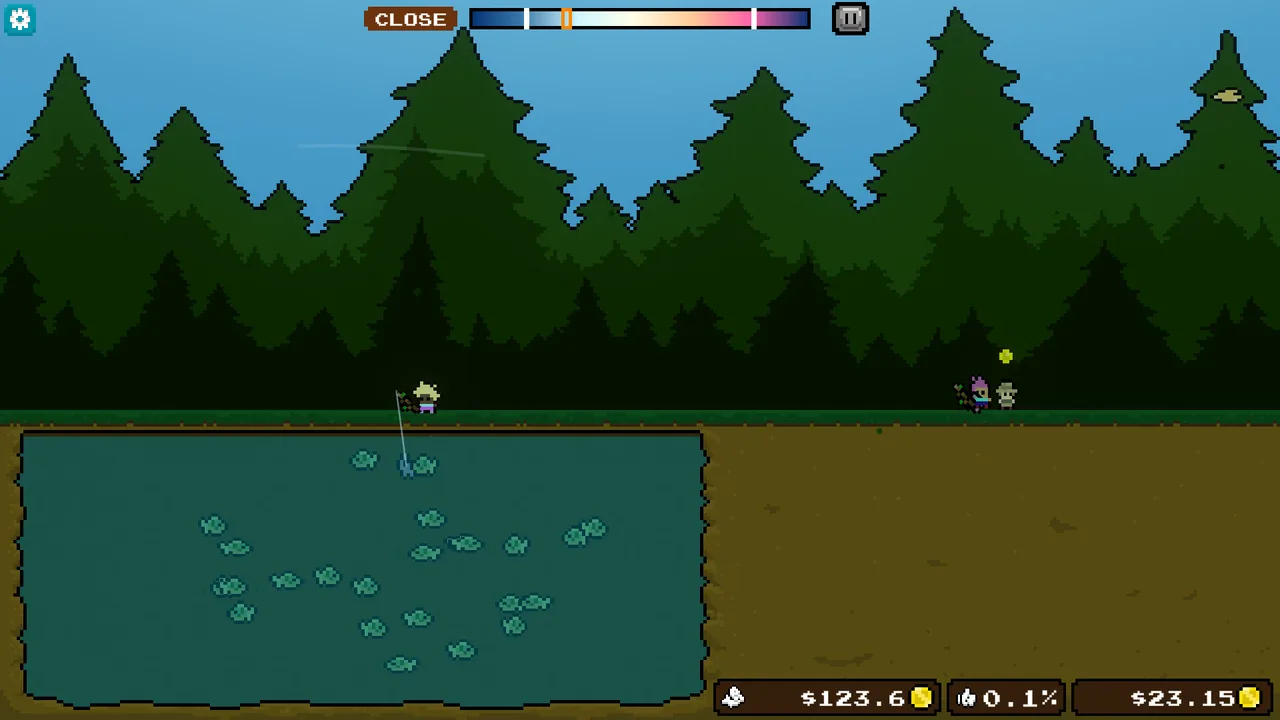
Pocket Idler: Fishing PondImage: Inner Realm Studios via Steam -
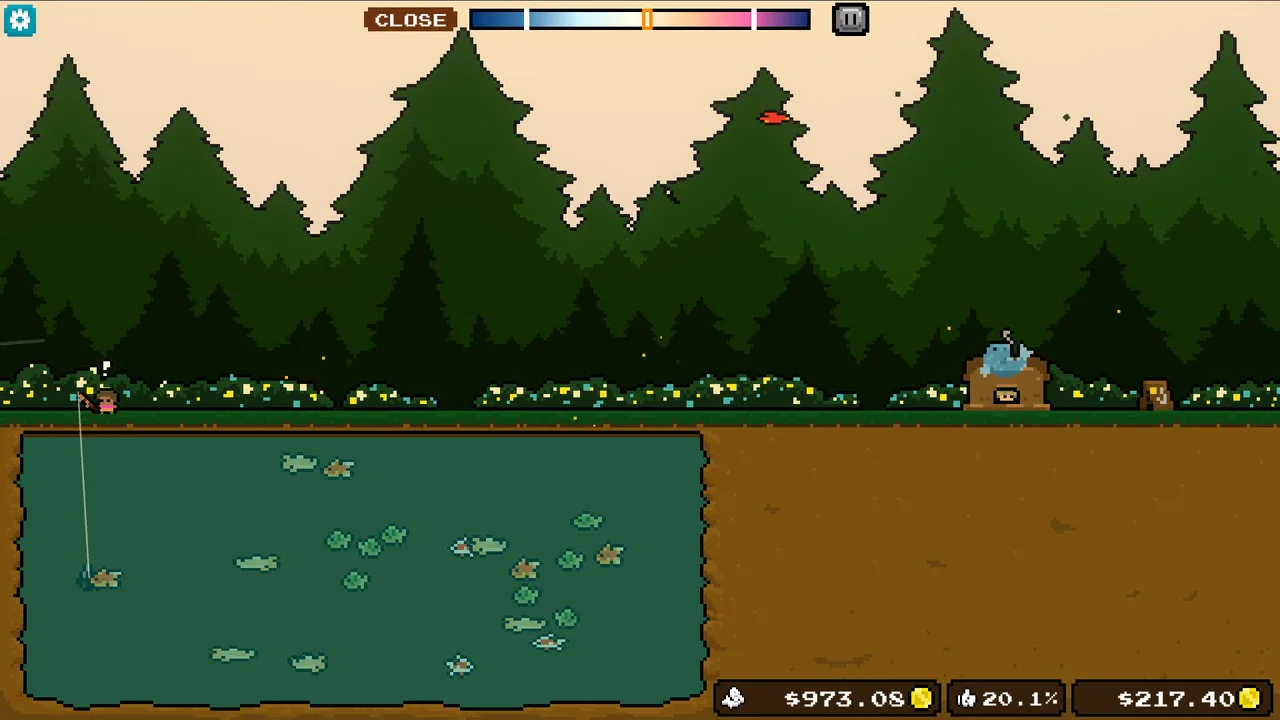
Pocket Idler: Fishing PondImage: Inner Realm Studios via Steam -
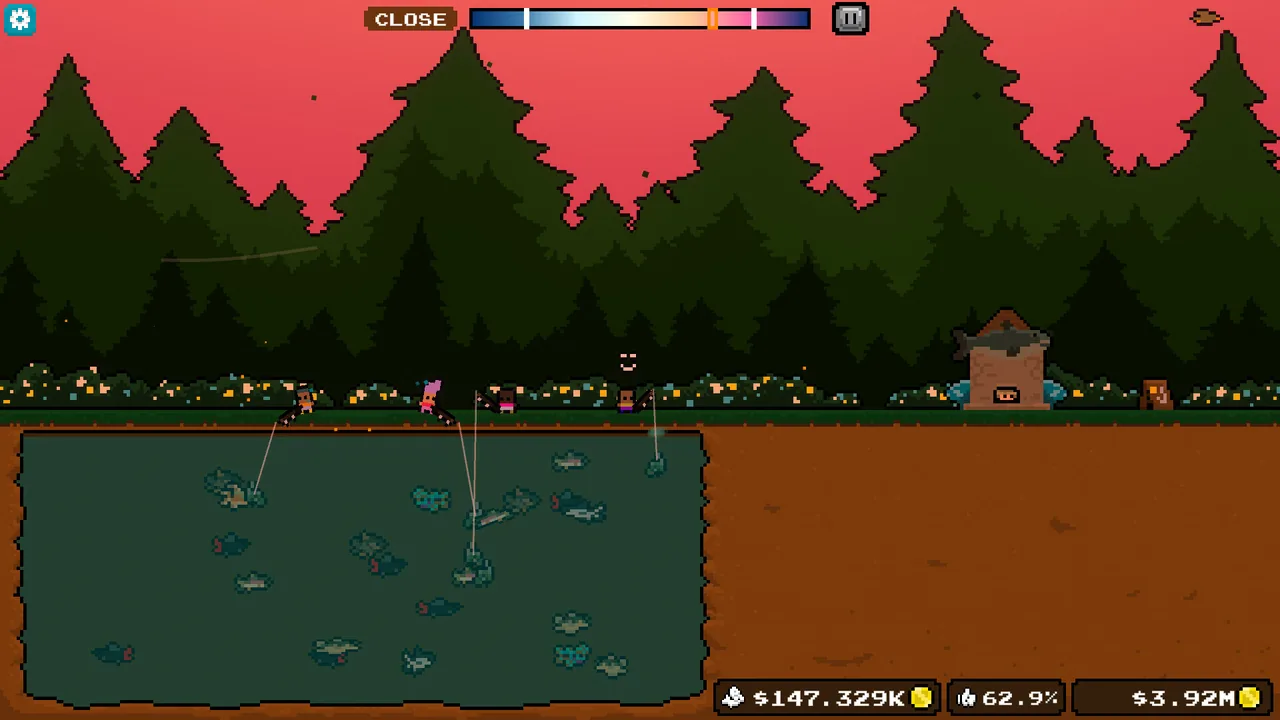
Pocket Idler: Fishing PondImage: Inner Realm Studios via Steam -
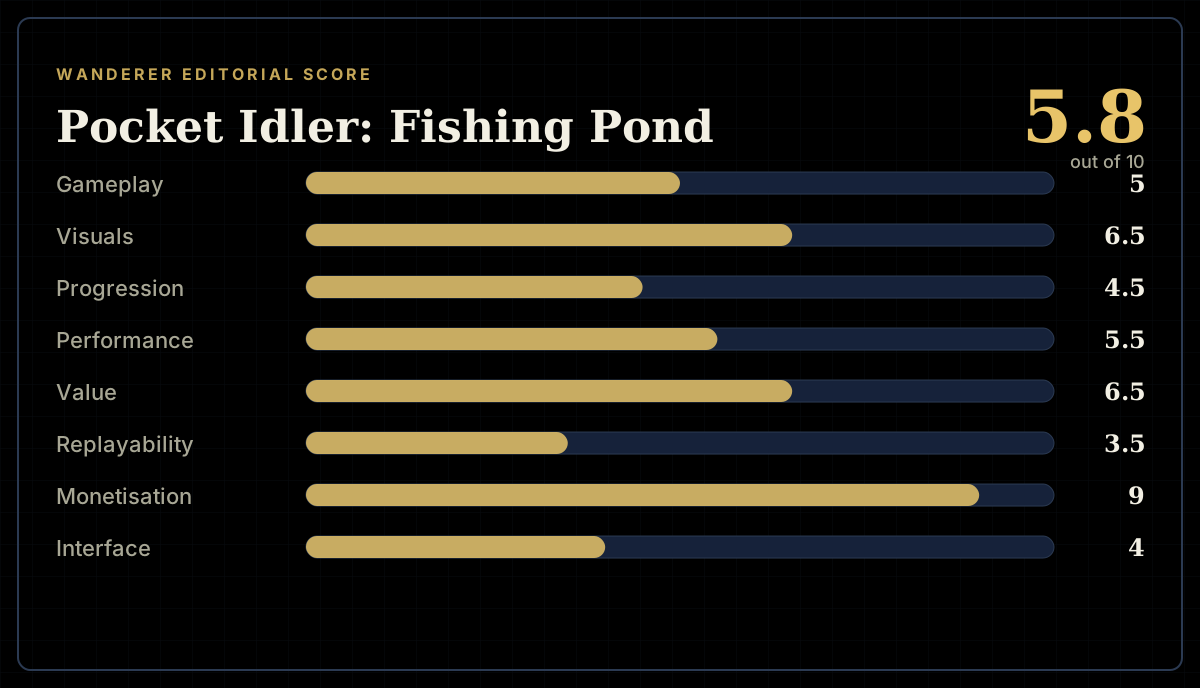
How the review scores each part of the gameWanderer Editorial -
The game at a glanceWanderer Editorial -
The short versionWanderer Editorial