
Game review
Spiritus Astrum Review
5.4 / 10
- Developer
- Phoenix Game Development
- Publisher
- Phoenix Game Development
- Released
- 14 September 2026
- Platforms
- ["Windows"]
- Genre
- RPG
An Infinite Universe, Built by One Developer
Spiritus Astrum is a persistent, open-world roleplaying sandbox set in an infinite, procedurally generated universe, with multiplayer support and no restrictions on where players can go or what they can do once they're in it. The pitch places it in the lineage of ambitious, systems-heavy space sandboxes like Starmade and Empyrion, or older genre touchstones built by small teams chasing an "everything simulator" vision: players can pilot a capital ship, mine asteroids, board a shuttle from the hangar bay, fly down to a planet's surface, land near a settlement, and walk around on foot trading with NPCs, all without a loading screen breaking the illusion of one continuous, explorable space. Developed and published by the small studio Phoenix Game Development, Spiritus Astrum entered Steam Early Access on September 14, 2026, priced at $4.99, though the developer briefly made the Early Access period free at launch as a gesture of goodwill while the game finds its footing. The scope is the whole appeal here: this is a game promising an "infinite" scale of player freedom on what reads, from the reviews, like a genuinely small development budget.
A Rough, Mostly Positive Early Access Debut
Spiritus Astrum has drawn 11 reviews so far, 8 positive and 3 negative, for a 73% approval rating, landing in "Mostly Positive" territory, a fitting label for a game whose reviewers are almost unanimous that its ambition currently outpaces its execution.
Real Depth and a Developer Reviewers Trust, Even Through the Rough Patches
What stands out across nearly every review, positive or negative, is how much good faith reviewers extend toward the underlying concept and the developer personally. One reviewer calls the amount of content and systems on offer "respectably deep," praising the game for actually requiring its included manual to understand, and welcoming that friction as a refreshing change from modern games that hold players' hands, writing "I MISS THAT! I want DEEP technical jargon and functionality!" Multiple reviewers independently compare the scope to Starmade and Empyrion, or to the kind of sprawling, systems-dense "all-in-one" space games associated with veteran solo developer Derek Smart, and more than one explicitly says the game "has soul" despite its rough state. That goodwill is anchored heavily in the developer's responsiveness: several reviewers describe reporting bugs and seeing fixes land within minutes to hours, with one player counting roughly eight separate issues the developer resolved directly from their feedback, and another noting the decision to make the Early Access period temporarily free as evidence the studio is prioritizing the game's health over immediate revenue. One detailed positive review walks through a full freeroam session, commanding a home ship called the Vanguard to mine asteroids, personally piloting a shuttle from the ship's hangar bay down to an alien world, and landing near a settlement to trade with an NPC before exploring on foot, describing the whole sequence as "a lot of fun" despite some early difficulty getting the shuttle's flight controls under control.
Severe Bugs, an Unplayable UI, and Performance That Doesn't Match the Visuals
The negative reviews, and even several of the positive ones, are blunt about the current state of the build. One negative reviewer calls the experience "an absolute mess," describing pop-up screens that won't dismiss, inconsistent input registration, and a player character that seems to slide "on slippery ice" while walking inside the ship, concluding it's "no where near ready for publication yet." Another negative review focuses on performance specifically, reporting frame rates worse than a demanding, graphically intensive title despite Spiritus Astrum's comparatively simple visuals, alongside a UI that reviewer calls "beyond terrible," while a third recommends waiting "at least 2 more years of hard development" before the game should have been considered ready for any kind of release. Even reviewers who ultimately recommend the game rarely dispute these points directly: one calls it "buggy as hell," specifically citing buttons that don't register input, while another admits the game "wasn't playable that much" for them personally and plans to return only after further updates. The pattern that emerges is consistent across nearly the entire review pool: a genuinely ambitious, systems-rich space sandbox currently undermined by input handling, UI stability, and performance problems severe enough that several reviewers describe entire play sessions as functionally blocked rather than merely rough around the edges.
Verdict
Spiritus Astrum is an enormously ambitious one-studio space sandbox whose reviewers largely agree on two things at once: the underlying vision, an infinite, seamlessly explorable universe with real systemic depth, is exactly the kind of game a certain audience has been waiting for, and the current Early Access build is genuinely too broken in places to properly evaluate that vision yet. Input inconsistency, an unfinished UI, and performance that lags well behind its modest visuals are not small complaints, and multiple reviewers describe entire sessions blocked by bugs rather than merely annoyed by them. What keeps the approval rating in "Mostly Positive" territory despite all that is an unusually responsive developer who reviewers repeatedly credit with fixing reported issues within hours, plus a willingness to make the Early Access period temporarily free while the foundation gets sorted out. At $4.99, this is a purchase for patient genre die-hards willing to treat it as a bet on where the game will be in a year or two, not a recommendation for anyone looking for a polished experience today.
Screenshots
-
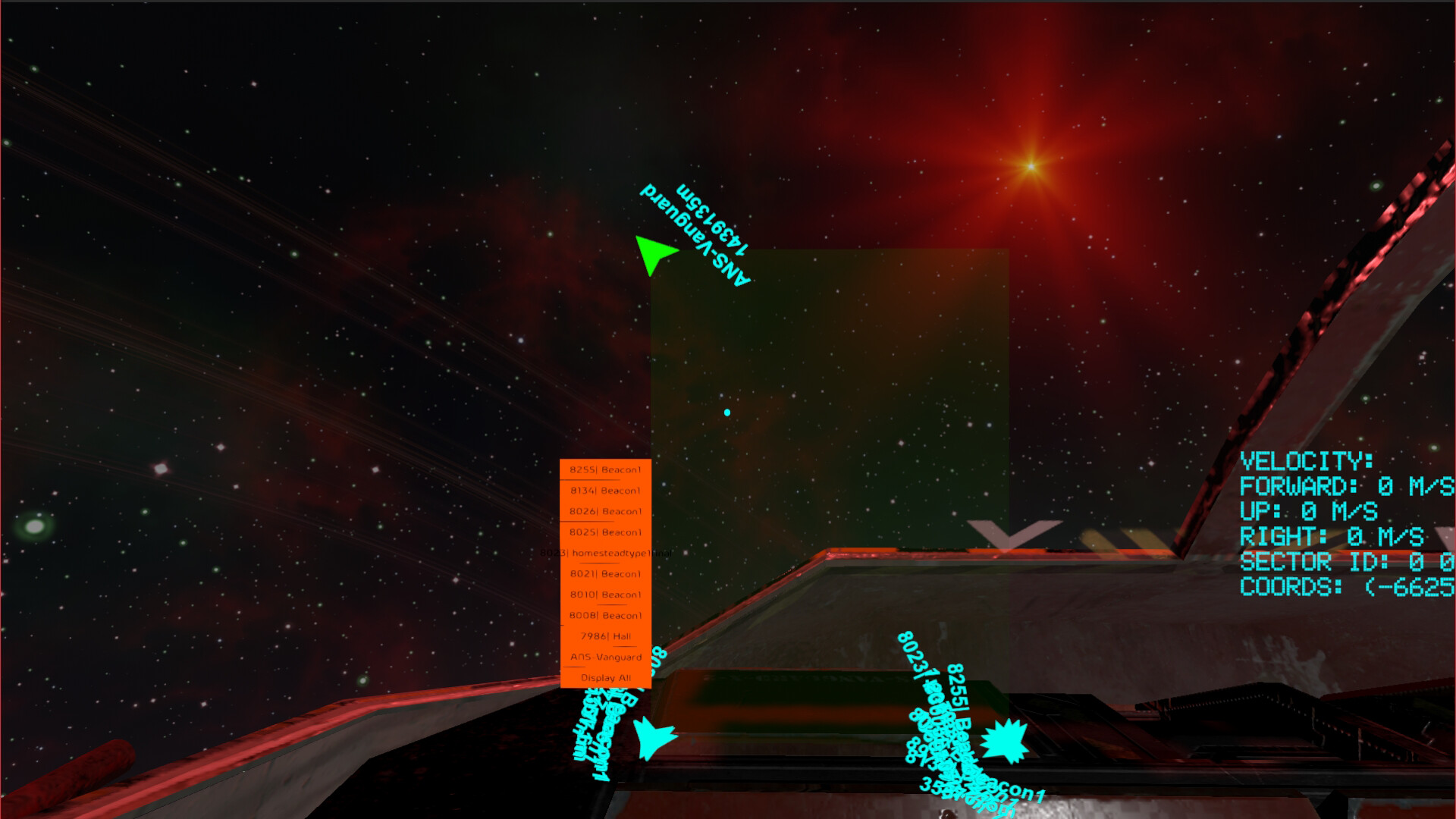
The cockpit HUD's overlapping, hard-to-read labels illustrate reviewers' complaints about the current UIImage: Phoenix Game Development via Steam -
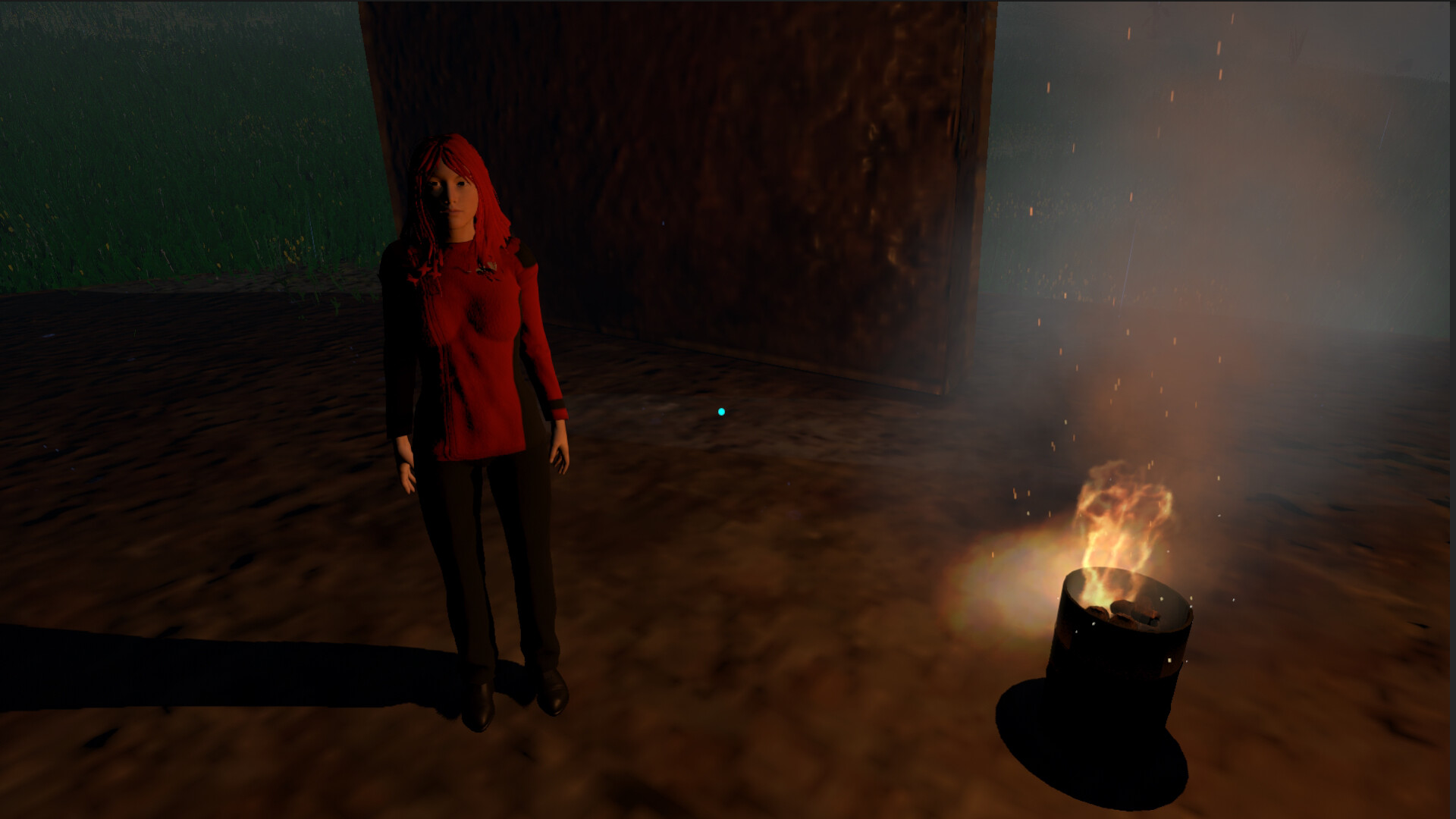
On-foot exploration takes players out of the cockpit entirely, here beside a burning barrel on an open field at nightImage: Phoenix Game Development via Steam -
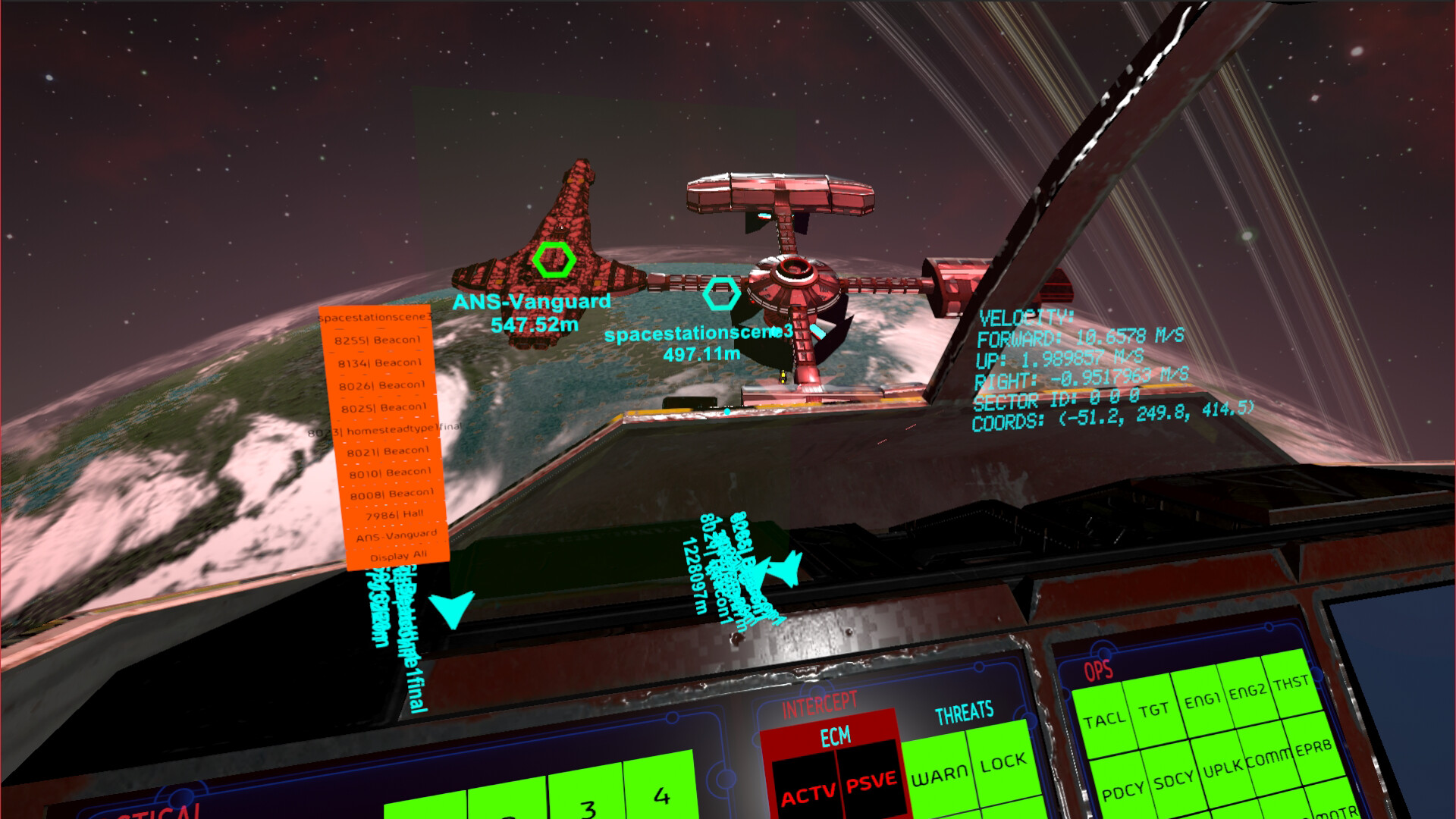
Approaching the home ship ANS-Vanguard and a space station in orbit, the kind of seamless-scale moment the game is built aroundImage: Phoenix Game Development via Steam