
Game review
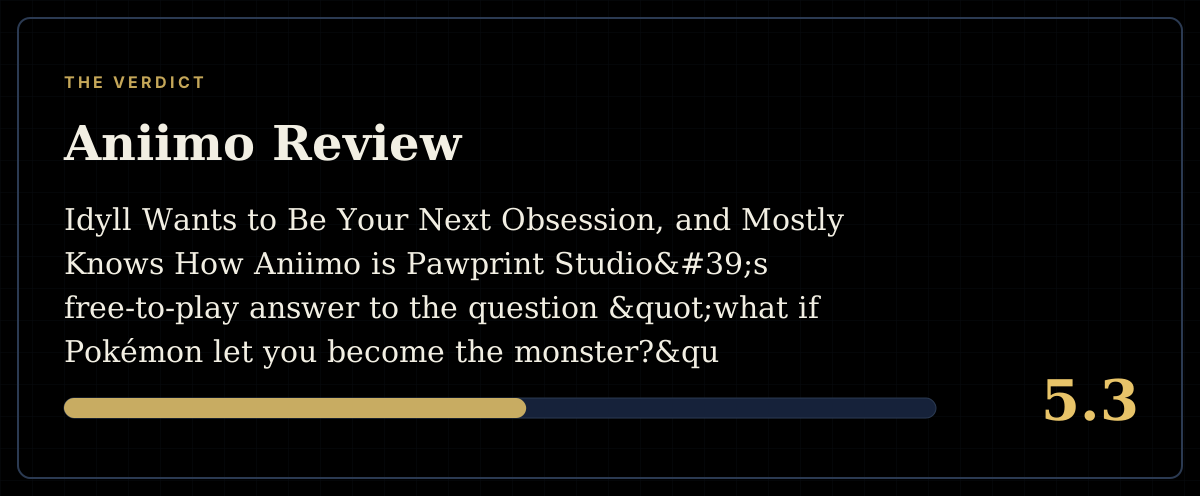
Aniimo Review
5.3 / 10
- Developer
- Pawprint Studio
- Publisher
- Pawprint Studio
- Released
- 16 September 2026
- Platforms
- ["Windows"]
- Genre
- RPG
Idyll Wants to Be Your Next Obsession, and Mostly Knows How
Aniimo is Pawprint Studio's free-to-play answer to the question "what if Pokémon let you become the monster?" You play a newly minted Pathfinder in the continent of Idyll, catching creatures called Aniimo by lobbing throwable capture orbs at them, then either commanding them from the sidelines or "Twining" into them directly to fight, climb, swim, or glide as the creature itself. It is, structurally, the Palworld playbook — open-world exploration, base-building on a purchasable RV plot, elemental type match-ups, a sprawling bestiary of collectible critters with rarity tiers — filtered through a much softer, more overtly kawaii art direction, with a sky-floating city and a cast of chatty NPCs standing in for Palworld's survival-crafting grit.
The core loop lands more often than it doesn't. Twining is the one genuinely distinct idea here: rather than watching your Aniimo fight for you, you become it, taking direct control of its moveset, its dash, its terrain traversal, and pairing it with your own trainer-side abilities. Reviewers who bounced off the game's other systems still tend to credit this as the hook that kept them playing, and a handful of Aniimo have unusually thoughtful movesets — Alpha variants (tougher wild bosses that drop elemental crafting materials on defeat), Prismana variants (rarer secondary-typed forms that trade raw power for extra weaknesses), and cosmetic-only Sparkling/shiny variants give the catching loop some genuine depth beyond simple stat-stacking. The capture system itself is unusually forgiving by genre standards: percentages are shown up front, monsters respawn, and nothing is gated behind limited-time gacha pulls.
A Derivative Shell Wrapped Around One Good Idea — and a Live AI-Slop Controversy
Where Aniimo struggles is originality. Strip away the Twining mechanic and almost everything else is assembled from parts players will recognize instantly: Palworld's exploration and base-plot loop, Genshin/Infinity Nikki's live-service event cadence and currency sprawl, and standard-issue anime-adjacent character design. Several reviewers explicitly describe individual Aniimo, environmental art, and even musical stings as feeling AI-generated — flagging inconsistent creature depictions across promotional billboards, a main-menu theme that "sounded like Suno," and dialogue with the stilted, slightly-off rhythm of machine translation. This isn't an idle accusation from a handful of cranks: it built into enough of a story that GamingOnLinux covered developer pushback over what reporters called a "distasteful AI notice" that appeared on the store page around launch, and the developers have since publicly stated some third-party advertising assets were AI-generated without their approval and have been pulled. Aniimo hasn't confirmed AI involvement in its core asset pipeline, and plenty of players report zero concerns on this front, but the controversy is real, ongoing, and sourced well enough in both press coverage and the review section itself that it can't be waved away as noise. Between that cloud and the sheer number of systems lifted wholesale from better-established competitors, "derivative" is the fairest word for what's on offer, Twining aside.
Grindy, Gated, and Occasionally Broken Behind the Scenes
Progression is where the seams show most. The opening hours are aggressively linear and heavily narrated — chests are highlighted, puzzle solutions are practically spelled out, and NPCs re-explain the same lore beats in back-to-back conversations, a pacing choice multiple reviewers single out as exhausting rather than accessible. Once the open world unlocks, several players report hitting a hard wall where further story progress requires PvP participation against other players, which sits awkwardly in a game marketed around solo exploration and cozy co-op; the promised co-op, in turn, is thinner than advertised, letting friends occupy the same map without sharing quest progress, trials, or PvP together. Monetization sits behind a monthly pass (egg-hatch speedups, XP boosts) and a battle pass with an exclusive Aniimo variant, and while multiple long-session reviewers insist nothing is required to compete or complete the game, the sheer number of overlapping currencies, timers, and menu tabs reads as a live-service pressure campaign even when nothing inside it is strictly pay-to-win. One review flags something more concerning than any of that: an undisclosed kernel-level anti-cheat (named NEPKernel in the report) that installs itself, tracks launch counts with a unique identifier, sets itself to run at Windows startup, and — per that reviewer — survives an uninstall unless manually removed from the registry, all without a mention on the store page as of launch weekend. That's the kind of disclosure gap that should concern anyone installing this, AI controversy aside.
Free Is Free, But the Price of Admission Isn't Just Money
As a $0 download, Aniimo is an easy recommendation to simply try, and the actual monetization — cosmetics, a modest pay-to-skip-waiting monthly pass, one battle-pass-exclusive Aniimo — is genuinely closer to Warframe's model than to a predatory gacha, something several long-time free-to-play players in the review section go out of their way to defend. The catch is that "free" doesn't cover the cost of the undisclosed anti-cheat installation, the hours of forced tutorial and exposition before the game opens up, or the emotional tax of playing through a controversy the developers still haven't fully addressed. For patient players who like creature collectors and don't mind wading through a rocky launch week, there's a genuinely well-built world underneath — gorgeous environments, a bestiary with real design effort, and the Twining mechanic doing something few other games attempt. For anyone allergic to live-service bloat, undisclosed background processes, or the possibility that they're playing something partially machine-assembled, there's enough smoke here to wait for patches — or a fuller accounting from the developer — before diving in.
Verdict
Aniimo launches with one legitimately clever idea, a gorgeous coat of paint, and enough baggage — an unresolved AI-content controversy, a kernel-level anti-cheat that wasn't disclosed at launch, a story that gates behind PvP, and a UI buried in overlapping currencies — that "Mixed" on Steam feels like the honest, deserved outcome rather than review-bombing. It's not a scam and it's not without craft: the Twining combat is worth experiencing, the world is large and pretty, and the monetization, on its own, is unusually restrained for the genre. But a free download still costs your trust, and Aniimo asks for a lot of that up front, in areas it hasn't yet earned it.
Pros:
- Twining — literally becoming your captured Aniimo to fight and explore — is a genuinely distinct hook the rest of the genre hasn't tried
- Generous, non-predatory monetization for a live-service F2P title: nothing meaningful is locked behind real money for solo or PvE play
- Large, detailed, visually striking world with a genuinely varied and well-animated creature roster
- Capture system is transparent and grind-friendly rather than gacha-gated — percentages are shown, monsters respawn, no chance-based pulls for core Aniimo
- Strong opening hook for genre fans, especially anyone burned out on Pokémon's yearly-iteration fatigue
Cons:
- Unresolved, press-covered controversy over AI-generated art, music, and dialogue that the developers have only partially addressed
- An undisclosed kernel-level anti-cheat reportedly installs at launch, tracks usage via a unique ID, and persists after uninstall without being mentioned on the store page
- Story progression reportedly hard-gates behind mandatory PvP participation, at odds with the game's cozy, solo-friendly marketing
- Co-op is largely cosmetic — friends can share a map but not quests, trials, or story progress together
- Cluttered, over-tutorialized UI with sluggish vertical camera sensitivity and clunky directional movement that several reviewers call the game's single biggest usability complaint
Screenshots
-
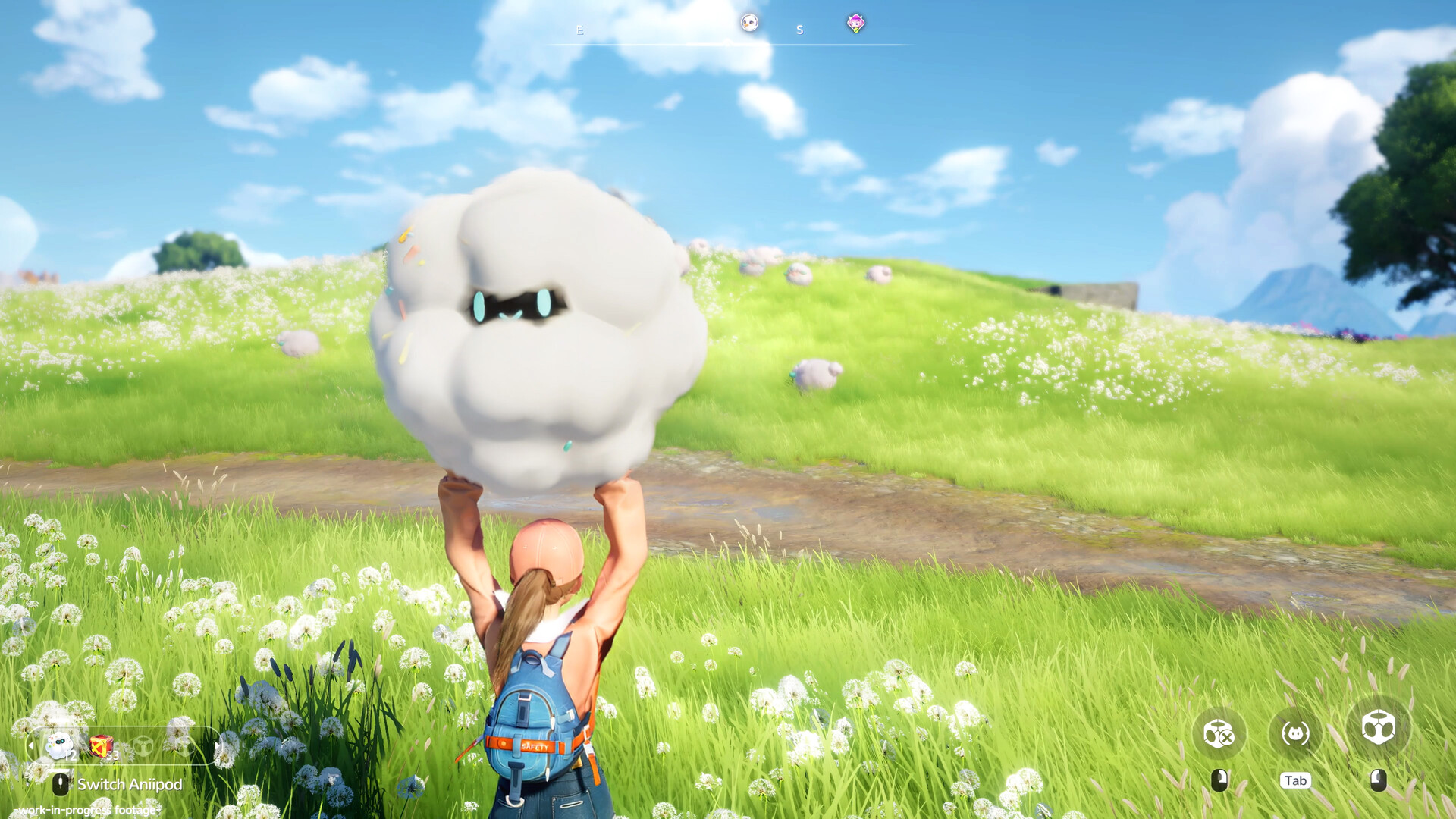
Capturing Aniimo in the open world, one of many creature variants roaming the hills of IdyllImage: Pawprint Studio -
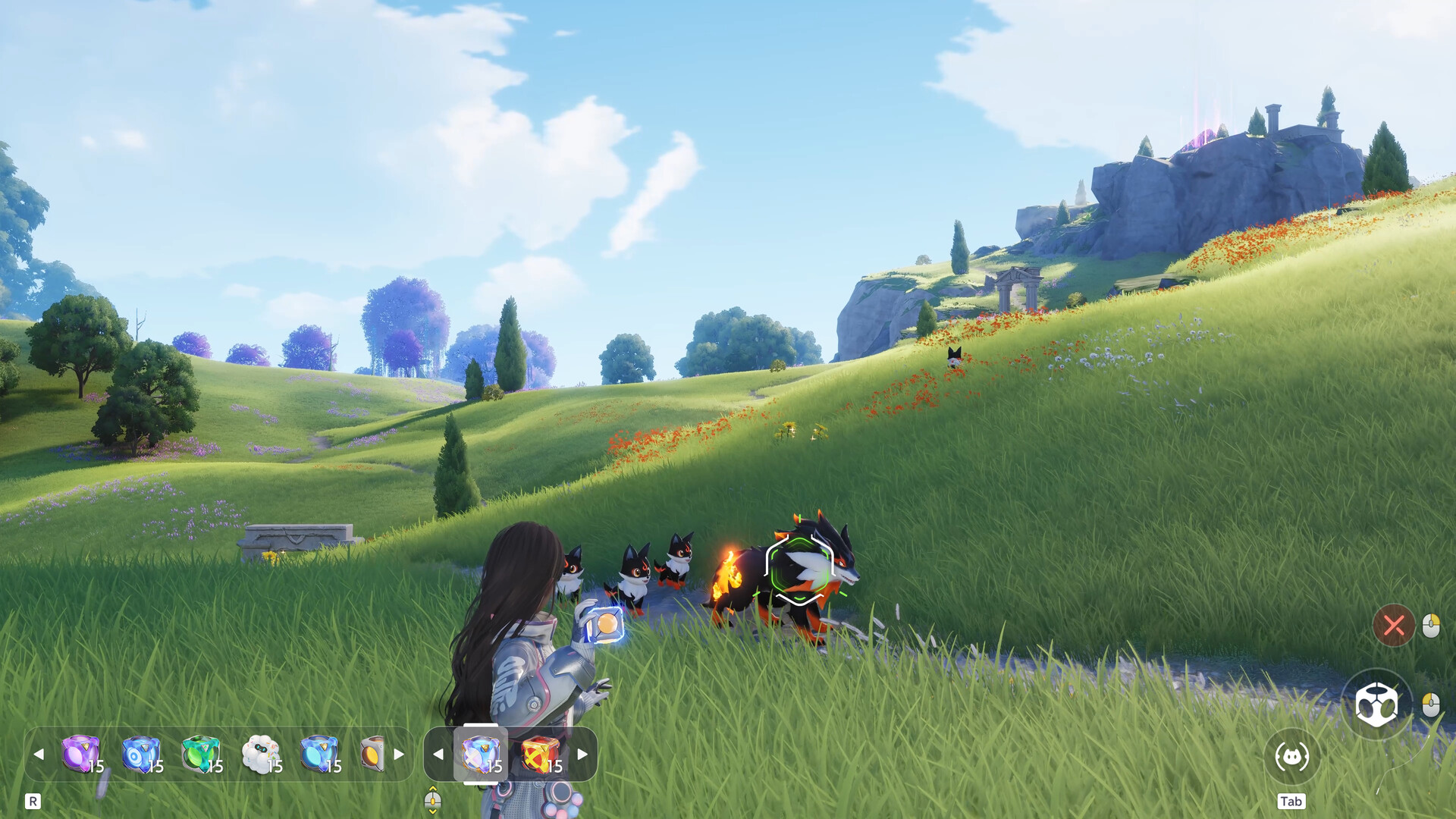
Exploring Idyll's open world, with wild Aniimo packs and distant ruins on the horizonImage: Pawprint Studio -
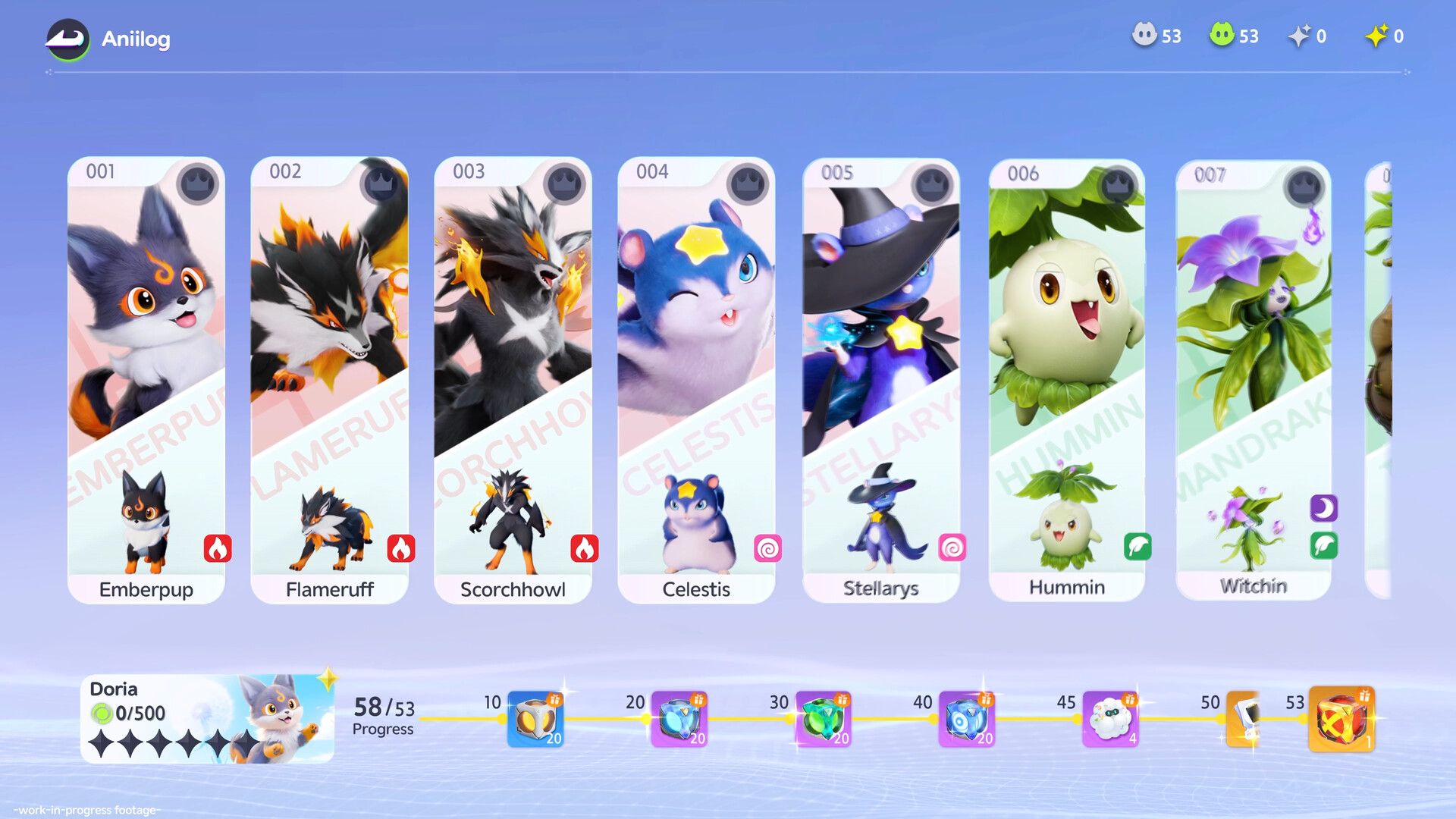
The Aniilog tracks every captured Aniimo and its variants, Pokédex-styleImage: Pawprint Studio -
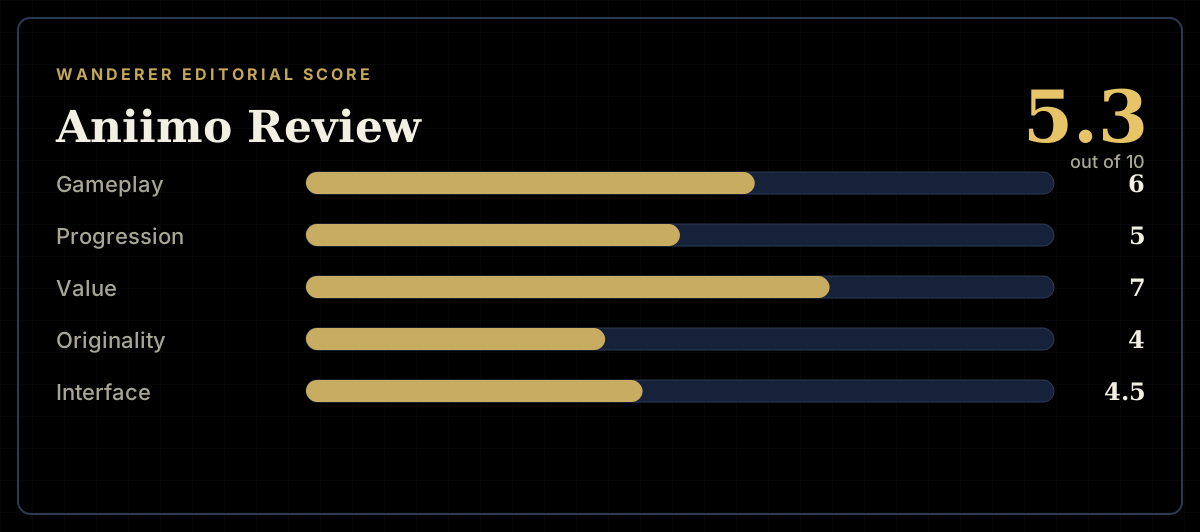
How the review scores each part of the gameWanderer Editorial -
The short versionWanderer Editorial