Game review
Soul Monsters: Dice RPG - Radan's Journey Review
6 / 10
- Developer
- Industrial Miracle
- Publisher
- Industrial Miracle
- Released
- 13 September 2026
- Platforms
- ["Windows"]
- Genre
- RPG
A Twenty-First Consecutive Launch Without a Single Review
Soul Monsters: Dice RPG - Radan's Journey released on Steam on 13 September 2026 and has zero user reviews at the time of writing, extending this stretch's run of unreviewed launches to twenty-one. That's a notable gap for a game leaning this heavily on genre nostalgia — a pitch built around ten classic board games (Backgammon, Reversi, Senet, Mancala and others) is exactly the kind of hook that tends to generate quick word-of-mouth from players who grew up with those games, so its total silence so far is somewhat surprising. This review draws entirely from the developer's own store page description, not from verified play.
The Dice Decide, the Board Repeats
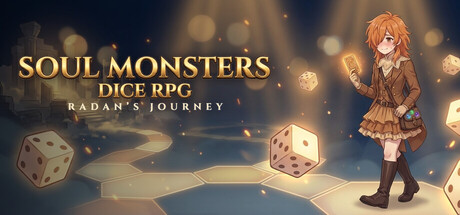
The core structure is a straightforward but distinctive fusion: players roll dice to advance across a hex board, with each landing tile triggering "an encounter, a battle, a treasure, a request." The store page specifies that "terrain is laid out fresh for every realm, so no two boards repeat," suggesting procedural map generation within a structured overworld rather than a single static route. That framing puts Soul Monsters closer to a board-game-adjacent RPG than a conventional dungeon crawler, with the dice roll itself functioning as the primary source of pacing and unpredictability rather than combat randomness alone.
Procedural terrain generation is a reasonable choice for replayability, but it sits in some tension with the game's other big pitch of seven distinctly themed realms — fire, water, forest, earth and sky — each meant to feel like a place with its own identity rather than an interchangeable hex grid. A randomly regenerated board can vary encounter density and pacing every playthrough, which is good for a second run, but it also means the seven realms are defined more by their monster rosters, dragon boss, and visual theme than by any fixed, memorable geography a player could navigate by landmark. Whether that trade-off favors a fresher, more replayable Radan's Journey or undercuts a sense of place the realm theming is trying to establish is something only actual play across multiple runs could settle.
Ten Classic Games as Boss Gates
The most distinctive feature is the developer's choice to gate progress between the game's seven realms with actual traditional board games rather than conventional boss fights: Game of the Goose, Snakes and Ladders, the Royal Game of Ur, Mancala, Backgammon, Halma, Senet, Reversi, Pachisi, and Fox and Geese, each played "one on one against the guardian of the trial." That's an unusually literal way to honor board-game heritage inside an RPG frame, and it raises an interesting design question the store page doesn't fully answer: whether these mini-games are faithfully implemented with real strategic depth, or simplified enough to avoid becoming a genuine skill wall between a player and the next realm. Getting that balance right matters more here than in most RPGs with optional minigames, since these are described as mandatory gates rather than side content — a player who can't beat Reversi or Senet against a capable AI opponent would be stuck rather than simply missing out on a bonus reward.
That mandatory framing cuts both ways for accessibility. Someone who grew up playing Backgammon or Mancala gets an immediate, satisfying edge no amount of RPG grinding could substitute for, but a player who has never encountered the Royal Game of Ur or Fox and Geese is asked to learn an unfamiliar ruleset cold, under pressure, as the price of continuing the story — a very different kind of difficulty curve than the stat-and-gear checks most RPGs use to gate content. Ten different games also means ten different AI opponents to tune, and a board-game RPG lives or dies on whether each of those AIs plays convincingly rather than either folding too easily or exploiting rules perfectly in a way that feels unbeatable; the store page gives no indication of adjustable difficulty for players unfamiliar with a specific game.
159 Souls and the Six-Slot Squeeze
Creature-collecting mechanics anchor the RPG side of the pitch: 159 "souls" can be fought, bonded with, and brought along, but "only six may travel with you," making squad composition an explicit strategic choice rather than an open roster. Souls are described as evolving "with level and bond," and rare variants exist, which suggests a layered collection incentive beyond simply grinding levels — bond strength appears to function as a second progression axis alongside raw stats. Seven realms each culminate in a dragon fight, giving the collection-and-bonding loop a clear escalating structure across "fire, water, forest, earth and sky" themed areas. Whether 159 souls translates to genuine build variety or mostly cosmetic reskins of a handful of underlying archetypes isn't something the store page can settle, but the six-slot cap at least forces meaningful choice regardless of roster depth.
Town Life Between Trials
Between board crossings, the game offers a town hub for resting at the inn, equipping gear at a shop, taking on townsfolk requests, and crafting or trading for missing materials — a fairly conventional RPG rhythm of exploration punctuated by safe-zone maintenance. Soul Monsters: Dice RPG is Windows-only and supports Korean, English, Russian, and Japanese, priced at NZ$15.75 with no discount at the time of writing, a mid-range price for the genre that assumes real replay value across seven distinct realms and 159 collectible souls to justify itself against shorter or cheaper alternatives in this same zero-review stretch.
Verdict
Soul Monsters: Dice RPG - Radan's Journey pairs a genuinely novel hook — ten real board games gating progress through seven dragon-guarded realms — with a creature-bonding RPG structure built around a hard six-slot squad limit. The idea is distinctive enough to stand out in this run purely on originality, but its success rides entirely on execution details the store page can't confirm: whether the ten mandatory board-game trials are well-balanced enough not to gatekeep progress unfairly, and whether 159 souls deliver real strategic variety rather than padding. Like every other title in this stretch, it remains completely unreviewed by Steam's user base at the time of writing, so those questions stay open rather than answered, and this assessment rests entirely on the developer's own description rather than anyone's actual playthrough.
Screenshots
-
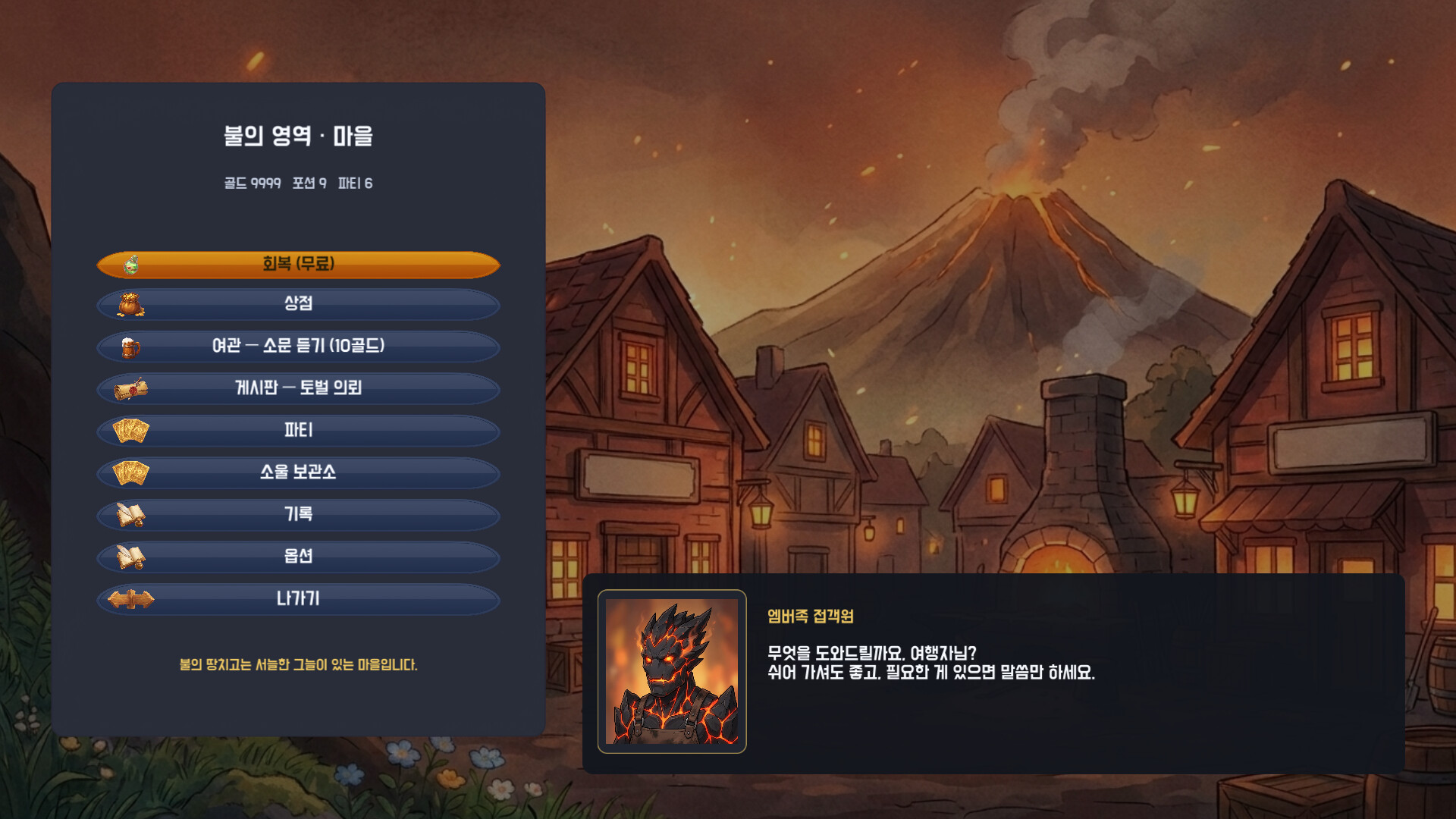
The town hub between board crossings, offering rest, shopping, quests and party management — shown here in the game's Korean-language option, one of four supported languagesImage: Industrial Miracle via Steam -
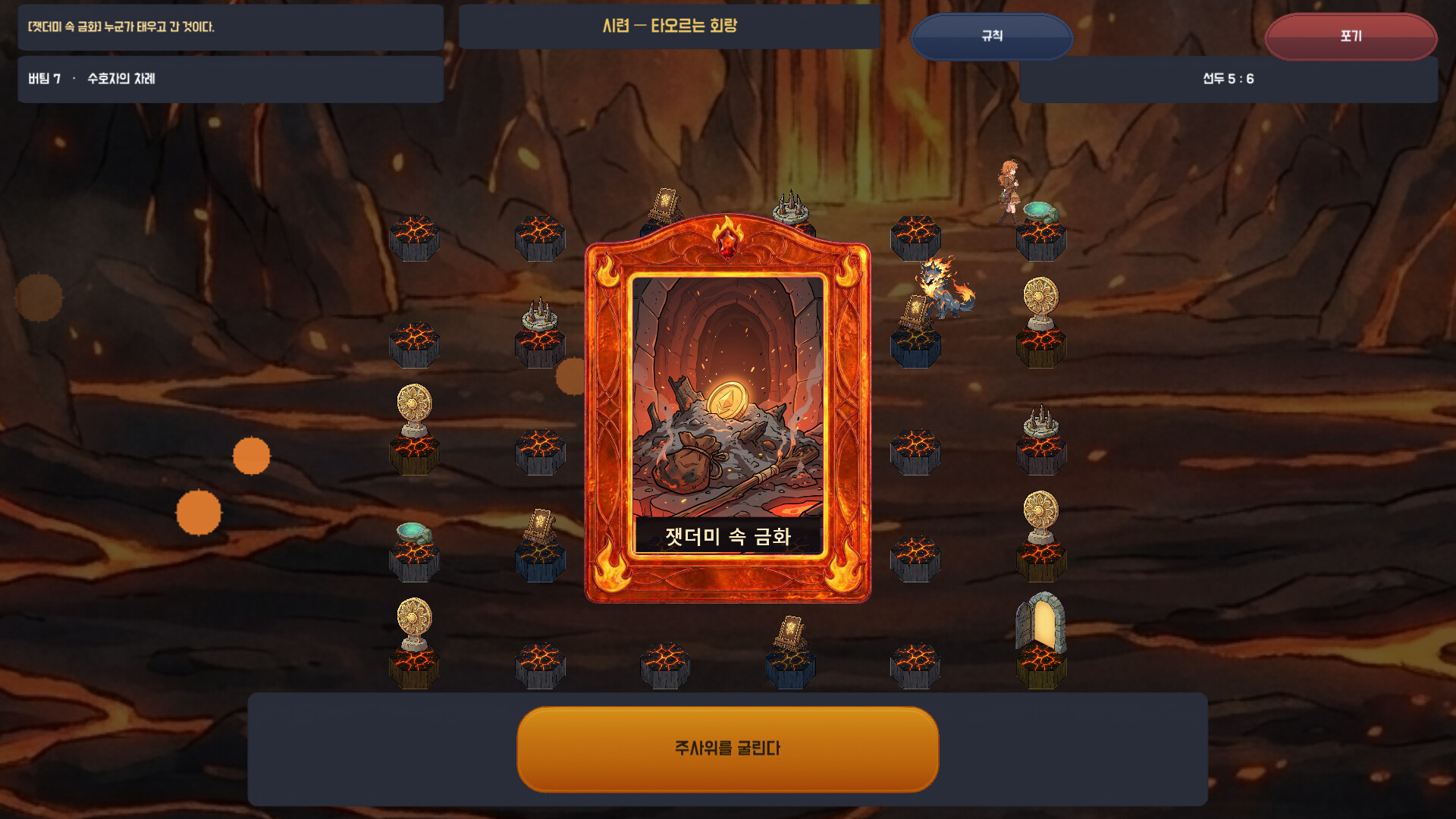
One of the mandatory board-game trials that gate progress between realms, played turn-for-turn against a guardian opponentImage: Industrial Miracle via Steam -
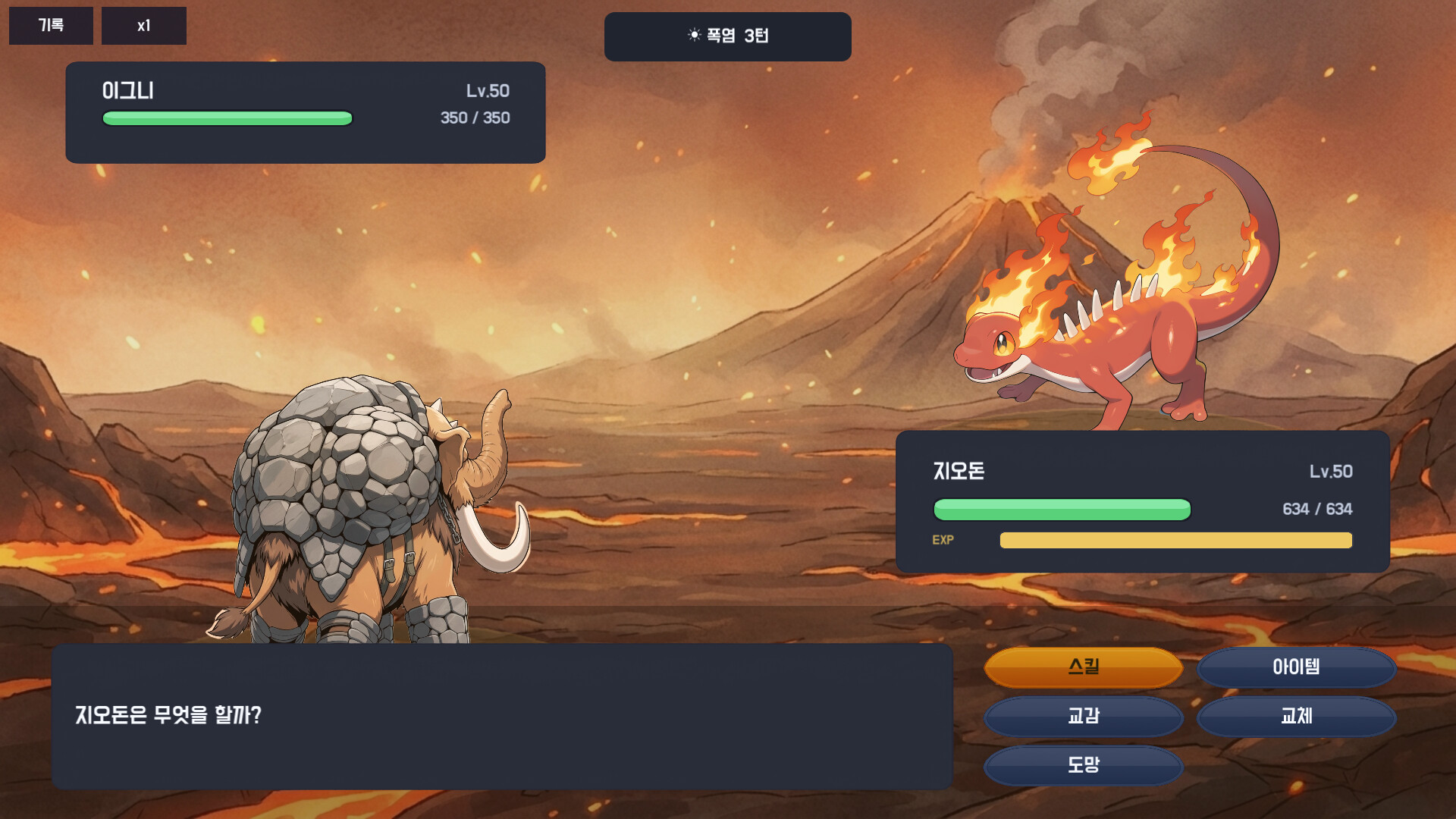
Turn-based combat between two collected souls at the level cap, with a dedicated "Bond" action alongside standard skill and item commandsImage: Industrial Miracle via Steam