Game review
Solasta II
6.5 / 10
- Developer
- Tactical Adventures
- Publisher
- Tactical Adventures, Kepler Interactive
- Released
- 12 March 2026
- Platforms
- Windows
- Genre
- Tactical CRPG
- Monetisation
- Premium, one-off purchase, currently in Early Access. One paid add-on exists, a cosmetic Supporter Pack of joke items that the game itself describes as doing nothing mechanically. No in-game currency, loot boxes or live-service systems
- Players
- Not available during the review period. Co-op multiplayer is on the developer's public roadmap for Q3 2026 but had not shipped as of this review
The short version
Solasta II swaps its predecessor's free SRD 5.1 for the newly published SRD 5.2 — the open document built on Wizards of the Coast's 2024 core rules revision, commonly called D&D 5.5e — and it is the first released game to build on it. Combat still does the thing this studio is known for: attacks of opportunity, concentration checks, spell components and arcane foci all function as written rather than as a simplified approximation, and a rebuilt Unreal Engine 5 presentation gives every fight noticeably more scale than the original managed on a much smaller budget.
What it doesn't yet do is add up to a finished game, and Early Access is not a euphemism here. The current build caps characters at level 4, covers a single Act, and runs out after roughly ten to fifteen hours — a stated, developer-published limit, not an estimate. Bugs that freeze combat, inconsistent performance and character faces that a meaningful share of Solasta II's own buyers describe as unconvincing sit alongside that ceiling. None of it looks unfixable. All of it is real, today, at a price closer to a finished AAA release than an early-access indie one.
Biggest strengths
- The SRD 5.2 ruleset enforces genuine spell components, arcane foci and concentration checks that Baldur's Gate 3 waves away for convenience
- Combat's tactical UI stays legible even as six classes and thirteen subclasses interact on the same battlefield
- Party creation covers full custom builds through to one-click prebuilt companions, with multiclassing intact from the first game
Biggest weaknesses
- Early Access is capped at character level 4 across a single Act, a developer-stated 10-to-15-hour ceiling rather than a rough estimate
- Character faces and expressions are the single most repeated player complaint, frequently described as stiff or unconvincing even by buyers who otherwise like the game
- Performance is inconsistent build to build, with stuttering cutscenes and players reporting no clear stability gains since the March launch
Who it's for: Existing Solasta players and D&D-ruleset enthusiasts who specifically want to track a faithful 5.5e implementation as it's built, and who are comfortable paying full price for an unfinished ten-hour slice with a multi-quarter roadmap attached.
Our recommendation: Worth the price only for players who genuinely want to follow this build in progress and don't mind hitting a hard content wall at level 4. Anyone who wants a complete campaign today should wait for at least the Q4 2026 update, which is when Act II and a level cap of 6 are currently promised, and consider the original Solasta or a finished rival in the meantime.
6.5 / 10
Tactical Adventures built its name on a bet that most CRPG studios wouldn't take: implement Dungeons & Dragons' actual rules, mechanically, rather than a video-game-friendly approximation of them. Solasta: Crown of the Magister ran that bet on the free 5.1 System Reference Document and came out the other side a genuinely faithful, if modestly produced, tactics game. Solasta II raises the stakes considerably. It's the first released game built on SRD 5.2 — the open document underpinning Wizards of the Coast's 2024 core rules revision, the one most of the hobby now calls D&D 5.5e — and it's doing so on Unreal Engine 5, with a publishing partner in Kepler Interactive and a price tag that assumes a finished product. Only one part of that sentence is currently true. The ruleset is real and it works. The rest of the game is still being built in front of paying customers, and Early Access here means something closer to its original, uncomfortable definition than the polished-preview version the term has come to mean for a lot of studios.
A newer, stricter ruleset
The headline feature is the rules update, and it's worth being specific about why that matters rather than treating "based on D&D" as a single fixed claim. SRD 5.2 isn't a simplification of 5.1 — if anything, Solasta II leans harder into rules fidelity than its predecessor did. Spellcasting requires the material components and arcane focuses the tabletop rules actually specify, rather than assuming a caster always has what they need, and that single decision produces a meaningfully different resource-management rhythm than Baldur's Gate 3, which quietly drops that bookkeeping in the name of accessibility. Concentration, attacks of opportunity and reaction economy all function as written, and the six launch classes with their thirteen subclasses interact with those systems in ways that reward actually knowing the ruleset rather than reading a tooltip and guessing. For the specific audience that wants a screen to behave like a rulebook, that's a genuinely rare thing to find anywhere in the genre, and it's the clearest through-line from the first game to this one.
The trade-off that mattered in Crown of the Magister — a free ruleset instead of a paid Wizards of the Coast license, which meant no Forgotten Realms setting and a smaller starting bestiary — carries over unchanged. Solasta II is set on the new continent of Neokos, in an original world with its own gods and history, decades after the events of the first game. That's the right call for a studio in this position, and it isn't really a new criticism; anyone who played the original already knows what an SRD-based sequel does and doesn't come with.
Combat holds up; the rest of the build doesn't yet
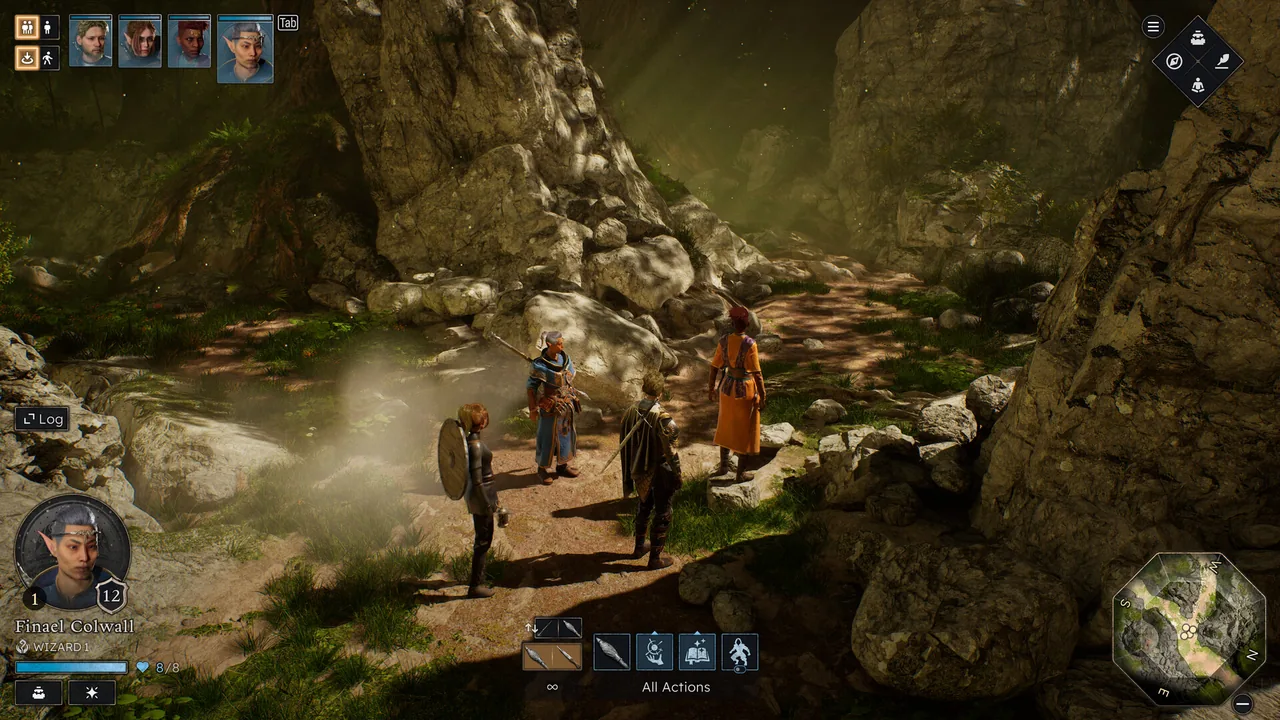
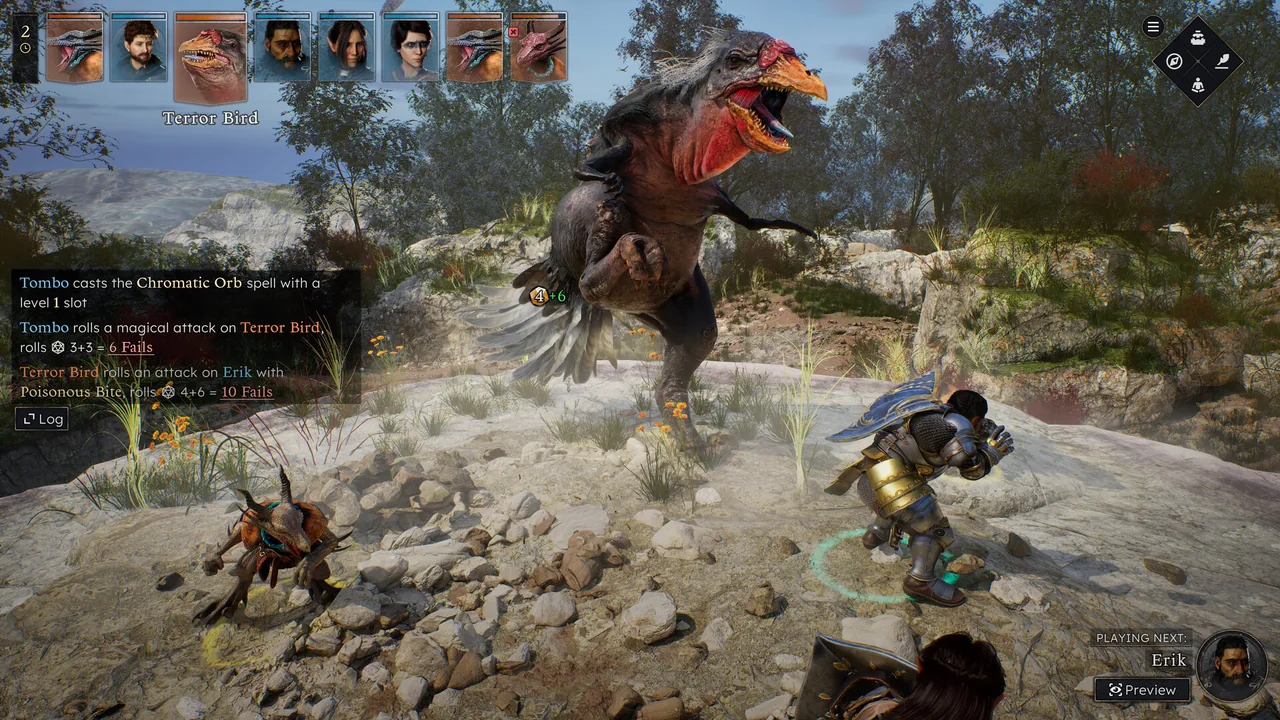
Where the first game's combat proved itself over a full campaign, Solasta II's has to prove itself in a single Act, and on that narrower stage it mostly succeeds. Encounters use real verticality and positioning rather than treating elevation as scenery, and the tactical UI stays readable even with more classes and subclasses interacting on the same field than the original ever had to juggle. That's a genuine improvement, and it's the part of the game least affected by its Early Access status — turn resolution, action economy and spell interactions are systems Tactical Adventures has now built twice, and it shows.
Everything adjacent to combat is where the unfinished state becomes impossible to ignore. Player feedback since the March launch converges on the same handful of problems with unusual consistency for a build only a few months old. Performance is inconsistent rather than uniformly bad — some players report smooth play, others describe stuttering cutscenes and frame drops severe enough to make cinematic moments genuinely hard to sit through, and at least one detailed account from a player with substantial time in the build specifically noted no measurable stability improvement across the months since launch. Scripted sequences occasionally break outright: a mid-game temple puzzle comes up repeatedly and specifically in player reports as something that can stall a playthrough entirely rather than merely annoy, and combat freezing when certain status effects are applied to enemies is reported often enough to read as a known issue rather than a rare edge case. None of this is unusual for a game three-and-a-half months into Early Access. It is unusual for a game charging close to full retail price for that state, and that gap is the central tension a buyer needs to weigh, not a footnote to wave past.
Faces, voices, and an interface still finding itself
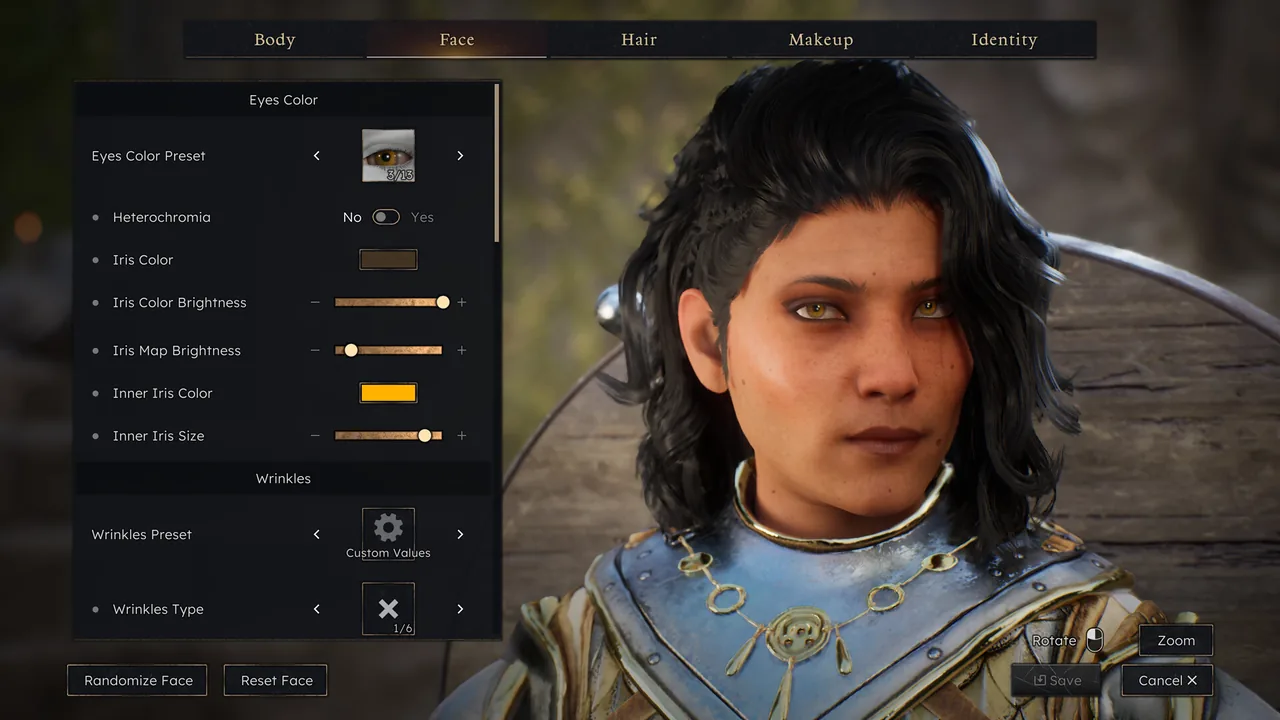
The single most repeated specific complaint in Solasta II's own player base isn't a system — it's the character models. Faces are frequently described as stiff or artificial-looking even in otherwise positive reviews, a criticism that carries extra weight here because the original Solasta drew similar complaints about its character art, and a sequel built on a new engine specifically to raise production values hasn't fully closed that gap yet. Voice acting fares better in outside coverage but still draws comments about delivery feeling broad rather than grounded, and the character creator itself — sliders, presets, body morphing — was flagged as underwhelming at launch and has since had a dedicated update aimed squarely at expanding it, which at least suggests the studio is treating it as a live problem rather than a settled one.
The interface has a similar shape: strong where combat is concerned, weaker everywhere else. Players consistently point to missing or unclear information outside of active turns — weapon damage breakdowns that don't surface cleanly, status effects and enemy statistics that require more digging than they should. None of that is a hard technical problem to fix, and it's the kind of quality-of-life gap that Early Access development is specifically supposed to catch before a wider audience arrives. It just isn't fixed yet, and a buyer today is playing around it rather than through a finished interface.
What's actually in the box right now
It's worth stating the current scope in concrete terms rather than gesturing at "early access limitations," because Tactical Adventures has published exact numbers rather than leaving it vague. The Early Access build ships six classes, thirteen subclasses and four playable ancestries, full multiclassing, and a fully voiced Act 1 that the developer itself estimates at ten to fifteen hours, hard-capped at character level 4. A follow-up patch since launch added expanded character customisation — new presets, body morphing, face sliders — without touching the content ceiling. The developer's own public roadmap lists co-op multiplayer and a new class for Q3 2026, and Act II, a raised level cap of 6, and a crafting system for Q4 2026, with more left unstated beyond that. Those are real, dated commitments rather than a vague "more content later" promise, which is worth crediting — but a roadmap is a promise, not something a buyer is purchasing today, and none of it had shipped as of this review.
Put plainly: the price on the store page buys one Act, four levels, and however long the current bugs take to iron out, with the rest of the campaign several months away at the earliest by the studio's own schedule.
Value, honestly assessed
At NZ$55.99 — currently 20% off a NZ$69.99 list price — Solasta II is priced like a complete game rather than a work in progress, and the ten-to-fifteen-hour ceiling makes the per-hour math considerably worse than the finished original, which currently sells at a steep discount of its own for a full campaign plus years of DLC. The monetisation itself is clean: no currency, no loot boxes, and the sole paid add-on is a NZ$17.99 Supporter Pack of intentionally useless cosmetic joke items that the game's own flavour text admits do nothing — a way to throw the studio extra money rather than anything resembling pay-to-win. That's the right way to run Early Access monetisation, and it deserves credit on its own terms.
It doesn't offset the core problem, though, which is that the content-to-price ratio right now assumes trust in a roadmap rather than reflecting what's actually playable. Mostly Positive at 76% across just over 3,000 reviews is a fair summary of where that trust currently sits — solidly above the midpoint, well short of the Very Positive territory the finished original earned, and consistent with a game whose fans believe in the destination while being honest about how far away it still is.
Where it sits next to the first game
Anyone deciding between the two Solasta games right now isn't really choosing between competing products — they're choosing between a finished game and a preview of its successor. Solasta: Crown of the Magister is complete, deeply discounted, and knows exactly what it is, with every system already balanced across a full campaign. Solasta II is a more technically ambitious game built on a stricter, newer ruleset, with real evidence in its combat systems that the sequel will eventually surpass it — but "eventually" is doing a lot of work in that sentence today. Players who want to see D&D 5.5e implemented properly as it happens, and who are willing to treat this purchase as funding a roadmap rather than buying a finished ten-hour campaign, are the intended audience. Everyone else should let the Q4 2026 update land first.
Players who'd rather build a character across an open-ended world that never technically ends might also find something to like in Wanderer.
Verdict
Solasta II earns real credit for the part it controls completely: SRD 5.2 is implemented with the same rules-first seriousness that made the first game's reputation, and the combat built on top of it is, fight for fight, better than what Crown of the Magister managed on a smaller budget. That's not enough to score higher than a mid-6 right now, because the rest of the package — a hard level-4 ceiling, one Act, inconsistent performance, character models a meaningful share of its own players don't like, and an interface that hides basic combat information — is exactly what "still in Early Access" is supposed to mean, and Tactical Adventures is charging close to full price for that state anyway. The roadmap reads as credible and specific rather than aspirational, which is the best reason to believe this becomes a very good game by the time Act II ships. It just isn't one yet, and a review has to score what's actually purchasable today, not the version currently scheduled for Q4.
Price and Steam review data checked 30 July 2026.
Pros and cons
Pros
- The SRD 5.2 ruleset enforces genuine spell components, arcane foci and concentration checks that Baldur's Gate 3 waves away for convenience
- Combat's tactical UI stays legible even as six classes and thirteen subclasses interact on the same battlefield
- Party creation covers full custom builds through to one-click prebuilt companions, with multiclassing intact from the first game
- The public roadmap names specific, dated milestones — multiplayer in Q3 2026, Act II and crafting in Q4 2026 — rather than an open-ended promise
- No microtransactions, loot boxes or subscription anywhere in the package; the only add-on is a NZ$17.99 cosmetic pack that changes nothing about play
Cons
- Early Access is capped at character level 4 across a single Act, a developer-stated 10-to-15-hour ceiling rather than a rough estimate
- Character faces and expressions are the single most repeated player complaint, frequently described as stiff or unconvincing even by buyers who otherwise like the game
- Performance is inconsistent build to build, with stuttering cutscenes and players reporting no clear stability gains since the March launch
- Combat information is often missing or unclear, including weapon damage breakdowns that the interface doesn't surface cleanly
- A minority of scripted encounters and puzzles ship broken enough to stall progress entirely, including one specific temple sequence singled out repeatedly in player feedback
- NZ$55.99 currently buys a single Act of story with the rest of the campaign still unbuilt and undated beyond a Q4 2026 milestone
Screenshots
-
Solasta IIImage: Tactical Adventures via Steam -
Solasta IIImage: Tactical Adventures via Steam -
Solasta IIImage: Tactical Adventures via Steam -
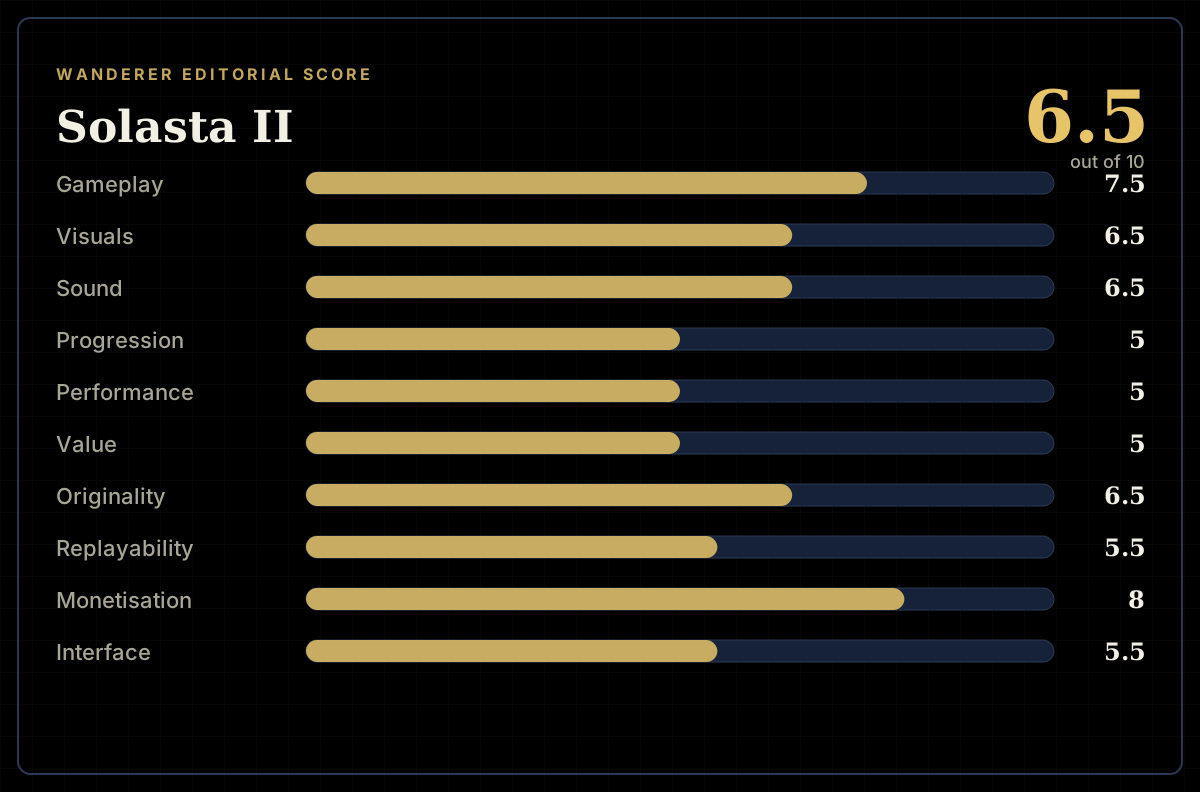
How the review scores each part of the gameWanderer Editorial -
The short versionWanderer Editorial