Game review
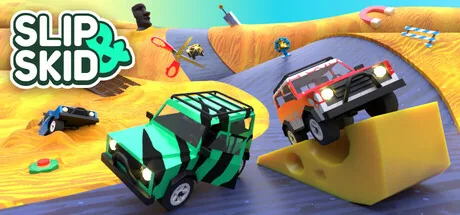
Slip & Skid
7 / 10
- Developer
- NHOGS Interactive
- Publisher
- NHOGS Interactive
- Released
- 3 June 2026
- Platforms
- Windows
- Genre
- Casual, Indie, Racing
- Monetisation
- paid
- Players
- true
The short version
Biggest strengths
- A genuinely hilarious, chaotic core loop of racing and placing track-altering obstacles that reviewers repeatedly compare favorably to Ultimate Chicken Horse
- Deep, expressive car and track customization that reviewers say lets real personality and creativity shine through
- Strong replayability, with players reporting 14-plus hours without exhausting the available maps and modes
Biggest weaknesses
- One detailed reviewer argues the scoring system can trap races into an "unfinishable torture chamber" once a player falls behind, since spoiling the leader's race becomes more rational than trying to win
- Capped at four players, with reviewers wanting support for bigger parties, though the developer has cited the need to rebalance the game first
- Best played with a full or near-full group of friends; solo and small-party experiences work but clearly aren't the intended showcase
Who it's for: Party-game groups who loved Ultimate Chicken Horse and want that same friendship-testing sabotage energy applied to kart racing, especially small friend groups of 2-4 who can play regularly over multiple sessions
Our recommendation: recommended
7 / 10
Ultimate Chicken Horse, but you're racing
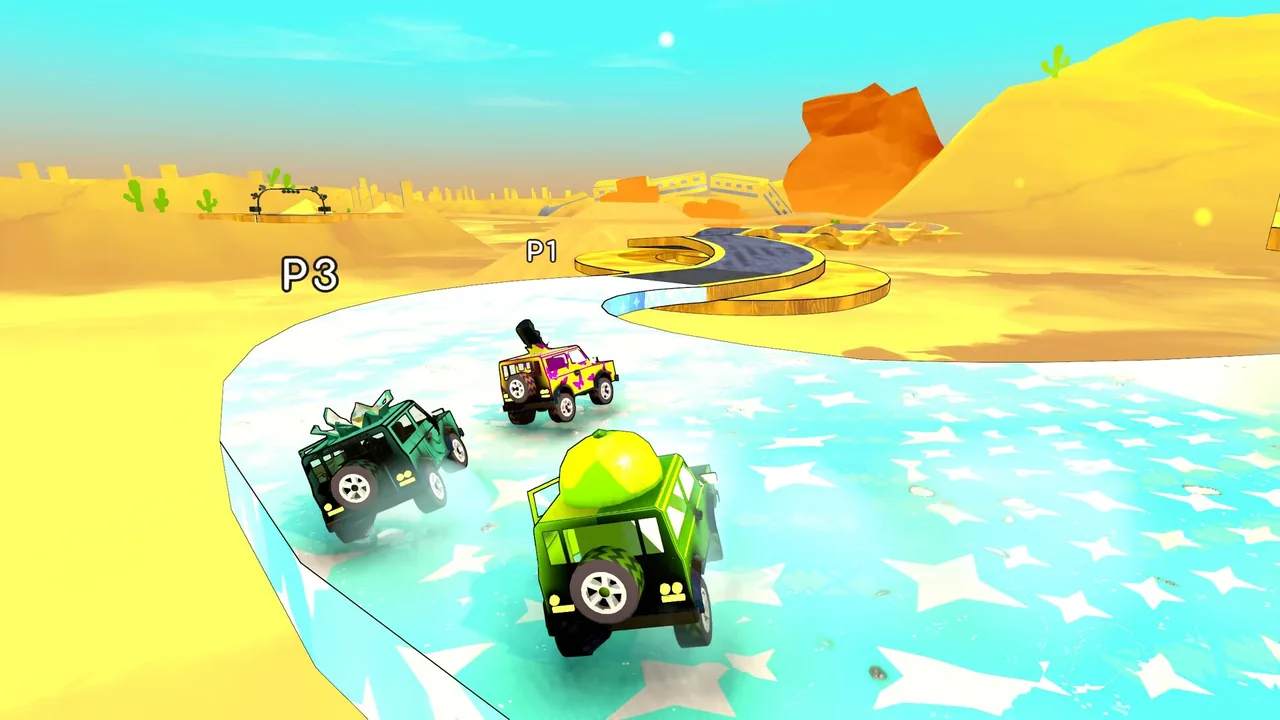
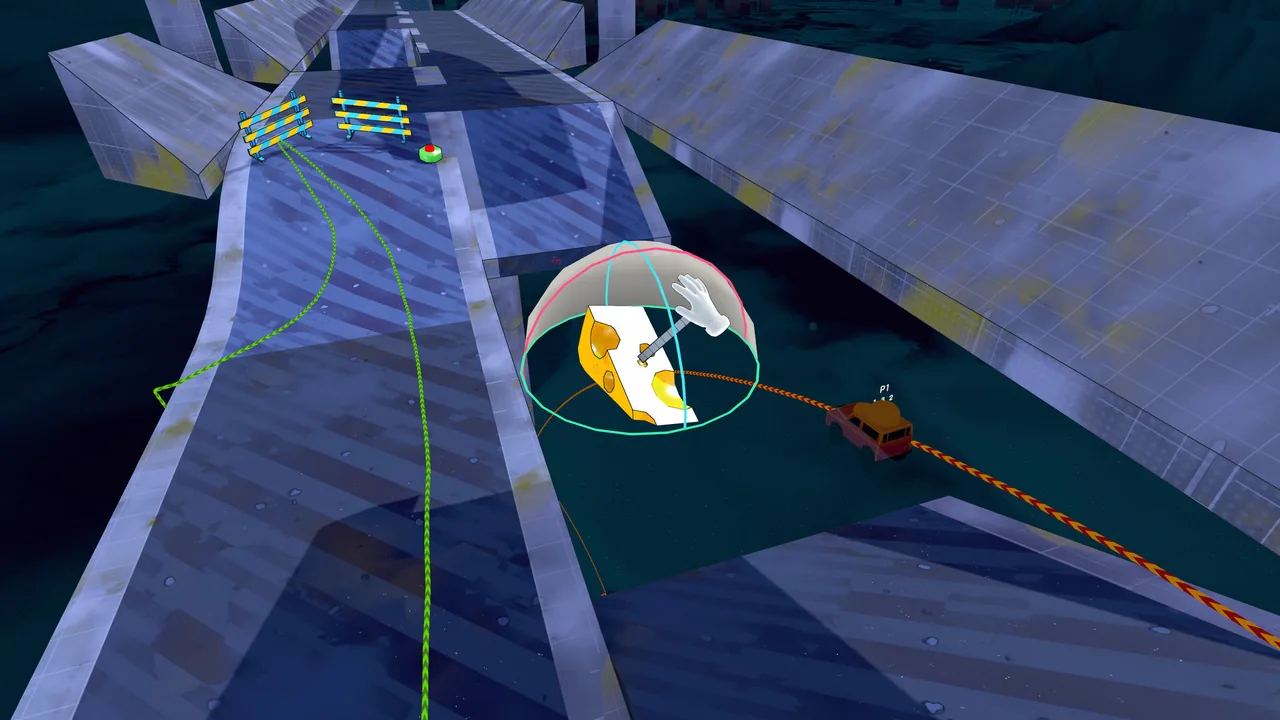
Slip & Skid's pitch lands immediately for anyone who's played Ultimate Chicken Horse: race up to three friends around a track, then use the gaps between laps to place obstacles, hazards, and roguelike-style modifiers that reshape the course for everyone's next attempt, including your own. One reviewer summed it up perfectly: "Ultimate Chicken Horse meets racing. Extremely fun party game that gets hectic and chaotic fast," adding that "the randomness of items, effects, and abilities can completely change the outcome of a track like a flip of a coin." Another reviewer, weighing it directly against a genre rival, was even more emphatic: "if you're deciding between Slip & Skid and Makeway, I would recommend Slip & Skid more. Way more unhinged, way less constricting, and way more fun."
Built for long nights with the same group
What comes through consistently across the review pool is how well the game sustains repeat play with a regular group rather than burning out after a session or two. One reviewer with 14 hours logged wrote that they "haven't even played half of the maps on offer yet," while another described settling into "once a night" sessions with friends and never once feeling bored across the same stretch of time. A third reviewer described the game's capacity for genuinely emergent chaos vividly: "we played one map for 112 minutes because we just kept modifying it and countering each other's traps and making the map insane... I haven't laughed this hard in years." That kind of escalating, self-perpetuating fun, where the obstacle-placing meta-game keeps generating new stories rather than repeating itself, is exactly what separates a good party game from a disposable one, and reviewers consistently credit Slip & Skid with hitting that mark.
A scoring system one detailed reviewer says can backfire
The most substantive criticism in the review pool comes from a reviewer who clearly put real thought into the game's underlying incentive structure. They laid out the core scoring loop, where finishing first nets six points toward a 20-point target and finishing second nets four, then identified a specific design tension: "you have every reason to make the race unwinnable if you're not first in score... every race becomes an unfinishable torture chamber where you don't have a sense of progression, which frustrates some players." That's a meaningfully different complaint than most party-game criticism, because it isn't about balance in the sense of raw power level, it's about the scoring system's incentives actively rewarding sabotage over racing once a player falls behind, in a way that can drain a session's momentum. The same reviewer noted the potential fix is straightforward in concept, alternative scoring or ending conditions, but flagged that none currently exist.
A four-player cap some want lifted
A second, more practical complaint concerns party size. The same detailed reviewer argued "the game would benefit from supporting more than a 4-player party," while acknowledging the developer's stated reasoning: rebalancing a bigger lobby size takes real design work, and NHOGS Interactive has been explicit in public posts about wanting to get that right before expanding it. The reviewer's suggested alternative, shipping a larger, clearly-labeled experimental player count as an opt-in setting while the "official" number stays smaller, is a reasonable ask, but as of this review the cap remains at four.
Solid technical footing, backed by real networking fixes
On the performance side, reviewers were largely positive. One noted the game "works well even for weaker computers although there are some minor bugs and lag spikes if you mess with the settings significantly." That performance base is backed up by the developer's own patch history: a networking-focused update specifically targeted stability during long sessions, fixing lag that previously set in after 90 minutes or more of continuous play and reducing overall data usage — a direct, corroborated response to exactly the kind of extended, hours-long sessions reviewers describe as the game's biggest strength.
A strong, low-cost entry into a proven sub-genre
The obstacle-placing party game has proven itself durable over the better part of a decade since Ultimate Chicken Horse popularized the formula, and racing turns out to be a genuinely fitting new frame for it, since every prop placed doesn't just threaten a jumping platformer character but actively reshapes a shared racing line everyone has to navigate together on the very next lap. Reviewers repeatedly reaching for Ultimate Chicken Horse as the natural comparison, rather than more traditional kart racers, signals the developer nailed that positioning rather than trying to be a Mario Kart competitor with a gimmick bolted on. At $9.99, it's priced as an easy impulse buy for a group already invested in the genre, and reviewers consistently frame the purchase as an easy recommendation on value alone, even while flagging the scoring and player-count issues as real, worthwhile feedback for where the game should go next.
Verdict
Slip & Skid successfully translates Ultimate Chicken Horse's friendship-testing sabotage formula into a racing context, backed by genuinely deep customization and enough map variety to sustain many hours of repeat play with the same group. Its most substantive flaw, a scoring system that one detailed reviewer argues can trap trailing players in an unwinnable stalemate, is worth knowing about going in, alongside a four-player cap that limits how big a party can currently get. Worth buying for small, regular friend groups looking for their next Ultimate Chicken Horse-style obsession; larger groups hoping for a bigger lobby, or anyone who wants a scoring system that stays competitive all the way to the finish, should keep an eye on future updates before committing.
Pros and cons
Pros
- A genuinely hilarious, chaotic core loop of racing and placing track-altering obstacles that reviewers repeatedly compare favorably to Ultimate Chicken Horse
- Deep, expressive car and track customization that reviewers say lets real personality and creativity shine through
- Strong replayability, with players reporting 14-plus hours without exhausting the available maps and modes
- Solid performance even on weaker hardware, and a networking-focused patch that specifically fixed lag in long (90-minute-plus) sessions
Cons
- One detailed reviewer argues the scoring system can trap races into an "unfinishable torture chamber" once a player falls behind, since spoiling the leader's race becomes more rational than trying to win
- Capped at four players, with reviewers wanting support for bigger parties, though the developer has cited the need to rebalance the game first
- Best played with a full or near-full group of friends; solo and small-party experiences work but clearly aren't the intended showcase
- Minor bugs and lag spikes reported by at least one reviewer when significantly altering graphics settings
Screenshots
-
Slip & SkidImage: NHOGS Interactive via Steam -
Slip & SkidImage: NHOGS Interactive via Steam -
Slip & SkidImage: NHOGS Interactive via Steam