Game review
Dialoop -Roguelite Puzzle-
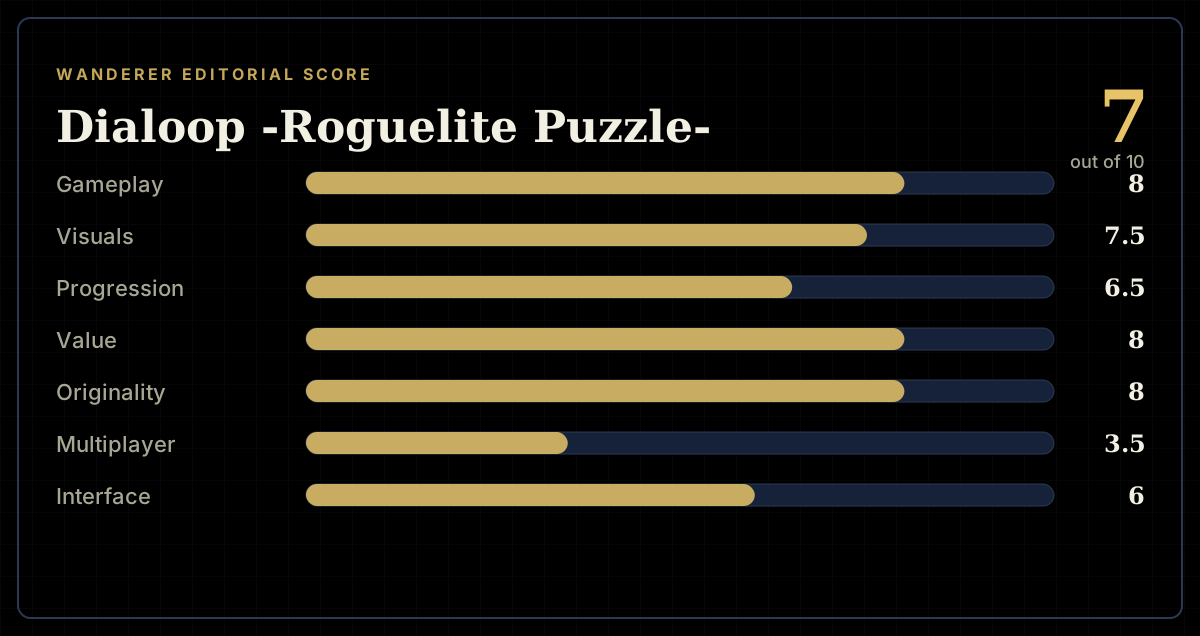
7 / 10
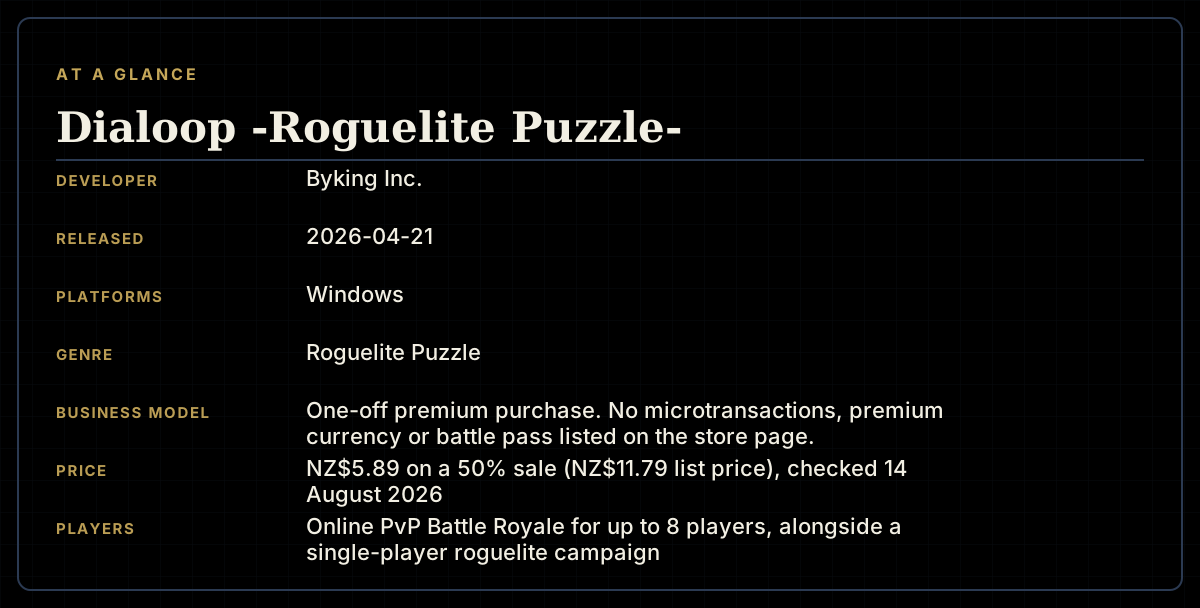
- Developer
- Byking Inc.
- Publisher
- Byking Inc.
- Released
- 21 April 2026
- Platforms
- Windows
- Genre
- Roguelite Puzzle
- Monetisation
- One-off premium purchase. No microtransactions, premium currency or battle pass listed on the store page.
- Players
- Online PvP Battle Royale for up to 8 players, alongside a single-player roguelite campaign
The short version
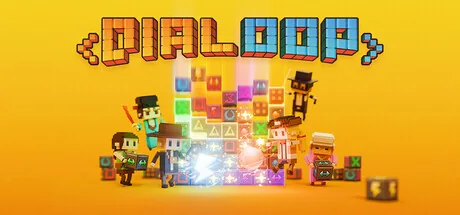
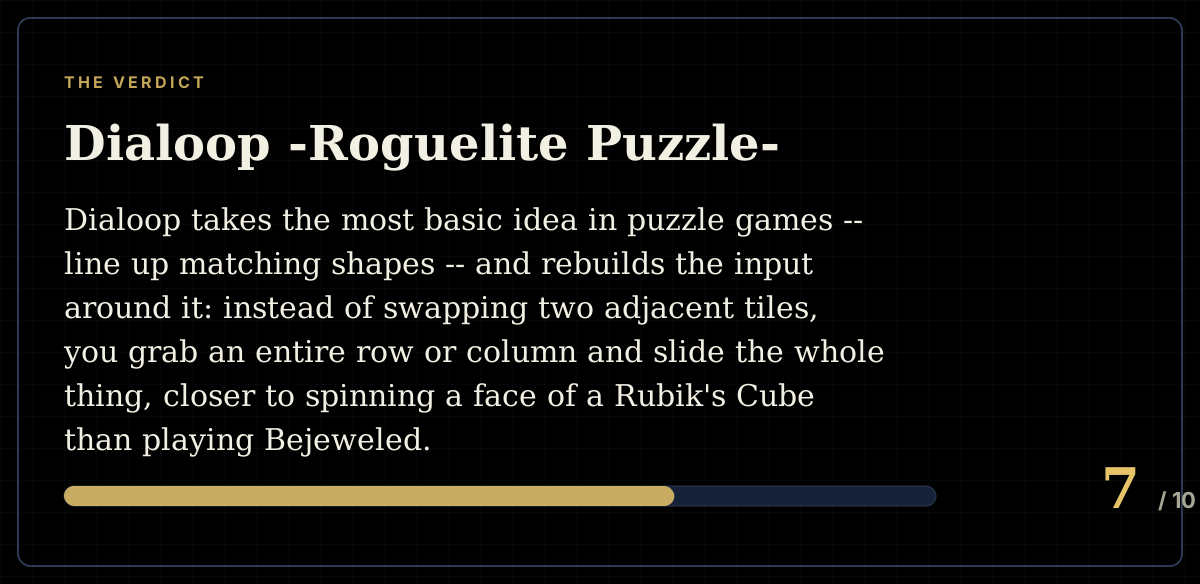
Dialoop takes the most basic idea in puzzle games -- line up matching shapes -- and rebuilds the input around it: instead of swapping two adjacent tiles, you grab an entire row or column and slide the whole thing, closer to spinning a face of a Rubik's Cube than playing Bejeweled. Japanese players, who make up the largest slice of this game's small but devoted review base, keep landing on the same comparison independently. Layered on top is a roguelite run structure -- a deck of block types you can bias toward specific shapes, unlockable relics that multiply your score, a branching stage map -- and the whole thing is dressed in a cheerful chunky-voxel style with an archaeologist hero digging through ruins full of skeletons and coin piles.
Biggest strengths
- Sliding entire rows and columns instead of swapping single tiles is a genuinely different puzzle grammar, not a reskin of match-3.
- The deck-building layer lets you bias which block types actually appear, turning raw luck into a build you can lean into and plan combos around.
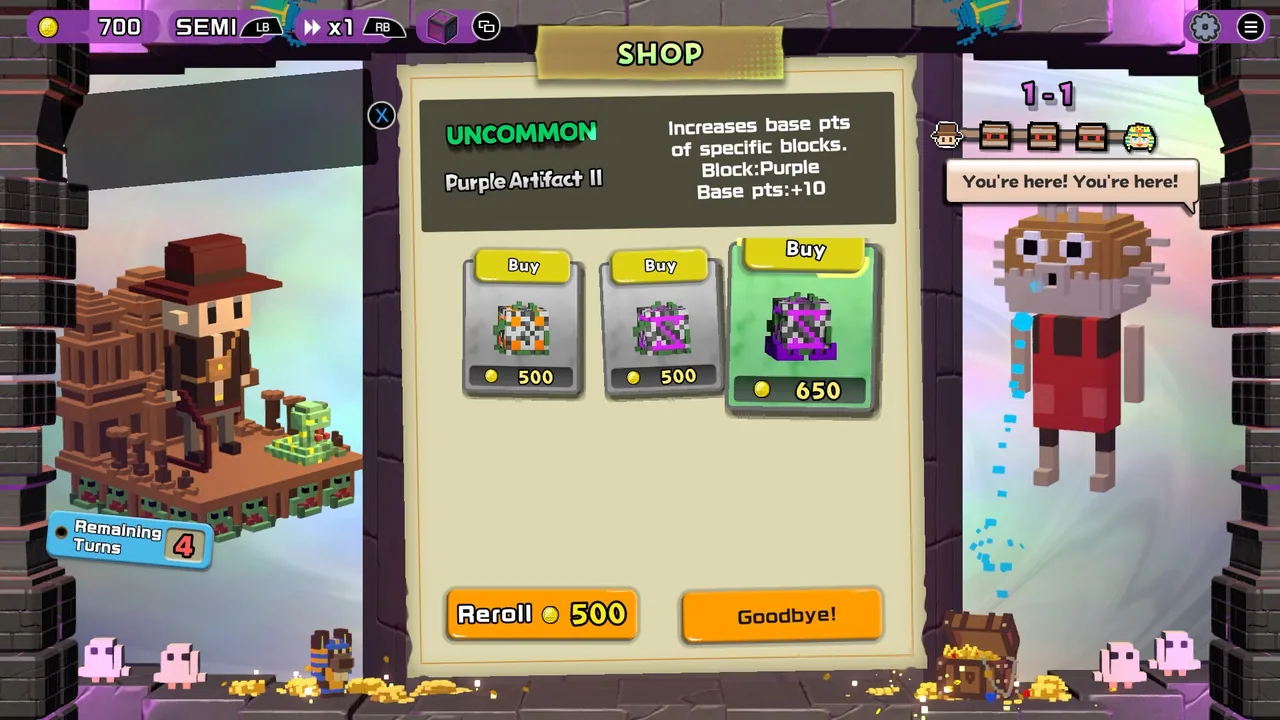
- A short, cheap roguelite campaign with unlockable characters, relics and stage variety that several long-playtime reviewers are still returning to hundreds of hours in.
Biggest weaknesses
- The advertised 8-player online Battle Royale mode is barely reachable in practice -- the global achievement for finishing even one online match sits under 30%, and Japanese-language reviews describe queues that simply never fill.
- Once the score-maximising pattern clicks, several reviewers describe the mid-to-late campaign becoming a repeatable routine rather than a puzzle to solve fresh each time.
- Camera movement during big combos reportedly caused motion sickness for at least one reviewer within ten minutes of play.
Who it's for: Puzzle fans who want something with actual mechanical novelty rather than another reskinned match-3, and roguelite players happy to build a score-maximising deck over a short, inexpensive single-player campaign. Not for anyone buying specifically for the advertised 8-player online mode -- the population isn't there to fill it.
Our recommendation: Worth the asking price for the single-player loop alone, and at under six dollars on sale it's a low-risk pickup. Go in expecting a solo roguelite with a puzzle-solving hook, not the competitive multiplayer game the store page leads with, and be aware the English-language player base is thin enough that most of what's known about this game currently comes from its Japanese and Chinese community rather than its English one.
7 / 10
The pitch: match-3 with a different grip
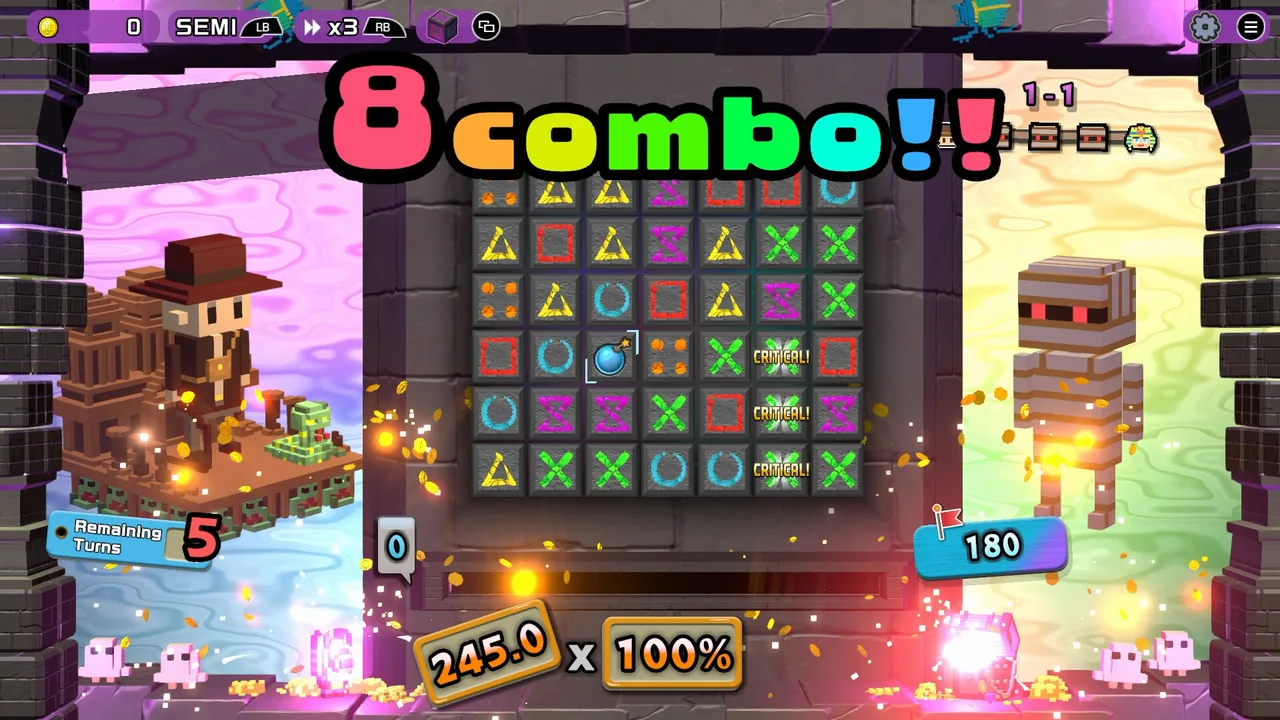
Most puzzle games built on matching shapes ask the same question over and over: which two adjacent tiles do I swap? Dialoop asks a different one. Grab a row, grab a column, and slide the whole thing around the board -- push it far enough and it wraps back in from the other side. Matches happen as a side effect of repositioning an entire line rather than nudging one tile into place, and that single change ripples through everything else the game does. Chains that would take several careful swaps in a conventional match-3 can collapse into one motion here, and the "eight combo!" celebration screens that show up in the game's own marketing aren't exaggerating what a good slide can produce.
Japanese reviewers -- who make up more than half of this game's entire review corpus -- keep reaching for the same comparison without prompting each other: it feels closer to manipulating a Rubik's Cube than playing Bejeweled. That's a useful mental model for anyone deciding whether to try it. The board isn't a static grid waiting for you to find a match; it's a puzzle object you're actively reshaping, and the learning curve is real. More than one reviewer describes needing two or three attempts before the input logic clicks, after which the appeal of watching a full board resolve into cascading combos becomes obvious.
Deckbuilding turns luck into a plan
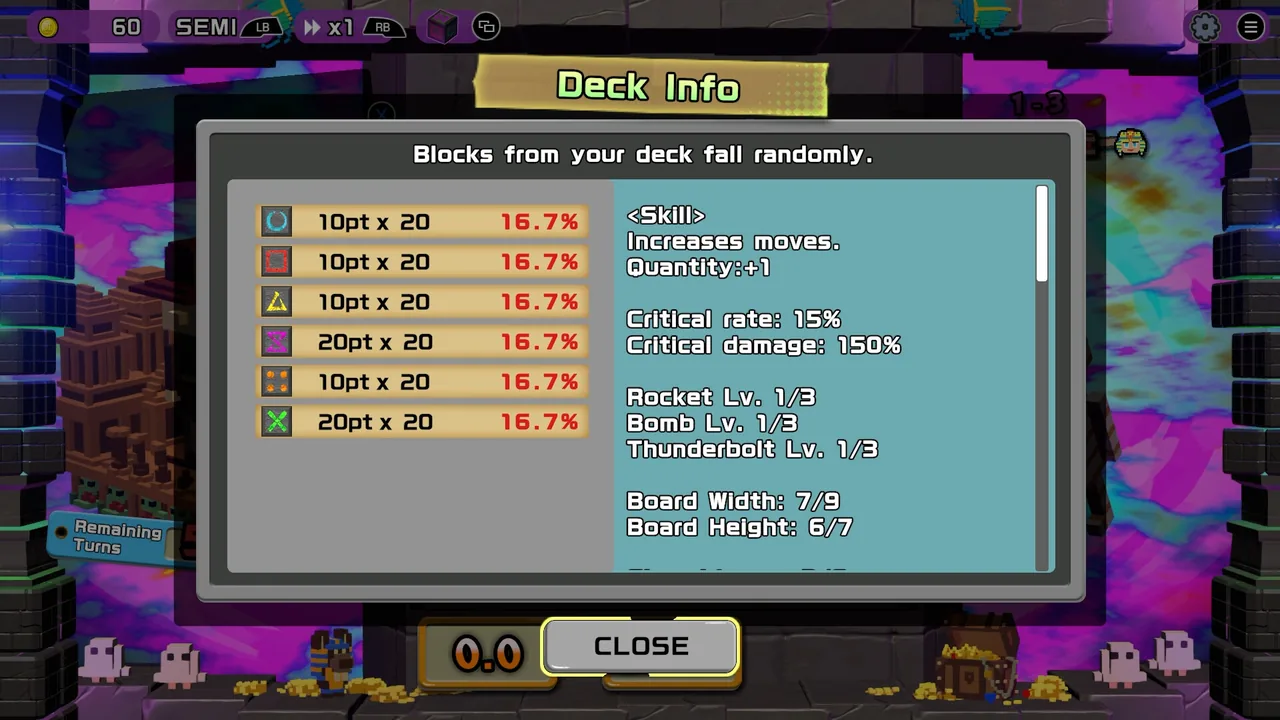
Layered onto that core mechanic is a genuine roguelite structure. Rather than accepting whatever block shapes randomly fall, Dialoop lets you build a deck -- weighting which of the game's six block types show up and in what proportion, the same 16.7%-per-type split visible on the in-game deck screen unless you spend relics to skew it. Skill upgrades stack alongside that: extra moves per turn, critical hit chance and damage multipliers, unlockable rockets, bombs and chain-lightning tiles that clear more than a simple match would, and even board-size upgrades that widen or heighten the grid you're working with. None of it reinvents roguelite deckbuilding, but it gives the puzzle layer a reason to keep evolving run to run instead of staying a single fixed challenge.
The one recurring complaint about this system, from a Japanese reviewer with close to a thousand hours logged, is that once the efficient pattern for filling the board is understood -- pack five of one colour to the edge, repeat -- the mid-game stops asking for fresh thinking and starts asking for repetition of a solved routine. That's a fair critique of most match-based roguelites eventually, but it's worth knowing going in: the ceiling here is a comfortable, well-paced campaign rather than an endlessly re-solvable puzzle box.
An 8-player mode almost nobody can join
Dialoop's store page leads with online multiplayer support for up to eight players in a Battle Royale format, elimination bracket and all -- visible in the game's own promotional screenshots, complete with a leaderboard sidebar and a day-by-day survival structure. The problem isn't the design of that mode; it's that the population needed to fill an eight-person lobby doesn't appear to exist. One Japanese reviewer, giving the game a thumbs-down specifically over this, says outright that matches never fire and that eight players simply never gather. The global achievement data backs that up: the achievement tied to completing a single online match sits at just under 30% completion, against 95%+ completion for the game's basic tutorial and story-progress milestones -- a steep, mode-specific cliff rather than the gradual drop-off you'd expect from players simply losing interest in general.
Byking clearly knows this is a problem. The 1.0.2 patch, several weeks after launch, specifically lists "improved online matchmaking" and "enhanced connection stability" among its headline changes. Whether that meaningfully helped is hard to say from outside -- no update since June 2026 has touched multiplayer again, and the review sample discussing it is small enough that a handful of accounts either way would shift the picture substantially. The honest summary: multiplayer is present, functional in principle, and effectively theoretical for most buyers right now.
Presentation and a rough early patch
The voxel-block art style -- a pith-helmeted archaeologist digging through ruins stalked by pixel-ghosts and skeleton guards -- is charming and reads clearly at a glance, which matters in a puzzle game where you need to parse the board fast. The one presentation complaint worth flagging is motion-related: one reviewer reports the camera's tilt-and-bounce animation during big combo chains caused genuine motion sickness within ten minutes, despite not usually being sensitive to that kind of thing in other games. It's a single report rather than a pattern across the small corpus available, but the specific, physical nature of the complaint makes it worth a mention for anyone prone to that kind of discomfort.
More concerning on paper, if not in outcome, was a bug introduced by the 1.0.0 launch itself: players who carried a suspended "Continue" save from the Early Access build into the 1.0 release could find the game unplayable. Byking shipped a fix in version 1.0.1 within days, apologised plainly in the patch notes, and was upfront that affected save files might be lost in the process. It's the kind of launch stumble that would sting more on a bigger, more expensive game; here it reads as a small developer moving fast to fix something it broke, rather than a pattern of neglect.
Value and who this is actually for
At roughly six dollars on sale and under twelve at list price, Dialoop asks very little for what it delivers -- a real roguelite campaign, an unusual and well-executed core mechanic, and no microtransactions, premium currency or battle pass anywhere on the store page to muddy that. The catch isn't the price, it's the audience mismatch a shopper might walk in with: this reads on the store page as a competitive online puzzle game with a single-player mode attached, and in practice it's the reverse. The single-player roguelite is the substance; the multiplayer is a feature that exists more than it functions.
Worth noting plainly: the evidence base behind this review is thin. Dialoop's entire lifetime review count sits in the low twenties across every language combined, more than half of it Japanese and almost a third Simplified Chinese, with only a couple of English-language reviews to date. That's not unusual for a small game from a Japanese developer four months past its full launch, but it does mean an English-speaking buyer is working with far less community verification than they'd get on almost any other game this size in this library. Go in for the puzzle mechanic, not the multiplayer promise, and that thin sample becomes much less of a risk.
Pros and cons
Pros
- Sliding entire rows and columns instead of swapping single tiles is a genuinely different puzzle grammar, not a reskin of match-3.
- The deck-building layer lets you bias which block types actually appear, turning raw luck into a build you can lean into and plan combos around.
- A short, cheap roguelite campaign with unlockable characters, relics and stage variety that several long-playtime reviewers are still returning to hundreds of hours in.
- Byking answered Early Access bug reports quickly, including a same-week hotfix for a save-corrupting issue the 1.0 update introduced.
Cons
- The advertised 8-player online Battle Royale mode is barely reachable in practice -- the global achievement for finishing even one online match sits under 30%, and Japanese-language reviews describe queues that simply never fill.
- Once the score-maximising pattern clicks, several reviewers describe the mid-to-late campaign becoming a repeatable routine rather than a puzzle to solve fresh each time.
- Camera movement during big combos reportedly caused motion sickness for at least one reviewer within ten minutes of play.
- The review base is tiny and overwhelmingly non-English, so an English-speaking buyer has very little independent verification to lean on before purchasing.
Screenshots
-
Dialoop -Roguelite Puzzle-Image: Byking Inc. via Steam -
Dialoop -Roguelite Puzzle-Image: Byking Inc. via Steam -
Dialoop -Roguelite Puzzle-Image: Byking Inc. via Steam -
How the review scores each part of the gameWanderer Editorial -
The game at a glanceWanderer Editorial -
The short versionWanderer Editorial