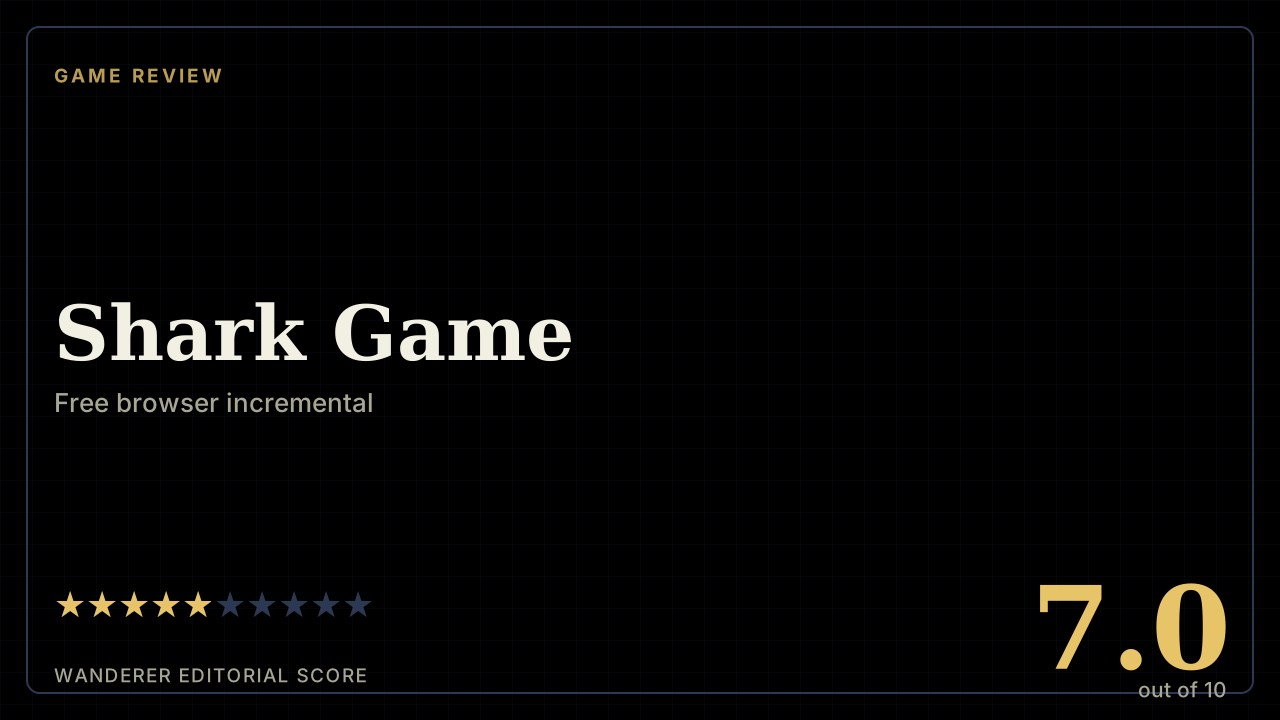
Game review
Shark Game
7 / 10
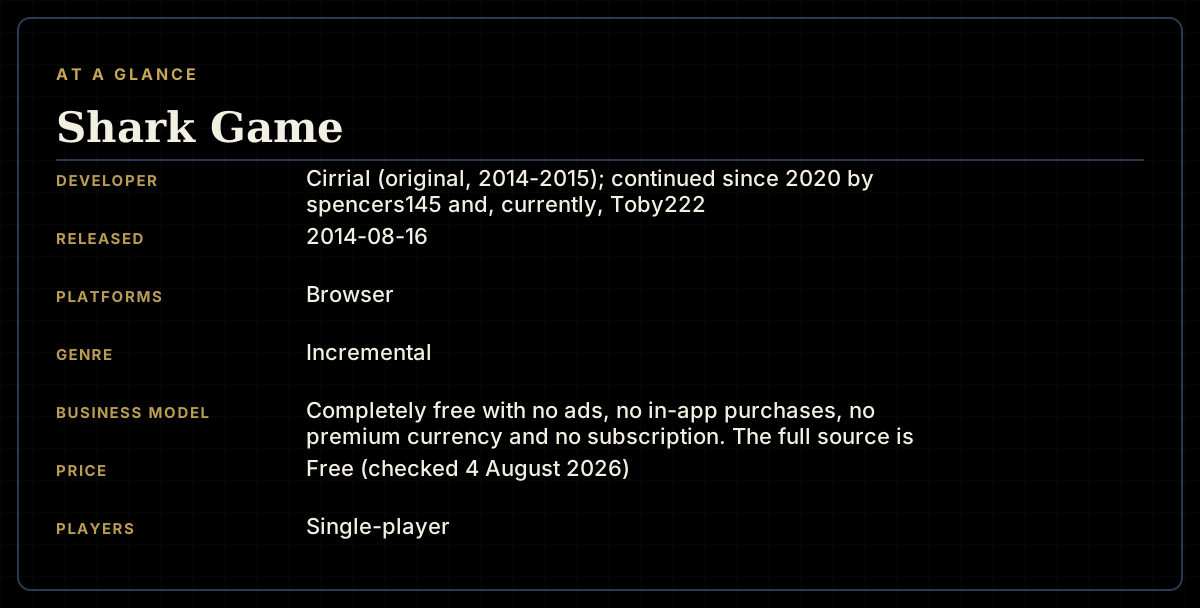
- Developer
- Cirrial (original, 2014-2015); continued since 2020 by spencers145 and, currently, Toby222
- Publisher
- Self-published freeware, MIT licensed
- Released
- 16 August 2014
- Platforms
- Browser
- Genre
- Incremental
- Monetisation
- Completely free with no ads, no in-app purchases, no premium currency and no subscription. The full source is public under the MIT licence, both the original archived repository and the actively developed continuation
- Players
- Single-player
The short version
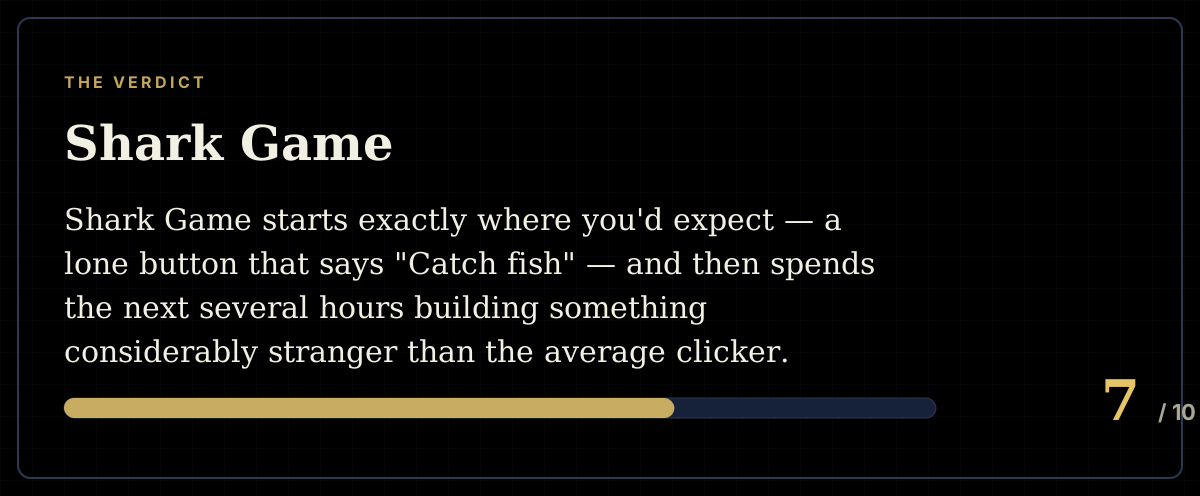
Shark Game starts exactly where you'd expect — a lone button that says "Catch fish" — and then spends the next several hours building something considerably stranger than the average clicker. Every one of its dozen-plus sea creatures gets its own dedicated chain of workers, breeders, specialists and machines rather than sharing one generic production template, and the eventual prestige layer lets you choose which specific animal population survives the trip to the next world, using dedicated Migrator artifacts instead of a single universal currency. It even has a genuine ending, which is rarer in this genre than it should be. What it doesn't have is any sound at all, a settled visual identity, or a single obvious place to go and play it — the creator's original build stalled in 2015, and the actively maintained version now lives under a completely different developer on a completely different domain.
Biggest strengths
- Every animal — sharks, rays, crabs, shrimp, lobsters, dolphins, whales, chimaeras, octopuses, eels — gets its own Frenzy-to-Breeder-to-Specialist-to-Machine production chain instead of one reskinned generic building
- Migrator artifacts turn the prestige reset into a real choice about which specific population survives the trip to the next world, rather than handing everyone the same universal currency
- Clearing the final Gate cost triggers an actual authored win condition, something most incrementals never bother building
Biggest weaknesses
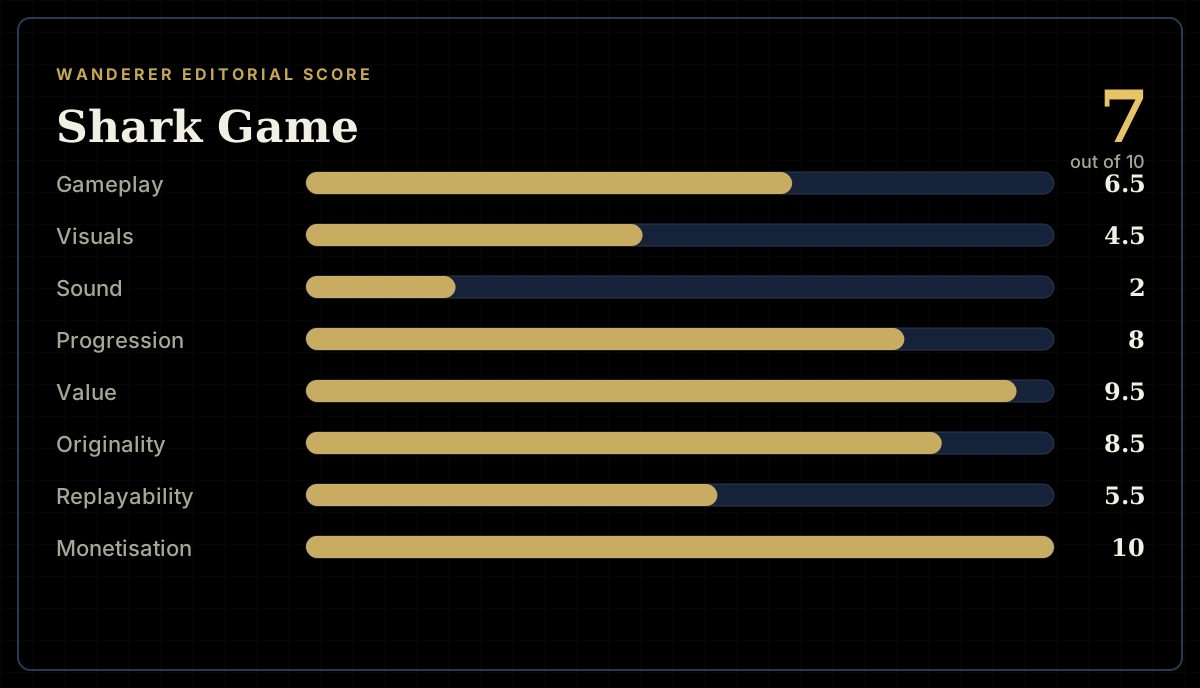
- There is no music or sound effect anywhere in the game's asset files — every session runs in complete silence
- The interface leans on flat resource lists and small per-section background art that hasn't aged well against the genre's more polished current entries
- A newcomer's first decision is which build to even play: the original creator's version froze at v0.71 in 2015 while the actively developed continuation lives on an entirely different site, and nothing points a first-time visitor toward the right one
Who it's for: Incremental-game veterans who enjoy spreadsheet-adjacent optimisation and are comfortable hunting down a niche fan-maintained build rather than following a single official link.
Our recommendation: Play the actively developed continuation at shark.tobot.dev rather than Cirrial's original — it inherits the same comedic sea-life economy and artifact system while still receiving real updates, whereas the original repository was archived by GitHub in September 2025 with development frozen at version 0.71.
7 / 10
Most browser incrementals settle for one production chain and reskin it a dozen times — the same generator, the same multiplier building, the same "buy 10" button, wearing a different coat of paint for every tier. Shark Game, a free HTML and JavaScript game that Cirrial built for the Seamergency 2014 jam, does something more deliberate. Sharks, rays, crabs, shrimp, lobsters, dolphins, whales, chimaeras, octopuses and eels each get their own dedicated ladder of workers, breeders, specialists and machines, and the eventual prestige system lets a player decide exactly which of those populations is worth carrying into the next world rather than resetting everything into one shared currency. It's a genuinely distinctive piece of incremental design, built by one person in their spare time, that a small volunteer team has kept alive years after its original creator quietly stopped working on it.
A fishing button that turns into an economy
The opening minutes are almost aggressively plain: click "Catch fish," watch a counter go up, read a one-line joke about the fish you just ate. A handful of upgrades unlock parallel gathering actions — pry a sponge, scoop a clam, grab a jellyfish, each with its own small library of deadpan flavour text describing the specific creature you happened to find. None of this is meant to be the game's real hook. It's there to fund the first recruits: spend enough fish and a shark joins your crew, click by click, until the crew is large enough to work on its own.
What separates Shark Game from the genre's more interchangeable entries is what happens once that crew grows. Every species that joins gets folded into its own production ladder — Frenzy (the raw, manually recruited population), then Breeders that grow that population automatically, then Specialists who convert basic resources into more advanced ones, then Machines that automate the whole chain. A shark and a dolphin aren't the same building with a different name stapled on; they feed genuinely different parts of the resource economy, with sand, crystal, kelp, coral and algae on the raw-materials side eventually refining into named processed goods like Sharkonium, Coralglass, Delphinium and Spronge, alongside a couple of resources — Tar, Ice — that actively work against you if left unmanaged. A Lab tab holds the research tree stitching all of that together, and a Recycler tab lets players convert unwanted stock into a neutral Junk currency and trade it back for whatever they actually need, at different exchange rates depending on the resource category. None of this is groundbreaking in isolation — plenty of incrementals have research trees and currency sinks — but building an entire zoo of parallel production chains instead of one central resource is a heavier commitment than most games in this genre are willing to make, and it pays off in how distinct each stretch of the mid-game feels from the last.
The Gate, and a prestige system that remembers which animal you cared about
The game's structural centrepiece is the Gate: an end-game tab that demands escalating resource payments, scaled against a special late-unlocking resource called numen, before it opens and lets the player travel onward. Stepping through resets standard resources and production back to nothing and drops the player into a new world drawn from a short list of distinct flavours — a serene Marine sea, a storm-locked Tempestuous ocean, a machinery-choked Abandoned world, a pitch- dark Shrouded one, and several others, each with its own hazard profile and its own piece of in-fiction framing about waking up with no memory of the journey that brought you there. That's a familiar shape for the genre; Cookie Clicker's ascension and Candy Box 2's own resets work on similar logic.
What's less familiar is how Shark Game handles what survives the trip. Rather than a single universal prestige currency that boosts everything equally, the artifact system includes a dedicated Migrator for nearly every species — a Shark Migrator, a Ray Migrator, a Crab Migrator, and so on — and each one is the only thing standing between "this population starts over from zero" and "this population comes with me." Alongside them sit broader artifacts like the World Shaper, which softens a new world's climate severity, and the various Totems, which boost a specific creature group's effectiveness permanently. The result is a prestige decision with actual texture: a player who's invested heavily in dolphins has a real reason to chase the Dolphin Migrator specifically, rather than simply grinding toward one shared "ascension points" number the way most of the genre handles a reset. It's the kind of design that rewards the exact spreadsheet-minded audience this genre tends to attract, and it's a legitimately clever answer to the question of what a prestige system can look like once you stop assuming every player values the same things.
The Reflection tab, unlocked behind a single unit of an even rarer resource called Essence, doesn't add another system on top of that — it's a trophy case, showing off collected artifacts and their accumulated power with no further mechanical effect. That restraint is the right call. Not every end-game tab needs to do something; sometimes a quiet room to look at what you've built is enough, and the flavour text leaning into the player's own accumulated, half-remembered transformation lands better for not being tied to a number going up. More striking still is what happens if a player actually clears every Gate cost: the game ends, with a real, deliberate win state rather than the open-ended "keep the number climbing forever" default most incrementals settle for. Very few games in this genre bother writing an ending at all.
Presentation that time hasn't been kind to
Judged as a piece of software from 2014, Shark Game holds up reasonably well — it's a functional, readable interface with small background illustrations behind each major tab and a set of simple icon sprites representing each resource and creature. Judged against 2026's incremental landscape, the gap shows. There is no soundtrack and no sound effect anywhere in the game's files; every session runs in total silence, which is a real absence next to genre peers that put real composed scores behind a free browser game. The visual language hasn't moved much past "readable spreadsheet with icons," and while that's a defensible choice for a solo jam project turned long-running hobby project, it means the game asks players to find its appeal entirely in its systems rather than in anything it shows or plays for them.
A free game with an unusually confusing front door
There's effectively nothing to say about monetisation because there isn't any — no ads, no purchases, nothing gated behind a currency, the full source public under an MIT licence. That generosity extends to its history: Cirrial walked away from active development in 2015 with the game frozen at version 0.71, and the original repository sat quietly until it was formally archived in September 2025. That could easily have been the end of the story. Instead, two other developers, spencers145 and Toby222, picked the project back up in 2020, with Toby222 now leading a continuation that has kept receiving real commits as recently as July 2026 — a genuinely unusual second life for a jam game its own creator had moved past a decade earlier.
The catch is that none of this is signposted anywhere obvious. A player who finds Cirrial's original page gets a competent but permanently unfinished 2015 build; the actively maintained version lives on an entirely different site under different developers, and there's no single canonical link tying the two together for someone arriving cold. For a free, community-kept-alive incremental that's otherwise a genuinely rewarding find, that's a real barrier to actually finding it.
Verdict
Seven out of ten. Shark Game's central idea — giving every creature its own production chain and letting a targeted artifact system decide exactly which populations survive a prestige reset — is more inventive than most of what this genre produces, and an actual win condition is rarer still. It earns real respect for being free, open source and, remarkably, still under active development more than a decade after the person who started it moved on. It loses ground on presentation, with no audio at all and an interface that reads as a 2014 solo project rather than something built for 2026, and on accessibility of a different kind: a first-time player has to do real detective work just to land on the version that's actually still being maintained, rather than the frozen original. Players who enjoy a game that keeps quietly adding a new system underneath the one they just mastered — the same instinct that keeps people digging into Wanderer's own gathering and smithing trees — will find plenty here worth the detective work. Players who want a single obvious official page and a soundtrack to go with it should expect a rougher first impression than the systems underneath actually deserve.
Pricing, licensing and repository activity checked 4 August 2026.
Pros and cons
Pros
- Every animal — sharks, rays, crabs, shrimp, lobsters, dolphins, whales, chimaeras, octopuses, eels — gets its own Frenzy-to-Breeder-to-Specialist-to-Machine production chain instead of one reskinned generic building
- Migrator artifacts turn the prestige reset into a real choice about which specific population survives the trip to the next world, rather than handing everyone the same universal currency
- Clearing the final Gate cost triggers an actual authored win condition, something most incrementals never bother building
- Entirely free and open source under MIT, with no ads, purchases or premium currency anywhere in either the original codebase or the maintained fork
- A volunteer team has kept shipping real updates years after the original creator moved on, including a push as recent as July 2026
Cons
- There is no music or sound effect anywhere in the game's asset files — every session runs in complete silence
- The interface leans on flat resource lists and small per-section background art that hasn't aged well against the genre's more polished current entries
- A newcomer's first decision is which build to even play: the original creator's version froze at v0.71 in 2015 while the actively developed continuation lives on an entirely different site, and nothing points a first-time visitor toward the right one
- The game bills itself as an incremental rather than an idle game, and the opening stretch of manual clicking before automation opens up backs that up more than players expecting a Cookie-Clicker-style hands-off pace will want
- End-game systems price Gate costs against a compounding "numen" resource and run a category-by-category Recycler exchange rate, both of which reward a spreadsheet mindset far more than a casual one
Screenshots
-
How the review scores each part of the gameWanderer Editorial -
The game at a glanceWanderer Editorial -
The short versionWanderer Editorial