Game review
Rift of the NecroDancer
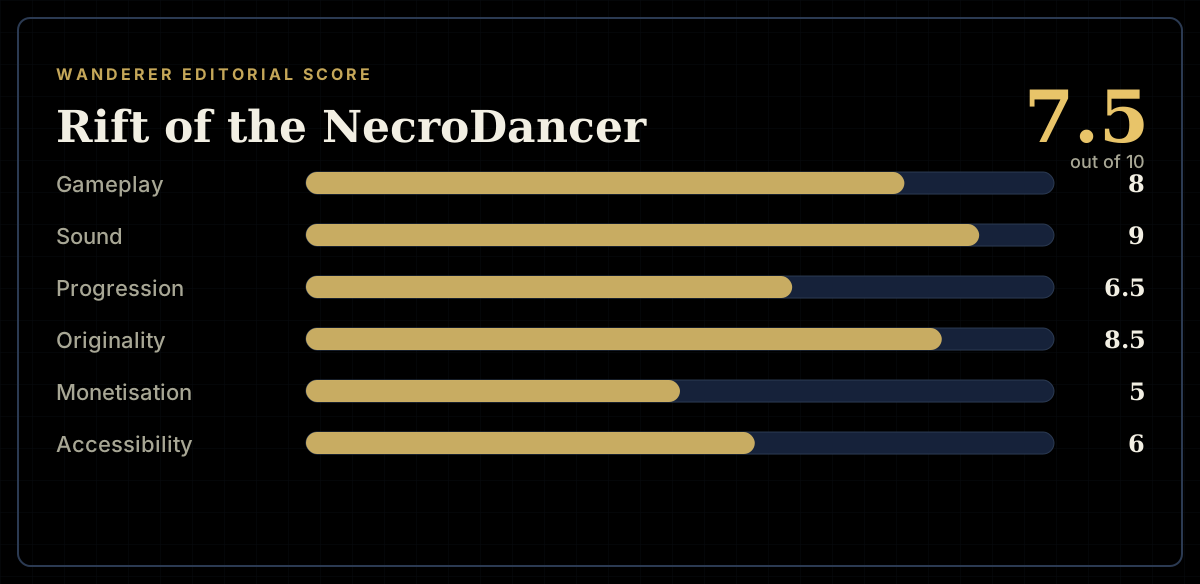
7.5 / 10
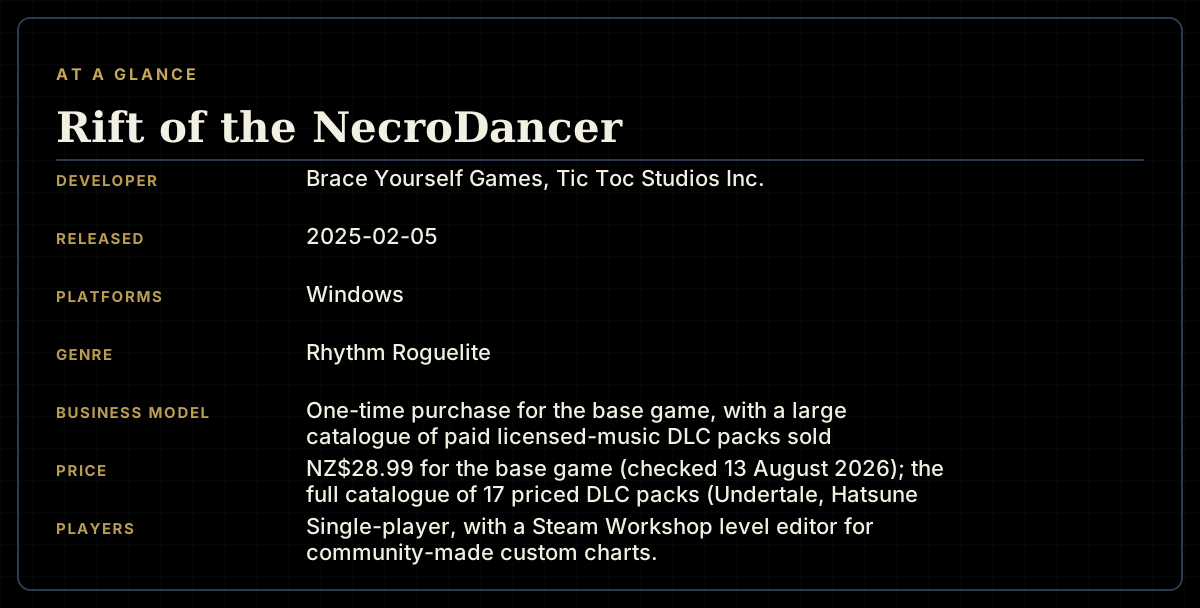
- Developer
- Brace Yourself Games, Tic Toc Studios Inc.
- Publisher
- Klei Publishing
- Released
- 5 February 2025
- Platforms
- Windows
- Genre
- Rhythm Roguelite
- Monetisation
- One-time purchase for the base game, with a large catalogue of paid licensed-music DLC packs sold separately.
- Players
- Single-player, with a Steam Workshop level editor for community-made custom charts.
The short version
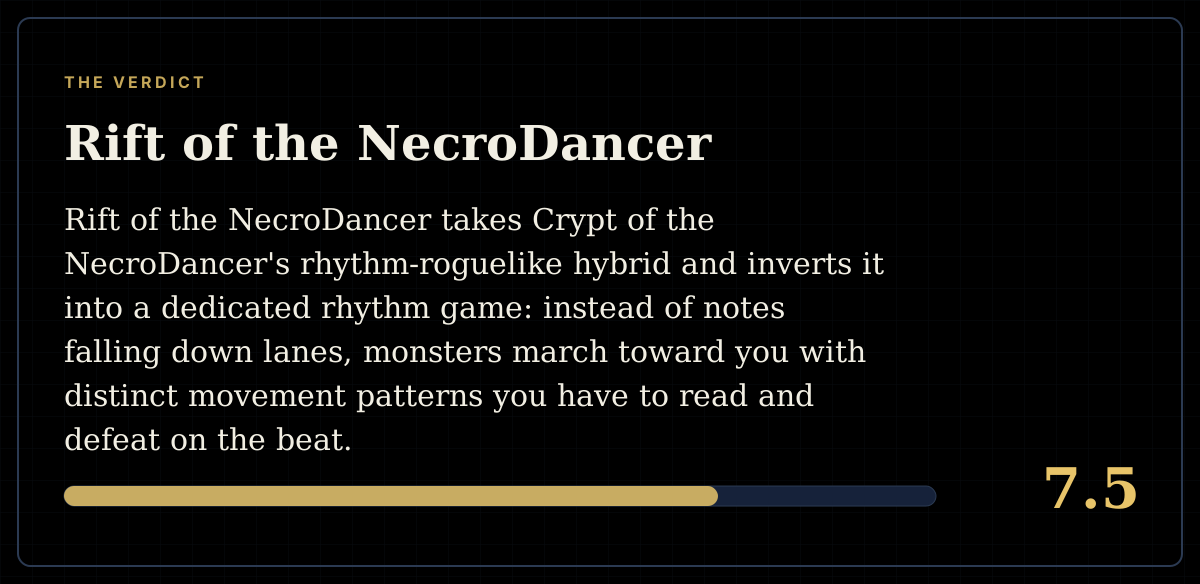
Rift of the NecroDancer takes Crypt of the NecroDancer's rhythm-roguelike hybrid and inverts it into a dedicated rhythm game: instead of notes falling down lanes, monsters march toward you with distinct movement patterns you have to read and defeat on the beat. It sits at Very Positive, 94% of 3,054 Steam reviews, and its most devoted fans are exceptionally devoted -- reviewers logging well over a thousand hours describe it as their new favourite rhythm game, and the built-in Steam Workshop level editor has grown a real community of custom charts.
The negative sample is smaller but specific and largely consistent: at medium-to-high difficulty, tracking seven or eight monster types with multiple variants each becomes, for a real minority of reviewers, a legibility problem rather than a rhythm-game challenge -- "a reading nightmare," as one puts it. The other recurring complaint is pricing: the base game sells for NZ$28.99, but its 17 priced licensed-music DLC packs (Undertale, Hatsune Miku, Celeste and more) add up to roughly NZ$175.65 if bought individually, more than six times the base game's cost, and several reviewers explicitly call this out as excessive.
Biggest strengths
- A genuinely novel rhythm-game idea -- monsters as notes, each with a readable movement pattern once learned -- that a large majority of reviewers say delivers a real "flow state" once it clicks, distinct from anything else in the genre
- Exceptional music, credited across nearly every review regardless of overall verdict, from Danny Baranowsky and collaborators
- A Steam Workshop level editor that has grown a real, active custom-chart community, extending the game well past its built-in setlist for engaged players
Biggest weaknesses
- Legibility becomes a real problem at medium-to-high difficulty for a consistent minority of reviewers, who describe tracking multiple monster types and variants simultaneously as memorization-heavy rather than genuinely readable in the moment
- The base game's 17 priced DLC packs total roughly six times the base game's own price if bought individually, and multiple reviewers specifically flag the model as excessive relative to what a rhythm game fan expects to pay for a reasonably complete song library
- Timing calibration and judgement windows are reported as inconsistent by several reviewers, with input timing feeling, in their words, "sporadically whimsical" even after recalibration
Who it's for: Rhythm-game fans open to a genuinely different approach to the genre, and existing Crypt of the NecroDancer or Cadence of Hyrule fans curious what happens when the formula flips. Purists who want traditional falling-note legibility, or players sensitive to a large paid DLC catalogue, should read the specific complaints below before buying in.
Our recommendation: A strong buy at NZ$28.99 for the base game and its included content -- treat the licensed-music DLC packs as optional collector items for specific franchises you care about rather than something you need to complete the experience, given how quickly the full catalogue adds up.
7.5 / 10
Crypt of the NecroDancer built its reputation on a strange, brilliant hybrid: a roguelike dungeon crawler where every move had to land on the beat. Rift of the NecroDancer, released on Steam by Brace Yourself Games and Tic Toc Studios on 5 February 2025, takes that DNA and flips the emphasis -- it's a dedicated rhythm game first, with the roguelike's monster-encounter structure repurposed as the note chart itself. It sits at Very Positive, 94% across 3,054 reviews, on the strength of an idea that reviewers across the sample agree is genuinely novel -- and a specific, well-documented minority report about where that idea runs into trouble.
Monsters as notes -- a real reinvention, not a reskin
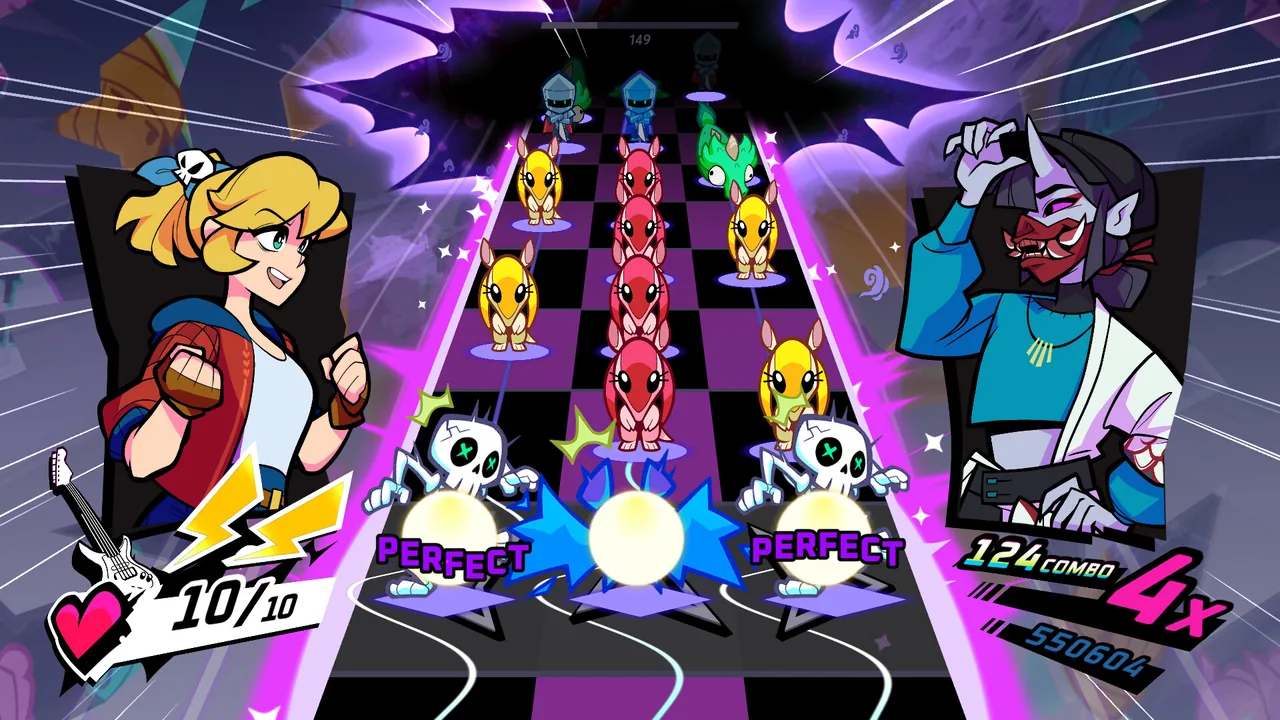
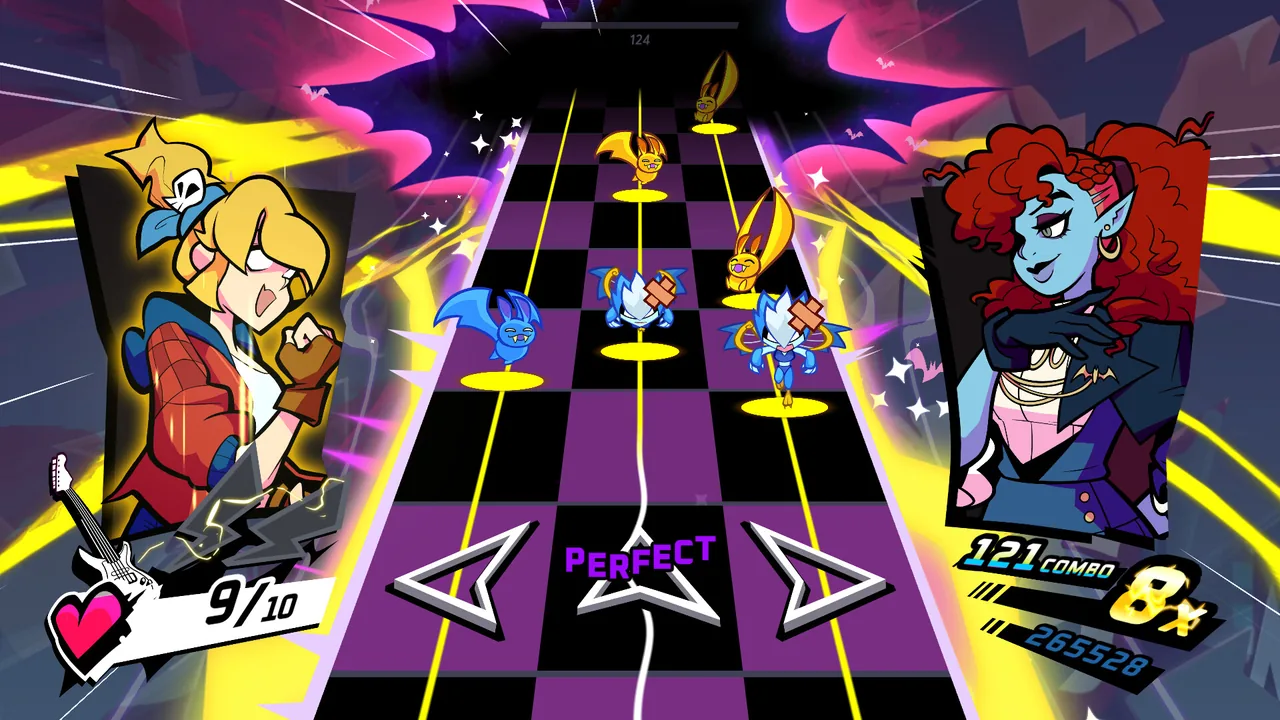
The pitch is simple to state and, several reviewers note, harder than it sounds to actually design well: instead of notes falling down lanes toward a hit line, monsters approach you across three lanes, each with a distinct movement and attack pattern you learn to read and counter on the beat. "Crypt of the Necrodancer broke the boundaries of what a rhythm game could look and function like," reads one review, "Rift of the Necrodancer puts everything created outside of those boundaries back inside of them and it's fantastic." Reviewers describe the sensation in strikingly consistent terms once the system clicks -- "the most insane flowstate ever," reads one; "just one more song and then I can stop for a bit," reads another, in a loop, from a reviewer with over 200 hours logged. One review, at over 1,000 hours played, calls it simply "my new favourite rhythm game."
That's an unusually strong engagement signal for a genre where burnout is common, and it's backed by structural support: a Steam Workshop level editor lets the community build and share custom charts, extending play well past the built-in setlist for players who stick around -- several reviewers specifically credit the custom-chart community as a reason they're still playing months after launch.
Where it loses people: legibility, not difficulty
The negative sample -- a real but comparatively small 183 of 3,054 total reviews -- converges on a specific complaint that's worth taking seriously precisely because it comes from self-identified rhythm-game veterans rather than genre newcomers put off by any challenge. As difficulty rises, the number of simultaneous monster types and variants a player has to track climbs with it, and for a consistent minority, that crosses from "hard" into "unreadable." "It's a reading nightmare on the higher difficulties," writes one reviewer who otherwise recommends the game; "I find this game really difficult to read," writes another, ultimately refunding it despite genre experience with the original Crypt of the NecroDancer. A third, more technical complaint concerns timing precision specifically: "in no other rhythm game has the judgement system for the timing been this sporadically whimsical," reads one, describing repeated recalibration attempts that never quite resolved the issue.
There's a genre-identity thread running underneath these complaints too. Several reviewers argue the game is, at heart, "a combat game set to a rhythm" rather than a true rhythm game in the traditional falling-notes sense, and that the monster-memorization structure asks players to learn discrete enemy behaviours rather than read continuous musical patterns the way genre veterans are used to. Whether that's a flaw or simply a different kind of rhythm game is genuinely split across the review sample -- plenty of reviewers frame the same observation as the game's most interesting idea rather than its biggest problem.
A DLC catalogue that adds up fast
The other concrete, checkable complaint concerns pricing, and the numbers back it up. The base game costs NZ$28.99. Layered on top of that are 17 separately priced music DLC packs -- licensed crossovers with Undertale, Hatsune Miku, Celeste, Shovel Knight, K/DA, Monstercat, Pizza Tower, Friday Night Funkin', hololive, Among Us, Everhood and VA-11 Hall-A among them -- which together total roughly NZ$175.65 if bought individually at full price, more than six times the base game's own cost. "Rift is starting to feel like a DLC farm game more than anything," reads one review from a long-time fan of the developer, who goes on to argue newer paid map packs feel worse-designed than the free content bundled at launch. Another is blunter: "the dlc is very expensive... if the dlc costs more than the main game, we have a problem." To be fair to the model, these are licensed music packs -- Brace Yourself Games is paying for the rights to Toby Fox's or Hatsune Miku's music on each one, a real cost structure different from a typical cosmetic DLC -- but the cumulative price tag is a legitimate thing to know going in, and it's not a complaint reviewers are inventing out of nothing.
Verdict
7.5 out of 10. Rift of the NecroDancer does something genuinely new with a genre that doesn't reinvent itself often, and the vast majority of its audience -- reviewers logging hundreds to thousands of hours, an active custom-chart Workshop scene, 94% positive across three thousand reviews -- say it works. The complaints that keep it from scoring higher here are specific and real rather than vague: a legibility ceiling that turns some of its harder charts into memorization tests for genre veterans used to reading music rather than monster behaviour, and a DLC catalogue that, if you chase it all, costs several times what the excellent base game does. Buy it for the base game and the setlist you actually care about, not the whole shelf, and it's an easy recommendation for anyone who wants to see a familiar genre do something it hasn't done before.
Pros and cons
Pros
- A genuinely novel rhythm-game idea -- monsters as notes, each with a readable movement pattern once learned -- that a large majority of reviewers say delivers a real "flow state" once it clicks, distinct from anything else in the genre
- Exceptional music, credited across nearly every review regardless of overall verdict, from Danny Baranowsky and collaborators
- A Steam Workshop level editor that has grown a real, active custom-chart community, extending the game well past its built-in setlist for engaged players
- Extremely high engagement among its fan base -- reviewers logging hundreds to well over a thousand hours are common in the positive sample, an unusually strong signal of staying power
- Polish and evident care throughout, acknowledged even by reviewers who ultimately don't recommend the game over specific mechanical complaints
Cons
- Legibility becomes a real problem at medium-to-high difficulty for a consistent minority of reviewers, who describe tracking multiple monster types and variants simultaneously as memorization-heavy rather than genuinely readable in the moment
- The base game's 17 priced DLC packs total roughly six times the base game's own price if bought individually, and multiple reviewers specifically flag the model as excessive relative to what a rhythm game fan expects to pay for a reasonably complete song library
- Timing calibration and judgement windows are reported as inconsistent by several reviewers, with input timing feeling, in their words, "sporadically whimsical" even after recalibration
- Rhythm-genre purists specifically flag that the game plays more like "a combat game set to a rhythm" than a traditional rhythm game, which some find a refreshing twist and others find a genre mismatch
Screenshots
-
Rift of the NecroDancerImage: Klei Publishing via Steam -
Rift of the NecroDancerImage: Klei Publishing via Steam -
Rift of the NecroDancerImage: Klei Publishing via Steam -
How the review scores each part of the gameWanderer Editorial -
The essentialsWanderer Editorial -
The short versionWanderer Editorial