
Game review
Regions Of Ruin
6 / 10
- Developer
- Gameclaw Studio
- Publisher
- Raw Fury
- Released
- 5 February 2018
- Platforms
- Windows, macOS, Linux
- Genre
- Action RPG, Town-Building
- Monetisation
- One-time purchase, no DLC or in-game currency
- Players
- Single-player
The short version
Regions Of Ruin puts a dwarven settlement-builder underneath a 2D side-scrolling action-RPG, sending a customisable dwarf out to loot dungeons and recruit followers while the home base grows buildings and specialists back at camp. It's earned an 84% Very Positive rating across 1,251 reviews largely on the strength of a first five-to-nine-hour stretch reviewers on both sides of the recommend button describe as genuinely addictive. What keeps this from a stronger score is equally consistent: repetitive combat, follower AI several reviewers call more hindrance than help, and at least one detailed report of a specific loading bug still present years after launch.
Biggest strengths
- The combination of side-scrolling dungeon looting with a settlement that visibly grows back at camp gives Regions Of Ruin a genuinely distinctive identity within the pixel-art action-RPG space
- A large, consistent share of reviewers describe the first five to nine hours as addictive and well-paced, several reporting they finished an entire sitting in one go
- The dwarven pixel art and tone are specifically credited even by critical reviews, giving the game a strong sense of place distinct from generic fantasy settings
Biggest weaknesses
- Combat is repeatedly described as shallow and repetitive once its early novelty wears off, with several detailed reviews specifically naming it as the point where enthusiasm drops off
- Recruited followers are criticised across multiple reviews for weak AI — unable to navigate simple platforming obstacles like jumps, and attacking indiscriminately rather than usefully — undermining the point of building a squad at all
- At least one detailed 2026 review reports a specific black-screen loading bug still present "4.5 years" after the game's release, suggesting some technical issues have gone unaddressed for a long time
Who it's for: Fans of pixel-art action-RPGs with a light colony-management layer, who want a satisfying, self-contained dozen hours rather than a deep endgame, will get real value here — several reviewers specifically recommend it on sale for exactly that. Players hoping for Dwarf Fortress-level settlement depth, meaningfully varied combat, or long-term replayability should moderate expectations before buying at full price.
Our recommendation: Worth it, especially discounted, for the strong opening stretch and its distinctive dwarven pixel-art identity — several of its own fans explicitly recommend waiting for a sale rather than paying full price, and this review agrees with that specific, consistent guidance.
6 / 10
A dwarf, a camp, and a genuinely strong opening
Regions Of Ruin sends a customisable dwarven adventurer out from a growing home settlement into side-scrolling dungeons full of loot, monsters and puzzles, while the camp back home fills out with specialists — a blacksmith, a physician, new buildings — funded by whatever gets hauled back. Reviewers across the spectrum of this game's 84% Very Positive rating agree on one thing without much argument: the opening stretch works. Multiple reviews describe finishing a full run in a single extended sitting, one specifically clocking nine hours straight through, and the specific combination of "short, sturdy creature fond of drink and industry" tone with genuinely satisfying dungeon-clearing loops draws consistent, warm praise even from reviewers who don't ultimately recommend the full package. The pixel art carries real personality too — distinctly its own rather than a generic fantasy skin, and one of the few things this review corpus doesn't seriously argue about in either direction.
Where the settlement promise falls short
The store page's own comparisons — Regions Of Ruin invites the Dwarf Fortress and Kingdom comparisons directly — set an expectation several reviewers say the actual settlement system doesn't meet. One reviewer's blunt framing captures the gap: describe the genre touchstones, then note that playing thirty seconds each of several very different games gets you close enough to the real thing. The settlement layer here functions more as a resource sink and light unlock tree than a genuinely deep management system, and reviewers who came in expecting real colony-sim depth consistently describe disappointment on that specific front, distinct from any complaint about the action-RPG half of the game.
Recruited followers draw the most detailed, specific criticism in the corpus. Multiple reviews independently describe AI that can't navigate basic platforming obstacles — getting stuck on jumps a player character clears easily — and that attacks indiscriminately rather than supporting the player's own combat decisions, undermining the appeal of building a squad in the first place. Combined with combat several reviewers call repetitive once its early variety is exhausted, the overall shape of the criticism is consistent: what's genuinely fun in the opening hours doesn't meaningfully expand or deepen across the rest of the campaign.
A specific, long-lived technical complaint
Separate from the design conversation, at least one detailed and recent review reports a specific loading-screen bug — a black screen that fails to progress when loading a save — still present roughly four and a half years after the game's original release. That's a striking claim on its own terms: not a launch-week rough patch, but a specific, reproducible issue a player says has survived years without a fix. This review can't independently confirm how widespread that particular bug is today, but it's specific and serious enough, and consistent enough with the broader "lacking polish" complaints scattered across this game's review history, to flag directly rather than assume away.
Pacing across the campaign draws its own separate, more modest criticism distinct from the combat and AI complaints above: several reviewers describe the difficulty and content curve as noticeably uneven in the back half, with some later zones feeling thinner or less considered than the strong opening areas, as though development attention was weighted heavily toward the experience a new player sees first rather than spread evenly across the full run.
Not an abandoned project
Unlike several smaller titles this session has covered, Gameclaw Studio didn't disappear after Regions Of Ruin's launch. The developer released a standalone follow-up, Regions of Ruin: Runegate, in April 2026 — eight years after the original — continuing the same dwarven-civilization premise with a fresh explorative hack-and-slash structure. That's a meaningfully different trajectory from the "shipped once, went silent" pattern this library keeps finding elsewhere in the genre, and it's worth weighing the original's rough edges against a studio that's clearly still invested in the idea rather than one that walked away from it. It doesn't retroactively fix the follower AI or the loading bug reported in the original, but it does suggest those complaints reflect a team still iterating on a concept rather than an abandoned asset.
Value against the competition
At NZ$15.49, Regions Of Ruin sits comfortably in indie action-RPG territory, and reviewers weighing cost against roughly a dozen hours of solid content generally land on fair-to-good value — several specifically recommend buying only during a sale rather than at full price, a more measured piece of guidance than an outright "skip it," and one this review agrees tracks the actual gap between the game's strong opening and its thinner back half. Compared to genre neighbours like Kingdom or Stardew Valley that reviewers reach for by comparison, Regions Of Ruin asks for less of a time commitment in exchange for offering correspondingly less long-term depth — a fair trade for players who want a self-contained weekend rather than an ongoing systems game to sink hundreds of hours into.
Verdict
Regions Of Ruin delivers a genuinely distinctive, well-executed opening stretch — dwarven pixel-art dungeon-crawling with a settlement growing in the background, addictive enough that several reviewers finished it in one sitting — and it's fair value at its price, especially on sale. It doesn't sustain that quality across a full playthrough: combat repetition, weak follower AI, a settlement system shallower than its own marketing implies, and at least one long-lived technical complaint keep this from a stronger recommendation. Buy it for a satisfying dozen hours of dwarven adventure rather than the deep colony sim its comparisons promise, and the gap between expectation and reality won't catch you the way it caught several of this game's own reviewers.
Pros and cons
Pros
- The combination of side-scrolling dungeon looting with a settlement that visibly grows back at camp gives Regions Of Ruin a genuinely distinctive identity within the pixel-art action-RPG space
- A large, consistent share of reviewers describe the first five to nine hours as addictive and well-paced, several reporting they finished an entire sitting in one go
- The dwarven pixel art and tone are specifically credited even by critical reviews, giving the game a strong sense of place distinct from generic fantasy settings
- At NZ$15.49, and especially discounted, reviewers weighing cost against the roughly dozen hours of content generally call it fair value for what's delivered
Cons
- Combat is repeatedly described as shallow and repetitive once its early novelty wears off, with several detailed reviews specifically naming it as the point where enthusiasm drops off
- Recruited followers are criticised across multiple reviews for weak AI — unable to navigate simple platforming obstacles like jumps, and attacking indiscriminately rather than usefully — undermining the point of building a squad at all
- At least one detailed 2026 review reports a specific black-screen loading bug still present "4.5 years" after the game's release, suggesting some technical issues have gone unaddressed for a long time
- The settlement-management layer draws comparisons to Kingdom and Dwarf Fortress from its own marketing that several reviewers say the actual system doesn't live up to, describing it as comparatively shallow bolt-on content rather than a deep management system
- Progression and pacing are described by more than one reviewer as uneven in the back half, with some late-game content feeling underdeveloped next to the strong opening hours
Screenshots
-

Regions Of RuinImage: Raw Fury via Steam -

Regions Of RuinImage: Raw Fury via Steam -

Regions Of RuinImage: Raw Fury via Steam -
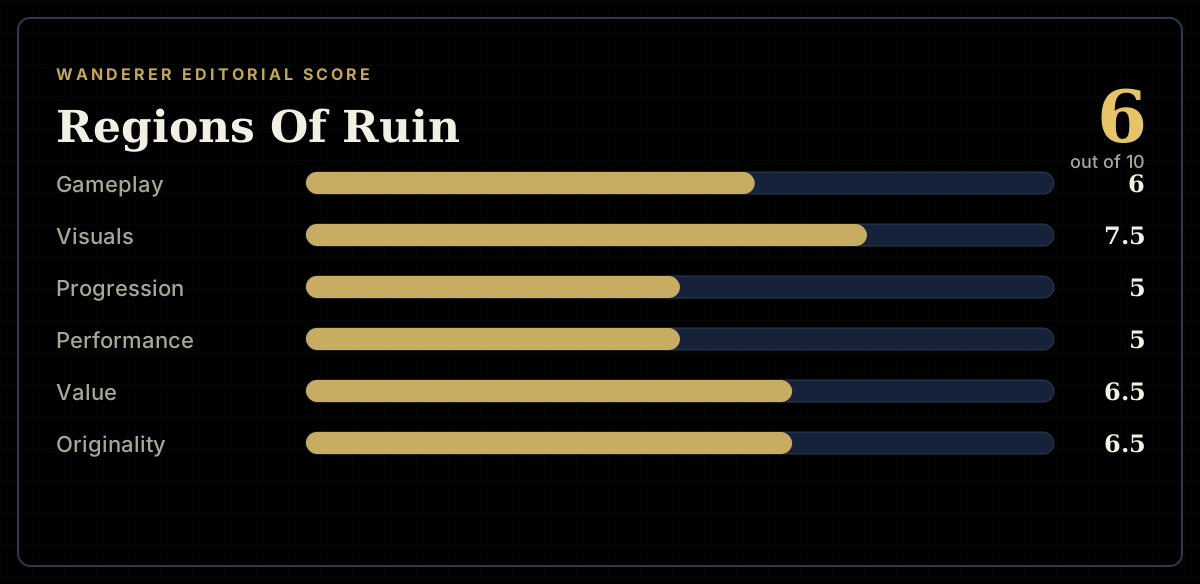
How the review scores each part of the gameWanderer Editorial -
The short versionWanderer Editorial