Game review
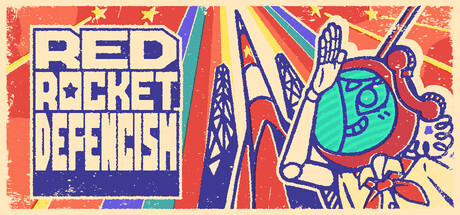
Red Rocket Defencism
7 / 10
- Developer
- tiny cactus studio
- Publisher
- tiny cactus studio
- Released
- 3 September 2026
- Platforms
- Windows
- Genre
- Action, Indie, Simulation, Strategy
- Monetisation
- One-time purchase, no in-game purchases listed
- Players
- Single-player
The short version
Red Rocket Defencism, released 3 September 2026 by tiny cactus studio, is a satirical tower-defense game set in the fictional autocracy of Varnakia, where a loyal military officer must protect the motherland's precious rockets from capitalist invaders through bribery, surveillance and the occasional purge. It sits Positive with a small, entirely favourable sample of 27 reviews, and reading through every one of them reveals genuine, specific enthusiasm for the game's writing and presentation well beyond what its short runtime and low price might suggest. Reviewers consistently praise witty, snarky dialogue and a genuinely charming cast of characters, singling out specific favourites by name, alongside a striking visual identity and a soundtrack multiple reviewers describe as a highlight in its own right. Set against that praise, this review found consistent complaints about difficulty and strategic depth, with several reviewers describing the game as too easy and battles that devolve into visually chaotic, hard-to-read chains of explosions and gunfire once multiple unit types are deployed at once. Multiple reviewers also wish the roughly two-to-four hour campaign, spread across seven levels, ran longer, with specific requests for additional stages or a dedicated challenge mode.
Biggest strengths
- Writing and dialogue draw overwhelming, specific praise as genuinely funny and snarky, with reviewers repeatedly describing the game as unusually well-written for a tower-defense title and citing specific favourite characters, including a robot companion, by name
- Presentation draws consistent, enthusiastic praise, with reviewers describing a striking, colourful pixel-art visual identity and a soundtrack multiple reviewers specifically call a standout, with more than one describing individual musical themes as staying with them after finishing
- Multiple reviewers specifically praise the game's satirical tone and careful, deliberate balance between grounded, realistic Russian-inspired naming and exaggerated, cartoonish stereotype humour, describing this specific mix as a genuinely rare achievement in the genre
Biggest weaknesses
- Multiple reviewers describe the game as too easy, reporting few genuinely interesting strategic decisions to make across most levels, with combat sometimes reducible to simply deploying available units without much need for careful planning
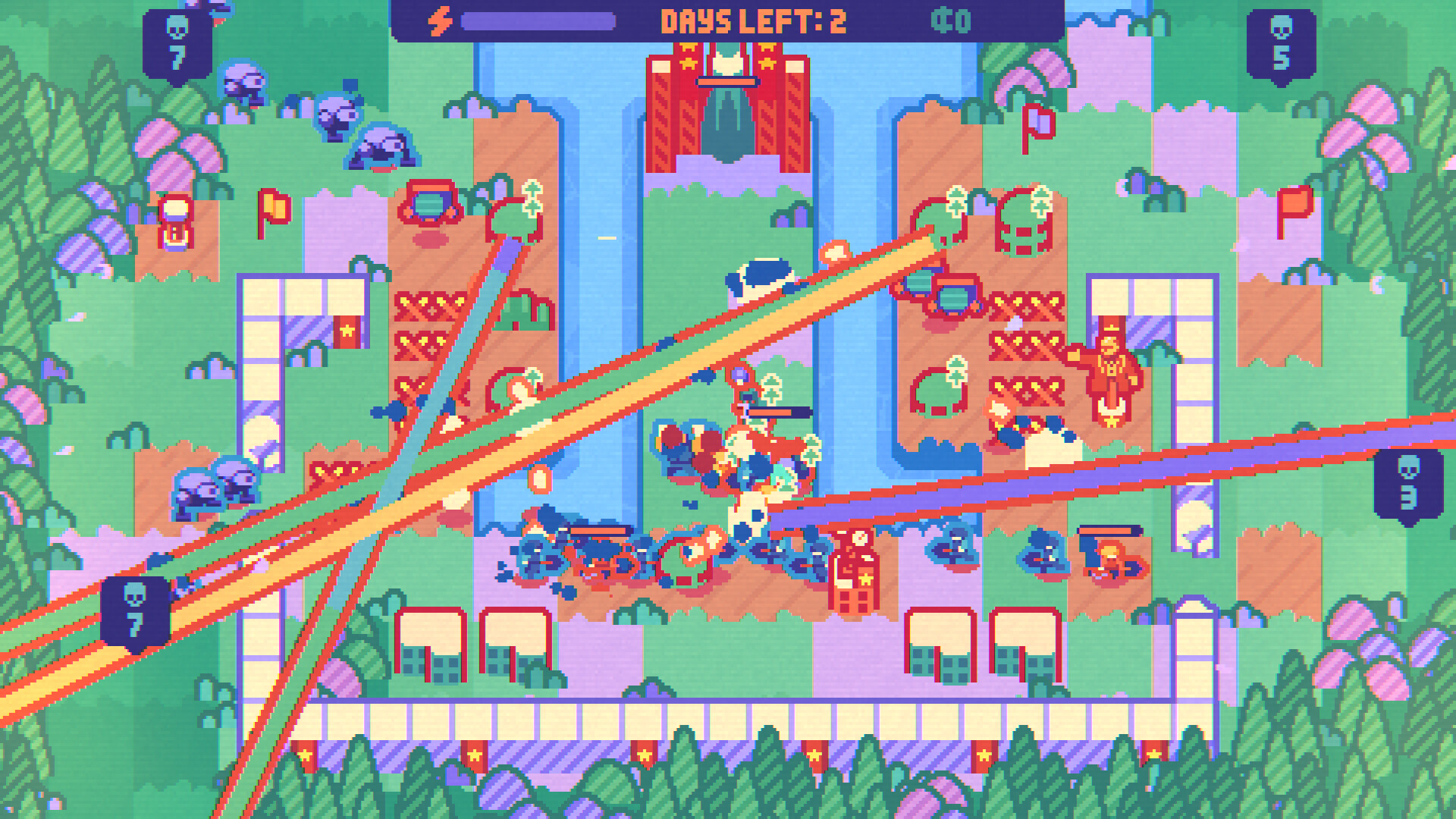
- At least one detailed reviewer reports battles frequently devolve into visually chaotic, hard-to-read sequences of explosions, gunfire and flashing effects once multiple unit types are active simultaneously, making it difficult to track what's actually happening on screen
- Multiple reviewers report enemy design lacks meaningful variety beyond larger health pools, rather than introducing genuinely distinct behaviours or threats across the campaign's seven levels
Who it's for: Fans of short, witty, satirical strategy games with genuine narrative charm, looking for a stylish tower-defense experience rather than a deep, mechanically demanding one.
Our recommendation: Strongly worth it at this price for fans of clever, satirical writing and light tower-defense gameplay; go in expecting a short, easy, story-forward experience rather than a deep strategic challenge.
7 / 10
Introduction
Red Rocket Defencism, released 3 September 2026 by tiny cactus studio, is a satirical tower-defense game set in the fictional autocracy of Varnakia, where a loyal military officer must protect the motherland's precious rockets from capitalist invaders through bribery, surveillance and the occasional purge. It sits Positive with a small, entirely favourable sample of 27 reviews, and reading through every one of them reveals genuine, specific enthusiasm for the game's writing and presentation, well beyond what a short runtime and low price might typically earn.
Genuinely funny, genuinely charming
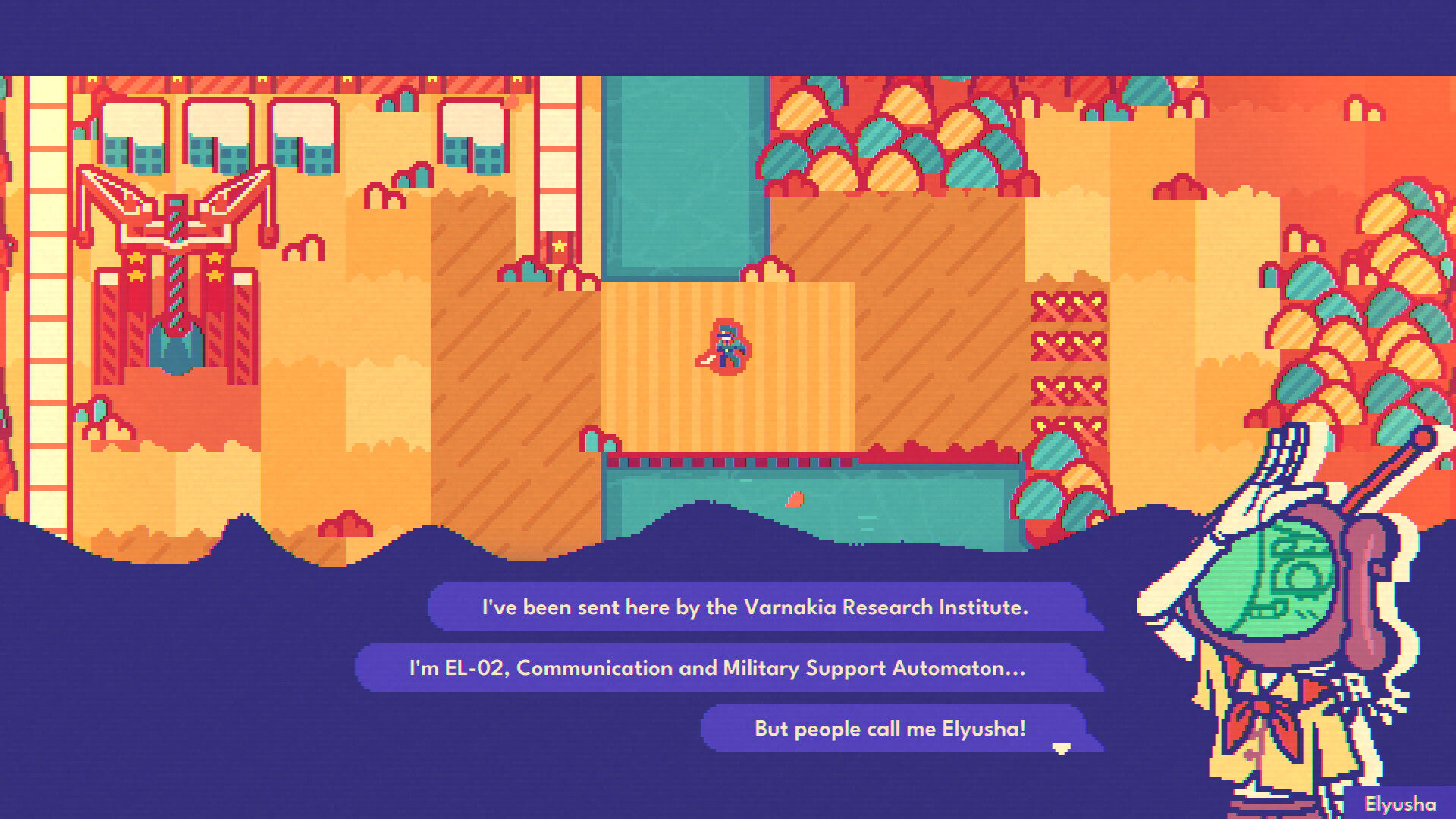
The clearest, most consistent praise across this sample concerns writing. Reviewers repeatedly describe the dialogue as snarky and genuinely funny, with several specifically noting they didn't expect a tower-defense game to have this much narrative charm. A cast of specific, well-remembered characters draws real affection, with multiple reviewers name-checking favourites, including a robot companion character several reviewers reference by name with obvious fondness. This isn't generic "good writing" praise — reviewers describe specific comedic beats and character moments they remember clearly after finishing, which reads as considered, genuine engagement with the material rather than reflexive positivity.
A deliberate, carefully balanced satirical tone
Beyond individual jokes, this review found specific praise for how the game's broader satirical premise is handled. At least one detailed reviewer specifically credits the developers with striking a rare, deliberate balance between grounded, realistic Russian-inspired naming for people and locations and exaggerated, cartoonish "klyukva"-style stereotype humour, describing this specific combination as unusually well-judged for the genre. That same reviewer directly addresses potential sensitivity around the setting, noting the game doesn't take itself seriously and that players uncomfortable with its Soviet-adjacent symbolism and subject matter should simply not purchase it — framing that this review reads as the fictional Varnakia setting functioning as broad, self-aware satire of authoritarian tropes rather than commentary aimed at any specific real nation or contemporary political situation.
Striking presentation and a standout soundtrack
Presentation draws its own consistent, enthusiastic praise throughout this sample. Reviewers describe a striking, colourful pixel-art visual identity, and the soundtrack draws particularly strong, repeated comment, with multiple reviewers independently calling out specific musical themes as genuine highlights that stuck with them well after finishing the campaign.
Genuine complaints about difficulty and strategic depth
Set against that praise, this review found consistent complaints about the actual tower-defense gameplay underpinning the satire. Multiple reviewers describe the game as too easy, reporting relatively few genuinely interesting strategic decisions across most levels, with combat sometimes reducible to simply deploying whatever units are currently available rather than requiring careful planning. Separately, reviewers report enemy design lacks meaningful variety beyond larger health pools, rather than introducing genuinely distinct behaviours or threats that would demand different strategic responses across the campaign's seven levels.
Visual chaos once battles get busy
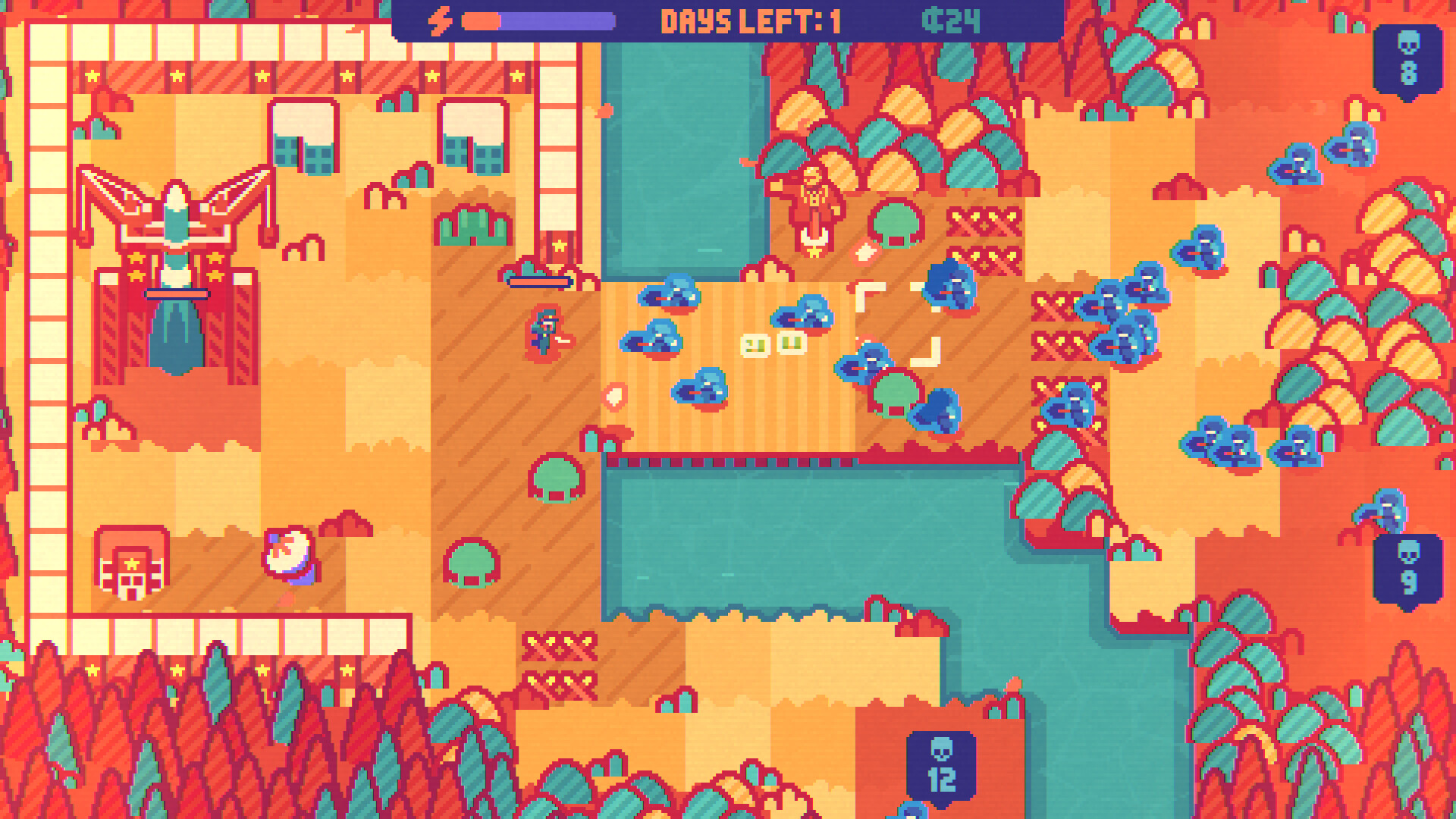
A specific, concrete complaint concerns visual clarity during combat itself. At least one detailed reviewer reports battles frequently devolve into a hard-to-read chaos of flashing lights, explosions and gunfire once multiple unit types are active simultaneously, making it genuinely difficult to track what's happening on screen despite the otherwise strong visual presentation elsewhere in the game.
A short campaign, and requests for more
A final, recurring theme concerns length. Multiple reviewers describe completing the full campaign, including achievement hunting, in around two to four hours, and several specifically wish it ran longer, requesting additional stages, alternate modes, or a dedicated challenge mode to extend replayability. At least one reviewer notes newly-unlocked units and illicit trade routes don't get meaningful time to be explored before the game advances to its next stage, undercutting the sense of mastery a longer tower-defense campaign typically builds toward over its runtime.
Why the low difficulty divides opinion less than it might elsewhere
It's worth engaging directly with how this review weighs the difficulty complaints against the overwhelmingly positive overall reception, since the two might otherwise seem contradictory. Reviewers who specifically raise the "too easy" complaint are, almost without exception, the same reviewers praising the writing and presentation most enthusiastically — this isn't a case of one camp loving the game and another finding it shallow, but rather individual reviewers holding both positions simultaneously, treating the light challenge as a genuine but secondary shortcoming relative to a game they primarily value for its narrative and stylistic strengths. One reviewer frames this tension directly, noting that easy difficulty is "a turnoff for some, yet I suspect most are glad this isn't Dark Souls," which this review reads as a reasonably accurate summary of how this specific sample actually weighs the tradeoff: satisfied to trade some strategic depth for a short, focused, story-forward experience that respects players' time rather than demanding mastery.
A rare, well-judged use of setting as pure comedic device
It's worth dwelling further on how carefully this game appears to have handled genuinely sensitive subject matter, since getting this kind of satire wrong is a common failure mode for games attempting similar territory. Rather than treating its autocratic setting as an opportunity for either shock value or heavy-handed real-world political messaging, reviewers consistently describe the tone as affectionate parody rooted in genre and pop-culture tropes about authoritarian regimes broadly, executed with enough specific care in its naming conventions and character writing that it reads as loving pastiche rather than mean-spirited mockery of any real people or nation. That's a genuinely difficult needle to thread, and the total absence of any negative reviews in this sample raising concerns about the game's handling of its own premise suggests the developers largely succeeded at keeping the satire self-contained within its fictional setting.
Final Verdict
Red Rocket Defencism succeeds primarily as a genuinely funny, well-written, stylish satirical experience, with reviewers consistently praising its charming characters, striking presentation and standout soundtrack well beyond what its modest scope and price might suggest. What holds this score back from a stronger recommendation is a tower-defense layer that multiple reviewers find too easy and strategically shallow, visually chaotic battles once things get busy, and a short campaign several reviewers wish had more room to breathe. Strongly worth it at this price for fans of clever, satirical writing paired with light, accessible tower-defense gameplay.
Pros and cons
Pros
- Writing and dialogue draw overwhelming, specific praise as genuinely funny and snarky, with reviewers repeatedly describing the game as unusually well-written for a tower-defense title and citing specific favourite characters, including a robot companion, by name
- Presentation draws consistent, enthusiastic praise, with reviewers describing a striking, colourful pixel-art visual identity and a soundtrack multiple reviewers specifically call a standout, with more than one describing individual musical themes as staying with them after finishing
- Multiple reviewers specifically praise the game's satirical tone and careful, deliberate balance between grounded, realistic Russian-inspired naming and exaggerated, cartoonish stereotype humour, describing this specific mix as a genuinely rare achievement in the genre
- The game's low price draws consistent, specific praise as matching its scope well, with multiple reviewers describing genuine satisfaction completing full achievement runs in just a few hours without feeling shortchanged relative to the cost
Cons
- Multiple reviewers describe the game as too easy, reporting few genuinely interesting strategic decisions to make across most levels, with combat sometimes reducible to simply deploying available units without much need for careful planning
- At least one detailed reviewer reports battles frequently devolve into visually chaotic, hard-to-read sequences of explosions, gunfire and flashing effects once multiple unit types are active simultaneously, making it difficult to track what's actually happening on screen
- Multiple reviewers report enemy design lacks meaningful variety beyond larger health pools, rather than introducing genuinely distinct behaviours or threats across the campaign's seven levels
- Several reviewers specifically wish the roughly two-to-four hour campaign ran longer, with requests for additional stages, alternate modes, or a dedicated challenge mode to extend replayability beyond a single completed playthrough
- At least one reviewer notes newly-unlocked units and illicit trade routes don't get meaningful time to be used and explored before the game moves on to the next stage, undercutting the sense of mastery a longer tower-defense campaign typically builds toward
Screenshots
-
Red Rocket DefencismImage: tiny cactus studio via Steam -
Red Rocket DefencismImage: tiny cactus studio via Steam -
Red Rocket DefencismImage: tiny cactus studio via Steam -
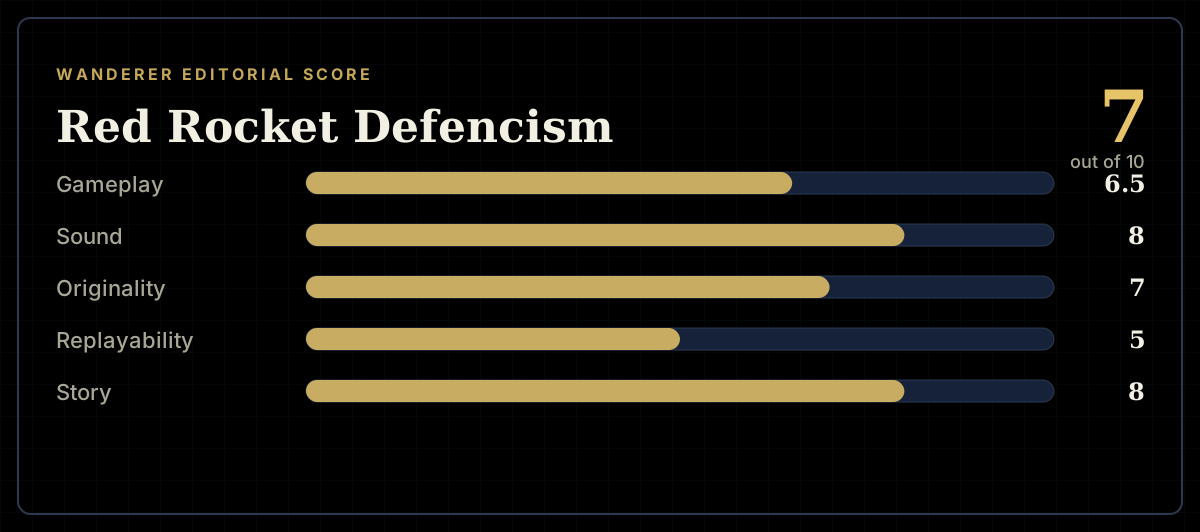
How the review scores each part of the gameWanderer Editorial -
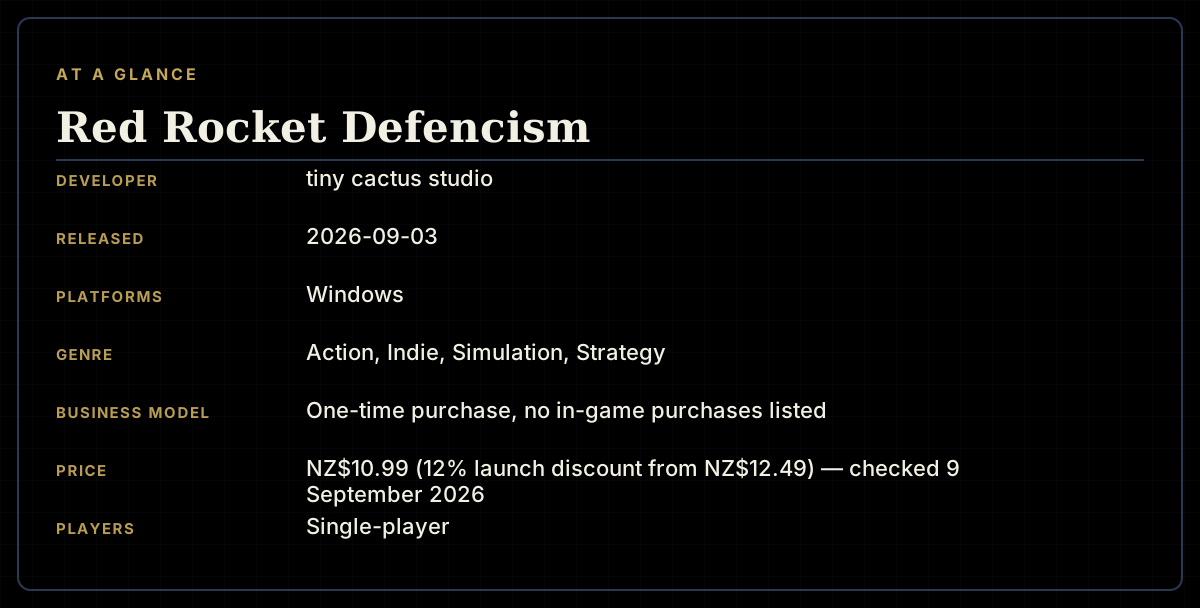
The essentials at a glanceWanderer Editorial -
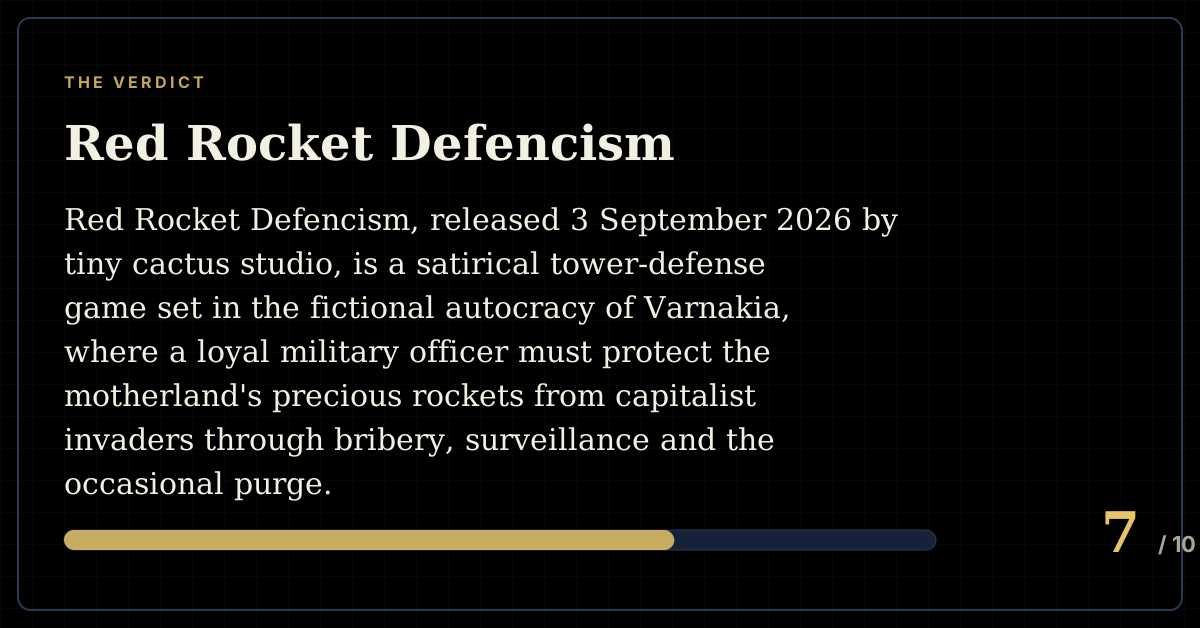
The short versionWanderer Editorial