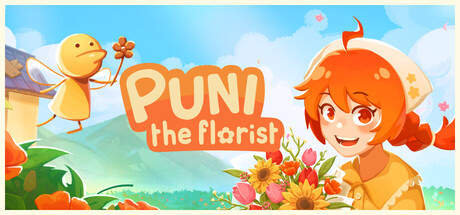
Game review
Puni the Florist Review
6.1 / 10
- Developer
- Earthquack Games
- Publisher
- Earthquack Games
- Released
- 8 June 2026
- Platforms
- Windows
- Genre
- Simulation
- Monetisation
- Premium
- Players
- Single-player only
The short version
Puni the Florist is a warm, well-made bouquet-arranging sim with genuinely funny customer requests and satisfying flower-cutting mechanics, but its main story is over almost as soon as it starts, and the game's answer to that problem — replaying the identical year to unlock the rest of its content — undercuts the very charm that earns it a recommendation.
Biggest strengths
- Bouquet-building mechanics that are simple to learn but genuinely rewarding to master
- A charming, funny cast of customers with increasingly absurd requests
- Light voice acting and a soft, lo-fi soundtrack that suit the tone perfectly
Biggest weaknesses
- The entire main story runs to just twelve in-game days, and can be finished in a handful of hours
- Unlocking the rest of the flowers and accessories means replaying the identical story and customer requests in New Game+
- Sandbox mode has no customers, economy, or way to save finished bouquets, so it feels disconnected from the rest of the game
Who it's for: Fans of cozy customer-service sims and decoration games who want something light and short rather than a deep, ongoing simulation.
Our recommendation: Recommended for a short, sweet session, with the expectation that the story ends well before the content does.
6.1 / 10
A Reluctant Florist With a Secret From Mum
Puni the Florist opens with a premise that's slight by design: Puni, a recent university graduate job-hunting under the quiet pressure of a mother who expects great things from her, wanders into a flower shop and is hired on the spot by the fairy who runs it. What follows is a year — told across four seasons and twelve in-game days — of building bouquets for a small, recurring cast of customers, each with their own light backstory and their own, occasionally ridiculous, idea of what a flower arrangement should look like. Dinosaur-shaped bouquets, robot-themed centrepieces, and a customer named Kota who seems constitutionally incapable of asking for anything simple all show up across the story, and the writing leans into that absurdity rather than playing it straight, with enough small character beats scattered through the twelve days to make the cast feel like more than customer-request dispensers.
It's a slim, low-stakes setup, and that's clearly the point: this is not a game reaching for narrative weight, and it mostly succeeds at what it's actually trying to do, which is be pleasant company for a few hours.
Bouquets That Actually Require Thought
The core loop — selecting flowers, trimming leaves, bending stems, and wrapping the finished arrangement to match a customer's request — is where the game earns most of its goodwill. The controls are simple enough to pick up in minutes, but the requests themselves have real texture: customers ask for specific colour palettes, specific flower meanings, or specific silhouettes, and getting there requires actually paying attention to what's on offer rather than grabbing whatever looks nice. New flowers, greenery, fillers, and wrapping paper are drip-fed in over the course of the story, both through a fairy-run shop and through a small greenhouse where players plant and water seeds and wait for them to mature — a simple, almost incidental system, though a few players have reported the greenhouse running a little sluggishly.
Crucially, the game never lets a bouquet fail outright. If a request isn't met, it tells the player what's missing and prompts a fix rather than disappointing the customer, which softens the whole experience considerably — appropriate for the cozy, stress-free tone it's going for, though a few more demanding players have said they'd have liked the option of a harder mode where requests actually can go wrong. There's also a home for players who want to skip the narrative entirely: bouquets can be arranged freely to match whatever a player's own creativity comes up with, no customer required.
A Story That Ends Just as It's Getting Going
The catch, and it's a significant one, is how little story there actually is. Twelve in-game days, at roughly three to four customers each, adds up to a main campaign that most players finish in somewhere between two and twelve hours depending on how much they linger — and once it's over, the game doesn't offer a second act, just a New Game+ that lets players keep their unlocks and play through the identical requests, from the identical five recurring customers, in the identical order. Because the full roster of flowers and decorations isn't available in a single run, actually completing the collection means sitting through that same story a second time, which several reviewers flagged as the single biggest drag on an otherwise charming experience — the jokes repeat, the character beats repeat, and the customer requests repeat word for word.
That's a real structural problem for a story-driven cozy game, and it's compounded by how good the bones of that story actually are: the writing is funny enough, and the character moments land well enough, that players clearly want more of both rather than a rerun of what they've already seen. A second year with fresh requests, even reusing the same systems and assets, would likely have addressed most of the frustration head-on; as released, the ambition of the systems outpaces the amount of story built to carry them.
Growing Pains: Sandbox and Floral Accuracy
The sandbox mode, intended as the answer for players who've exhausted the story, doesn't quite close that gap either. There are no customers to sell to, no economy to engage with, and finished bouquets aren't saved anywhere in the game itself — players can export an image to their desktop, but there's no in-game gallery, no sense of the creation being "real" within the world the story built. It reads less like a second mode and more like a free-arrangement showcase bolted onto the side of the actual game, pleasant to dabble in for a few minutes but not built to hold attention the way the story's structured requests do.
One smaller but recurring complaint is worth flagging for anyone who cares about the details: several reviewers who take floral symbolism seriously noted that the game's flower-meaning descriptions pull from different regional traditions inconsistently, so two flowers might carry meanings sourced from entirely different cultural contexts without any clear internal logic. It's a minor thing for most players, and the developers have already made small legibility improvements — moving flower-meaning tags higher up in each flower's description after player feedback — but it's a rough edge on a system the game otherwise leans on for a lot of its personality.
Verdict
Puni the Florist gets the fundamentals right: the bouquet-building is genuinely satisfying, the customer writing is funny without trying too hard, and the whole package is wrapped in a soft, lo-fi aesthetic that never wears out its welcome across a short runtime. Where it falls down is exactly that runtime — a story too brief to justify the systems built around it, and a New Game+ solution to that problem that asks players to relive the same twelve days rather than offering anything new. For a lazy afternoon spent building bouquets for a cast of pleasant weirdos, it's an easy recommendation; anyone hoping for a flower shop they can keep coming back to should temper expectations accordingly.
Pros and cons
Pros
- Bouquet-building mechanics that are simple to learn but genuinely rewarding to master
- A charming, funny cast of customers with increasingly absurd requests
- Light voice acting and a soft, lo-fi soundtrack that suit the tone perfectly
- A generous variety of flowers, fillers, and accessories to unlock over time
Cons
- The entire main story runs to just twelve in-game days, and can be finished in a handful of hours
- Unlocking the rest of the flowers and accessories means replaying the identical story and customer requests in New Game+
- Sandbox mode has no customers, economy, or way to save finished bouquets, so it feels disconnected from the rest of the game
- Flower-meaning descriptions mix traditions inconsistently for anyone who takes floriography seriously
Screenshots
-
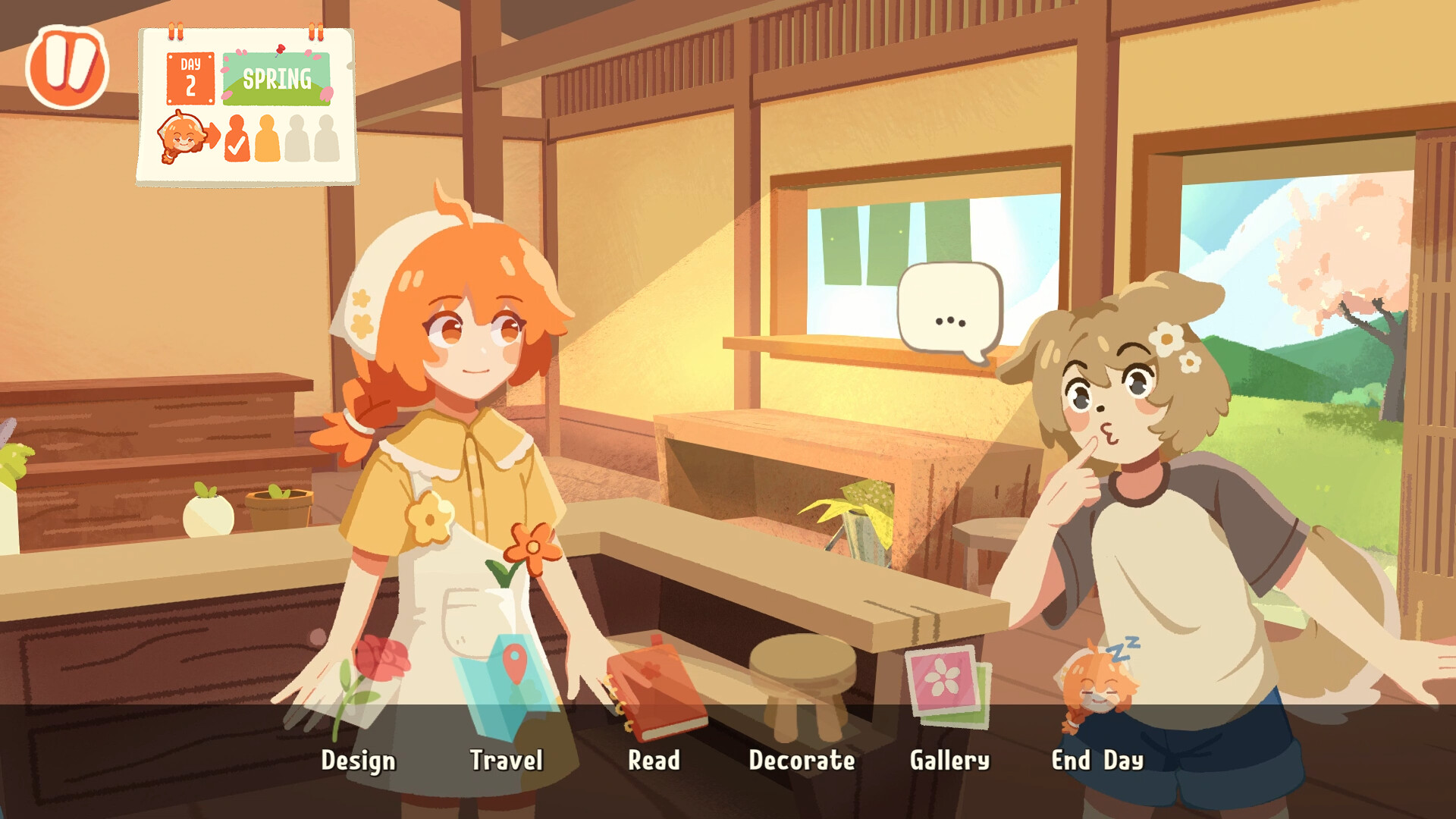
The shop hub between customers — twelve in-game days across four seasons make up the entire main storyEarthquack Games -
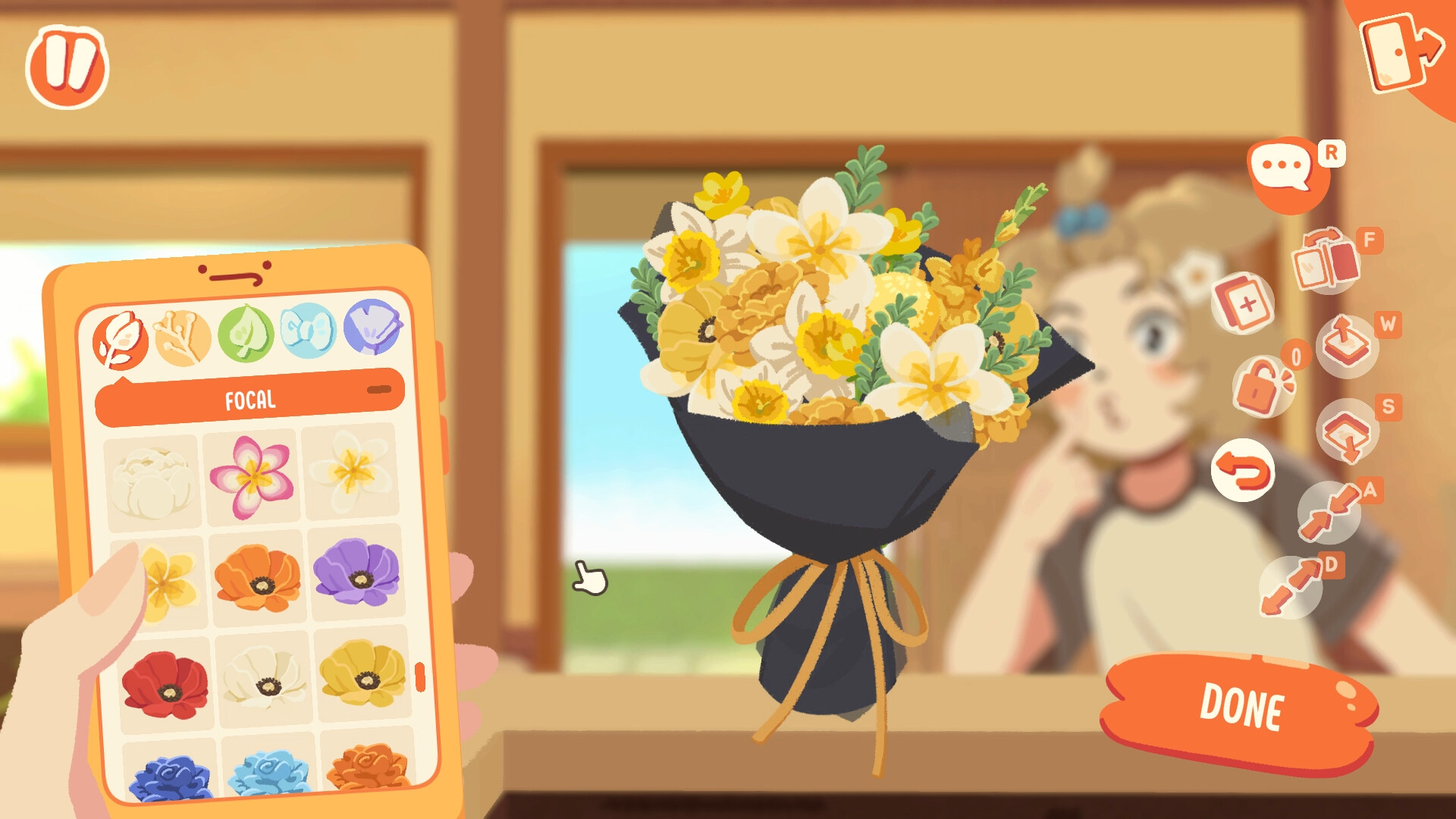
Building a bouquet from focal flowers, greenery, and wrapping to match a customer's requestEarthquack Games -
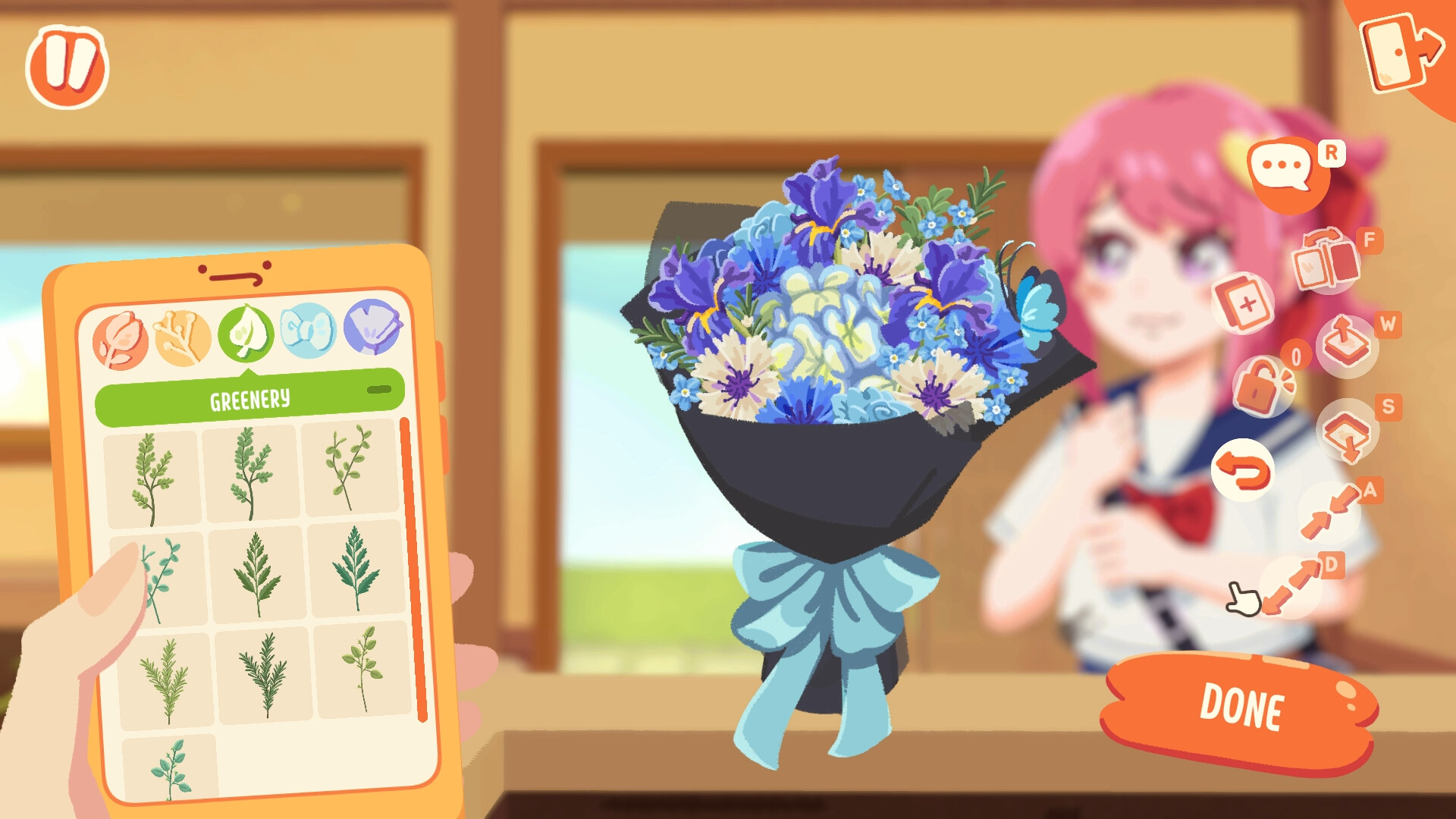
A different customer, a different palette — the requests vary enough to keep the twelve days from feeling identical while they lastEarthquack Games -
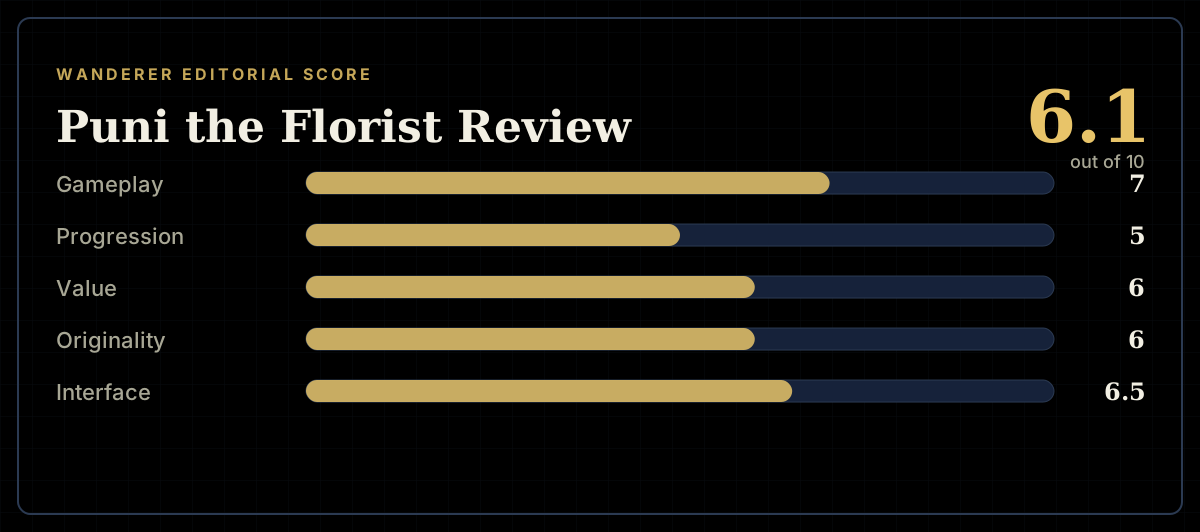
How the review scores each part of the gameWanderer Editorial -
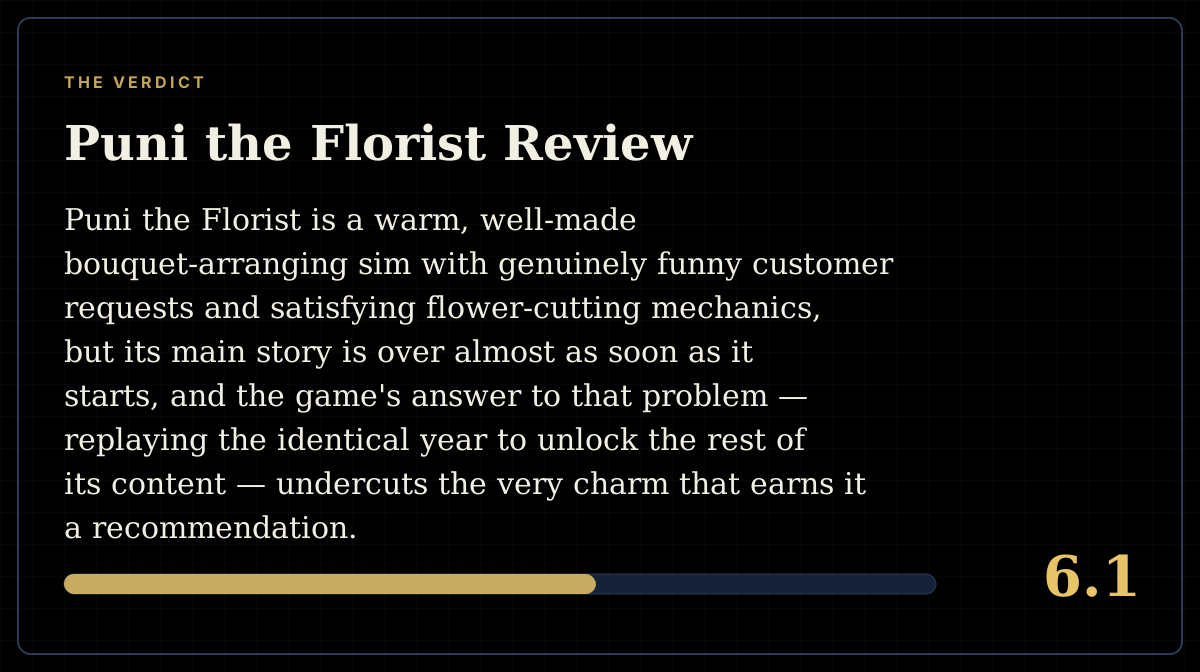
The short versionWanderer Editorial