
Game review
Punch Club
6 / 10
- Developer
- Lazy Bear Games
- Publisher
- tinyBuild
- Released
- 8 January 2016
- Platforms
- Windows, macOS, Linux
- Genre
- Management RPG
- Monetisation
- One-time premium purchase, plus one paid DLC pack (The Dark Fist). No ads, no in-app purchases
- Players
- Single-player only; no online, co-op or PvP modes
The short version
Punch Club wraps a choose-your-own-adventure boxing career around wall-to-wall 80s and 90s action-movie homages — Fight Club, Rocky, TMNT, Pulp Fiction — and that shell earns it real, consistent affection even from reviewers who otherwise dislike the game underneath it. The premise of juggling a day job, training and a murder-mystery plotline is a genuinely distinctive mashup.
What drags the score down is that the game's own most-upvoted reviews are overwhelmingly critical, and specific about why: constant stat decay that undercuts training progress no matter what a player does, and an Agility-focused build reviewers independently and repeatedly call the only realistic way to win. The developer did respond to both complaints — an early balance patch and a later opt-in "no stat decay" easy mode — but later reviews posted after each fix still raise the same problems, suggesting neither response fully resolved what reviewers were actually asking for.
Biggest strengths
- A genuinely distinctive genre mashup — choose-your-own-adventure narrative, boxing career management, and a murder-mystery plot — built around constant, specific homages to Fight Club, Rocky, TMNT and Pulp Fiction that land consistently well even with critical reviewers
- The developer responded directly to community complaints rather than ignoring them: an Agility nerf landed five days after launch, and a "no stat decay" Easy Mode arrived about ten months later specifically to answer the grind complaints
- Real post-launch investment beyond bugfixes: a paid story DLC (The Dark Fist), a dozen language localizations, mobile ports, and cross-platform cloud saves all shipped within the game's first year
Biggest weaknesses
- The single most consistent complaint across this game's most-upvoted reviews: stat decay erodes training progress continuously regardless of player effort, turning the core loop into what several reviewers specifically call an unwinnable treadmill rather than a fair challenge
- A build-balance complaint recurs independently across multiple detailed reviews: an Agility-focused strategy is repeatedly described as strictly superior to Strength or other paths, undermining the appeal of the game's own branching skill trees
- A specific, reproducible-sounding random event (a mugger who repeatedly targets and beats a physically weak player, stealing earned money) creates a catch-22 some reviewers describe as the game actively working against a struggling player rather than just being hard
Who it's for: Fans of 80s/90s action-movie throwbacks who enjoy a management-sim grind and don't mind a punishing, occasionally unfair-feeling difficulty curve. Less suited to players who want a management game that rewards steady, predictable progress for the time they put in.
Our recommendation: Worth trying for the writing and references alone, especially discounted, but go in expecting a genuinely grindy, occasionally frustrating system underneath the charm rather than the more forgiving management sim its aesthetic suggests.
6 / 10
Punch Club asks a simple question: what if a management sim about training for boxing matches were also a choose-your-own-adventure murder mystery, wrapped entirely in loving references to 80s and 90s action cinema? It's a genuinely distinctive pitch, and the shell built around it — Fight Club nods, a TMNT cameo, Pulp Fiction easter eggs, a pixel-art Rocky homage running through the whole structure — earns real, consistent praise even from reviewers who otherwise dislike what's underneath it. That's an unusual split worth taking seriously: this is a game whose aggregate "Mostly Positive" score sits well above what its own most-read reviews actually argue.
A grind the developer tried, twice, to fix
The single most consistent complaint across Punch Club's highest-voted reviews is stat decay: a player's training stats erode continuously over time regardless of effort, meaning simply keeping pace requires constant retraining rather than making lasting progress. One widely-quoted review puts it bluntly — "No matter how much you train, you will always lose some stat progress. ALWAYS." — and the phrasing recurs across multiple independent reviews rather than being one player's outlier frustration.
This wasn't ignored. The developer's own patch history shows a direct response about ten months after launch: "Update 1.30: Easy mode introduces no-stat-decay," an opt-in mode built specifically to remove the mechanic critics were complaining about. That's a real, checkable acknowledgment that the complaint was legitimate enough to warrant a dedicated fix. What it doesn't show is the complaint disappearing afterward — reviews raising the same stat-decay frustration continued to appear well after the patch, which suggests making the grind optional wasn't the same as reviewers wanting it removed or rebalanced in the base game they'd already bought.
A balance complaint the developer nerfed but didn't fully solve
A second, equally consistent thread singles out build balance: multiple detailed reviews independently argue that an Agility-focused strategy ("Way of the Tiger") is close to strictly superior to the alternatives, turning the game's branching skill trees into a choice between one viable path and several inferior ones. This complaint predates and postdates a specific patch — "1.04 - AGI nerf and some bugfixes" landed just five days after launch, directly targeting the issue. But the second-most-upvoted review in this game's entire history was posted after that patch and makes essentially the same argument anyway, describing the other builds as still "inferior." A quick early nerf clearly wasn't enough to settle a balance question this fundamental to how the game plays.
When a hard game starts to feel like a rigged one
Beyond the two headline complaints, several reviewers describe a specific structural catch-22 that reads as more than ordinary difficulty. One detailed account describes a recurring mugging event that specifically targets a physically weak player, stealing hard-earned savings meant for gym upgrades — creating a loop where a player who falls behind on strength becomes progressively less able to catch up, rather than simply facing a harder but fair challenge. Framed against the stat-decay and build-imbalance complaints, this reads less like three separate issues and more like one underlying problem: several of the game's core systems actively work against a struggling player rather than testing a skilled one, which is a meaningfully different (and less forgivable) kind of difficulty than reviewers who enjoy the game's challenge are describing when they defend it.
What the completion curve shows
Steam's achievement data offers a useful third angle on how these complaints play out in practice. The earliest milestones — the first fight, the first trainer session, the first silver- tier win — all sit comfortably above 80% of the tracked playerbase, confirming the opening stretch hooks players just as consistently as the top reviews suggest. But completion drops off sharply from there: the hardest win-condition achievements, including a dedicated hardcore-mode clear, sit under 5% each. That's a steeper decline than a well-paced management game typically shows, and it's consistent with reviewers' account of a game that starts strong and then turns into exactly the kind of grinding, attrition-heavy slog the stat-decay and build-imbalance complaints describe — most players see the charming opening hours, and a much smaller fraction push through to see the systems reviewers argue are unfairly tuned against them.
Real, sustained support around the flaws
None of this reflects an abandoned or under-supported release. Beyond the balance patches, Punch Club shipped a paid story DLC (The Dark Fist) within its first two months, a dozen language localizations and mobile ports inside its first year, and cross-platform cloud saves connecting the PC and mobile versions. Lazy Bear Games went on to build the well-regarded Graveyard Keeper series and returned to this specific game with a full sequel, Punch Club 2: Fast Forward, in 2023 — a developer with real, demonstrated follow-through, even if this particular entry's core balance questions were never fully put to rest.
Where it lands
Punch Club earns its charm honestly — the writing, the references and the central premise are distinctive enough that even its harshest critics tend to praise them specifically rather than dismissing the whole game. But the complaints dominating its own top reviews are specific, corroborated, and only partially addressed by the developer's own patch history, which makes them worth weighing seriously rather than assuming a "Mostly Positive" score means the grind and balance issues are exaggerated. Go in for the story and the aesthetic, and expect a genuinely punishing system underneath it that two rounds of fixes never fully resolved.
Pros and cons
Pros
- A genuinely distinctive genre mashup — choose-your-own-adventure narrative, boxing career management, and a murder-mystery plot — built around constant, specific homages to Fight Club, Rocky, TMNT and Pulp Fiction that land consistently well even with critical reviewers
- The developer responded directly to community complaints rather than ignoring them: an Agility nerf landed five days after launch, and a "no stat decay" Easy Mode arrived about ten months later specifically to answer the grind complaints
- Real post-launch investment beyond bugfixes: a paid story DLC (The Dark Fist), a dozen language localizations, mobile ports, and cross-platform cloud saves all shipped within the game's first year
- Made by the same studio that went on to build the well-regarded Graveyard Keeper franchise, and which returned to this specific series with Punch Club 2: Fast Forward in 2023 — a developer with a real track record of following through on its projects
- Achievement data shows a healthy majority of players reach the game's early milestones, confirming the core loop hooks people even before the harder complaints set in
Cons
- The single most consistent complaint across this game's most-upvoted reviews: stat decay erodes training progress continuously regardless of player effort, turning the core loop into what several reviewers specifically call an unwinnable treadmill rather than a fair challenge
- A build-balance complaint recurs independently across multiple detailed reviews: an Agility-focused strategy is repeatedly described as strictly superior to Strength or other paths, undermining the appeal of the game's own branching skill trees
- A specific, reproducible-sounding random event (a mugger who repeatedly targets and beats a physically weak player, stealing earned money) creates a catch-22 some reviewers describe as the game actively working against a struggling player rather than just being hard
- The skill tree is criticized by several reviewers as cosmetically deep but mechanically linear, with progression feeling predetermined rather than shaped by player choice
- Both major balance responses (the early Agility nerf and the later Easy Mode) were followed by further reviews raising the same original complaints, suggesting neither fully addressed what critics were asking for
Screenshots
-
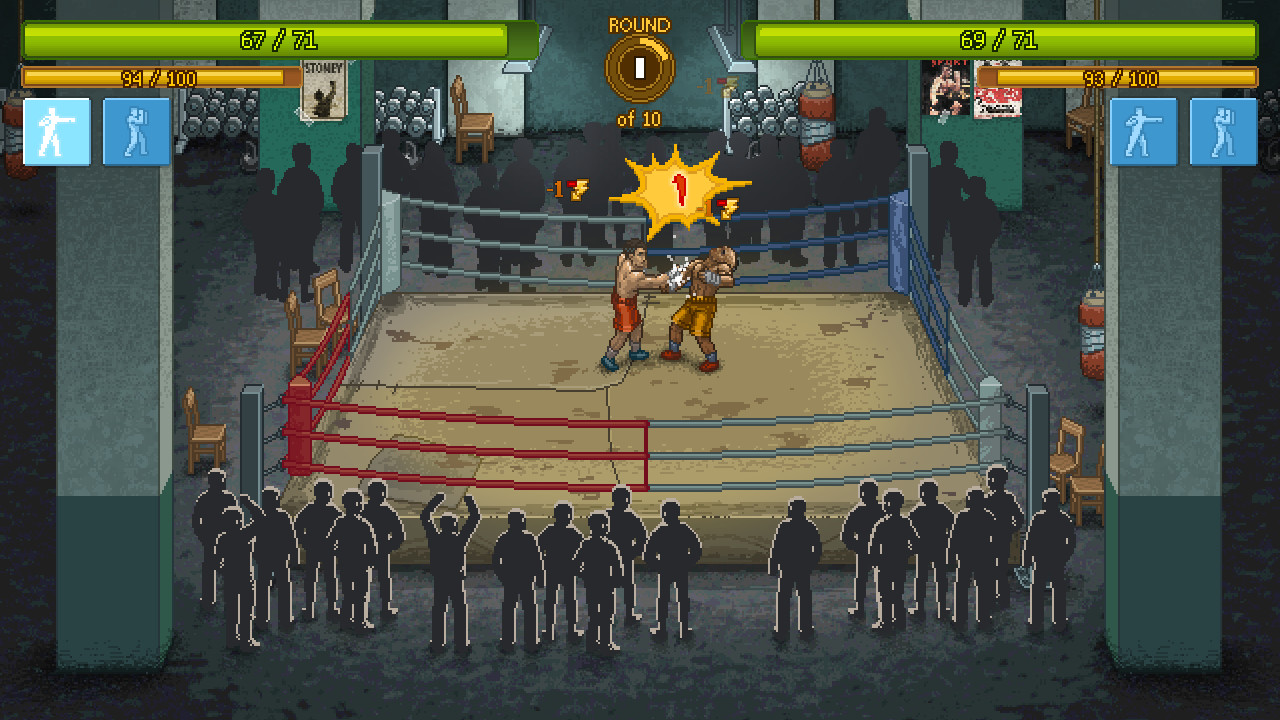
Punch ClubImage: tinyBuild via Steam -

Punch ClubImage: tinyBuild via Steam -
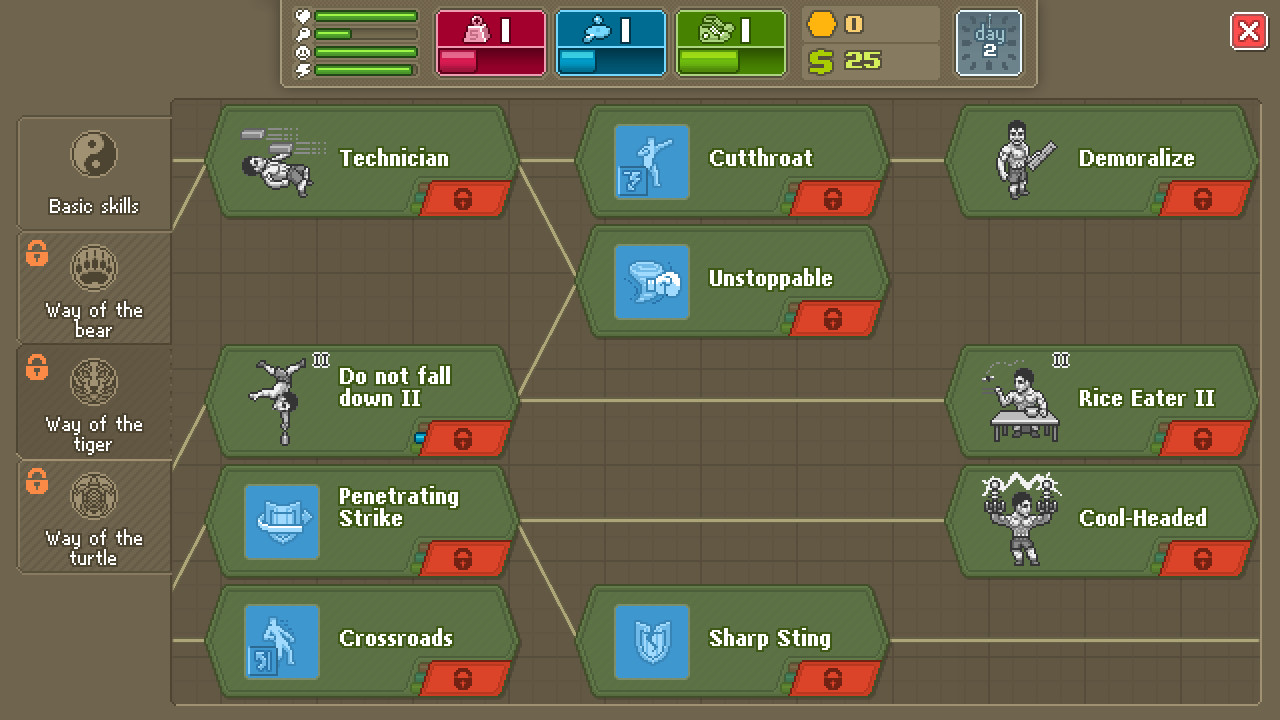
Punch ClubImage: tinyBuild via Steam -
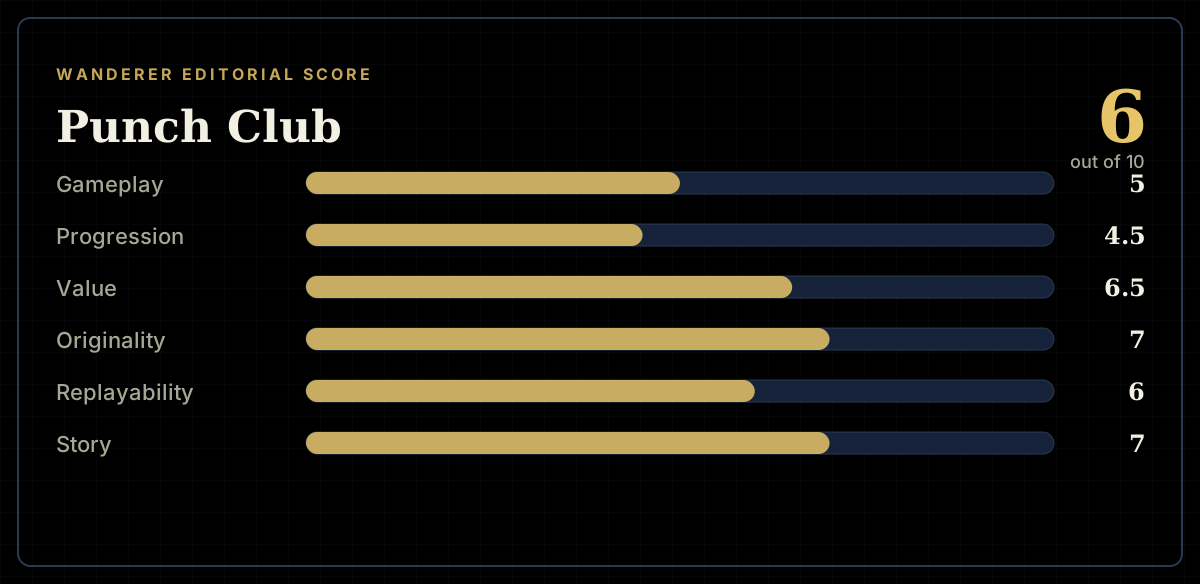
How the review scores each part of the gameWanderer Editorial -

The specsWanderer Editorial -
The short versionWanderer Editorial