Game review
Prosperity
5 / 10
- Developer
- Persera Software Inc.
- Publisher
- Persera Software Inc.
- Released
- 28 May 2018
- Platforms
- Windows
- Genre
- City-building resource management
- Monetisation
- One-off purchase, no in-game currency, ads or gameplay-affecting purchases
- Players
- None; single-player only
The short version
Prosperity has a real, well-liked foundation underneath its abandonment — reviewers with deep city-builder backgrounds praise its resource-balancing and policy systems as genuinely thoughtful, and a rare, substantive accessibility update in 2020 made large parts of the game screen-reader-navigable specifically in response to outreach from blind players, a level of care few games at any budget bother with. That update is also the last thing the developer ever shipped. The partner-events feed goes completely silent after it, matching a near-unanimous chorus of reviewers independently confirming the same story: years without so much as an acknowledgment, a dead community Discord, and one detailed account reporting the developer took a full-time job and is looking to sell the game's intellectual property rather than finish it. A free, earlier web version of the same game reportedly still has more content than the paid Steam release it was meant to supersede — a genuinely unusual value inversion worth knowing before paying anything for this one.
Biggest strengths
- A genuinely well-regarded resource-management and policy foundation, praised specifically by reviewers with long city-builder genre backgrounds as thoughtfully designed
- A substantive August 2020 accessibility update made major structural changes for screen-reader compatibility and added a light-sensitivity-friendly dark mode, done in direct response to outreach from blind players rather than as an afterthought
- One blind reviewer confirms the accessibility work functions in practice, calling the game fully playable and praising the developer's continued responsiveness at the time
Biggest weaknesses
- Development has been silent since the August 2020 accessibility update — six years with no patch, announcement, or acknowledgment from the developer, confirmed directly by the empty partner-events feed since that date
- Reviewers report the game's own community Discord is dead and describe the studio as having fully moved on; one detailed account states the developer took a full-time job elsewhere and is looking to sell the game's intellectual property rather than return to finish it
- Multiple reviewers independently and specifically recommend playing the free, earlier text-based web version instead, reporting it has more content than the paid Steam release that was meant to expand on it
Who it's for: City-builder genre enthusiasts curious about an unusually text-forward, systems-heavy take on the format, and screen-reader users specifically who want to confirm a real accessibility effort exists here, on the clear understanding that development has stopped for good. Not recommended for anyone expecting ongoing support or a completed game.
Our recommendation: Skip unless the specific mechanical foundation genuinely appeals and the price is heavily discounted — this is permanently unfinished software, by the near-unanimous account of its own long-term players, and a free earlier version reportedly offers more content anyway.
5 / 10
Prosperity began life as a text-based web game a solo developer built in 2014, then arrived on Steam in May 2018 as a paid, deeper reimagining of the same core idea: lead a camp of peasants through resource management, policy decisions, and slow growth into a settlement, then a hamlet, then — theoretically — a city. Nearly a decade later, it has never left Early Access, and its own review sample tells a specific, well-corroborated, and genuinely sad story about why: a developer who clearly cared, who did real, unusual work to make the game accessible to players who couldn't have played it otherwise, and who then simply stopped, with no announcement, no goodbye, and no acknowledgment that anyone was still waiting.
A foundation genre veterans actually respect
Before getting to the abandonment, the underlying design deserves its own accounting, because reviewers with real standing in the city-builder genre give it real credit. One detailed review from a self-described lifelong builder-genre player — citing Sierra's early city games, the Anno series, and Banished as reference points — praises Prosperity's resource-balancing systems and the way policy choices ripple through crime, famine, and disaster management rather than existing as decorative flavor text. That's a meaningfully specific endorsement from an experienced audience, not generic praise, and it's echoed by other reviewers who describe the existing content as justifying the asking price on its own mechanical merits, abandonment aside.
An accessibility effort worth naming directly
The single most distinctive thing about Prosperity's development history is a substantive accessibility update shipped in August 2020, and it's worth quoting the developer's own framing of it directly: "Prosperity wants to be an experience shared by all sorts of people... after speaking with some blind gamers, I decided to shift my focus on this update from features to QoL improvements." The changes were real and structural — a full reworking of the game's code for screen-reader compatibility, a dark-mode option for light sensitivity, and a dedicated UI audio channel providing cues for tab changes and popups. This wasn't a token gesture; it required prioritizing accessibility work over new features for an entire development cycle, and one reviewer who identifies as completely blind confirms it functioned in practice: "i'm completely blind and am able to play just fine, the developer is still listening to suggestions and updating the game." That the update was genuinely responsive to real outreach from real players is worth crediting on its own terms, independent of everything that came after.
The silence that followed
Everything after that update is silence. The partner-events feed, dense with monthly-or-better updates from launch through mid-2020, records nothing at all in the six years since. The review sample corroborates this with unusual unanimity: reviewers dated across 2021 through 2026 independently describe a dead community Discord, no developer communication, and a settled consensus that the project is abandoned rather than merely slow. One especially detailed account goes further, reporting specific secondhand information: "The developer have fully abandoned the game. He is planning to sell this game's IP because he doesn't have the funds to hire someone to continue this game... He got a full time job." This review can't independently verify a claim this specific about the developer's personal circumstances, but it's consistent with everything independently observable — the events feed's silence, the reviewer consensus, and the total absence of any contradicting statement from the developer in six years.
A stranger problem: the free version is better
A specific, repeated complaint sharpens the abandonment story further: several reviewers independently recommend skipping the paid Steam version entirely in favor of the original free web game, reporting that the older, simpler version actually has more content than the paid release that was meant to expand on it. That's an unusual value inversion worth stating plainly — this isn't a case of a finished game losing support after being worth its price, but of a paid successor that stalled before catching up to what it was replacing.
Text-first by design, not by budget constraint
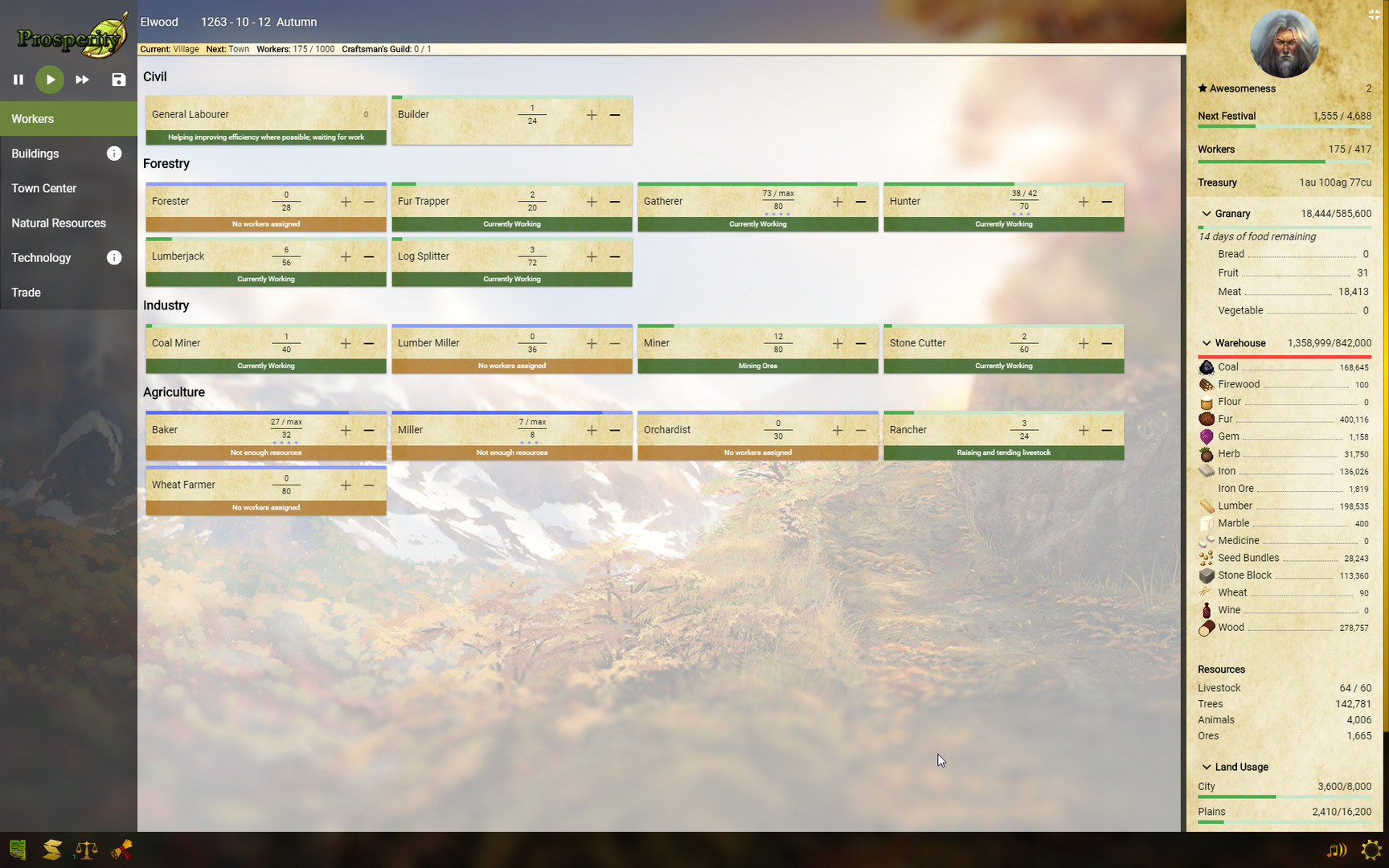
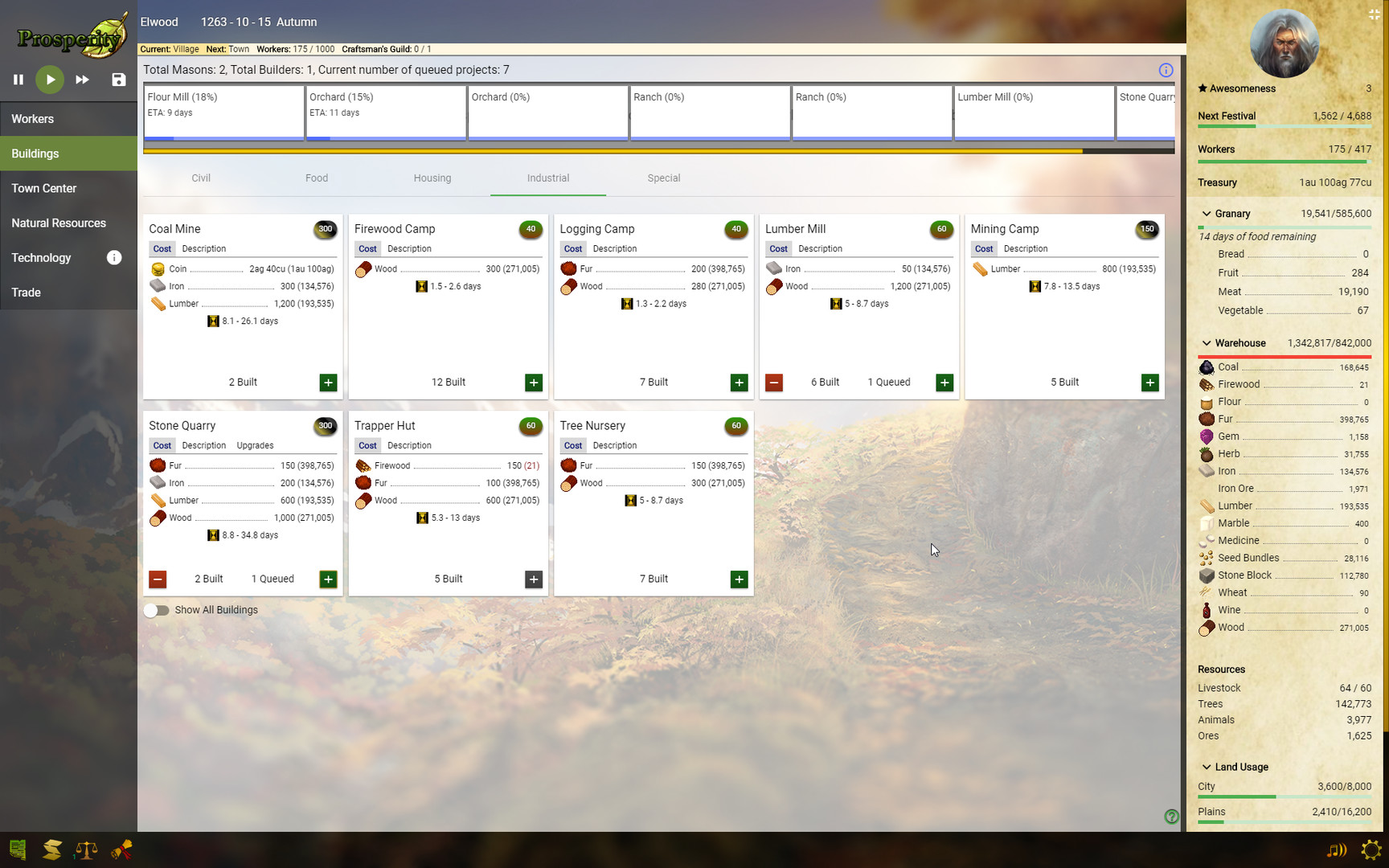
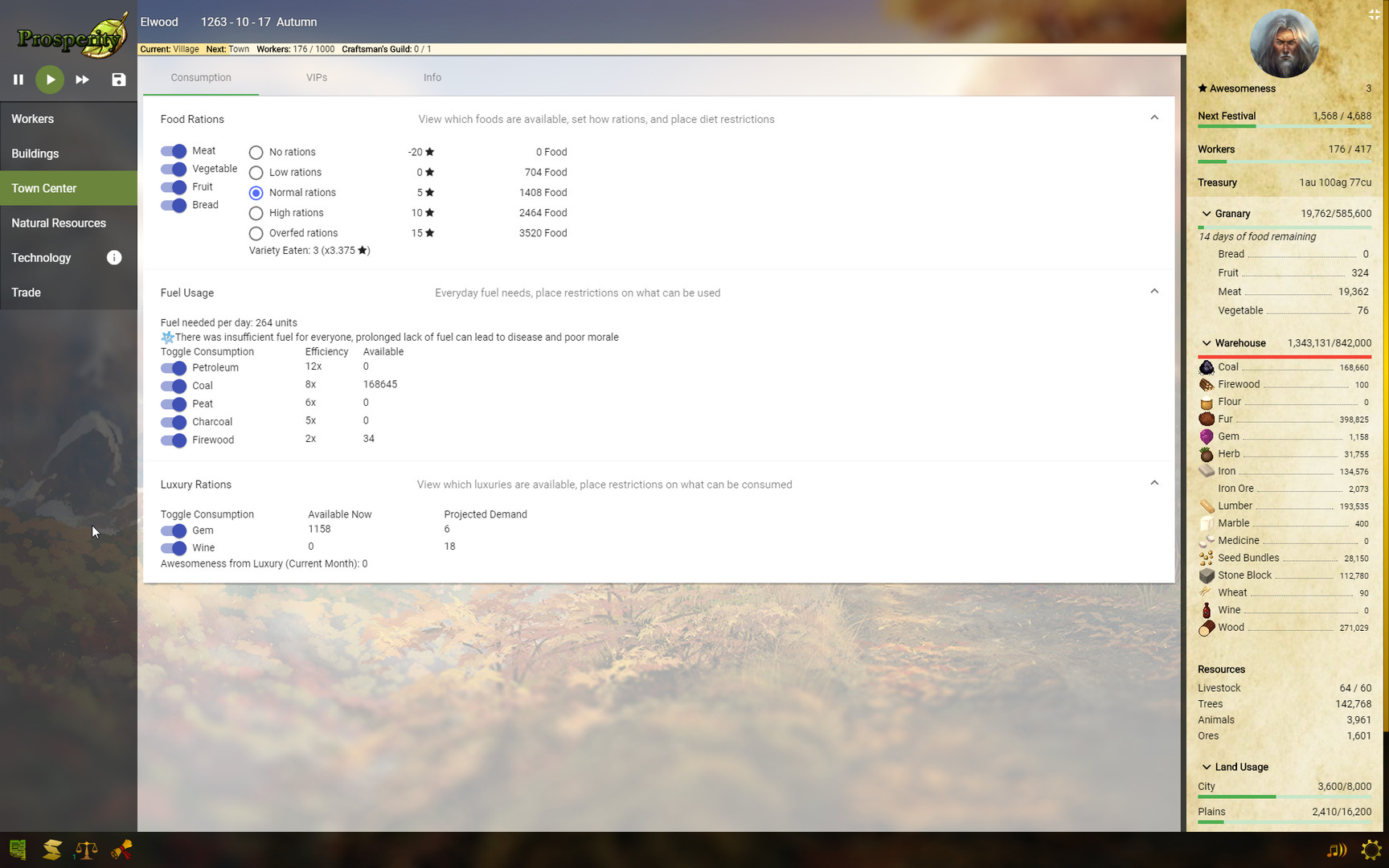
Prosperity's own store page addresses its presentation directly, and the framing matters: "this game is heavily text based and not meant to have flashy graphics, images or videos," one reviewer notes as a fair warning rather than a criticism, since the game was built this way deliberately rather than as a placeholder waiting for art passes that never came. That choice is precisely what made the 2020 screen-reader work possible in the first place — a heavily visual city-builder couldn't have made the same accessibility leap without a much larger investment, so the text-first interface and the accessibility achievement are directly connected design decisions rather than a lucky coincidence. It's a legitimate aesthetic and structural choice, not a corner cut, and worth judging on those terms even though it will read as sparse to players expecting a visually rich city-builder in the Cities: Skylines mold.
A developer who knew the scope was the risk
The store page's own FAQ, addressing how the Steam version differs from the original web game, reads today as an unintentional preview of exactly what went wrong: the developer describes how "many of the things I wanted to do became unrealistic due to the limitations of the game's architecture and planning" on the web version, prompting the full Steam rebuild — the same architecture-outgrowing-ambition problem that, by every account in the review sample, eventually caught up with the rebuild too. That's not a criticism unique to this developer; solo-developed systems-heavy city builders have a well-documented tendency to keep expanding planned scope past what a single person can sustain, and Prosperity's own pre-launch messaging shows a developer already aware of that exact risk before it happened again.
Verdict
Prosperity is a genuine paradox: a well-regarded mechanical foundation, an unusually sincere and well-executed accessibility effort, and a permanent, near-universally confirmed abandonment, all true at once. The accessibility work deserves real, specific credit rather than a footnote — it's rarer than it should be, even in finished games. But a reader deciding whether to spend NZ$14.75 today needs the plainer fact first: this is frozen software with no realistic path to completion, by the account of its own most invested players, and a free, older version of the same idea reportedly offers more to actually play.
Sources: Steam store page and appdetails API (release date, pricing, platform data, current Early Access status); Steam's aggregate review data (query_summary totals, English-language sample); individually read user reviews, both positive and negative, sorted by helpfulness and recency; Persera Software Inc.'s own partner-events patch notes, dense from launch in June 2018 through the accessibility update in August 2020, and silent in the six years since.
Pros and cons
Pros
- A genuinely well-regarded resource-management and policy foundation, praised specifically by reviewers with long city-builder genre backgrounds as thoughtfully designed
- A substantive August 2020 accessibility update made major structural changes for screen-reader compatibility and added a light-sensitivity-friendly dark mode, done in direct response to outreach from blind players rather than as an afterthought
- One blind reviewer confirms the accessibility work functions in practice, calling the game fully playable and praising the developer's continued responsiveness at the time
- No in-game currency or monetisation beyond the one-time purchase, keeping the systems honest even in their unfinished state
- The core mechanical loop (balancing renewable and non-renewable resources, managing crime, famine, and disaster response) is substantial enough that reviewers say the existing content justifies its cost on its own merits, abandonment aside
Cons
- Development has been silent since the August 2020 accessibility update — six years with no patch, announcement, or acknowledgment from the developer, confirmed directly by the empty partner-events feed since that date
- Reviewers report the game's own community Discord is dead and describe the studio as having fully moved on; one detailed account states the developer took a full-time job elsewhere and is looking to sell the game's intellectual property rather than return to finish it
- Multiple reviewers independently and specifically recommend playing the free, earlier text-based web version instead, reporting it has more content than the paid Steam release that was meant to expand on it
- No achievement schema exists at all, offering no objective completion data to check any of the game's mid-to-late-game claims against
- Permanently stuck in Early Access with no realistic prospect of reaching a finished 1.0, meaning any late-game systems or balance the developer had planned will very likely never ship
Screenshots
-
ProsperityImage: Persera Software Inc. via Steam -
ProsperityImage: Persera Software Inc. via Steam -
ProsperityImage: Persera Software Inc. via Steam -
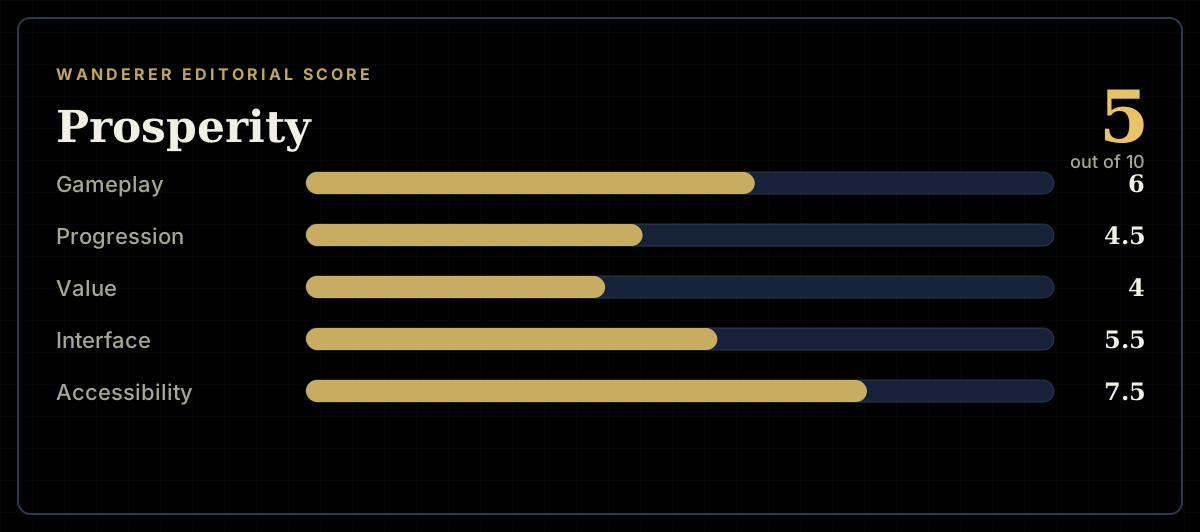
How the review scores each part of the gameWanderer Editorial -
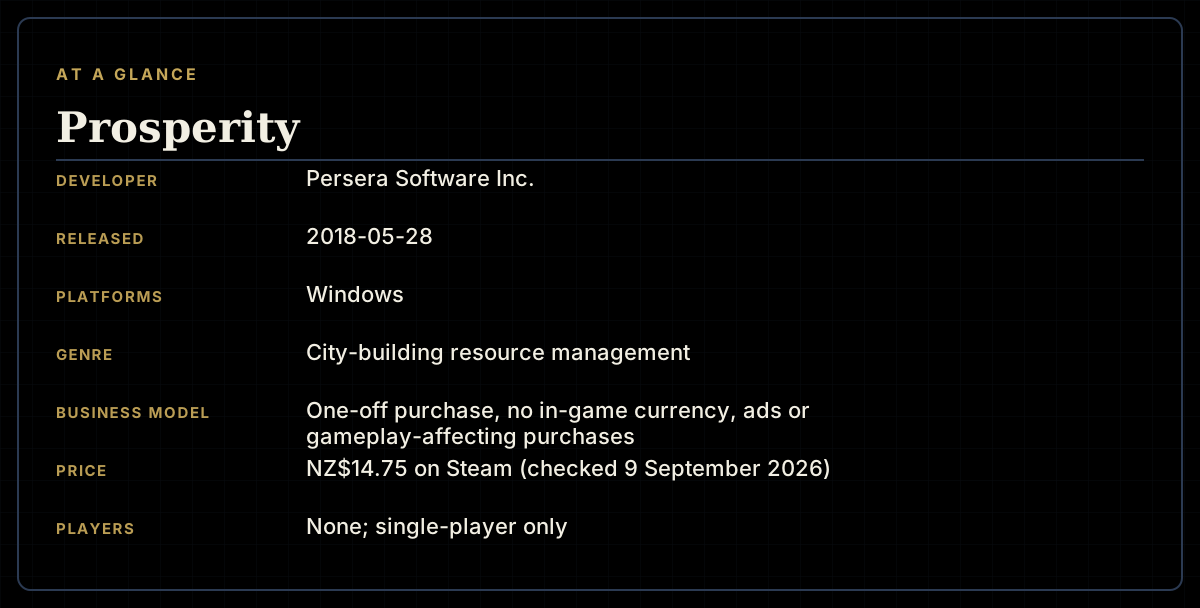
The specsWanderer Editorial -
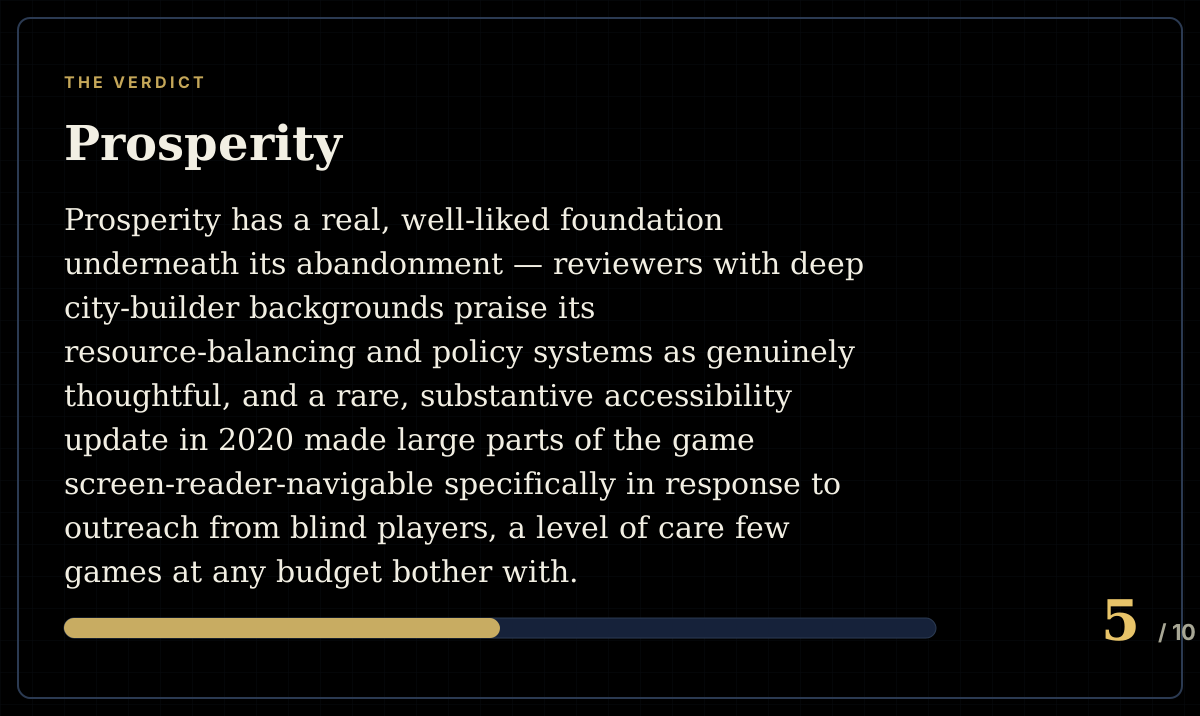
The short versionWanderer Editorial