Game review
Powers Downtown Review
6 / 10
- Developer
- Masaharu Studio
- Publisher
- Masaharu Studio
- Released
- 3 September 2026
- Platforms
- ["Windows"]
- Genre
- RPG
A Thirty-First Consecutive Launch Without a Single Review
Powers Downtown released on Steam on 3 September 2026 and has zero user reviews at the time of writing, extending this stretch's run of unreviewed launches to thirty-one. A modern-day urban brawler RPG with a genuinely detailed, multi-layered turn-based fighting system is a distinctive enough pitch that the total silence is a real surprise, especially given the store page's unusually specific mechanical documentation compared to many titles in this run. This review is built entirely from the developer's own store page description, not from verified play.
Martial Artists, Gunmen, and Cyborgs Share a City
The setting is a deliberately eclectic modern-day city where martial artists, gunmen, samurai warriors, cyborgs, and "enhanced individuals" coexist alongside regular civilians, with an unnamed force establishing control over the city's rooftops and turning the population against anything that looks threatening. That's a genre-blending premise more common in fighting games than RPGs — closer to a roster-driven brawler's "everyone fights everyone" logic than a typical fantasy or sci-fi RPG's more internally consistent power system — and it gives the recruitment loop an inherent visual and mechanical variety, since a samurai, a gunman, and a cyborg presumably each bring genuinely different toolkits to a fight rather than reskinned versions of the same base kit.
Recruitment Through Combat, Not Dialogue
Rather than recruiting allies through quests or dialogue choices, Powers Downtown ties team-building directly to combat: fighters are recruited by defeating them in one-on-one battles first, turning every recruitment target into a genuine tactical challenge rather than a scripted cutscene. That's a meaningfully different structure from the genre's usual "persuade or pay" recruitment model — it means scouting a strong potential recruit and beating them is itself the content, rather than a hurdle placed before the real reward, and it should give the roster-building loop a consistent difficulty curve tied directly to how strong the fighters worth recruiting actually are. Official screenshots back this up directly, showing named recruitable fighters like Avalanche and Mercury facing off against explicitly leveled opponents labelled "Thug level 1" and "Citizen level 1," with HP and energy bars and a running move log ("Avalanche uses Ground Smash," "Delgodo uses Punch") tracking each turn — a clear, legible presentation of the tiered recruitment ladder the store page describes.
Range, Timing, and Damage Types All Matter at Once
The combat system's most distinctive claim is genuinely unusual for a turn-based RPG: battles take place across long, mid, and short range bands, with each character carrying a distinct set of attacks and moves specific to each range, meaning a single fighter's toolkit changes shape depending on how close the fight currently is. Layered on top of that is a speed-versus-damage tradeoff on individual attacks — some hit hard but execute slowly, giving an opponent more room to react defensively, while faster attacks deal less damage but are harder to punish — alongside explicit accuracy and energy-cost considerations on a per-move basis. That's a genuinely dense decision space for a single turn: range positioning, attack speed, energy management, and accuracy all factored into one choice, which is considerably more layered than the "pick the highest-damage move" logic that drives many budget turn-based RPGs.
The damage-type system adds a final wrinkle, splitting damage into categories like "power" and "cut" with correspondingly separate defensive stats, so a blade attack that shrugs off a power-resistant opponent might cut straight through one with weak cut defense. That's a smart, legible way to make positioning and fighter selection matter beyond raw stat totals — a team built entirely around power damage will struggle against enemies who've specifically hardened against it, rewarding a genuinely mixed roster over one built around a single dominant attacker.
A Narrow but Focused Package
Powers Downtown is Windows-only, English-only, and single-player, with no stated co-op or online component — a tightly scoped package that puts its entire budget into the fighting system and roster rather than spreading resources across multiplayer infrastructure or broad platform support. At NZ$12.49 with no discount at the time of writing, and no in-app-purchase category listed on the store page, the entire recruitment-and-team-building loop appears to run on in-game combat victories rather than any real-money layer. Eleven screenshots on the store page suggest a reasonably fleshed-out visual identity for a modern urban setting, though the single supported language and the absence of any stated post-launch content plan point to a fairly self-contained, one-and-done experience rather than a live-service ambition.
The listing also flags a small cluster of accessibility options — camera comfort, colour alternatives, and the ability to play without timed input — that are worth noting on their own merits, since they're not the kind of feature a small studio typically prioritises for a niche turn-based combat RPG. The "playable without timed input" option is particularly relevant given the speed-versus-damage tradeoff described above: if reaction windows or timing-sensitive prompts are involved anywhere in resolving an attack, an explicit option to remove that time pressure means the tactical decision-making around range, damage type, and energy cost can stand on its own without also demanding quick reflexes, broadening who the combat system is actually built for. Colour alternatives likewise suggest some care was taken over how damage types or status effects are visually communicated, which matters for a system that leans this heavily on distinguishing several simultaneous variables at a glance.
Verdict
Powers Downtown's core pitch — recruit-through-combat team building layered onto a genuinely multi-dimensional turn-based fighting system spanning range, speed, energy, accuracy, and damage type — is one of the more mechanically specific and well-documented combat systems in this entire zero-review stretch. Its biggest open question is whether that density holds up as intuitive rather than overwhelming once dozens of recruitable fighters and their individual per-range movesets start stacking up, since a system this granular lives or dies on whether its UI can communicate all of it clearly turn to turn. A month without a single review is a genuine surprise for a combat system this distinctively documented, and this assessment rests entirely on the developer's own description rather than anyone's actual playthrough.
Screenshots
-
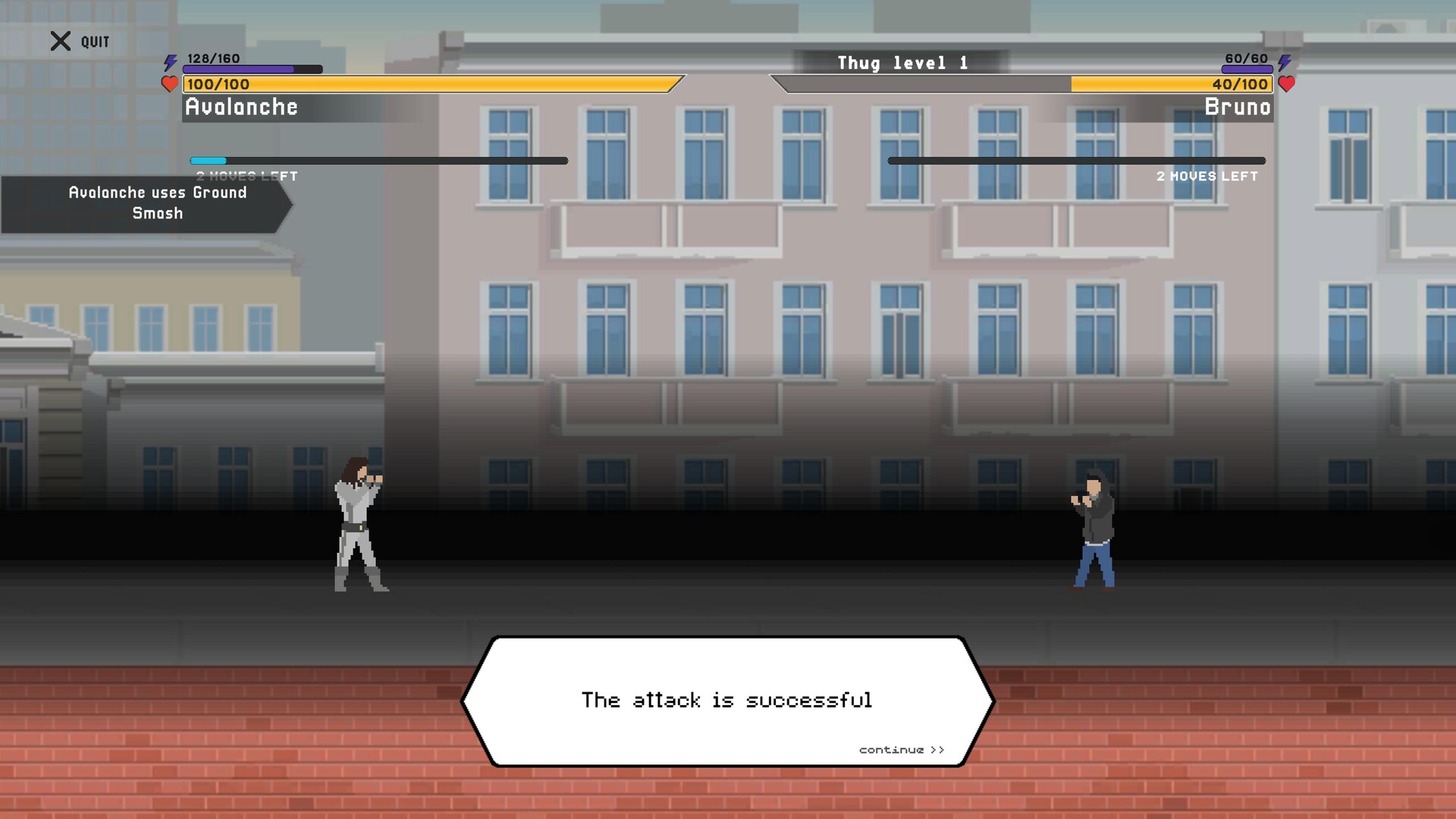
A one-on-one recruitment battle in progress, with HP, energy, and per-turn move logs tracking the fightImage: Masaharu Studio via Steam -
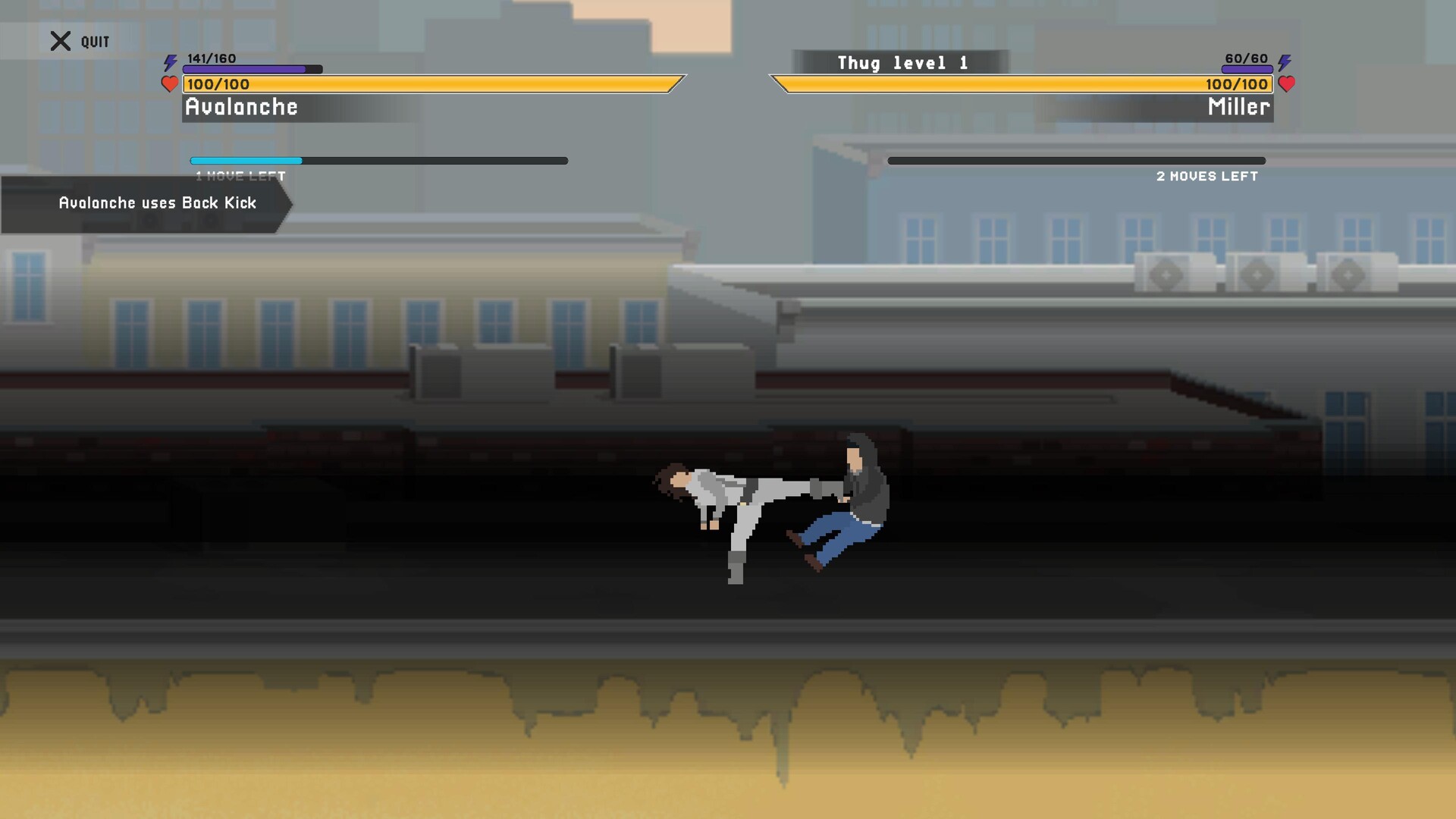
A successful Back Kick lands against a recruitment target atop the city's rooftopsImage: Masaharu Studio via Steam -
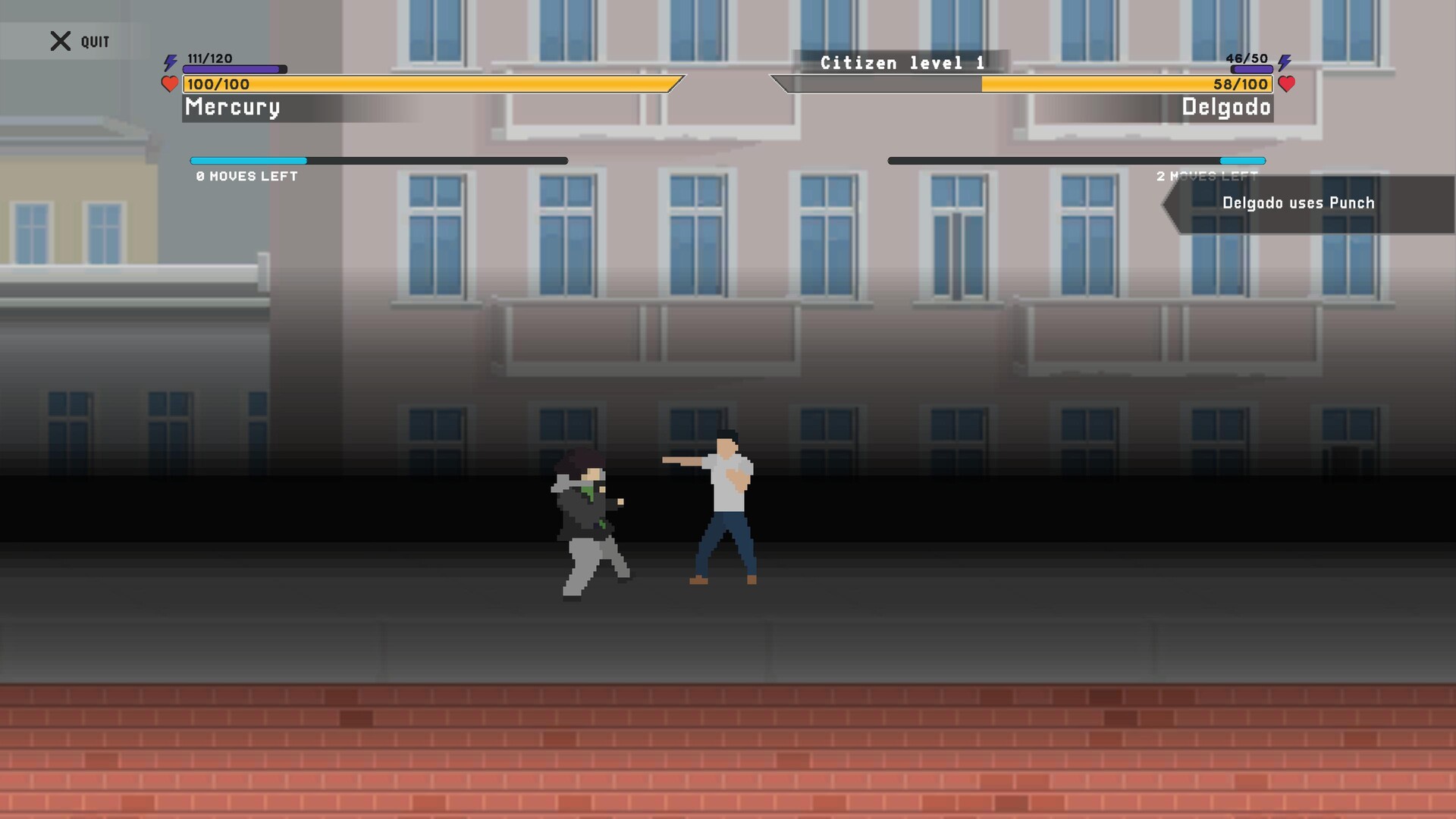
A citizen-tier opponent squares off against the player's fighter MercuryImage: Masaharu Studio via Steam