Game review
Please Proceed To The Dungeon Review
7.5 / 10
- Developer
- Noodle Interactive
- Publisher
- Noodle Interactive
- Released
- 21 July 2026
- Platforms
- ["Windows", "macOS"]
- Genre
- Simulation
A Papers, Please Formula Reskinned as a Dungeon Gatekeeper Sim
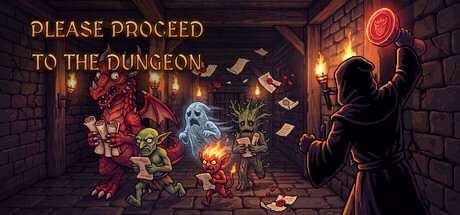
Please Proceed To The Dungeon takes the document-inspection formula popularised by Papers, Please and moves it to a fantasy gate: you are the Dungeon Gatekeeper, checking passports, health records, combat certificates and council seals for the dragons, goblins and adventurers who queue up every day. Reviewers draw the comparison directly and repeatedly, but are careful to note the game earns its own identity rather than simply copying the template. One wrote, "if you liked Papers, Please you'll probably enjoy this too, it has a similar style but still feels different enough to be its own game," while another put it more bluntly: "It's like Papers Please but in dungeon themed." The fantasy dressing gives the inspection loop a different texture from its inspiration — a dragon needing a combat certificate or a goblin family fleeing something in the dark carries different emotional weight than a human border crossing, and reviewers consistently credit the presentation for selling that shift. One called the experience of holding power at the gate "a power trip" in a good way: "having the power to decide who gets in and who doesnt gives me a power trip."
Four Factions, a Growing Rulebook, and Consequences for Every Stamp
The rulebook governing who gets through the gate isn't static: Steam's own description lists mismatched names, expired permits and forged seals as details the player has to catch, with the rules changing as the campaign's thirty days drag on. Layered on top of the paperwork is a faction system — Management, the Union, the Guild, and the Shadow all press competing demands on the Gatekeeper, and the game tracks standing with each of them separately, meaning the player can play factions against one another or commit to one at the expense of the others. Reviewers respond well to the atmosphere carrying that structure: "the atmosphere and music really pull you into the game's world and make you feel like you're actually working as the doorman," wrote one, while another praised the whole package without reservation: "the art style, the gameplay, the soundtrack. amazing. all done by an indie dev, with so much care put into detail."
The game is also explicit that there's no safe default: approving the wrong applicant risks contagion, fraud, or disaster the following morning, while rejecting a desperate case out of caution just shifts the guilt onto the player instead. Steam's own framing puts it starkly — "There are no clean hands at this gate" — and that refusal to offer an obviously correct choice is what separates the faction politics from a simple reputation meter. Standing with the Union might demand leniency the Guild would punish, so a run built around appeasing one side inevitably means alienating another, and the campaign is built to remember which trade-offs were made rather than letting the player reset the balance later.
Pressure As a Mechanic, Not Just a Timer
Rather than relying purely on a ticking clock, the game folds pressure directly into its systems: rent comes due, quotas climb, and stress accumulates with every hard call the Gatekeeper makes, forcing a choice between spending evenings recovering or pushing through and risking a breaking point. That framing turns individual inspection decisions into something with lingering cost rather than isolated puzzles, which lines up with how reviewers describe getting drawn in past a single sitting. One admitted, "I had to quit the game because I have work tomorrow, but I would have kept going if I could," and another described the pull of the format directly: "it's one of those games where you keep saying 'just one more day' because you want to see what happens next... it doesn't hold your hand."
Thirty Days, Nine Endings, and Choices That Are Remembered
Please Proceed To The Dungeon runs a branching thirty-day campaign built from scripted events, wanted-list manhunts and side quests that carry forward the consequences of earlier decisions, ending in one of nine possible outcomes ranging from order and compassion to betrayal and madness. That structure gives the inspection loop somewhere to go beyond repetition — reviewers frame their choices at the gate as accumulating into a specific personal story rather than a set of disconnected puzzles, and the fact that different endings are explicitly promised gives the format a reason to replay once a run concludes, something the strict Papers, Please formula doesn't always offer as cleanly.
The thirty-day structure also folds in wanted-list manhunts alongside the routine gate-checking, meaning the campaign occasionally hands the player an active hunting objective rather than only reactive paperwork decisions, which several reviewers cite as a welcome change of pace partway through a shift. That mix of passive inspection work and the occasional active pursuit keeps the moment-to-moment loop from settling into pure repetition across the full month-long campaign, even before accounting for the branching that determines which of the nine endings a given run reaches.
A Cheap Single Price With No Monetisation Concerns
The game costs a single NZ$7.89 with no in-app-purchase category listed on its Steam store page and nothing resembling a live-service structure layered onto its thirty-day campaign. For a genre built around scripted narrative branches and defined endings, that one-time-purchase model fits naturally, and nothing in the review sample raises any concern about monetisation, paywalls, or content withheld behind further purchases.
Verdict
Please Proceed To The Dungeon takes a well-worn inspection-sim formula and finds enough new texture in its fantasy dressing, faction politics and pressure mechanics to stand on its own rather than reading as a reskin. Reviewers who came in expecting Papers, Please with dragons instead of humans consistently report finding a game with its own atmosphere, its own stakes, and enough branching consequence across its thirty days and nine endings to reward more than one playthrough. At a low single price with no monetisation baggage attached, it's an easy recommendation for anyone who enjoys a good moral dilemma dressed up as bureaucratic paperwork.
Screenshots
-
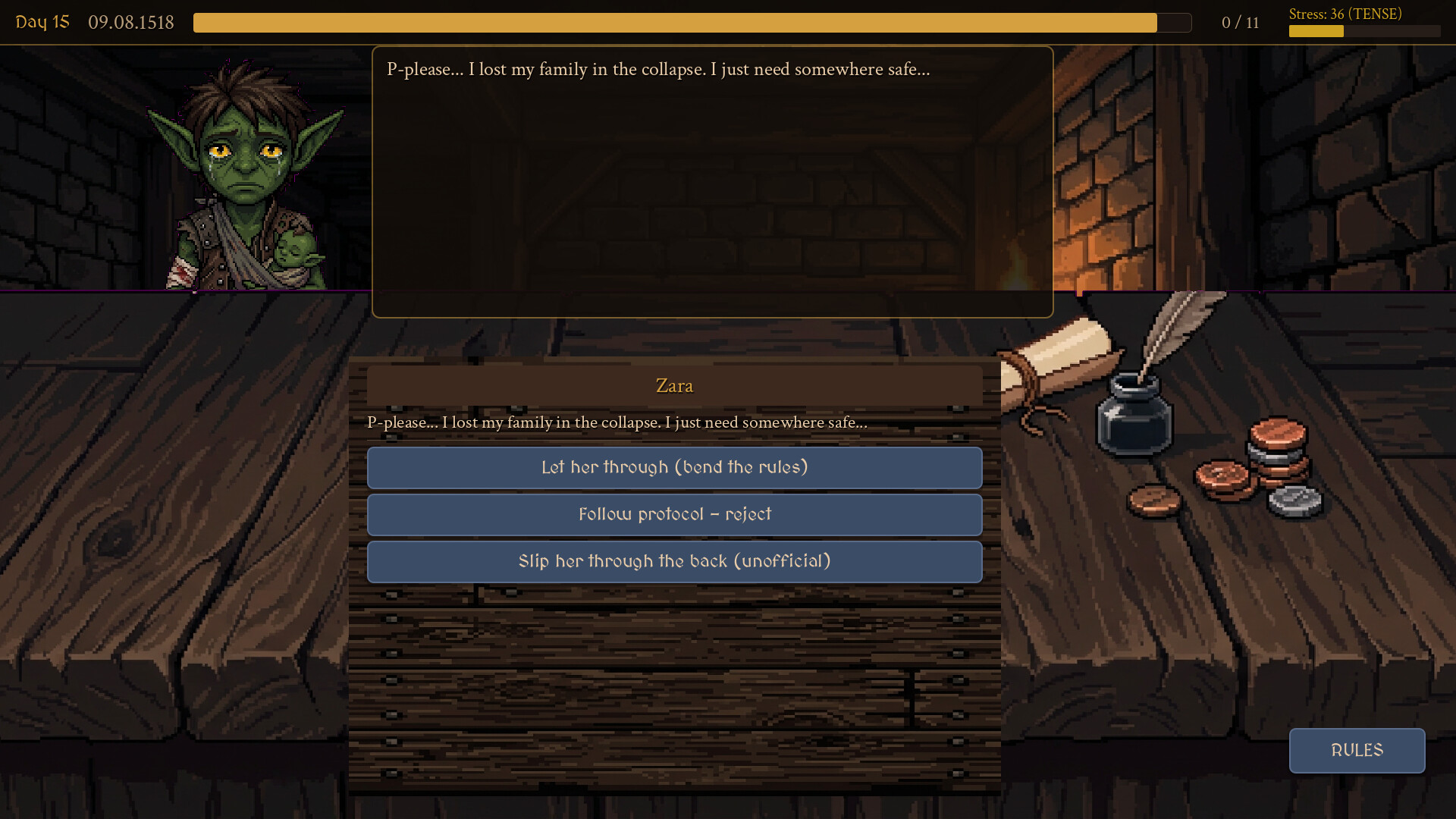
A refugee applicant pleads her case, with the Gatekeeper facing a choice between bending the rules, rejecting her, or letting her through unofficially.Image: Noodle Interactive via Steam -
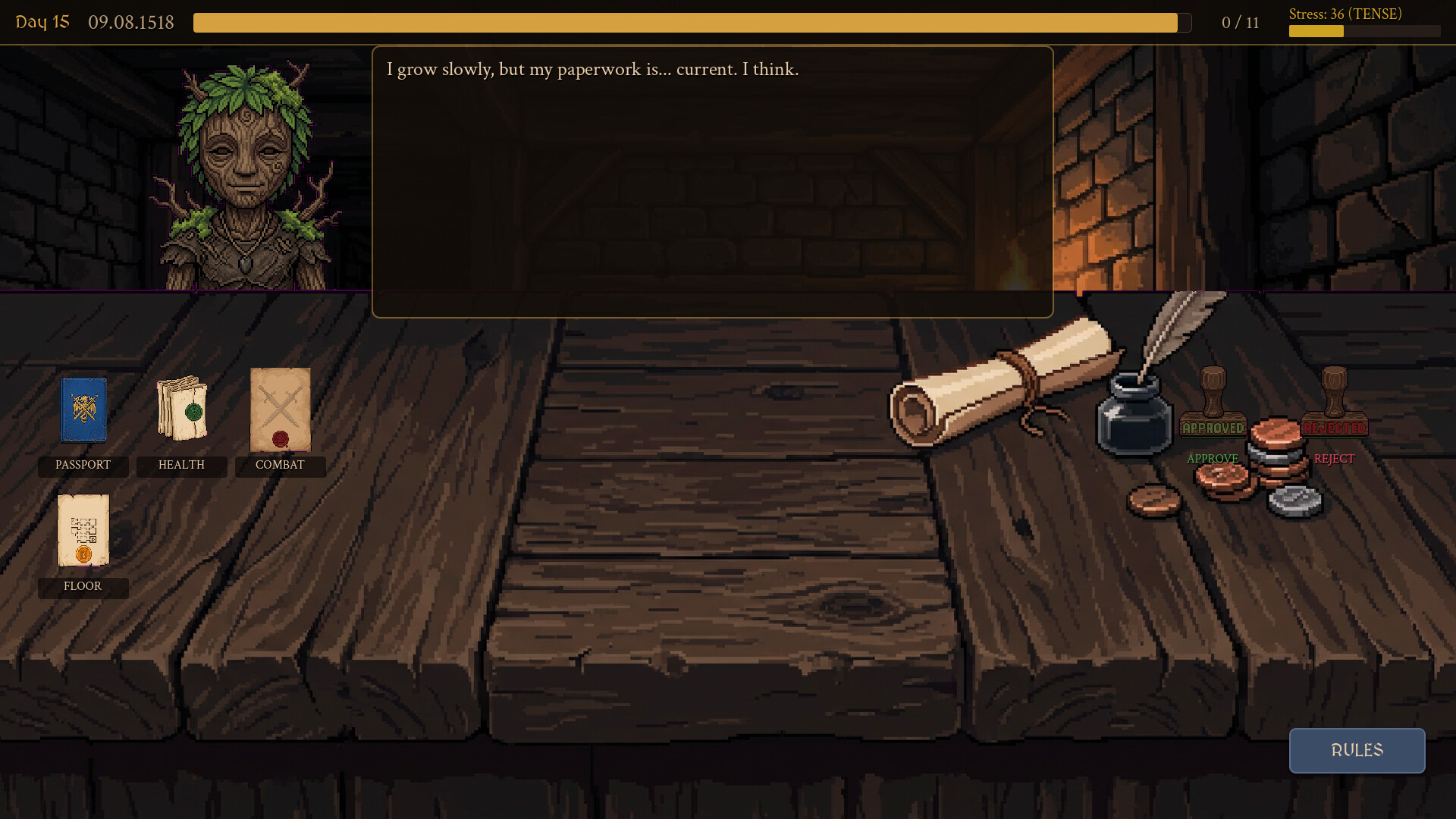
The inspection desk, with a treant applicant's documents laid out for review and the Gatekeeper's stress level tracked in the corner.Image: Noodle Interactive via Steam -
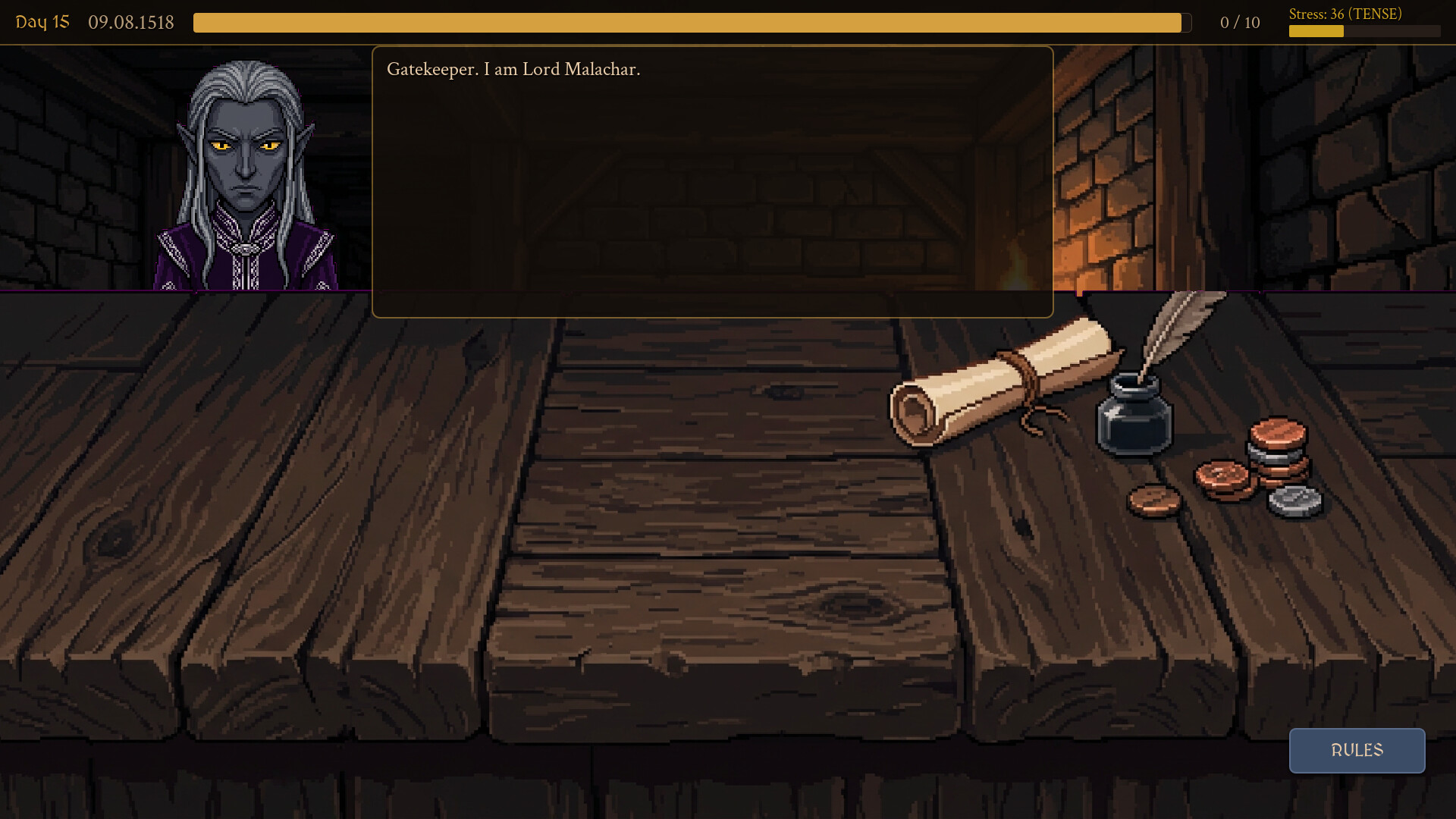
A more ominous applicant, the aristocratic Lord Malachar, introduces himself at the gate.Image: Noodle Interactive via Steam