
Game review
Platform 8
5.5 / 10
- Developer
- KOTAKE CREATE
- Publisher
- PLAYISM
- Released
- 31 May 2024
- Platforms
- Windows
- Genre
- Anomaly-detection horror walking sim
- Monetisation
- One-time purchase, no in-game store or additional currency purchases
- Players
- Single-player only
The short version
Platform 8 sends you through an endless sequence of train carriages, spotting anomalies as strange, unsettling changes ripple through an otherwise mundane commute — a direct follow-up to the same developer's beloved The Exit 8, and this review's sample treats that lineage as the central story. Where The Exit 8 built tension by letting you turn back and recheck a carriage the moment something felt wrong, Platform 8 removes that option entirely, forcing you forward to confront and survive each anomaly instead. Reviewers are split almost precisely along whether that structural reinvention is a bold, deliberate departure worth judging on its own terms, or a removal of exactly the mechanic that made the format work in the first place.
Biggest strengths
- The visual presentation and atmosphere earn consistent praise, with multiple reviewers describing the game as even more visually striking than its predecessor
- The shift to surviving rather than merely spotting anomalies is credited by a real portion of reviewers as a legitimate, different kind of tension, with several describing the game as scarier than The Exit 8 in its jump-scare execution
- The short runtime and low price make it an easy, low-risk way to sample the format, with most reviewers reporting completion in well under two hours
Biggest weaknesses
- The single most repeated complaint across nearly this entire review sample concerns the removal of The Exit 8's core "turn back and recheck" mechanic, which a large portion of reviewers describe as the exact element that made the original format tense and rewarding
- Multiple reviewers describe the resulting gameplay as too easy or too forgiving, noting the game explicitly tells players what an anomaly is in many cases rather than requiring careful observation to identify it
- Several reviewers report specific instances of unclear or seemingly unfair time-critical sequences, where it's genuinely difficult to understand what action is required before a penalty occurs
Who it's for: Fans of The Exit 8 curious to see the format reimagined, and horror fans looking for a short, atmospheric, forward-only anomaly game — with the clear caveat that this is a different experience from its predecessor, not a straightforward continuation of the same formula.
Our recommendation: Worth trying at its very low price for horror and anomaly-game fans, but go in having played The Exit 8 first and understanding this deliberately changes its core mechanic rather than refining it — expecting the same experience is the single most common source of disappointment in this review's sample.
5.5 / 10
Platform 8 puts you on an endless train, moving from carriage to carriage while watching for anomalies — strange, unsettling breaks in an otherwise mundane commute. It's the same developer's direct follow-up to The Exit 8, a game whose "spot the difference, then turn back if something's wrong" format became genuinely influential in horror circles. This review's sample treats that lineage as inseparable from any assessment of Platform 8 itself, and the resulting picture is a fascinating, sharply divided conversation about what changes a sequel should and shouldn't make.
A deliberate, controversial reinvention
The core structural change is the first thing nearly every review mentions, and reviewers disagree sharply about whether it works. "Being the sequel to Exit 8, this is about 20 steps back. Not only is there basically zero challenge to find the anomalies compared to Exit 8, but the game is basically a run forward only game. There is no going forward and back like in Exit 8," one reviewer writes. Another describes the same change more neutrally before landing on disappointment: "Rather than carefully paying attention to environmental change and learning how it's supposed to look you just rush through carts while being bombarded with all kinds of bizarre looking anomalie[s]." A third, however, frames the same shift as a legitimate creative choice: "It's like Exit 8, but your dad told you to confront your fears so you run past them rather than running away like the first game. Very fun." That range — from "abandons what worked" to "a fun, deliberate twist" — captures this review's sample precisely, and it's worth taking both readings seriously rather than picking a side.
The specific mechanic reviewers say is missing
What makes the negative sample particularly credible is how specifically reviewers describe the mechanical loss, rather than vaguely disliking change for its own sake. "Exit 8 was great for a very important reason - it made you gaslight yourself HARD and forced you to take a paranoia-induced look at every little letter on the posters while trying to find what was wrong. In this game you have literally zero fear and paranoi[a because there's no cost to simply walking past]," one reviewer writes. Another makes the design critique explicit: "If the game lets you ignore 30% of the anomalies - which is the most important part of the experience - while still being able to progress through the game, then something has gone fundamentally wrong with the game mechanic as a whole." That's a specific, mechanically precise complaint — not that the game changed, but that the change undermines the genre's foundational tension between careful observation and forward progress.
Reviewers who judged it on its own terms
Several reviewers explicitly worked to separate their expectations from their actual experience, and their accounts are worth weighing carefully. "This game is not an anomaly game! Platform 8 is the successor of Exit 8, however it does not offer the same experience at all! However, it is not necessarily a bad thing: some people will like it and others won't. I personally had a good time," one reviewer writes, offering a genuinely balanced framing. Another describes coming around after initial skepticism: "Ok at first I was like 'what is this, Exit 8 was so great and this is trash' but actually I liked it. The mechanics are different, so don't misunderstand." A third, having played extensively, gives useful practical guidance for prospective buyers: "if you like this one, try the first game of this developer also. The first one is a bit harder however" — treating the two games as complementary rather than one superseding the other.
Real, specific complaints about fairness and clarity
Beyond the core structural debate, some reviewers flag more concrete usability issues. "I was expecting gameplay similar to Exit 8 but after playing this the overwhelming feeling was it was 'unfair' because it is completely unclear in a lot of cases what you need to do. So you can spend a lot of time progressing and end up in situations, many of which are time critical, where you have" no clear sense of the correct response, one reviewer writes. That's a fair, distinct complaint from the broader "too easy" criticism elsewhere in the sample — some specific sequences apparently strike the opposite problem, demanding split-second reactions to poorly telegraphed threats.
What the achievement data confirms about scope
Steam's own completion figures, drawn from only three tracked achievements, show a short, largely accessible experience: an early milestone sits at 68.8%, falling to 39.7% for the hardest tracked achievement. That modest spread is consistent with reviewer reports of a brief runtime — most completing the game in well under two hours — with a real but limited amount of harder optional content for more dedicated players.
A responsive launch, without confirmed longer-term support
This review found genuine evidence of active attention during the game's launch window: the partner-events feed documents a rapid sequence of version patches and a dedicated English text correction, all concentrated within roughly two weeks of the May 2024 release. No further content updates were found documented beyond that initial window, a different pattern from some other titles in this lane with sustained, multi-year post-launch investment — though no reviewer in this sample raises a specific ongoing-support complaint, so this is reported as an observed fact rather than a criticism in itself.
Final verdict
Platform 8 makes a genuinely bold, deliberate choice to reinvent rather than repeat The Exit 8's beloved formula, and this review's sample shows that choice landing as both a legitimate creative risk and a real disappointment depending on which reviewer you ask. At its very low price, it's worth trying for horror fans curious about the format — just play The Exit 8 first if you haven't, and go in understanding this is a genuinely different game wearing a familiar coat of paint.
Pros and cons
Pros
- The visual presentation and atmosphere earn consistent praise, with multiple reviewers describing the game as even more visually striking than its predecessor
- The shift to surviving rather than merely spotting anomalies is credited by a real portion of reviewers as a legitimate, different kind of tension, with several describing the game as scarier than The Exit 8 in its jump-scare execution
- The short runtime and low price make it an easy, low-risk way to sample the format, with most reviewers reporting completion in well under two hours
- Steam's own partner-events feed documents an active, responsive launch-window patch cadence, including multiple version updates and a dedicated English text correction within roughly two weeks of release
- Several reviewers explicitly frame the game as a worthwhile experience once judged on its own terms rather than as a direct continuation, describing genuine enjoyment after adjusting their expectations
Cons
- The single most repeated complaint across nearly this entire review sample concerns the removal of The Exit 8's core "turn back and recheck" mechanic, which a large portion of reviewers describe as the exact element that made the original format tense and rewarding
- Multiple reviewers describe the resulting gameplay as too easy or too forgiving, noting the game explicitly tells players what an anomaly is in many cases rather than requiring careful observation to identify it
- Several reviewers report specific instances of unclear or seemingly unfair time-critical sequences, where it's genuinely difficult to understand what action is required before a penalty occurs
- At least one reviewer notes a specific design flaw: the game allows players to ignore a meaningful percentage of anomalies entirely and still progress, undermining the core anomaly-spotting premise the genre is built around
- This review found no partner-events evidence of longer-term post-launch content updates beyond the initial two-week patch cycle, unlike some other titles in this lane with sustained multi-year support histories
Screenshots
-

Platform 8Image: PLAYISM via Steam -

Platform 8Image: PLAYISM via Steam -

Platform 8Image: PLAYISM via Steam -
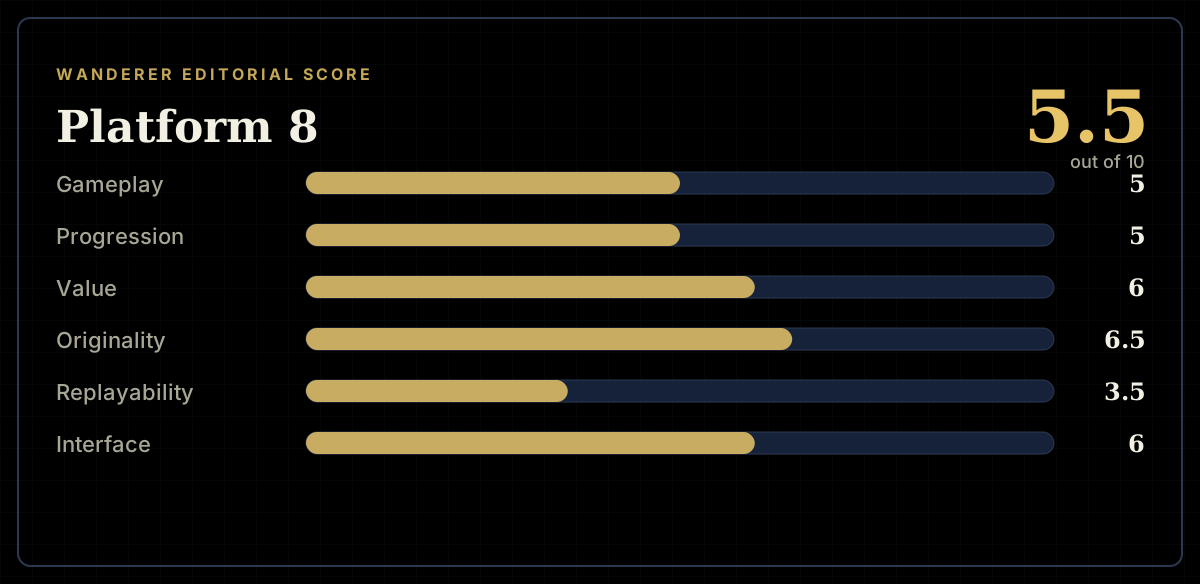
How the review scores each part of the gameWanderer Editorial -
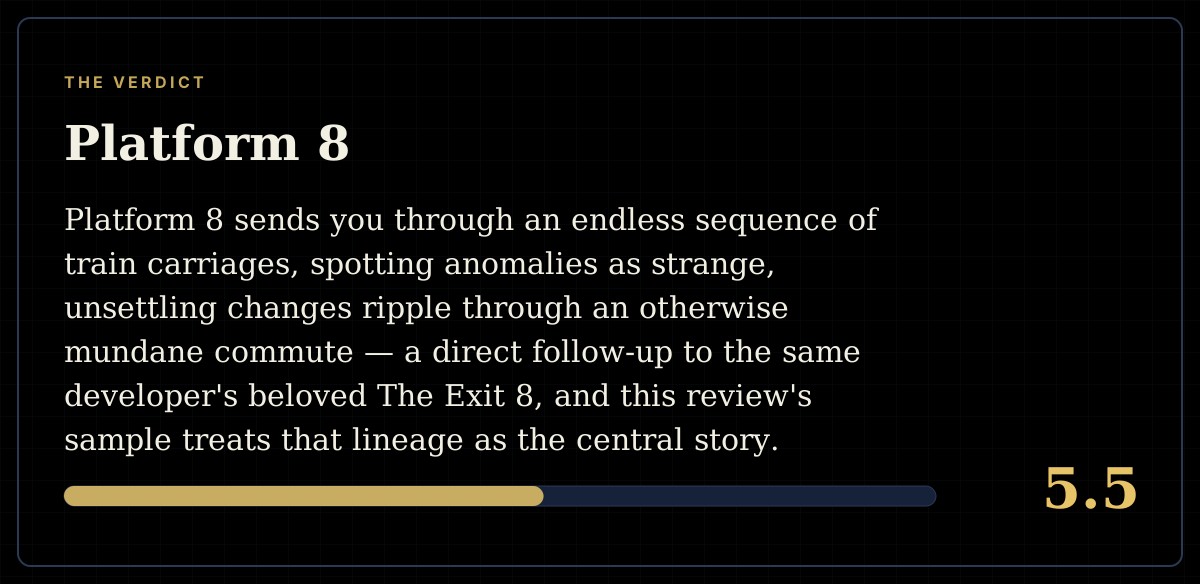
The short versionWanderer Editorial