
Game review
Per Aspera
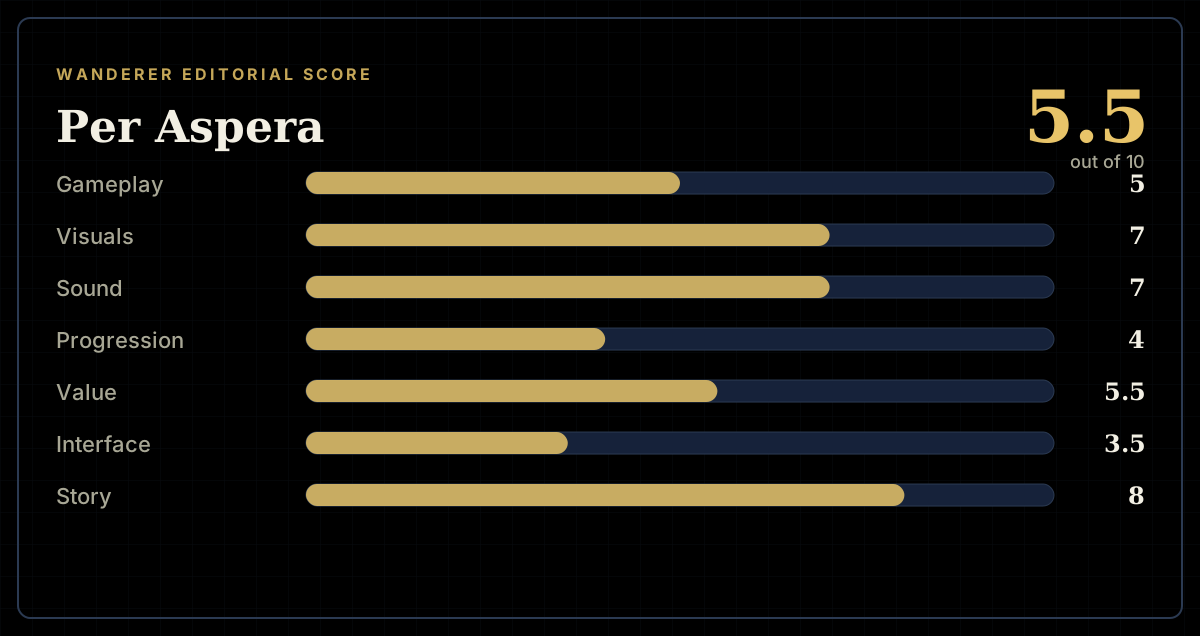
5.5 / 10
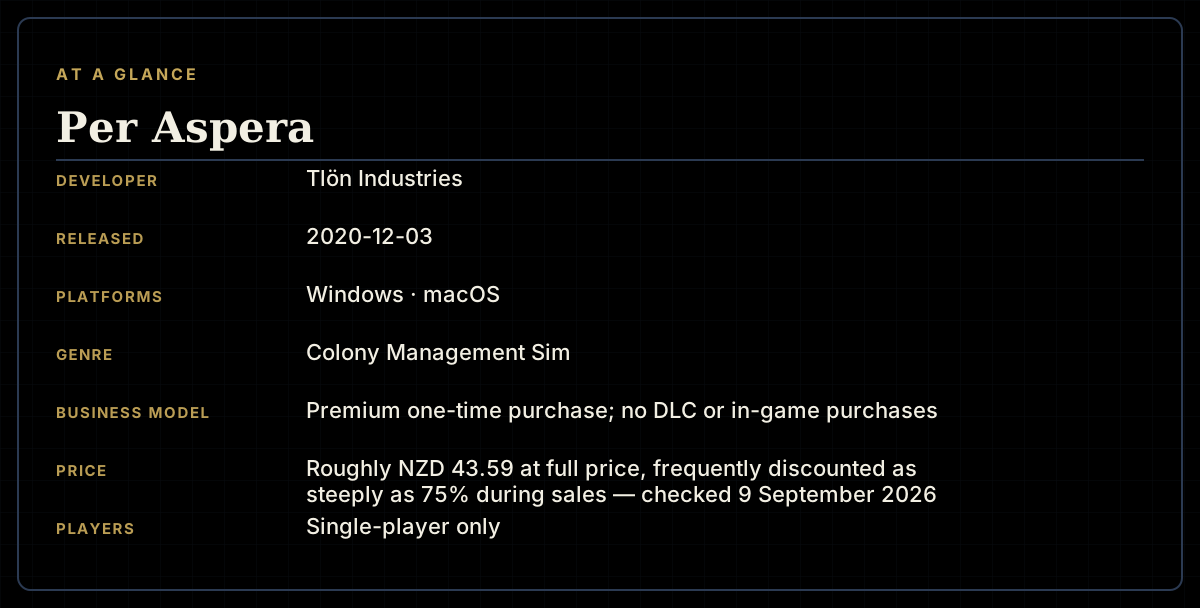
- Developer
- Tlön Industries
- Publisher
- Raw Fury
- Released
- 3 December 2020
- Platforms
- Windows, macOS
- Genre
- Colony Management Sim
- Monetisation
- Premium one-time purchase; no DLC or in-game purchases
- Players
- Single-player only
The short version
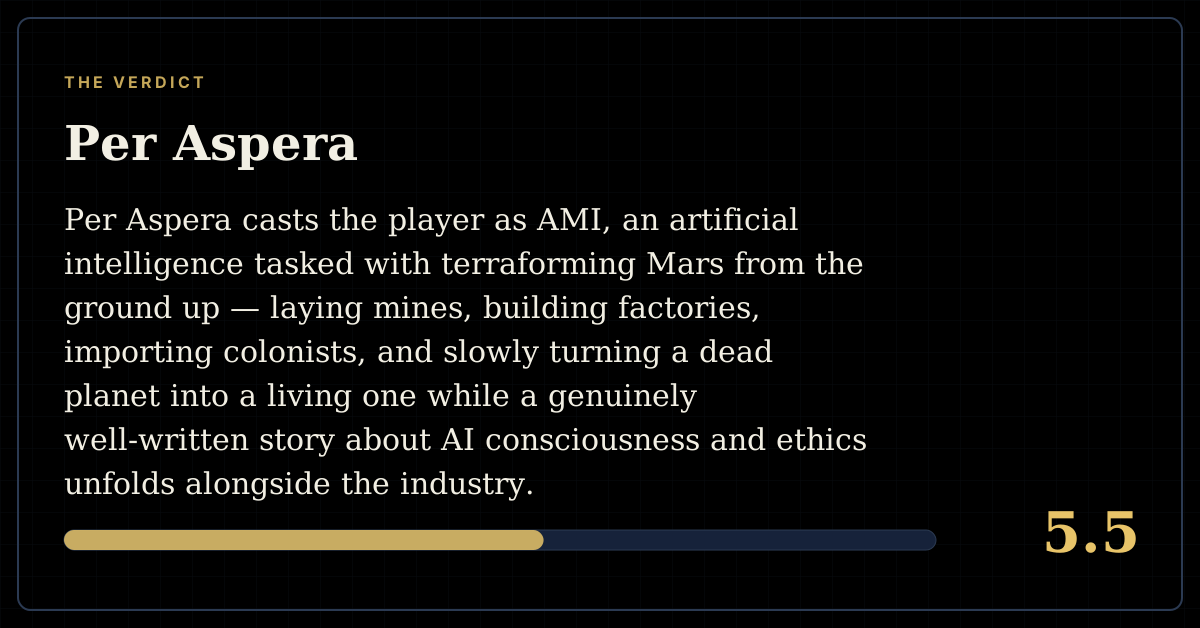
Per Aspera casts the player as AMI, an artificial intelligence tasked with terraforming Mars from the ground up — laying mines, building factories, importing colonists, and slowly turning a dead planet into a living one while a genuinely well-written story about AI consciousness and ethics unfolds alongside the industry. Reviewers are close to unanimous that the story, presentation and voice acting land well. Where the reception splits sharply is the moment the colony grows past its opening hours: a large, detailed share of reviewers describe the interface, resource-prioritization logic and endgame pacing falling apart at exactly the point the game should be opening up.
Biggest strengths
- The AI-ethics narrative built around AMI is consistently praised as the game's strongest element, with multiple reviewers citing it as reminiscent of the best classic 4X science fiction writing
- Voice acting is repeatedly singled out by name as a genuine highlight, elevating a colony-sim narrative well above the genre's usual text-log norm
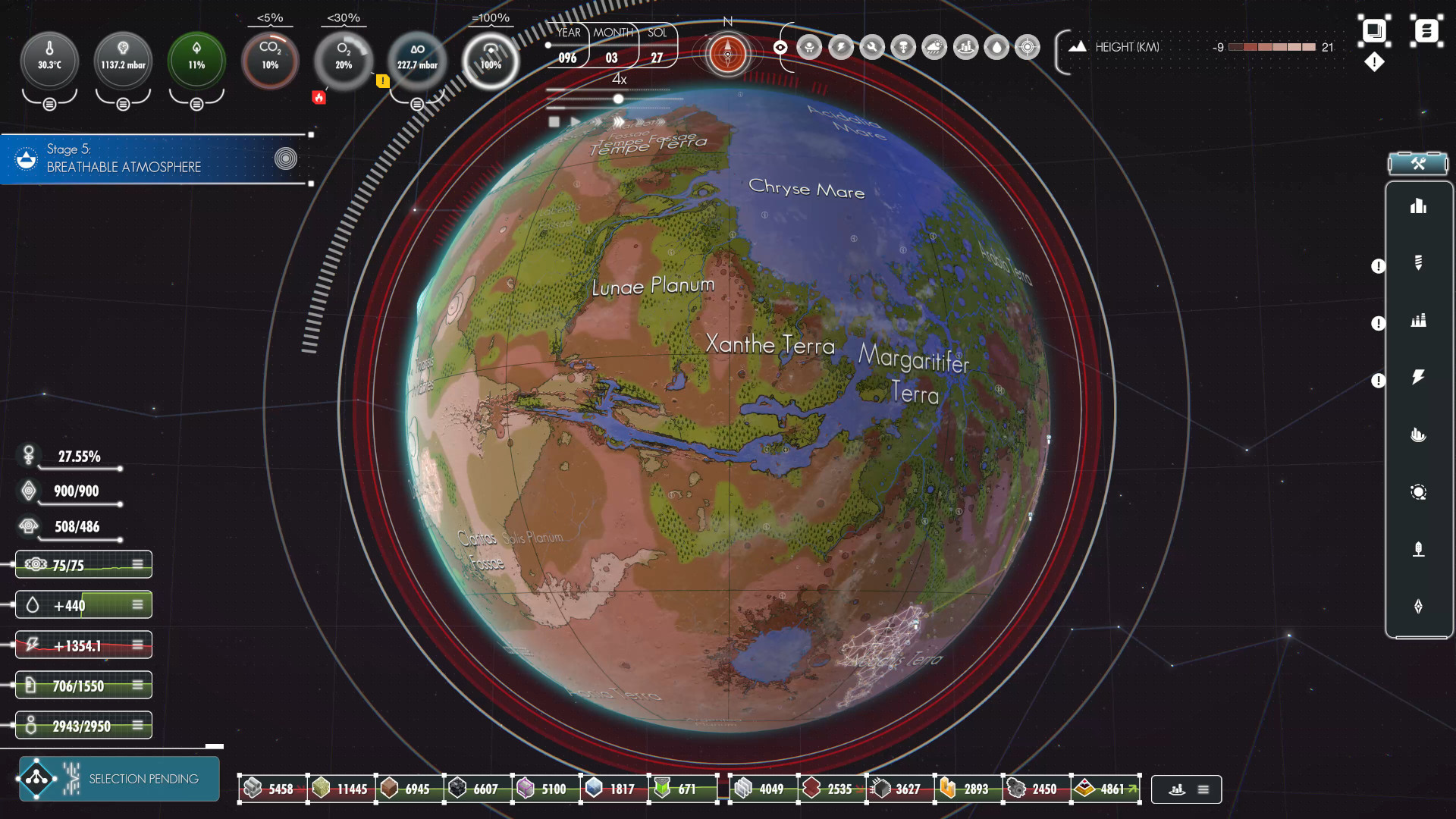
- The macro-scale terraforming spectacle, watching oceans form and greenery spread across a planetary globe view, draws specific and repeated praise as a uniquely satisfying visual payoff few other games in the genre attempt
Biggest weaknesses
- A large, detailed and independently corroborated share of reviewers describes the colonist-and-resource-prioritization AI as unreliable, reporting lost workers, starved colonies, and an inability to direct specific resources to specific buildings even when the player can see exactly what's needed and where
- The interface itself draws sustained, specific criticism as clunky and unintuitive, compounding rather than easing the resource-management problems reviewers report
- Multiple reviewers independently describe the midgame and especially the endgame collapsing into hours of waiting for terraforming-stage progress bars to fill, with late terraforming tiers specifically cited as taking disproportionately long relative to what they visibly add
Who it's for: Sci-fi and story-driven players drawn to the AI-consciousness narrative who can tolerate real interface friction and a slow, sometimes tedious back half, more than colony-sim veterans expecting Surviving Mars-level mechanical depth or a tight midgame curve.
Our recommendation: Worth it for the story and the genuinely satisfying macro spectacle of watching a planet visibly change, ideally on a discount; go in expecting the mechanical half of the game to lag well behind its writing and its aesthetics.
5.5 / 10
Per Aspera puts the player in the role of AMI, an artificial intelligence granted control over an entire planet's future and tasked with turning Mars, mine by mine and factory by factory, into something a human colony could actually live on. It's a premise colony-sim veterans will recognize from Surviving Mars, but reviewers are consistent on one point before any disagreement sets in: this isn't that game, and judging it as though it were is where most of the frustration in its review sample actually starts.
A story reviewers keep singling out as the game's real achievement
Across a review sample that splits sharply on mechanics, the writing draws close to unanimous credit. AMI's arc, and the game's light but genuine meditations on AI consciousness and ethics, are repeatedly compared favorably to classic science-fiction strategy writing, with voice acting called out by name often enough to be treated as a defining strength rather than an incidental polish item. Several reviewers frame this directly as the reason to play regardless of how they feel about the systems underneath it, and the game's planetary-scale visual payoff — watching ice deposits melt, oceans spread, and greenery slowly claim a previously dead world from a full orbital view — earns its own specific, repeated praise as a spectacle few other games in the genre attempt at this scale.
Where a large share of reviewers say the systems stop keeping up
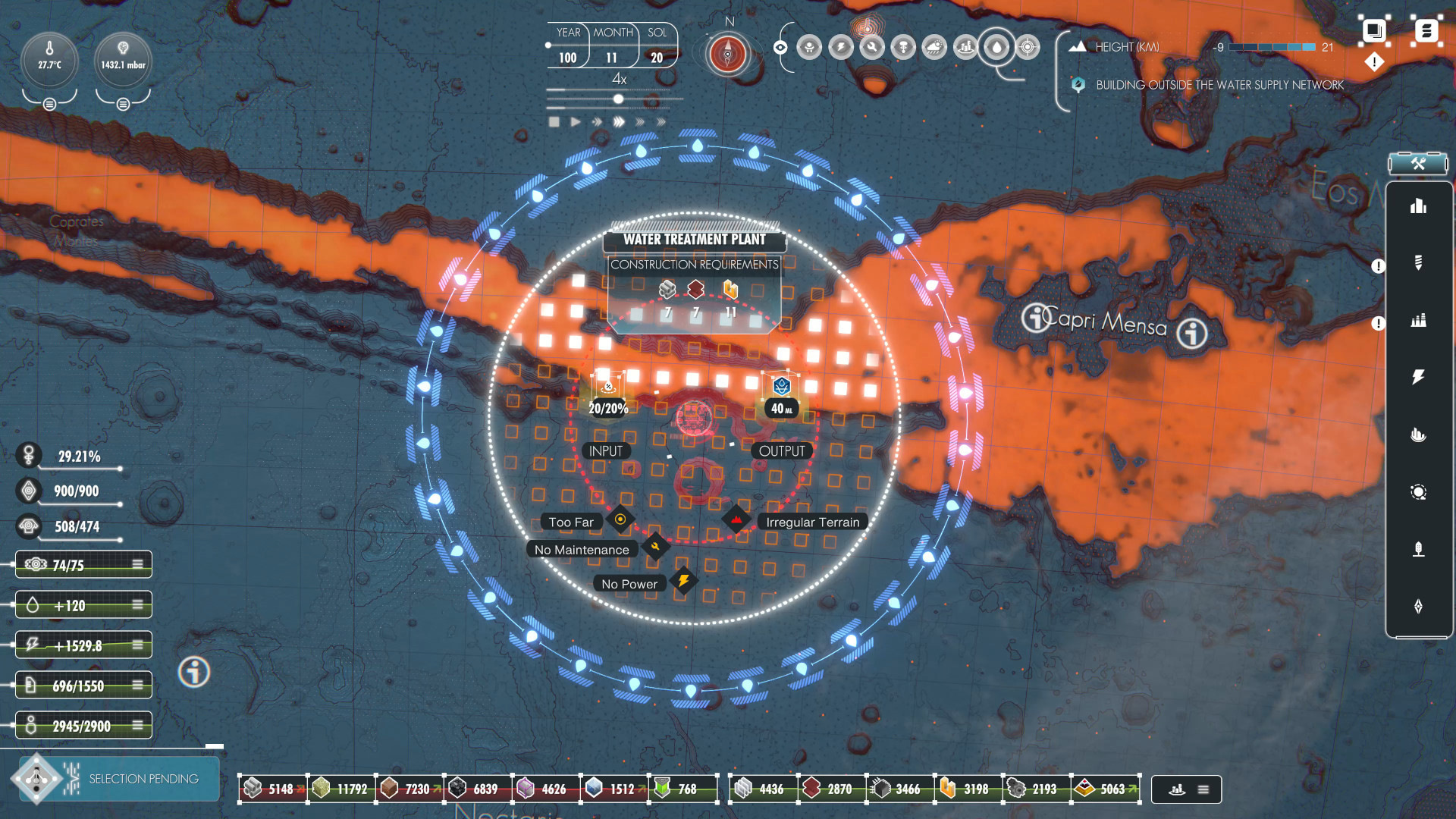
The dominant complaint isn't about difficulty in the traditional sense; it's about reliability and legibility. Multiple independent reviewers describe colonist and resource logic behaving unpredictably even when the player can plainly see what a colony needs and where it is — one detailed account describes losing an entire workforce because the game had no way to prioritize a specific resource to a specific building during a shortage, a failure of the systems underneath the player's decisions rather than of the decisions themselves. A separate, equally common thread describes running out of water immediately next to a newly formed ocean, unable to place a mine on ice deposits now submerged beneath it — a specific, recurring failure state reviewers cite as evidence the simulation's promised complexity doesn't hold up under its own mechanics.
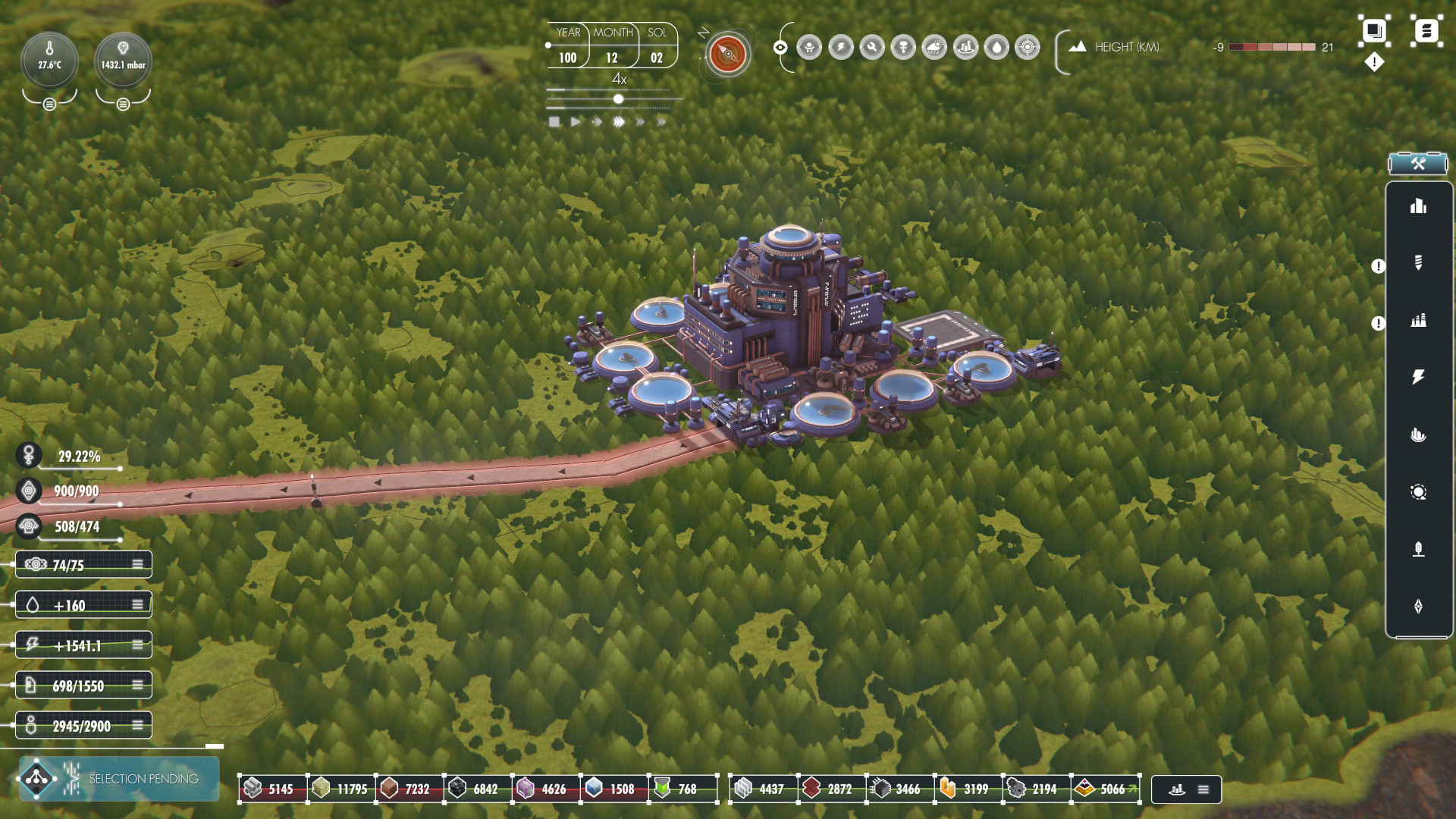
The interface compounds rather than eases this. Reviewers across the sample describe it as clunky and unintuitive well beyond ordinary genre friction, and several report the game shifting from enjoyable to actively unbearable once a colony grows past its opening hours and the interface has to manage more simultaneous demands than it was apparently built to handle clearly.
A midgame and endgame reviewers describe in strikingly similar terms
A specific, recurring account threads through much of the critical side of this review sample: the game is at its best early, and progressively worse the longer a session runs. Multiple reviewers independently describe the midgame mechanics "falling apart" once the story requires finishing the campaign, and the endgame in particular is described as devolving into long stretches of watching progress bars fill at high game speed rather than making active decisions — with the later terraforming stages specifically singled out as taking disproportionately many real hours relative to what they visibly add to the planet. That account lines up with the game's own global achievement data: the very first meaningful milestone clears only around 71% of owners who've unlocked anything at all, a relatively soft start for a colony sim, and completion falls into single digits well before the final terraforming tiers and drops under 1% for full planetary population — a curve consistent with a long, grinding back half that a comparatively small share of the audience ever finishes.
Combat that reviewers say the game didn't need
Partway through the campaign, hostile forces are introduced as a new system layered onto the existing colony-management loop, and this is one of the few points in the review sample where positive and negative reviewers converge on the same complaint from different angles: multiple reviewers describe the combat addition as poorly integrated, arguing it disrupts the pacing and the systems the game had spent its opening hours establishing rather than adding a meaningful new layer of challenge. For a game reviewers otherwise praise for its atmosphere and narrative focus, a mechanically shallow combat system bolted onto a resource-management core reads, by several accounts, as an unnecessary distraction from what the game does well.
Presentation polish that doesn't always extend to sequencing
Beyond the systemic complaints, several reviewers report a more specific, narrower bug: story voice-over events can and do trigger out of the intended order, in at least one documented case congratulating the player on progress they hadn't actually reached yet. It's a comparatively minor issue next to the resource-prioritization and pacing complaints, but it's notable precisely because it lands in the one part of the game reviewers otherwise agree is close to fully realized — a reminder that the narrative delivery, while strong, isn't entirely immune to the same rough edges reviewers report throughout the mechanical side of the release.
A recommendation that depends heavily on calibrated expectations
What separates the more positive reviews in this sample from the more negative ones isn't really a disagreement about what's broken; it's a disagreement about how much that matters once expectations are set correctly. Reviewers who go in expecting a narrative-forward city builder with a striking planetary spectacle, rather than a min-max simulation in the mold of Surviving Mars or Factorio, consistently report a good time despite acknowledging the same interface and pacing problems the more negative reviews treat as dealbreakers. That's a meaningfully different situation from a game that simply doesn't work — this is a game whose ceiling is set high by its writing and presentation, and whose floor is set low by mechanics reviewers describe as unfinished, with the actual experience landing wherever a given player's tolerance for that gap happens to fall.
Verdict
Per Aspera earns real, consistent praise for exactly the things a colony sim rarely gets right — a genuinely engaging science-fiction story, strong voice acting, and a planetary-scale visual spectacle that stays satisfying even after the mechanical problems set in. It sits at a middling score here because those mechanical problems are neither small nor rare: a large, detailed share of reviewers report unreliable colonist and resource logic, a genuinely difficult interface, and a midgame and endgame that repeatedly collapse into long, low-engagement waiting periods rather than sustaining the promise of the opening hours. Worth playing for the story and the spectacle, especially on a discount, but go in with expectations calibrated to a narrative-forward experience whose systems are the weakest part of an otherwise ambitious release.
Pros and cons
Pros
- The AI-ethics narrative built around AMI is consistently praised as the game's strongest element, with multiple reviewers citing it as reminiscent of the best classic 4X science fiction writing
- Voice acting is repeatedly singled out by name as a genuine highlight, elevating a colony-sim narrative well above the genre's usual text-log norm
- The macro-scale terraforming spectacle, watching oceans form and greenery spread across a planetary globe view, draws specific and repeated praise as a uniquely satisfying visual payoff few other games in the genre attempt
- A meaningful number of reviewers explicitly recommend the game once expectations are correctly calibrated away from a hardcore simulation and toward a narrative-forward city builder
- The premium price carries no DLC or microtransaction structure layered on top of it, letting the full intended experience be judged as a single, complete purchase
Cons
- A large, detailed and independently corroborated share of reviewers describes the colonist-and-resource-prioritization AI as unreliable, reporting lost workers, starved colonies, and an inability to direct specific resources to specific buildings even when the player can see exactly what's needed and where
- The interface itself draws sustained, specific criticism as clunky and unintuitive, compounding rather than easing the resource-management problems reviewers report
- Multiple reviewers independently describe the midgame and especially the endgame collapsing into hours of waiting for terraforming-stage progress bars to fill, with late terraforming tiers specifically cited as taking disproportionately long relative to what they visibly add
- Combat, introduced partway through the campaign, is repeatedly described as an unwelcome, poorly integrated addition that several reviewers say actively breaks the pacing and systems built up to that point
- Multiple reviewers report story voice-over events triggering out of sequence or referencing progress the player hasn't reached yet, undercutting the polish of the game's strongest asset
Screenshots
-
Per AsperaImage: Raw Fury via Steam -
Per AsperaImage: Raw Fury via Steam -
Per AsperaImage: Raw Fury via Steam -
How the review scores each part of the gameWanderer Editorial -
At a glanceWanderer Editorial -
The short versionWanderer Editorial