
Game review
Othercide
6.5 / 10
- Developer
- Lightbulb Crew
- Publisher
- Focus Entertainment
- Released
- 27 July 2020
- Platforms
- Windows
- Genre
- Tactical RPG, Roguelite
- Monetisation
- One-time purchase, cosmetic and artbook DLC
- Players
- Single-player
The short version
Othercide takes the XCOM formula, strips its colour palette down to black, white and blood red, and layers a roguelite structure on top where losing a "daughter" in battle is a resource to manage rather than a simple failure state. Across 2,493 reviews, 83% of players recommend it, and the praise for its aesthetic, music and voice work is close to unanimous even among reviewers who ultimately don't recommend the game. What divides that remaining 17%, and shows up repeatedly even inside positive reviews, is boss design several players describe as crossing from legitimately hard into structurally unfair, paired with checkpoint placement that forces replaying several encounters before every attempt at a boss that beats you.
Biggest strengths
- The black-white-and-red visual style and voice work draw close to unanimous praise across the entire review corpus, including from reviewers who ultimately recommend against buying the game
- The Dynamic Timeline combat system, which lets players manipulate turn order by delaying or advancing actions rather than simply alternating sides, is repeatedly credited as a genuinely fresh twist on the XCOM formula
- The roguelite "daughters" structure — permanently losing units feeds strategic legacy bonuses into future runs — gives failure real narrative and mechanical weight rather than treating it as a simple reset
Biggest weaknesses
- Several detailed reviews describe specific boss fights as relying on unfair mechanics — one names a boss that takes seven actions in a single turn — rather than difficulty that rewards better play
- Checkpoints are placed before, rather than immediately preceding, boss fights, forcing players to replay several standard encounters on every failed attempt, a design choice multiple reviewers call needlessly punishing rather than tense
- A three-years-later review reports the same unresolved issues present at launch still unfixed, suggesting the specific complaints below aren't a launch-week rough patch but a stable, unaddressed pattern
Who it's for: Tactics fans who want a genuinely distinctive visual identity and don't mind a roguelite structure built around sacrificing units strategically rather than protecting all of them, and who have patience for a steep, unforgiving learning curve, are the intended audience and the one the positive reviews consistently describe. Players who want boss fights to feel hard-but-fair, or who bounce off repeated pre-boss grinding, should read the specific complaints below closely.
Our recommendation: Recommended for tactics players specifically drawn to its style and willing to accept real, documented unfairness in some boss encounters as the price of admission. Buy on sale rather than at full price if the boss-design complaints below sound like a dealbreaker rather than a manageable frustration.
6.5 / 10
A tactics game built to be looked at
Othercide's most immediate, least disputed quality is its presentation. Rendered almost entirely in black, white and a single shade of blood red, with voice work and a score reviewers repeatedly single out by name, it's a genre entry with a visual identity distinct enough that even players who don't recommend the game spend a paragraph praising it before explaining why they can't. One reviewer's plain summary — "XCom meets Dark Souls in Silent Hill" — captures both the tone and the difficulty philosophy in a single line, and it's a comparison the corpus reaches for often enough that it reads as broadly accurate rather than one player's flourish.
Underneath that style sits a genuine mechanical innovation: the Dynamic Timeline system, which visualises turn order as a manipulable line rather than a simple alternating sequence, letting skilled play delay enemy actions or advance your own units ahead of a threat. Reviewers who click with the system describe real satisfaction in "outsmarting the game by chaining up abilities and delaying enemy turns," and it's the mechanical hook that separates Othercide from being merely an XCOM reskin with better art. Layered on top, the roguelite structure treats losing a "daughter" not as a simple defeat but as a resource — her death can strengthen the units who survive her, folding failure directly into the game's own legacy-progression systems rather than punishing it as pure loss.
Where hard tips into unfair
The complaint that recurs across even strongly positive reviews concerns specific boss encounters, and it's detailed enough to separate from a general "this game is too hard" grumble. Multiple reviewers describe individual bosses relying on mechanics that feel less like a difficulty curve and more like a design failure — one names a specific encounter where the boss takes seven actions in a single turn, a concrete, checkable claim rather than a vague impression. Compounding that, checkpoints are placed before a run of standard encounters rather than immediately ahead of the boss fight that follows them, meaning a failed boss attempt means replaying several non-boss fights before getting another try — several reviewers call this needlessly punishing rather than a meaningful part of the challenge, arguing it adds time without adding tension.
What elevates this from a normal difficulty debate is how long these specific complaints have persisted. A review written roughly three years after the reviewer's original purchase reports the same issues present at launch remaining unresolved, despite the reviewer having 100%'d the game and clearly wanting to recommend it. That's a meaningfully different signal than launch-week frustration — it suggests Lightbulb Crew's post-launch attention moved elsewhere rather than toward the specific balance complaints its own community kept raising, similar to a pattern this library has documented in several other titles.
The roguelite structure, in practice
Othercide's progression sits on a genuinely unusual foundation for the genre: rather than a single, deliberately-built roster you protect across a campaign, the "daughters" system expects losses, and channels them into permanent strategic bonuses that carry forward into subsequent runs. Reviewers who describe long-term engagement — several logging well past a hundred hours — consistently frame this as the game's real hook once the early frustration passes: learning which units are worth sacrificing, and when, becomes its own tactical layer distinct from the moment-to-moment combat. That's a meaningfully different design philosophy from a traditional tactics game's permadeath, where losing a unit is purely a cost, and it's a large part of why the corpus's most devoted fans describe the game as genuinely replayable rather than a one-and-done campaign.
The trade-off several reviewers name honestly is that this same system, combined with the difficulty spikes discussed above, produces a steep and sometimes brutal learning curve before that depth becomes apparent. More than one review explicitly warns prospective buyers to watch gameplay footage first specifically because the early hours can misrepresent what a settled, systems-literate run actually feels like — a fair, specific piece of buyer guidance rather than a generic disclaimer.
Value, platform support and what's missing
At NZ$49.99 full price — regularly discounted to a fraction of that, as low as NZ$4.99 in past sales — reviewers weighing cost against the roguelite replay value the game offers generally land on fair-to-generous, provided the specific boss and checkpoint complaints above don't apply to a given player's patience. It's worth noting plainly that Othercide is Windows-only, with no Mac or Linux build, which several potential buyers on those platforms won't find out until checking the store page directly rather than assuming cross-platform support the way many contemporary indie tactics games offer.
Verdict
Othercide is a genuinely distinctive tactical roguelite — visually unlike almost anything else in the genre, built around a combat system that rewards real tactical thinking, and structured so that losing units feeds meaningfully back into future runs rather than simply ending the game. The specific, well-documented complaints about certain boss fights and checkpoint placement are real enough, and durable enough across years of reviews, that this can't be scored as an unqualified success. For tactics fans who want the style and the Dynamic Timeline system badly enough to accept a few genuinely unfair fights along the way, it's an easy recommendation. For anyone who needs difficulty to always feel earned rather than occasionally arbitrary, the 17% negative slice of this game's own reviewers has already made the specific case for caution.
Pros and cons
Pros
- The black-white-and-red visual style and voice work draw close to unanimous praise across the entire review corpus, including from reviewers who ultimately recommend against buying the game
- The Dynamic Timeline combat system, which lets players manipulate turn order by delaying or advancing actions rather than simply alternating sides, is repeatedly credited as a genuinely fresh twist on the XCOM formula
- The roguelite "daughters" structure — permanently losing units feeds strategic legacy bonuses into future runs — gives failure real narrative and mechanical weight rather than treating it as a simple reset
- Reviewers with 100+ hours logged describe genuine long-term engagement with the run structure, suggesting real depth for players who get past the early learning curve
Cons
- Several detailed reviews describe specific boss fights as relying on unfair mechanics — one names a boss that takes seven actions in a single turn — rather than difficulty that rewards better play
- Checkpoints are placed before, rather than immediately preceding, boss fights, forcing players to replay several standard encounters on every failed attempt, a design choice multiple reviewers call needlessly punishing rather than tense
- A three-years-later review reports the same unresolved issues present at launch still unfixed, suggesting the specific complaints below aren't a launch-week rough patch but a stable, unaddressed pattern
- A specific, independently reported bug affects armor damage calculation, making it difficult for at least one detailed reviewer to predict whether an attack will finish off an enemy
- The core loop is described by several reviewers as repetitive once its systems are understood, with more than one saying the tactical decisions become "rinse and repeat" well before a full campaign is complete
Screenshots
-

OthercideImage: Focus Entertainment via Steam -

OthercideImage: Focus Entertainment via Steam -

OthercideImage: Focus Entertainment via Steam -
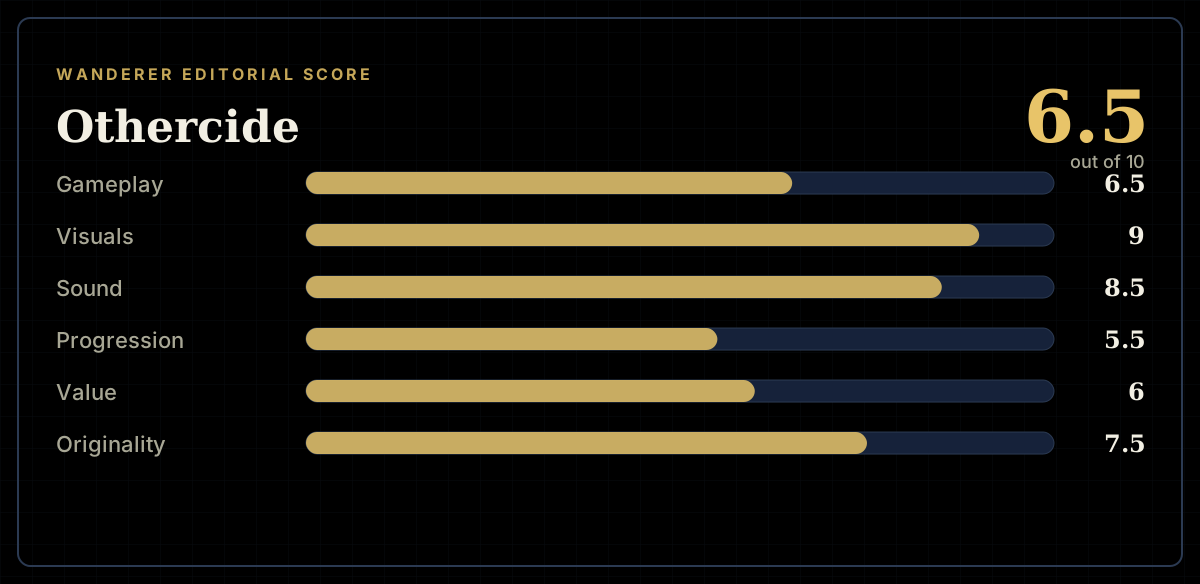
How the review scores each part of the gameWanderer Editorial -
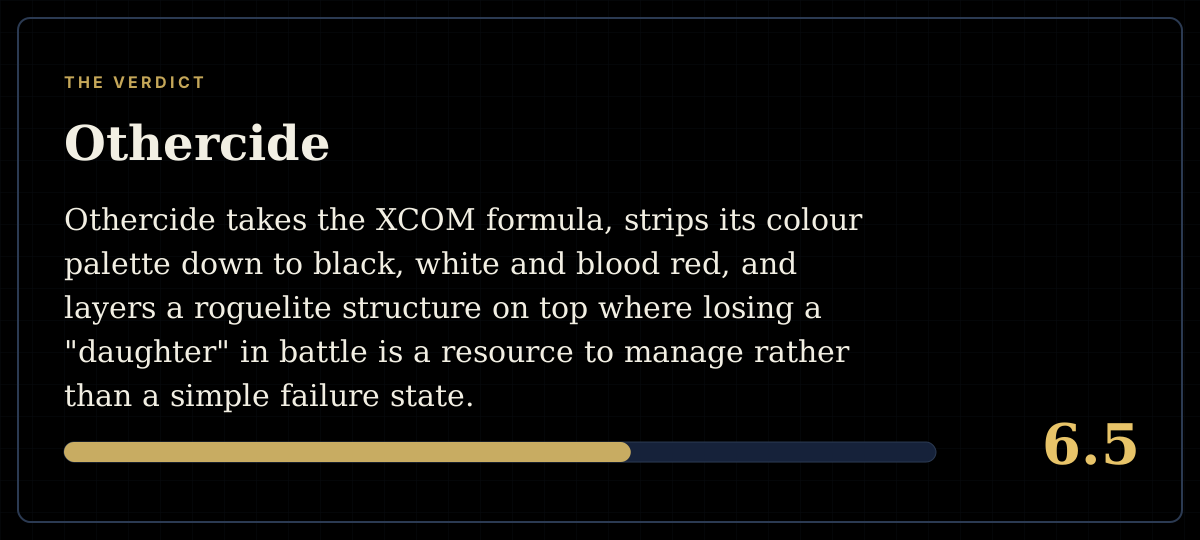
The short versionWanderer Editorial