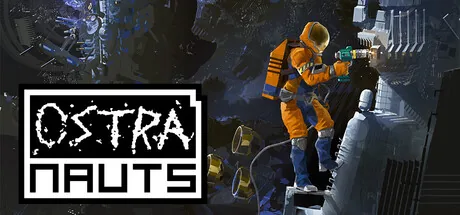
Game review
Ostranauts
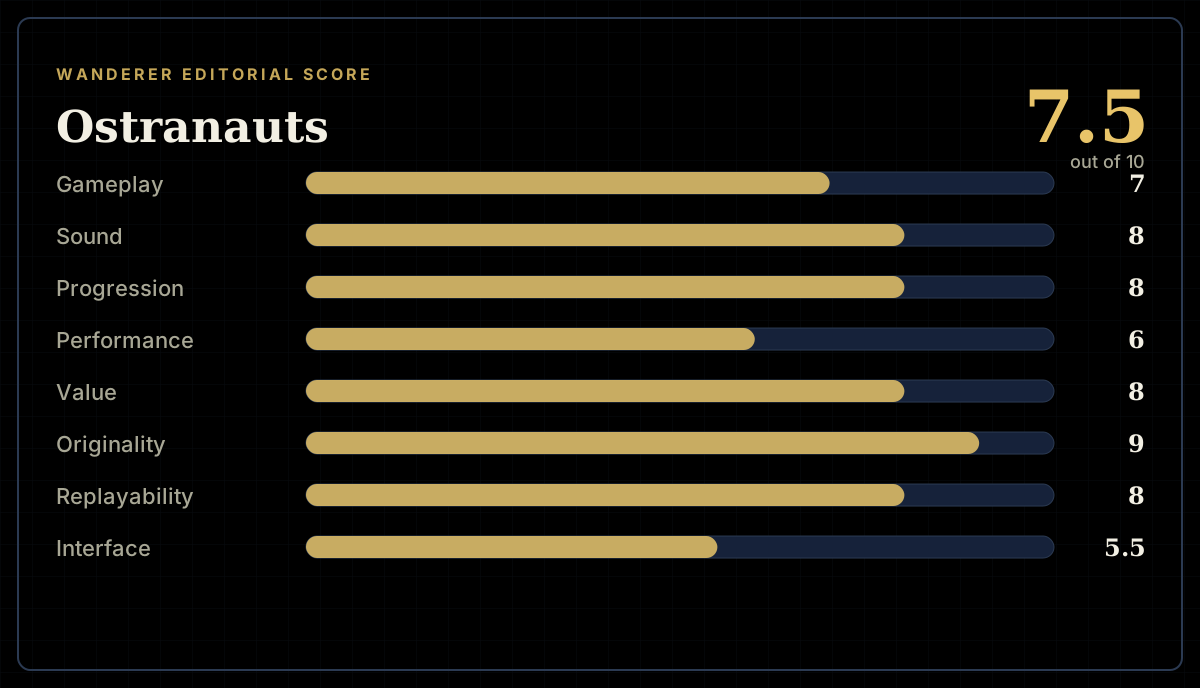
7.5 / 10
- Developer
- Blue Bottle Games
- Publisher
- Kitfox Games
- Released
- 3 August 2026
- Platforms
- Windows
- Genre
- Space Sim / Sandbox RPG
- Monetisation
- One-time purchase. No in-app purchases, no DLC, no season pass. Free Steam Workshop mod support, with 68+ community mods already published. Listed at NZ$24.79 — checked 4 August 2026.
- Players
- Single-player only
The short version
You start as an exploited shipbreaker on a corporate station, take out a loan you can't afford, and buy a wreck. Everything after that is yours — every room you weld on, every reactor you assemble out of scrap and start incorrectly, every debt payment you scrape together by stripping a derelict while your oxygen runs down. When Ostranauts works it produces a feeling of ownership almost nothing else in games manages. It's also obtuse, buggy in its crew simulation, and thin in its verbs — most interactions resolve to clicking a button and waiting. The 1.0 adds an ending, a bounty system and Workshop support, but the veterans with a thousand hours are the ones saying it arrived early.
Biggest strengths
- A genuine feeling of ownership over your ship that almost no other game achieves — you assemble it from salvage, room by room, system by system
- The NEO Scavenger DNA is intact — grim, specific worldbuilding and writing that treats space as a job rather than an adventure
- Simulation depth that goes all the way down, to putting your boots on the correct feet and getting blisters that take real days to heal
Biggest weaknesses
- The crew and NPC simulation is unreliable — long-time players and modders report NPCs failing to keep themselves alive, including on the starting station
- Most interactions are click-and-wait; repair and disassembly have no depth of their own, so the imagination does a lot of the work
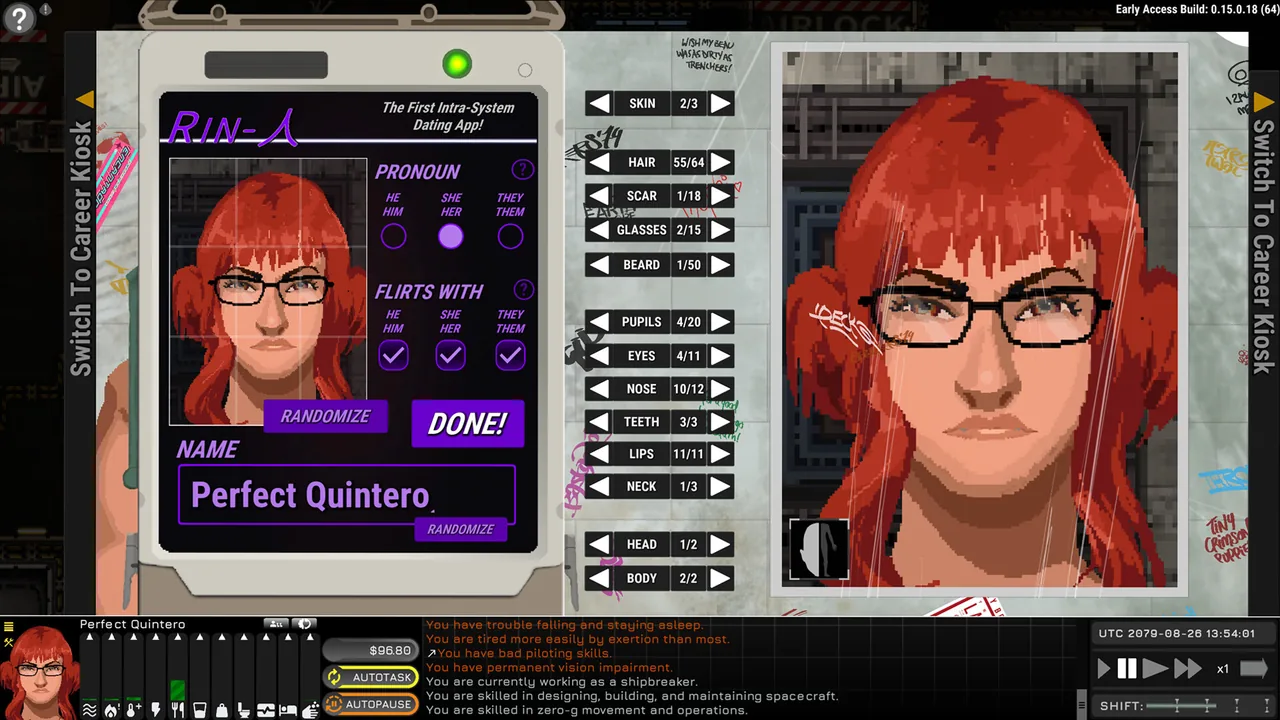
- Onboarding is brutal, and important information is often present but poorly communicated
Who it's for: Players who loved NEO Scavenger, Kenshi or the fiddliest parts of a systems sim, and who treat obstruction as content. Not for anyone who wants to be taught how to play, and not for players who need their simulations to behave.
Our recommendation: Buy it if the phrase "I built this reactor out of salvage and it works" sounds like a reward rather than a chore — you'll get hundreds of hours. Budget several hours to stop being confused, use the official beginners guide, and expect NPC crew to behave strangely. If you want the version people are describing as finished, the developers have committed to another year of work, so waiting is a reasonable play.
7.5 / 10
A reviewer with nearly a thousand hours in Ostranauts describes the appeal better than the store page does. You start as an exploited worker on a corporate station, scraping by on salvage money. But you don't have to stay there. Instead of selling the scrap, you can build with it — add rooms, weld on a reactor assembled from parts you pulled out of a corpse of a ship — and end up with a vessel that is yours. Not your character's. Yours.
That's the whole game, and when it lands, nothing else is quite like it.
The job, not the adventure
Blue Bottle Games made NEO Scavenger, and the family resemblance is immediate: a grim, specific world, writing that assumes you're an adult, and systems that will kill you for ordinary carelessness. Space here is a workplace. You have a loan. The interest doesn't care about your adventure.
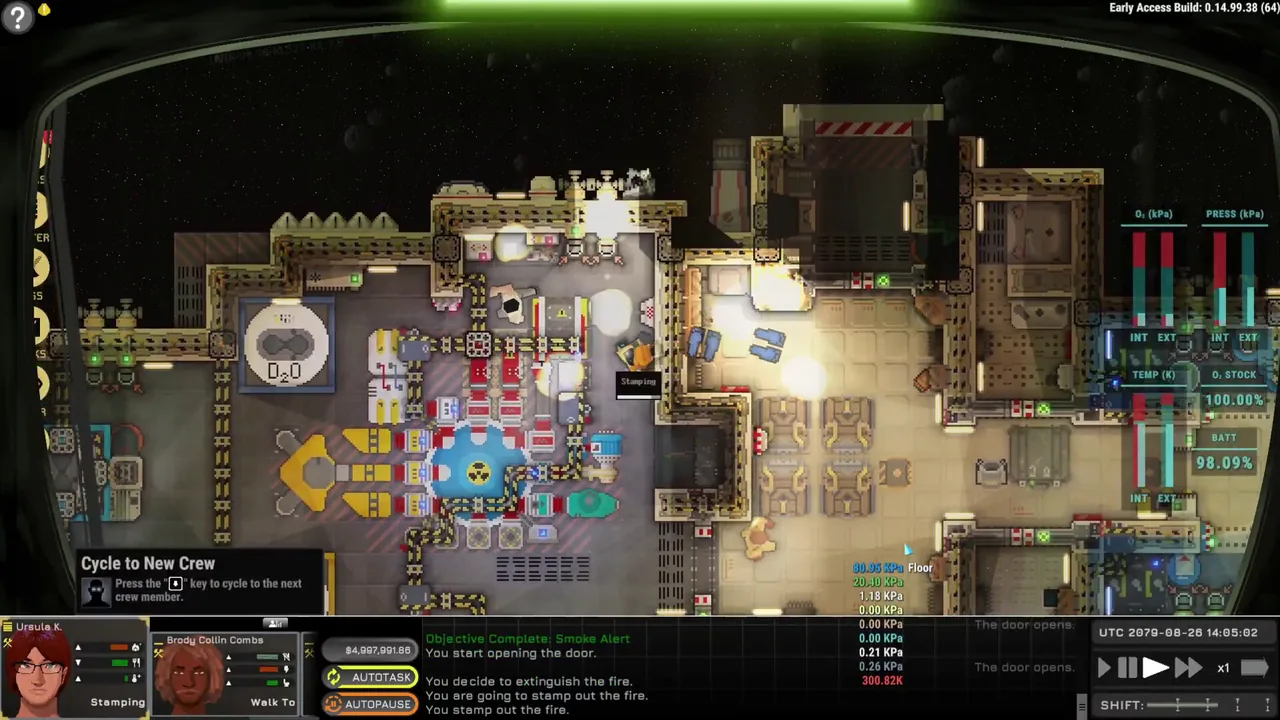
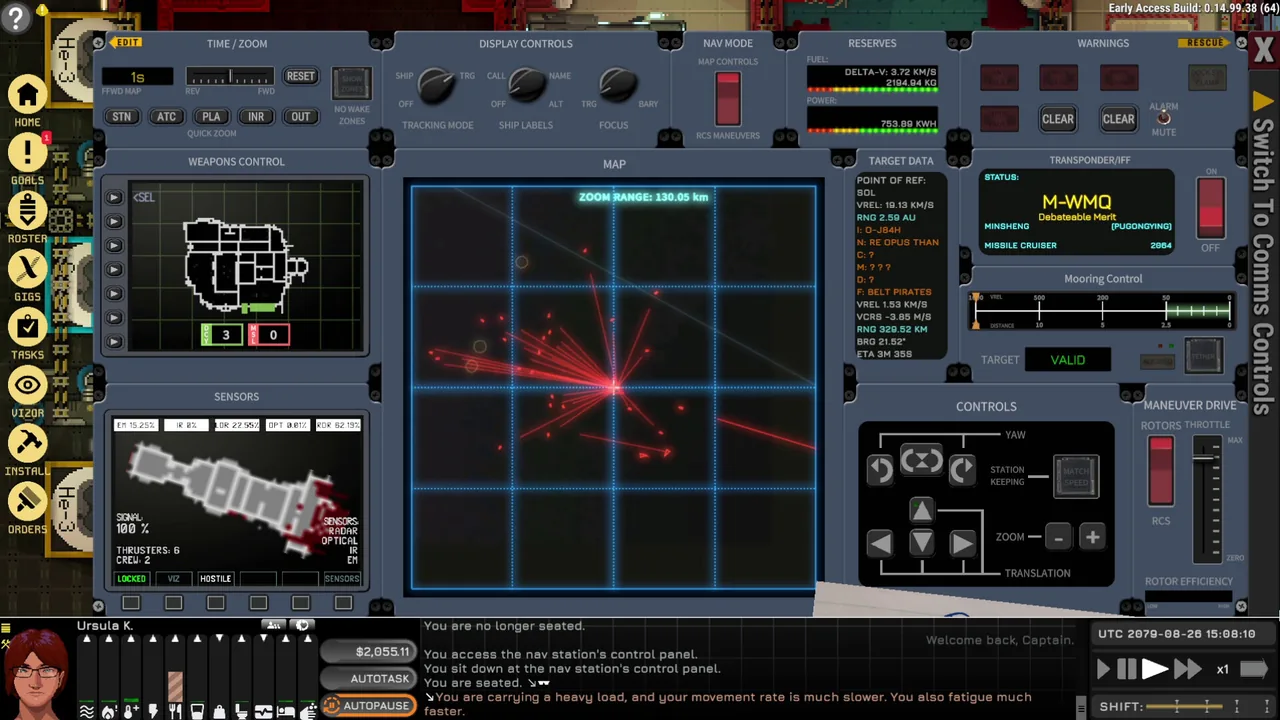
The loop is salvage. Fly to a derelict, board it, strip what's valuable, get it home before your air runs out or your reactor faults, then decide whether each part gets sold to service the debt or bolted onto your own ship. That last decision is what elevates it, because your ship isn't a stat block — it's a physical layout with real volumes, real power draw, real atmosphere, and every salvaged component makes it more capable and more yours.
The simulation goes absurdly deep and mostly earns it. You put boots on the correct feet or you get blisters, and those blisters take real days to heal. Suits need oxygen bottles. Reactors can be assembled correctly and started incorrectly. One player's summary — "a hardcore dystopian sci-fi cozy game" — captures the tone better than any genre label: it's stressful in the details and calm in the whole.
If you liked Kenshi's indifference to your comfort or the parts of RimWorld where the story comes from the systems misbehaving, you already know whether you want this.
Where the simulation stops simulating
The most damning criticism comes from people who love it, including one who built one of the game's first major expansion mods. The NPC and crew simulation — the pillar the whole social layer rests on — doesn't hold up. Crew fail to keep themselves alive. Players report finding NPCs on the floor of the starting station in pressure suits with no oxygen in them. Stations, several long-time players say, still read as placeholders rather than inhabited places.
The recent patch notes make the same point from the other direction, and they're worth reading as evidence rather than reassurance: AI will now attempt to replace empty oxygen bottles in worn suits; AI will no longer get confused and do nothing if an unworn suit has no battery; AI pilots will no longer torch at ludicrous speed. Those are good fixes. They also describe what the crew simulation was doing weeks before a 1.0.
The other structural complaint is thinness of verbs. Repair and disassembly are a button and a wait. There's no craft to the salvaging itself, only to the logistics around it. That's a defensible design — the interesting decision is what to take, not the taking — but it means long stretches where you're watching progress bars, and it's why one reviewer landed on "House Flipper in space" and another said the imagination does the heavy lifting. Both are being unfair, and neither is wrong.
The 1.0 question
Here's the thing a review published this week has to address: is it finished?
The 1.0 is a genuine content release. It closes the Ceres Affair storyline with an ending whose choices ripple across the System, adds a bounty-hunting career, opens new station maps, improves the tutorial, and turns on Steam Workshop support that already has 68-plus mods behind it.
But the loudest voices saying it came too early are the ones with the most hours. A player with 13,000 minutes logged wrote, a month out from release, that it felt like it had just entered beta. Another with 20,000 minutes recommends the experience while calling the state it's in atrocious. And the pattern one reviewer identified is real and easy to verify: an unusual share of the positive reviews are structured as "I love this game, however."
The post-1.0 reviews are warmer — 29 of the first 34 are positive — but that's a small, self-selecting sample of people who bought a six-year Early Access game on launch week.
One note for anyone reading achievement data on this game: don't. Achievements shipped as a 1.0 feature, so the top one sits at 2.2% because almost the entire six-year ownership base has never had the chance to earn any. The curve measures the age of the achievement system, not where players stopped.
The promise that matters
Buried in the 1.0 announcement is the most reassuring paragraph I've read on a store page this year. The developers state plainly that this is not the end of development, that they know players have been burned by Early Access games before, and that they are committed to at least another year of work regardless of sales.
That deserves credit, and it's the exact opposite of the pattern I looked at in Forager — a game that promised a headline feature, went quiet, and never retracted the promise where buyers could see it. Ostranauts is doing the reverse: shipping a 1.0 that its own community considers imperfect, and saying out loud that it intends to keep going.
7.5 out of 10. Rated 7.5 out of 10.
It's a 9 for ambition and a 5 for reliability, and 7.5 is where those meet. There is genuinely nothing else that gives you this — the debt, the salvage, the ship you assembled yourself, the specific grubby future it's set in — and for the right player that's worth every one of the several confusing hours it takes to get going.
Just don't buy it expecting the simulation to behave. Buy it expecting to build something out of junk, in a game that is itself still partly held together with duct tape, from a studio that has promised to keep working on it. On current evidence, that promise is the one to trust.
Pros and cons
Pros
- A genuine feeling of ownership over your ship that almost no other game achieves — you assemble it from salvage, room by room, system by system
- The NEO Scavenger DNA is intact — grim, specific worldbuilding and writing that treats space as a job rather than an adventure
- Simulation depth that goes all the way down, to putting your boots on the correct feet and getting blisters that take real days to heal
- Enormous time investment on offer, with committed players logging hundreds and in some cases approaching a thousand hours
- The 1.0 is a real content release — an ending to the Ceres Affair plot, a bounty system, new station maps and Steam Workshop support with 68+ mods already up
- The developers publicly committed to at least another year of post-1.0 development, explicitly citing players burned by other Early Access games
Cons
- The crew and NPC simulation is unreliable — long-time players and modders report NPCs failing to keep themselves alive, including on the starting station
- Most interactions are click-and-wait; repair and disassembly have no depth of their own, so the imagination does a lot of the work
- Onboarding is brutal, and important information is often present but poorly communicated
- Performance problems and bugs persist into the 1.0, and several thousand-hour players say the release arrived before it was ready
- Stations still read as functional placeholders rather than places
- No difficulty or quality-of-life mode for players who want the fiction without the full administrative load
Screenshots
-
OstranautsImage: Kitfox Games via Steam -
OstranautsImage: Kitfox Games via Steam -
OstranautsImage: Kitfox Games via Steam -
How the review scores each part of the gameWanderer Editorial -
The short versionWanderer Editorial