
Game review
Nuclear Throne
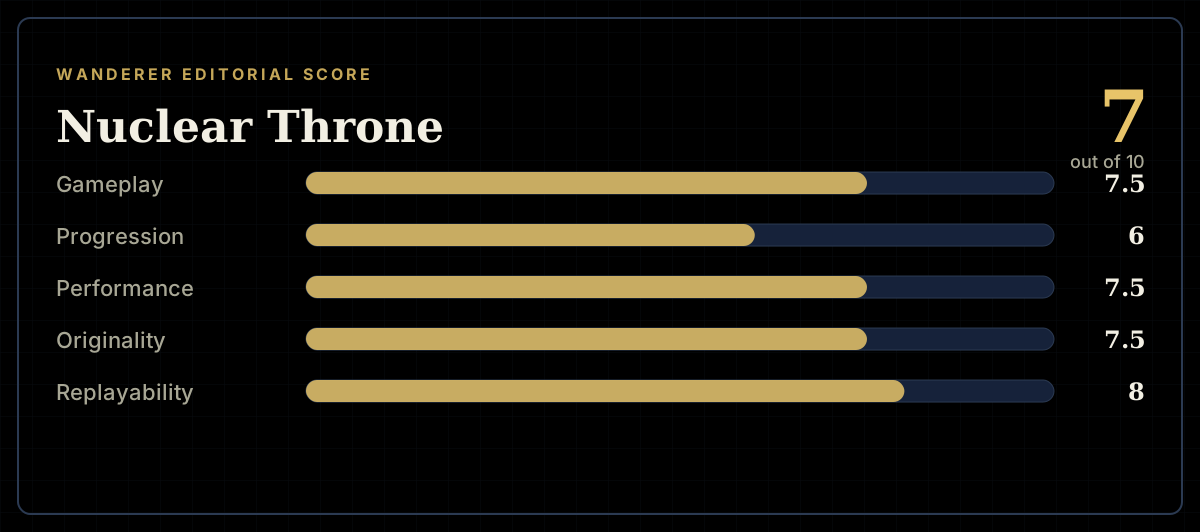
7 / 10
- Developer
- Vlambeer
- Publisher
- Vlambeer
- Released
- 5 December 2015
- Platforms
- Windows, macOS, Linux
- Genre
- Roguelike RPG
- Monetisation
- Paid, one-time purchase. No in-app purchases or DLC.
- Players
- Local co-op supported alongside the primary single-player roguelike loop.
The short version
Nuclear Throne's premise is bracingly direct — not "the final hope of humanity" post-apocalyptic, but "humanity is extinct and mutants and monsters now roam the world" post-apocalyptic — and its snappy, high-variety gunplay across a large mutant character roster earns it Overwhelmingly Positive status across more than 15,000 reviews. Running alongside that praise, consistently since launch, is a specific and coherent complaint: a meaningful share of reviewers argue the game's difficulty leans more on unpredictable, unforeseeable randomness than on skill a player can reliably improve, particularly around sudden lethal damage bursts with little room to react.
Biggest strengths
- Snappy, responsive gunplay with a large, varied weapon and mutation roster that rewards experimentation across runs.
- A distinctive roster of playable mutant characters, each altering the moment-to-moment feel of a run meaningfully rather than cosmetically.
- A sharp, self-aware post-apocalyptic tone and pixel art style that gives the game real personality within a crowded genre.
Biggest weaknesses
- A consistent, decade-long complaint argues the game's difficulty relies more on unpredictable randomness than skill a player can reliably build, particularly around sudden, hard-to-avoid lethal damage.
- A specific, repeated frustration point centres on a particular Frozen City-area boss, with multiple reviewers describing runs ending there through what they characterise as unfair rather than earned difficulty.
- Several reviewers unfavourably compare the game's balance and player agency to Enter the Gungeon, a frequently-cited genre peer.
Who it's for: Roguelike and twin-stick shooter fans who want fast, characterful gunplay and don't mind runs ending to circumstances outside their control as often as to their own mistakes.
Our recommendation: A genre favourite worth playing for its variety and feel, but go in expecting genuine, repeated frustration with specific difficulty spikes reviewers have been flagging since launch.
7 / 10
Fast, characterful mutant combat with real variety
Nuclear Throne's pitch, direct from its own store page, sets a bleaker tone than most post- apocalyptic games attempt: not a story about humanity's last hope, but one where "humanity is extinct and mutants and monsters now roam the world." Built on Vlambeer's snappy, momentum-driven shooting feel — the same studio behind Downwell and Ridiculous Fishing — the game backs that tone with a large roster of playable mutant characters and an extensive weapon pool, each run assembled from procedurally generated levels and item drops. The official screenshot captures the tone and density well: a cluttered arena mid-fight, multiple distinct mutant enemy types converging around a campfire checkpoint while the player character brandishes a golden revolver, a character-select strip along the bottom hinting at the roster's range. Reviewers across the game's history consistently credit the moment-to-moment shooting and the character variety as genuinely excellent — even the harshest critics in this review's research rarely target the core gunplay feel itself, focusing instead on how the game's difficulty is structured around it.
A decade-long argument about where the difficulty actually comes from
What keeps this game's otherwise glowing reputation from being uncontested is a specific, recurring argument about the nature of its challenge. "About 90% of it is pure RNG," reads one detailed review, describing runs ending to circumstances the reviewer felt were outside meaningful player control rather than to their own mistakes. A 2024 review draws a sharper conceptual distinction: "this game is a good example for explaining the difference between hard and frustrating... it's momentarily rewarding and makes you want to come back and try again, but not in a good way," arguing the challenge doesn't consistently reward improved play the way a well-tuned "hard" game should. A December 2025 review is more specific about the mechanical cause: "you take too much damage far too quickly and there are no grace periods," describing a final boss capable of eliminating a run before the player has meaningfully engaged with it. One particular recurring flashpoint is a specific encounter in the Frozen City area — a 2021 review describes "countless runs" ending at the same boss there, framing the pattern as a design problem rather than a personal skill gap. This isn't a scattering of unrelated complaints; it's the same underlying argument, about randomness overriding earned skill, showing up independently across a full decade of reviews.
A fair comparison that keeps recurring
Several reviewers make their point by direct comparison rather than in the abstract, and the same comparison recurs often enough to be worth naming: Enter the Gungeon. "Play Enter the Gungeon instead," reads one detailed 2020 review, arguing that game's design gives players more consistent tools to respond to danger. A 2026 review describes arriving at Nuclear Throne after Enter the Gungeon and finding the difficulty curve disappointing by comparison once past the early levels. This review hasn't independently verified a systemic mechanical difference between the two games, but the frequency and specificity of this particular comparison across otherwise-unconnected reviewers suggests it reflects a real, felt difference in how the two games balance randomness against player agency, not a coincidence.
A more measured middle ground
It's worth noting that many of the reviews raising this complaint are careful to distinguish it from simply disliking the game. "This game is very fun. However, there is a particular boss that ruins the game," reads one 2021 review, praising the core loop directly before naming its specific frustration. A 2022 review states plainly, "this game is good its really good especially the Sound Effects," while still flagging difficulty as its central complaint. That pattern — genuine enthusiasm for the core design, paired with a specific, repeatable frustration rather than a wholesale rejection — reads as a fair, proportionate critique rather than review-bombing, and this review treats it accordingly.
What "roguelike-like" signals about the design's intent
The store page's own genre label is worth taking seriously rather than treating as marketing phrasing: Vlambeer describes the game as a "roguelike-like," a deliberate hedge suggesting the studio itself didn't consider it a strict, purist take on the genre's usual conventions around fairness and information. That framing matters for weighing the RNG complaint fairly. Many of the genre's most respected entries build extensive systems specifically to keep randomness legible — clear enemy telegraphs, predictable damage patterns, meaningful choices before danger arrives. Nuclear Throne's faster, more chaotic pace trades some of that legibility for speed and unpredictability as a deliberate stylistic choice, closer to an arcade shooter's philosophy than a careful, information- rich roguelike's. Read that way, the recurring RNG complaint isn't necessarily evidence of a broken system so much as a real, valid mismatch between what some players want from the genre label and what this specific "roguelike-like" was built to deliver. Both the game's defenders and its critics on this point are describing the same design choice accurately; they simply disagree, reasonably, on whether it was the right one.
Final verdict
Nuclear Throne's gunplay, character variety and tone remain genuinely excellent, and its Overwhelmingly Positive standing across 15,000-plus reviews is well earned on those merits alone. Where this score reflects real caution is a specific, consistent and decade-long argument that its difficulty curve leans on randomness players can't reliably plan around more than the genre's best peers do, with a particular, repeatedly-named boss encounter as the clearest example. That's a legitimate design critique worth weighing rather than a minority of players simply struggling with a hard game, and it's the main reason this review lands a point or two below the aggregate score despite having no real complaints about the moment-to-moment shooting itself.
Pros and cons
Pros
- Snappy, responsive gunplay with a large, varied weapon and mutation roster that rewards experimentation across runs.
- A distinctive roster of playable mutant characters, each altering the moment-to-moment feel of a run meaningfully rather than cosmetically.
- A sharp, self-aware post-apocalyptic tone and pixel art style that gives the game real personality within a crowded genre.
- Local co-op adds genuine replay variety beyond the core solo roguelike loop.
Cons
- A consistent, decade-long complaint argues the game's difficulty relies more on unpredictable randomness than skill a player can reliably build, particularly around sudden, hard-to-avoid lethal damage.
- A specific, repeated frustration point centres on a particular Frozen City-area boss, with multiple reviewers describing runs ending there through what they characterise as unfair rather than earned difficulty.
- Several reviewers unfavourably compare the game's balance and player agency to Enter the Gungeon, a frequently-cited genre peer.
- The low health pool and near-total absence of damage grace periods mean a single bad spawn or unlucky pattern can end a run with limited opportunity to respond.
Screenshots
-

Nuclear ThroneImage: Vlambeer via Steam -

Nuclear ThroneImage: Vlambeer via Steam -

Nuclear ThroneImage: Vlambeer via Steam -
How the review scores each part of the gameWanderer Editorial -
The short versionWanderer Editorial