Game review
Nordhold
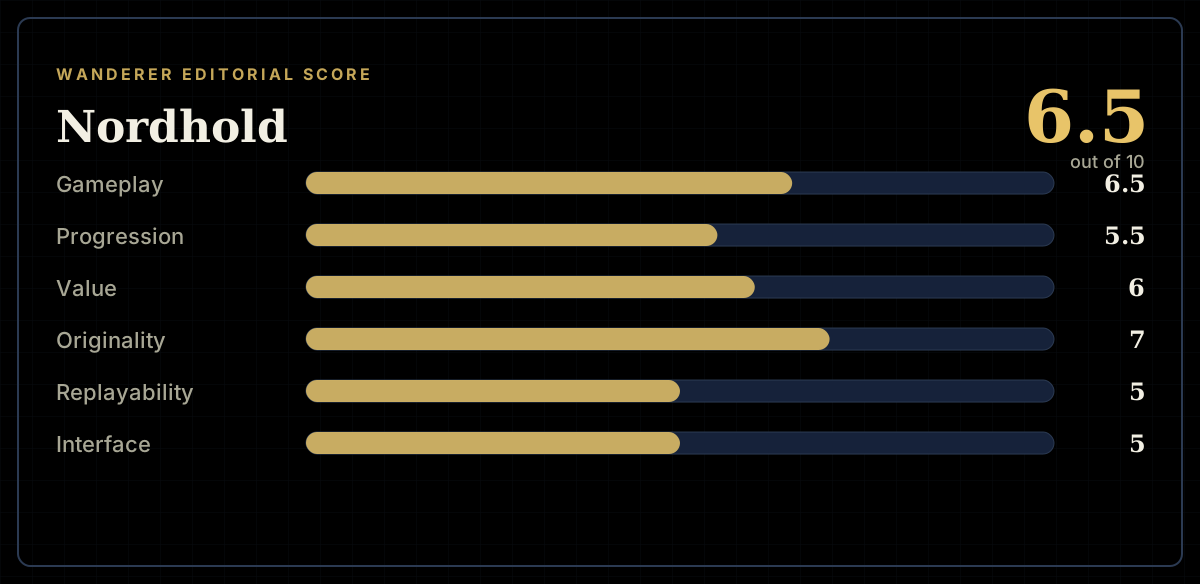
6.5 / 10
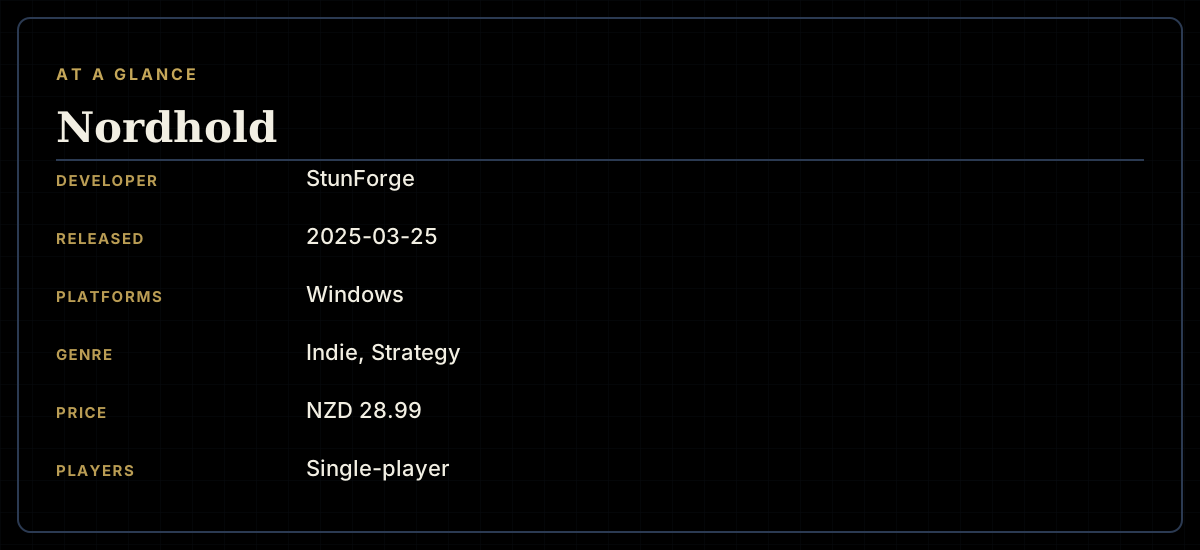
- Developer
- StunForge
- Publisher
- HypeTrain Digital, StunForge
- Released
- 25 March 2025
- Platforms
- Windows
- Genre
- Indie, Strategy
- Players
- Single-player
The short version
Biggest strengths
- A genuinely deep fusion of tower defense and roguelite run structure, with several long-time TD veterans calling it among the best entries they've played in the genre
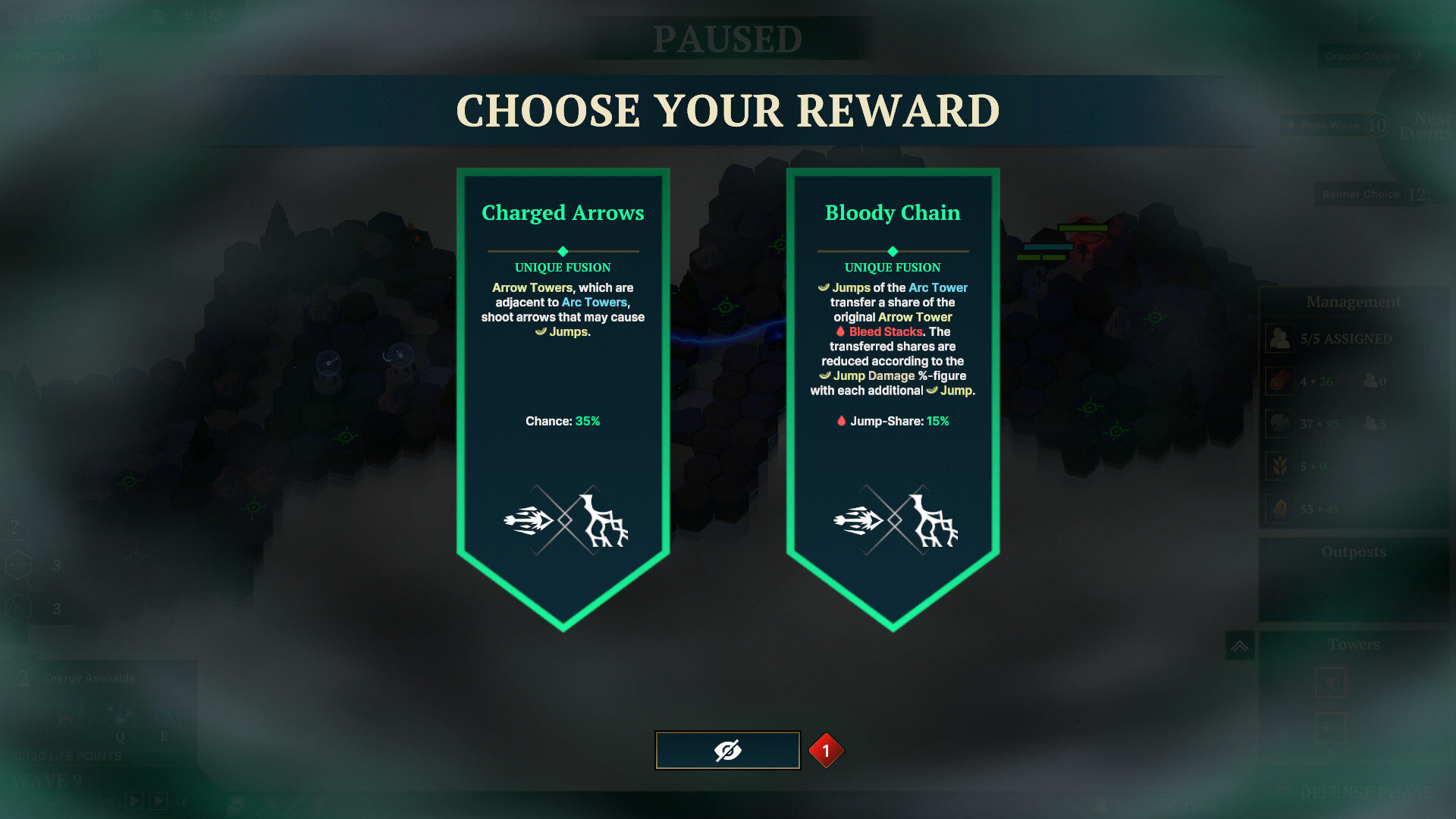
- Randomized maps, banners, and relics create real per-run variance rather than a static, memorized optimal path
- Meta-progression and a cozy Nordic-village presentation give the run structure a sense of long-term stakes beyond a single session
Biggest weaknesses
- A post-launch balance patch is reported by multiple reviewers to have made the early economy so restrictive that reaching the game's more interesting later strategic layer now requires following a narrow, near-mandatory build order
- Tower balance is repeatedly described as heavily skewed toward a small handful of dominant choices, with several reviewers reporting most of the roster feels close to useless by comparison
- A strong, recurring "same run every time" complaint once a player has won once, since the actual strategic decisions tend to converge on one build regardless of the randomized elements around it
6.5 / 10
Tower defense with a roguelite spine
Nordhold takes the tower-defense formula — build defenses along a path, survive escalating enemy waves, upgrade between rounds — and grafts it onto a run-based roguelite structure: each attempt generates a new map, offers a random selection of banners and relics to build around, and feeds meta-progression back into future runs regardless of whether the current one succeeds. Wrapped around all of it is a cozy, well-realised Nordic village aesthetic that several reviewers single out for its presentation alone, with satisfying sound design and a "one more round" pull that a number of long-time tower-defense players describe in genuinely enthusiastic terms — one reviewer with over a decade of tower-defense playtime across dozens of titles calls it, without qualification, the best they've played.
That praise is real and substantial, and it's worth taking at face value: the fusion of a genre built around static optimization with one built around per-run variance and long-term meta-growth is a legitimately interesting design idea, and when it clicks — when the randomized banners and relics on offer for a given run actually open up a different strategic angle than the last one — reviewers describe exactly the kind of "just one more round" engagement the roguelite half of the design is meant to produce.
When it doesn't click, it really doesn't
The trouble, and it's the single most consistent thread running through a large and detailed negative review sample, is that the "different angle" the design promises frequently isn't there in practice. Reviewers repeatedly describe converging on one dominant build through trial and error and then having no reason to deviate from it, since a meaningful share of the tower roster is reported as simply weaker across the board rather than differently useful. "I unlocked everything in the game and I still always use to the L25 or L30 boss," one reviewer writes, "because I apparently did not do the right things... I refuse to play a game that forces me to use a guided patch any further" — a specific complaint about the game's own community-made optimal-build guides becoming close to mandatory rather than optional, which is a meaningfully different problem than simple difficulty.
Layered onto that is a currently-relevant, rather than merely historical, controversy: the review sample's single most-upvoted negative review, posted roughly two months after launch rather than in a launch-week pile-on, reports that a balance patch specifically made the early economy more punishing, walling off the game's more interesting later strategic layer behind a narrow set of required early choices. Several other reviewers corroborate the same shape of complaint independently — the interesting strategic decisions the roguelite structure is supposed to enable exist mostly in theory, gated behind an early game that increasingly demands one correct sequence of moves to even reach them.
A documentation problem underneath the balance problem
A second, related complaint concerns clarity rather than difficulty: several detailed reviews describe banners, relics, and enemy special abilities as insufficiently explained in-game, forcing players to learn what things actually do through failed runs rather than clear system feedback. One reviewer frames this precisely against the genre's better examples: "the great roguelikes help you improve from run to run not simply by meta-progression, but by teaching you through failure. This requires clear information and feedback." That's a sharp, specific standard to hold the game to, and the review sample suggests Nordhold doesn't consistently meet it — several reviewers describe making meaningful early-run decisions essentially blind.
The achievement data supports a game with real structural depth despite these complaints — the completion curve runs a wide, smooth range from 84.6% for early milestones down to single digits for the hardest late unlocks like "Last Stand" at 2.5%, spread across 32 distinct achievements. That's consistent with a genuinely substantial game rather than a shallow one; the criticism in the reviews isn't that there's nothing to do, it's that the path to the interesting parts of what's there has been made narrower than it should be.
City building in the marketing, tower defense in the box
One more specific complaint is worth separating out from the balance discussion, because it's about honesty in presentation rather than difficulty: several reviewers report the store page's description and trailer oversell a city-building layer that doesn't really exist in the shipped game. "This game has no city building and has an incredibly uninspired basic economy balance even for a tower defence game," one detailed review states, arguing the game is better understood and marketed as a straightforward session-based roguelite tower defense than as the hybrid city-builder its framing implies. That's a fair, checkable expectation-setting issue distinct from the balance and documentation complaints above — anyone drawn in specifically by the village-building angle should know the actual mechanical weight sits almost entirely on the tower-defense side.
Where this leaves it
Nordhold is a genuinely ambitious and, for a meaningful share of its audience, genuinely successful attempt to fuse tower defense with roguelite structure — the presentation is strong, the concept is sound, and plenty of experienced genre veterans rate it among the best examples they've played. Set against that is a real, well-documented balance and clarity problem: a post-launch patch that several reviewers say tightened the early game into a near-mandatory build order, a tower roster with a sharp power gap between its best and worst options, and documentation that leaves core systems to be learned through failure rather than explained up front. It's worth playing for the concept and the presentation, with the expectation that getting to the game's best moments currently requires more trial-and-error patience than the roguelite framing initially suggests.
Pros and cons
Pros
- A genuinely deep fusion of tower defense and roguelite run structure, with several long-time TD veterans calling it among the best entries they've played in the genre
- Randomized maps, banners, and relics create real per-run variance rather than a static, memorized optimal path
- Meta-progression and a cozy Nordic-village presentation give the run structure a sense of long-term stakes beyond a single session
- Satisfying sound design and presentation that multiple reviewers single out even when critical of the balance underneath
Cons
- A post-launch balance patch is reported by multiple reviewers to have made the early economy so restrictive that reaching the game's more interesting later strategic layer now requires following a narrow, near-mandatory build order
- Tower balance is repeatedly described as heavily skewed toward a small handful of dominant choices, with several reviewers reporting most of the roster feels close to useless by comparison
- A strong, recurring "same run every time" complaint once a player has won once, since the actual strategic decisions tend to converge on one build regardless of the randomized elements around it
- In-game documentation of banners, relics, and enemy mechanics is repeatedly criticized as insufficient, leaving players to learn core systems through trial and error rather than clear feedback
Screenshots
-
NordholdImage: HypeTrain Digital via Steam -
NordholdImage: HypeTrain Digital via Steam -
NordholdImage: HypeTrain Digital via Steam -
How the review scores each part of the gameWanderer Editorial -
At a glanceWanderer Editorial -
The short versionWanderer Editorial