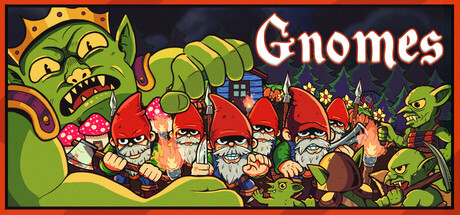
Game review
Gnomes
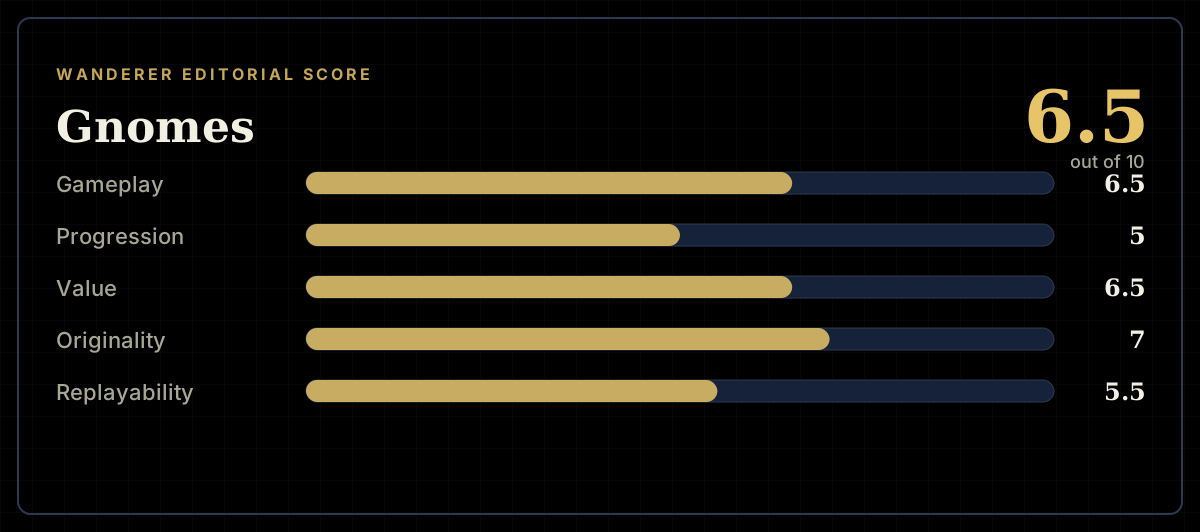
6.5 / 10
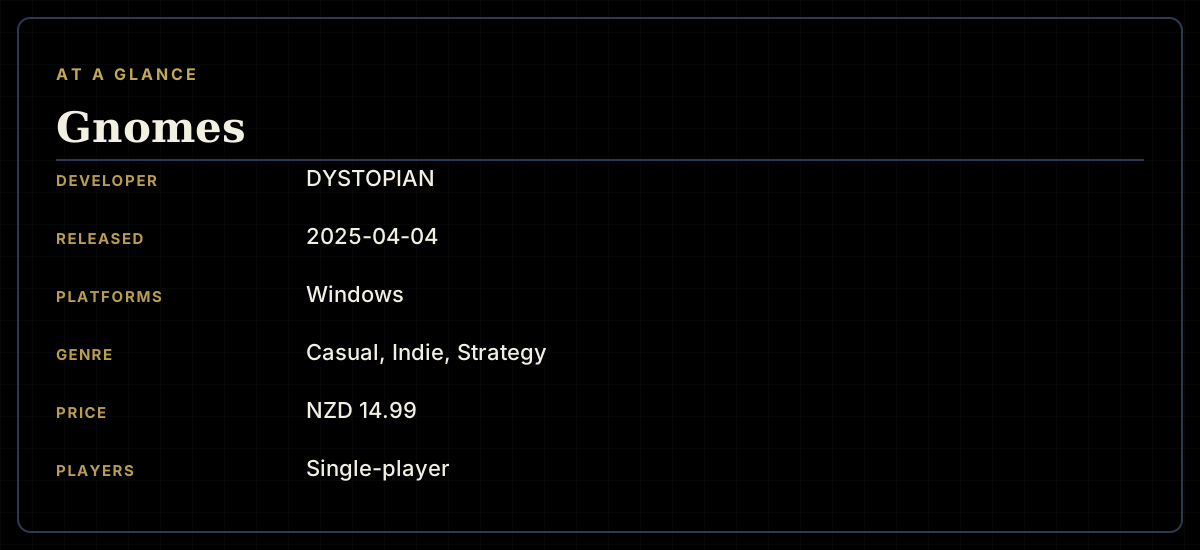
- Developer
- DYSTOPIAN
- Publisher
- DYSTOPIAN, Gamersky Games
- Released
- 4 April 2025
- Platforms
- Windows
- Genre
- Casual, Indie, Strategy
- Players
- Single-player
The short version
Biggest strengths
- A genuine reinvention of tower-defense fundamentals — your gnome units are mobile rather than placed on fixed points, changing how the whole genre's core spatial puzzle works
- A well-liked farming-economy layer sits underneath the combat, giving each run a resource-management rhythm distinct from a straightforward wave-defense game
- Charming arcade-bright presentation and sound design that reviewers praise even when they're critical of the strategic depth underneath
Biggest weaknesses
- The mobile-unit hook that makes the game distinctive is also its most divisive design choice — many reviewers describe having to reposition every gnome every wave as tedious busywork rather than an interesting puzzle, especially once enemy pathing shifts mid-plan
- A strong, repeated complaint that runs converge on the same optimal strategy and artifact picks regardless of starting conditions, with little incentive to deviate
- No meaningful meta-progression between runs beyond cosmetic or minor unlocks, which several reviewers say makes the loop feel stale after the first several hours
6.5 / 10
Tower defense where the towers walk
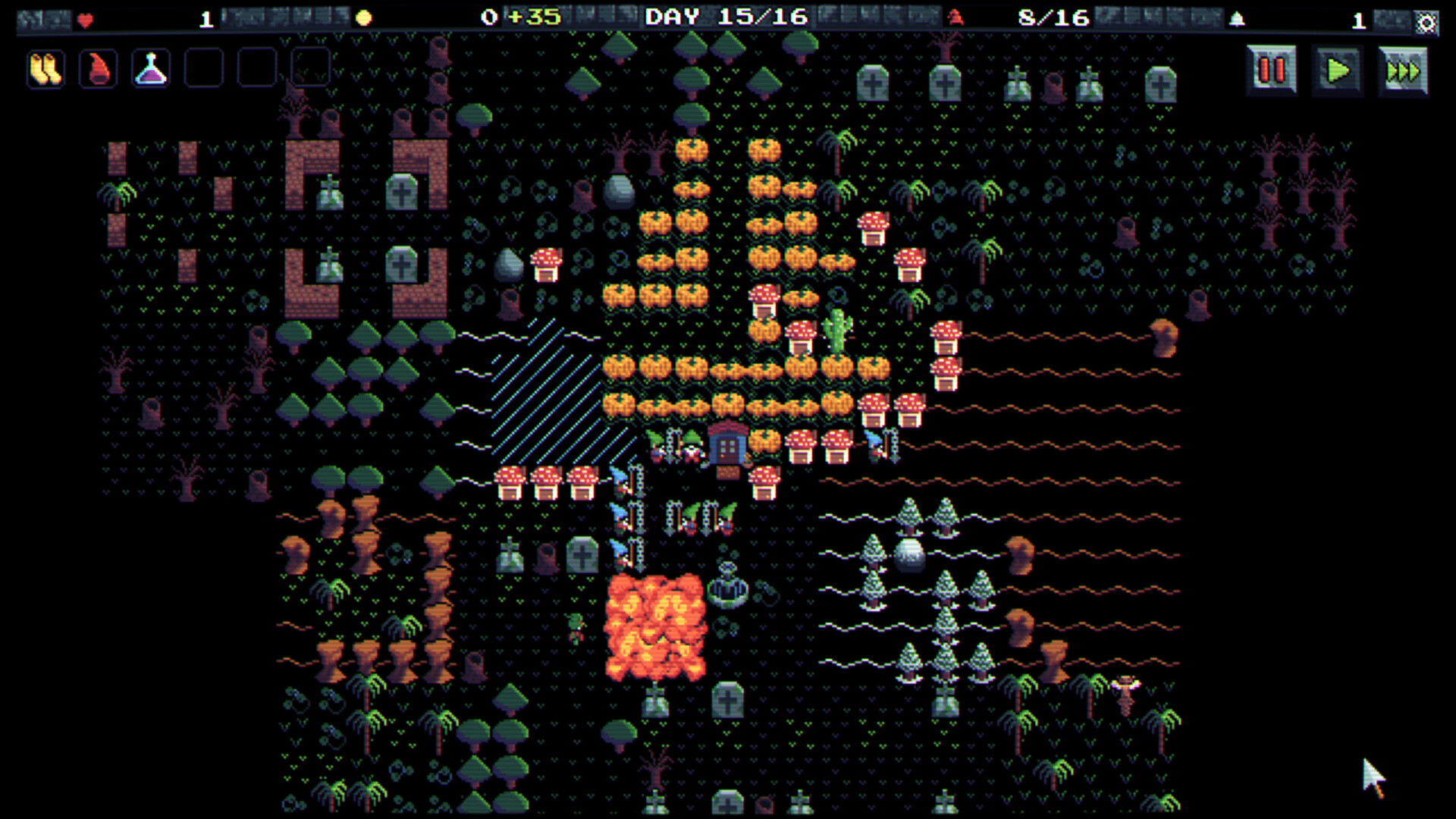
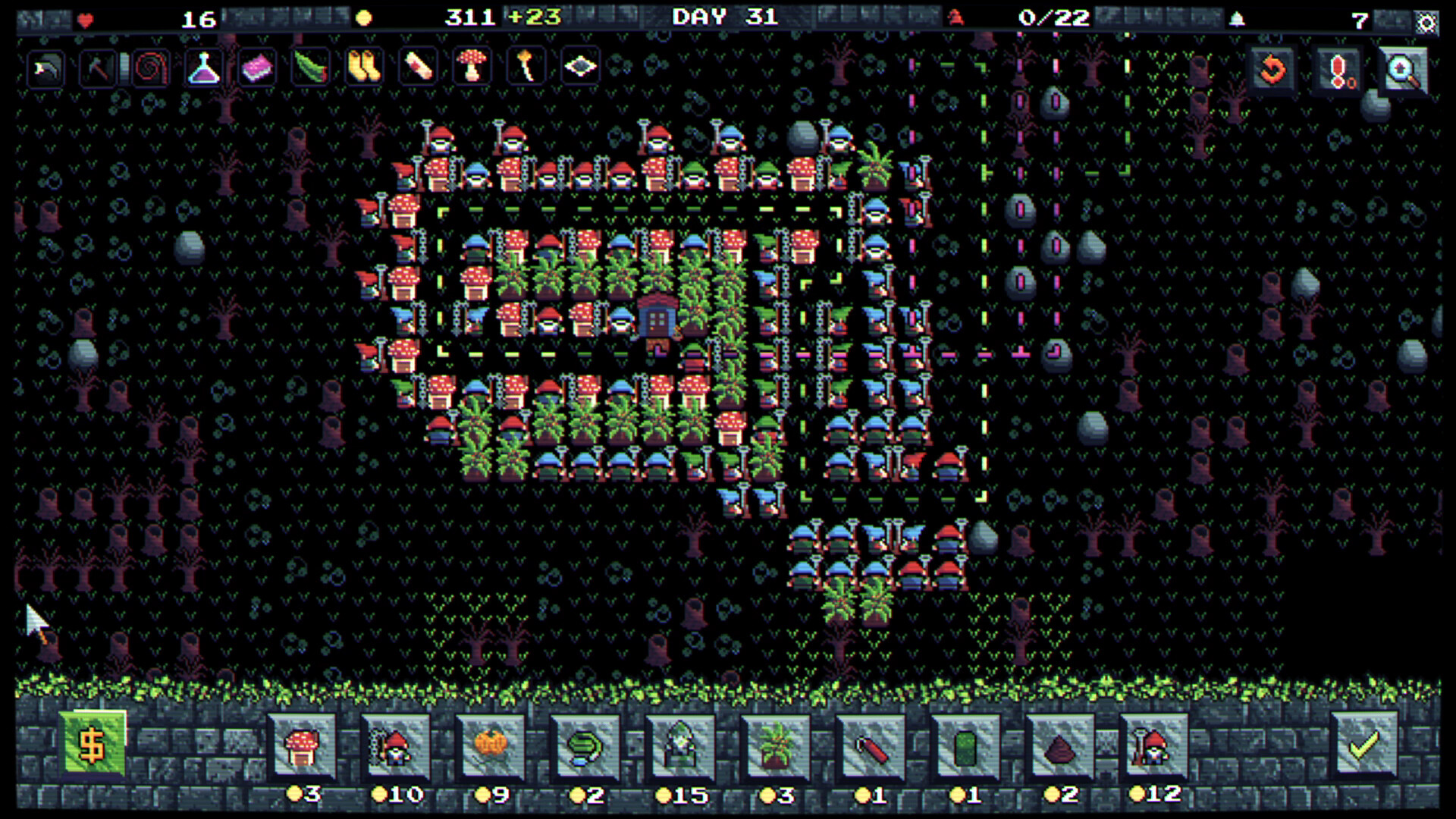
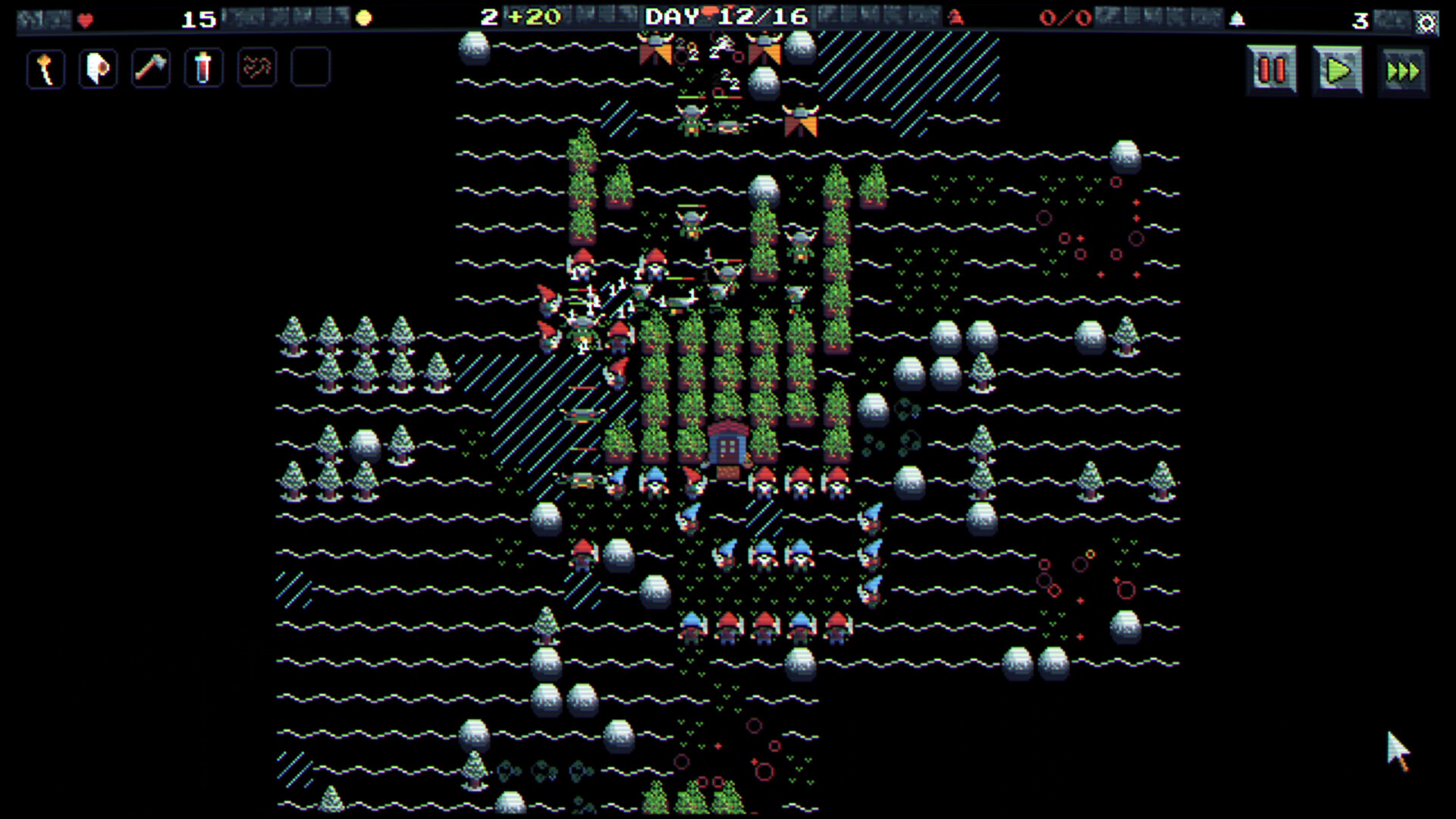
Gnomes' one genuinely novel idea is also its most divisive: instead of placing towers at fixed points along a lane, you deploy small mobile gnome units that you can — and, as waves escalate, must — reposition across the map as enemy pathing shifts around whatever you've built. Layered on top of the combat is a farming and resource economy: plant crops, manage soil types, and grow the income that funds your unit roster, all inside procedurally generated biomes that push you deeper into goblin-infested territory run after run. It's a legitimately fresh combination, and the presentation sells it well — reviewers across the spectrum, positive and negative alike, praise the bright arcade aesthetic and the sound design even when they have real reservations about everything underneath it.
One review frames the value proposition memorably in a way that captures the appeal directly: joking about running comfortably on modest hardware while being a "complete game" that would still feel worth its price even if development stopped entirely. That's echoed by other reviewers who single out the game's tight, purposeful mechanic design — one goes as far as to say it's one of the most "elegantly concise" strategy games they've played, while specifically wishing for mod support to extend a design they consider strong enough to build community content around.
The mechanic that divides the room
The mobile-unit twist that makes Gnomes distinctive from every other tower defense on the market is exactly what a large share of its critical reviews single out as the problem. "Having to reposition your gnomes every wave is honestly a pain in the ass," one reviewer writes, "especially because your gnomes alter the enemy path, so you position half your gnomes, then something breaks and you have to move them all again." That's not an isolated complaint — multiple reviewers independently describe the same specific frustration: because gnome placement changes the enemy path, and the enemy path changes gnome effectiveness, planning can spiral into constant re-adjustment rather than settling into a satisfying rhythm. One reviewer calls the genre reframing "more of a puzzle game than anything else" as a result, which is either a compliment or a complaint depending on what a given player wanted from a tower-defense purchase.
A shallow strategic well beneath a deep completion ladder
The second major thread in the negative reviews concerns build variety and long-term progression rather than the core mechanic itself. A detailed pros-and-cons review lays it out precisely: "simple strategy depth, repeat same strategy every composition every run... artifact offers little to no variety, same OP good choices every start... economy offers little to no strategic depth." Several other reviewers converge on the identical observation independently — that once an optimal approach is found, there's limited incentive to experiment with anything else, and no meaningful meta-progression exists between runs to give repeated play a sense of building toward something. "Unlocks are nice, but without long-term growth or upgrades, there's not much incentive to keep playing," one review summarises.
That complaint sits in real tension with the achievement data, which argues for genuine, substantial depth at the extreme high end: the hardest full-completion achievements — winning with all relics, all rare items, all common items, all uncommon items — each sit at just 0.2–0.3% of the playerbase, an extraordinarily steep tail even by roguelite standards. One reviewer captures this split directly: "Pretty fun game but do not expect to 100% it. Very sweaty endgame." The picture that emerges is a game whose everyday strategic loop is thinner than reviewers wanted, sitting underneath a genuinely brutal completionist ceiling for the small fraction of players who push toward full mastery.
A recent balance patch is a live point of contention
One more thread is worth separating from the general balance discussion because it concerns a specific, dated change rather than the game's original design: at least one detailed review points to a recent update introducing new imbalance rather than fixing existing problems, describing "the imbalance introduced by the latest update" as actively harming the experience relative to how the game played before it. That's a meaningfully different kind of complaint than "the game was always too easy once solved" — it suggests the developer is still actively tuning the game post-launch, for better or worse, which cuts both ways: it means the specific balance complaints in this review may not hold in perpetuity, but it also means anyone buying today is buying into a game whose numbers are still visibly in motion rather than a settled, finished design.
That's worth keeping in mind alongside everything else here: Gnomes reads less like an abandoned or coasting release and more like a genuinely interesting design still being actively rebalanced, for an audience that is largely enthusiastic about the foundation even where they disagree about specific numbers sitting on top of it.
Where this leaves it
Gnomes takes a real risk with its central mechanic — mobile units instead of fixed towers — and that risk pays off unevenly depending on whether a given player experiences it as a fresh spatial puzzle or as constant, tedious re-planning. The farming-economy layer and presentation are well-liked across the board, and the achievement data confirms there's a genuinely difficult endgame for players who want one. But the middle of the experience, the everyday run-to-run strategic variety most players will actually spend their time in, is thinner than either the premise or the price point promises, with limited build diversity and little meta-progression to pull players back for a fifth or sixth run. Worth trying for the novelty of its core idea, with tempered expectations about how much strategic depth survives the first several hours.
Pros and cons
Pros
- A genuine reinvention of tower-defense fundamentals — your gnome units are mobile rather than placed on fixed points, changing how the whole genre's core spatial puzzle works
- A well-liked farming-economy layer sits underneath the combat, giving each run a resource-management rhythm distinct from a straightforward wave-defense game
- Charming arcade-bright presentation and sound design that reviewers praise even when they're critical of the strategic depth underneath
- An extremely wide achievement spread (62.6% down to 0.2% across 69 achievements) confirms a genuine, punishing endgame exists for players chasing full completion
Cons
- The mobile-unit hook that makes the game distinctive is also its most divisive design choice — many reviewers describe having to reposition every gnome every wave as tedious busywork rather than an interesting puzzle, especially once enemy pathing shifts mid-plan
- A strong, repeated complaint that runs converge on the same optimal strategy and artifact picks regardless of starting conditions, with little incentive to deviate
- No meaningful meta-progression between runs beyond cosmetic or minor unlocks, which several reviewers say makes the loop feel stale after the first several hours
- Multiple reviewers report the game under-explains its own systems even with the tutorial enabled, citing specific unlisted mechanics like crop soil requirements and boss health regeneration
Screenshots
-
GnomesImage: DYSTOPIAN via Steam -
GnomesImage: DYSTOPIAN via Steam -
GnomesImage: DYSTOPIAN via Steam -
How the review scores each part of the gameWanderer Editorial -
At a glanceWanderer Editorial -
The short versionWanderer Editorial