Game review
Deck of Haunts
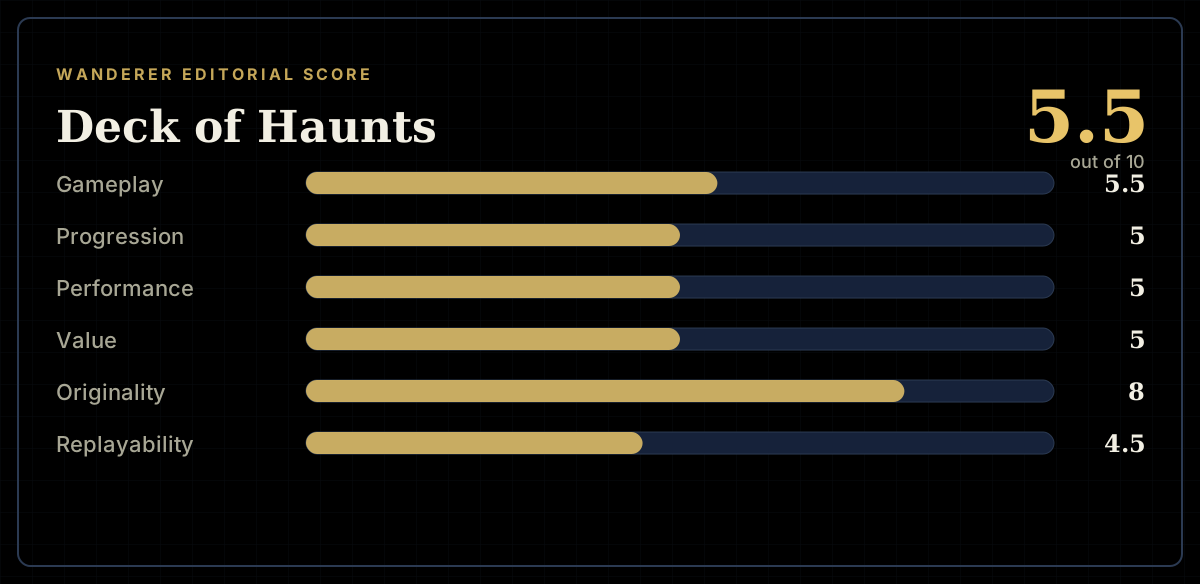
5.5 / 10
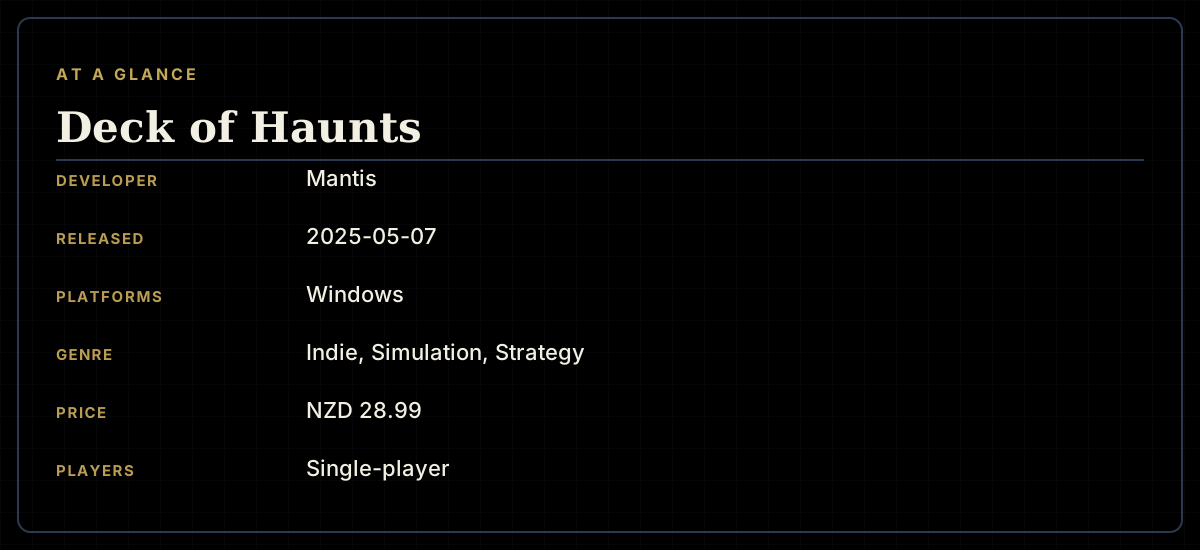
- Developer
- Mantis
- Publisher
- DANGEN Entertainment, Game Source Entertainment
- Released
- 7 May 2025
- Platforms
- Windows
- Genre
- Indie, Simulation, Strategy
- Players
- Single-player
The short version
Biggest strengths
- A genuinely original premise — you play the haunted house itself, luring and draining human intruders through a maze of rooms you design and staff with cards — that multiple reviewers say they've never seen attempted before
- Strong gothic atmosphere, music, and small environmental details that reviewers consistently praise even when critical of the mechanics underneath
- A wide, 40-achievement completion spread (95.1% down to 0.7%) confirms there's real difficulty depth in the hardest challenge content for players who push far enough
Biggest weaknesses
- The core spatial-design promise collapses in practice: reviewers independently converge on describing one narrow "1x1 funnel" room layout as the mathematically optimal, near-mandatory house design, undercutting the creative maze-building the premise is built around
- No player-authored starting deck — you choose from a small number of premade decks or a random draw from what you've unlocked, which several reviewers say works against a genre built on deckbuilding choice
- Reported thin on content for its price, with multiple reviewers unlocking nearly everything the base game offers within five to eight hours
5.5 / 10
You are the haunted house
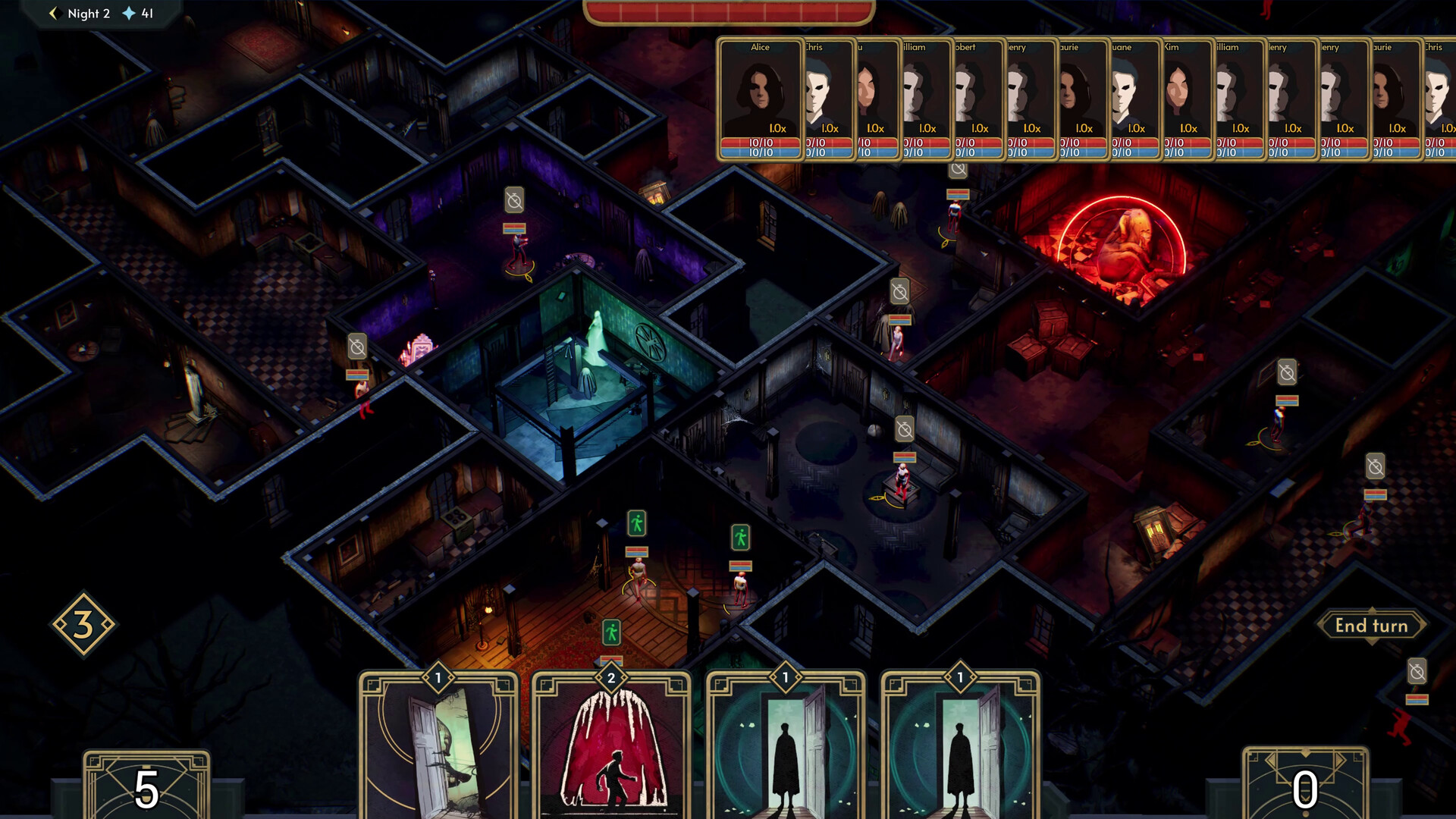
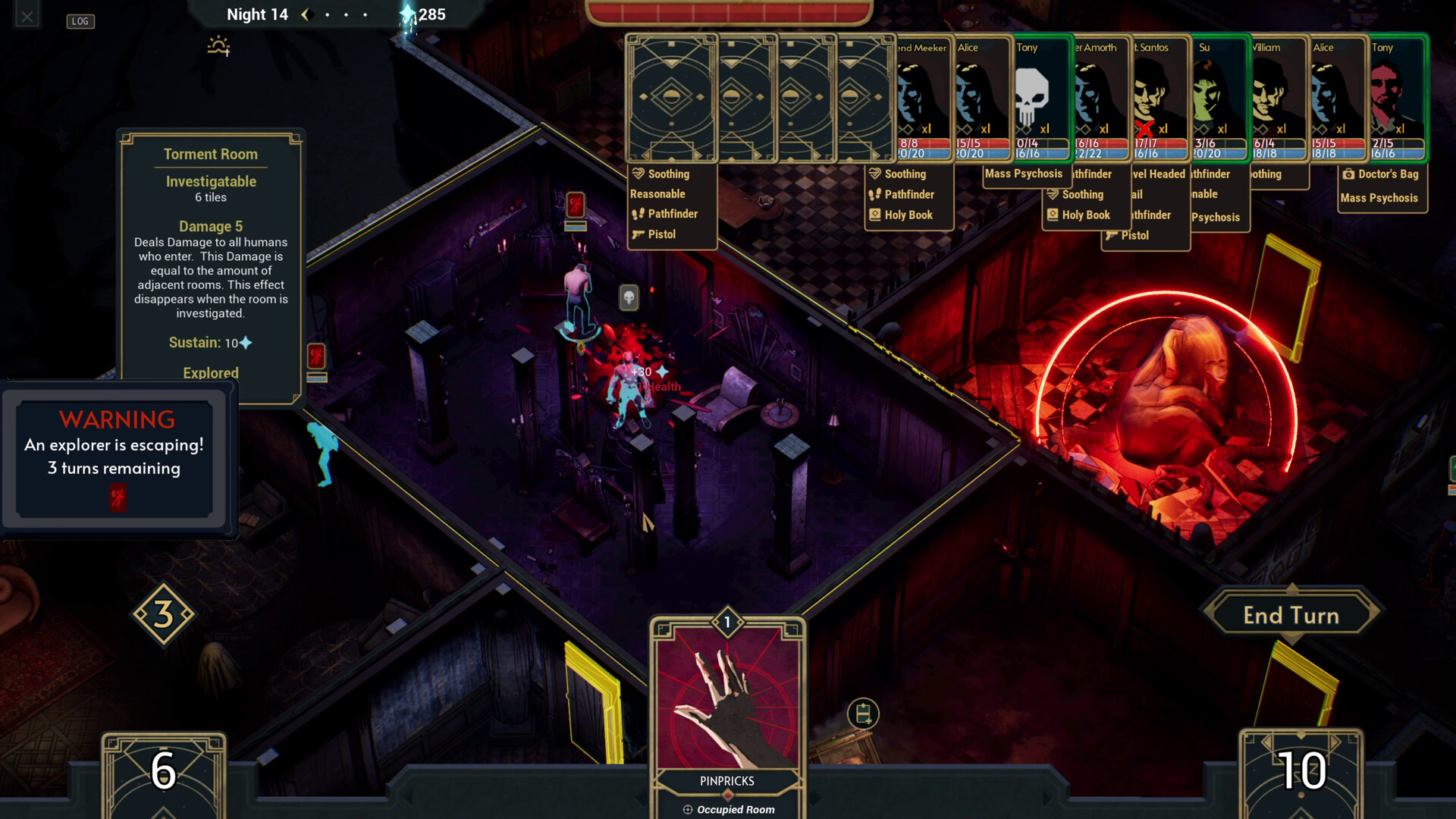
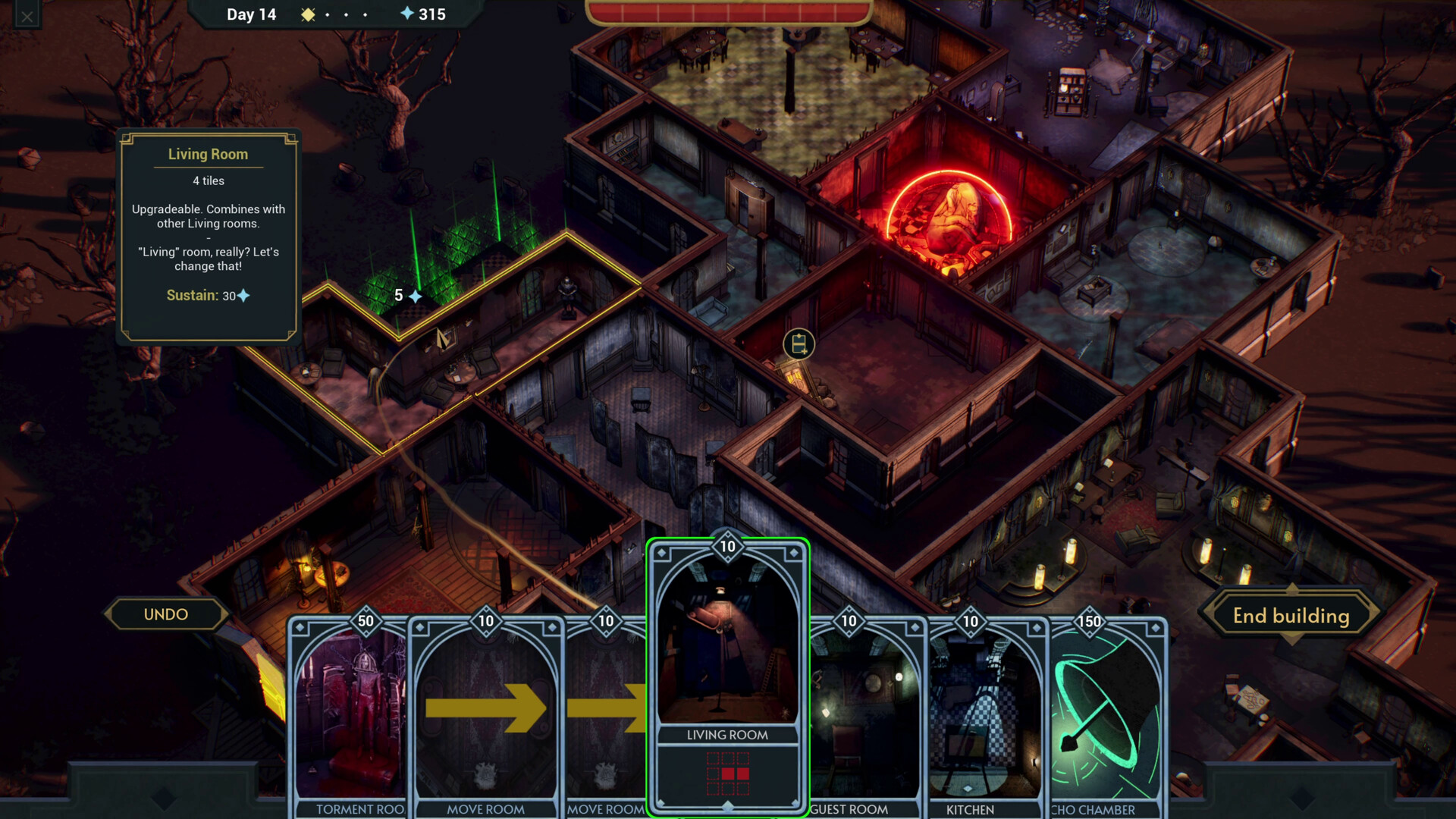
Deck of Haunts starts from a premise genuinely uncommon enough to stand out on its own: rather than exploring a haunted mansion, you play as the mansion, luring nosy human visitors inside, manipulating their fears through a deck of cards, and draining their essence to grow your power across a series of escalating nights. It's part deckbuilder, part tower-defense maze-design puzzle, wrapped in a gothic atmosphere that draws favourable comparisons in the review base to Boss Monster and the Cthulhu-adjacent dread of Arkham Horror. The presentation carries real craft — reviewers who are otherwise sharply critical of the mechanics still consistently praise the music, the vibe, and small environmental storytelling details, and more than one describes genuine excitement following the game through its public demo period before release.
That demo-to-1.0 trajectory is itself a real point in the game's favour: reviewers who tracked the game through its development describe meaningful growth by launch — more nights, a larger card pool, new room types, and difficulty modifiers that weren't present earlier. This isn't a game that shipped with nothing behind its concept; it's one whose core mechanical loop, once built out, turned out to have a structural problem the additional content didn't solve.
The maze that solves itself
The single most consistent, most specific criticism across the review sample concerns the game's central spatial-design hook — building a house layout that channels intruders where you want them. Multiple reviewers, independently and using nearly identical language, describe discovering that the actual optimal layout is a repeating "1x1" funnel pattern, and that deviating meaningfully from it makes runs harder for no compensating benefit. "What could be a really creative game of building a haunted house, just becomes building countless 1x1 [rooms]," one review puts it, and another calls the same layout "mandatory" rather than merely favoured. That's a serious problem for a game whose entire premise is spatial creativity — if there's one correct answer to the central puzzle, the puzzle stops being one after the first few runs.
Compounding it is a specific, independently-reported enemy behaviour: an AI trait called "Pathfinder" lets intruders enter through a randomly chosen room rather than the entrance your maze is designed to funnel them through, which multiple reviewers say undermines the maze concept directly rather than adding a fair difficulty spike. Layered on top of the layout problem is a deckbuilding structure some reviewers find backwards for the genre: rather than assembling your own starting deck, you choose from a handful of premade options or accept a random draw from your unlocked pool, which several reviewers argue removes exactly the kind of build-crafting agency deckbuilders are usually valued for.
Content, bugs, and a missing safety net
A recurring value complaint sits alongside the design criticism: several reviewers report unlocking nearly everything the base game offers — cards, rooms, challenge modes — within five to eight hours, which at a roughly NZD 29 price point reads as thin to multiple reviewers who otherwise like the underlying idea. One reviewer explicitly frames this as a "wait for more content" recommendation rather than an outright pan. A separate, more pointed complaint concerns technical readiness at launch: one detailed review describes graphical bugs, mechanical bugs, and achievement-tracking bugs at release, arguing the game "is clearly early access but selling itself as a full release" despite not carrying an Early Access tag. A more practical and very specific complaint: runs don't autosave, and at least one reviewer reports losing a run twenty days deep to an accidental exit — a real quality-of-life gap for a roguelite genre where losing hard-won progress to a UI oversight, rather than to the game's actual challenge, is a particularly frustrating way to lose.
The achievement data suggests the hardest content, at least, has real teeth: milestones like completing the Nightmare difficulty tier sit at just 1.2%, and several late-game challenge achievements sit under 3%, a genuinely steep tail for players who push past the early hours the "solved" 1x1 strategy dominates. That's a meaningful asterisk on the "solved after a few runs" complaint — the ceiling for mastery is real, even if the everyday strategic variety underneath it is thinner than the premise promises.
A genre mashup that's honest about its influences
It's worth being precise about what kind of game this actually is once the marketing framing is set aside, because a few reviewers arrive at sharper, more useful descriptions than "deckbuilder" alone provides. One review calls it, more accurately, "a stylized solitaire with some missing information and bugs... more like a maze-builder with some cards," while another lands on "more like a tower defense game because so many enemies will waltz straight to the heart if you don't have a single, trapped funnel." Both descriptions are more mechanically precise than the store page's own deckbuilder-forward pitch, and both point at the same underlying issue from different angles: the card layer is real but thinner than the genre label implies, and the actual skill test is spatial optimization against AI pathing rather than deck construction or in-combat decision-making.
That reframing matters for expectation-setting more than it changes the verdict. A buyer going in expecting a Slay the Spire-style deckbuilder with a haunted-house skin is likely to be disappointed by how little the cards themselves vary run to run; a buyer going in expecting a tower-defense-adjacent spatial puzzle with a genuinely novel setting and strong atmosphere is more likely to get what they're actually paying for, funnel-maze optimization and all.
Where this leaves it
Deck of Haunts has one of the most genuinely original premises this lane has covered, executed with real atmospheric craft and a demonstrated willingness to keep building content through its development. What holds it back is that its central mechanic — designing a haunted house layout — has a discovered optimal answer that several independent reviewers converge on describing in near-identical terms, turning a creative puzzle into a repetitive execution exercise once you've found it. Recommended for the atmosphere and the novelty of the concept, with realistic expectations about how much strategic variety survives contact with the game's own best players, and a strong suggestion to manually save often given the reported absence of autosave.
Pros and cons
Pros
- A genuinely original premise — you play the haunted house itself, luring and draining human intruders through a maze of rooms you design and staff with cards — that multiple reviewers say they've never seen attempted before
- Strong gothic atmosphere, music, and small environmental details that reviewers consistently praise even when critical of the mechanics underneath
- A wide, 40-achievement completion spread (95.1% down to 0.7%) confirms there's real difficulty depth in the hardest challenge content for players who push far enough
- The demo-to-release trajectory reviewers describe (more nights, more cards, more room types, difficulty modifiers) shows real content growth over the game's development
Cons
- The core spatial-design promise collapses in practice: reviewers independently converge on describing one narrow "1x1 funnel" room layout as the mathematically optimal, near-mandatory house design, undercutting the creative maze-building the premise is built around
- No player-authored starting deck — you choose from a small number of premade decks or a random draw from what you've unlocked, which several reviewers say works against a genre built on deckbuilding choice
- Reported thin on content for its price, with multiple reviewers unlocking nearly everything the base game offers within five to eight hours
- A specific enemy AI trait ("Pathfinder," which lets intruders enter through a random room) is repeatedly singled out as breaking maze-based strategy outright rather than adding difficulty
- No run autosave, which cost at least one reviewer a lengthy, far-progressed run entirely on an accidental exit
Screenshots
-
Deck of HauntsImage: DANGEN Entertainment via Steam -
Deck of HauntsImage: DANGEN Entertainment via Steam -
Deck of HauntsImage: DANGEN Entertainment via Steam -
How the review scores each part of the gameWanderer Editorial -
At a glanceWanderer Editorial -
The short versionWanderer Editorial