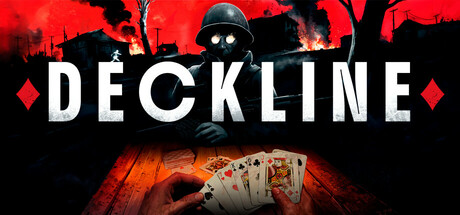
Game review
Deckline
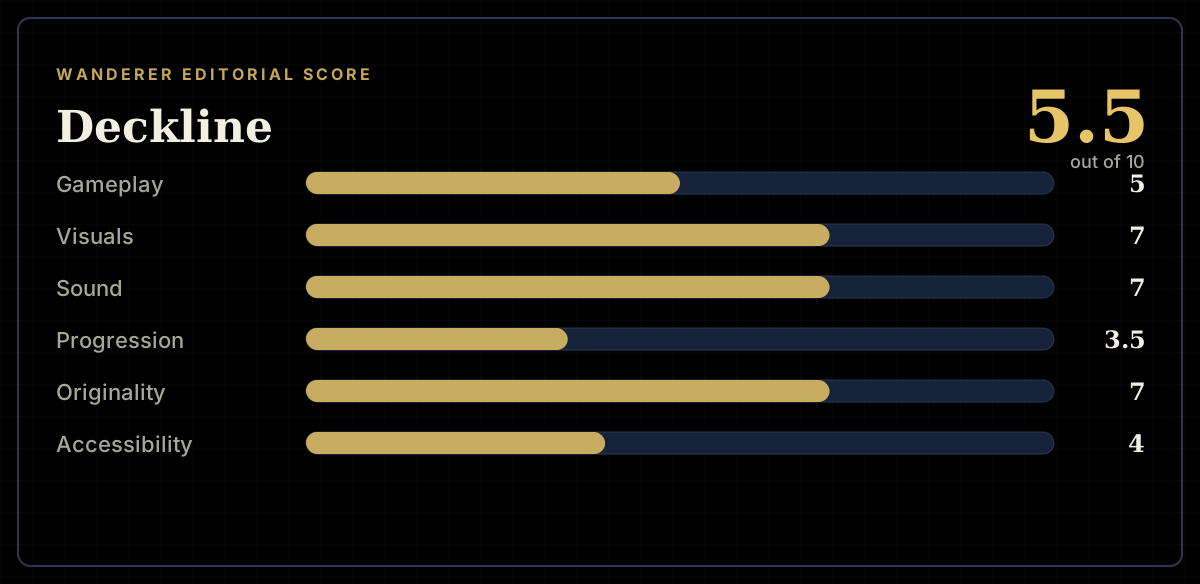
5.5 / 10
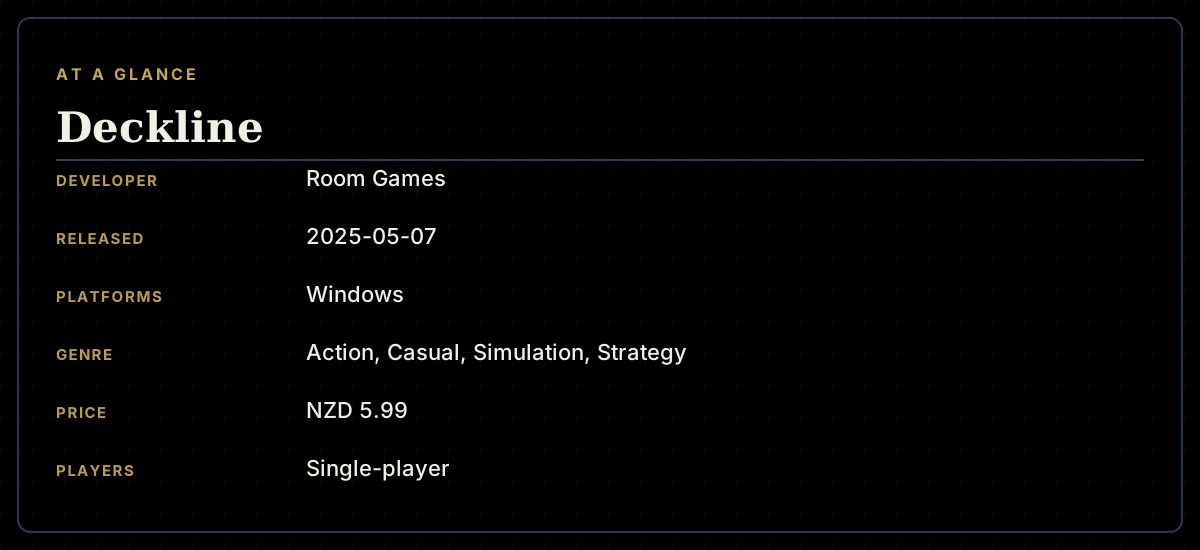
- Developer
- Room Games
- Publisher
- Room Games
- Released
- 7 May 2025
- Platforms
- Windows
- Genre
- Action, Casual, Simulation, Strategy
- Players
- Single-player
The short version
Biggest strengths
- A genuinely striking, unusual premise — a last card game between soldiers while the shelling gets closer — that reviewers repeatedly praise for its atmosphere alone
- Successfully introduces the Russian card game Durak to a Western audience unfamiliar with it, with multiple reviewers reporting they picked up the rules within a few losses and came away curious about the real game
- Distinct low-light visuals, thundering ambient war sound, and grimy presentation that reviewers consistently credit even when they're otherwise critical
Biggest weaknesses
- No progression system beyond a raw win/loss score, which multiple reviewers say leaves no concrete reason to keep playing after a first win
- Missing basic quality-of-life features expected of any digital card game, including no way to rearrange or sort cards in hand and, according to one detailed review, no in-game reference for the rules themselves
- The story is reported as vanishingly small, with one reviewer calling it "infinitesimally small," despite the atmospheric framing promising a narrative experience
5.5 / 10
One last game before the walls come down
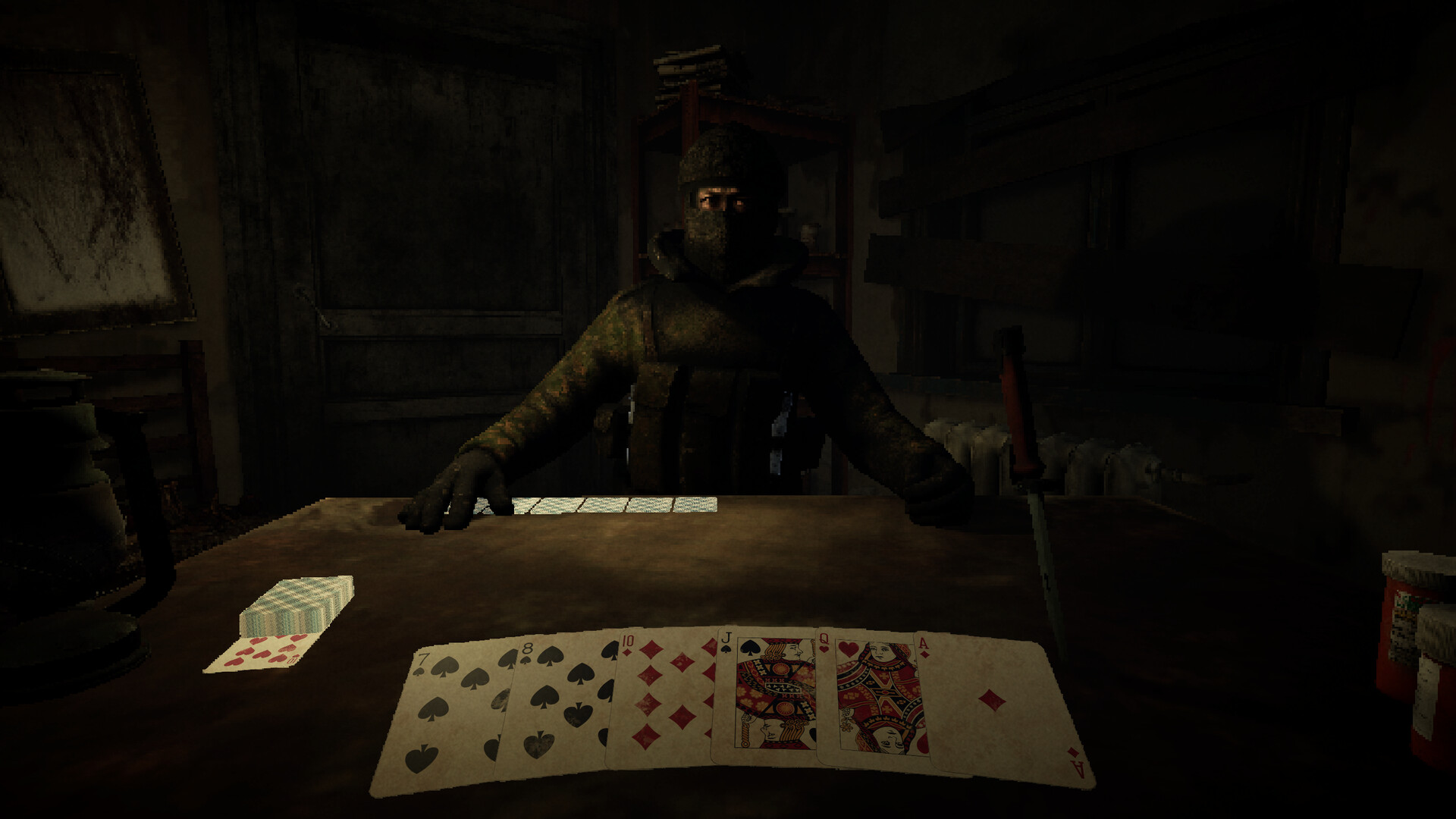
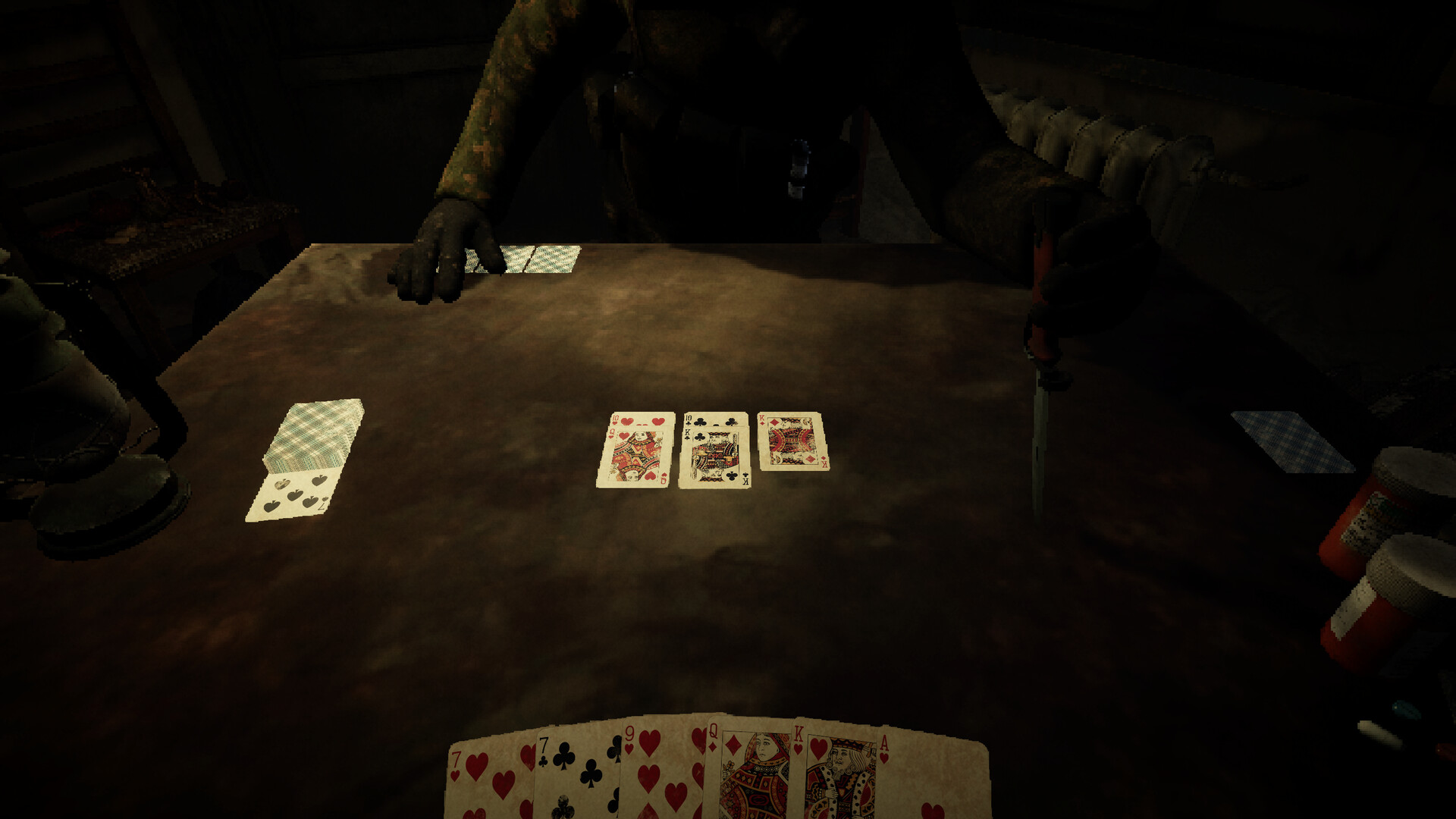
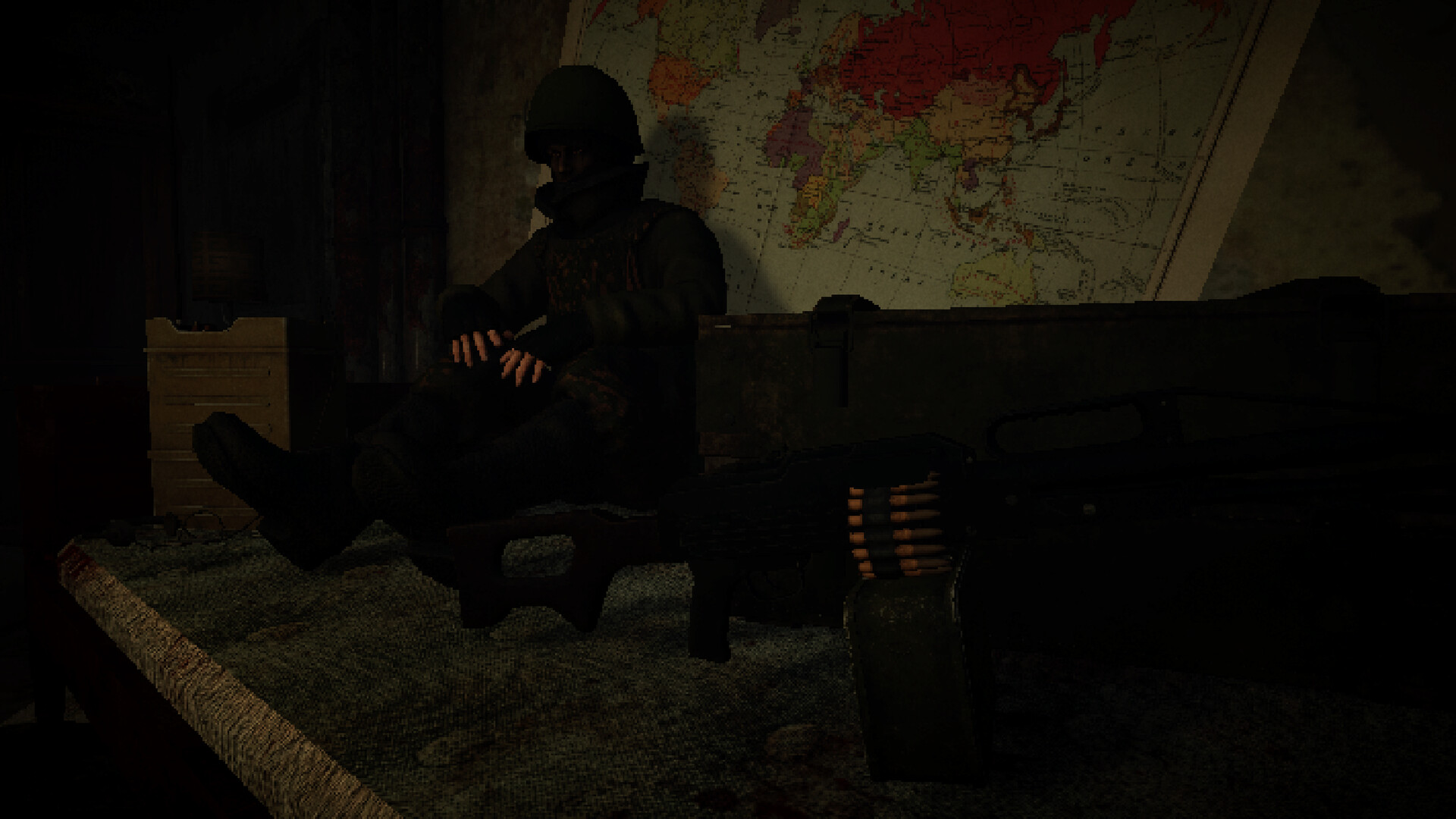
Deckline's premise is disarmingly simple and genuinely effective as a hook: two soldiers, one bunker, one table, and a game of Durak while artillery gets steadily closer outside. It's a small, single-idea game, and reviewers across the board credit it for nailing that idea's atmosphere — dim lighting, distant thunder, and a persistent sense of dread that several reviewers say elevates what would otherwise be a straightforward card-game implementation into something genuinely memorable in the moment. "The atmosphere is very strong, made by a low light environment, thundering war sounds in the background, and grimy visuals," one review states, a sentiment echoed almost universally even by reviewers who can't recommend the game overall.
The game's other genuine success is educational in a low-key way: Durak, a widely played but Western-obscure Russian card game, gets a real introduction here, and multiple reviewers report never having heard of it before Deckline and coming away both able to play it and curious to learn more. "I never heard of Durak until playing Deckline... now I'm pretty interested in Durak overall," one review states, which is a genuinely rare and specific kind of praise — the game succeeding at something closer to cultural transmission than pure entertainment.
An experience with almost nothing underneath the mood
Where the reviews turn sharply is on content and structure. The single most consistent complaint concerns the complete absence of any progression system: you win or lose hands, a score accumulates, and that's it. "When I won, there was nothing. only 'score'. and no motivation to keep playing," one detailed reviewer writes, explicitly noting they don't want the game turned into a roguelike, just given some reason to return once the novelty of the setting wears off. A separate, more comprehensive negative review lists the gaps precisely: "no option for more than two players, no optional Durak rules, no challenges, no multiplayer and no customizable card decks" — a fairly complete accounting of the features a digital card game adaptation would typically be expected to include, none of which are present here.
Basic usability gaps compound the thinness. One reviewer reports there's no way to rearrange cards within your hand to better see suits and ranks, and, more strikingly, that the game ships without any in-game reference for the rules of Durak itself — a real problem for a game whose entire appeal rests on teaching an unfamiliar ruleset to newcomers. The narrative side fares no better by most accounts: despite the atmospheric framing suggesting a story worth uncovering, reviewers describe what's actually there as vanishingly thin, with one calling it "infinitesimally small" and another stating flatly "there's no plot whatsoever."
A specific integrity question worth flagging
One recurring, more serious complaint deserves its own mention: multiple reviewers report the card deal doesn't feel randomized, describing near-identical sessions and, in one detailed case, an opponent that reliably yields the same strong suits early in every match. This review can't independently verify the shuffle algorithm's actual randomness, but it's worth flagging as a repeated, specific player observation rather than a vague balance complaint — if accurate, it would undermine the fairness of the one mechanical system the entire game is built around. A separate, concrete accessibility complaint is more directly checkable: the game's screen-shake and flashing-light effects, tied to the shelling atmosphere, have no toggle to reduce or disable them, which several reviewers call out as a real oversight given how central those effects are to the moment-to-moment presentation.
The achievement data suggests a modest but real structural spread underneath the thin content complaints — the curve runs from 85.4% for an early milestone down to a cluster of achievements under 2% for the hardest wins and specific card-combination challenges, spread across 21 total achievements. That's not nothing, but it's a considerably shorter tail than most of the deckbuilders and roguelikes covered elsewhere in this lane, consistent with reviewers' shared sense that there simply isn't much game here once the atmosphere and the Durak lesson have been absorbed.
Rules on purpose, or rules by omission?
There's a useful distinction some reviewers draw between Deckline's stripped-down feel being a deliberate artistic choice versus a simple lack of features, and it's worth taking seriously rather than assuming the harsher reading is automatically correct. One reviewer frames the base Durak implementation as a positive precisely because it resists the urge to bolt on unnecessary systems: "it's ok to focus on" the core card game rather than padding it with mechanics that don't serve the mood — though that same reviewer still concludes the lack of any progression system goes a step too far even under that generous reading. Another reviewer more bluntly rejects the charitable interpretation, calling it "basically a slavic card game 'Durak' without any additional twists and modifications," wanting "twists and replayability and something interesting" that the atmosphere alone can't substitute for.
That split matters because it changes what "more content" would even mean here. A player sympathetic to the minimalist framing might want just a save-anywhere option or a rules reference and nothing else; a player who wants the game to earn its price through mechanical depth is asking for something closer to a full redesign. Both are reasonable readings of the same thin package, and prospective buyers should know which kind of disappointment they're more likely to have going in.
Where this leaves it
Deckline succeeds completely at the one thing it's clearly most interested in — building a specific, memorable mood around a genuinely under-exposed card game — and at its asking price, several reviewers argue that's enough to be worth the purchase regardless of everything it's missing. What it doesn't offer is much reason to return: no progression, missing basic card-game quality-of-life features, a story too thin to register, and a specific, repeated player concern about whether its central mechanic is even properly randomized. Worth a single evening's purchase for the atmosphere and the Durak introduction alone, with expectations set firmly at "short mood piece" rather than "card game with legs."
Pros and cons
Pros
- A genuinely striking, unusual premise — a last card game between soldiers while the shelling gets closer — that reviewers repeatedly praise for its atmosphere alone
- Successfully introduces the Russian card game Durak to a Western audience unfamiliar with it, with multiple reviewers reporting they picked up the rules within a few losses and came away curious about the real game
- Distinct low-light visuals, thundering ambient war sound, and grimy presentation that reviewers consistently credit even when they're otherwise critical
- Extremely cheap at its asking price, which several reviewers cite directly as making its thin content easier to forgive
Cons
- No progression system beyond a raw win/loss score, which multiple reviewers say leaves no concrete reason to keep playing after a first win
- Missing basic quality-of-life features expected of any digital card game, including no way to rearrange or sort cards in hand and, according to one detailed review, no in-game reference for the rules themselves
- The story is reported as vanishingly small, with one reviewer calling it "infinitesimally small," despite the atmospheric framing promising a narrative experience
- No accessibility toggle for screen shake or flashing visual effects, a real omission for a game that leans on constant environmental distortion for tone
- A specific, unverified but repeated complaint that the card deal does not appear randomized, playing out identically across sessions
Screenshots
-
DecklineImage: Room Games via Steam -
DecklineImage: Room Games via Steam -
DecklineImage: Room Games via Steam -
How the review scores each part of the gameWanderer Editorial -
At a glanceWanderer Editorial -
The short versionWanderer Editorial