
Game review
Night in the Woods
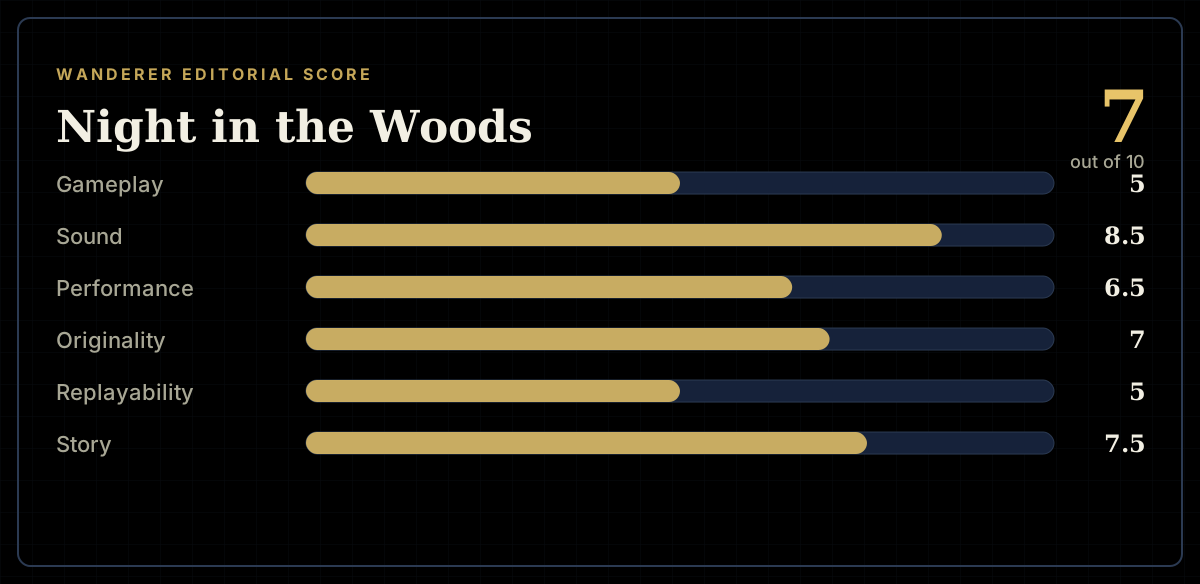
7 / 10
- Developer
- Infinite Fall
- Publisher
- Finji
- Released
- 21 February 2017
- Platforms
- Windows, macOS, Linux
- Genre
- Narrative Adventure
- Monetisation
- Paid, one-time purchase, plus a free content update (Weird Autumn Edition).
- Players
- Single-player only.
The short version
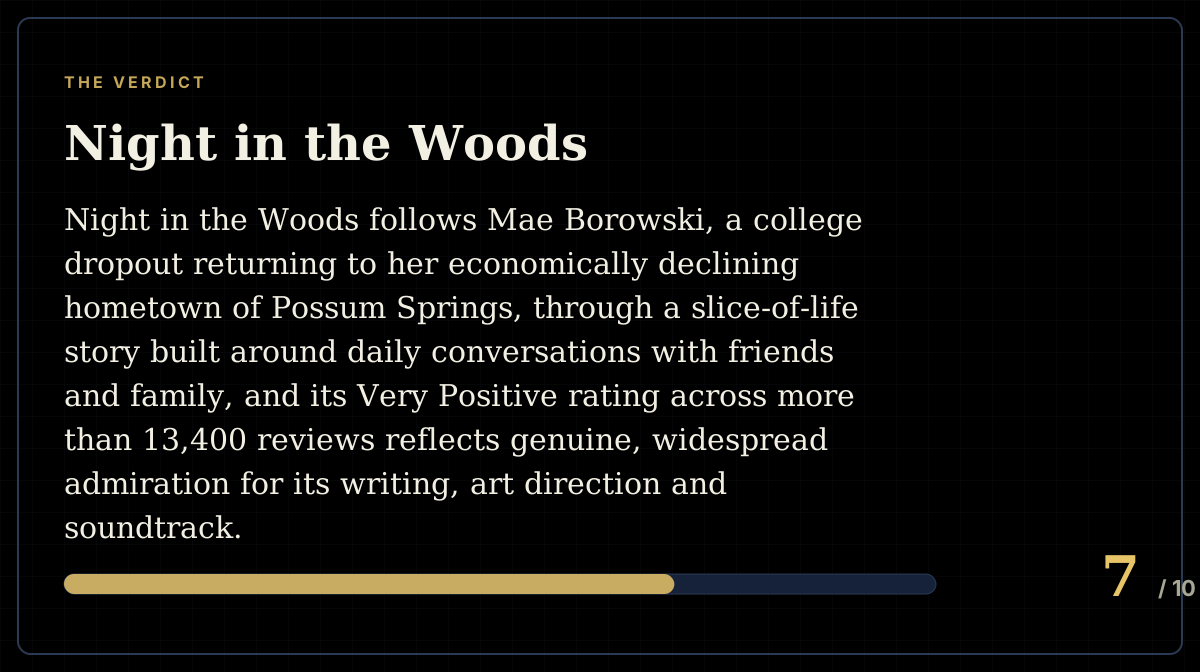
Night in the Woods follows Mae Borowski, a college dropout returning to her economically declining hometown of Possum Springs, through a slice-of-life story built around daily conversations with friends and family, and its Very Positive rating across more than 13,400 reviews reflects genuine, widespread admiration for its writing, art direction and soundtrack. What holds this review back is a consistent complaint that the game's repetitive daily walk-and-talk loop and a plot that arrives late relative to the runtime leave a meaningful share of players describing the pacing as padded or slow. This review also notes, with appropriate restraint, that the game's original composer and co-creator passed away in 2019 amid disputed public allegations; some reviewers factor that into their recommendation, and this review does not take a position on those allegations or repeat specific claims made about any individual.
Biggest strengths
- Genuinely well-regarded writing and character work, with reviewers consistently praising how naturally the friendship between Mae and her circle develops over the course of the story.
- A distinctive, hand-crafted visual style and an outstanding, widely praised soundtrack that reviewers repeatedly single out as among the best aspects of the game.
- A specific, effective focus on economic decline and small-town stagnation as a genuine narrative throughline, giving Possum Springs real thematic weight beyond its charming presentation.
Biggest weaknesses
- A consistent complaint describes the core daily loop of walking around town talking to the same characters as repetitive, with several reviewers feeling the six-hour-plus runtime is padded relative to roughly two hours of substantial plot content.
- Several reviewers describe the main plot as arriving very late in the game, with pacing that leaves large stretches feeling directionless before a concentrated final push of story content.
- A planned narrative follow-up, Revenant Hill, was announced and later confirmed cancelled in 2023, meaning any larger story ambitions beyond this game will not be realised.
Who it's for: Fans of character-driven, slice-of-life narrative games who value writing and atmosphere over traditional gameplay systems, and who are prepared for a slow-burn plot that takes real time to develop.
Our recommendation: A well-written, atmospheric narrative experience worth playing for its characters and world; go in with patience for its slow, repetitive daily structure.
7 / 10
Genuinely well-regarded writing, art and music
Night in the Woods' core strength, by wide consensus across this review base, is its character writing and presentation. "Lovely character design, quaint art style/aesthetic, outstanding soundtrack, charming settings to explore, interesting world-building," reads a 2018 review, listing exactly the elements reviewers across this sample most consistently credit. A 2020 review frames the appeal specifically: "The character interactions are fun, the art and soundtrack are beautiful, and the characters can be very relatable." That combination — naturalistic, well-observed dialogue between Mae and her friend group, paired with a genuinely distinctive visual style and score — is the throughline of praise across nearly this entire review base, including from reviewers who go on to raise the pacing concerns documented below.
Beyond the atmosphere, reviewers consistently single out the game's specific thematic focus as a genuine strength distinct from more generic coming-of-age framing. Possum Springs is written as a town in real, visible economic decline — closed storefronts, a collapsing mine, friends stuck in jobs they've outgrown — and several reviewers credit this grounded specificity as what elevates the writing above a simpler "college dropout comes home" premise. A 2020 review notes the game's willingness to sit with genuinely difficult, unresolved feelings about growing up somewhere that no longer has room for you, rather than offering tidy resolution, as a meaningful strength distinct from its more surface-level charm.
A consistent complaint about repetitive pacing
What tempers that praise, with real consistency, is a specific complaint about the game's daily structure. "Too short (The 6hr length is extremely padded out, but really there's about 2 hours of" substantial story content spread across a much longer runtime of repeated town-walking and conversation, reads a 2018 review. A 2023 review describes the practical experience of that pacing: "having to go through the town every day to talk to the same" characters, with only incremental new dialogue each time, wears thin for a meaningful share of players before the plot's later stretches pick up. A separate review makes a related, more specific complaint: "the plot takes FAR too long to get started, and when it does, there is far too little of it spread over a wide area until the very end, when you get a torrent of plot th[at feels rushed by comparison]." Checking a broad sample of critical reviews, this pacing complaint — not disliking the writing itself, but finding the specific rhythm of slow build-up followed by a late, concentrated plot push — recurs consistently enough to treat as a genuine, structural characteristic of the game's design rather than a matter of individual patience.
A related, more specific complaint concerns the minigames scattered through the daily loop. Several reviewers describe these — including a band-practice rhythm segment and a knife-throwing challenge — as mechanically thin and occasionally frustrating relative to the polish of the writing surrounding them, functioning more as pacing breaks than as gameplay systems worth engaging with on their own merits. This is a narrower criticism than the broader pacing complaint above, but it compounds it: players already finding the core loop repetitive describe these minigame interruptions as adding friction rather than welcome variety.
A planned sequel that never arrived
This review checked Finji's own news feed directly and found a specific, relevant piece of context: a narrative follow-up to Night in the Woods, titled Revenant Hill, was teased by the creators in 2020 and later confirmed cancelled in a 2023 news post. That's worth knowing for anyone specifically invested in Possum Springs and its characters beyond this game — whatever additional story the creators had planned will not be released, and this game represents the complete, final word on its narrative as far as this review can confirm.
A note on the game's history, handled with care
This review found that a significant share of reviews for this specific game reference a serious, real-world event: the game's original composer and co-creator died in 2019, following public allegations of past misconduct that were disputed and never resolved through any legal process this review is aware of. Some reviewers cite this history as a reason for withholding a positive recommendation of the current publisher, independent of their opinion of the game itself. This review takes no position on the underlying allegations, does not repeat the specific claims made by any party, and does not name individuals involved beyond what's necessary to note that this history exists and that it factors into some players' purchasing decisions. Readers for whom this context matters should research it directly through reputable sources rather than relying on any single game review's characterisation, including this one.
Weighing the pacing complaint against the game's own defenders
It's worth being fair to reviewers who don't share the pacing concern. Several explicitly describe the repetitive daily structure as intentional and effective — mirroring the genuine stagnation and slow decline of a struggling small town is, for these reviewers, precisely the point, and the game's themes about economic decay and small-town life land more effectively because the player experiences some of that same repetitive, going-nowhere rhythm Mae herself feels trapped in. That's a legitimate reading of the design choice, and it's worth weighing against the more straightforwardly critical framing some other reviewers offer.
Final verdict
Night in the Woods delivers genuinely well-regarded writing, art direction and music built around a specific, effectively realised small-town setting, and this review credits that achievement honestly. What keeps the score short of higher praise is a consistent, well-corroborated complaint about repetitive daily pacing and a plot that arrives late relative to the game's overall runtime, alongside the confirmed cancellation of any planned narrative continuation. This is a worthwhile, well-crafted narrative experience for patient players who value character and atmosphere; go in understanding the plot takes real time to develop, and this game is now the complete and final chapter of its story.
Pros and cons
Pros
- Genuinely well-regarded writing and character work, with reviewers consistently praising how naturally the friendship between Mae and her circle develops over the course of the story.
- A distinctive, hand-crafted visual style and an outstanding, widely praised soundtrack that reviewers repeatedly single out as among the best aspects of the game.
- A specific, effective focus on economic decline and small-town stagnation as a genuine narrative throughline, giving Possum Springs real thematic weight beyond its charming presentation.
- A free content update, the Weird Autumn Edition, added meaningfully to the base game after release rather than being sold separately.
Cons
- A consistent complaint describes the core daily loop of walking around town talking to the same characters as repetitive, with several reviewers feeling the six-hour-plus runtime is padded relative to roughly two hours of substantial plot content.
- Several reviewers describe the main plot as arriving very late in the game, with pacing that leaves large stretches feeling directionless before a concentrated final push of story content.
- A planned narrative follow-up, Revenant Hill, was announced and later confirmed cancelled in 2023, meaning any larger story ambitions beyond this game will not be realised.
- The game's original composer and co-creator died in 2019 amid publicly disputed allegations; this review notes that some players factor this into their purchasing decision without taking a position on the underlying claims.
Screenshots
-

Night in the WoodsImage: Finji via Steam -

Night in the WoodsImage: Finji via Steam -

Night in the WoodsImage: Finji via Steam -
How the review scores each part of the gameWanderer Editorial -
The short versionWanderer Editorial