Game review
Music Racer
5.5 / 10
- Developer
- AbstractArt
- Publisher
- AbstractArt
- Released
- 20 July 2018
- Platforms
- Windows
- Genre
- Music arcade racer
- Monetisation
- One-off purchase, no in-game currency, ads or gameplay-affecting purchases
- Players
- Local split-screen versus for 2 players; no online multiplayer
The short version
Music Racer's central idea earns real credit: point it at your own music library, or in its better years a YouTube link, and it turns whatever you're listening to into a driving track shaped around that song's own rhythm. As a $2.49 novelty with local MP3s, that idea still holds up fine today. What's collapsed is everything the developer built on top of it — the YouTube plugin that made this game's reputation broke around 2020-2021, several attempted fixes eventually stopped, and roughly six years of silence later the game's own store page has quietly dropped any mention of YouTube at all rather than admit the feature is gone. Layer onto that a specific, repeated player warning about seizure-inducing flashing effects with no way to turn them down, and this is a game whose good idea needs real caveats before recommending it to anyone but the curious and cheap-thrill-seeking.
Biggest strengths
- The core hook of driving a track shaped by whatever song you choose is still genuinely satisfying with local audio files, and rare enough that little else on Steam does it
- Extremely low asking price makes even a short novelty session feel like fair value
- Local split-screen versus mode gives it a genuine reason to load up with a second player, unusual for a budget indie at this price point
Biggest weaknesses
- The YouTube-import feature the game built its reputation and much of its word-of-mouth around has been broken since roughly 2020-2021, confirmed by both the review sample and the absence of any patch addressing it since; the developer has said nothing publicly about its status since the last fix
- The store page's own current description has quietly dropped any mention of YouTube support at all, walking the promise back silently rather than acknowledging what changed
- A specific, detailed reviewer complaint that the game's flashing effects are "seizure-inducing" and don't sync well with music is worth treating as a real accessibility concern, not a stylistic quibble, since no in-game option to reduce flash intensity is documented anywhere
Who it's for: Curious buyers who want a novelty way to drive to their own local music library for a couple of dollars, and nobody who was hoping to feed it a YouTube link based on older reviews or video coverage — that feature hasn't worked in years. Players with photosensitivity should avoid it outright given a specific, credible seizure-risk warning in its own review sample.
Our recommendation: Worth it only at its low asking price and only for the local-file version of the pitch — treat any promise of YouTube integration as dead, and skip it entirely if flashing visuals are a personal health concern.
5.5 / 10
Music Racer's premise is simple enough to explain in one sentence and rare enough that it still stands out eight years later: point it at a song, local or (for a while) streamed, and it builds a neon-lit racing track whose obstacles, speed and length are shaped by that song's own rhythm. Load up your own library, pick a track, and drive. Released in July 2018 for a couple of dollars, it picked up a genuinely warm reception — 80% positive across nearly 900 English-language reviews — built substantially on that one idea. The harder question for a review written in 2026 isn't whether the idea was good. It's whether the specific version of it that made the game's reputation still exists, and the review sample answers that plainly: it doesn't, and hasn't for years.
A good idea that still works, with local files
Strip away everything else and Music Racer's basic loop holds up: select an MP3, OGG, FLAC or WAV file from your own hard drive, and the game generates a run around it, timing beat-collection prompts and obstacle placement to the track's actual rhythm. It's a lightweight, arcade-simple version of the "rhythm game meets your own music library" idea that a small handful of other games have chased, and at this price it doesn't need to be more ambitious than it is. A local two-player split-screen versus mode is a genuine, if modest, bonus feature rarely seen at this budget tier, and Steam Trading Cards and a small achievement set round out a package that clearly intended to give players more than a five-minute toy. Reviewers who engage with it purely on these terms are consistently positive, calling it "simple" and "understand[ing] exactly what it wants to offer" rather than reaching for a genre it never claimed to be.
The feature that made its reputation is gone
Where the story turns is a YouTube import plugin the developer added within weeks of launch in 2018, letting players feed the game a YouTube link instead of a local file — the feature that drove most of the game's word-of-mouth coverage and the one still referenced by reviewers who remember it fondly. The developer supported it seriously for years: the partner-events patch history shows repeated, dedicated YouTube-plugin fix updates in 2018, 2019 and 2020, alongside an AUDIUS streaming integration added in September 2020 as a second online source. The last recorded patch of any kind, in November 2020, is titled "YT plugin is back to action!" — and then nothing. No patch of any kind has followed in the roughly six years since.
The review sample confirms what that silence means in practice. Multiple recent, detailed reviews independently report the plugin has been non-functional for a long time: one calls the game "abandonware" and says "the developers no longer support it," another reports waiting "almost an hour" on a "Converting to audio" screen that never completes, a third simply asks the developer directly to "fix the YouTube" feature. None of these are speculation about intent — they're consistent, first-hand, repeated reports of the same broken feature across different reviewers posting years apart, which is as close to confirmed as an unmaintained indie game's status usually gets without a developer statement. Compounding it quietly: the game's own current store description no longer mentions YouTube integration anywhere, instead directing players to local files or the AUDIUS streaming library — a silent walk-back of a headline feature rather than an acknowledgment that it stopped working.
A specific health warning worth taking seriously
One detailed review raises a concern this review treats as more than an aesthetic complaint: a description of the game's visual effects as "seizure-inducing levels of flashy" that "doesn't match the music very well." No in-game setting to reduce flash intensity or visual effects is documented anywhere in the store listing or patch notes reviewed for this piece. A single reviewer's account isn't a clinical finding, but photosensitive seizure risk is serious enough, and cheap enough to avoid entirely by skipping the game, that it's worth stating plainly rather than filing under ordinary style criticism — anyone with a personal or family history of photosensitive epilepsy should treat this as a real reason to pass, not a stylistic quibble to weigh against the price.
A quiet, thin base game underneath the pitch
Global achievement data suggests the base game, separate from the YouTube controversy entirely, doesn't hold most buyers' attention for long even when everything works. Every tracked achievement sits between roughly 9% and 28% of the playerbase, with no single milestone standing out as a common early stopping point the way a typical game's tutorial-adjacent achievements do — the numbers read less like a difficulty curve and more like a game most buyers try briefly and set aside, consistent with several reviews describing it as a novelty best enjoyed in short bursts ("mostly when I'm drunk," in one reviewer's words) rather than a game with real long-term pull on its own soundtrack and level design alone.
Verdict
Music Racer's founding idea — build a driving track out of whatever song you hand it — is still a genuinely clever, rare pitch, and at $2.49 with your own local music library it does exactly what it says. But the version of that idea reviewers actually praise, the one that could pull a track straight from YouTube, has been dead for roughly six years with no developer acknowledgment beyond quietly removing the claim from the store page, and a specific, credible flashing-lights warning adds a real health caveat on top of the ordinary small-bug complaints that come with unmaintained software. Buy it cheap, expect only the local-file version of the pitch to work, and skip it outright if strobing visuals are a personal risk.
Sources: Steam store page and appdetails API (release date, pricing, platform, current feature description); Steam's aggregate review data (query_summary totals, English-language sample); individually read user reviews, both positive and negative, sorted by helpfulness and recency; Steam's global achievement statistics API; AbstractArt's own partner-events patch notes from 2018 through the last recorded update in November 2020.
Pros and cons
Pros
- The core hook of driving a track shaped by whatever song you choose is still genuinely satisfying with local audio files, and rare enough that little else on Steam does it
- Extremely low asking price makes even a short novelty session feel like fair value
- Local split-screen versus mode gives it a genuine reason to load up with a second player, unusual for a budget indie at this price point
- The developer visibly cared for years, shipping repeated YouTube-plugin fixes, an AUDIUS streaming integration, and even HTC Vive support well past initial launch
- Achievements and Trading Cards support round out the package for collectors at effectively no extra cost
Cons
- The YouTube-import feature the game built its reputation and much of its word-of-mouth around has been broken since roughly 2020-2021, confirmed by both the review sample and the absence of any patch addressing it since; the developer has said nothing publicly about its status since the last fix
- The store page's own current description has quietly dropped any mention of YouTube support at all, walking the promise back silently rather than acknowledging what changed
- A specific, detailed reviewer complaint that the game's flashing effects are "seizure-inducing" and don't sync well with music is worth treating as a real accessibility concern, not a stylistic quibble, since no in-game option to reduce flash intensity is documented anywhere
- Multiple recent reviews report the game failing to load, hanging on "Converting to audio," or simply not launching, consistent with a game that has had no maintenance patch in several years
- Achievement completion sits low across the board (roughly 9-28% for every tracked milestone), suggesting most buyers who do get it working don't stay with it long
Screenshots
-
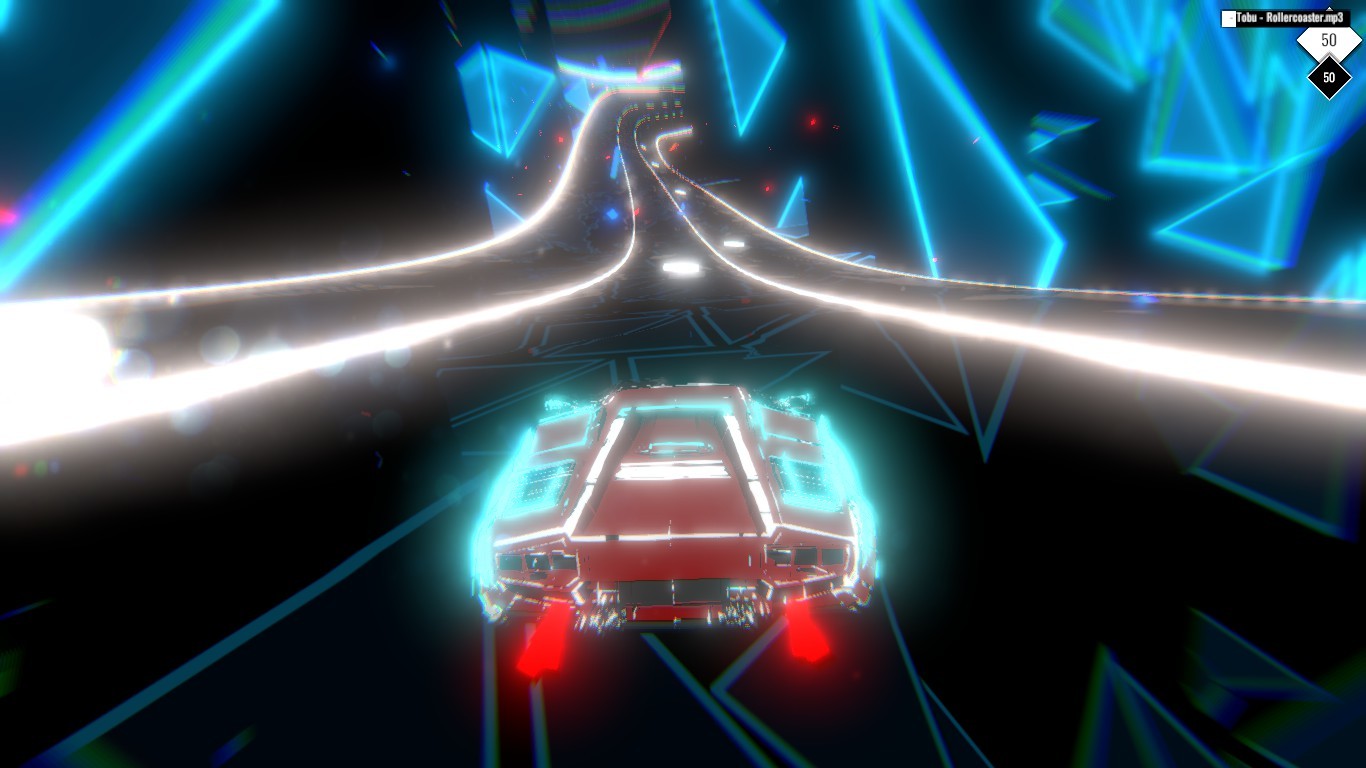
Music RacerImage: AbstractArt via Steam -
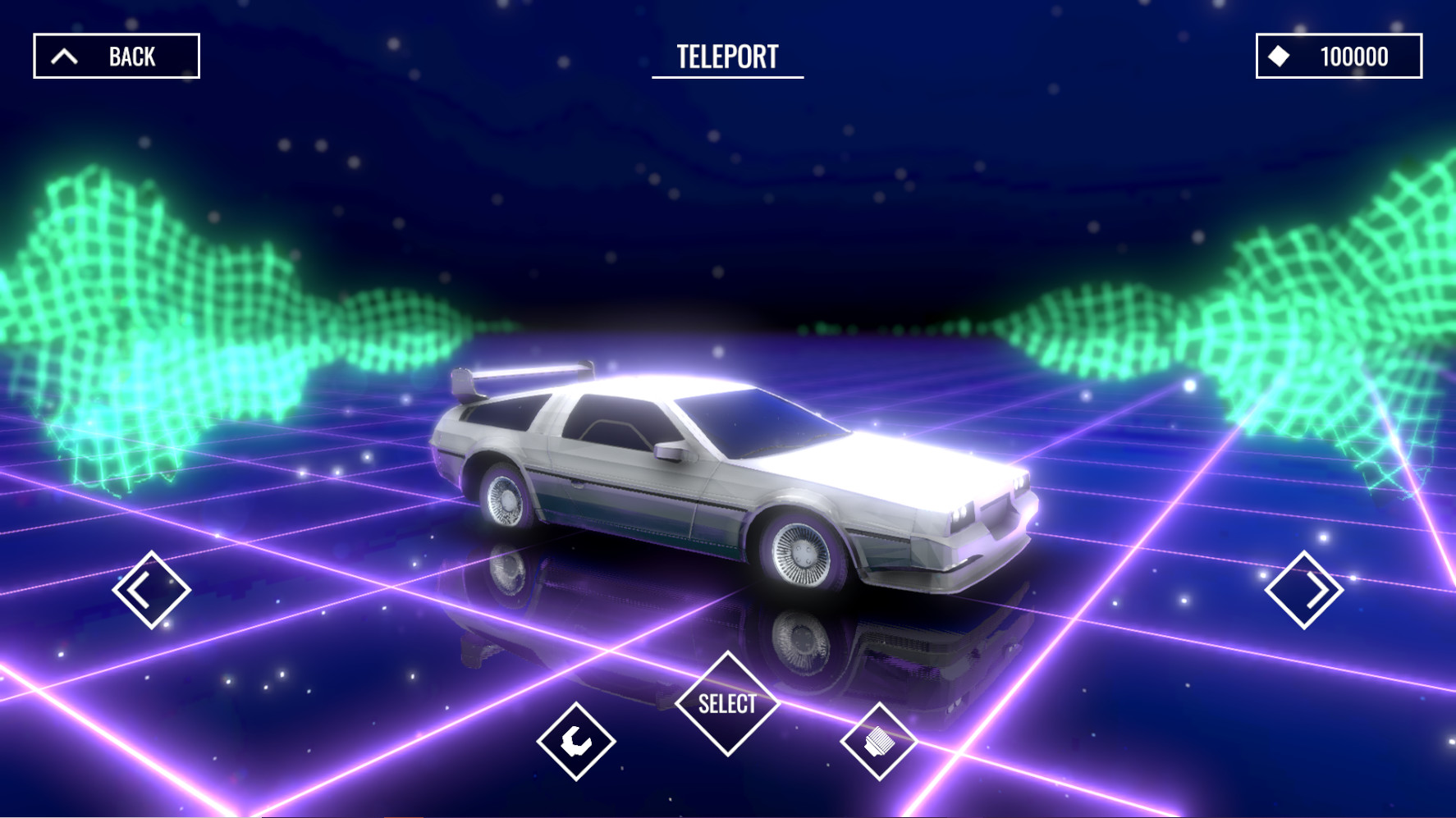
Music RacerImage: AbstractArt via Steam -
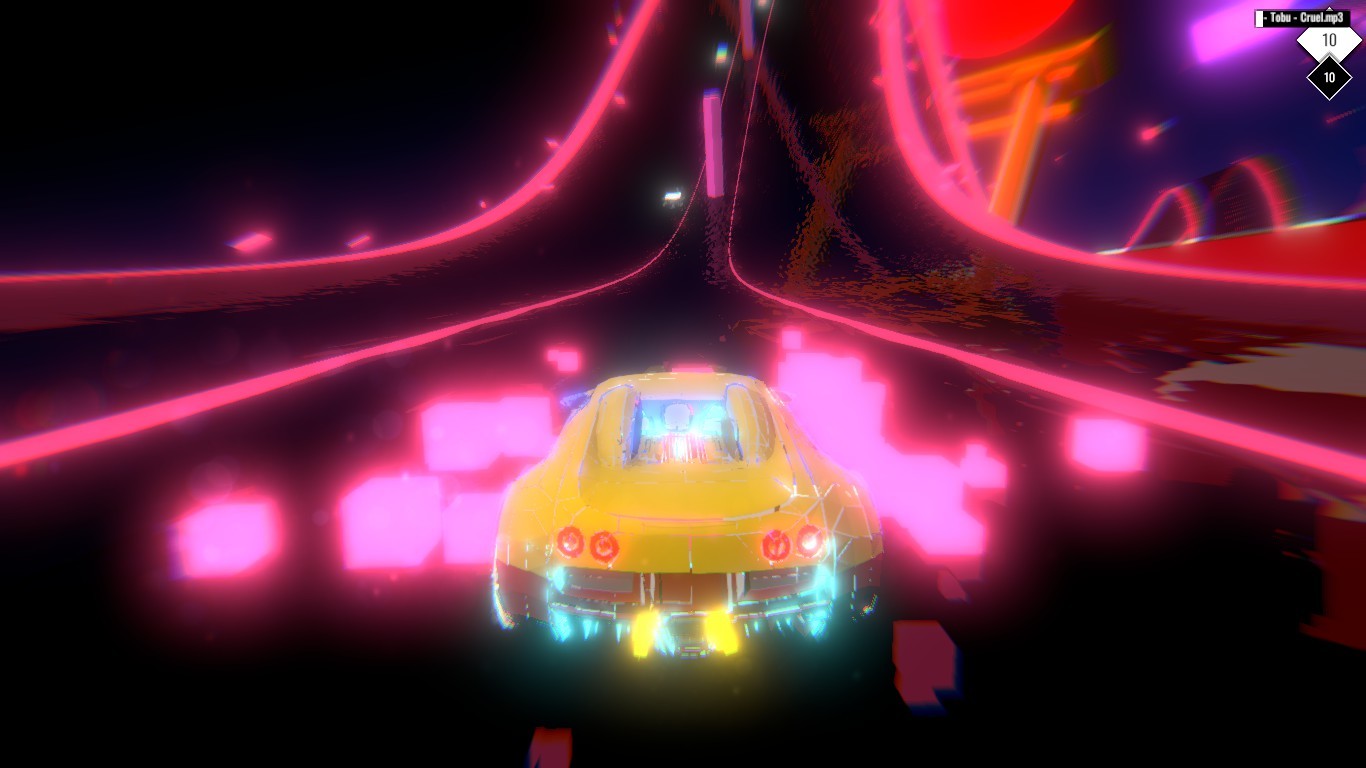
Music RacerImage: AbstractArt via Steam -
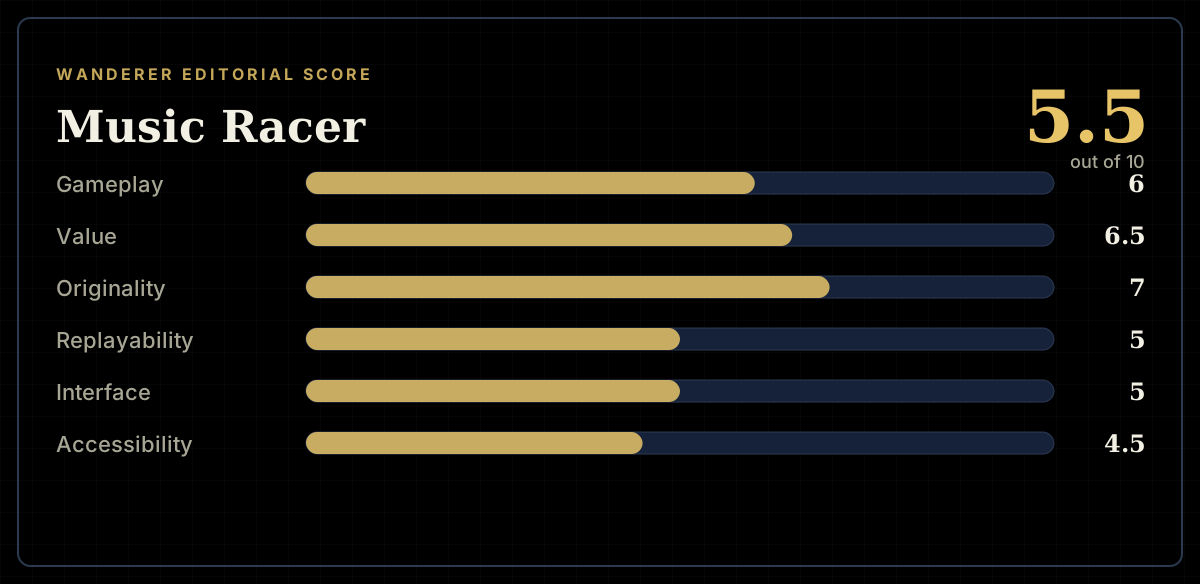
How the review scores each part of the gameWanderer Editorial -
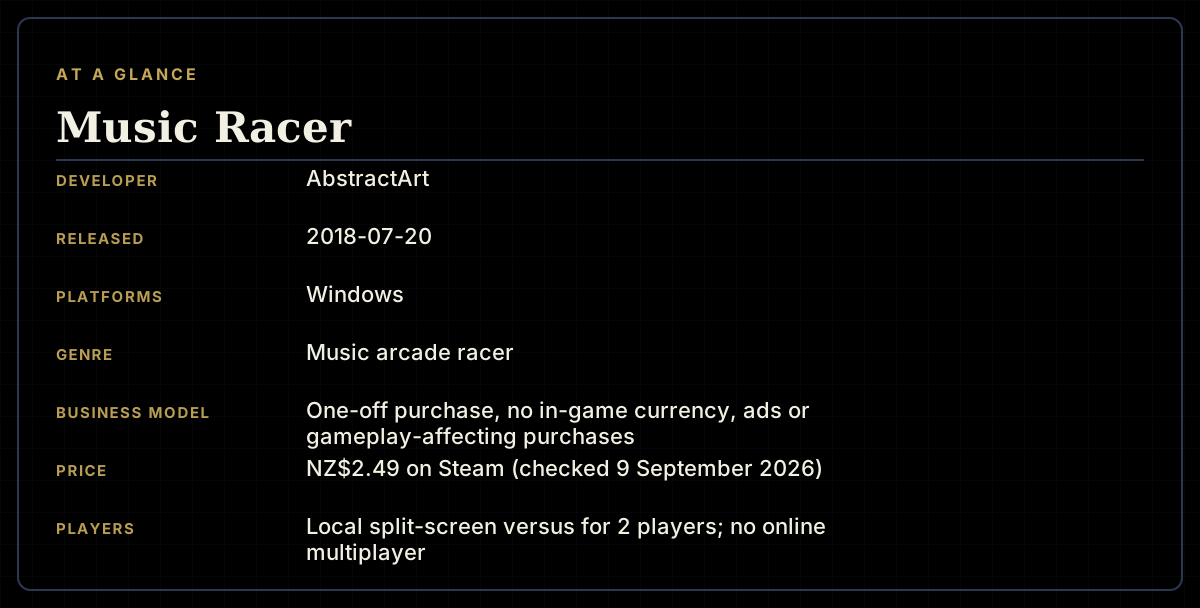
The specsWanderer Editorial -
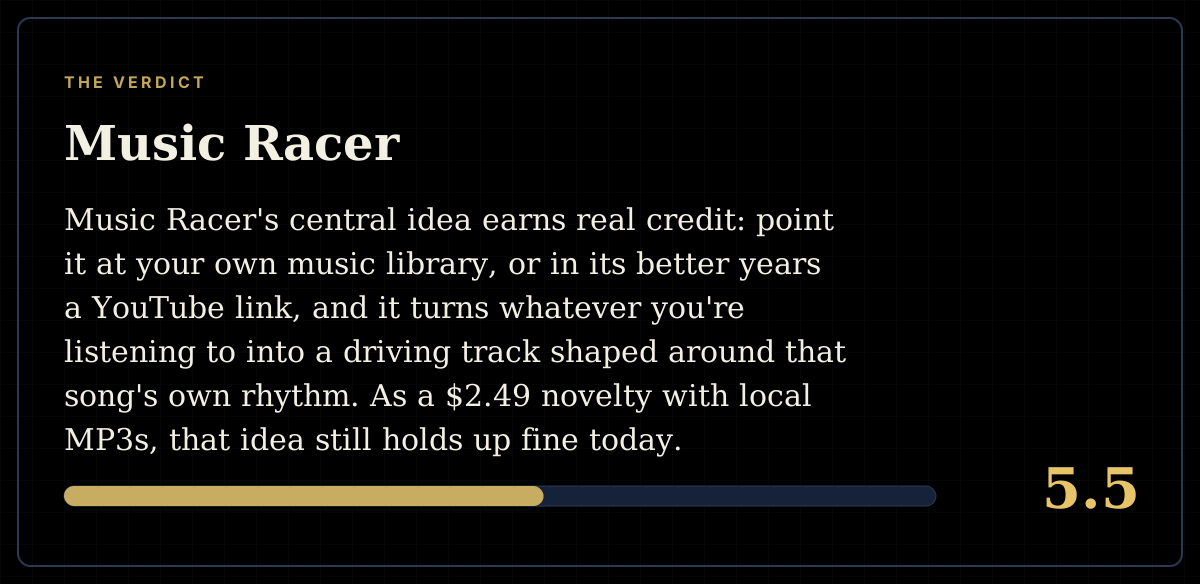
The short versionWanderer Editorial