Game review
Trombone Champ
8 / 10
- Developer
- Holy Wow Studios LLC
- Publisher
- Holy Wow Studios LLC
- Released
- 15 September 2022
- Platforms
- Windows, macOS, Linux
- Genre
- Rhythm, Music, Comedy
- Monetisation
- One-time purchase; two optional soundtrack DLC packs and one licensed song-pack DLC, none required for the base game; the vast majority of content updates since launch have been free
- Players
- Single-player only, with online leaderboards
The short version
Trombone Champ turned a single absurd premise — control a trombonist's slide with the mouse and actually play the melody of songs ranging from classical standards to viral internet audio — into one of 2022's most talked-about indie releases, and it has held onto that reputation with an Overwhelmingly Positive 98% across 7,829 English-language reviews. What separates this from a meme that faded is a genuinely inventive core mechanic that professional and amateur trombonists alike confirm actually replicates the instrument, and a developer who kept shipping substantial free updates for more than three years after launch — including, in 2025, the Steam Workshop custom-track support its own players had been asking for since release week. Real accessibility gaps and a minority "the joke wears thin" complaint keep this out of the very top tier, but this is a case where the internet's initial hype turned out to be earned.
Biggest strengths
- The core mechanic — sliding the mouse to control pitch and clicking to the beat — genuinely replicates playing a trombone, confirmed independently by multiple reviewers who play the instrument themselves, rather than being a gimmick layered over standard rhythm-game notes
- Sound design and musical arrangement draw consistent, specific praise as both genuinely funny and genuinely well-crafted, a harder combination to land than either alone
- An exceptionally long developer support tail — substantial free updates ran from launch through at least early 2026, including native custom-track support and full Steam Workshop integration added roughly three years after release, directly answering the community's most requested feature
Biggest weaknesses
- Specific, credible accessibility complaints recur in the negative sample — a colour-blind player reported being unable to see the on-screen cursor at all, and multiple reviewers warn the flashing visuals and sound design can trigger migraines or photosensitive reactions
- A meaningful minority of reviewers describe the joke wearing off within one to two hours, after which the underlying rhythm-game loop alone isn't enough to sustain their interest
- Timing precision draws repeated technical complaints — short notes not registering reliably, a calibration tool some found inconsistent, and a difficulty curve several reviewers felt ramped up faster than the tutorial prepared them for
Who it's for: Anyone who enjoys rhythm games, novelty input schemes, or genuinely funny sound design; a poor fit for players sensitive to flashing visuals or bright, saturated colour, and for anyone who wants the joke to still be funny after several hours.
Our recommendation: A viral premise backed by real design craft and an unusually generous, unusually long developer support record — worth it even now that the initial internet moment has passed.
8 / 10
Introduction
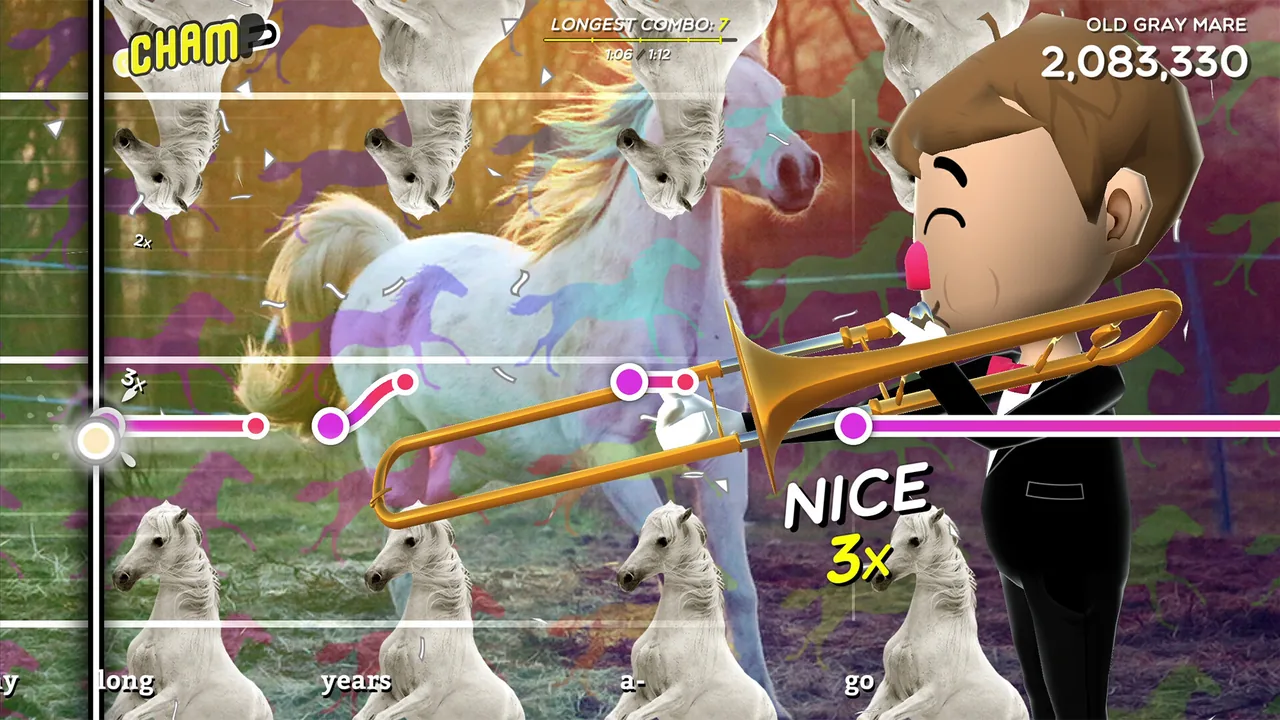
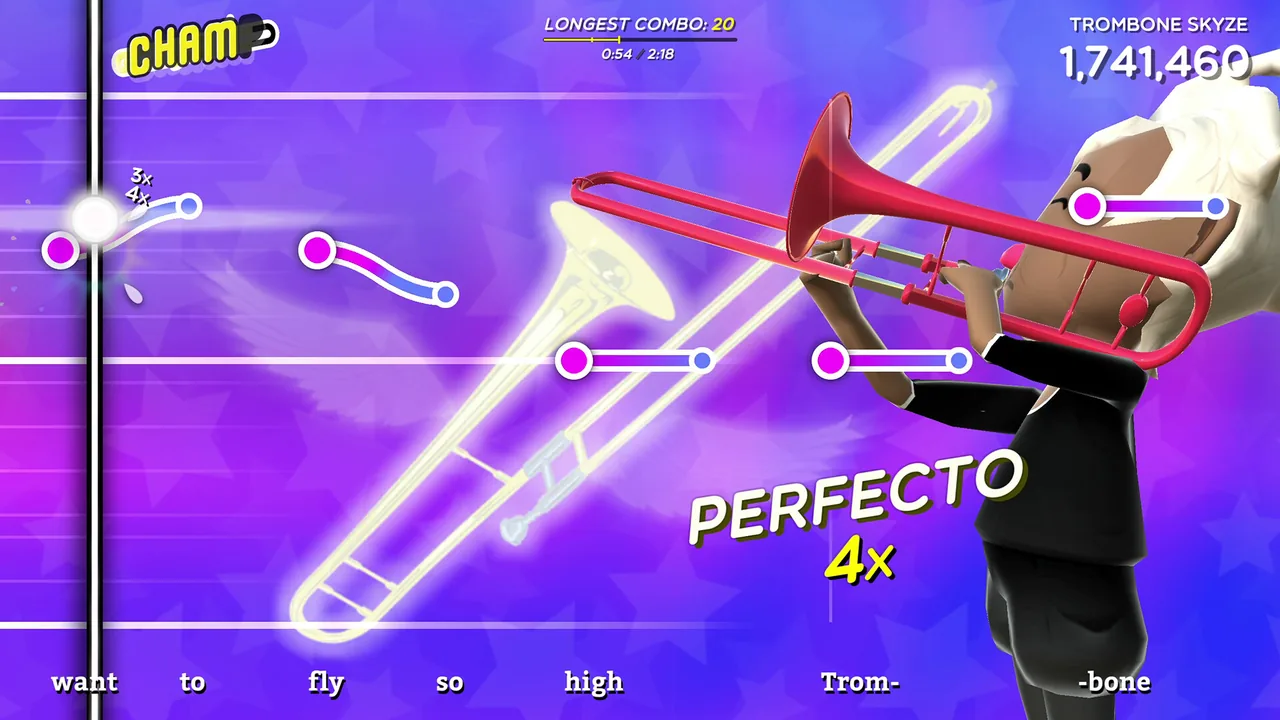
Trombone Champ asks the player to slide the mouse up and down to control a cartoon trombonist's slide, clicking in time to play everything from classical standards to viral internet audio clips, scored on pitch accuracy in a way that rewards genuinely playing the instrument rather than simply hitting notes as they scroll past. Developed and self-published by Holy Wow Studios LLC, it released 15 September 2022 into a wave of internet attention that most viral indie games never manage to convert into a lasting reputation. Four years later it sits at Overwhelmingly Positive, 98% across the 7,829 English-language reviews sampled for this review — a figure so lopsided that the more useful story lives in the 153 negative reviews and in what the developer has done with the game since launch, both of which this review reads in full.
A joke with real design underneath it
The single most repeated observation across this review sample, from both positive and negative reviewers, is that the core mechanic is not a gimmick. Multiple reviewers who identify themselves as trombone players — one describing three years of playing the instrument — confirm independently that the mouse-slide control scheme actually replicates the physical technique of the instrument in a way most rhythm games don't attempt for any instrument: "you actually get to play the melody," as one 260-vote review put it, rather than hitting a fixed sequence of notes regardless of what's happening musically. That's a genuinely harder thing to build than a standard note-highway rhythm game, and it's the reason the joke has staying power rather than being a one-time punchline — there's real skill expression underneath the comedy, evidenced by a healthy spread of Steam leaderboards and an achievement curve with a genuine skill ceiling.
Sound design and musical arrangement earn their own specific, repeated praise. Reviewers describe the game as being simultaneously very funny and genuinely well-made musically, crediting the developer's evident passion and craft even while laughing at fart-adjacent sound fonts and absurd loading-screen jokes. One reviewer summed up the tension neatly: "it's almost sad that this game is considered a meme. The developers were clearly incredibly passionate about this game and it shines through." That combination — funny and well-crafted rather than funny instead of well-crafted — is the throughline connecting almost every strongly positive review in the sample.
The real complaints, and they matter
Set against that overwhelming positivity, the negative sample raises specific, credible issues worth taking seriously rather than dismissing as noise from a 2% minority. The most important is accessibility: one 99-vote review reports being colour-blind and unable to see the on-screen cursor at all, forcing a refund despite wanting to enjoy the game — a concrete, fixable gap rather than a matter of taste. A separate 61-vote review specifically warns players with epilepsy or migraines away from the game, attributing the risk less to visual flashing and more to the combination of bright colour and the game's distinctive sound design becoming genuinely painful over an extended session. Both warnings are specific enough, and independent enough, that this review passes them on directly rather than softening them.
A second, smaller cluster of complaints concerns whether the joke sustains itself. Several reviewers describe the humour wearing thin within one to two hours, after which the underlying rhythm-game loop has to carry the experience on its own — one called it "a novelty game at best," another found the repeated viral gags losing their charge on repeat listens. This isn't a majority view by any measure in this corpus, but it's a fair, specific caveat: the game's most viral moment was built on the surprise and humour of a first encounter, and a small share of buyers found that the whole appeal rather than a starting point. A third, more technical complaint recurs around precision — short notes not registering reliably, a calibration tool some found inconsistent between sessions, and a difficulty ramp several reviewers felt outpaced what the tutorial actually taught them.
An unusually long developer support record
What elevates this from "a good viral game" to a genuinely well-supported product is the Steam news feed, which documents substantial, near-continuous development from launch through at least March 2026 — the better part of four years. The single most notable data point directly answers a complaint that shows up repeatedly in this game's early negative reviews: multiple 2022-era reviewers specifically asked for Steam Workshop support so they could play custom tracks, and Holy Wow Studios delivered it — not quickly, but for real — with native custom-track support arriving in March 2025 and full Workshop integration in June 2025, roughly three years after launch. That's an unusually long-tail commitment for a game that could easily have coasted on its initial viral moment. Alongside that, the feed shows regular free content drops — holiday-themed tracks, new songs, ultrawide resolution support added in August 2025 — plus a small, clearly optional DLC catalogue: two soundtrack collections and, as of December 2025, a licensed UNDERTALE and DELTARUNE song pack, itself still receiving new tracks as recently as March 2026. None of the paid content gates anything in the base game; every core system and the vast majority of new songs have arrived free.
Steam's achievement data backs up a game with real depth beyond its opening joke: the top achievement sits at 66.5%, tied to an early S-rank milestone, tapering down through progressively harder challenges to under 3% for perfect gold-rank clears across the whole song list — a spread consistent with a rhythm game that rewards sustained mastery rather than running out of challenge after the novelty wears off.
Final Verdict
Trombone Champ earned its viral moment honestly and then did the harder thing afterward: it kept being supported, kept adding what its players asked for, and kept the joke funny by pairing it with a control scheme that turns out to reward real skill. The accessibility gaps this review's negative sample raises are genuine and worth knowing before buying, and a small share of players will reasonably find the humour doesn't carry a full session on its own. Neither of those undercuts what this game actually is: a genuinely inventive rhythm game, backed by one of the more sustained developer support records this library has documented, that turned out to deserve the attention it got.
Pros and cons
Pros
- The core mechanic — sliding the mouse to control pitch and clicking to the beat — genuinely replicates playing a trombone, confirmed independently by multiple reviewers who play the instrument themselves, rather than being a gimmick layered over standard rhythm-game notes
- Sound design and musical arrangement draw consistent, specific praise as both genuinely funny and genuinely well-crafted, a harder combination to land than either alone
- An exceptionally long developer support tail — substantial free updates ran from launch through at least early 2026, including native custom-track support and full Steam Workshop integration added roughly three years after release, directly answering the community's most requested feature
- A generous free-content cadence (holiday tracks, ultrawide support, new songs) alongside optional, clearly-labelled paid DLC that never gates the base game
Cons
- Specific, credible accessibility complaints recur in the negative sample — a colour-blind player reported being unable to see the on-screen cursor at all, and multiple reviewers warn the flashing visuals and sound design can trigger migraines or photosensitive reactions
- A meaningful minority of reviewers describe the joke wearing off within one to two hours, after which the underlying rhythm-game loop alone isn't enough to sustain their interest
- Timing precision draws repeated technical complaints — short notes not registering reliably, a calibration tool some found inconsistent, and a difficulty curve several reviewers felt ramped up faster than the tutorial prepared them for
- Not designed around controller play, which narrows its appeal for anyone who doesn't want to use a mouse for a rhythm game
Screenshots
-
Trombone ChampImage: Holy Wow Studios LLC via Steam -
Trombone ChampImage: Holy Wow Studios LLC via Steam -
Trombone ChampImage: Holy Wow Studios LLC via Steam -
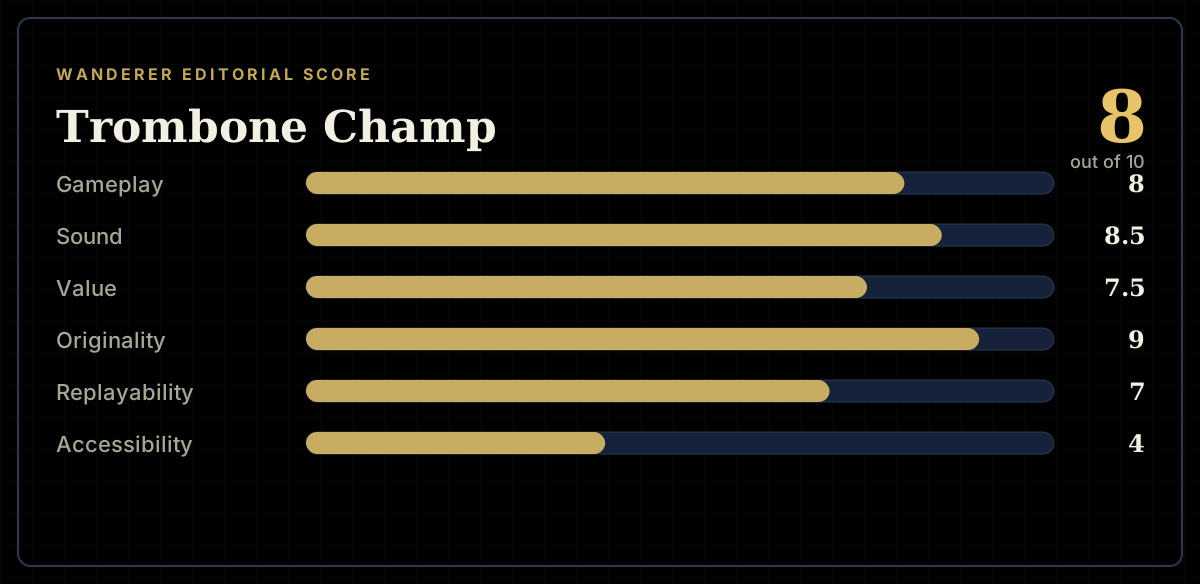
How the review scores each part of the gameWanderer Editorial -
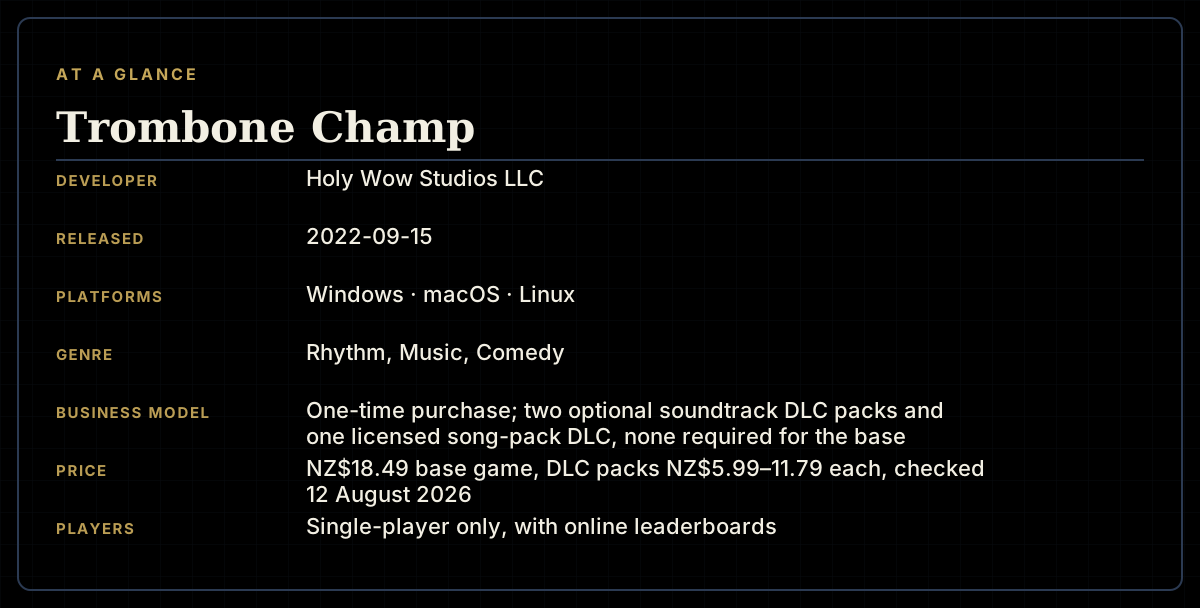
The essentials at a glanceWanderer Editorial -
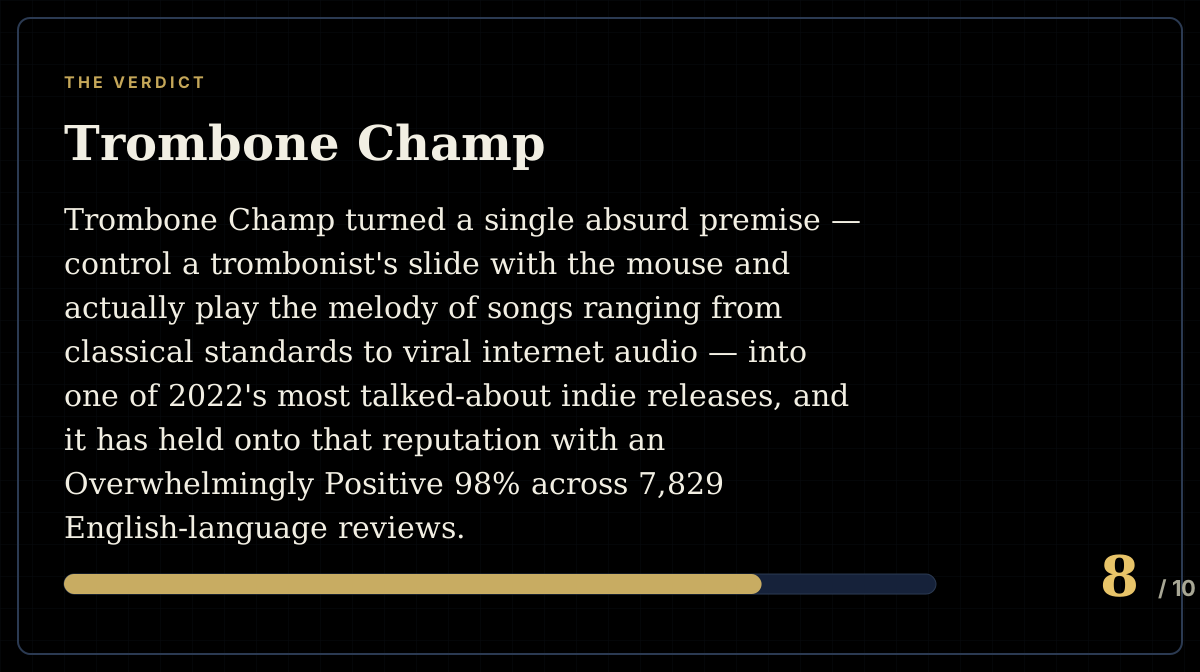
The short versionWanderer Editorial