
Game review
Mothkeep
6.2 / 10
- Developer
- Ivette Schmidt
- Publisher
- Ivette Schmidt
- Released
- 10 July 2026
- Platforms
- Windows
- Genre
- Casual, Indie
- Monetisation
- Paid
- Players
- Single-player only, no online or local co-op modes.
The short version
Mothkeep is a small, gentle, and genuinely educational nature game built around real moth species, hand-drawn with obvious care. It rarely takes more than two hours to see everything it has, and the review sample is split on whether that runtime justifies its price, but almost nobody who played it seems to regret the time spent.
Biggest strengths
- Hand-drawn art that reviewers repeatedly single out as gorgeous, with zoomable species sketches
- A journal system built on real moth species and genuine biological facts, praised as both cute and educational
- An unlimited-use, no-punishment hint system that keeps the search relaxing rather than frustrating
Biggest weaknesses
- Most players reach 100% completion in one to two hours, with several wishing for more locations and species
- A vocal minority of reviewers feel the asking price doesn't match the amount of content on offer
- The garden-decorating system has limited mechanical purpose beyond attracting moths for completionists
Who it's for: Fans of cozy nature-documenting games who want something short, calming, and grounded in real wildlife facts.
Our recommendation: Recommended
6.2 / 10
A Journal, a Lantern, and a World Full of Moths
Mothkeep drops you into a peaceful nature sanctuary with a small brown journal and asks you to fill it in. Each entry starts as a blank page and becomes a full species profile once you've tracked down every life stage of a given moth — egg, larva, cocoon, and adult — approaching carefully enough not to scare it off along the way. Reviewers describe the core loop as small and tight: visit a location, search for signs of moths in the environment, play a short and simple mini-game to catalogue what you find, and watch the journal slowly fill with real biological facts about each species. More than one reviewer draws a direct line to Kabuto Park, an earlier cozy bug-collecting game, and calls Mothkeep a worthy spiritual successor built specifically around moths rather than insects in general.
The sample is close to unanimous that the presentation carries the experience. The hand-drawn art is repeatedly called gorgeous, with reviewers highlighting the ability to zoom into each species sketch as a small but meaningful touch, and several describe simply wanting to stare at individual scenes for their own sake. That care extends to accessibility: the game ships with a hint system that reviewers describe as unlimited and free of punishment, there purely to nudge you toward a well-camouflaged moth rather than to gatekeep progress, alongside camera comfort and difficulty options that suggest real thought went into who might want to play something this gentle.
A Garden You Don't Strictly Need, But Will Probably Build Anyway
Early on, Mothkeep opens a small shop stocked with flowers, lanterns, and other decorations, each tied to attracting specific moth species into your immediate area. Functionally, it's an optional tool for completionists trying to lure in harder-to-find species. In practice, several reviewers admit the garden became its own quiet obsession, with one describing losing track of time decorating and "accidentally forgetting this was a moth game and not a garden simulator." There's a cat you can pet in the sanctuary too, mentioned by name in enough reviews that it's clearly doing real work for the game's charm, however small a detail it might seem on paper.
Not every review is fully sold on the garden's purpose beyond decoration, though. One completionist-minded player calls it "basically useless if you're purely a completionist," since most of what it offers can be experienced without heavy investment in decorating. That's a fair characterisation of a system that seems designed more to give players something restful to fuss over than to gate meaningful content behind it.
The Runtime Question
The single most consistent thread running through the review sample, positive or negative, is length. Reviewers routinely report finishing everything Mothkeep has to offer, including a full 100% achievement clear, in somewhere between one and two and a half hours. For a large portion of the sample, that's read as a feature rather than a flaw: several reviewers frame it as a perfect single evening's activity, easy to fully complete without the game overstaying its welcome, and more than one recommends it explicitly as a calm way to spend an afternoon rather than a long-term project.
For a smaller but clearly present group, that same runtime undercuts the asking price. One reviewer flatly argues the game is "NOT worth $5" at its current length, suggesting something closer to two or three dollars would feel fairer, while another says it's "a sweet little game" that "doesn't quite earn the price" without more content or a way to look moths up outside of finding them directly. Both concede the craft on display is real; the disagreement is purely about whether an hour or two of that craft is worth its ticket price. Several reviewers, on either side of that divide, independently ask for more locations, moths, or minigames in a potential future update, suggesting the appetite for more Mothkeep is there even among its critics. One reviewer who had also played an earlier demo build says they went in already sold on the concept and simply wanted more of it once the full release arrived, which suggests the demo did real work convincing at least part of this audience before launch.
A Note on Transparency
One review thread in the sample is worth mentioning on its own: a player initially withheld a recommendation after discovering the game's text had been machine-translated via DeepL without upfront disclosure, arguing that buyers deserve to know that before purchasing rather than finding it buried in a press kit. The developer engaged directly with the reviewer, discussed the concern, and added clearer disclosure to the game's description. The reviewer subsequently updated their review to recommend the game, citing the developer's willingness to listen as the reason they felt comfortable doing so. It's a small footnote in the larger picture, but it speaks to a developer paying attention to feedback rather than ignoring it.
Verdict
Mothkeep is exactly as small as it looks, and it knows it: a short, hand-drawn love letter to real moth species that most players will finish in an afternoon. What it does, it does with obvious care — the art, the journal, the hint system, even the cat, all point toward a developer who sweated the details that matter for a cozy game like this. Whether that's worth its asking price comes down to how much you value a couple of hours of genuine calm and a little real biology alongside it. Judged purely on craft and charm, it earns its recommendation; judged purely on hours per dollar, it's a harder sell.
Pros and cons
Pros
- Hand-drawn art that reviewers repeatedly single out as gorgeous, with zoomable species sketches
- A journal system built on real moth species and genuine biological facts, praised as both cute and educational
- An unlimited-use, no-punishment hint system that keeps the search relaxing rather than frustrating
- A gardening side activity where shop-bought plants and decorations attract specific moth species
Cons
- Most players reach 100% completion in one to two hours, with several wishing for more locations and species
- A vocal minority of reviewers feel the asking price doesn't match the amount of content on offer
- The garden-decorating system has limited mechanical purpose beyond attracting moths for completionists
- One notable review thread flagged a lack of upfront disclosure about machine-translated text, since resolved with developer transparency
Screenshots
-
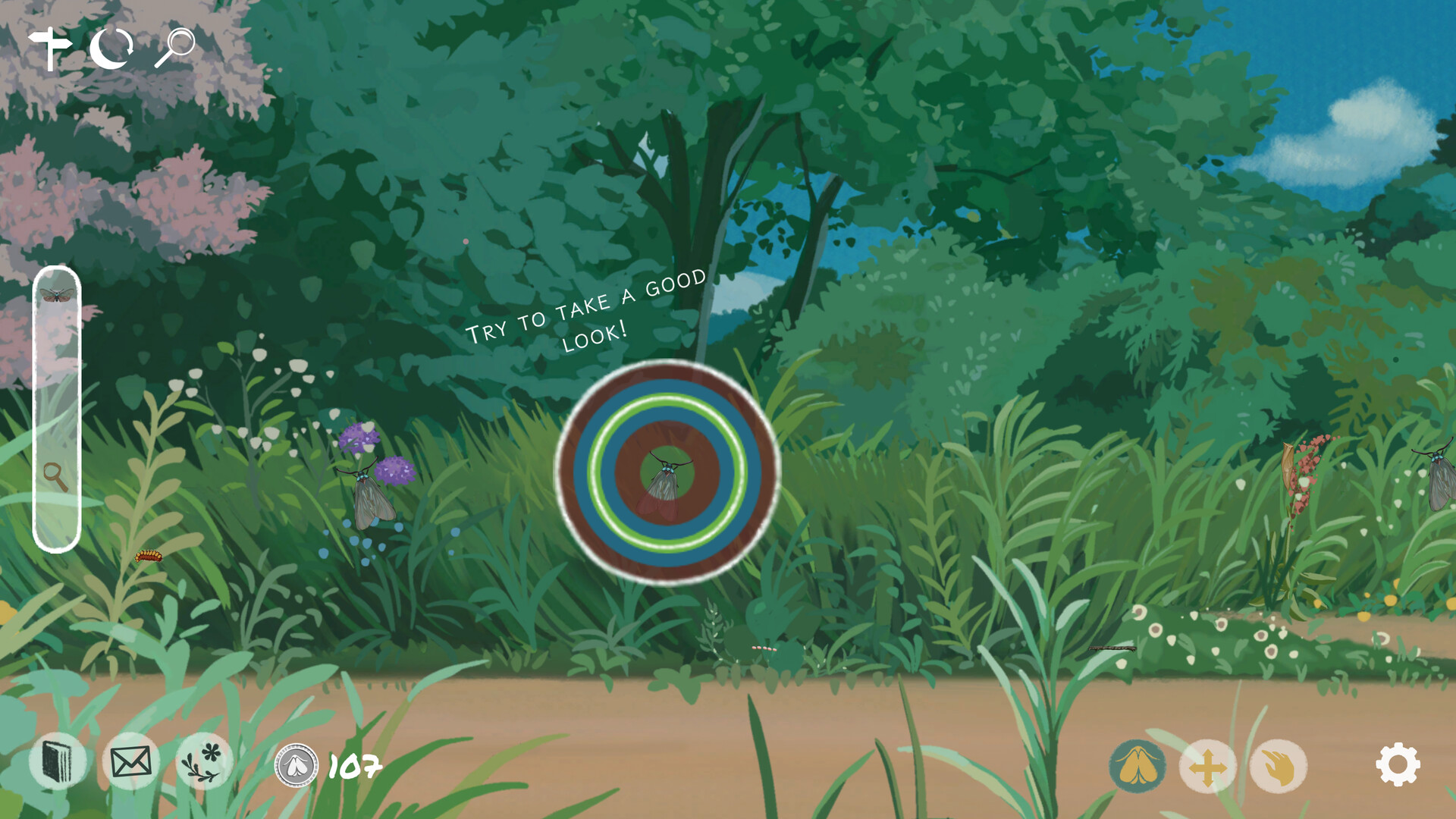
The gentle, no-punishment mini-game used to catalogue each mothIvette Schmidt -
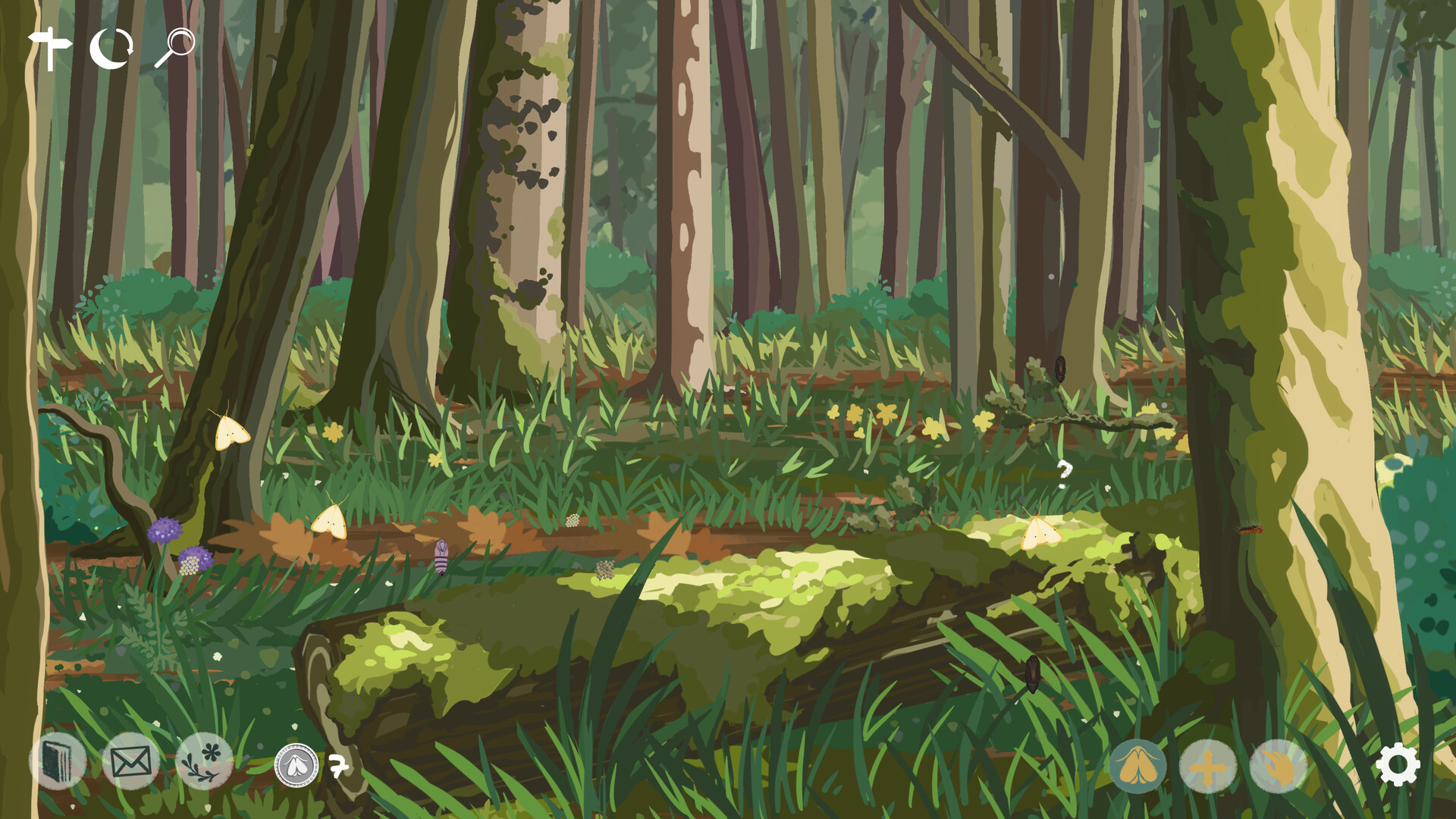
One of the game's peaceful sanctuaries, showing different moth life stagesIvette Schmidt -
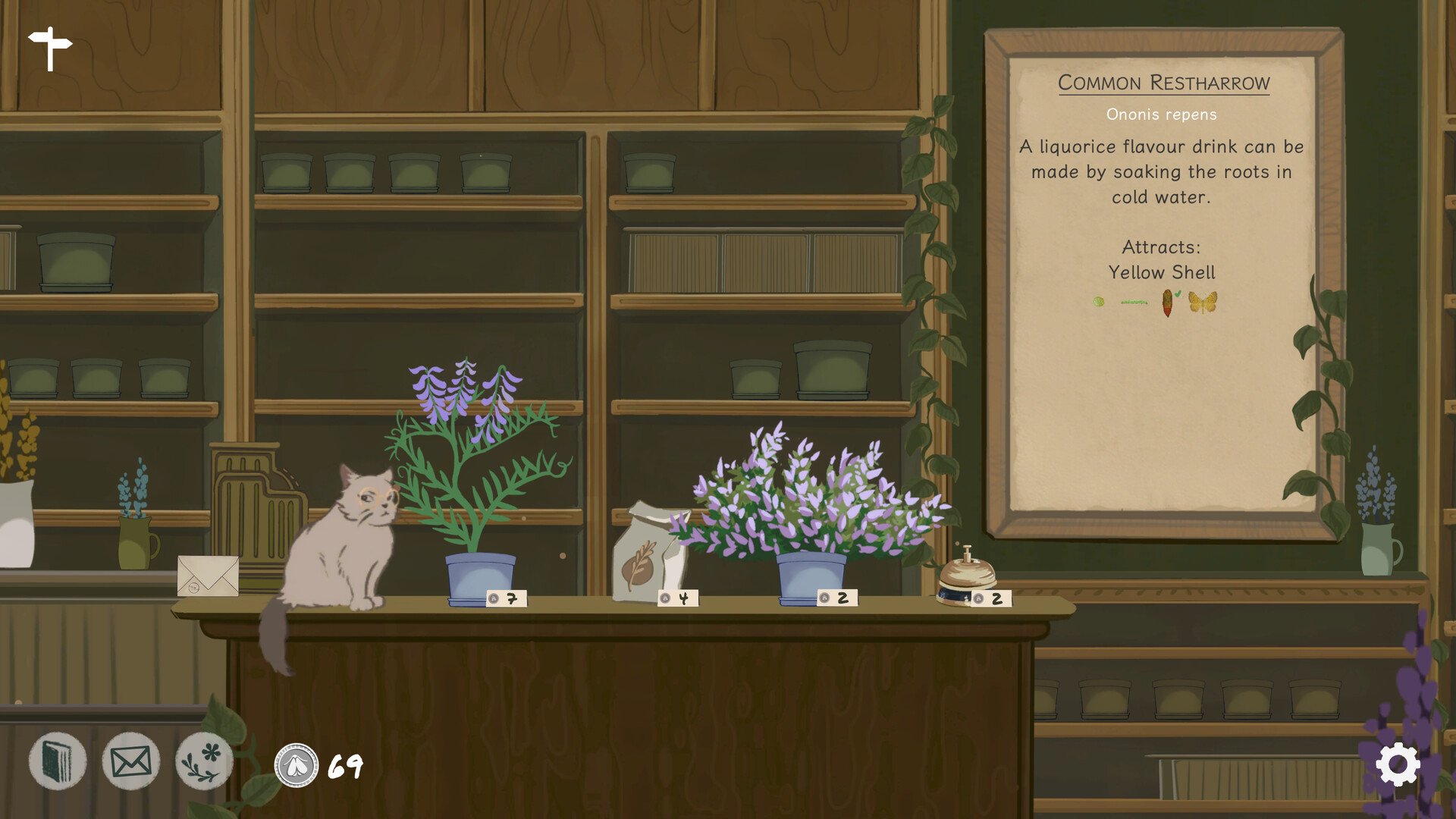
The shop where plants and decorations are bought to attract specific speciesIvette Schmidt -
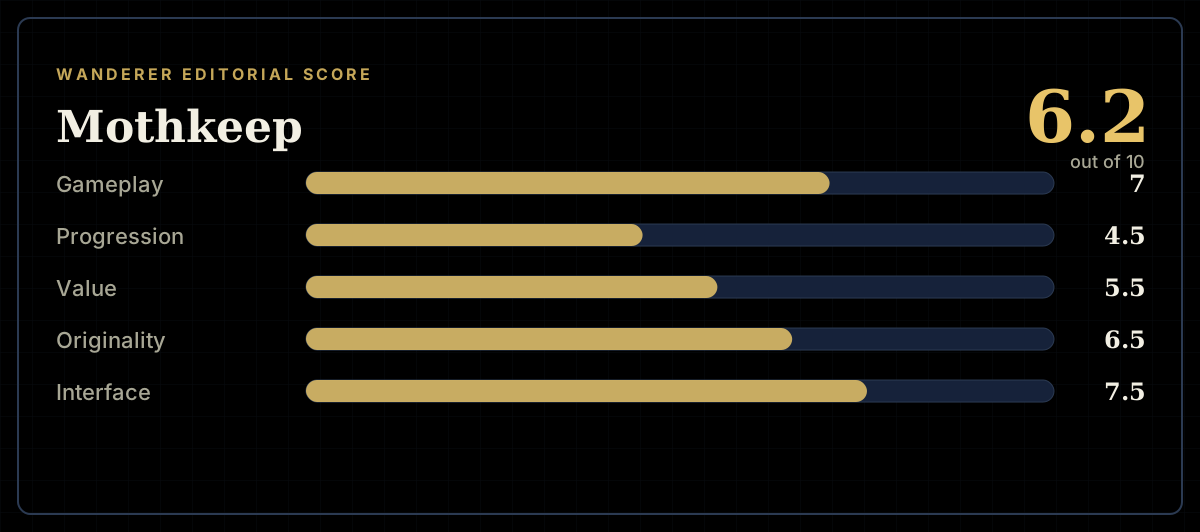
How the review scores each part of the gameWanderer Editorial -
The short versionWanderer Editorial