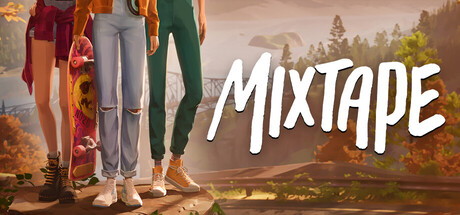
Game review
Mixtape
5.6 / 10
- Developer
- Beethoven and Dinosaur
- Publisher
- Annapurna Interactive
- Released
- 7 May 2026
- Platforms
- [Windows]
- Genre
- Adventure
- Monetisation
- Paid
- Players
- Single-player only
The short version
Mixtape sits at an unusually wide gap between its aggregate score and its loudest reviews. Steam calls it "Very Positive" across more than 8,500 reviews, and the sample backs that up: reviewers consistently love the licensed soundtrack, the striking art direction, and the wave of nostalgia the game is chasing. But the same sample also contains an extraordinarily well-upvoted cluster of reviews — some with thousands of helpful votes apiece — arguing the game barely qualifies as interactive at all, that its 90s setting rings false in specific, checkable ways, and that a three-to-four-hour runtime at a near-AAA price feels thin next to the games it's openly inviting comparison to. Both camps are drawing from the same experience; they just weigh "vibes" against "substance" very differently.
Biggest strengths
- A licensed soundtrack and audio mix that draws near-universal praise, described by multiple reviewers as the game's single best element
- A distinct, striking visual and art direction that reviewers repeatedly single out as gorgeous even in otherwise critical reviews
- A varied set of vignette minigames — skateboarding, photography, a shopping-cart chase, a fireworks display — that several reviewers say give the "playable movie" format welcome pacing and texture
Biggest weaknesses
- A high-profile cluster of extremely well-upvoted reviews argue there is close to no traditional gameplay, with some minigames playable hands-off
- Specific, repeated period-accuracy complaints — reviewers who say they were actually teenagers in the 90s report the fashion, slang, and even the soundtrack's dominant 60s/70s song selections feel wrong for the setting
- A short three-to-four-hour campaign at a near-AAA asking price draws consistent value complaints, especially set against comparable narrative games
Who it's for: Fans of narrative-first, low-mechanical "playable movie" experiences (Life Is Strange, Before Your Eyes, Lost Records) who prioritise mood, music and art over traditional gameplay systems, and who are comfortable paying a full-length price for a short runtime.
Our recommendation: Worth it for players sold on the vibe and the soundtrack; skip if you want systems, choice, or consequence — check the specific criticisms below before buying at full price.
5.6 / 10
A Last Night, Told Through a Mixtape of Memories
Mixtape casts players as three friends on their final night together before adulthood scatters them, threading a licensed soundtrack through a sequence of narrative vignettes: skateboarding through empty streets, sneaking into an abandoned theme park to take photos after hours, hitting baseballs, riding shotgun during an impromptu fireworks show, and working through a string of formative teenage memories that build toward one last party. It's built by Beethoven and Dinosaur, the small studio behind the well-regarded first-person memory game Before Your Eyes, and published by Annapurna Interactive, a label with a well-established track record of backing narrative-first indie games. The pitch is explicit in its own marketing: this is meant to be a "playable movie," and it wears that description as a badge rather than an accusation.
Mechanically, each vignette hands players a different, lightweight interactive hook rather than a consistent verb set — there's no combat, no inventory, no branching dialogue trees in the traditional sense. Reviewers across the entire spectrum of opinion agree on this basic description of what the game is; where they diverge sharply is on whether that's a legitimate design choice or a fundamental shortfall. One reviewer who otherwise enjoyed the game summarised the format fairly neutrally: "it follows a 'playable movie' style, but lacks the usual multiple choice options usually associated with this type of game... controls are minimal with slightly different commands for different scenes." Achievements are tied to each minigame and remain accessible via chapter select after finishing the story, a structural detail a handful of completionist-minded reviewers appreciated for making a second, more exploratory pass practical.
The game released into an unusually charged conversation, arriving in the wake of two other high-profile narrative titles it's constantly measured against: Life Is Strange, the genre's most familiar reference point, and the recently released Lost Records: Bloom & Rage, which several reviewers explicitly argue is the better, more substantial version of the same basic pitch. That comparison recurs so often across the sample — both from fans and critics — that it functions almost as the game's unavoidable frame of reference rather than an occasional aside.
Style, Soundtrack, and the Case For Mixtape
Set aside the debate for a moment, because the positive case for Mixtape is genuinely substantial and consistent across a large number of reviewers. The soundtrack draws by far the most unanimous praise in the entire sample — one reviewer called the music "obviously the main plot point," and even reviewers who otherwise disliked the game concede the licensed song selection and its integration into scenes is a genuine achievement. One glowing review credited the game with reminding them "just how mind-altering, warm, and comforting good music can be," while another described completing the entire game in one sitting purely "for the vibes," with a stated intention to replay it for the same reason.
The art direction earns similarly wide praise. Reviewers repeatedly call the visuals "gorgeous," "stunning," and "off the charts" in production quality, and this is one of a small number of qualities that shows up favourably even inside otherwise scathing reviews — reviewers who call the game barely interactive will, in the same breath, credit its visual and audio polish. Technical stability draws real, if less flashy, praise too: multiple reviewers across both the positive and critical camps specifically note they encountered no bugs across one or even two full playthroughs, a genuinely clean showing for a narrative game built around bespoke vignette sequences.
For the players it clicks with, the emotional pitch lands hard. One reviewer wrote about the game surfacing "nostalgia for events that I've never even been through," while another, more literary review compared music's power to transport listeners back to a specific time and place, describing individual songs on the soundtrack as doing exactly that for them personally. A different reviewer framed the whole experience as deliberately curated highs: "just like an actual mixtape, this game is a selection of the very best moments — the peak of an experience, the best of the best, with all the bad bits skimmed off." Several reviewers explicitly favoured the format over a straight film, arguing the minigame interludes let the story "slow down in a way that a movie simply isn't able to," giving scenes room to breathe that passive media can't replicate. None of this reads as manufactured enthusiasm — it's a specific, detailed, and recurring account of what the game does well, and it lines up with the roughly 88% positive aggregate score across more than 8,500 reviews at the time of writing.
"Is This Even a Game?" — The Backlash the Score Doesn't Show
Here's where Mixtape gets genuinely unusual as a case study, and worth dwelling on in detail rather than glossing over: sort its Steam reviews by helpfulness rather than by score, and the picture changes dramatically. Reviews with the highest vote counts — several with well over a thousand "helpful" marks, one with nearly nine thousand — are overwhelmingly critical, arguing something much sharper than "not my thing." One of the most-upvoted reviews in the entire sample opens by questioning the game's legitimacy outright: "I've never before written a review for a game on Steam, but holy hell this game was too bad for me to not do so. And it's especially worrisome to me seeing this game somehow launching with a 95% positive store rating, to the point where I'm convinced this must have been astroturfed in some way." A separately highly-upvoted review goes further, calling it "a blatant astroturfing slop disguised as a game," while another brands it "the biggest industry plant in gaming history," pointing to its funding by "a billionaire" publisher as evidence the game's scrappy, handmade indie framing doesn't match its actual production reality.
Whether or not "astroturfing" is literally accurate — and it's worth being clear that this is an accusation made by individual Steam reviewers, not a substantiated finding, and is presented here as documented critical reception rather than a verified fact — the underlying, more concrete complaint beneath it is consistent and specific: that Mixtape is being marketed and perceived as a scrappy independent passion project while carrying the polish, licensing budget, and marketing reach of major-publisher backing, and that reviewers feel misled by the gap between those two things. One reviewer put the gameplay concern most bluntly: "There is no consistent gameplay formula or genre you can attach to Mixtape because at the end of the day: it isn't trying to be a video game... most of [the minigames] you can just not press anything and the game will do it for you." Others reached for even more pointed comparisons — "an interactive PowerPoint presentation that even plays automatically," or, more charitably, "Bruno Simon's web portfolio is a considerably more substantial 'game' than this."
It's worth stressing that this isn't a fringe minority shouting into the void — these specific reviews carry vote totals in the thousands, meaning a very large number of other Steam users actively agreed the critique was worth surfacing above the crowd, even while the aggregate score stayed comfortably in "Very Positive" territory. That tension — a broadly positive numeric score sitting alongside an extremely well-supported, high-visibility critical minority — is arguably the single most important thing a prospective buyer should understand about Mixtape's reception before purchasing, more so than any individual gripe.
Not every critical reviewer frames it this harshly, and it's worth representing the softer end of the criticism too. One measured negative review described the characters as "written like cardboard cutouts," felt the story "just founders about and goes nowhere," and rated it a plain 5/10 despite being, in their own words, exactly the target audience for nostalgic, low-mechanics narrative games. Another simply noted that the minigame sections "feel like disconnected minigames during a movie, just so you have something to do," acknowledging the developers built genuinely novel mechanics for them without finding those mechanics added much to the overall experience. These calmer critiques land closer to a conventional "this wasn't for me" than an accusation of manufactured hype, and they appear throughout the sample alongside the louder, more viral complaints.
Authenticity, Anachronism, and a Short, Pricey Runtime
Beyond the gameplay-substance debate, a second, more checkable line of criticism runs through the sample: whether Mixtape's 90s setting is actually authentic to the era it claims to depict, and whether the roughly three-to-four-hour runtime justifies its price. On the first point, several reviewers who say they personally lived through the decade push back hard on the game's period detail. One wrote plainly, "it's obvious after playing the game that not one person on the dev team was a teenager in the 90's... let me assure you the 90's were much, much cooler than what's presented in the game." Another, more granular complaint zeroes in on the soundtrack itself: "a large chunk of the music is from the 60s or the 70s which is just weird for a game in the 90s," with the same reviewer adding that the lead character's fashion choices were "probably the most unusual thing about this game, not something I ever saw anyone wearing in the 90s." A separate review made a related point about the cast in general, arguing the teenagers "dress and act like modern art-school caricatures wearing curated fashion-designer outfits instead of actual '90s teenagers," and suggesting the game's nostalgia feels performed rather than lived-in as a result.
On value, the complaints are more straightforward but no less consistent: at roughly NZ$30, several reviewers directly compare the price to the runtime and come away unconvinced, with one reviewer joking that the same money would have bought "myself Little Caesars instead" and getting more lasting satisfaction out of it. Others explicitly recommend prospective buyers just watch a playthrough on YouTube rather than purchase, arguing the lack of meaningful choice or interactivity means very little is lost by watching instead of playing — a specific, recurring suggestion that shows up independently across multiple reviews rather than as an isolated gag. Given that Mixtape offers no dialogue branches or divergent endings, that argument has real teeth for buyers specifically weighing cost against a one-time, largely linear experience, even though it understates what the minigame segments add for players who do connect with the format.
Against all of this, it's worth reiterating that a clear majority of the review base — including many of the shorter, less-discussed reviews that don't carry the same vote totals as the viral critical cluster — walked away satisfied, some rating it a personal 10/10 and describing it as an "absolute gem" worth replaying. Nothing here should be read as the game secretly being disliked despite its score; rather, it's a game whose reception genuinely contains two well-populated and well-articulated camps, and prospective buyers are better served knowing both exist than seeing only the aggregate percentage.
Verdict
Mixtape is a hard game to summarise in a single sentence, because its own review base can't agree on what kind of thing it even is. As a mood piece built around a genuinely excellent licensed soundtrack and striking art direction, it clearly works for a large number of players, who describe real emotional resonance and a technically clean, replayable experience. As a video game in the more traditional sense — one judged on interactivity, consequence, and value for a near-AAA asking price — a loud, highly-upvoted, and specific segment of its audience isn't convinced, and their complaints about thin gameplay, questionable period authenticity, and a short runtime at a steep price are concrete enough to take seriously rather than dismiss as noise. If the pitch of a licensed-music, low-mechanics "playable movie" about one last teenage night already appeals to you, the positive case here is real and well-supported. If you're looking for a game with systems, choice, or a runtime that matches its price tag, the sample's loudest critics are making an argument worth reading in full before you buy.
Pros and cons
Pros
- A licensed soundtrack and audio mix that draws near-universal praise, described by multiple reviewers as the game's single best element
- A distinct, striking visual and art direction that reviewers repeatedly single out as gorgeous even in otherwise critical reviews
- A varied set of vignette minigames — skateboarding, photography, a shopping-cart chase, a fireworks display — that several reviewers say give the "playable movie" format welcome pacing and texture
- A technically clean release; multiple reviewers across both camps report no bugs across full playthroughs
- Accessibility features including adjustable text size, colour alternatives, subtitle options, and play-without-timed-input support
Cons
- A high-profile cluster of extremely well-upvoted reviews argue there is close to no traditional gameplay, with some minigames playable hands-off
- Specific, repeated period-accuracy complaints — reviewers who say they were actually teenagers in the 90s report the fashion, slang, and even the soundtrack's dominant 60s/70s song selections feel wrong for the setting
- A short three-to-four-hour campaign at a near-AAA asking price draws consistent value complaints, especially set against comparable narrative games
- Some reviewers accuse the game of being inauthentic "industry plant" indie, pointing to its major-publisher funding and pre-launch marketing as at odds with its scrappy coming-of-age framing
- Characters and dialogue read as flat, cliché, or unlikeable to a substantial share of critical reviewers, undercutting the emotional payoff for players who don't connect with the leads early
Screenshots
-
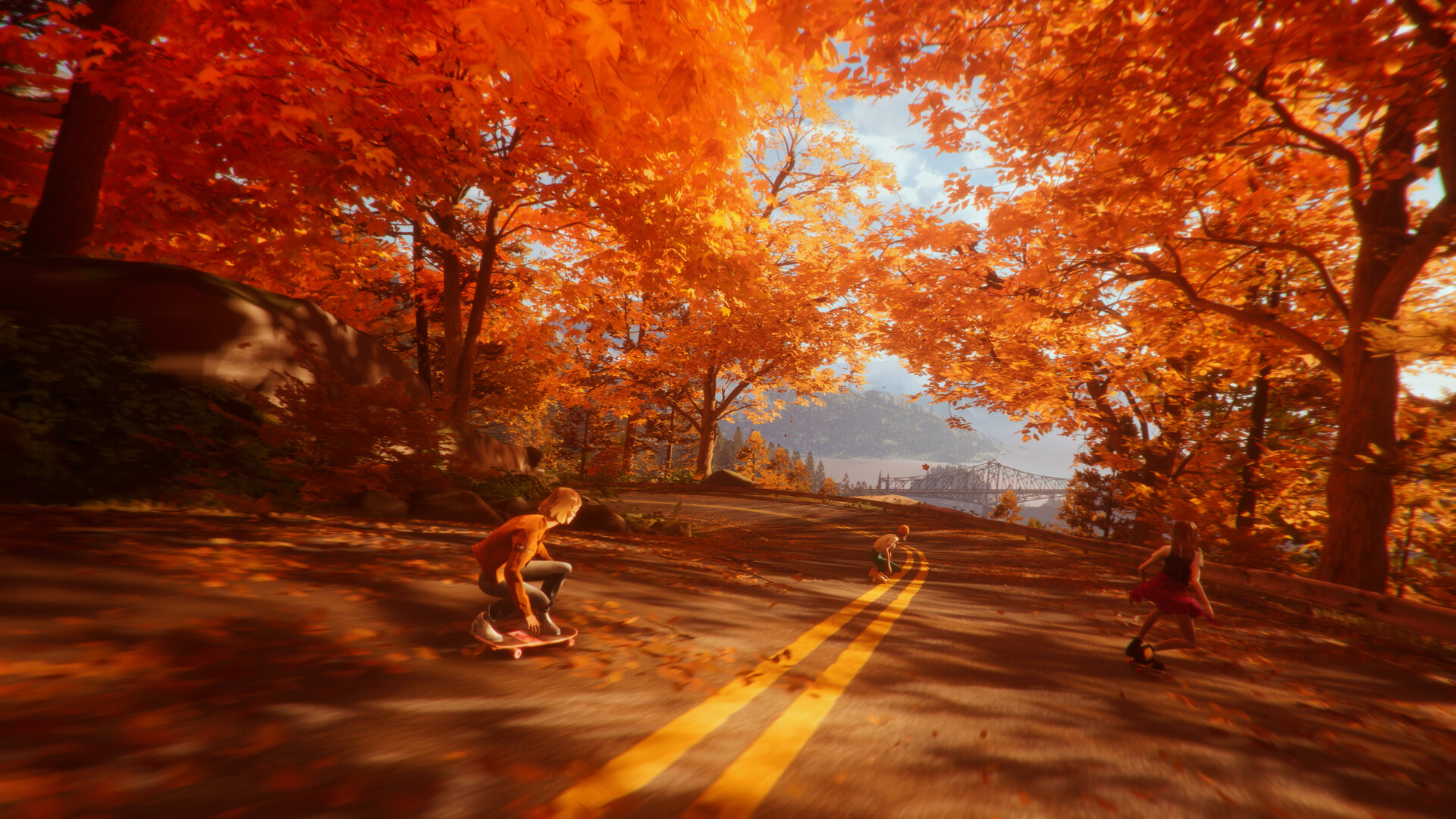
One of the game's vignette minigames, set against the licensed soundtrack reviewers praise mostAnnapurna Interactive -
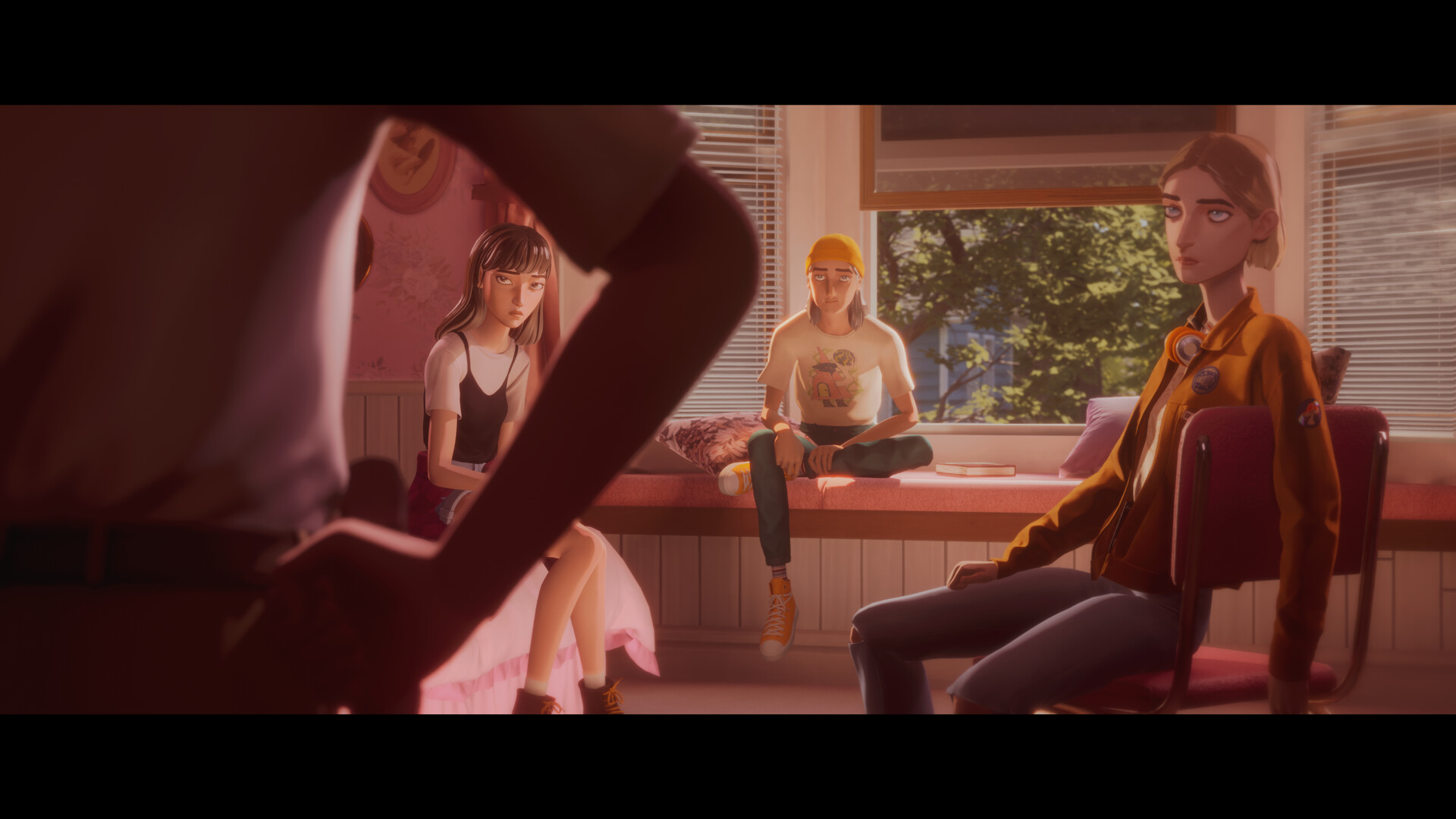
Quieter dialogue scenes drive the comparisons to Life Is Strange and other narrative-first gamesAnnapurna Interactive -
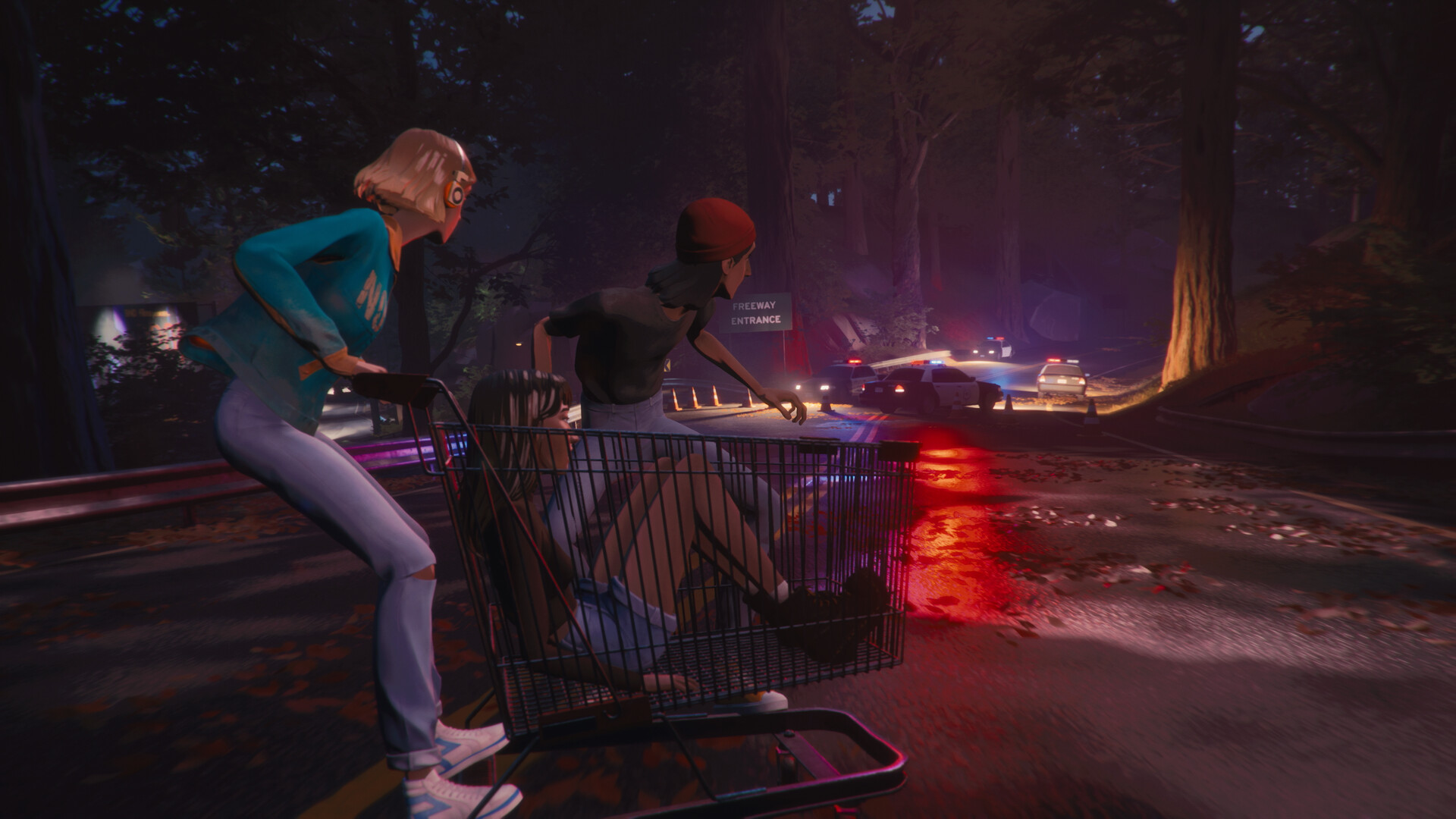
Higher-energy sequences like this late-night chase break up the game's calmer, conversation-driven scenesAnnapurna Interactive -
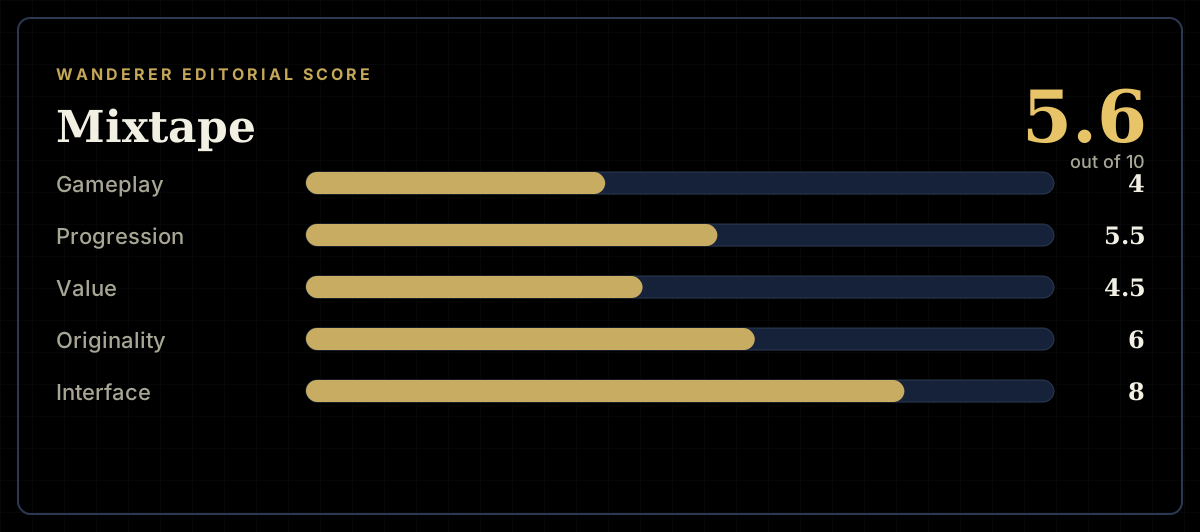
How the review scores each part of the gameWanderer Editorial -
The short versionWanderer Editorial