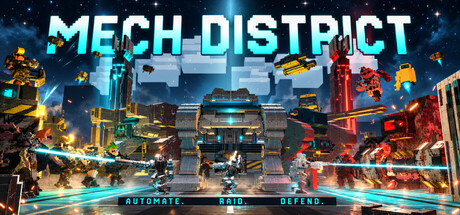
Game review
MECH DISTRICT
7 / 10
- Developer
- Stands to Reason Games
- Publisher
- Stands to Reason Games
- Released
- 11 September 2026
- Platforms
- Windows
- Genre
- RPG
A Forty-Fourth Consecutive Launch Without a Single Review
MECH DISTRICT entered Early Access on Steam on 11 September 2026 and carries zero user reviews at the time of writing. That's a meaningful gap for a game asking players to learn two distinct rule sets at once — a factory-automation economy and a turn-based tactical combat layer — since genre-mashup games like this one live or die on whether both halves feel worth the other's overhead, and that's exactly the kind of judgment normally settled by dozens of hours of collective player feedback rather than a single studio's own pitch text.
A Factory-Automation Economy That Keeps Becoming a Combat Problem
The core premise casts the player as an AI Core rebuilding an abandoned industrial zone called District Zero: placing extractors, production machinery, generators, storage, and logistics infrastructure across a rigid grid, routing materials between buildings with autonomous Hauler Bots, and exporting surplus goods through an Export Terminal for Funding used to keep expanding. That's a fully-featured factory-builder loop in its own right, with the store page's self-aware, comedic tone leaning hard into the genre's familiar bottleneck-chasing rhythm — solve one shortage, create two more farther down the supply chain. The wrinkle that pulls this into RPG territory is that the same infrastructure is under constant threat from "PigDude" raiders attacking power systems, storage, and logistics routes, forcing the player to build real-time defensive coverage using eight distinct turret types split across roles like rapid energy suppression, heavy anti-armor, and long-range artillery. Production and defense are explicitly the same resource pool: every turret, Raidframe, and Superframe is manufactured from the same materials keeping the factory itself alive, so combat losses translate directly into economic setbacks rather than being walled off in a separate currency. A screenshot of the base view backs this up directly: a live scrolling log shows individual export sales and a completed "Component Order: AI Chip" contract feeding real funding numbers, sitting alongside a power readout running over its stated capacity — a genuine resource-deficit state rather than a cosmetic gauge — with a tabbed menu splitting Production, Logistics, Power, Signal, Defense, and Tools into distinct management screens.
Squad-Based Tactical RPG Combat Layered Onto the Factory Floor
Beyond real-time base defense, the game shifts into what the store page explicitly calls turn-based tactical operations: deploying squads of up to five manufactured combat units — humanoid "Raidframes" for standard operations, and much larger autonomous "Superframes" for assaults on fortified positions — into procedurally assembled territory called the Aegis Grid. Combat there is described in genuinely tactical terms: managing health, armour, abilities, cooldowns, status effects, battlefield roles, and target priorities, with class-style specialization mattering more than simply fielding the biggest possible pile of guns. Six named "Protocol bosses" stand between the player and full control of the district network, each pitched as a dedicated encounter built around its own combat mechanics rather than a reskinned stat check. Progression is handled through Directive Points spent across six specialized Protocol trees shaping how the AI Core approaches production, logistics, defense, and combat, plus Relics earned from successful operations that function as equippable modifiers to be built around — a genuine skill-tree-and-loot structure sitting on top of the factory-management core, rather than an afterthought bolted onto a pure automation game. A tactical-encounter screenshot confirms the class-role promise is real and specific: a five-unit squad named Striker, Demolitionist, Reaper, Lifeline, and Hammer, each tracking their own health total, faces off against enemies with a telegraphed "Enemy Intent" readout naming the incoming attack and its target, while a five-slot ability bar lists distinct named moves — Striker Carbine, Breach Rush, Suppressing Burst, Combat Roll, Shockline — under a clear "Defeat all hostile units" objective banner, evidence of a properly built cooldown-and-positioning tactics screen rather than a simplified stat check.
A Single, Interconnected System Rather Than Two Separate Games
What's notable about the design, at least as pitched, is that the store page repeatedly frames the factory and the battlefield as one continuous system rather than two modes bolted together: every combat unit begins as raw material, every operation depends on production, and a destroyed Raidframe becomes "another item on tomorrow's manufacturing schedule" rather than a simple respawn. Liberating territory on the Aegis Grid can also mean restoring damaged infrastructure for persistent strategic benefits rather than only fighting through it, which suggests at least some non-combat routes to progress. A screenshot of the Aegis Grid's sector-selection screen confirms this expansion loop is a real, granular system rather than a single "expand" button: an unclaimed sector is shown listing its own specific resource yield — ScrapMetal, IndustrialCarbon, ConductiveScrap, and GlassDebris — alongside an Aegis Points cost and an explicit Unlock Sector action, matching the store page's description of pushing outward sector by sector rather than opening the whole map at once. That's an ambitious integration for a solo-developer Early Access release to deliver cleanly — automation games and tactical RPGs each carry their own genre expectations around pacing and difficulty curves, and reconciling them well is a harder design problem than building either system in isolation. The store page gives no indication of how many hours of factory-building precede the first tactical encounters, or how punishing losing a fully-built Superframe squad actually is against the time invested constructing it.
An Early Access Price That Assumes Real Staying Power
At NZ$24.99 with no discount, MECH DISTRICT is priced well above the NZ$5–15 range typical of solo-developer Early Access releases surfacing alongside it this month, closer to what a small studio with a finished, multi-system release would charge. That price is a reasonable bet if the automation-meets-tactics loop holds up across dozens of hours, which is the normal expectation for factory-builder fans, but it also raises the stakes on how complete the current Early Access build actually is — the store page doesn't state a planned Early Access duration, a roadmap, or a current playtime estimate, all of which would help justify the price against what's playable today. Accessibility support is reasonably thorough for a solo project, including adjustable text size, colour alternatives and contrast controls, camera comfort, and save-anytime functionality, and the game supports Windows only with no stated system requirements to judge how demanding a fully built-out District Zero becomes to simulate and render.
Verdict
MECH DISTRICT pitches an ambitious, tightly-integrated combination of factory automation and squad-based tactical RPG combat — shared resources, a six-tree skill system, equippable Relics, and six named bosses — wrapped in a self-aware comedic voice, at a price that assumes the loop has real staying power. Screenshots of the sector-unlock map, a five-role tactical squad with named abilities and telegraphed enemy intents, and a live factory HUD tracking funding, power deficits, and export contracts all confirm these systems are implemented and working together, not just described in the abstract. It entered Early Access on 11 September 2026 with zero user reviews so far, so whether the automation and tactics halves actually reinforce each other in play, rather than one feeling like a chore blocking access to the other, and how much of this extensive feature list is genuinely playable at the current build, remain unverified by anyone outside the studio.
Screenshots
-
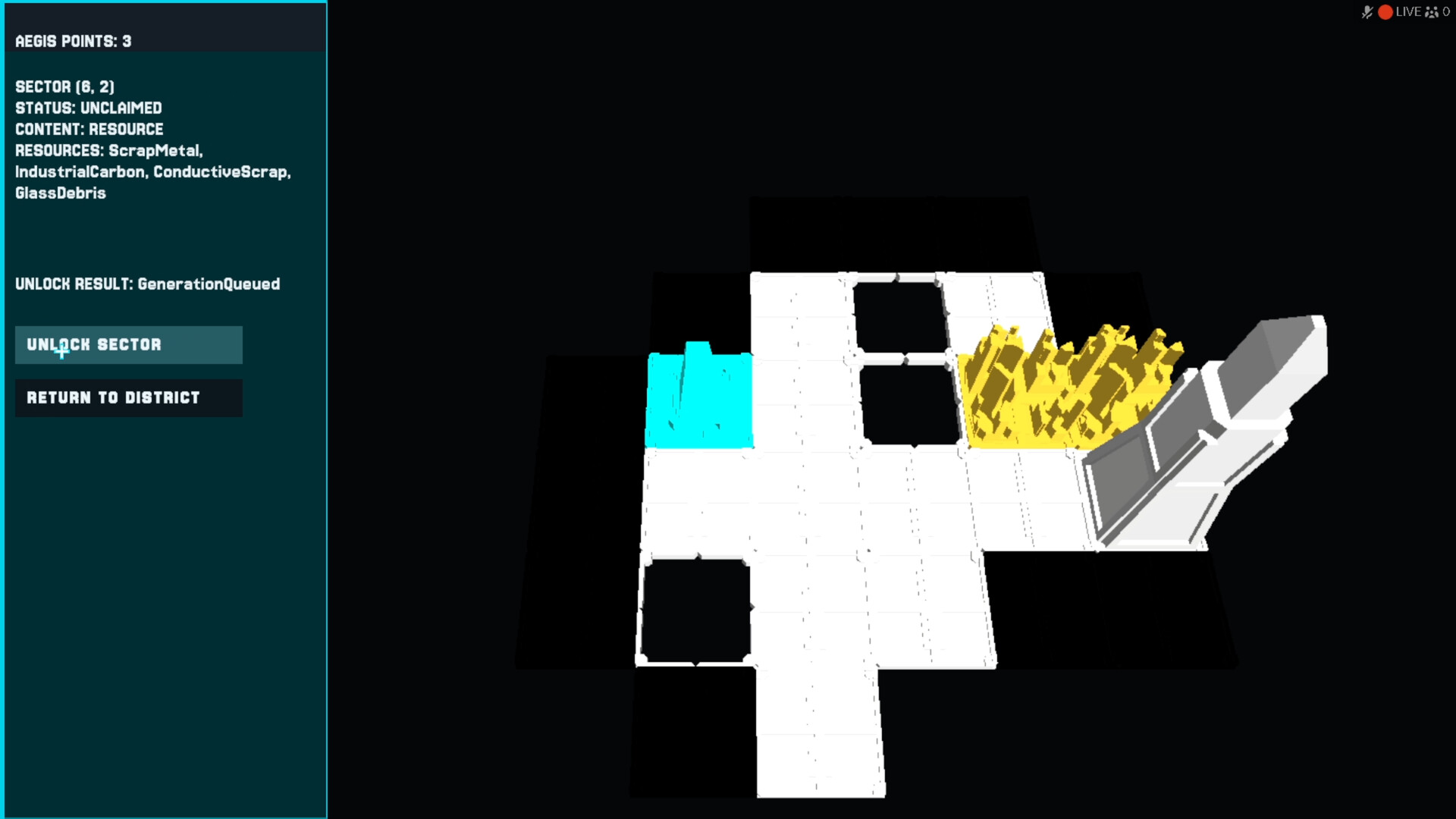
The Aegis Grid's sector-unlocking screen confirms named, distinct resource types tied to specific unclaimed territory tiles, matching the store page's description of expanding outward sector by sector.Steam store page -
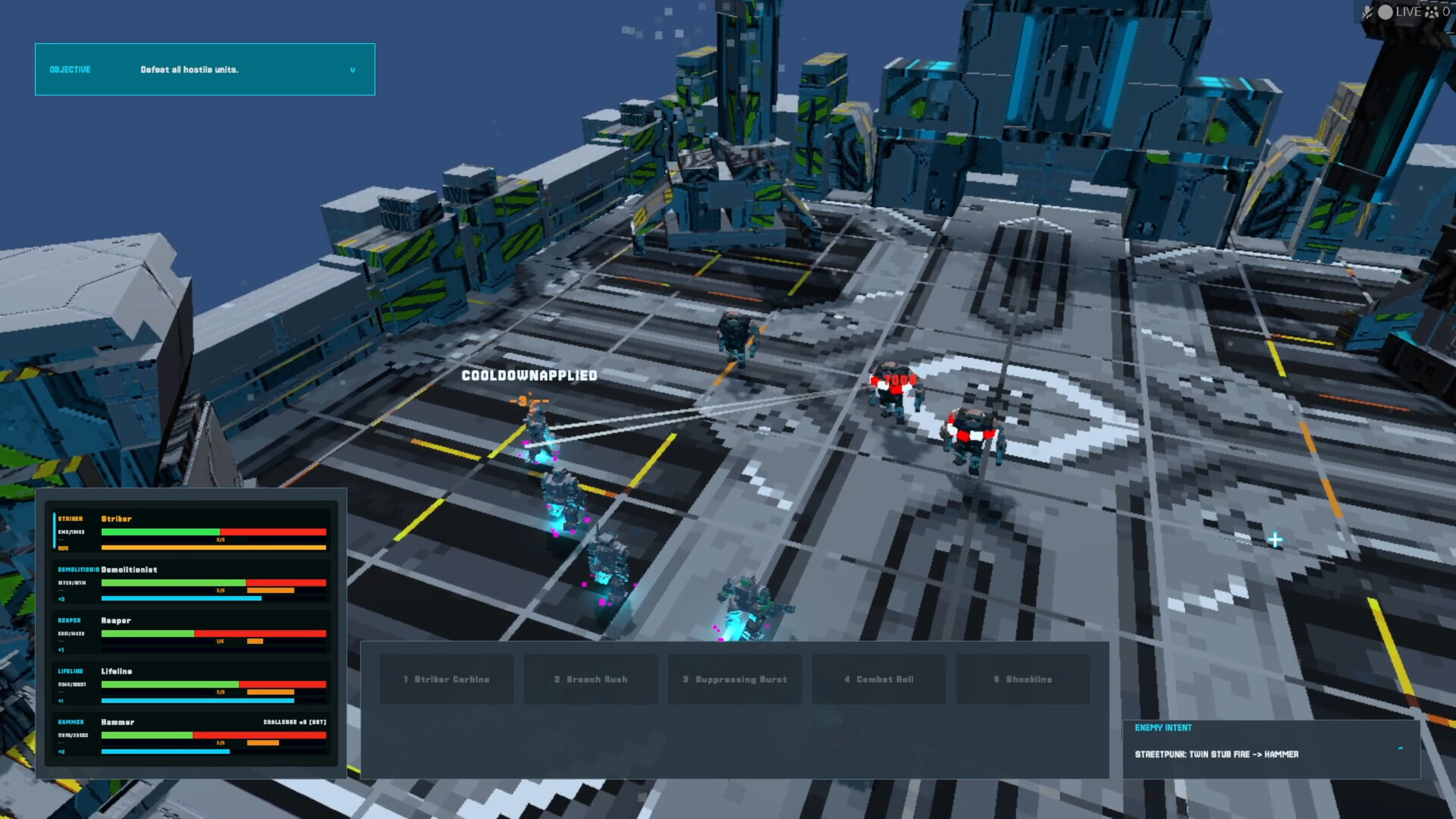
Five distinctly named unit roles with their own health pools and a five-move ability bar, plus a telegraphed enemy intent line, confirm the tactical layer is a real class-and-cooldown system rather than a simple damage race.Steam store page -
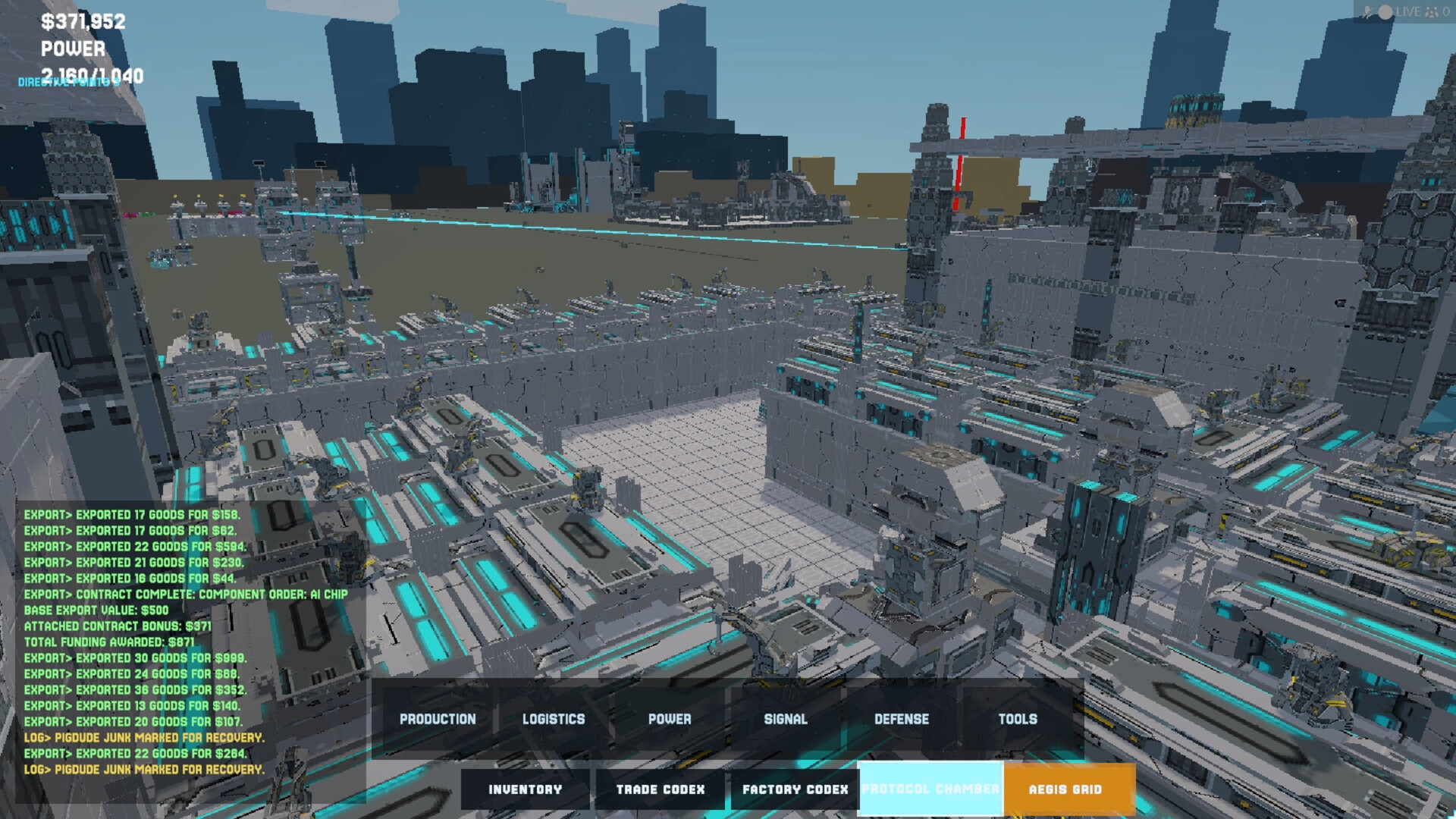
A power draw shown running over capacity alongside a live export log and completed component contract is concrete evidence of the interlocking production, power, and trade systems described on the store page, not just a static base-building backdrop.Steam store page