Game review
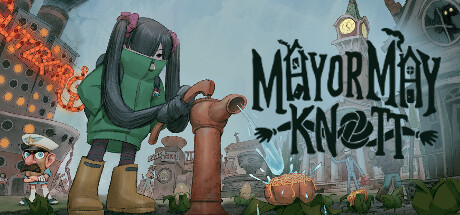
Mayor May Knott
8.1 / 10
- Developer
- Ravenous Images
- Publisher
- Ravenous Images
- Released
- 30 April 2026
- Platforms
- ["Windows"]
- Genre
- Adventure
- Monetisation
- Paid
- Players
- Single-player
The short version
Mayor May Knott is a wonderfully strange, hand-crafted puzzle adventure whose ghoulish cast, gag-stuffed writing, and gloriously silly original songs make it one of the most purely charming releases of the year, held back only by a missing town map and a few stretches where the hint system leaves players guessing.
Biggest strengths
- An enormous, distinctive cast of gothic-cute monsters and ghosts, matched by writing that's dense with puns and running jokes without becoming exhausting
- An original soundtrack of 30-plus short parody songs, each tied to a crafting or cooking recipe, that reviewers repeatedly single out as a genuine highlight
- A well-paced confidence mechanic that gates access to darker areas and characters, giving a linear story real structure without ever feeling like busywork
Biggest weaknesses
- No in-game town map, which combined with dozens of similarly unfamiliar house names leaves many players unsure where a given resident actually lives
- The fortune teller's hints can be too vague at a few key sticking points, leading to stretches where progress stalls with no clear next step and no official guide to fall back on
- Reports of unusually high CPU usage and stutter on some hardware and platforms, plus a small number of players hitting crashes or lockups early on
Who it's for: Fans of creepy-cozy adventures like Creature Kitchen and Bugsnax, and anyone who grew up on Tim Burton films, Love-De-Lic games like MOON and Chibi-Robo, or Majora's Mask-style character-driven puzzle progression.
Our recommendation: A confident, easy recommendation, especially for players who want a linear, puzzle-focused story over an open-ended decorating sandbox; try the demo first if you're on the fence about the humour.
8.1 / 10
A Scaredy-Cat's Accidental Mayorship
Mayor May Knott opens with its heroine, May, spending the last of her money on a train ticket to nowhere in particular, only to be stranded overnight in what turns out to be a genuinely haunted town. By morning she's stumbled onto the old mayoral deed, and with nowhere else to go, she takes the job: repairing derelict houses, granting the wishes of the ghosts still haunting them, and inviting new residents, most of them affable monsters, to move in once a home is ready. Developed and published by Ravenous Images and released April 30, 2026, it's the studio's debut, and the premise alone puts it in good company, echoing the character-driven, weekly-cycle structure of Love-De-Lic classics like MOON and Chibi-Robo, filtered through a Tim Burton-esque visual language that reviewers repeatedly compare to Beetlejuice and Mars Attacks.
The catch is May's own crippling anxiety. She physically bolts for home if startled, and every new monster she meets triggers a jump scare until her "confidence" meter, built up by completing tasks and helping residents, is high enough to let her stand her ground. It's a clever bit of mechanical storytelling: the game literally will not let players linger in the dark or push into new areas until May herself is ready, and watching that gate loosen over roughly 15 to 20 hours mirrors her arc from a girl who flees her own shadow to the confident, if still reluctant, mayor of a town full of friends. The response to this pitch has been remarkable: out of 212 reviews at the time of writing, only a single one is negative, an almost unheard-of ratio for a debut game at this scale.
Fixing Houses, Feeding Monsters, and Reading the Room
The core loop is straightforward but layered. Each haunted house needs repairing before its resident ghost will move on, which usually means gathering materials through light exploration, a handful of recurring minigames like bowling for resources, or eventually recruiting townsfolk who specialise in particular jobs and will gather things on May's behalf. Crafting and cooking sit alongside repair work, since townsfolk have specific needs and preferences that reviewers describe as genuinely worth tracking rather than a rote checklist, and anything crafted but unwanted can be dismantled again so nothing is ever permanently wasted. It's less a management sim than reviewers initially expect from the marketing, and more of a linear point-and-click adventure with the escalating access of a Metroidvania: new tools, shortcuts, and areas open up steadily as May repairs more of the town and grows more confident, and several reviewers describe the resulting sense of a town visibly coming back to life, comparing the feeling to watching a Digimon World village grow, as one of the most satisfying parts of the whole experience.
The signature mechanic, though, is the Edjukebox, a device that plays short parody songs to teach new recipes. Reviewers describe roughly 30 of these original tracks spanning genres from French rap to boy bands to The Smiths and Johnny Cash, each one deliberately, gleefully dumb, and the response across dozens of reviews is close to unanimous delight, with several people saying they bought the soundtrack separately just to keep listening. Puzzles get similarly strong marks, particularly a set of proper logic puzzles that open up in the game's third act inside a haunted mansion; multiple reviewers mention reaching for scrap paper to work through them, a rare compliment for a genre that often leans on trial and error instead.
Where the Charm Runs Into Friction
For as consistent as the praise is, the same handful of frustrations show up again and again across the review base. The most common is navigation: once a resident has been given the key to a specific house, the game tells players the house's name but offers no map showing where that house actually is in town, and with dozens of similarly styled buildings to remember, several reviewers say they lost real time simply wandering in search of the right door. A second recurring issue is that the fortune teller, who offers hint-style "fortunes" for active quests, occasionally isn't specific enough at a few key sticking points; a handful of reviewers describe genuinely stalling out with no clear next step and no comprehensive guide or wiki to fall back on, though a community-run fanwiki was cited as a work in progress. A separate technical thread involves CPU usage that some players, particularly on Steam Deck and Linux via Proton, describe as unusually high for the game's visual complexity; the developer has been actively patching in response and shipped a "Very Low" graphics preset to help, and several affected reviewers note the team has been unusually responsive to bug reports in the studio's Discord, sometimes patching issues within a day. The single outright negative review in the sample describes a lockup severe enough to freeze the reviewer's whole computer, with no resolution found at the time of writing, a stark outlier against an otherwise glowing reception but a real data point for anyone on less common hardware.
A Cast Worth Getting Attached To
Much of what makes those rough edges forgivable is the strength of the writing and cast. Character names, town lore, and even resource names are stuffed with puns and running gags, from a potato-shaped landlord in a captain's uniform to a rapping handyman clock who teaches crafting, and reviewers consistently describe the humour as landing more often than it misses, even among people who admit dad jokes aren't usually their thing. Some do note the jokes thin out somewhat during the final act's two big story quests, when the tone shifts to wrap up plot threads rather than land gags, a minor deflation after such a consistently funny build-up. It's also worth flagging as genuinely notable given how common the complaint has become elsewhere in the industry: several reviewers explicitly praise the game for having no generative AI involved in its art or writing, a detail Ravenous Images appears to have made a point of communicating to its community.
Accessibility gets real attention too, with sensory-conscious design, no significant flashing lights, no violence or gore, and audio sliders for sensitive players called out by several reviewers, including some who specifically play alongside communities affected by chronic illness or disability. Combined with generous, flexible saving that lets players dip in for thirty minutes or several hours without penalty, it's a game reviewers describe as easy to live with day to day, not just admire in short bursts.
Verdict
Mayor May Knott arrives from a first-time studio with the confidence and polish of a much more experienced one, pairing a genuinely inventive creepy-cozy premise with some of the funniest, most purely charming writing and music released this year. Its near-unanimous reception, 211 positive reviews against a single negative one, isn't hype or luck; it reflects a game that consistently delivers on a distinctive idea without overstaying its welcome across a well-paced 15-to-20-hour campaign. The lack of a town map and a handful of under-specific hints are real, repeatedly reported annoyances, and players on less common hardware should be aware of the CPU usage reports before diving in, but neither comes close to undoing what the game gets right. For anyone drawn to puzzle adventures with real personality, this is an easy, confident recommendation.
Pros and cons
Pros
- An enormous, distinctive cast of gothic-cute monsters and ghosts, matched by writing that's dense with puns and running jokes without becoming exhausting
- An original soundtrack of 30-plus short parody songs, each tied to a crafting or cooking recipe, that reviewers repeatedly single out as a genuine highlight
- A well-paced confidence mechanic that gates access to darker areas and characters, giving a linear story real structure without ever feeling like busywork
Cons
- No in-game town map, which combined with dozens of similarly unfamiliar house names leaves many players unsure where a given resident actually lives
- The fortune teller's hints can be too vague at a few key sticking points, leading to stretches where progress stalls with no clear next step and no official guide to fall back on
- Reports of unusually high CPU usage and stutter on some hardware and platforms, plus a small number of players hitting crashes or lockups early on
Screenshots
-
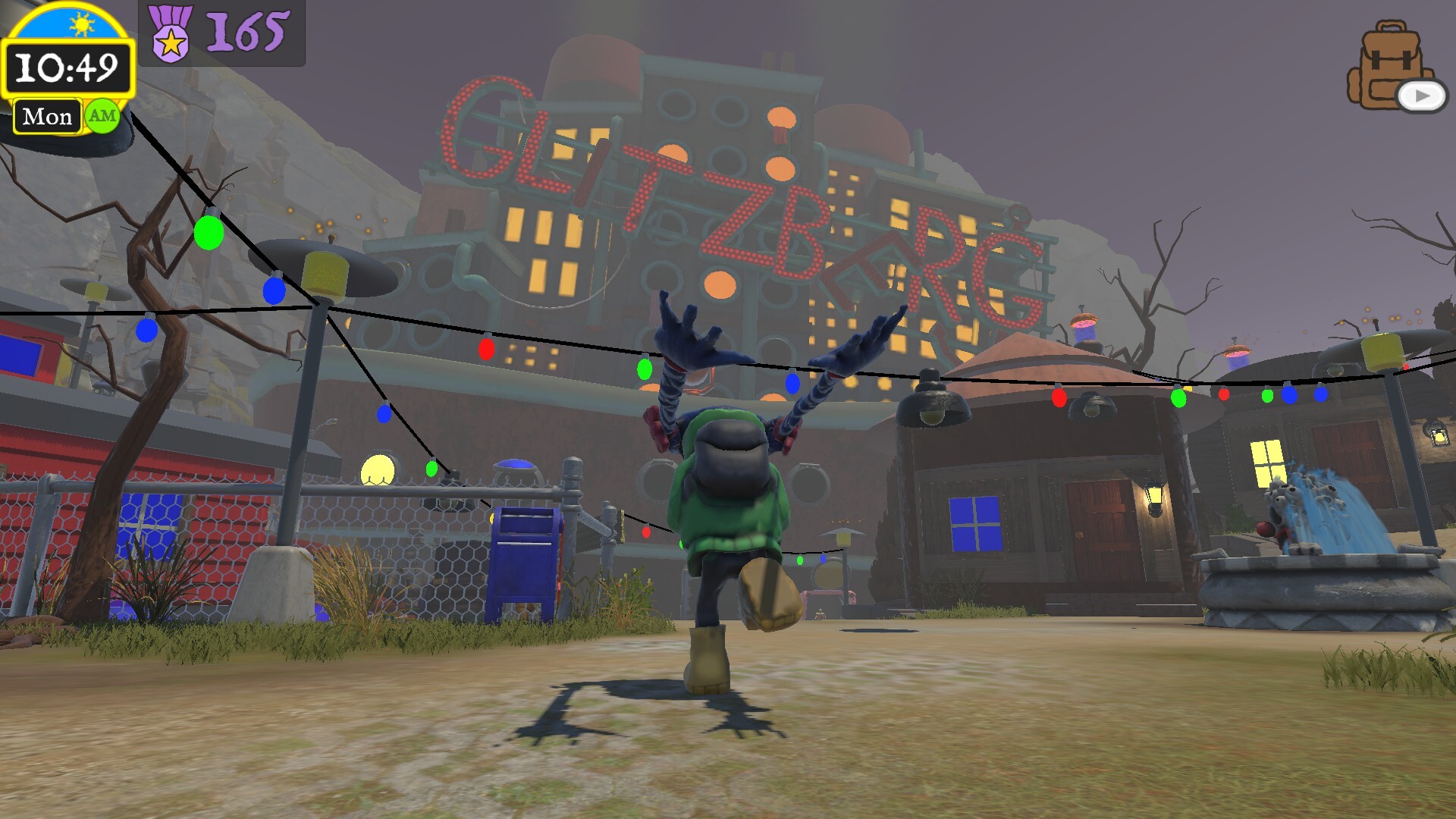
The town of Glitzberg lights up as May explores after darkRavenous Images -
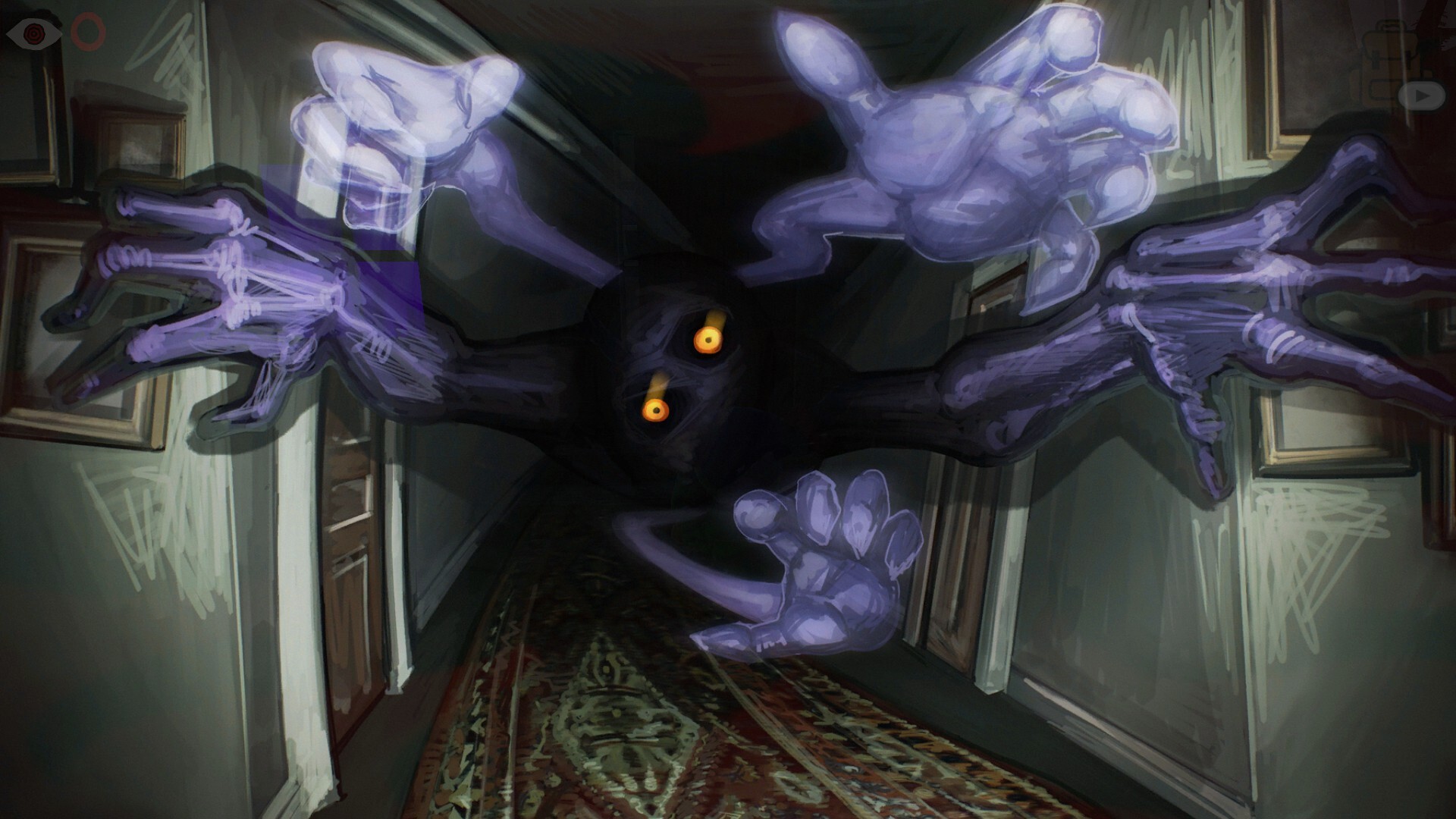
One of the game's exaggerated, hand-painted jump scaresRavenous Images -
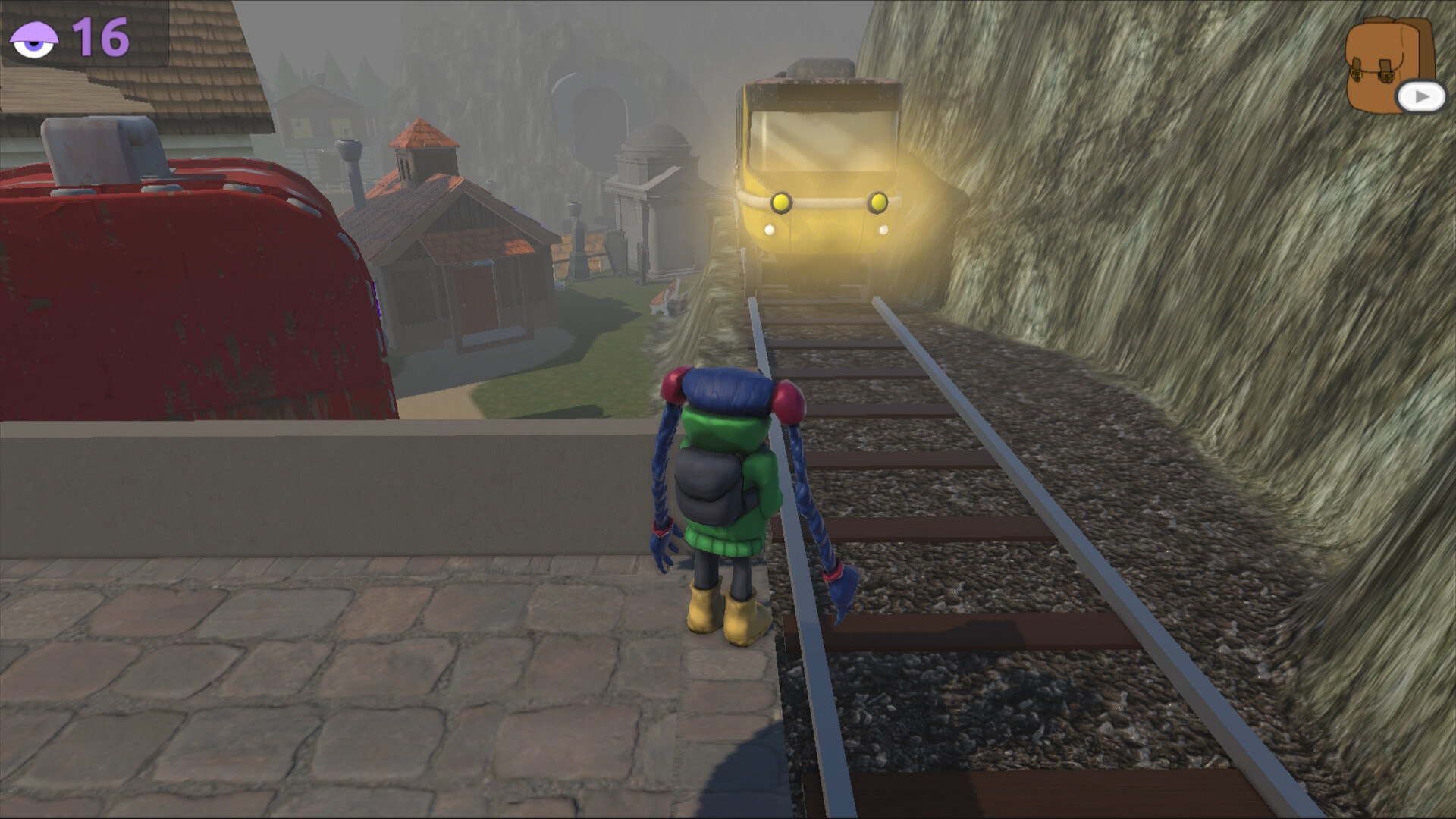
The train that strands May in her new haunted hometownRavenous Images -
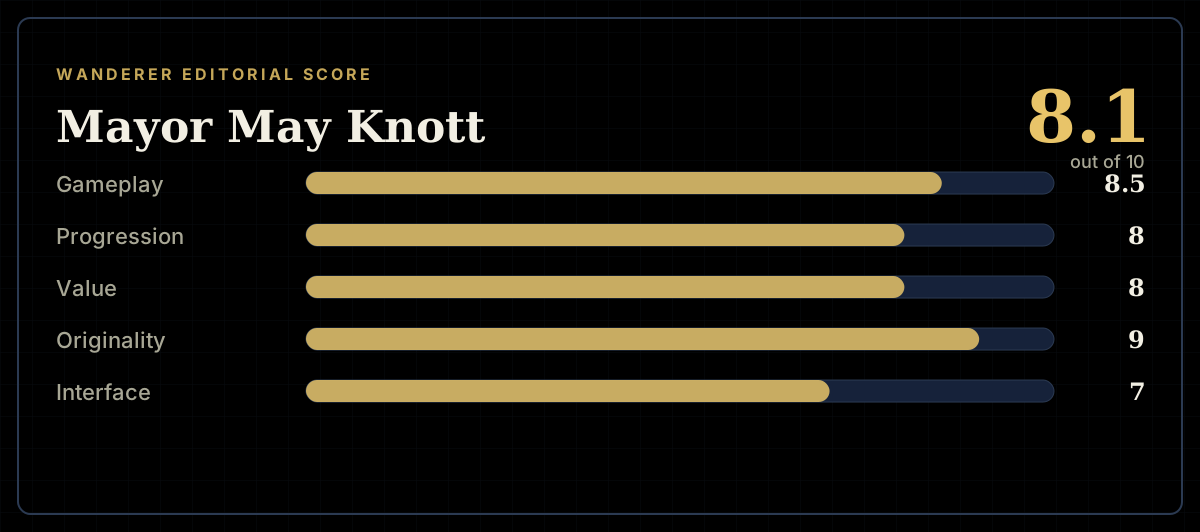
How the review scores each part of the gameWanderer Editorial -
The short versionWanderer Editorial