Game review
Tiny Garden
6.8 / 10
- Developer
- Ao Norte
- Publisher
- Super Rare Originals / Gamersky Games
- Released
- 8 April 2025
- Platforms
- ["Windows", "Mac", "Linux"]
- Genre
- Simulation
- Monetisation
- Paid
- Players
- Single-player
The short version
Tiny Garden nails its Polly Pocket-inspired premise and hides a genuinely clever terrain puzzle under its cozy exterior, but the crop-chaining economy that powers its late game asks for more grinding than the pressure-free tone promises, and it stumbled out of the gate with launch bugs and thin controller support.
Biggest strengths
- A genuinely original hook: a Polly Pocket-style clamshell toy turned into a terrain-management puzzle
- Deep, tactile customisation of the tiny world, down to individual item colours and rotatable stickers
- Cheap and short enough to 100% in well under ten hours, which reviewers repeatedly call great value
Biggest weaknesses
- The seed-unlocking economy chains crop requirements together until late-game progress feels like a spreadsheet exercise
- A rough launch week for some players: black-screen hangs, an invisible cursor, and stuck saves that drove refund requests
- Steam Deck and controller support were minimal at launch, though the developers patched much of it in quickly
Who it's for: Puzzle-minded cozy gamers with a soft spot for miniature-toy nostalgia who don't mind some resource-chain grinding.
Our recommendation: Recommended, especially on sale, for players who want a short, inventive puzzle-farming loop; those allergic to grindy unlock chains should temper expectations.
6.8 / 10
A Polly Pocket Diorama Reimagined as a Terrain Puzzle
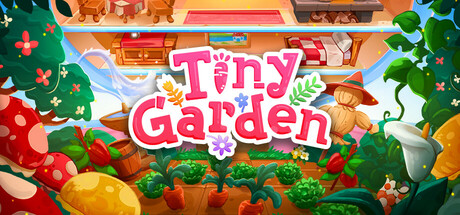
Tiny Garden, developed by the Portuguese studio Ao Norte and published by Super Rare Originals and Gamersky Games, drops players inside a miniature clamshell toy and asks them to grow a garden one soil patch at a time. It's an unmistakably direct descendant of Polly Pocket, and nearly every one of its 115 English-language Steam reviews says so within the first sentence or two; the comparison isn't incidental marketing, it's the emotional core of why so many reviewers picked the game up in the first place. Underneath that nostalgia hook sits a mechanic that turns out to be more than a cozy backdrop: each new seed type has to be bought using crops harvested from earlier seed types, and different seeds only grow on specific soil combinations that the player has to sculpt into their limited garden space by hand.
At Very Positive with 100 of 115 English reviews recommending it, the reception is warm but not uncomplicated, and reading through the full set makes the fault line clear almost immediately. The praise centres on the puzzle-solving buried inside the cozy premise and the sheer amount of customisation on offer; the criticism, which shows up in both the negative reviews and plenty of otherwise-positive ones, centres on a late-game economy that several reviewers describe turning from puzzle into chore.
The Puzzle Underneath the Cuteness Is the Real Draw
What separates Tiny Garden from a generic "cute farming clicker" is the terrain-chaining puzzle, and reviewers who engage with it tend to come away impressed. Growing an advanced crop typically means first cultivating several "intermediate" crops on specific soil types, which in turn requires reshaping the garden's limited plots to support the right combination of soil preferences at once. Multiple reviewers describe this as more logic puzzle than farming sim, with one comparing the process of working out an optimal layout to solving a spatial reasoning problem, and several single out a late-game puzzle sequence as a genuine test of everything the player has learned. The chunky, tactile crank that advances time between plantings gets called out repeatedly as oddly satisfying, and the decision to use harvested crops as the game's only currency, rather than a separate gold system, is a detail several reviewers specifically praise for keeping the loop self-contained.
Customisation is the other pillar reviewers keep returning to. Furniture, wall colours, floor colours, and stickers can each be recoloured and repositioned individually, to the point that multiple reviewers note it's unlikely any two players' gardens will end up looking alike. A small collectible-letters system, unlocked alongside new content, draws unusually emotional praise; more than one reviewer mentions being caught off guard by how much the letters affected them, and it's one of the few specific systems that shows up as a highlight across reviews that otherwise disagree about almost everything else.
Where the Grind Sets In, and a Rough First Week
The same chaining mechanic that earns praise for its puzzle depth is also the game's most common complaint, and it's worth taking seriously given how often it recurs. As the crop tree deepens, unlocking a single advanced seed can require harvesting seven or more intermediate crops first, each with its own soil requirements competing for the same cramped plots. Several reviewers describe reaching a point where they felt they needed to track requirements on a literal spreadsheet, which more than one calls the opposite of the relaxed, pressure-free experience the game's tone promises elsewhere. This is consistently the reason cited by reviewers who otherwise liked the art and concept but stopped playing, rather than any single dealbreaking flaw.
Tiny Garden also had a genuinely rough launch week for a meaningful slice of players. Several reviews describe the game hanging on a black screen after the developer logo with no way to proceed, one reporting an invisible cursor that made the game effectively unplayable, and at least one player describing a soft-lock that left them with no usable seeds at all. Steam Deck and controller support were thin at release too: the default control scheme mapped movement to the triggers with the trackpad standing in for a mouse, and rotating decorative stickers wasn't possible on a gamepad, which a Deck-focused reviewer called actively uncomfortable to play for more than 45 minutes at a stretch. To the developers' credit, several reviewers who initially reported these exact problems later edited their reviews to note that patches fixed the soft-lock, added proper controller support, and resolved a camera-drift bug, with more than one upgrading from a negative or lukewarm review to a recommendation as a direct result.
A Short, Cheap Trip That Some Reviewers Wish Ran Longer
Length and price come up constantly, almost always as a point in the game's favour. Reviewers who finish and 100% the achievement list frequently report doing so in well under ten hours, with several citing figures as tight as eight hours, and at a launch price under twenty New Zealand dollars, "great value for the money" is one of the most repeated single phrases in the review set, sale or no sale. A handful of reviewers land on the opposite complaint, wishing the game were longer given how much they enjoyed their time with it, which is a more flattering problem to have than most cozy games run into. A smaller thread of criticism argues the gardening and decorating halves of the game don't reinforce each other as tightly as they could, since decorations are mostly cosmetic and don't feed back into the puzzle-solving in a meaningful way, leaving a few reviewers feeling like they were juggling two separate games rather than one cohesive loop.
Verdict
Tiny Garden earns its Polly Pocket comparisons honestly, and the terrain-chaining puzzle it builds around that premise is smarter and more original than its cozy, pastel presentation lets on at a glance. Where it stumbles is exactly where a lot of well-intentioned puzzle-economy games stumble: the same chaining system that makes early hours feel clever eventually asks players to hold an entire crop-dependency tree in their heads, and a shaky launch week added avoidable friction on top of that for a real number of players, even if the developers moved quickly to patch much of it. For a short, cheap, thoughtfully designed puzzle wrapped in genuine toy-box nostalgia, it's an easy recommendation; players who know grindy unlock chains burn them out fast should go in with that expectation set correctly.
Pros and cons
Pros
- A genuinely original hook: a Polly Pocket-style clamshell toy turned into a terrain-management puzzle
- Deep, tactile customisation of the tiny world, down to individual item colours and rotatable stickers
- Cheap and short enough to 100% in well under ten hours, which reviewers repeatedly call great value
Cons
- The seed-unlocking economy chains crop requirements together until late-game progress feels like a spreadsheet exercise
- A rough launch week for some players: black-screen hangs, an invisible cursor, and stuck saves that drove refund requests
- Steam Deck and controller support were minimal at launch, though the developers patched much of it in quickly
Screenshots
-
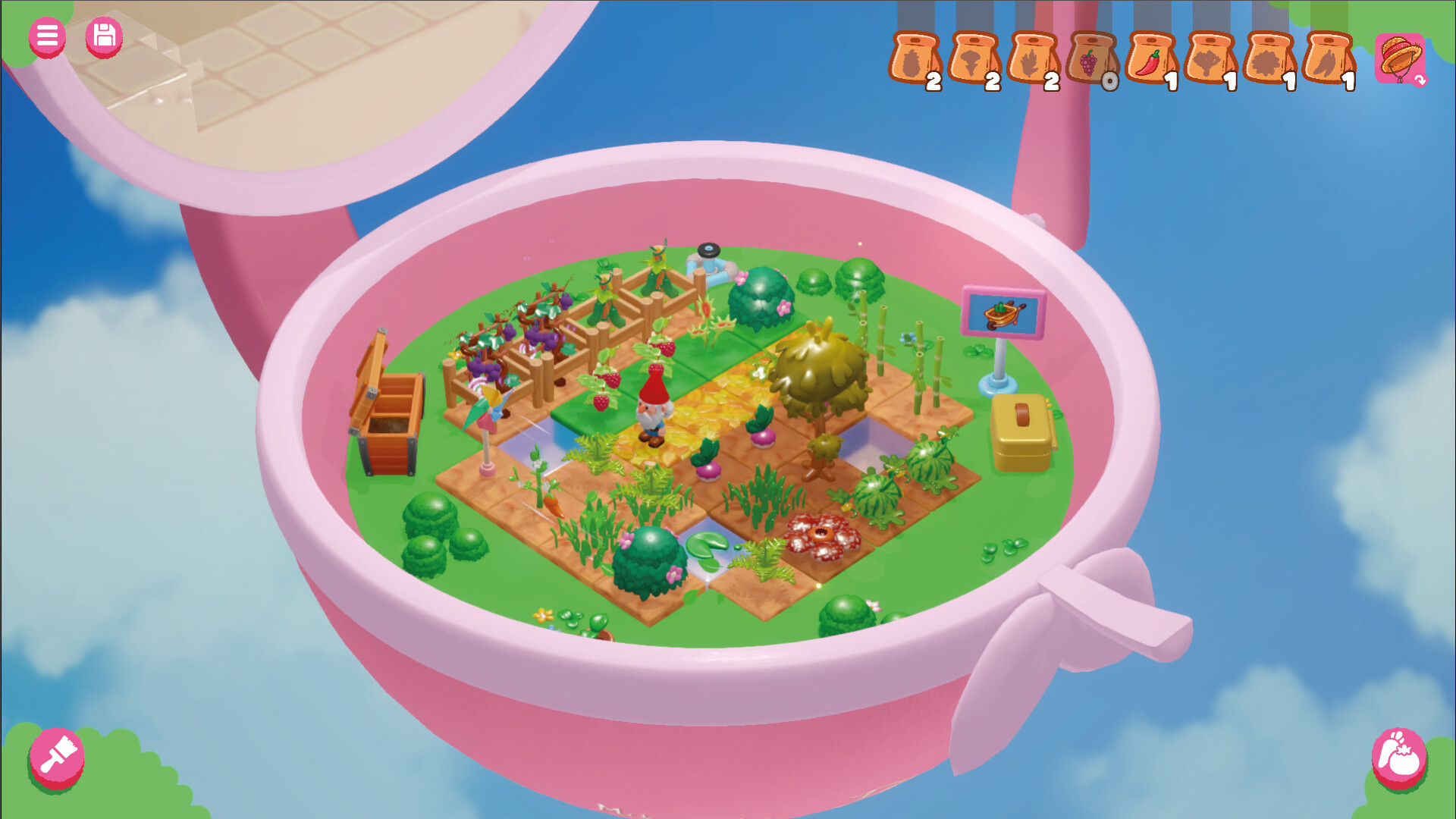
The core loop in miniature -- sculpting soil plots and chaining crops to unlock the next seed typeAo Norte -
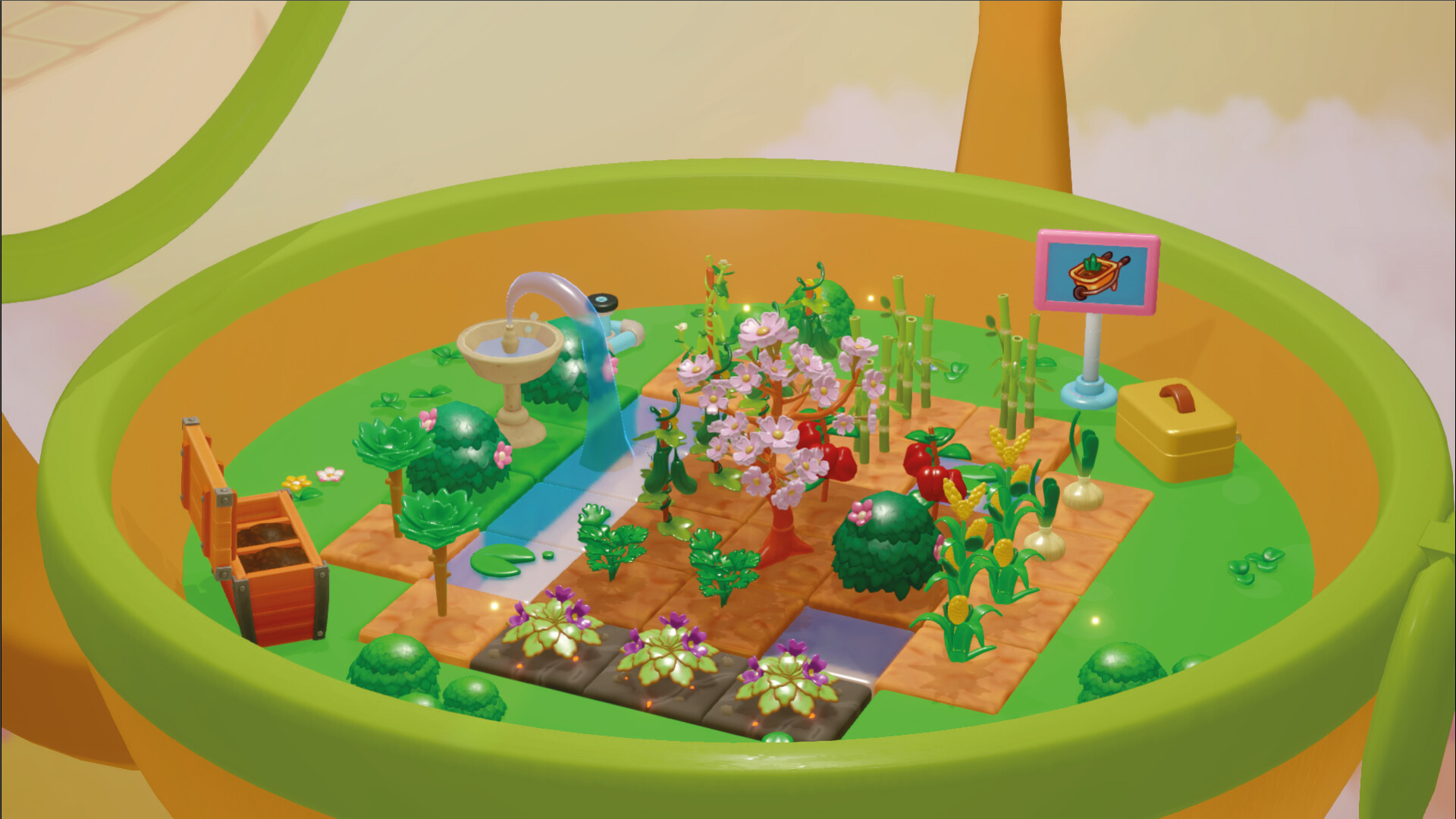
A different garden case with its own soil layout, showing the variety terrain-chaining is built aroundAo Norte -
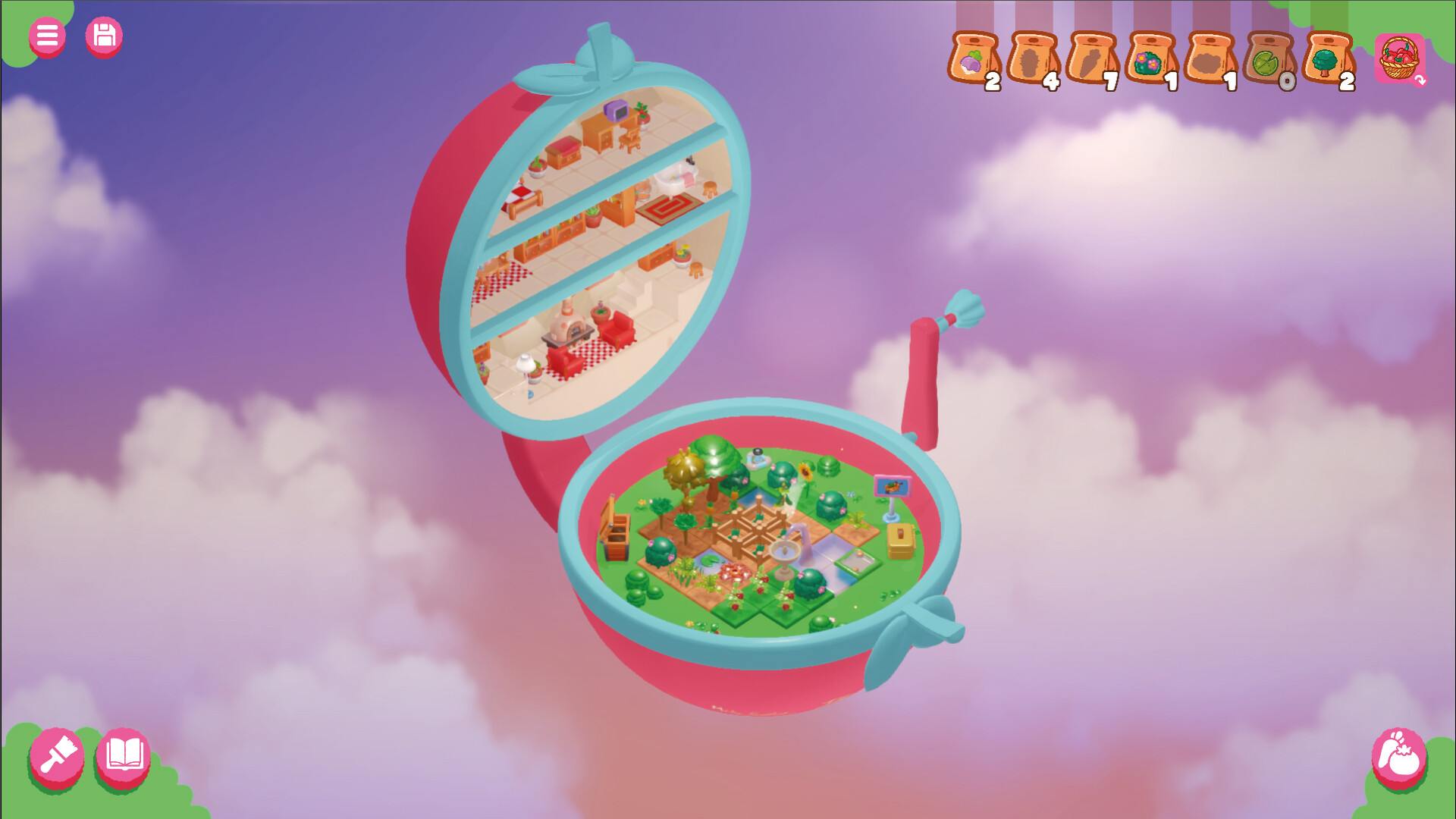
The toy's two halves -- a decorated little home above the garden -- and the customisation reviewers praisedAo Norte -
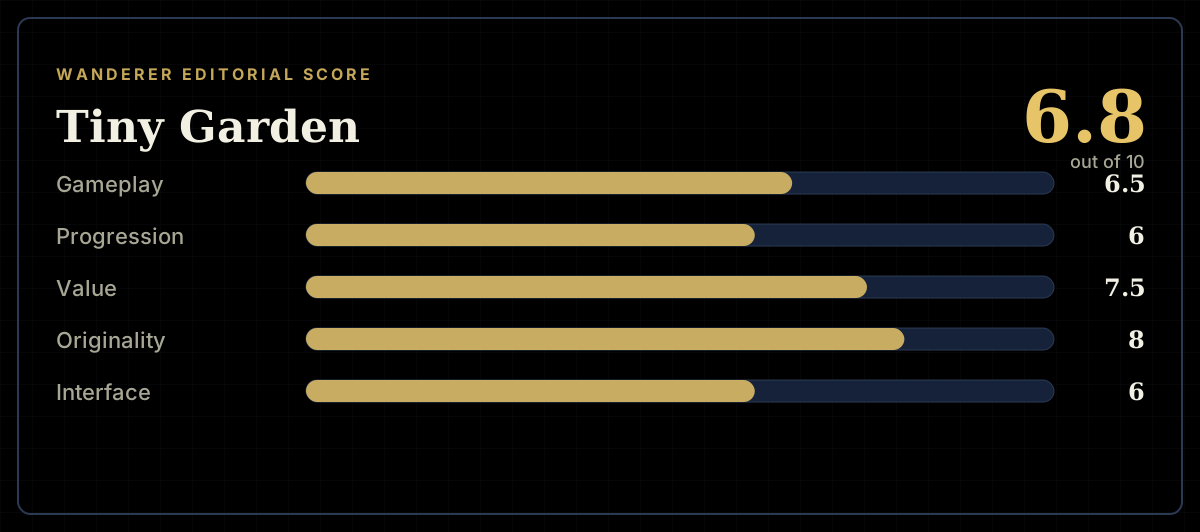
How the review scores each part of the gameWanderer Editorial -
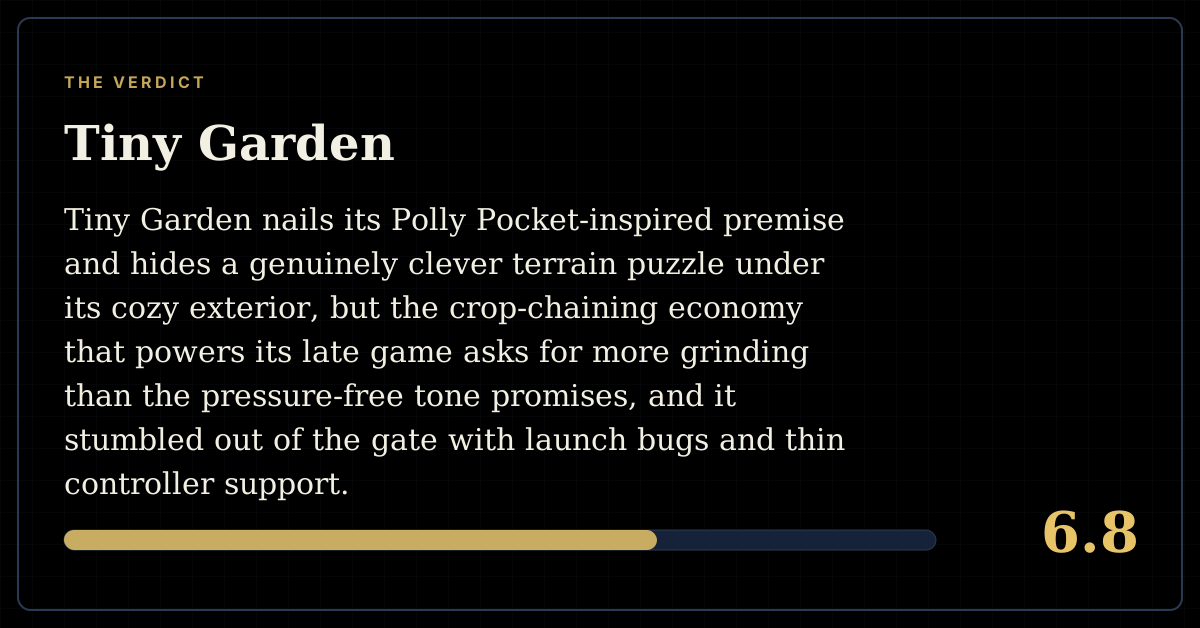
The short versionWanderer Editorial