
Game review
Hozy
6.3 / 10
- Developer
- Come On Studio
- Publisher
- tinyBuild
- Released
- 30 March 2026
- Platforms
- ["Windows", "Mac"]
- Genre
- Simulation
- Monetisation
- Paid
- Players
- Single-player
The short version
Hozy is one of the most visually and sonically accomplished cozy games of the year, undermined by camera and cursor jank, save-related bugs, and a runtime that most players finish in an afternoon; it's a game to buy on sale and savour slowly rather than rush through at full price.
Biggest strengths
- Extraordinarily hand-crafted presentation: near-unique furniture models with physical deformation, rich interactive details (radios, lights, TVs), and widely praised sound design
- A satisfying two-phase loop, cleaning and repairing a space before decorating it, that many reviewers compare favourably to PowerWash Simulator crossed with Unpacking
- Nine distinctly themed rooms, several with clever environmental gimmicks, plus a post-launch sandbox mode that unlocked genuine player-made mural art using the in-game paintbrush
Biggest weaknesses
- Persistent camera and cursor complaints, including input lag, awkward corner-painting, and a lack of keyboard camera controls that many reviewers call actively frustrating
- Recurring save and progress bugs, from reset room states to broken completion triggers to achievements failing to unlock, reported across a wide range of playtimes
- A short, tightly scripted experience, nine fixed levels usually finished in three to twelve hours, with only three paint colours and no way to set furniture aside rather than being forced to place all of it
Who it's for: Fans of Unpacking, House Flipper, and PowerWash Simulator who want a hand-crafted, non-first-person restoration game, and players who value atmosphere and detail over open-ended customization.
Our recommendation: Worth owning for its craft and atmosphere, but buy on a discount rather than at launch price, and go in expecting a short, structured experience rather than a true creative sandbox.
6.3 / 10
Restoring a Neighbourhood, One Room at a Time
Hozy casts players as an unnamed restorer moving through a forgotten neighbourhood, bringing nine abandoned homes and spaces back to life one at a time: a cramped studio apartment, a treehouse, a lighthouse, a cafe, a wizard's tower, a penthouse, and several more, each belonging to an implied former occupant whose personality is meant to come through in what they left behind. Made by the small team at Come On Studio and published by tinyBuild, it launched fully on March 30, 2026 after nearly a year of public playtests and demos stretching back to mid-2025, a runway that built a large and vocal community well before release, reflected in its unusually high review count of nearly 4,800 at the time of writing, with roughly 81% recommending it.
That high review count comes with an unusually wide spread of opinion for a game with such strong overall numbers. Reading through hundreds of reviews, a clear pattern emerges: almost nobody disputes that Hozy is beautiful and meticulously crafted, but a substantial minority, including many people who ultimately still recommend it, describe fighting the game's controls, waiting out its bugs, or feeling shortchanged by how quickly it ends. It's a game whose reputation depends heavily on which side of that divide a given player lands on, and reviewers are refreshingly candid about walking that line themselves.
A Two-Phase Loop That Splits Reviewers' Favourite Parts
Each of the nine locations plays out in two stages. First comes restoration: sweeping and mopping floors, washing windows, tearing up and relaying tile, raking leaves, and repainting walls with a roller or, in select rooms, a genuine freehand paintbrush. Only once a space is fully cleaned and repaired does the game move to its second phase, unpacking a series of themed boxes and arranging the furniture and decor inside to furnish the now-restored room, capped off with an in-game camera mode for taking a finished "after" photo.
Reviewers are split almost evenly on which half they prefer, and that split says a lot about the game's appeal. Several call the cleaning and repair phase their favourite part of the entire experience, praising the tactile sound design, the way tiles snap satisfyingly into place, and the simple, meditative rhythm of restoring order to a wrecked space. Others find the decorating phase more compelling, singling out the unusually detailed, non-repeating furniture models: pillows that slump realistically around a grip point, blankets that drape differently depending on how they're picked up, radios and lamps and televisions that actually switch on and play something when clicked. One especially thorough reviewer, who received a review copy directly from tinyBuild and disclosed it clearly, described the amount of hand-crafted variety in the furniture as a genuine standout compared to similar games in the genre, and pointed to community-made mural art created with the paintbrush tool, now expanded into a dedicated post-launch sandbox mode, as an unexpectedly rich creative outlet layered on top of the core game.
Where the Controls and the Bugs Get in the Way
The most consistent, specific criticism across both positive and negative reviews targets the camera and cursor. Multiple reviewers describe a noticeable lag between moving the mouse and the on-screen cursor responding, which they say makes precision tasks like painting a straight line along a wall corner or catching the last few leaves in a tight space disproportionately frustrating for a game built around slow, relaxing actions. The camera itself draws similar complaints: it's tied to a fixed pivot point in each room that reviewers describe as awkward to rotate, difficult to zoom out fully in larger spaces, and impossible to adjust independently while holding an item or tool, since view angle is bound to the same mouse input used for placement.
Bugs are the second major recurring theme, and they show up across a striking range of playtimes and platforms, not just from players who bounced off early. Reports include finished rooms reverting to a messy or unpainted state after saving and reloading, completion checkboxes that refuse to register despite a task genuinely being done (windows cleaned "4 out of 10" after every pane has visibly been wiped, in one detailed account), achievement triggers that don't fire even after a level is fully unpacked, and, in a handful of cases, full game or system crashes, including one report of a Steam Deck needing a hard restart. Several reviewers frame these bugs charitably as new-release teething problems from a small studio and say they'd revise their opinion once patched, while others treat the same issues as a dealbreaker at full price. Mac support in particular draws pointed criticism for window and multitasking behaviour that several reviewers describe as fundamentally broken at launch.
Furniture, Freedom, and the Case Against Full Price
The decorating phase's defining tension is between curated aesthetic and creative freedom, and it's here that opinion splits most sharply. Every box for a given room must be fully unpacked and every item placed somewhere before the level can be completed; there's no way to set unwanted furniture aside permanently, only a temporary holding area that reviewers describe as becoming its own tangled mess. Combined with a palette of just three wall paint colours and no options for flooring or wallpaper variety, many reviewers feel the "carefully curated, always look great together" furniture Hozy's own store page promises doesn't hold up in practice, pointing to rooms with a dozen mismatched chair styles, oversized shelving units with too few items to fill them, or an abundance of small trinkets and too few surfaces to display them on. Some reviewers embrace this as an intentional, eclectic "lived-in" look and describe genuine delight at working within it; a comparable number describe it as simply frustrating, undermining the sense of accomplishment a completed room should provide.
Length compounds the disagreement over value. Most reviewers finish all nine locations somewhere between three and twelve hours depending on pace, with the majority landing closer to four to six, and at a launch price in the mid-teens of US or Euro dollars, that runtime is the single most repeated value complaint in the review base, including from many reviewers who otherwise recommend the game. The addition of a post-launch sandbox mode, letting players decorate a blank room with items collected across the campaign, has been welcomed as a direct response to this criticism, though several reviewers who tried it early found its interface for browsing and re-sorting items clunky in its own right. The thin, environmentally-told story, occasional flashes of character shown through a family photo here or a stack of unusual books there, draws a mixed reception too: reviewers who came in hoping for something with Unpacking's emotional specificity tend to come away wanting more, while those treating the narrative as pure atmosphere rather than a central feature are generally satisfied with what's there.
Verdict
Hozy earns its reputation as one of the year's most strikingly crafted cozy games; the sound design, the individualized furniture, and the small interactive touches scattered through every room are genuinely difficult to find matched elsewhere in the genre, and reviewers who slow down and treat it as a short, atmospheric experience rather than a lengthy creative sandbox tend to come away charmed. But its camera and cursor issues are real and widely reported, its save-related bugs have affected players across a wide spread of hardware and playtimes, and nine tightly scripted levels without much room to say no to individual items leaves many feeling like the price doesn't match the content. It's an easy recommendation on sale for anyone who loves the restoration-and-decorate genre and can tolerate some jank for the sake of its atmosphere; at full price, it's a harder sell until the studio irons out the rough edges its own community has been patiently flagging since launch.
Pros and cons
Pros
- Extraordinarily hand-crafted presentation: near-unique furniture models with physical deformation, rich interactive details (radios, lights, TVs), and widely praised sound design
- A satisfying two-phase loop, cleaning and repairing a space before decorating it, that many reviewers compare favourably to PowerWash Simulator crossed with Unpacking
- Nine distinctly themed rooms, several with clever environmental gimmicks, plus a post-launch sandbox mode that unlocked genuine player-made mural art using the in-game paintbrush
Cons
- Persistent camera and cursor complaints, including input lag, awkward corner-painting, and a lack of keyboard camera controls that many reviewers call actively frustrating
- Recurring save and progress bugs, from reset room states to broken completion triggers to achievements failing to unlock, reported across a wide range of playtimes
- A short, tightly scripted experience, nine fixed levels usually finished in three to twelve hours, with only three paint colours and no way to set furniture aside rather than being forced to place all of it
Screenshots
-
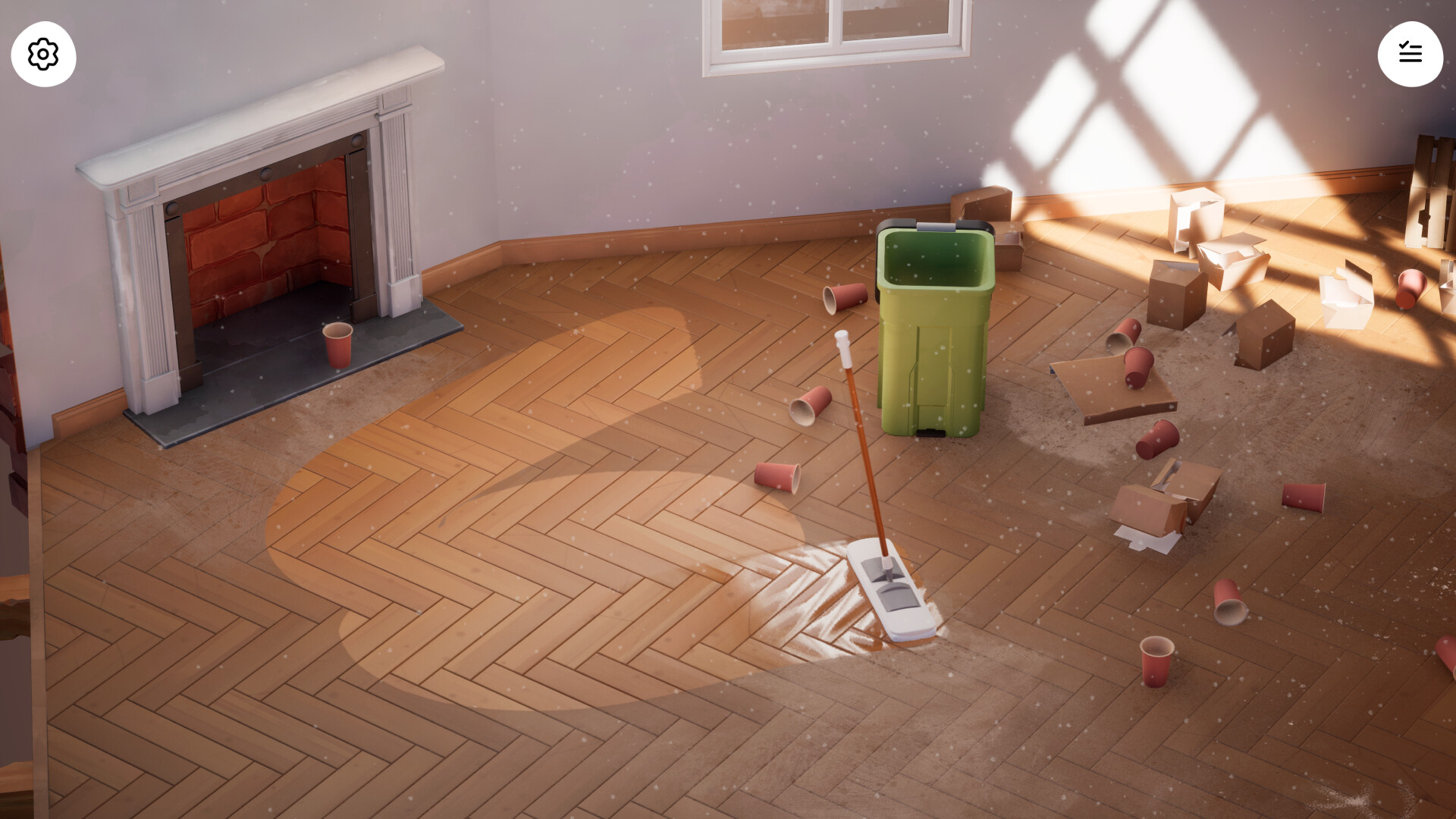
The restoration phase starts with sweeping, mopping, and clearing debris before any decorating beginstinyBuild -
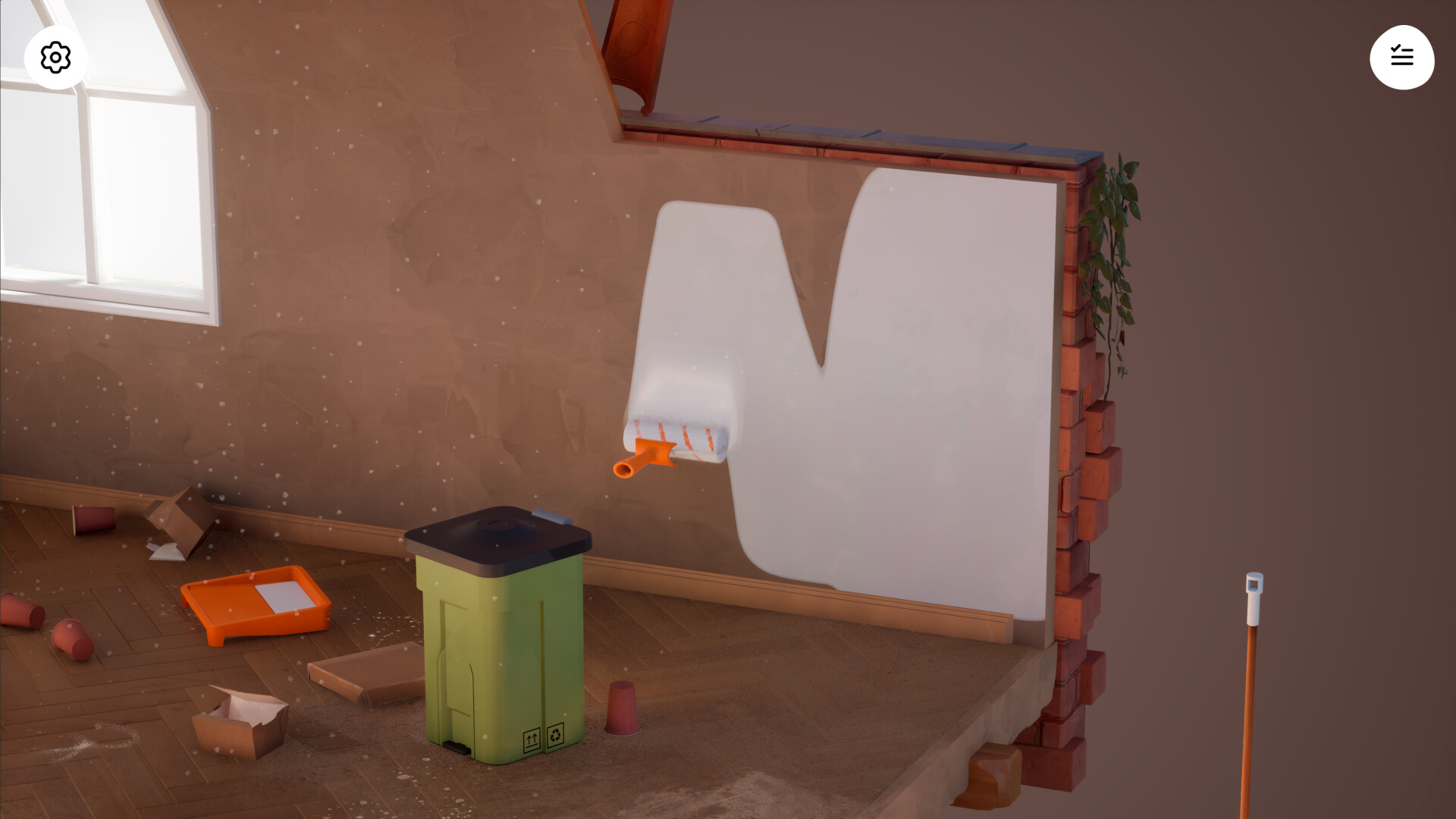
Repainting a wall with a roller, one of several restoration tasks alongside tiling and window washingtinyBuild -
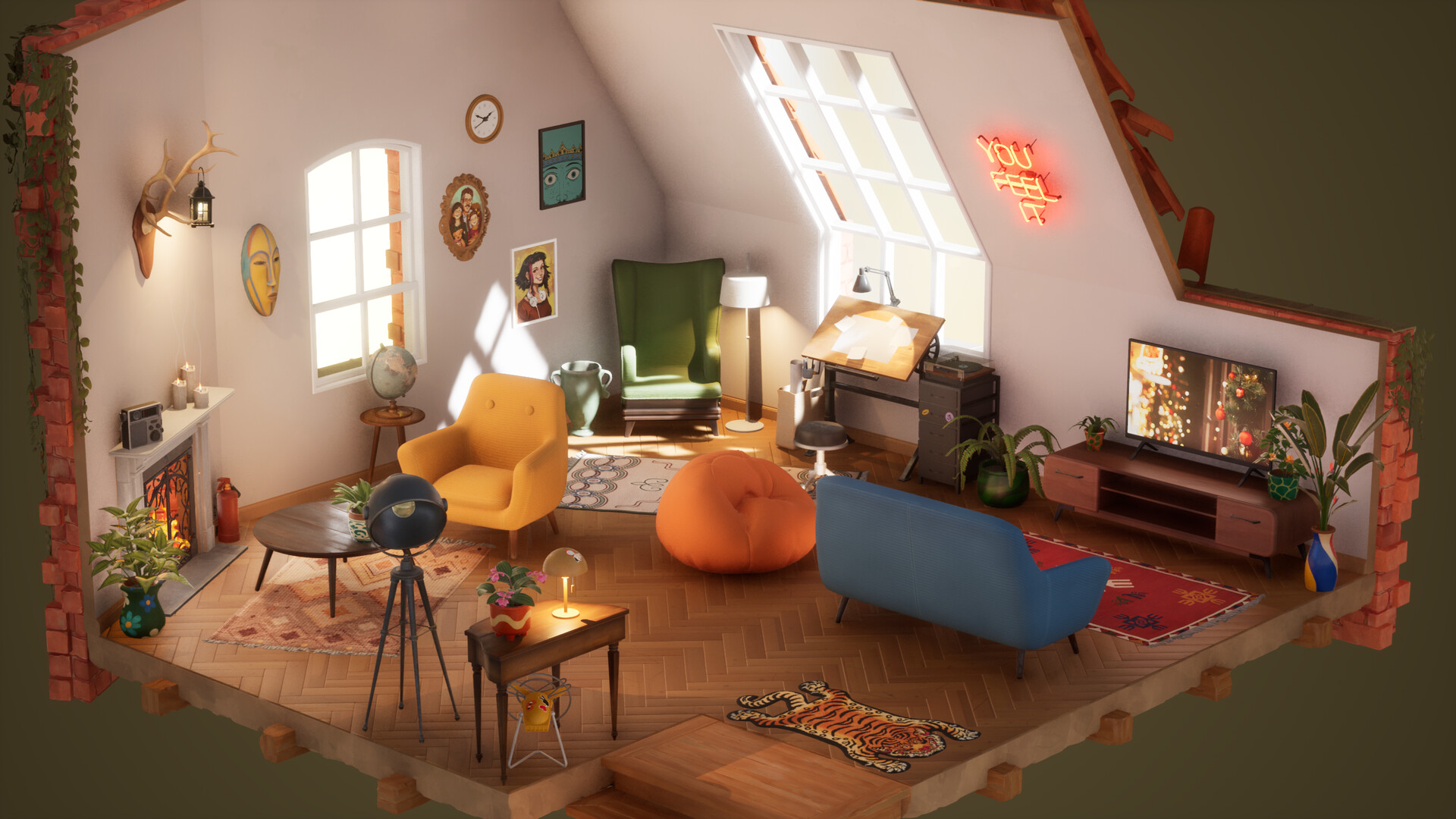
A finished room, furnished with the hand-crafted, individually modelled décor reviewers repeatedly praisetinyBuild -
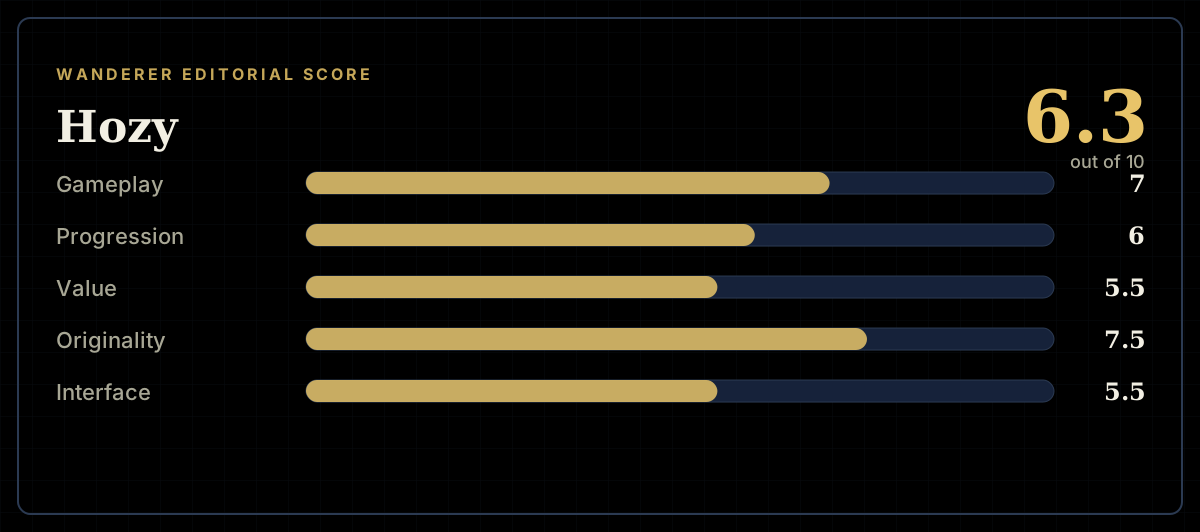
How the review scores each part of the gameWanderer Editorial -
The short versionWanderer Editorial