Game review
Mage Fight Review
5.5 / 10
- Developer
- Tin Hau Station
- Publisher
- Tin Hau Station
- Released
- 16 September 2026
- Platforms
- ["Windows"]
- Genre
- Strategy
A Duel, a Deck, and Not Much Else on the Store Page
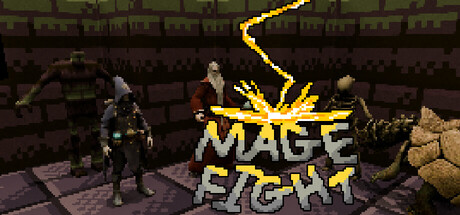
Mage Fight is a head-to-head deckbuilding duel game from Tin Hau Station, framed simply enough: two wizards, one drafted deck each pulled from a pool of 70 cards, and roughly thirty minutes to burn, paralyze, or out-summon the opponent into submission. It launched into Early Access on September 16, priced at $11.99, and its store page describes a genre-familiar but reasonably detailed toolkit — over ten minion types including undead skeletons, mage assistants, resurrecting faeries, and demons "beyond the realm," spells split across fire, electric, and magic schools that can set opponents alight, paralyze them, or put them to sleep, and card-manipulation effects that let players steal, destroy, or add to either deck mid-match. There's also a stranger, more distinctive wrinkle: players can transform into a Spectre or a Tortoise mid-battle, each form temporarily changing the rules of the game itself rather than just granting a stat boost, which is the one mechanic here that reads as a genuine attempt to differentiate Mage Fight from the crowded field of PvP wizard-duel card games it's otherwise competing against.
What's Actually Verifiable Right Now
Here's the honest state of Mage Fight three days after launch: it has exactly one public review, no news posts on its Steam page at all, and no visible marketing trail beyond the store listing itself. That's an unusually quiet footprint for any Early Access launch, let alone a PvP-focused one that depends on a live population of opponents to actually function as intended. The one review that does exist, however, is worth taking seriously — it comes from a player who says they "helped playtest this from the beginning" and logged over 35 hours with the game, which suggests Mage Fight went through a private or semi-private testing phase before its public Early Access debut, even though none of that history shows up in the game's public news feed. That reviewer calls the deckbuilding and dueling "really cool" and specifically praises the tension of deciding what to add to a deck and when to draw it, which is the right kind of praise for a card duel game — it means the fundamental decision space is landing. The same reviewer flags balance issues on certain unspecified cards as a known problem at this stage, while expressing confidence those will improve as the developer ships planned expansions, and scores the game 7.3 out of 10 in their own accounting.
A PvP Game Betting Everything on a Population That Doesn't Exist Yet Publicly
The core design tension in Mage Fight isn't really about its card pool or its spell schools — it's the much more basic problem every PvP-first Early Access card game has to solve: does anyone show up to play it. Mage Fight supports online PvP, split-screen local PvP, cross-platform multiplayer, and Remote Play Together, which is a generous spread of ways to find an opponent, and there's a single-player option too for anyone who wants to learn the systems without a live match on the line. But a deck-drafting duel game lives or dies on match quality and matchmaking depth, both of which depend entirely on having enough players in the pool to face a variety of decks and skill levels rather than the same handful of early adopters over and over. With zero visible community engagement from the developer beyond the store page itself — no roadmap post, no patch notes, no dev diary of the kind that's become standard even for tiny solo Early Access releases — it's genuinely difficult to tell from the outside whether Tin Hau Station has a plan for growing and retaining that population, or whether the "expansions" the one available review references are a stated intention or just an assumption on the reviewer's part.
Balance Concerns Are the Right Thing to Worry About Early
Card-battler balance is one of the hardest problems in game design under the best of circumstances, and it's a much harder problem for a small studio shipping into Early Access with a 70-card pool and no visible public feedback loop yet. The one review on record flags balance issues on specific cards without naming them, which is exactly the kind of thing that either gets fixed quietly over a few patches or festers into a genre-killing meta if the developer doesn't have the community bandwidth to identify and respond to it quickly. The transformation mechanic — turning into a Spectre or Tortoise to temporarily rewrite the rules mid-duel — is the strongest, most distinctive idea in the package, and how well it's tuned relative to the more conventional minion-and-spell toolkit will likely determine whether Mage Fight reads as a clever twist on the format or an exploitable outlier once more players get hands-on with it. None of this is disqualifying for an Early Access release specifically, which exists to work through exactly these kinds of problems in public — but it does mean anyone buying in now is explicitly buying into that process, not a finished, tuned product.
Verdict
Mage Fight has a workable core — a card-drafting wizard duel with a genuinely distinctive transformation mechanic and, per its lone detailed reviewer, deckbuilding tension that's landing the way it should — wrapped in an unusually quiet, low-visibility Early Access launch that leaves a lot of open questions about population, communication, and balance unanswered from the outside. A single 35-hour playtester's enthusiasm is a meaningfully positive signal, but it's not a substitute for a public track record, and $11.99 for a PvP-centric card game with essentially no visible community yet is a real gamble on whether Tin Hau Station builds both the player base and the patch cadence this genre demands. Worth watching for card-battler fans willing to accept Early Access uncertainty; not yet a confident recommendation for anyone who wants proof of a healthy matchmaking pool before they buy in.
Screenshots
-
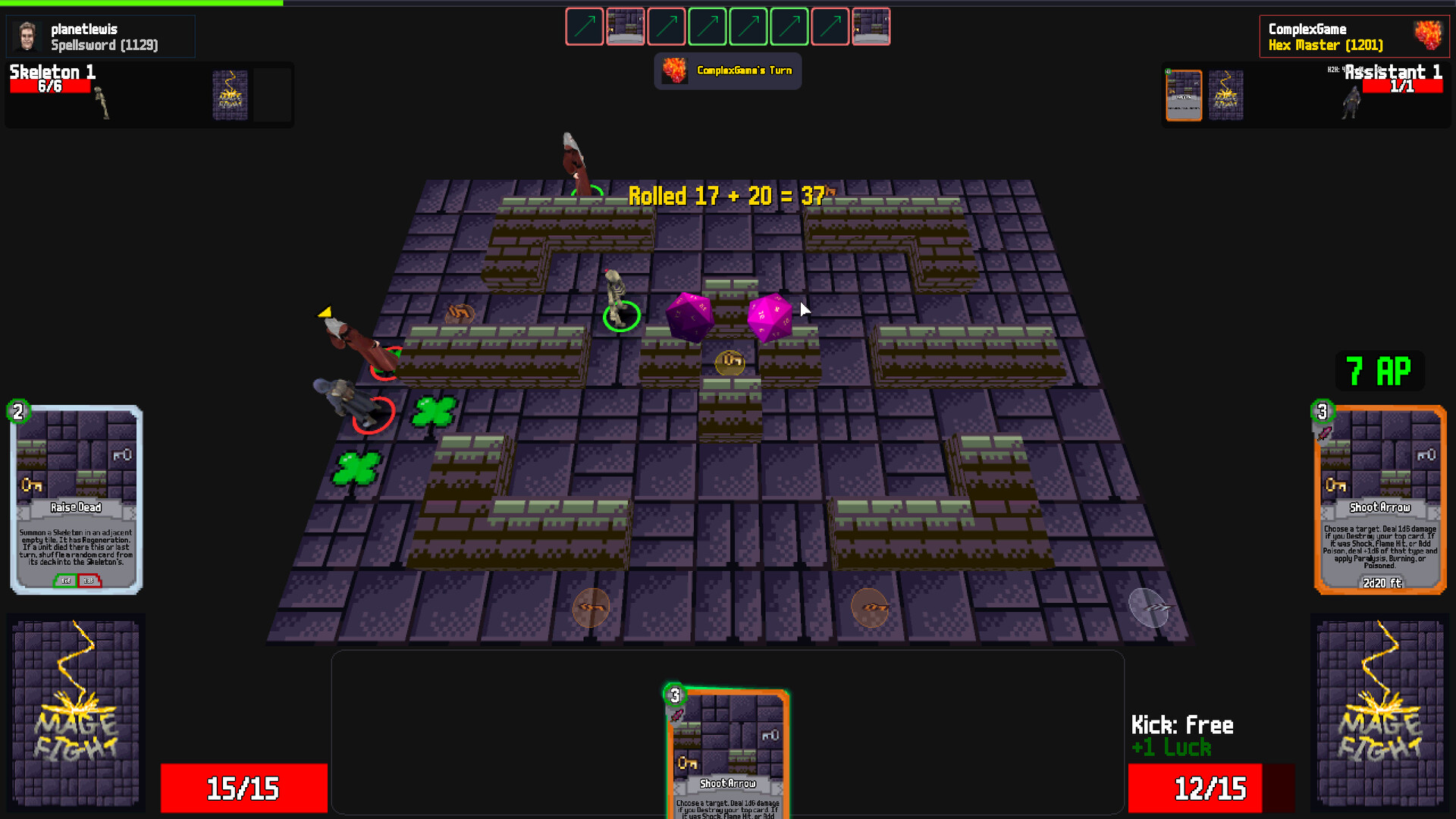
Duels play out on an isometric grid, with dice rolls and drafted cards like Raise Dead and Shoot Arrow determining each exchange.Image: Tin Hau Station via Steam -
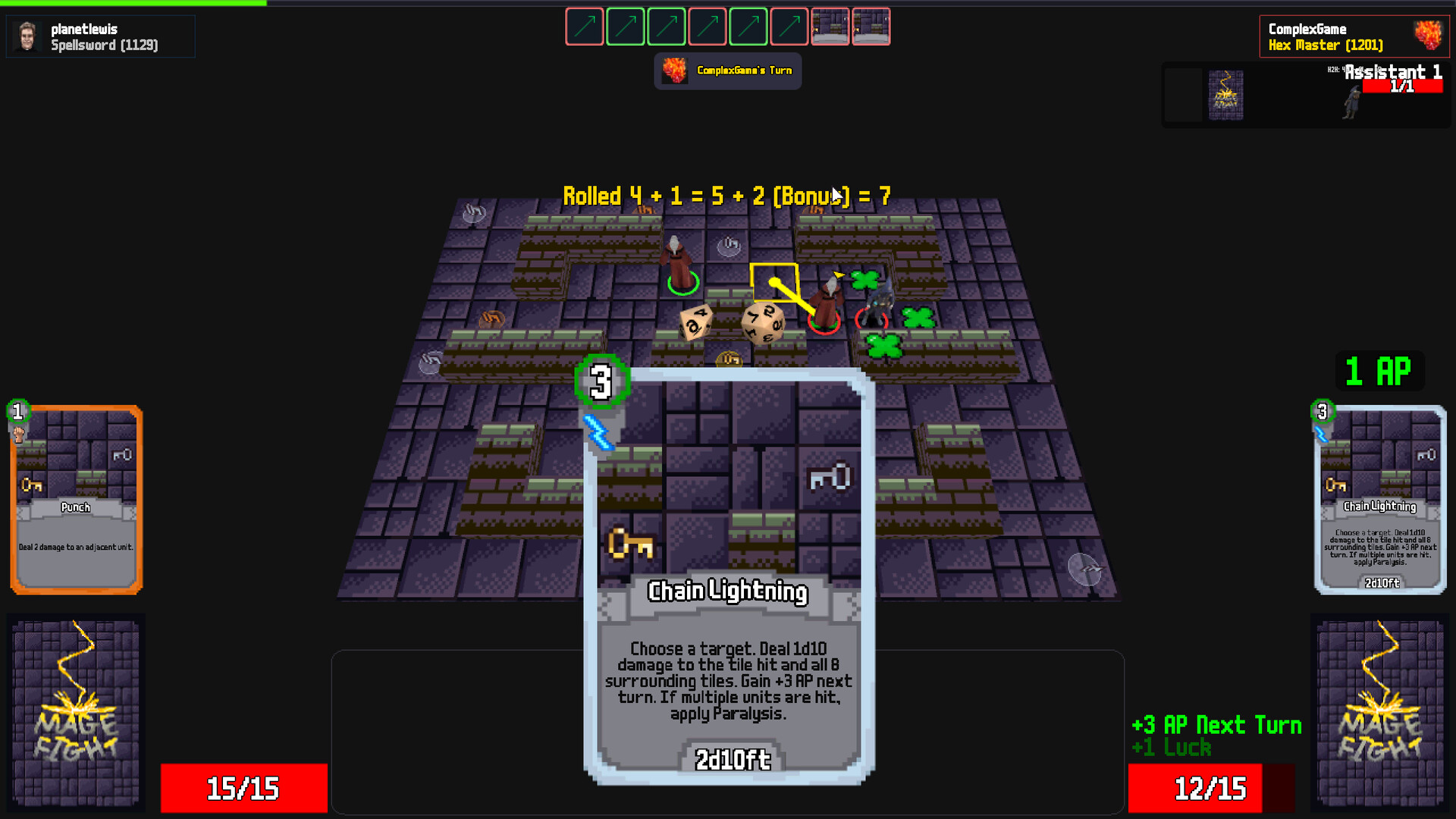
Spells like Chain Lightning hit a tile and its surrounding squares, with dice rolls and AP bonuses layered into every cast.Image: Tin Hau Station via Steam -
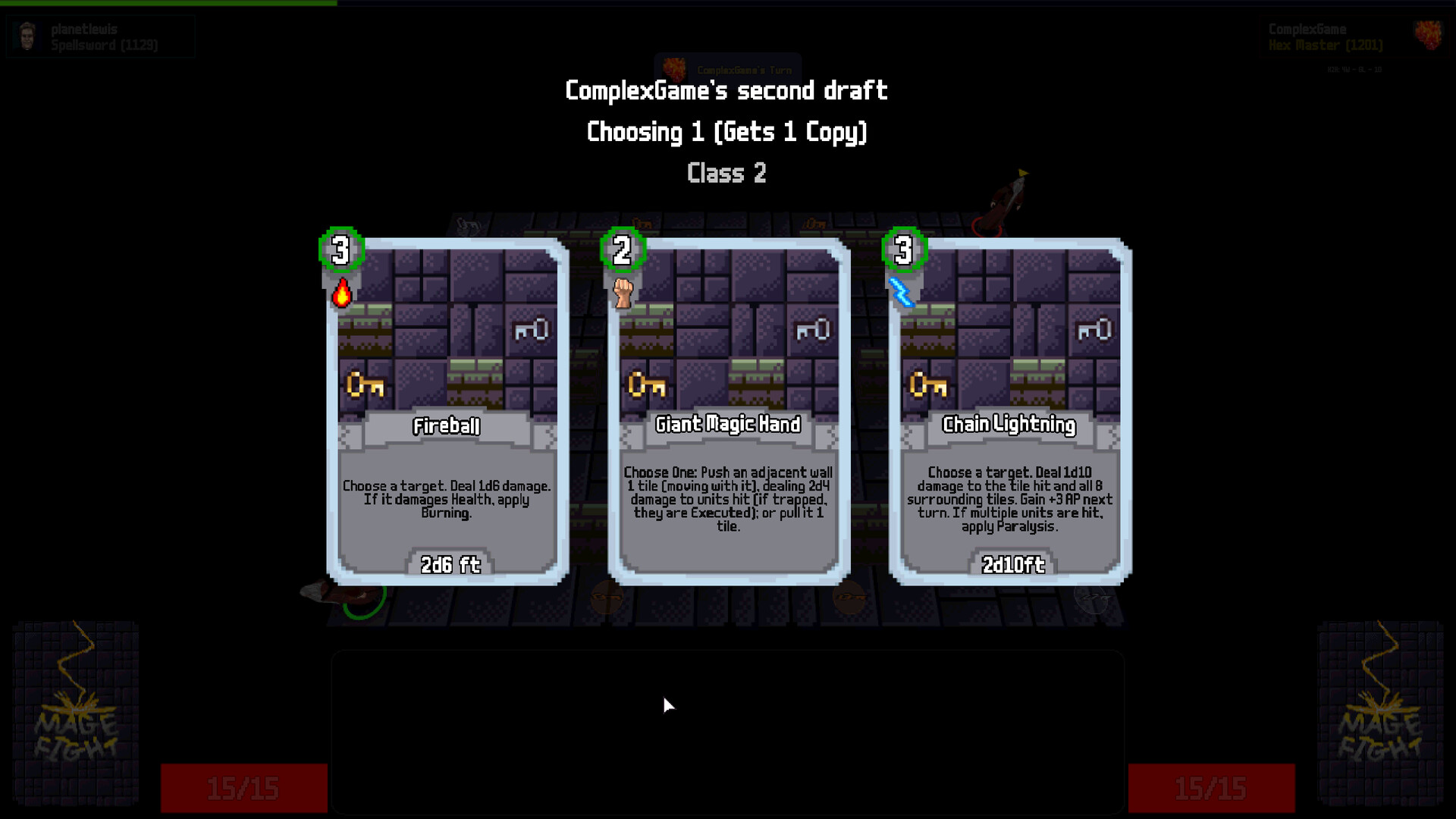
Decks are built through a draft, picking one card at a time from small batches like this Fireball/Giant Magic Hand/Chain Lightning choice.Image: Tin Hau Station via Steam