Game review
Boardlike Review
6 / 10
- Developer
- Bozz
- Publisher
- Bozz
- Released
- 18 September 2026
- Platforms
- ["Windows"]
- Genre
- Strategy
A Tabletop Roll Wrapped Around a Card-Battle Roguelike
Boardlike is a solo project from developer Bozz that spends almost a year in public development before landing at 1.0 on September 18, and the pitch it's been refining that whole time is a genuinely uncommon one: move a token across a dice-rolled board like a classic tabletop game, then drop into turn-based, action-point card combat whenever you land on an enemy tile. Traps, resource nodes, treasure chests, random events, and enemies are scattered across a freshly generated board every loop, and every step forward is a small gamble between pushing deeper for better rewards and retreating home before a bad roll costs you the run. Survive eight distinct regions and reach the end of the world, and you've beaten the game — assuming you get that far, since Boardlike layers permanent character death on top of all of it, in a way that turns out to be the single most interesting decision in the whole design.
Breeding Your Way to a Stronger Bloodline
The feature that keeps coming up across Boardlike's review base, positive and negative alike, is its legacy-breeding system, and it's easy to see why — it's a genuinely novel twist on the roguelike meta-progression formula. Every run begins with a hero descended from one of six "primal parents," and any hero you manage to bring home alive from an expedition joins an ancestor pool that future heroes can inherit traits and stat bonuses from through in-game breeding ceremonies. It's the kind of system that's common in dedicated life-sim or monster-breeding games but genuinely rare paired with a dice-and-cards roguelike, and reviewers across English, Turkish, and Chinese-language reviews single it out as the thing that makes Boardlike feel unlike anything else they've played recently, rather than a reskin of an established formula. Runs also fund a home village with buildings like a ranger camp, a tavern, and a gold mine, each handing out passive bonuses to future heroes — one English-language reviewer with 545 hours logged specifically calls out the "Ink Mine" building as a metaprogression element whose effects you can genuinely feel run over run, which is exactly the kind of payoff a legacy system needs to justify itself.
A Board That's Smaller and More Fragile Than It Should Be
Where Boardlike runs into real trouble is in the gap between its ambitious concept and its current execution, and the review base is candid about both halves of that gap. Several reviewers flag the core problem as a battle system that resolves into a small number of dominant, exploitable builds — stacking defense and armor-based damage cards trivializes much of the early game, to the point that one reviewer lays out a specific "90% winrate" defense-only deck, while another notes that the attack stat barely matters because the strongest attack card in the game scales off defense instead. That kind of build convergence undercuts the tactical variety the card-combat layer is supposed to offer, and a couple of reviewers describe the moment-to-moment loop turning repetitive once a dominant strategy is found — one bluntly summarizes post-death runs as "prepare to grind and spam click dice roll." Bugs are the other recurring complaint, and they're not cosmetic: multiple reviews describe bred heroes vanishing from the ancestor pool after a reload, equipped items failing to actually equip a majority of the time, cards disappearing after a save-reload, and — in the most serious report, from a Japanese-language reviewer who explicitly downgraded their recommendation over it — status effects on frontline enemies becoming permanently disabled in certain fights, which can make an entire bleed- or burn-focused build literally unplayable against multi-enemy encounters.
An Honest Early Access Track Record, Not Yet a Finished Product
To Bozz's credit, the four-and-a-half-month Early Access period that preceded 1.0 (April 23 through September 18, both comfortably inside 2026, following an even longer public demo phase stretching back to October 2025) was genuinely active — ultrawide support, a full roadmap post, and two major numbered content updates (0.8.0.0 and 0.9.0) all shipped before the full release, alongside smaller patches addressing specific card and status-effect bugs. That's a real, visible commitment to iterating in public, and it's reflected in a review base that leans positive overall (72% of 29 total reviews) despite the bug reports, with several reviewers explicitly praising the hand-drawn 2D dark-fantasy art direction and calling the core dice-and-breeding loop addictive even while flagging the game's rough edges. But "actively patched during Early Access" and "polished at 1.0" aren't the same claim, and reports of save-corrupting bugs around the breeding system — the game's single most distinctive feature — are still showing up in reviews dated after the 1.0 release, which is a genuinely serious concern for a mechanic that's supposed to reward long-term investment across many runs.
A Board Interface That Asks a Lot of Repetitive Clicking
Beyond the balance and bug concerns, several reviewers also flag friction in how the game is actually played moment to moment — no keyboard shortcuts for the constant dice-rolling and card-selection clicks that make up the bulk of a run, animations that can get stuck mid-roll and force a restart, and a board size on the small side, which one reviewer says makes shops and card-reward events "super rare" and equipment correspondingly hard to come by. None of that is unusual for a small solo Early Access project transitioning to 1.0, but it does mean Boardlike currently asks more patience of its players, moment to moment, than its underlying concept really should.
Verdict
Boardlike's central idea — a tabletop board crossed with roguelike permadeath and a genuinely novel cross-generational breeding system — is one of the more distinctive pitches in the crowded roguelike-deckbuilder space this year, and its hand-drawn art and addictive dice-and-cards loop have earned it real goodwill across a small but international review base. What it hasn't earned yet is the bug-free stability its most interesting mechanic needs to fully land: reports of heroes and equipment vanishing after reloads, and status effects breaking outright in certain fights, are still surfacing after the 1.0 release, alongside a card meta that currently rewards one dominant defensive build over tactical variety. Worth a look for roguelike fans drawn to its central hook, but going in with patience for post-launch patches, not an expectation of a fully sanded-down release.
Screenshots
-
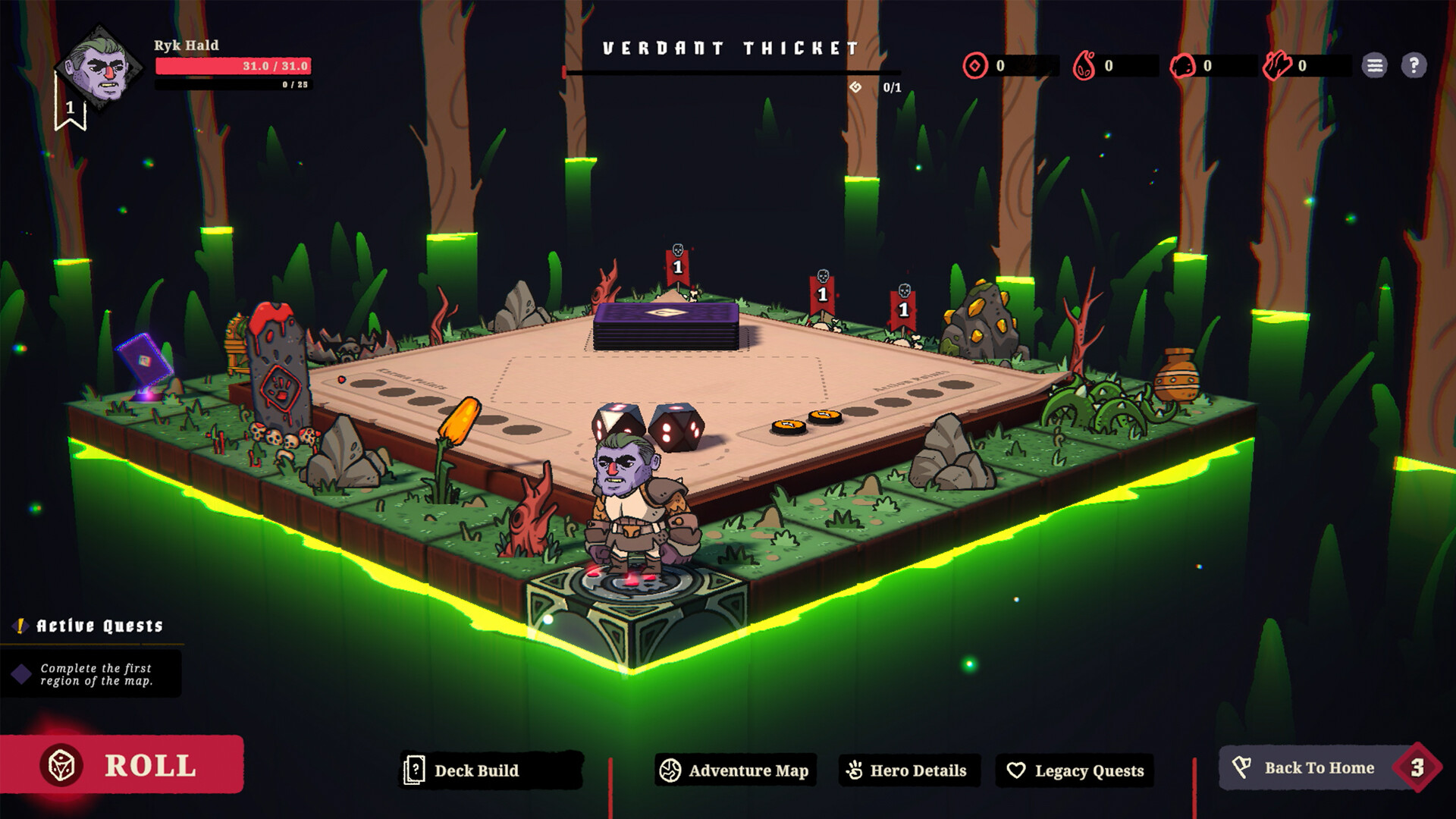
Each region plays out as its own miniature tabletop board, with dice rolls determining movement and resource icons tracking runs.Image: Bozz via Steam -
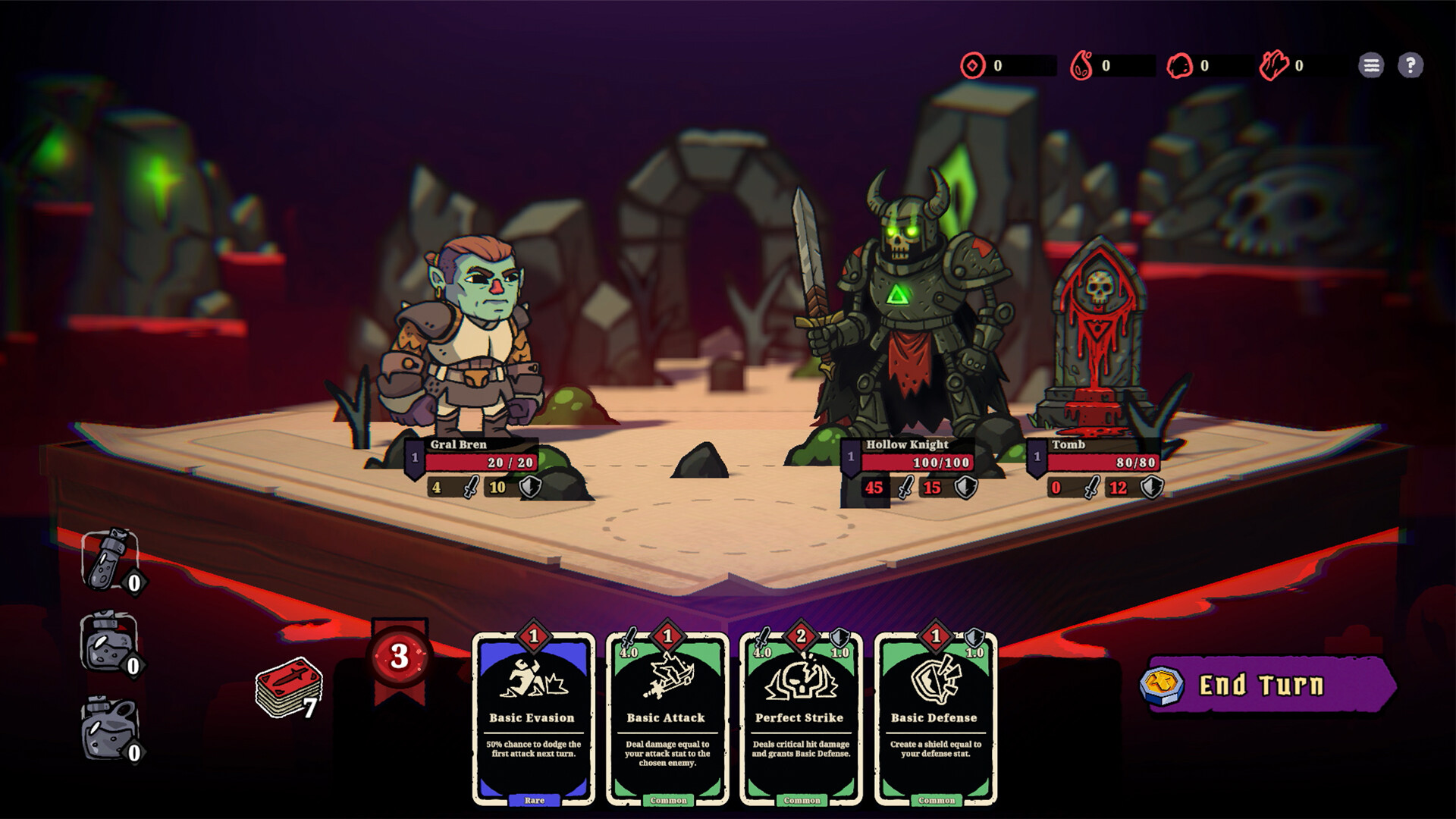
Combat drops into a card-based battle screen, with Attack, Defense, and Evasion cards drawing from the same small pool reviewers say gets exploited by defense-heavy builds.Image: Bozz via Steam -
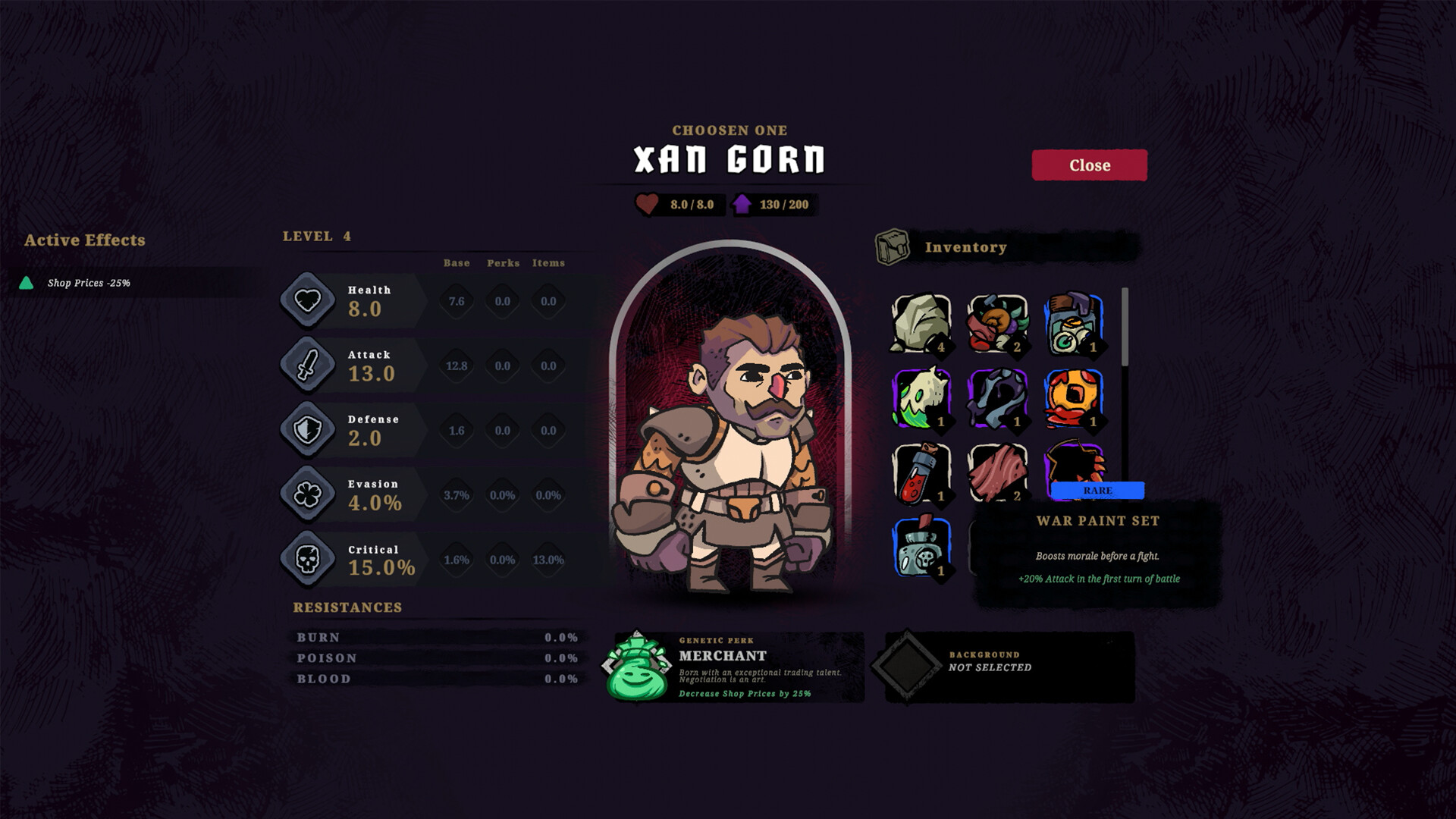
The character sheet tracks a bred hero's inherited stats and genetic perks, the legacy system reviewers call the game's most distinctive idea.Image: Bozz via Steam