Game review
AstroDig Review
6.5 / 10
- Developer
- Only4Gamers
- Publisher
- Only4Gamers
- Released
- 11 September 2026
- Platforms
- ["Windows"]
- Genre
- Strategy
Dig Deep, Shoot Back, Repeat
AstroDig takes the resource-extraction loop of Turmoil, mining a circular planet's surface, hauling ore back to a silo, and selling it for profit, and bolts a defensive shooter onto it. Every planet you excavate attracts hostile threats that scale from minor nuisances to full-blown enemy waves, and it's on the player to fend them off with manual mouse-aimed shooting while simultaneously managing base structures, support units, and the constant pressure to keep digging before an attack wipes out an unprotected operation. It's a small, tightly scoped premise, and the game doesn't pretend otherwise: sessions are short, deliberately replayable, and built around a simple risk-versus-reward tension between how deep to dig and how much defense to leave behind while doing it.
A Familiar Loop With a Combat Layer
The mining half of AstroDig will feel immediately recognizable to anyone who's played Turmoil or similar excavation-economy games: extract resources from a planet's surface, sell them for credits, and reinvest in upgrades and access to new, more dangerous planets further out. What differentiates it is the combat layer stitched on top. Rather than treating enemy encounters as a scripted event or a background hazard, AstroDig hands the player direct manual aiming and shooting responsibility, meaning the moment-to-moment loop constantly shifts between economic management (what to mine, what to sell, what to build next) and reactive combat (aiming at incoming threats while defensive structures and deployed support units absorb the rest). One detailed early review describes this combination as feeling like "fancy retro," drawing a comparison to old arcade-machine planet-defense games from the Flash-game era, but without the choppy framerate that era was known for — a fair characterization of a game clearly aiming for nostalgic, bite-sized sessions rather than a sprawling 4X-scale strategy experience.
A Minimalist Look That Mostly Works
AstroDig's visual presentation is deliberately stripped down, and that choice draws a mixed but generally favorable reaction from its earliest players. The same reviewer who isn't naturally drawn to minimalist art styles nonetheless singles out the game's menu UI and sector map for praise, noting that the developer clearly put care into those screens even where some remaining elements are still plain textboxes. That's a reasonable trade-off for a small solo-developed project: polish where it counts (the systems a player interacts with constantly) even if some of the more peripheral UI hasn't caught up yet. The circular-planet visual conceit itself is a nice touch that gives the mining loop a distinct silhouette compared to the flat excavation shafts more common in the genre, even if the overall aesthetic won't win over players who want more detailed sci-fi art direction.
A Crash Bug, Caught and Fixed Quickly
AstroDig's launch wasn't entirely smooth, and it's worth being upfront about that rather than glossing over it. Within days of the September 11th release, reports surfaced of a persistent crash affecting some players specifically around level seven of the mining progression, severe enough that one reviewer reported being unable to continue playing at all. To the developer's credit, the response was fast: within about a week, two consecutive patch notes (v1.01 and v1.02) specifically targeted the crash, along with a related issue where credits weren't resetting correctly on a planet restart and several bugs tied to trucks and silos. The previously affected reviewer confirmed in an update to their own review that the crash had indeed been fixed. That's exactly the kind of responsive, transparent post-launch support a small studio should be delivering, and it meaningfully changes how a launch-week stability issue should be weighed by the time a prospective buyer is reading this.
Reading a Thin Review Base Honestly
AstroDig currently sits on just two public reviews, both positive, and it's worth being direct about what that does and doesn't tell a prospective buyer. A 100% positive score built on a sample this small carries far less statistical weight than the same score on a game with hundreds of reviews behind it, and it would be misleading to present that figure as evidence of broad consensus. What the two reviews do offer, though, is unusually detailed, specific testimony rather than a quick thumbs-up: one walks through gameplay feel, UI quality, and the crash issue in structured detail, while the other documents the exact bug encountered and later confirms the fix worked. That's more genuinely useful signal than a larger pool of one-line reviews would typically provide, even if it can't yet speak to how the broader player base will react once the review count grows. Buyers should treat AstroDig's launch as still being in its earliest, most fluid days rather than a settled verdict.
Small Scope, Honest Pricing
At $5.99, AstroDig isn't positioning itself as anything more than what it is: a compact, session-based mining-and-defense game built for short bursts of play rather than long-form strategic depth. The research and upgrade progression gives it enough of a longer arc to reward repeated sessions without pretending to be a sprawling economy sim, and the escalating danger of unlockable planets provides a clear sense of forward momentum. It won't satisfy players looking for the genre-defining depth of something like Factorio or Satisfactory, but that was never really the pitch — this sits much closer to a modernized arcade cabinet experience with real stakes attached to every expansion decision.
Verdict
AstroDig delivers exactly what its minimalist billing promises: a tight, replayable loop of mining, selling, upgrading, and fending off waves of threats across increasingly dangerous planets, wrapped in a clean if occasionally plain presentation. A launch-week crash bug was a real black mark, but the developer's quick two-patch response to fix it, along with several smaller quality-of-life issues, speaks well of what buyers can expect going forward. For $5.99, it's a modest but honestly-scoped sci-fi strategy shooter that knows exactly what kind of short, arcade-flavored experience it wants to be.
Screenshots
-
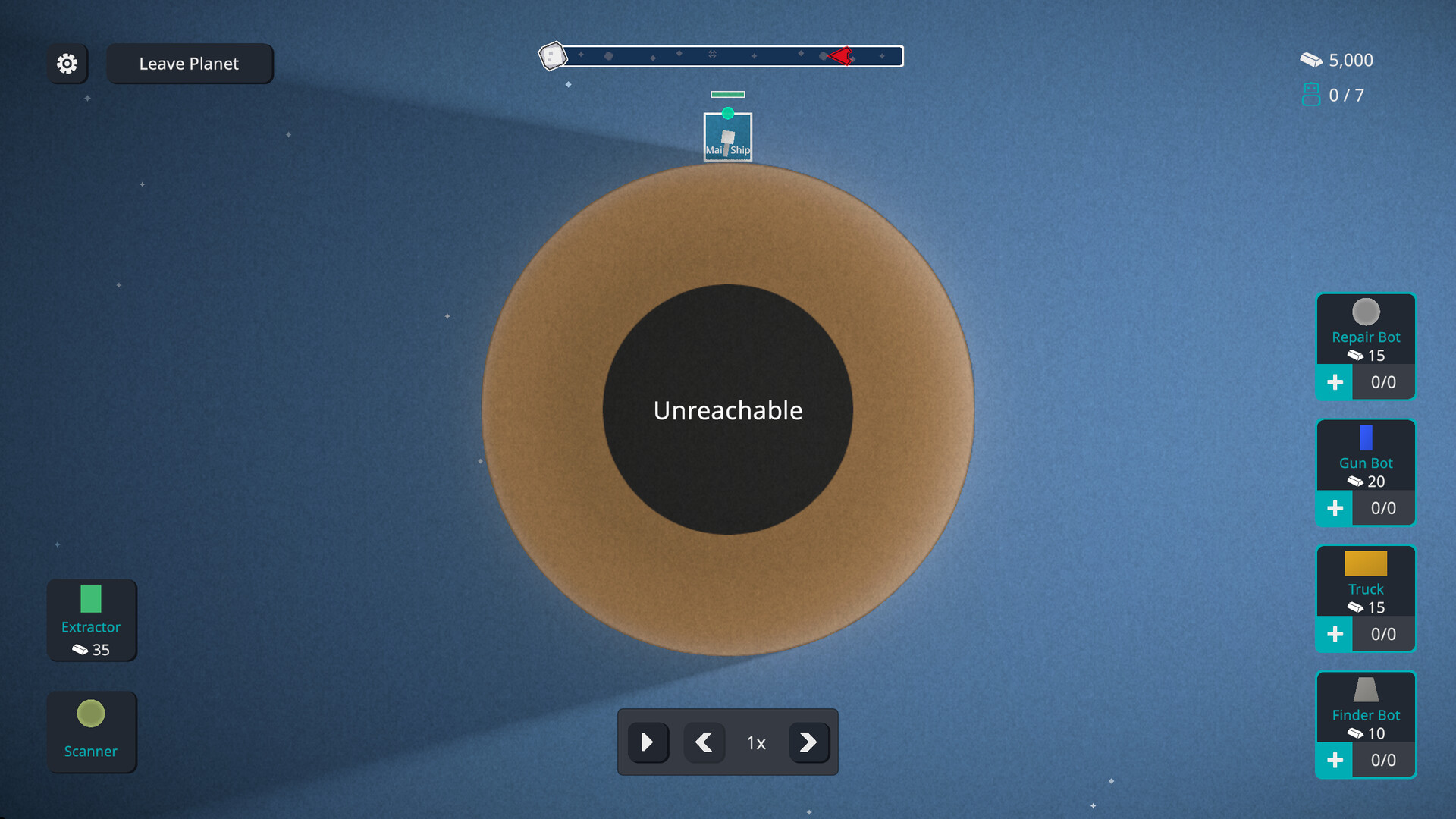
Each planet starts small — a lone extraction point and a shop of unlocked bot and vehicle purchases to expand from.Image: Only4Gamers via Steam -
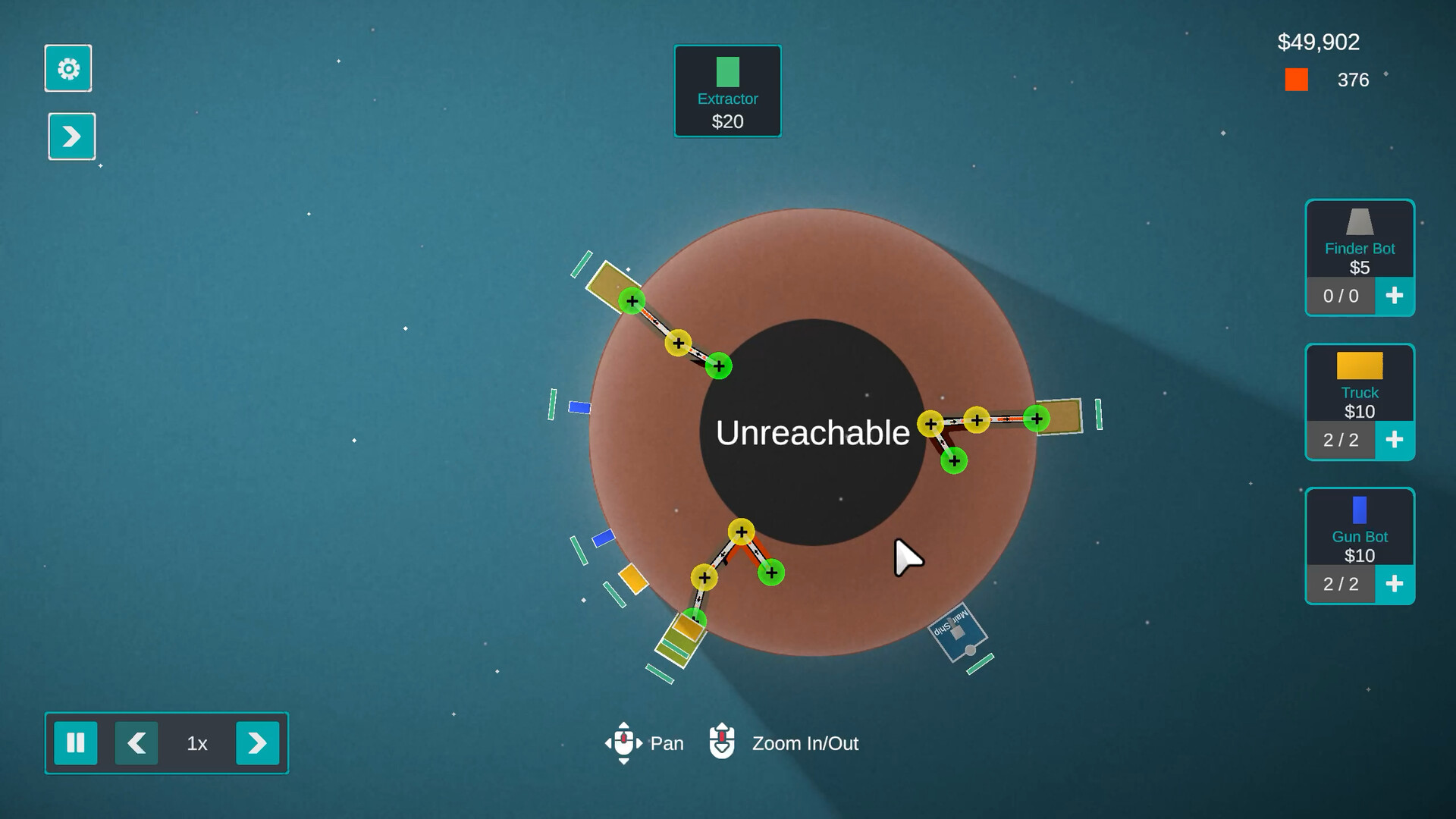
A fully built-out operation, multiple extraction rigs and trucks radiating out from the planet's core as the economy scales up.Image: Only4Gamers via Steam -
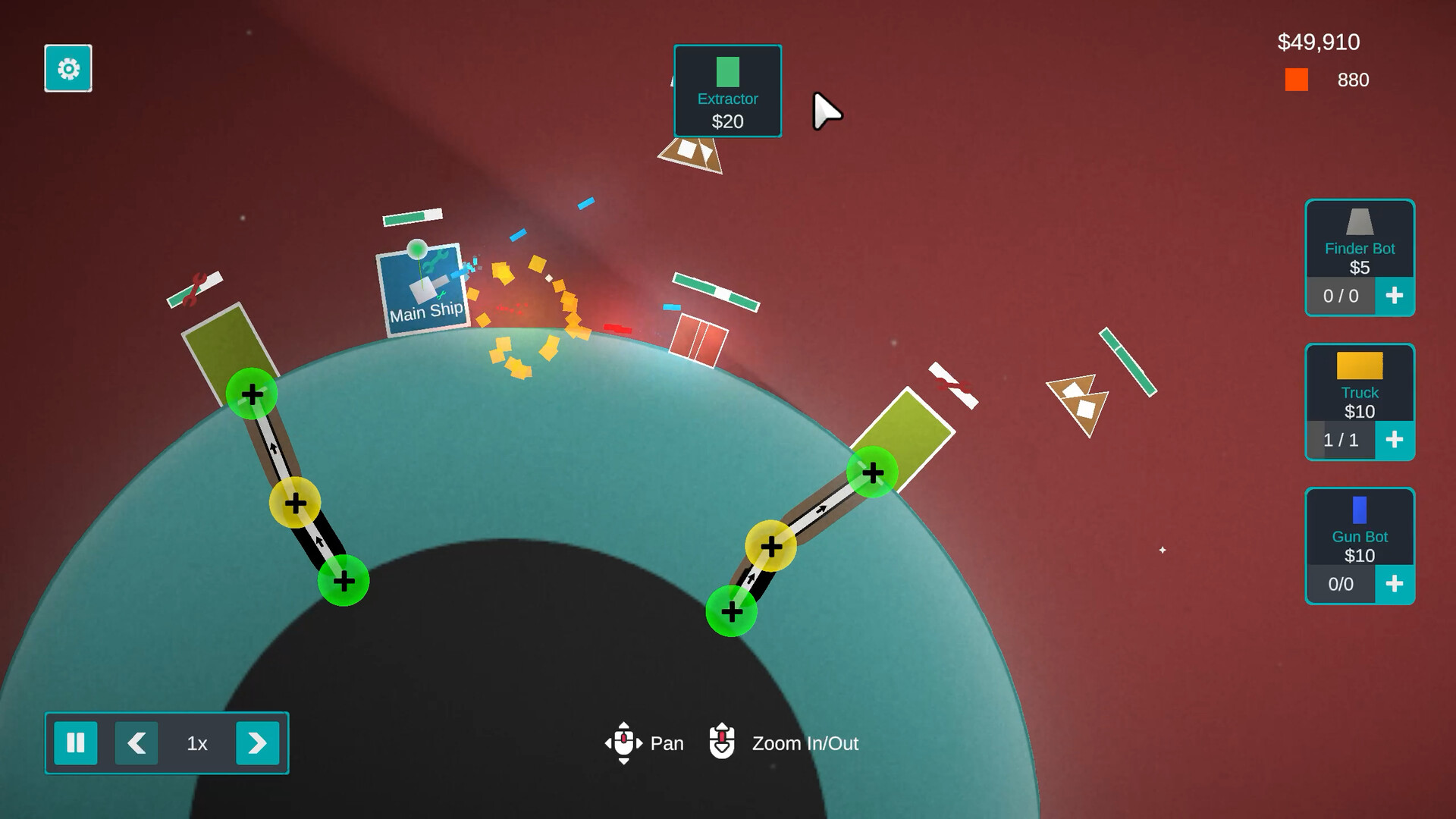
Mining attracts trouble — an enemy skirmish breaks out right at the Main Ship's doorstep, forcing a shift from economy to defense.Image: Only4Gamers via Steam