Game review
Tower Lab Review
6.9 / 10
- Developer
- Devon Powell, Xueer Zhu
- Publisher
- Devon Powell, Xueer Zhu
- Released
- 7 September 2026
- Platforms
- ["Windows", "Mac"]
- Genre
- Strategy
Towers That Push Instead of Kill
Tower Lab's hook is a single, well-chosen twist on a genre that has run the same formula for two decades: enemies here have no health bars at all. Instead of chipping away at hit points, every tower in the game manipulates physics — fans blow enemies sideways, bombs launch them into the air, growers and shrinkers change their mass, and the goal is simply to fling as many robots as possible off the edge of the map before they reach the exit portal. It's a genuinely clever reframing of tower defense math, and reviewers consistently single it out as the game's best idea. One reviewer called it "a very important event to happen to tower defence," while another, more measured, described it as "an 8/10 idea with a 4-5/10 execution" — a line that captures the reception better than almost any other in the review pool. With 143 Steam reviews sitting at a Mostly Positive 71%, Tower Lab has clearly found players who love watching robots get catapulted into the void, even if the underlying systems haven't fully caught up to the concept yet.
A Card-Based Loadout Layered on Top
Beyond the physics gimmick, Tower Lab borrows structure from the deckbuilding roguelike boom, letting players draft towers as cards and combine them into synergistic loadouts across three campaign levels and an Endless mode. Several reviewers were initially skeptical of the crossover, expecting a forced roguelike failure loop, but came away pleasantly surprised that the game doesn't lean on punishing runs the way genre touchstones like Slay the Spire do. As one reviewer put it, "there seems to be a misconception that this is trying to be a serious roguelike deck builder. It's really not. It's a physics building game that happens to have casual versions of those features." That looser structure is part of the appeal for players who just want to experiment with tower combinations, but it also means the roguelike trappings feel bolted on rather than essential, and a few reviewers argued the game would be stronger if it dropped the deckbuilding pretense entirely and leaned harder into being a pure physics sandbox.
Chaos Without Enough Control
The most common complaint across the negative reviews is that the physics-based combat, however novel, frequently feels unfair rather than skillful. Explosions and knockback effects send enemies flying in directions the player can't reliably predict, and more than one reviewer specifically flagged robots getting launched clean through the exit portal by a badly timed effect, dealing damage the player had no way to prevent. "The physics are more frustrating than fun," wrote one reviewer, pointing to exactly this problem, while another joked bitterly that "amazing that some of your towers can just catapult an enemy straaaaight into the exit gate. 10/10, would refund again." A separate cluster of reviewers criticized the tech tree and upgrade systems for resetting completely between runs, leaving no permanent progression to chase; one review flagged this directly, noting "there's no permanent upgrades to anything so each run is just starting over, which makes it feel like there's no form of progression at all." With only three campaign levels currently available, several players who enjoyed their first few hours reported the content running thin well before the physics systems had shown everything they could do.
Rough Edges Typical of Early Access
Performance issues compound the design complaints, particularly in Endless mode, where reviewers report crashes and slowdown once the screen fills with enemies, particles, and stray effects — one reviewer described their game crashing after wave 26 from "splitting and shrinking shenanigans," and another asked for an option to simply turn off explosion visual effects and number popups to keep the frame rate playable. Card-effect descriptions don't always line up cleanly with what happens on screen either, which undercuts the strategic planning the physics systems are meant to reward. None of this is unusual for a game barely two weeks into Early Access, and the developers appear to be responsive; reviewers repeatedly note built-in bug reporting tools in the pause menu and describe seeing genuine improvement from the demo phase that preceded launch. One longtime demo player summed up the trajectory well: "I have followed this game in development for over a year. Now that its finally here I can say that I'm absolutely in love with it."
Verdict
Tower Lab's central idea — a tower defense game built entirely around knockback instead of damage — is genuinely fresh, and when its physics-driven chaos clicks, watching a wave of robots get flung, bounced, and blown off a platform is deeply satisfying in a way few genre entries manage. Right now, though, that idea is wrapped around thin permanent progression, only three campaign levels, unpredictable knockback that can feel more like bad luck than bad play, and the performance hiccups typical of a young Early Access build. At $9.99 it's a reasonable bet for tower defense fans hungry for something that doesn't play like everything else on the market, but anyone expecting a fully fleshed-out roguelike deckbuilder experience should wait for a few more content updates before jumping in. With workshop support and a level editor already included this early, there's a credible path for the community itself to fill in the content gaps faster than the small two-person team can manage alone, which is reason enough to keep half an eye on this one even if it isn't quite ready for a full recommendation today.
Screenshots
-
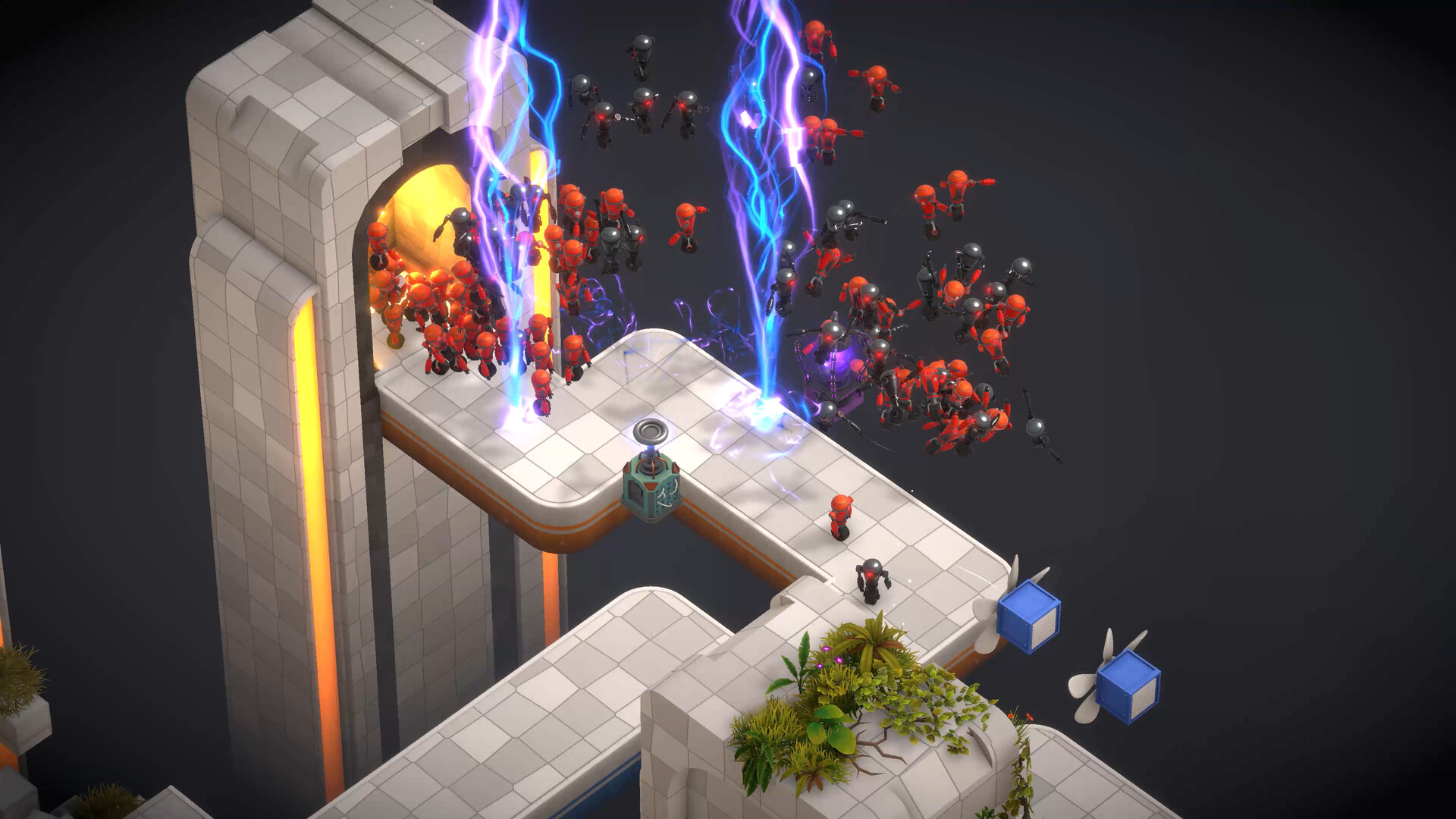
Towers weaponize physics instead of damage, using knockback and electric shocks to fling enemies off the map.Image: Devon Powell, Xueer Zhu via Steam -
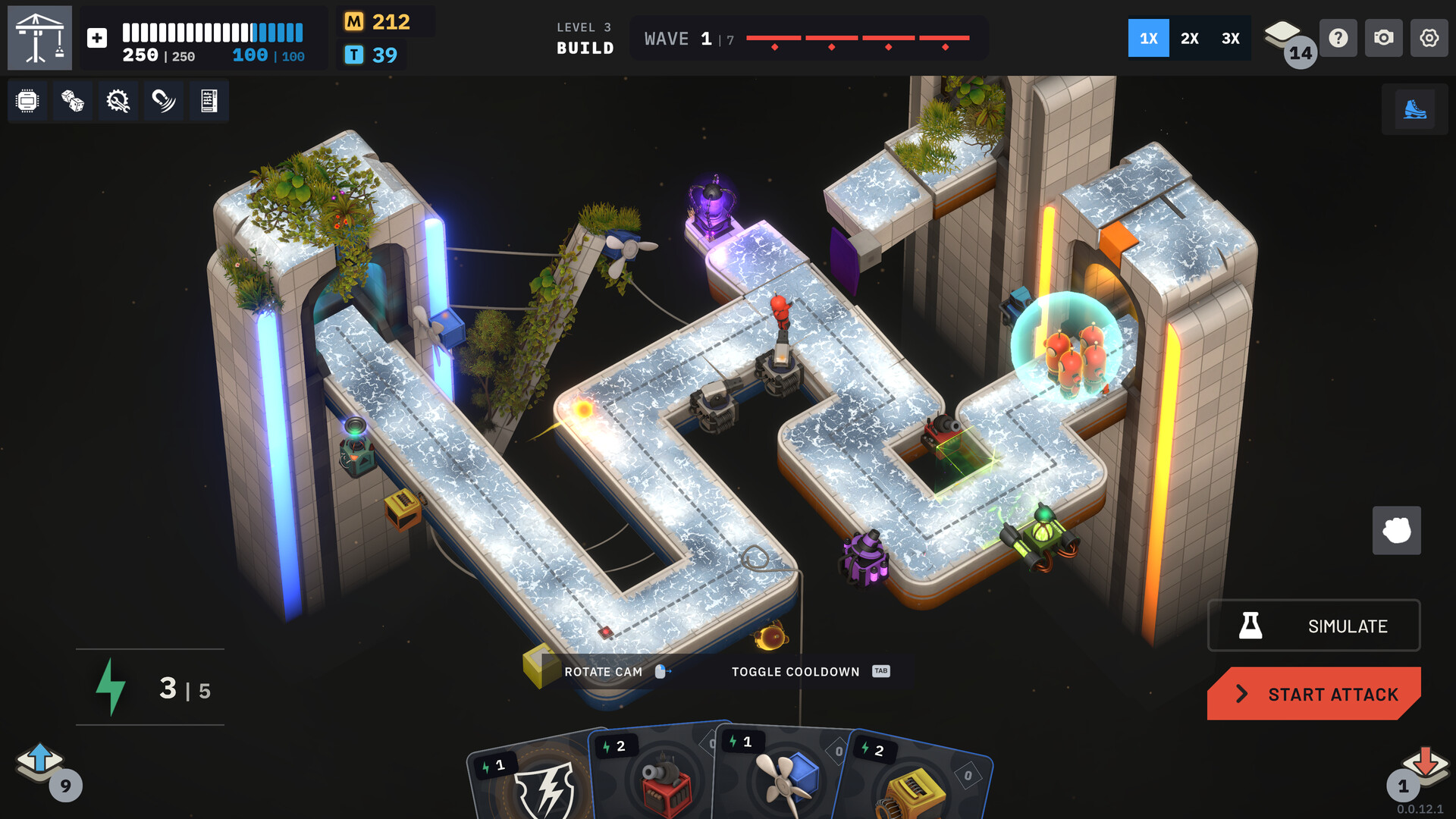
Between waves, players draft and place towers as cards, mixing deckbuilding structure into the physics-based defense.Image: Devon Powell, Xueer Zhu via Steam -
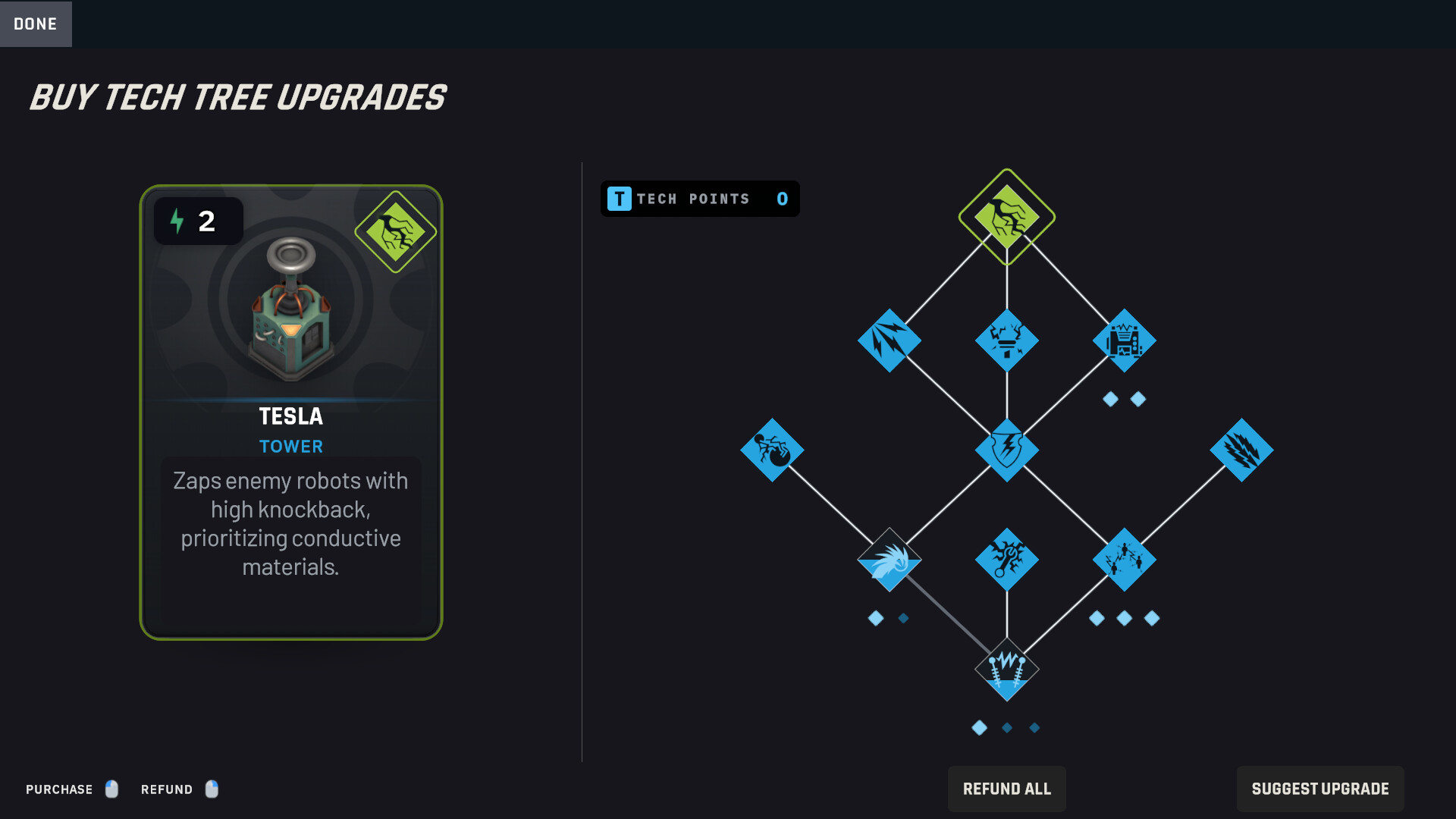
The tech tree resets each run, a design choice several reviewers cite as the game's biggest gap in permanent progression.Image: Devon Powell, Xueer Zhu via Steam