Game review
Slay the Horde Review
6.4 / 10
- Developer
- Regretware
- Publisher
- Regretware
- Released
- 9 September 2026
- Platforms
- ["Windows"]
- Genre
- Action
A Deckbuilder Wearing a Survivorlike's Clothes
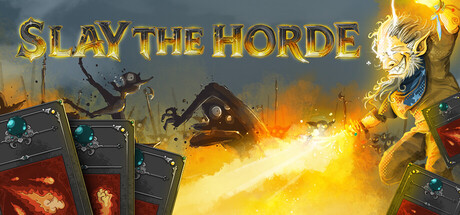
Slay the Horde is a roguelike from solo studio Regretware that grafts card-based deckbuilding directly onto the screen-filling horde-survival format popularized by games like Vampire Survivors, rather than treating the two as separate modes. Every spell a player casts in real time comes from a drawn hand rather than a fixed hotbar, so managing mana, card costs, and draw speed becomes as central to survival as dodging and positioning. Runs start small, a handful of simple elemental spells barely capable of downing a single goblin, and are meant to spiral outward through a large, re-speccable skill tree of perks and upgrades until a single button press can trigger chain reactions that clear half the screen. It launched on Steam on September 9, 2026, priced at $9.99 but discounted 30% to $6.99 at launch, aiming squarely at the sizeable audience that already enjoys both deckbuilders and survivorlikes and wants a game that genuinely fuses the two rather than borrowing surface elements from each.
A Small but Unanimously Positive Launch
Slay the Horde launched to a modest 7 total reviews across languages at the time of writing, every one of them positive, which earns it a "7 user reviews" designation on Steam rather than one of the platform's percentage-based tiers reserved for larger sample sizes. It's too small a pool to draw firm conclusions about broad reception, but the reviews that do exist are unusually detailed and specific for a launch this size, several running well over a hundred words with concrete observations about build variety, skill-tree design, and performance, giving a clearer picture than the raw review count alone would suggest.
A Spell Engine That Reviewers Say Genuinely Comes Together
Reviewers consistently praise the game for delivering on its core premise: a run that starts weak and ends absurd. One writer, reviewing after watching and playing the game on stream, credits it with understanding "what makes this style of game fun," namely throwing overwhelming numbers of enemies at the player while offering enough build-crafting depth to keep tempting "just one more run," and specifically calls out how approachable it is to pick up despite that depth. Another reviewer, self-described as a fan of wizards and mage fantasies, calls it "a wonderful game mixing a deckbuilder and a survivorlike," comparing the elemental spell-slinging to "playing a survivorlike MtG game but without the branding." A more systems-focused review praises the skill tree specifically for subverting a common genre expectation, noting they assumed nodes further from the center would simply cost more and hit harder, but found the game instead balances nodes fairly evenly except for unique "Keystone" bonuses at the edges, calling the unconventional choice "balanced/cool" once understood. That same reviewer highlights a genuinely convenient quality-of-life touch: hovering the mouse over a card in hand pauses the game entirely, letting players remap spell hotkeys mid-run without losing time to the horde bearing down on them. Multiple reviewers separately praise the flexibility of controls, with one specifically enjoying the choice between hotkeying spells or clicking them with the mouse while everything else pauses around the decision.
Balance Rough Edges, a Thin Tutorial, and Particle-Heavy Performance Drops
The praise is consistent, but even within an all-positive pool, reviewers flag real, specific friction. The most detailed critical reviewer points to a frustrating card-selection interaction: choosing to skip a set of offered cards when none of them fit a build currently grants nothing at all, and that reviewer suggests the game should instead offer gold for a reroll or a deck upgrade as compensation, since skipping should be a meaningful choice rather than a pure loss. The same review also notes the tutorial is thin, forcing players to puzzle out mechanics like right-click discarding through experimentation, and flags a build-balance concern worth taking seriously: certain spells are described as capable of killing the player outright unless paired with specific defensive perks like Vampirism, while other spells are called nearly "useless" without a specific complementary pick, suggesting some elemental combinations are currently mandatory rather than optional playstyle choices. Performance is the other recurring thread: two separate reviewers flag frame-rate drops tied to the game's heavy particle effects, with one reporting a range of 20 to 45 FPS on more modest hardware (8GB of DDR3 RAM and a 2GB video card) and noting their system ran noticeably hotter after a half-hour session, though they add there was no visible stuttering alongside the dip. A second reviewer independently confirms the same pattern, calling the game "really fun and unique" but naming FPS drops from excessive on-screen particles as their one real complaint.
Verdict
Slay the Horde earns its unanimous early praise by actually delivering the fusion its pitch promises: a real deckbuilder's card-management tension layered directly onto horde-survival's escalating power fantasy, with a skill tree reviewers say rewards experimentation rather than simply rewarding whoever reaches the outer nodes first. It's a small, very early launch, though, and the specific, detailed nature of its handful of reviews points to real rough edges alongside the fun: a card-skip option that currently offers nothing in return, a tutorial that leaves players to reverse-engineer some interactions themselves, apparent balance gaps around certain "mandatory" spell pairings, and particle-driven performance drops on modest hardware. At $6.99 during its launch discount, this is an easy recommendation for anyone who wants their survivorlike with real deckbuilding teeth, with the understanding that a small solo studio is still likely smoothing out the edges reviewers have already found.
Screenshots
-
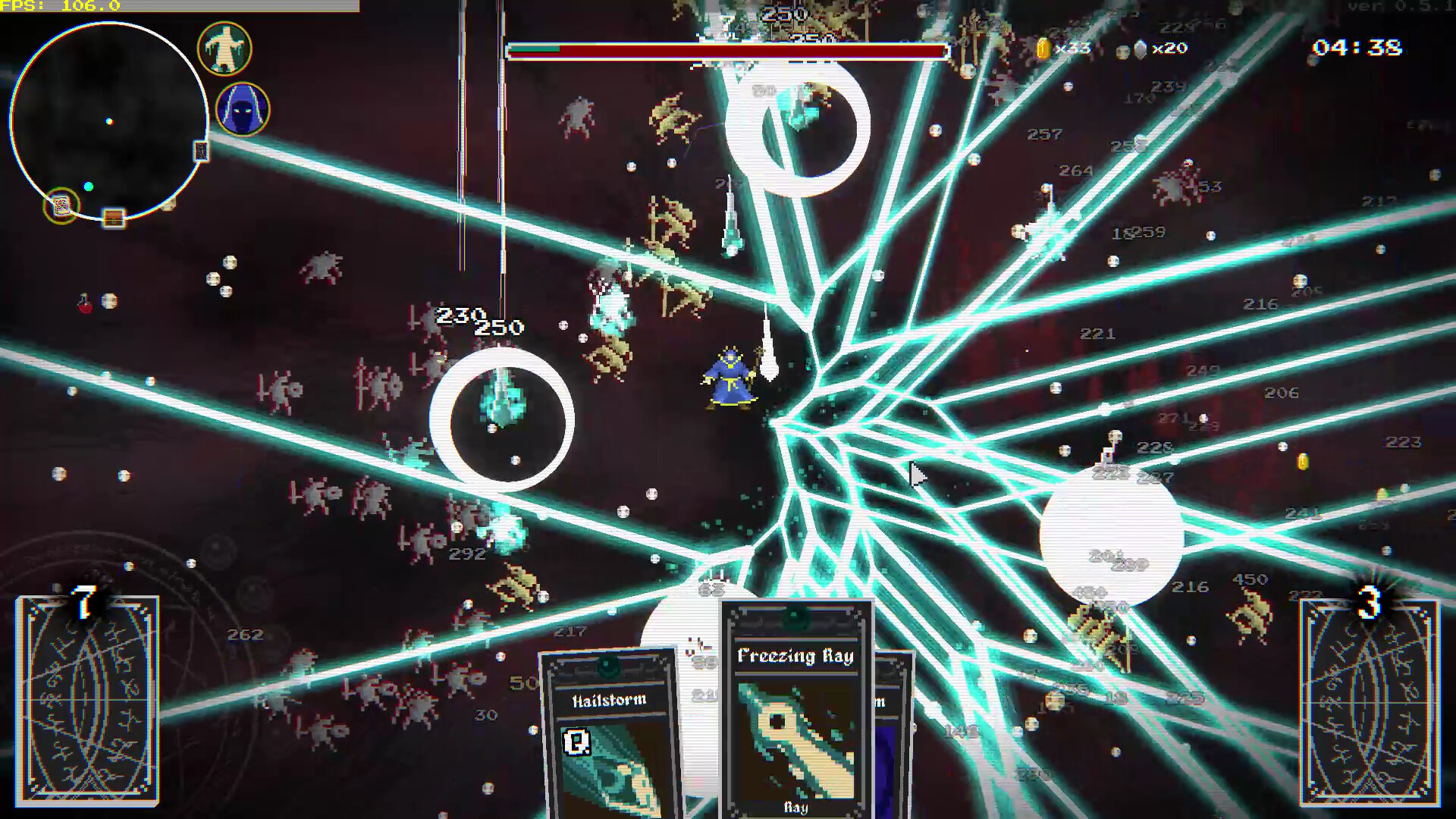
Lightning and freezing spells chain across the screen as a run escalates, with the active hand of spell cards shown along the bottomImage: Regretware via Steam -
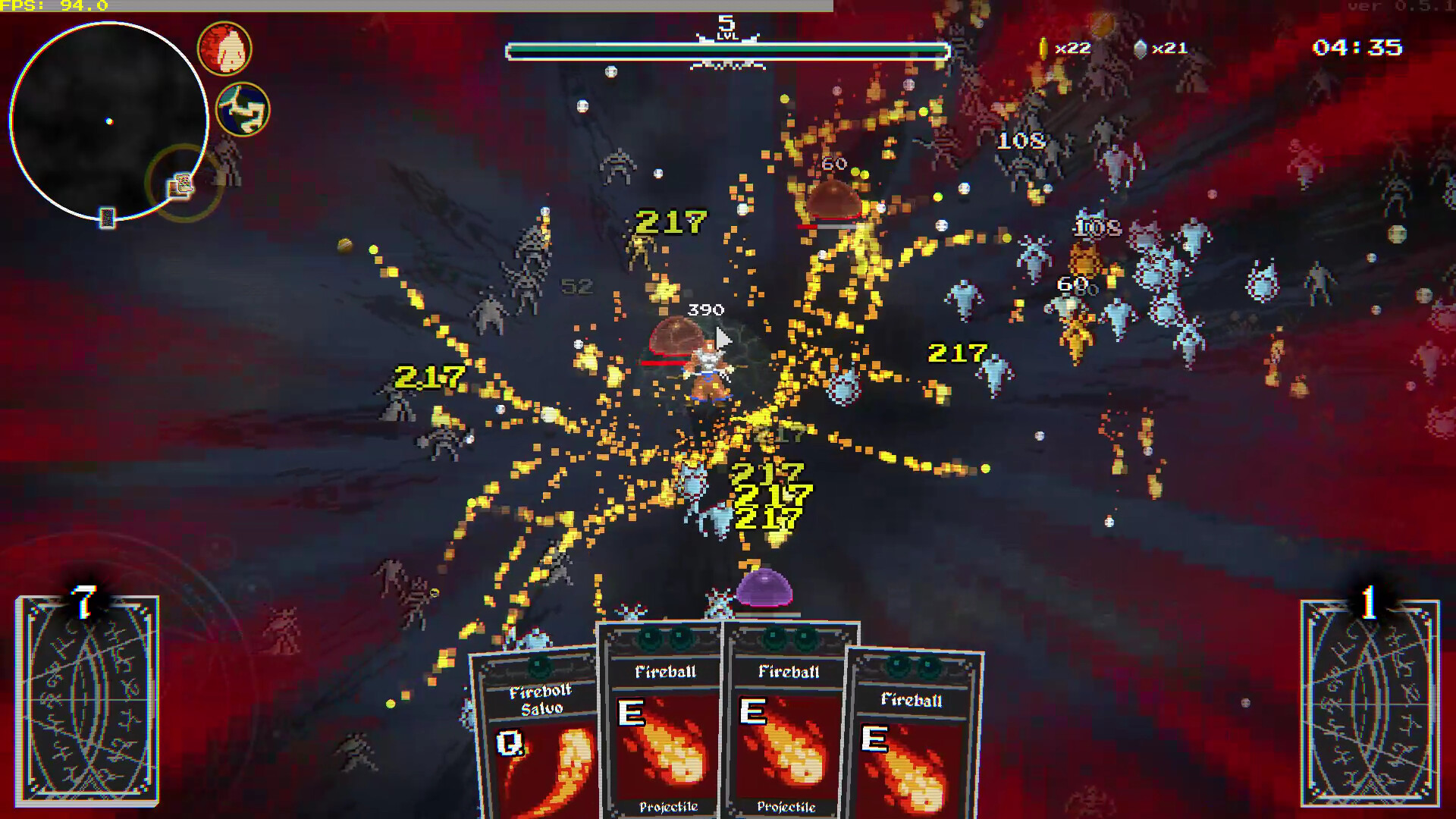
A fire-focused build clears a swarm in a single burst, the kind of chain-reaction moment reviewers praised the build system for enablingImage: Regretware via Steam -
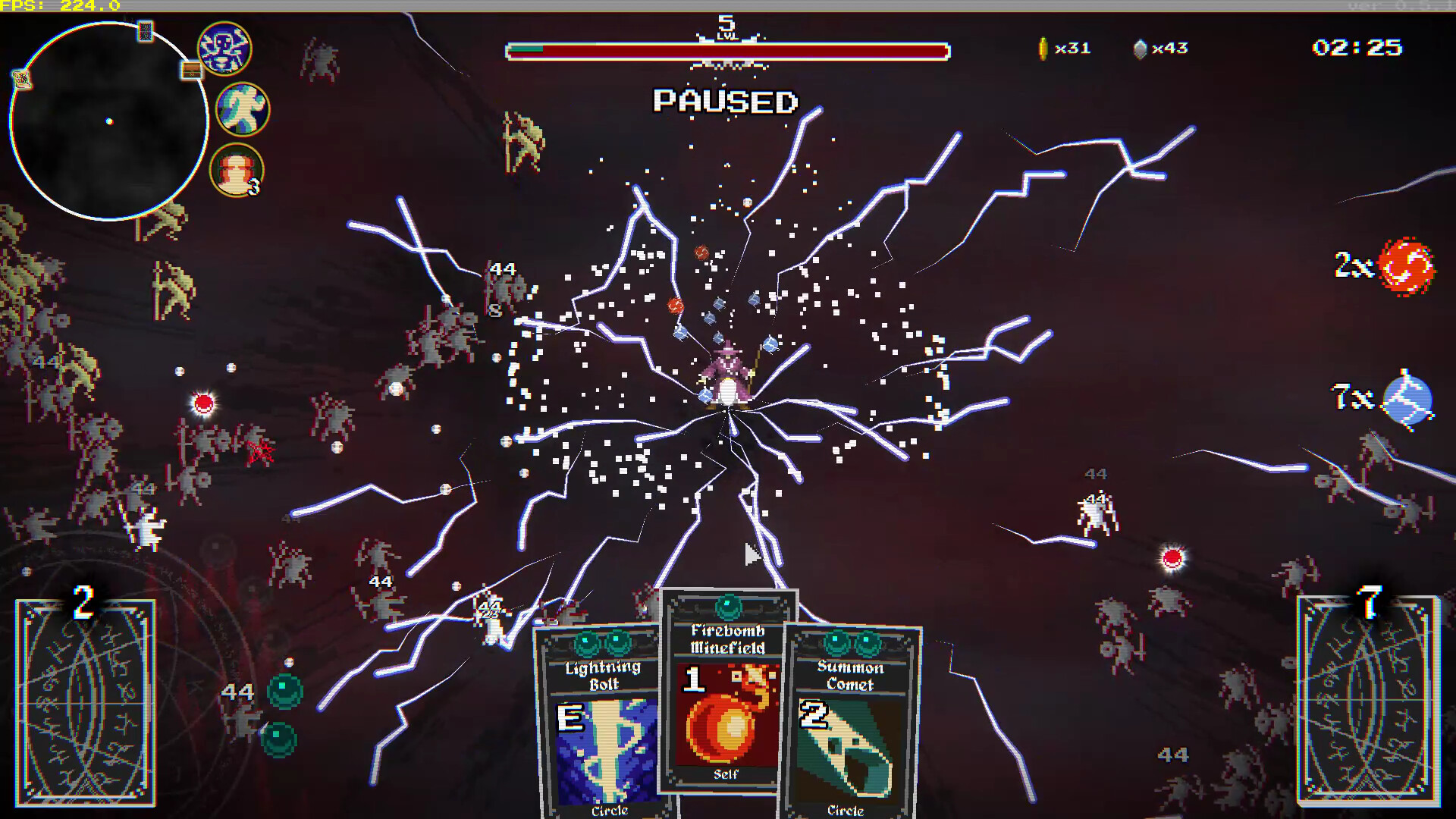
Hovering over a card pauses the game entirely, a quality-of-life touch reviewers singled out for letting players remap hotkeys mid-runImage: Regretware via Steam