
Game review
Die Diver Review
6.5 / 10
- Developer
- Foe Laschite Games
- Publisher
- Foe Laschite Games
- Released
- 7 September 2026
- Platforms
- ["Windows"]
- Genre
- Adventure
Building a Dice Pool to Survive the Forest of the Dead
Die Diver swaps the deckbuilding roguelite genre's usual cards for dice, sending players diving into the Forest of the Dead, a cursed woodland canopy that has risen up to engulf the world and swallow anything unlucky enough to wander beneath it, the place where, as the game's premise puts it, everyone who dies eventually ends up. Rather than drafting and playing a deck, players collect dice over the course of a run and build out a pool that determines how they handle whatever the Forest throws at them, rolling for outcomes rather than choosing from a fixed hand, and making meaningful decisions about which dice to add or keep even though the results of any given roll stay genuinely uncertain. That tension between deliberate pool-building and the raw unpredictability of a roll is the entire hook, closer to shaking a box of tabletop dice than following a scripted character build, and every dive plays out differently as a result, forcing adaptation to whatever the pool actually rolls rather than execution of one dominant strategy. Developed and published by Foe Laschite Games, Die Diver launched free-to-play on Steam on September 7, 2026. The developer describes it plainly on the store page as a small university experiment built around exploring what a dice-focused roguelite idea can do, with its own future scope explicitly left open-ended depending on where the concept goes from here.
A Handful of Reviews, All in Agreement
Die Diver has picked up three reviews at the time of writing, all three positive, for a clean 100% approval rating. That's a tiny sample for any game, let alone a free student project with, as one reviewer puts it, surprisingly little visibility given how much they enjoyed it, but the reviews that exist are consistent, thoughtful, and one runs long enough to function as a genuinely balanced critique rather than a quick thumbs-up.
Reviewers Praise a Genuinely Novel Hook and a Creepy, Colorful Setting
All three reviews single out the dice-pool mechanic itself as the game's strongest idea. One reviewer calls the gameplay mechanics "intriguing" and praises the visual design as "lovely," coming away having genuinely enjoyed the time spent with it despite its small scale. Another reviewer opens by calling the animation "not perfect" but says that roughness "gives it charm," expressing outright shock that "this fun of a game has so little support," enough to have made a YouTube video about it and to recommend anyone curious just try it, since it costs nothing. The longest and most detailed review goes further, calling Die Diver "a really unusual little roguelite" and praising specifically how the combination of dark fantasy, dice mechanics, and roguelite progression came together better than expected. That reviewer highlights the balance between planning and luck as the system's core strength, describing the satisfaction of not being able to fully control what a pool produces while still being able to make meaningful decisions about how to build that pool over a run, and calls the resulting adaptive, no-single-perfect-strategy structure a genuine strength rather than a limitation. The Forest of the Dead setting itself draws real praise too, described as having "a creepy fantasy atmosphere" balanced by stylized, colorful presentation that keeps the dark themes from tipping into outright bleakness, a combination that reviewer singles out as one of the game's best qualities.
An Honest Student Experiment With Real, Acknowledged Limits
Even the most enthusiastic review is candid that Die Diver is exactly what its own store page says it is: a small, scope-limited experiment rather than a finished, fleshed-out game. That reviewer states plainly that "some systems feel like the foundations of a larger game rather than completely developed mechanics," and specifically wanted more variety in encounters and progression the deeper a run went, a fair assessment for a project built as an exploration of an idea rather than a full production. The same review flags that the dice-driven randomness, while clearly an intentional design choice rather than an afterthought, will not appeal to every player, noting real moments where an unlucky roll can make a run feel governed more by chance than by strategy, even for a reviewer who personally enjoys the challenge of salvaging something useful from an awkward roll. A separate reviewer's blunt acknowledgment that the animation "isnt perfect" reinforces the same picture: a rough, small-team production whose ideas outpace its current polish. None of the three reviews had logged extensive playtime, and none address how the dice-pool system holds up across many runs, or whether the currently thin encounter variety expands in future updates, questions this launch-week review pool simply hasn't had the runs to answer yet.
Verdict
Die Diver is a small, free, genuinely inventive roguelite experiment that trades cards for dice and builds a real, felt tension between deliberate pool construction and honest, unscripted luck. Every review currently on record praises the idea's originality, the atmosphere of its cursed Forest of the Dead setting, and the way each dive plays out differently depending on what a pool actually rolls. But it is, by its own developer's description, a university experiment first and a complete game second: encounter variety is thin, some systems read as foundations rather than finished mechanics, and the rough-around-the-edges animation and presentation reflect a small team exploring an idea rather than polishing a product. At $0, there's no real reason not to try it if a tabletop-flavored, luck-embracing roguelite twist sounds appealing, just go in expecting a compelling proof of concept with real room to grow rather than a fully realized adventure.
Screenshots
-
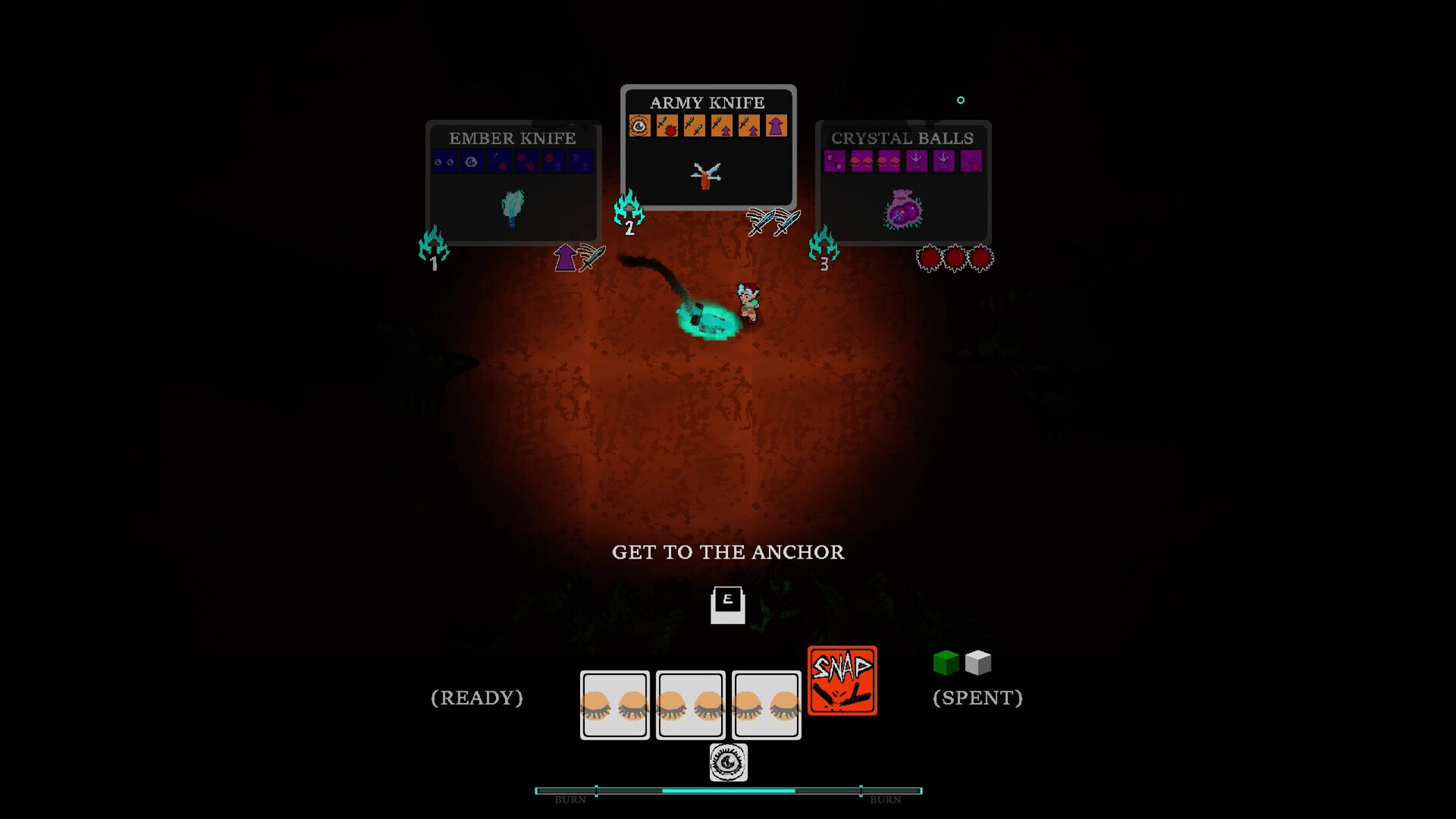
Between encounters, players juggle dice-pool items like Ember Knife and Crystal Balls while managing which dice are ready or spentImage: Foe Laschite Games via Steam -
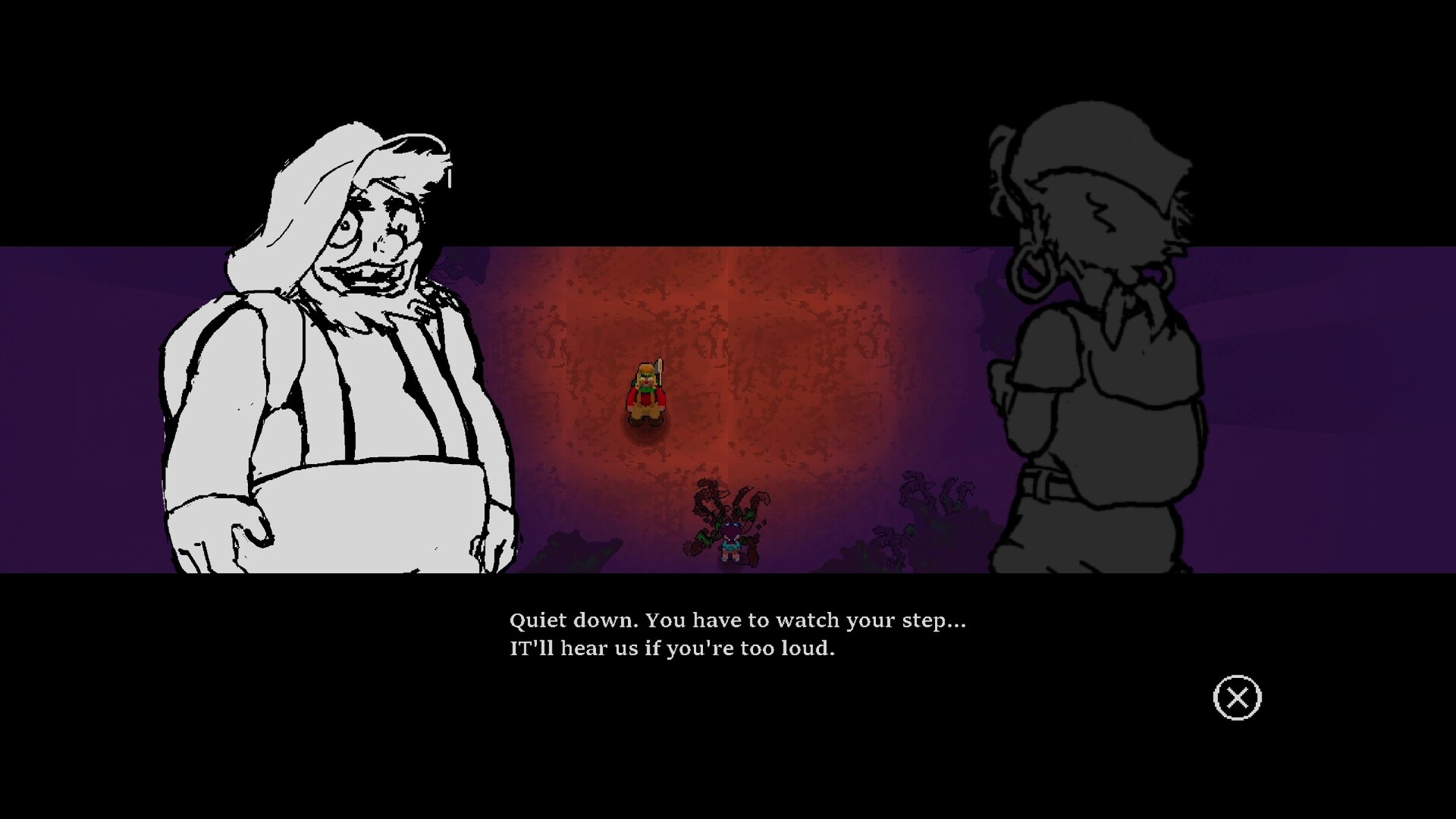
Hand-drawn cutscene panels break up the pixel-art dives with the Forest of the Dead's unsettling narrative beatsImage: Foe Laschite Games via Steam -
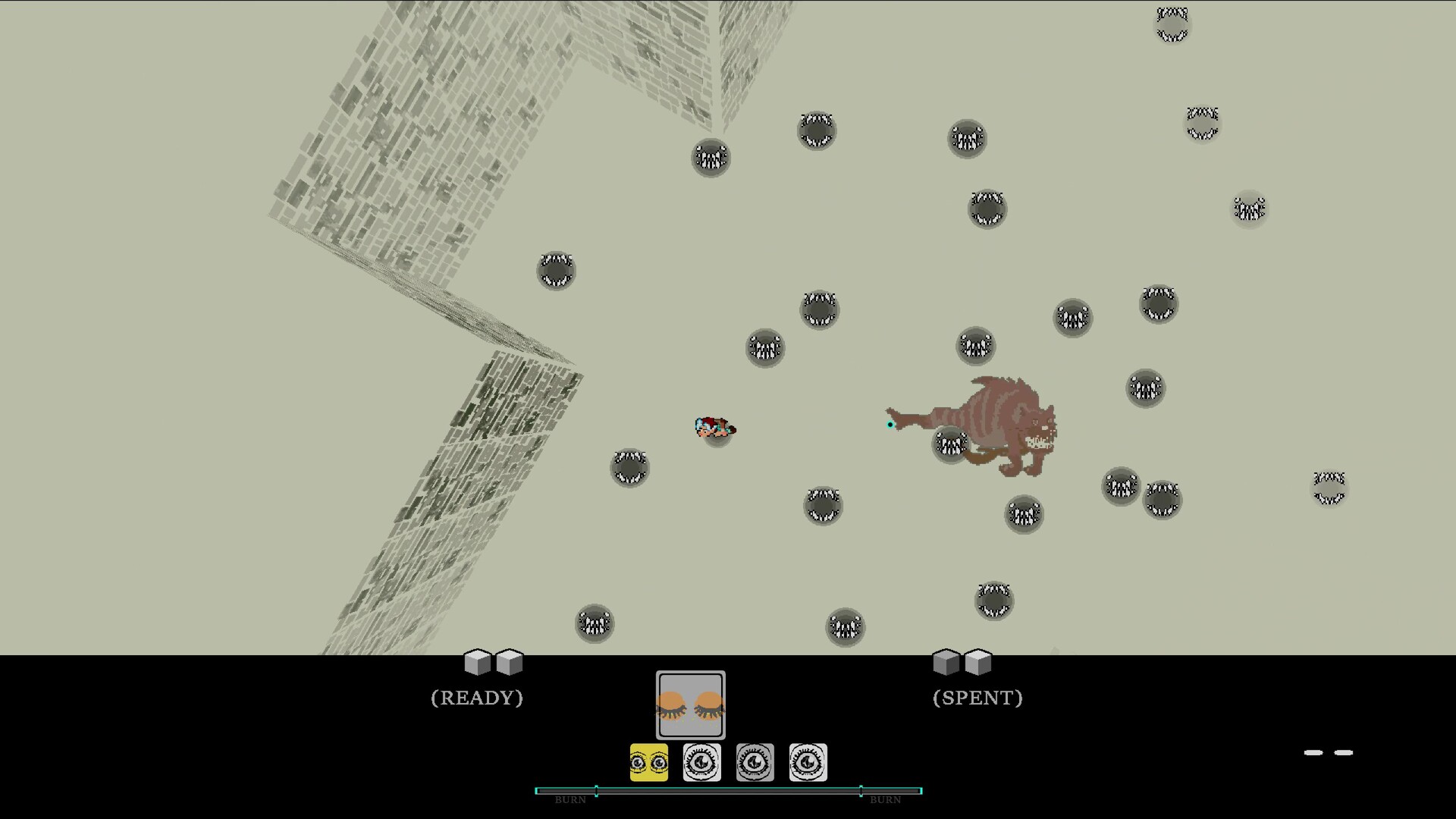
A run's dice pool gets tested against a swarm of enemies and a larger foe out in the openImage: Foe Laschite Games via Steam