
Game review
Maestro
6.5 / 10
- Developer
- Double Jack
- Publisher
- Double Jack, Creature Label
- Released
- 22 October 2024
- Platforms
- Windows (VR Only)
- Genre
- VR rhythm / orchestra-conducting simulator
- Monetisation
- Base game purchase plus multiple paid downloadable content packs adding song libraries
- Players
- Single-player only
The short version
Maestro puts you at the podium in front of a full symphonic orchestra, tracking your hand gestures to keep tempo, cue individual instrument sections, and shape dynamics in real time rather than simply timing button presses to falling notes. This review's sample is genuinely impressed by how distinct that premise feels from typical VR rhythm games, with even reviewers who have actually conducted real orchestras offering qualified, specific praise for what the game gets right. Set against that novelty are two recurring, practical complaints: a meaningful share of players report the game simply not working correctly on their specific headset or controller hardware, and a monetization structure that gates a large portion of the game's most recognizable music behind separately priced DLC packs.
Biggest strengths
- The core conducting mechanic earns specific, credible praise, including from reviewers who have personally conducted real orchestras and describe several gestures and dynamics systems as genuinely realistic
- The game is repeatedly described as capturing a feeling few other VR titles attempt, with multiple reviewers noting they intended a short session and stayed for hours once the format clicked
- Steam's own partner-events feed documents exceptionally active, sustained post-launch support, including numerous free content updates, new song packs, and cross-promotional content, extending well past launch into ongoing development
Biggest weaknesses
- A significant portion of the negative sample reports the game simply not functioning correctly on specific hardware, with named complaints across the original Vive controllers, HP Reverb G2, and Oculus Rift, including reports of missing menu options that made the game impossible to exit without force-closing
- Left-handed support was reportedly promised by the developers but had not been delivered as of at least one detailed review, leaving left-handed players unable to play comfortably
- The lack of spatial audio is a specific, repeated complaint from reviewers who otherwise enjoyed the experience, noting that instrument cues don't audibly match their physical position around the conductor, undercutting immersion in a game built entirely around spatial gesture and positioning
Who it's for: VR owners drawn to music and rhythm games looking for something meaningfully different from slashing-block formats like Beat Saber, and players with a genuine interest in orchestral music who don't mind paying extra for their favorite pieces beyond the base library.
Our recommendation: A genuinely novel and well-realized VR experience worth trying if your specific headset and controllers are confirmed compatible — check community hardware reports before buying, and budget for DLC if you want access to the game's more recognizable and popular tracks.
6.5 / 10
Most VR rhythm games ask you to slash, punch, or dodge in time with music. Maestro asks something rarer: stand at a podium, raise your hands, and actually conduct a symphonic orchestra, with real gesture tracking driving tempo, section cues, and dynamics rather than a simplified block-hitting abstraction. This review's sample takes that premise seriously, and the resulting picture is one of a genuinely novel idea executed well enough to win real respect, held back by a set of practical problems that have nothing to do with the core concept itself.
A rare kind of specific, informed praise
What sets this review's positive sample apart from typical enthusiast praise is how many reviewers bring real musical or conducting experience to their assessment, and offer qualified rather than blanket approval as a result. "As someone who has actually conducted an orchestra, I have mixed feelings about this game. There are some parts that are very realistic, and other parts that feel like they added movements just for the sake of increasing difficulty," one reviewer writes — a genuinely useful, credentialed perspective rare in game reviews generally. Another professional weighs in with similar nuance: "I'm an orchestral director by day, so I was curious how far this would stray from" real technique, going on to describe losing three hours to a session they'd planned to keep short. A third distills the appeal simply: "It's a VR-only rhythm game where you conduct an orchestra; but it's so much more than its parts. It combines a good sense of humour, great (brilliant!) music and has obviously been put together with a lot of love."
Hardware compatibility is the sample's biggest practical problem
Set against that praise, the negative sample is dominated overwhelmingly by one category of complaint: the game simply not working correctly on specific hardware. "Doesn't work with the original steam controllers... it doesn't respond to certain gestures and you can't select anything in the pause menu," one reviewer writes. Another, more frustrated: "Does not Work well on OCULUS RIFT... have NO OPTION: NO PAUSE / NO MENU / NO EXIT!!! You have to shut down the ENTIRE GAME/APP to LEAVE!!!" A third reports the same category of problem on an HP Reverb G2. These aren't vague performance grumbles — they're specific, named hardware incompatibilities serious enough in some cases to make basic menu navigation impossible, and prospective buyers with less mainstream VR setups should check current compatibility reports before purchasing.
A promised feature still missing, by at least one detailed account
One reviewer raises a specific accessibility gap worth flagging directly: "No left-handed support, even if devs have promised it for months. I'm left-handed and cannot play the game." That's a concrete, checkable claim about a specific promised feature rather than a vague complaint, and it's worth taking at face value as reported — this review found no partner-events post specifically confirming left-handed support had shipped, though the feed's overall pace of updates suggests the feature, if genuinely promised, may simply not have been prioritized yet rather than abandoned outright.
Spatial audio, and a sharper dissent on realism
A second recurring, more specific critique concerns audio design: "audio is not spatial, so it does not match to the orchestra around you breaking the immersion," one reviewer writes, a complaint echoed independently by a second reviewer who says spatialized audio positioned by instrument section is the one thing missing from an otherwise strong experience. A sharper dissent comes from a reviewer who felt the novelty faded fast: "This game does tickle the feeling of standing in front of an orchestra... However, that quickly fades, and soon you realize it's nothing more than guitar hero with some conductor-inspired movements." That's a fair counterpoint to the more enthusiastic praise above, and worth weighing seriously — the professional conductors in this sample found real substance in specific mechanics, but agreement isn't universal on how deep that realism actually runs once the initial impression wears off.
The monetization complaint, and whether it's fair
Multiple otherwise-positive reviewers raise the same concern about the game's business model: a substantial amount of recognizable, popular music sits behind separately priced DLC rather than the base purchase. "It has a very good collection of the classics in the base game, but the really popular and fun ones are locked behind paid DLCs. To the devs: PLEASE, for" the sake of the base experience, bundle more content in, one reviewer pleads. One negative review goes further, alleging stalled development after a promised roadmap — but this review's own check of the game's partner-events feed directly contradicts that specific claim: the feed documents a steady stream of both free and paid content updates running well past that reviewer's complaint, including a Duel of the Fates DLC, a Secret Sorcery content update, and an Attack on Titan collaboration, alongside a VR Game of the Year finalist nomination. The DLC-heavy pricing model itself is a legitimate value complaint; the specific "development has stopped" allegation is not supported by the record.
What the achievement data confirms about difficulty
Steam's own completion figures show a game with genuine long-term challenge built in. An early concert-completion milestone sits at a comfortable 86.1%, but five-star scores on specific songs fall as low as 0.6-0.7% — evidence of a real, demanding skill ceiling for players chasing full mastery, consistent with reviewers who describe the deeper mechanics rewarding real precision rather than being trivially easy once the basic gestures are learned.
Final verdict
Maestro succeeds at something genuinely rare in VR: a rhythm game built around a real, distinct physical skill rather than a reskinned slashing mechanic, and it earns credible, qualified praise from reviewers who actually know what conducting an orchestra involves. Its hardware compatibility gaps and DLC-heavy pricing are real, documented drawbacks worth checking against your own setup and budget before buying, but neither reflects a project that's been abandoned — the record shows the opposite.
Pros and cons
Pros
- The core conducting mechanic earns specific, credible praise, including from reviewers who have personally conducted real orchestras and describe several gestures and dynamics systems as genuinely realistic
- The game is repeatedly described as capturing a feeling few other VR titles attempt, with multiple reviewers noting they intended a short session and stayed for hours once the format clicked
- Steam's own partner-events feed documents exceptionally active, sustained post-launch support, including numerous free content updates, new song packs, and cross-promotional content, extending well past launch into ongoing development
- The game was a finalist for Steam's VR Game of the Year in its launch year, a credible signal of broader recognition beyond this review's own sample
- Achievement data shows a legitimately difficult skill ceiling, with the hardest five-star song scores sitting under 1%, confirming the game offers real long-term mastery challenge for dedicated players rather than trivial difficulty
Cons
- A significant portion of the negative sample reports the game simply not functioning correctly on specific hardware, with named complaints across the original Vive controllers, HP Reverb G2, and Oculus Rift, including reports of missing menu options that made the game impossible to exit without force-closing
- Left-handed support was reportedly promised by the developers but had not been delivered as of at least one detailed review, leaving left-handed players unable to play comfortably
- The lack of spatial audio is a specific, repeated complaint from reviewers who otherwise enjoyed the experience, noting that instrument cues don't audibly match their physical position around the conductor, undercutting immersion in a game built entirely around spatial gesture and positioning
- The monetization structure locks a substantial amount of the game's most recognizable and popular music behind separate paid DLC packs, a complaint raised by multiple positive reviewers even as they otherwise recommended the game
- At least one reviewer disputes the game's realism at the mechanical level, describing it as closer to "guitar hero with some conductor-inspired movements" than genuine orchestral conducting once the initial novelty wears off
Screenshots
-

MaestroImage: Double Jack via Steam -

MaestroImage: Double Jack via Steam -

MaestroImage: Double Jack via Steam -
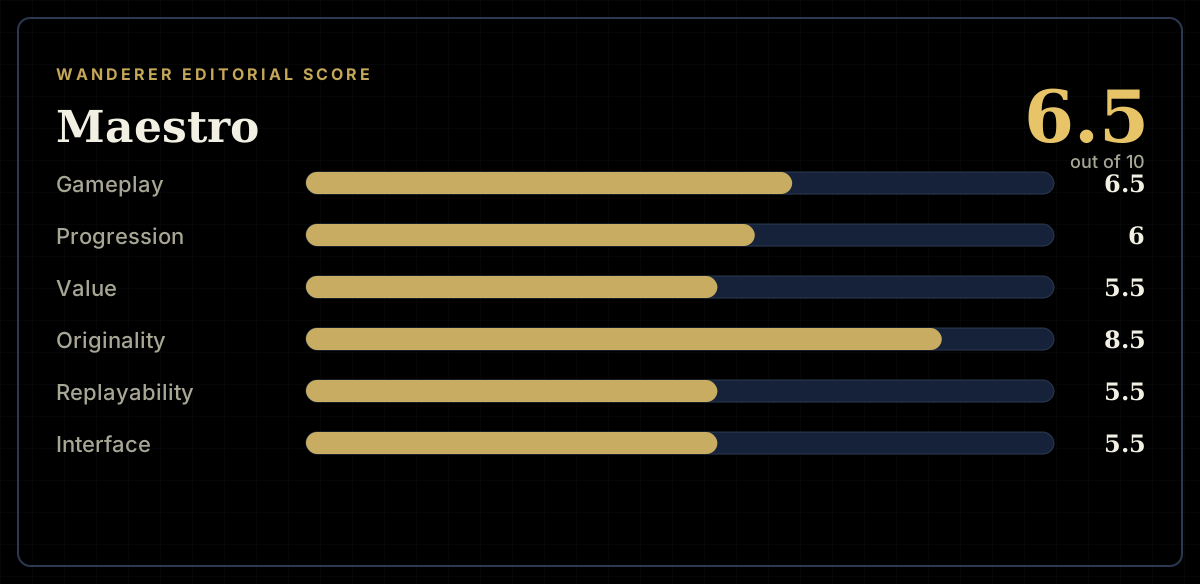
How the review scores each part of the gameWanderer Editorial -
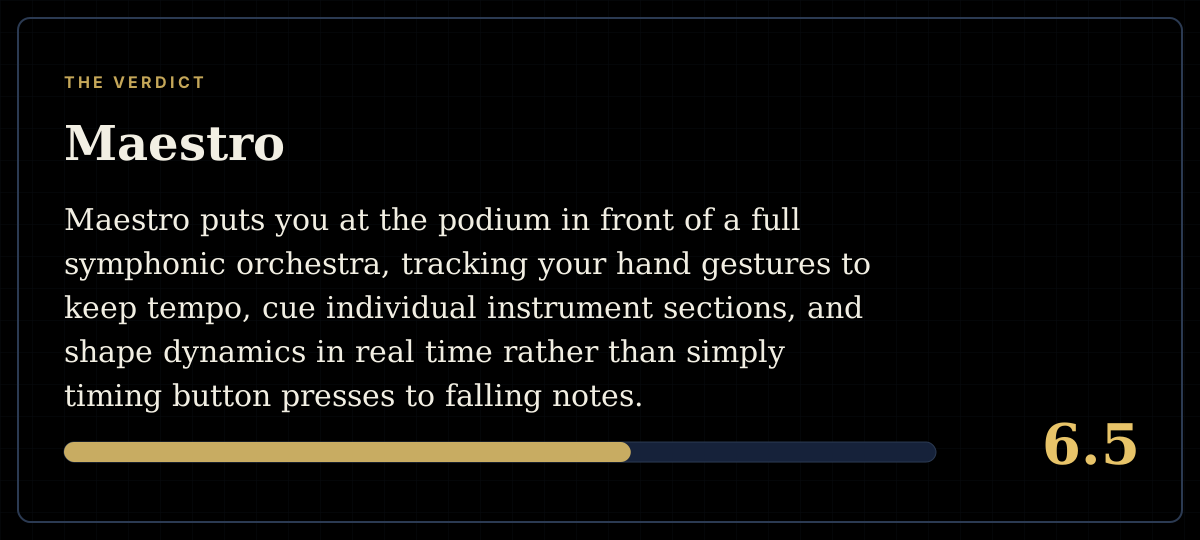
The short versionWanderer Editorial