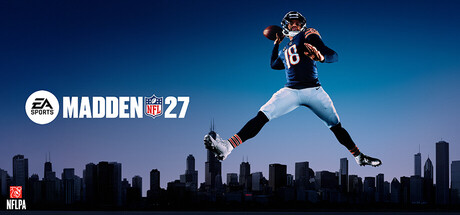
Game review
EA SPORTS Madden NFL 27
3.5 / 10
- Developer
- Tiburon
- Publisher
- Electronic Arts
- Released
- 13 August 2026
- Platforms
- Windows
- Genre
- Simulation, Sports, Strategy
- Monetisation
- One-time purchase, with extensive in-game currency and Ultimate Team card purchases
- Players
- Online and local multiplayer
The short version
EA Sports Madden NFL 27, released 13 August 2026 by Tiburon and published by Electronic Arts, is the latest entry in the NFL's annual licensed football simulation. It sits Mostly Negative with a large sample of 654 reviews, and reading through a wide cross-section of that sample reveals a genuinely split verdict beneath the harsh headline score. A large, vocal majority of reviewers describe severe, specific problems: an internet connection and server dependency for ostensibly single-player modes, with widely reported server congestion that crashes matches and loses hours of offline franchise progress; single-player microtransactions that let players pay real money to remove artificial caps on their own custom athlete; and specific gameplay bugs including receivers running into walls, defenders sliding without moving their feet, and players getting physically stuck to one another. Set against this, a smaller but detailed and credible minority — including several long-time players who had skipped multiple prior entries — specifically praise this year's Franchise mode, contract negotiation depth, and running game as genuine, meaningful improvements, arguing the game underneath the technical problems is mechanically one of the stronger recent Maddens.
Biggest strengths
- Franchise mode draws specific, detailed praise from multiple long-time players, including several who hadn't purchased a Madden game in five or more years, citing deeper contract negotiation, a livelier presentation with a new in-game news center, and players who feel like they have genuine individual depth during negotiations
- The running game is repeatedly singled out as meaningfully improved over recent entries, with more than one detailed reviewer specifically comparing it favourably to prior years' versions
- Several reviewers who tried the game via a trial period before buying report the changes go beyond a simple roster update, citing cleaner menus, more challenging and controllable passing, and improved defensive zone-style play options
Biggest weaknesses
- A large number of reviewers report the game requiring an internet connection for ostensibly offline single-player modes, with widely and repeatedly documented EA server congestion causing crashes, lost progress in offline franchise saves, and total inability to launch matches at peak times
- Single-player microtransactions draw intense, specific backlash: multiple reviewers report being able to pay real money, in one case citing figures up to $100, to remove artificial performance caps on a custom athlete in a mode with no other human players involved
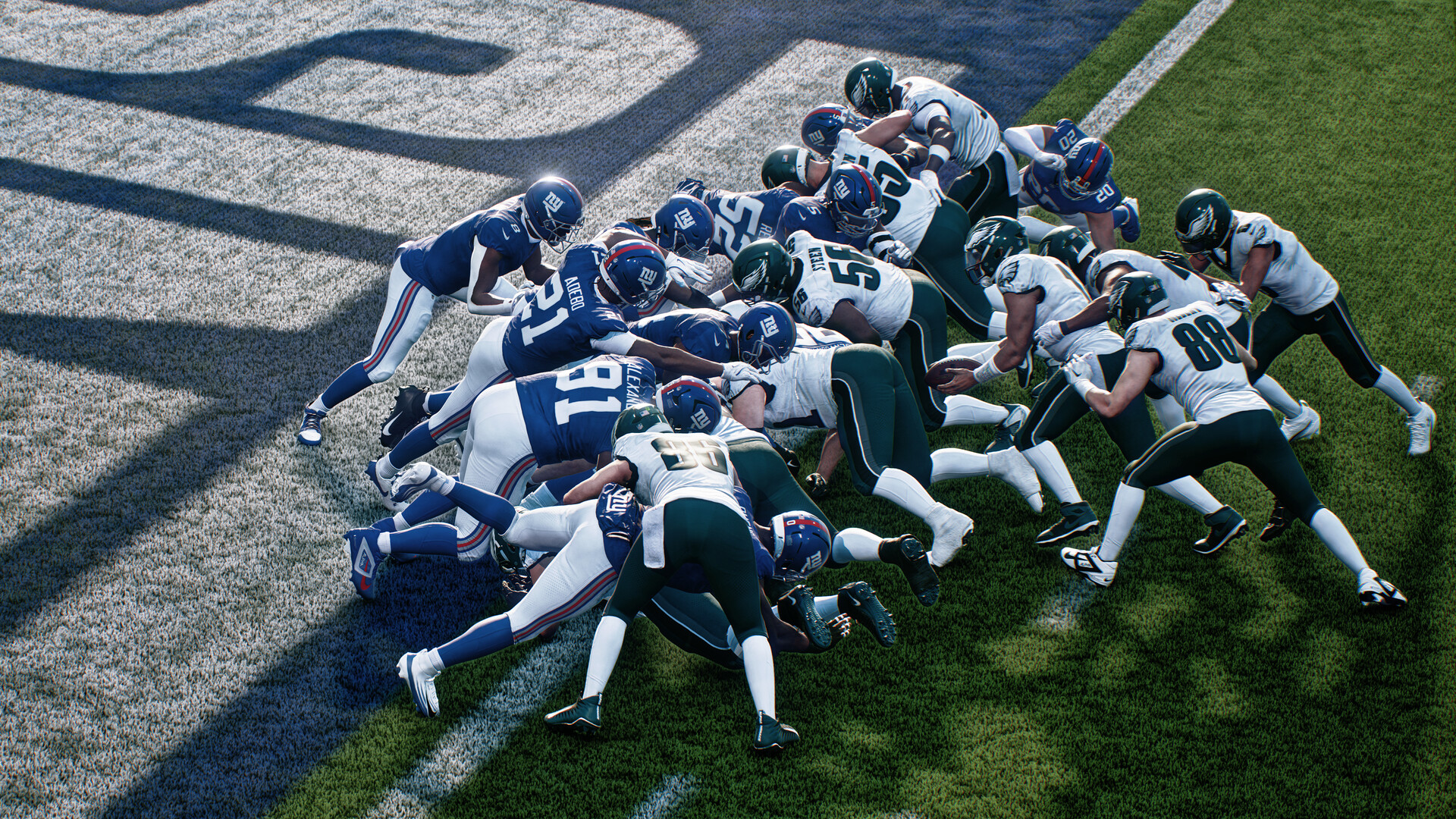
- Specific, repeated gameplay bugs are widely reported: defensive backs sliding sideways without moving their feet to break up passes, receivers and running backs becoming physically stuck to opposing players or the sideline, and animation-driven physics that multiple detailed reviewers say override player input entirely in key moments
Who it's for: Long-time Madden and NFL fans specifically drawn to Franchise mode's added depth who can tolerate real server instability and are prepared to entirely avoid Ultimate Team's monetisation.
Our recommendation: Skip Ultimate Team and any single-player mode requiring a live connection until EA demonstrates server stability; Franchise-mode-focused players report a genuinely improved experience, but the asking price and the severity of reported bugs make this a wait-for-patches purchase for most buyers.
3.5 / 10
Introduction
EA Sports Madden NFL 27, released 13 August 2026 by longtime developer Tiburon and published by Electronic Arts, is the newest entry in the NFL's exclusively licensed annual football simulation franchise. It sits Mostly Negative with a large sample of 654 reviews, and reading widely across that sample tells a more complicated story than the blunt aggregate score suggests: this is a release where a genuinely improved core mode sits underneath a launch marred by server dependency, aggressive single-player monetisation, and specific, widely corroborated gameplay bugs.
A single-player game that needs a server to work
The single most repeated technical complaint in this review's research is that core modes marketed as offline experiences depend on a live connection to Electronic Arts' servers. Multiple reviewers report being unable to load Superstar or franchise-adjacent modes due to server congestion, with one detailed account describing an entire offline franchise save crashing irrecoverably just before a Super Bowl appearance after more than fifty hours invested. Several reviewers frame this as a basic, almost philosophical objection independent of any specific bug: a single-player football simulation, they argue, should never require a functioning internet connection or a healthy EA server to run at all, and more than one states they are refunding specifically in protest rather than for the bugs themselves.
Single-player microtransactions draw the sharpest backlash
Layered on top of the server dependency is a monetisation structure that draws this sample's most pointed criticism. Multiple reviewers report that a player's custom Superstar athlete is subject to an artificial performance cap that can be removed through real-money purchases, with one detailed reviewer citing a specific figure of up to $100 to fully unlock a single custom player in what is, by definition, a single-player mode with no other humans to compete against. Ultimate Team draws equally sustained criticism as a card-collection mode reviewers describe as effectively pay-to-win, with one detailed breakdown estimating hundreds of dollars beyond the initial purchase price would be needed to stay competitive as acquired cards rotate out of relevance within months. Several reviewers frame this pattern as the central reason for their negative review, independent of any technical complaint, arguing a $120 purchase price should not be treated as a down payment on a much larger ongoing spend.
Specific, widely corroborated gameplay bugs
Beyond monetisation and connectivity, this review found a consistent, specific set of gameplay bugs repeated across many independent reviews rather than a single outlier's bad experience. Multiple reviewers separately describe defensive backs sliding sideways without moving their feet to break up passes, receivers and running backs becoming physically stuck to opposing linemen or sideline markers, and animation sequences that reviewers say override player input at exactly the moments that should matter most. One long-time franchise player states bluntly that physics "do not" actually govern outcomes and that pre-baked animations decide the result of contested plays regardless of user control, calling the underlying engine broken enough that it barely functions as a cohesive football simulation despite next-gen marketing claims. Compounding this, several reviewers report post-launch patches actively making stability worse rather than better, with one detailed reviewer citing a specific 26 August update that prevented PC players from launching the game at all, and separately noting this exact same failure pattern — an unstable PC-specific patch — recurred from the previous year's entry.
A genuinely improved Franchise mode, reported by credible skeptics
It would be a mistake to read this review's research as uniformly negative, and the more credible positive accounts specifically come from players with real skepticism going in. Multiple reviewers who hadn't purchased a Madden game in five or more years, or who explicitly tried a trial period before deciding to buy, report Franchise mode delivering genuinely deeper contract negotiations, a livelier presentation built around a new in-game news center, and players who feel individually distinct during roster decisions rather than interchangeable spreadsheet entries. The running game draws specific, repeated praise as meaningfully improved over recent years, and more than one detailed reviewer separates Ultimate Team's greed from Franchise mode's genuine quality, explicitly recommending the latter while warning strongly against the former. This isn't a small, easily dismissed minority — the specificity and consistency of the Franchise-mode praise, especially from players with no brand loyalty motivating a positive review, gives it real weight against the far louder technical and monetisation backlash.
Presentation gripes, and a "skill issue" counter-narrative
Beyond the major structural complaints, this review's research turned up two smaller but specific threads worth reporting. Several reviewers single out a specific sports announcer's commentary as a persistent irritation, describing the delivery as overly forced and lacking real football knowledge in a way that undercuts the broadcast-style presentation the series has built its identity around for years — a detail unlikely to affect anyone's purchase decision on its own, but specific and repeated enough across independent reviews to be worth naming directly. Separately, a small number of reviewers push back hard against the broader negative consensus, framing complaints about gameplay difficulty as a "skill issue" rather than a legitimate design or bug complaint, with one directly dismissing the entire negative-review sample in those terms. This review treats that pushback as a genuinely held minority position rather than dismissing it, but notes it engages almost exclusively with the difficulty-balance complaints and doesn't address the separately reported server outages, single-player microtransaction caps, or players becoming physically stuck to each other mid-play — problems no amount of individual skill can route around.
What this pattern says about the franchise's yearly cycle
Reading this review's full sample alongside what's publicly known about the series' release cadence adds useful context. Multiple long-time reviewers frame their frustration explicitly in terms of repetition: one describes the year-over-year changes as "painfully, and comically, incremental," noting a ten-year-old entry looks meaningfully different from this one, while a side-by-side against just last year's game reveals far smaller differences. That framing matters for how to read the Franchise-mode praise above — several of the same reviewers crediting genuine improvement this year are explicit that they're grading against a low, familiar baseline set by several thinner preceding entries, not against what a football simulation could look like if built without an annual release cycle forcing incremental, yearly shipping regardless of how much meaningfully new content is actually ready. That doesn't make the praise for this year's Franchise mode dishonest, but it does mean this review reads it as a genuine, specific improvement within a franchise structure multiple of its own long-time players describe as fundamentally strained by its own release schedule.
Final Verdict
Madden NFL 27 is a release whose two halves pull in opposite directions hard enough to genuinely complicate a single score. Franchise mode earns specific, credible praise, including from skeptical long-time players returning after years away, for deeper contract systems, a livelier presentation and a meaningfully improved running game. Set against that is a launch defined by server dependency for modes that shouldn't need it, single-player microtransactions that let players pay to remove artificial caps on their own custom athlete, and a specific, widely corroborated set of gameplay bugs that several long-time fans say make this one of the worst technical states the franchise has shipped in. At its full asking price, this is hard to recommend broadly; Franchise-focused players willing to entirely avoid Ultimate Team and wait out server stability issues may find real value underneath the noise, but most buyers should wait for patches and a price drop before deciding.
Pros and cons
Pros
- Franchise mode draws specific, detailed praise from multiple long-time players, including several who hadn't purchased a Madden game in five or more years, citing deeper contract negotiation, a livelier presentation with a new in-game news center, and players who feel like they have genuine individual depth during negotiations
- The running game is repeatedly singled out as meaningfully improved over recent entries, with more than one detailed reviewer specifically comparing it favourably to prior years' versions
- Several reviewers who tried the game via a trial period before buying report the changes go beyond a simple roster update, citing cleaner menus, more challenging and controllable passing, and improved defensive zone-style play options
- At least one long-time player states this is mechanically one of the better Maddens in years once separated from its monetisation, specifically praising the depth of new features added to Franchise mode this year
Cons
- A large number of reviewers report the game requiring an internet connection for ostensibly offline single-player modes, with widely and repeatedly documented EA server congestion causing crashes, lost progress in offline franchise saves, and total inability to launch matches at peak times
- Single-player microtransactions draw intense, specific backlash: multiple reviewers report being able to pay real money, in one case citing figures up to $100, to remove artificial performance caps on a custom athlete in a mode with no other human players involved
- Specific, repeated gameplay bugs are widely reported: defensive backs sliding sideways without moving their feet to break up passes, receivers and running backs becoming physically stuck to opposing players or the sideline, and animation-driven physics that multiple detailed reviewers say override player input entirely in key moments
- Several reviewers report post-launch patches making the game less stable rather than more, including one specific update reported to have prevented PC players from launching the game at all, with more than one reviewer noting this exact pattern recurring from the previous year's entry
- Ultimate Team specifically draws sustained, detailed criticism as an aggressively monetised mode built around card packs with a short competitive shelf life, with one detailed reviewer breaking down the cost of remaining competitive as running into hundreds of dollars beyond the initial purchase price
Screenshots
-
Madden NFL 27Image: Electronic Arts via Steam -
Madden NFL 27Image: Electronic Arts via Steam -
Madden NFL 27Image: Electronic Arts via Steam -
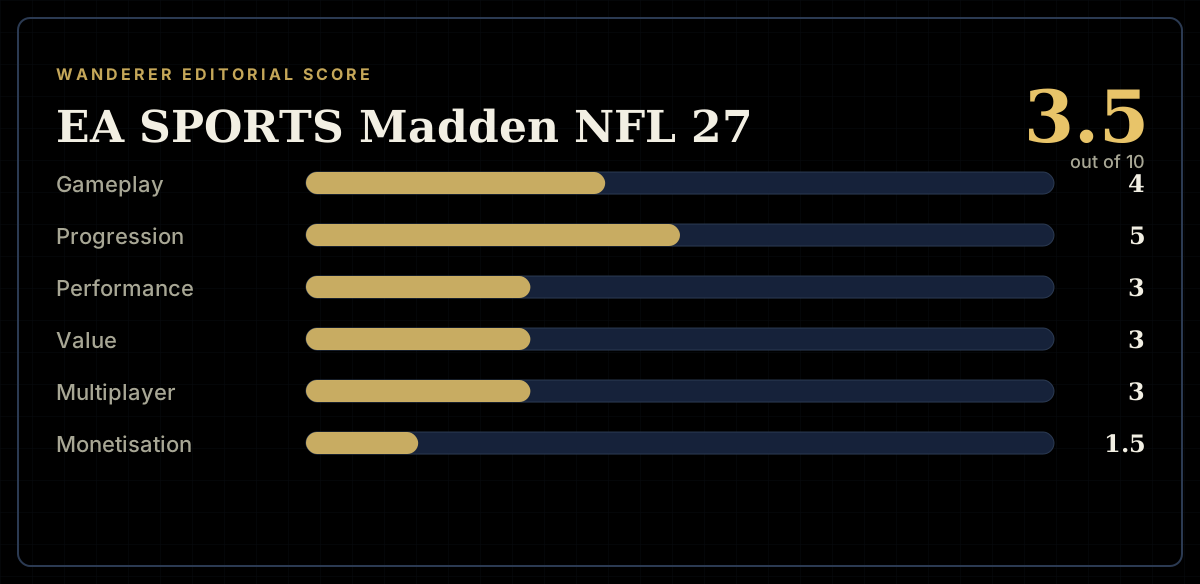
How the review scores each part of the gameWanderer Editorial -
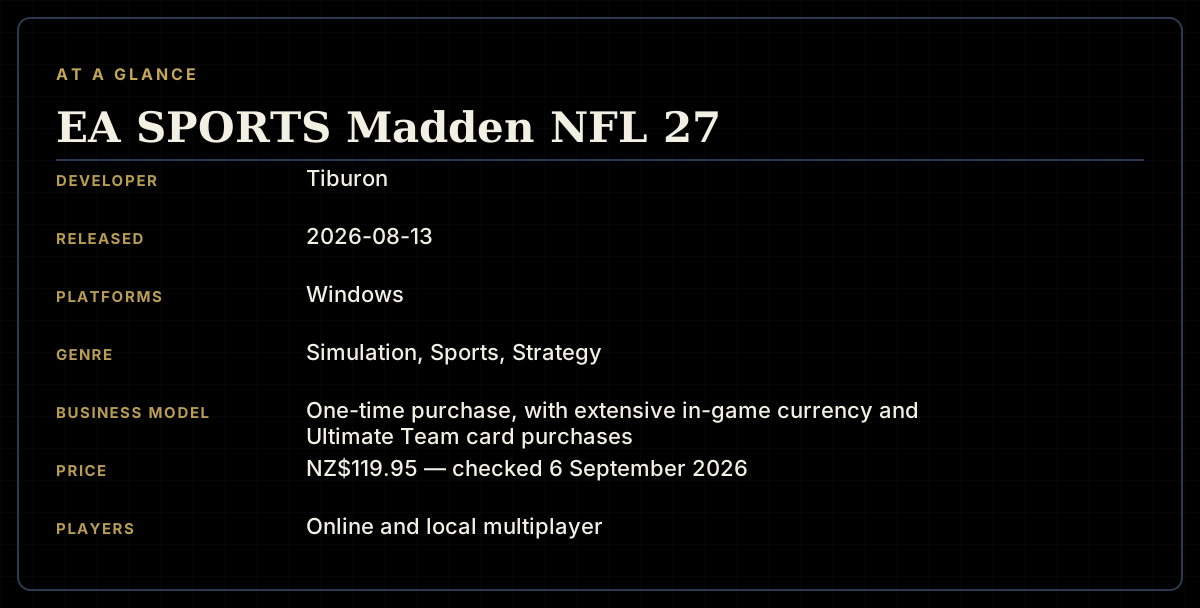
The essentials at a glanceWanderer Editorial -
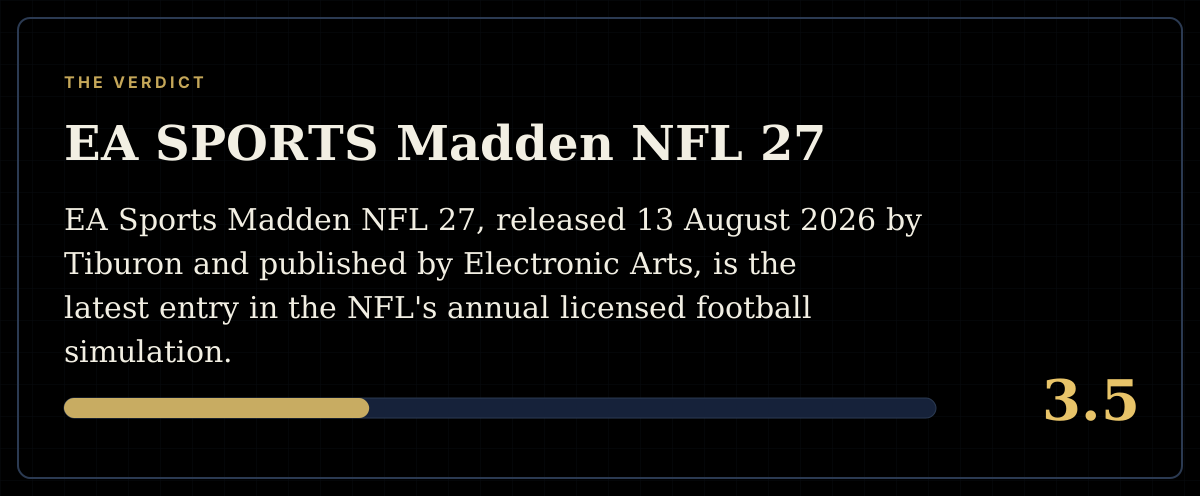
The short versionWanderer Editorial