Game review
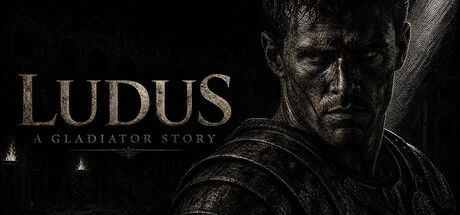
Ludus: A Gladiator Story
3.5 / 10
- Developer
- A Story Interactive
- Publisher
- A Story Interactive
- Released
- 30 July 2026
- Platforms
- Windows, macOS
- Genre
- RPG, Adventure, Simulation
- Monetisation
- One-time purchase, no in-game purchases listed
- Players
- Single-player
The short version
Ludus: A Gladiator Story, released 30 July 2026 by A Story Interactive, is a fully voiced branching narrative RPG following a captured warrior sold into Roman slavery and forced into the gladiatorial arena, promising over 1,800 choices and 19 endings. It sits Negative with English-speaking players, 9% across a small but unusually detailed sample of 11 reviews as of this check. The most detailed positive review in that sample, an extensive first-impressions writeup covering the opening chapters, praises genuinely mature, philosophically serious writing about slavery, identity and survival, awarding the prose a 10 out of 10 and choice design a 9.5. Set directly against that is an unusually specific, cross-language consensus among the remaining reviewers, writing independently in English, Russian and Portuguese, that the narrative collapses into disordered, inconsistent storytelling from roughly the third chapter onward — scenes playing in the wrong order, characters and plot references appearing before the content that would explain them, stat and origin choices failing to affect later events, and narrator voices shifting inconsistently mid-story. Nine of the eleven reviews in this sample independently describe this as the product of AI-generated content; this review has not investigated the game's development process and reports that as an overwhelming but unverified reviewer consensus, not a confirmed fact.
Biggest strengths
- The opening chapters draw genuinely detailed, specific praise for mature, restrained writing about slavery, identity and survival, with one extensive review awarding the prose a full 10 out of 10 and highlighting specific lines it considers genuinely insightful
- Early choice design is described, in that same detailed review, as shaping who the protagonist becomes as a person rather than simply branching plot outcomes, with none of the early decisions feeling like an obvious "good" or "evil" pick
- Historical atmosphere in the opening — Roman bureaucracy, slave markets, and the empire's administrative efficiency rather than Hollywood spectacle — draws specific praise for feeling genuinely grounded rather than generic
Biggest weaknesses
- An unusually specific, cross-language reviewer consensus — independently written in English, Russian and Portuguese — reports the narrative becoming disordered and incoherent starting around the third chapter, with scenes playing out of sequence, references to choices or origins the player hasn't actually made or played appearing early, and characters entering and exiting the story with no clear continuity
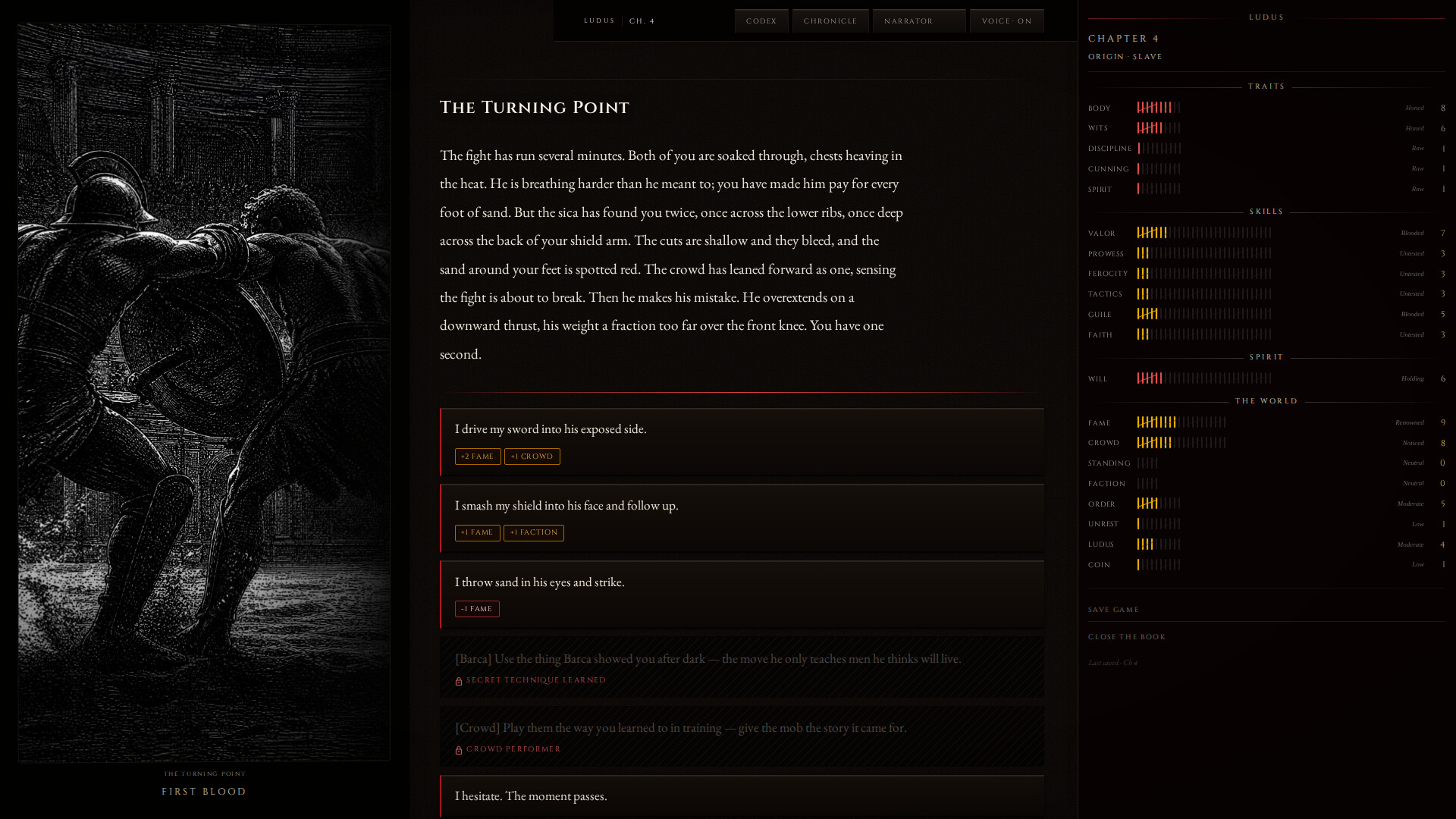
- Multiple reviewers report that character stats and starting-origin choices fail to meaningfully affect later outcomes, with one detailed review stating that approximately 99% of tracked stats never visibly influence anything
- Nine of the eleven reviews in this review's full sample independently attribute the above problems to AI-generated content, several using nearly identical language across different languages; this review has not verified this claim and reports it only as an overwhelming, but unconfirmed, reviewer consensus
Who it's for: Readers specifically curious about the philosophical, literary framing of its opening chapters, who are prepared for the strong possibility that quality collapses significantly before the story concludes.
Our recommendation: Wait for a substantial patch or a clearer resolution to the widely reported chapter-three quality collapse before buying; the opening hours are worth experiencing on their own merits, but a near-unanimous, detailed reviewer consensus says the rest of the game does not sustain that standard.
3.5 / 10
Introduction
Ludus: A Gladiator Story, released 30 July 2026 by A Story Interactive, sets out to be a fully-voiced branching narrative RPG built around a genuinely serious premise: a captured warrior, stripped of home and identity, sold into Roman slavery and forced to decide who he becomes as he's shaped into a gladiator. It sits Negative with English-speaking players — 9% across a small, 11-review sample as of this check — and reading through every review in that sample turns up something unusual: the negative consensus isn't vague disappointment. It's an unusually specific, cross-language agreement about exactly where and how the experience falls apart, set directly against one extensively detailed positive account of the game's opening hours.
An opening reviewers genuinely praise
The most detailed review in this sample is an extensive first-impressions writeup covering only the game's early chapters, and its praise is specific rather than generic. It awards the writing a full 10 out of 10, quoting individual lines it considers genuinely insightful about captivity and identity, and praises choice design for shaping who the protagonist becomes as a person rather than simply branching which plot beats occur — none of the early decisions, that reviewer notes, feel like an obvious "good" or "evil" pick. Historical atmosphere draws similar specific praise: Roman bureaucracy, slave markets and administrative efficiency are described as feeling grounded rather than like "Hollywood Rome." That reviewer explicitly frames their score as provisional, based only on the opening portion, and states plainly that the rest of the game — gladiator training, arena combat, character progression — will determine whether that standard holds.
A specific, cross-language consensus that it doesn't
The remaining ten reviews in this sample answer that question, and they answer it with unusual consistency given how few of them there are. Writing independently in English, Russian and Portuguese, reviewers describe the same specific pattern: the story becomes disordered and incoherent starting around the third chapter, with scenes appearing to play in the wrong sequence — one reviewer describes a fight scene followed abruptly by a meal, another describes "the night before the rebellion" playing right before an unrelated confrontation — and references to plot content or origin choices the player hasn't actually reached yet appearing prematurely. Characters are reported entering and leaving the narrative without clear continuity. One detailed review states that character stats and the player's chosen starting origin fail to meaningfully affect later outcomes at all, estimating that roughly 99% of tracked stats never visibly influence anything, and separately reports event outcomes appearing before the choices that were supposed to lead to them.
An overwhelming, unverified diagnosis
What makes this pattern unusual isn't just its consistency — it's that nine of the eleven reviews in this full sample independently reach the same specific explanation for it: that the later content is AI-generated, and that this is the root cause of the disordered pacing, inconsistent characters and non-functional choice tracking. Reviewers use strikingly similar language across different languages to make this claim, and one goes further, arguing that the narrator's voice work shifts inconsistently within scenes, including voices they describe as noticeably "robotic" — inconsistent with a game advertising full voice acting as a headline feature. This review has not investigated A Story Interactive's development process, has no access to the game's production history, and cannot confirm or deny this diagnosis. What can be reported factually is the diagnosis's near-unanimity across this sample and its specificity — this isn't a single reviewer's vague suspicion, but the same explanation reached independently, in different languages, by the overwhelming majority of people who reviewed the game.
A localization gap on top of everything else
One further, more concrete problem compounds the picture for non-English players. Ludus lists full voice acting only for English, with several other languages, including Russian, offered as text-only translations. At least one Russian-language reviewer reports that translation is machine-generated to a degree that makes the text genuinely difficult to follow, despite expressing real interest in the underlying choice-and-consequence systems — comparing them favourably to another well-regarded narrative RPG before concluding the localization quality made the comparison moot in practice.
A marketing promise the reviewer sample says goes unmet
The store page advertises four distinct origins, over 1,800 choices, and 19 possible endings — a substantial scope for a narrative RPG at this price. Set against the reviewer consensus above, that scope becomes a specific liability rather than a selling point: if stat tracking and origin selection stop meaningfully affecting the story by the third chapter, as multiple reviewers report, then the promised breadth of choice is arguably decorative for most of the game's length rather than structurally real. One reviewer makes this connection directly, noting that references to origins they hadn't actually chosen or played began appearing as early as the second chapter — a concrete symptom of exactly this disconnect between the advertised branching structure and what the game currently delivers.
Even the strongest praise flags a warning sign
It's worth noting that even the most detailed positive review in this sample — the one awarding the writing a 10 out of 10 — includes a small but telling caveat: a minor historical inconsistency involving Roman roads, where the narrative appears to place a journey to Rome along a route that, historically, ran the opposite direction. That reviewer treats it as a trivial, easily fixed wording issue rather than a real complaint, and in isolation it would be exactly that. In the context of the disordered chronology reported everywhere else in this sample, though, it reads less like an isolated slip and more like the first, mildest visible edge of the same underlying consistency problem that reviewers say becomes severe later in the game.
Final Verdict
Ludus: A Gladiator Story has, by the most detailed account in this review's research, a genuinely strong opening: serious, specific, philosophically engaged writing about slavery and identity that earned real, detailed praise on its own merits. What this review cannot responsibly set aside is that this appears to be true only briefly — an unusually specific, cross-language reviewer consensus reports the experience collapsing into incoherent, non-functional storytelling for most of its remaining length, widely but unprovably attributed to AI-generated content standing in for the care evident in its opening chapters. At full price, with the overwhelming majority of this small sample reporting a game that falls apart well before its stated 19 endings, this is a purchase to wait on rather than one to make on the strength of its first few hours alone.
Pros and cons
Pros
- The opening chapters draw genuinely detailed, specific praise for mature, restrained writing about slavery, identity and survival, with one extensive review awarding the prose a full 10 out of 10 and highlighting specific lines it considers genuinely insightful
- Early choice design is described, in that same detailed review, as shaping who the protagonist becomes as a person rather than simply branching plot outcomes, with none of the early decisions feeling like an obvious "good" or "evil" pick
- Historical atmosphere in the opening — Roman bureaucracy, slave markets, and the empire's administrative efficiency rather than Hollywood spectacle — draws specific praise for feeling genuinely grounded rather than generic
- The premise itself, presenting gladiators as people stripped of identity and culture rather than as action heroes, is credited as a genuinely different angle on well-worn subject matter
Cons
- An unusually specific, cross-language reviewer consensus — independently written in English, Russian and Portuguese — reports the narrative becoming disordered and incoherent starting around the third chapter, with scenes playing out of sequence, references to choices or origins the player hasn't actually made or played appearing early, and characters entering and exiting the story with no clear continuity
- Multiple reviewers report that character stats and starting-origin choices fail to meaningfully affect later outcomes, with one detailed review stating that approximately 99% of tracked stats never visibly influence anything
- Nine of the eleven reviews in this review's full sample independently attribute the above problems to AI-generated content, several using nearly identical language across different languages; this review has not verified this claim and reports it only as an overwhelming, but unconfirmed, reviewer consensus
- Narrator voice work is reported as inconsistent within scenes, including voices reviewers describe as noticeably "robotic," compromising the fully-voiced presentation the game advertises as a key feature
- At least one Russian-language reviewer reports the non-English localization is machine translated to a degree that makes the text difficult to follow, despite genuine interest in the game's underlying systems
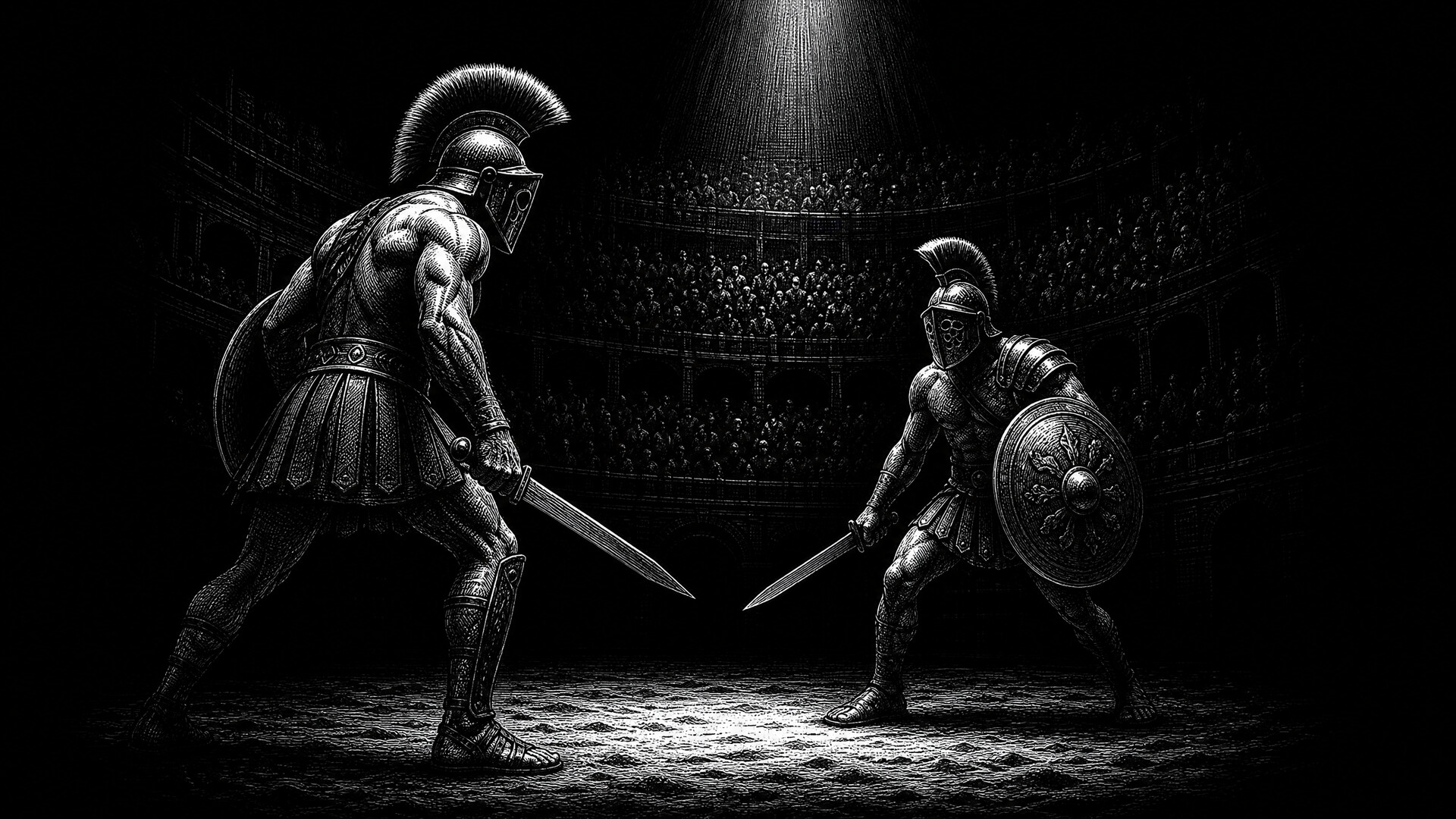
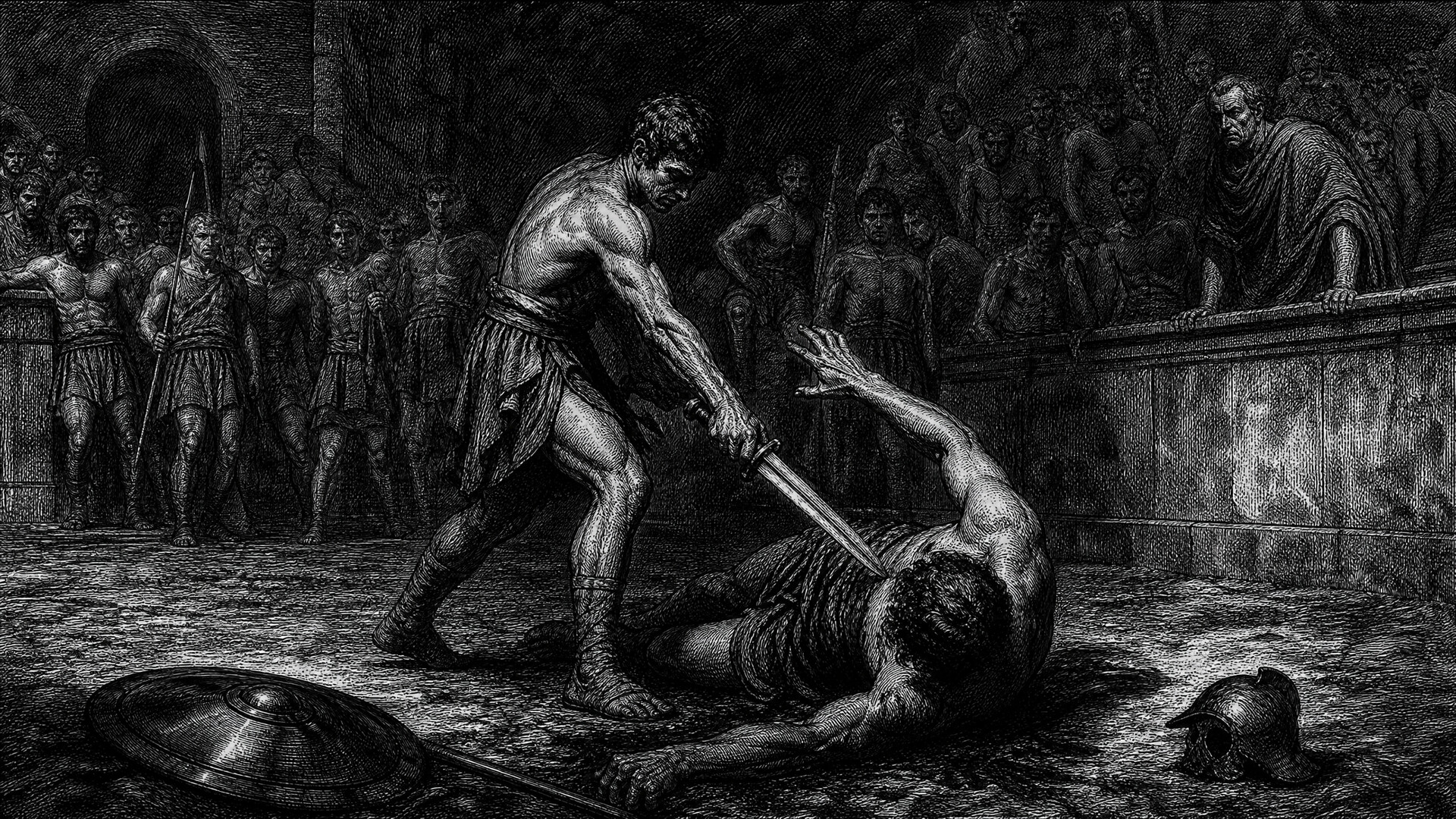
- Illustrations accompanying the story are described by more than one reviewer as feeling random or inconsistent with the scenes they're meant to depict
Screenshots
-
Ludus: A Gladiator StoryImage: A Story Interactive via Steam -
Ludus: A Gladiator StoryImage: A Story Interactive via Steam -
Ludus: A Gladiator StoryImage: A Story Interactive via Steam -
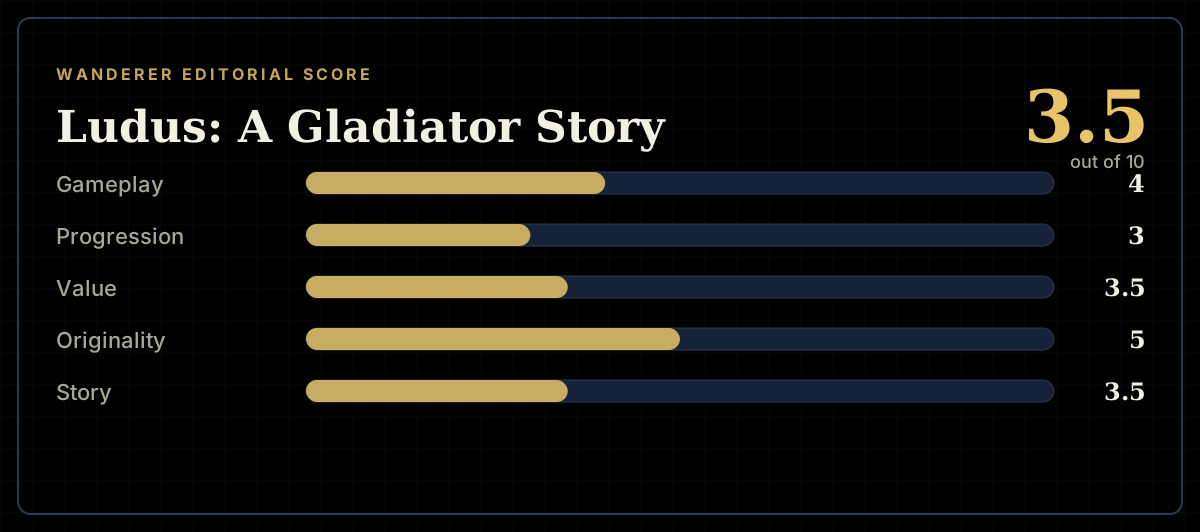
How the review scores each part of the gameWanderer Editorial -
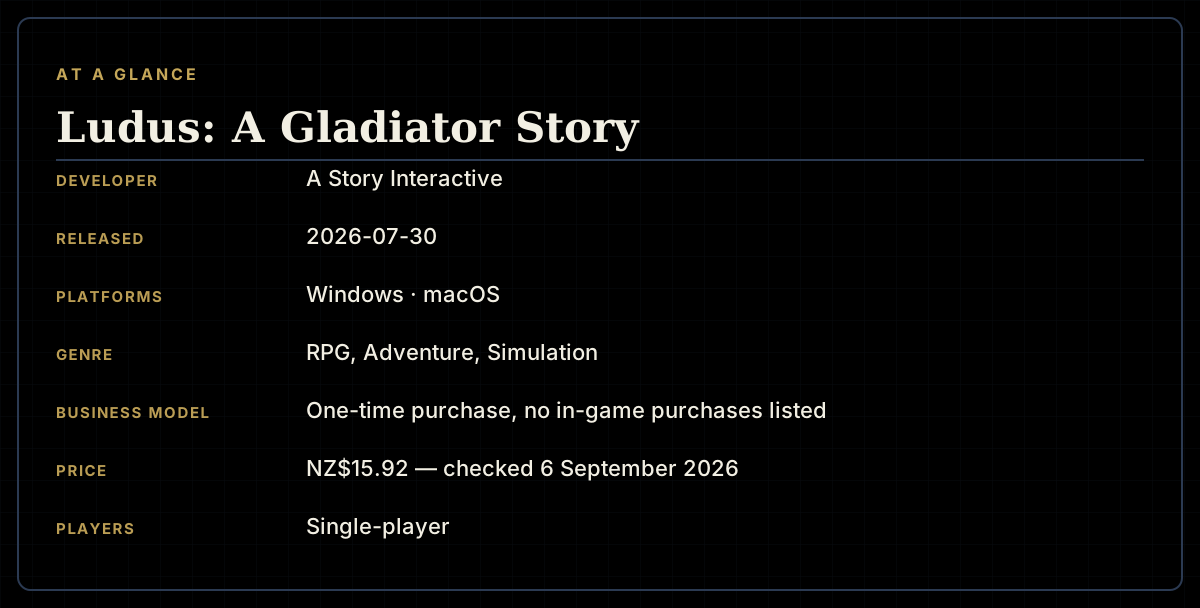
The essentials at a glanceWanderer Editorial -
The short versionWanderer Editorial