Game review
Limbus Company
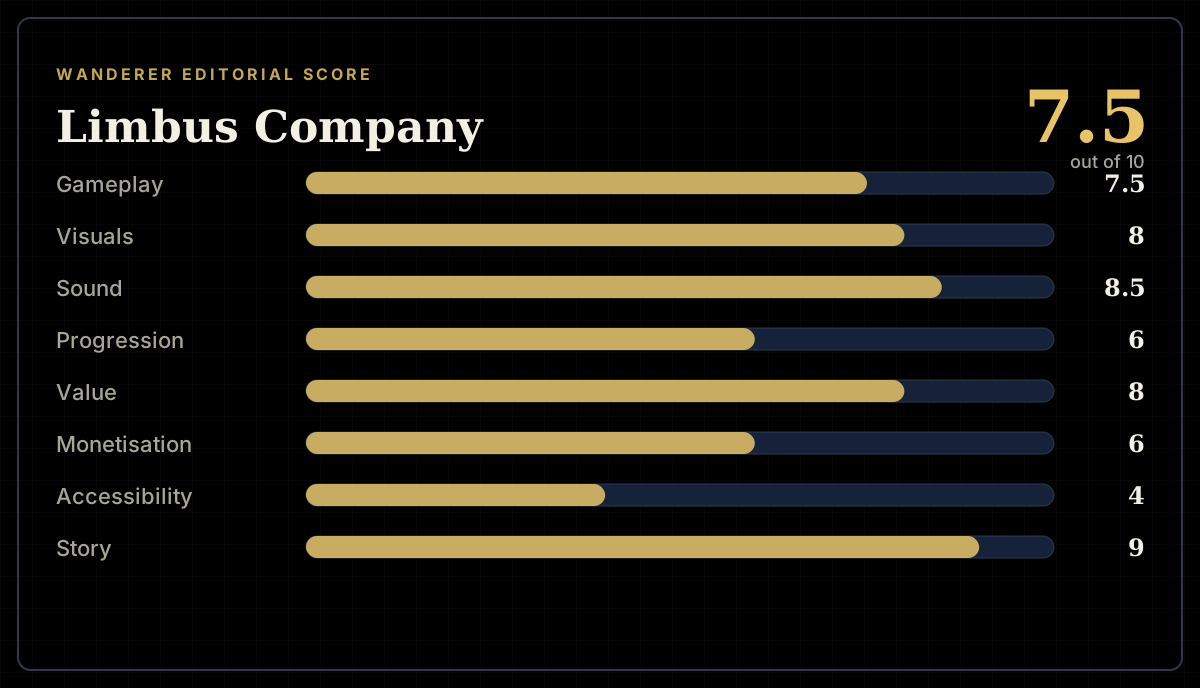
7.5 / 10
- Developer
- ProjectMoon
- Publisher
- ProjectMoon
- Released
- 26 February 2023
- Platforms
- Windows, iOS, Android
- Genre
- Turn-Based RPG
- Monetisation
- Free to play with gacha. Identities and E.G.O — the characters and abilities — are pulled from banners. The campaign itself is free.
- Players
- Single-player only
The short version
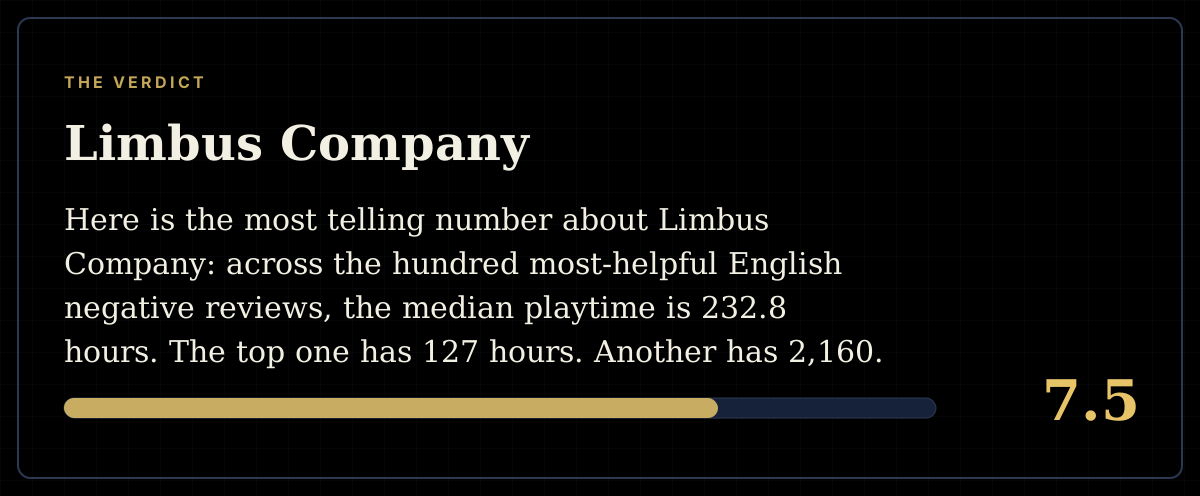
Here is the most telling number about Limbus Company: across the hundred most-helpful English negative reviews, the median playtime is 232.8 hours. The top one has 127 hours. Another has 2,160. People do not accumulate a working month inside a game they dislike — what this corpus actually records is a long, complicated, unusually literate argument between a studio and an audience that will not leave.
It's a turn-based RPG where twelve Sinners borrowed from world literature — Dante, Faust, Meursault, Don Quixote, Heathcliff — fight through the ruins of a corporate hellscape, and where almost every attack resolves on a coin flip. The writing is genuinely ambitious. The combat is denser than it first appears. And the whole thing sits inside a gacha, made by a studio whose two previous games you simply bought.
Biggest strengths
- Story and characterisation well beyond what the gacha format usually attempts, drawing openly on world literature
- The clash system has real depth once you understand how skill order, sanity and coin odds interact
- Extraordinary support — updates roughly every two weeks for three and a half years, plus prompt known-issue notices and hotfixes
Biggest weaknesses
- Combat resolves on coin flips, and losing a run to variance rather than decisions is a recurring frustration
- Reviewers consistently say it gives less tactical control than the studio's earlier premium games
- The time cost is heavy and the backlog facing a new player in 2026 is daunting
Who it's for: Players who want a free RPG with real literary ambition and don't mind a daily-ish commitment measured in months. Best for people who enjoy systems mastery; worst for anyone who wants to buy a story once and finish it.
Our recommendation: Free, so try it — but understand you're starting a long-term relationship, not a game you'll complete in a fortnight. If you're prone to motion sickness, check the screen-shake complaints first, because there's still no way to turn it off.
7.5 / 10
Most negative reviews are written by people who bounced. Limbus Company's are written by people who stayed for a year.
The median playtime across its hundred most-helpful English negative reviews is 232.8 hours. One runs to 2,160 hours and opens with "I HATE GAMES AS A SERVICE" in capitals before conceding, twice, that the story is great. Another, at 861 hours, describes playing it as "sitting on a chair that hits your balls with a hammer whenever you lose a coin flip" — which is a complaint, a joke, and a fairly precise description of the combat system all at once.
You cannot read this game's reviews as a verdict on quality. They're a record of a long marriage.
What it actually is
You manage twelve Sinners, each lifted from a work of world literature — Dante is your manager, and the roster runs through Faust, Meursault, Don Quixote, Heathcliff and others — sent into the buried ruins of a corporate dystopia to recover something valuable. The tone is dense, allusive and much more serious about its source material than a free anime RPG has any obligation to be.
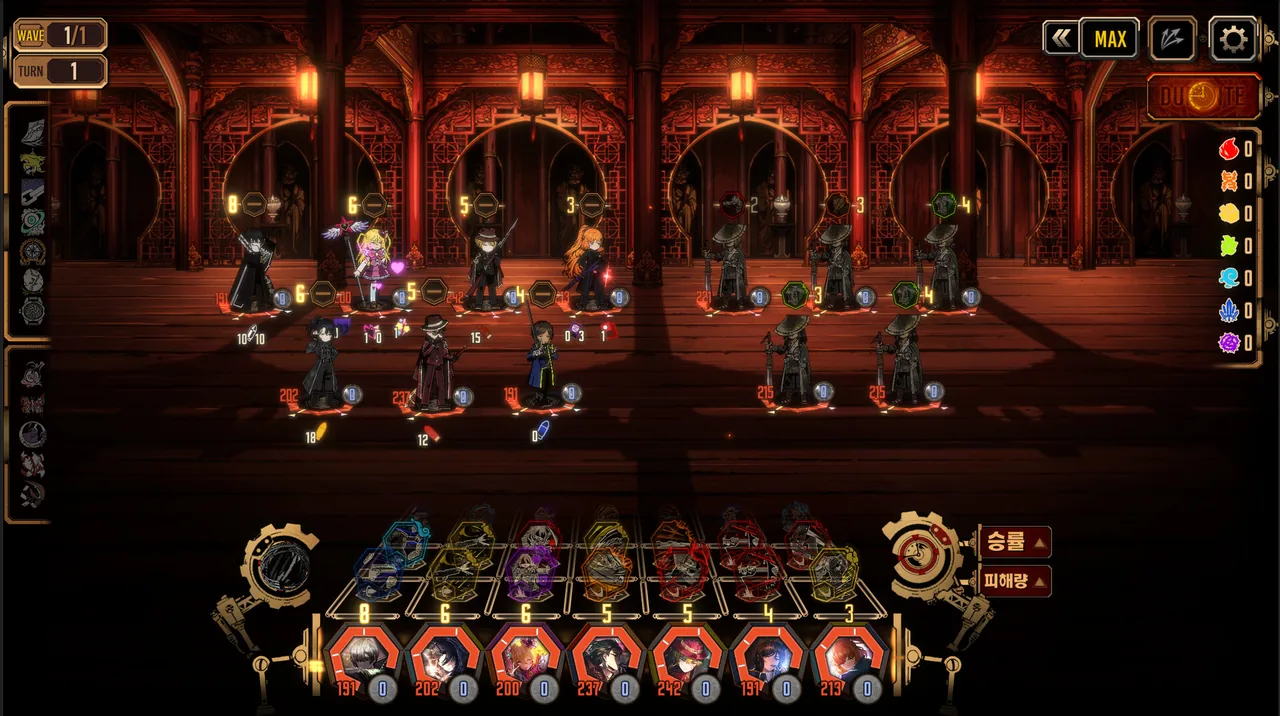
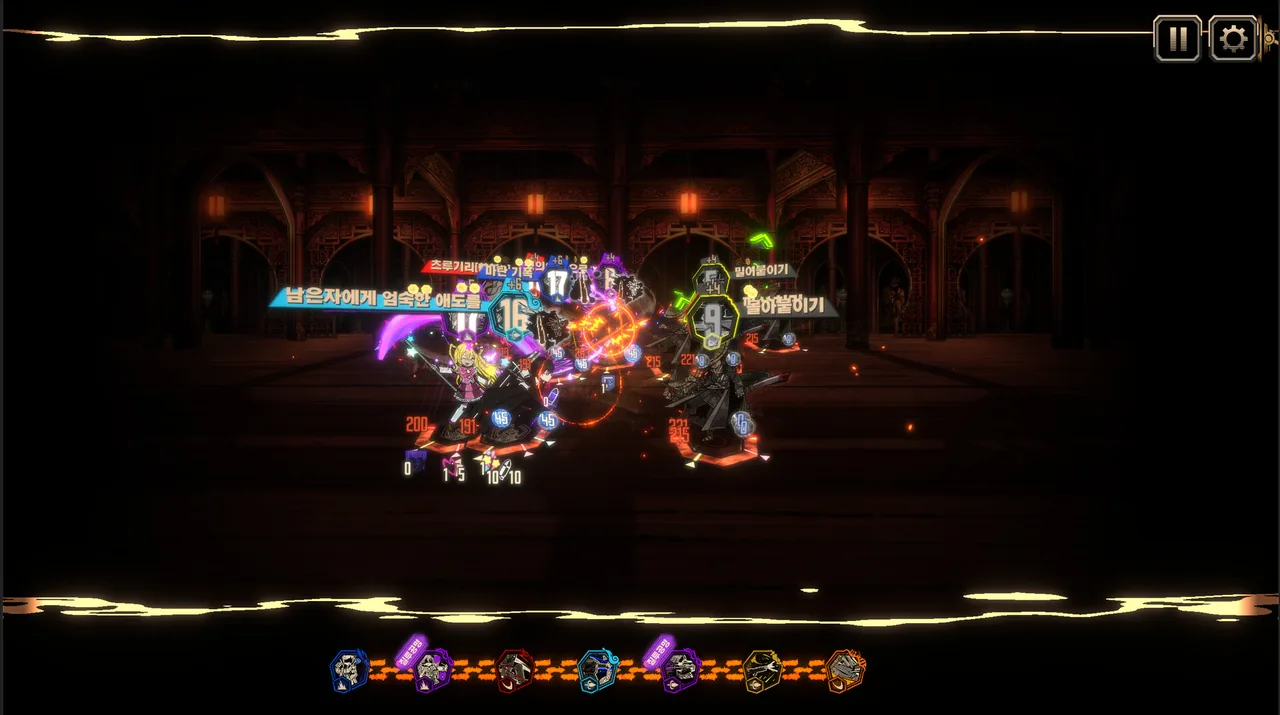
Combat is where it gets unusual. Each turn you assign skills, and attacks resolve through "clashes" where opposing skills meet and each side flips coins weighted by stats and sanity. Win the clash, your attack lands. Lose it, theirs does. Layered on top are damage types, status effects and a sanity system that shifts your odds as a fight goes on.
It is genuinely deep, and it is also, irreducibly, a coin flip. That tension drives more argument than anything else in the game.
The premium studio problem
ProjectMoon made Lobotomy Corporation and Library of Ruina first, and both were games you bought once. That history sits underneath a large share of the criticism, and it's the most interesting thing about this game's reception.
"The combat system LOOKS like Ruina's," writes a reviewer who loved the earlier games, "but imagine if it was Ruina's, but you can only pick out of" a fraction of the options. Another puts it more bluntly: "Gameplay has taken a deep dive since Ruina, with far less control over battles than its predecessor, a very limited set of abilities per character." The charge isn't that Limbus is bad — it's that a studio known for handing players enormous tactical control moved to a format that rations it, because rationing is how the format works.
That's the honest core of the free-to-play trade, stated more clearly here than in most games I've reviewed. You get an enormous amount for nothing. What you give up is the density of agency a sixty-dollar game can afford to give you on day one.
Time is the real price
The gacha is not the thing most long-term reviewers complain about. Time is.
A 295-hour player who explicitly says the game isn't bad still can't recommend it, "because as a new player" it "doesn't respect the time" you have. That's the sharpest version of a problem every long-running live-service RPG eventually gets: three and a half years of accumulated content, systems and meta sit between a newcomer and the part everyone's talking about. Recent negative reviewers name the same thing — grinding, escalating difficulty they read as pressure to spend, and a daily rhythm that becomes an obligation.
For a reader deciding whether to start in 2026, that's the honest warning. This is not a game you try. It's a game you take up.
Where the score comes from, and where it doesn't
Two patterns are worth separating out.
The 2023 cluster. 61 of the hundred most-helpful English negatives were written in 2023, and the single most-upvoted one isn't about the game at all — it concerns the studio's handling of an employee's dismissal that year, and objects that ProjectMoon's statement about it was published in Korean only, leaving international players without an explanation. I'm not going to adjudicate a contested employment dispute from a review corpus. What's fair to report is that a company-conduct controversy is the highest-voted criticism this game has, that it drove a large share of its lifetime negatives, and that the volume dropped sharply afterwards — 11 negatives in 2024, 20 in 2025, 8 so far in 2026.
The language split. English sits at 92.9% of 48,743 reviews and Japanese at 90.2%, while Korean is 84.1% and Simplified Chinese 79.5% of 26,964 — a thirteen-point spread between the highest and lowest cohorts. As with several games in this library, the badge you see averages audiences having noticeably different experiences, and an English-speaking reader should weight the English figure.
An accessibility failure worth naming
One complaint deserves lifting out because it's specific, recent and unresolved. A reviewer with 31 hours reports that excessive screen shake and camera movement makes them physically ill, that they could find no option to disable it, and that support did not respond. It carries 436 helpful votes, which is a lot of people recognising the problem.
Screen shake toggles are close to a solved problem in game development. For a studio shipping updates every fortnight, three and a half years in, not having one is a choice — and it's the reason this review scores accessibility as harshly as it does.
The support is genuinely exceptional
Set against all of that, ProjectMoon's cadence is remarkable. Scheduled updates land roughly every two weeks — 16 July, 23 July, 30 July and 6 August in the stretch I looked at — each bringing new Identities, E.G.O abilities or story content, with preview posts, known-issue notices published within days, and hotfix ETAs communicated openly. There was even a notice correcting the phrasing of a character's passive description.
That is a studio paying attention, and it shows in current sentiment: 93 of the last 100 English reviews are positive, with a median playtime of 106 hours. Three and a half years after launch, people are still starting and still staying.
The verdict
Limbus Company earns a 7.5, and it's the sort of 7.5 that will annoy both camps.
Its writing is the best argument for taking gacha games seriously as a storytelling medium, its combat has more depth than its coin flips suggest, it costs nothing, and it's supported with a diligence most premium games never manage. If the literary premise appeals, there is nothing else quite like it.
What holds it back is everything the format imposes. Variance decides fights you played well. Progress is metered. A new player in 2026 faces a wall of accumulated content. And a studio that once sold complete, generous, player-controlled games now sells characters — which its most devoted players, the ones with a thousand hours, have never entirely forgiven and keep saying so at length.
Play it if you want a long project and a genuinely good story. Skip it if what you want is Slay the Spire's clean determinism or a game you can finish. And if you're weighing it against Honkai: Star Rail or Genshin Impact, understand the trade: Limbus is poorer, rougher and far less accommodating, and it's writing about things the others wouldn't attempt.
Pros and cons
Pros
- Story and characterisation well beyond what the gacha format usually attempts, drawing openly on world literature
- The clash system has real depth once you understand how skill order, sanity and coin odds interact
- Extraordinary support — updates roughly every two weeks for three and a half years, plus prompt known-issue notices and hotfixes
- Costs nothing to experience the entire main campaign
- A ferociously engaged community that keeps playing for hundreds and sometimes thousands of hours
Cons
- Combat resolves on coin flips, and losing a run to variance rather than decisions is a recurring frustration
- Reviewers consistently say it gives less tactical control than the studio's earlier premium games
- The time cost is heavy and the backlog facing a new player in 2026 is daunting
- No option to disable screen shake, with reviewers reporting motion sickness and unanswered support requests
- Interface is the single most-cited complaint in the critical corpus
Screenshots
-

Limbus CompanyImage: ProjectMoon via Steam -
Limbus CompanyImage: ProjectMoon via Steam -
Limbus CompanyImage: ProjectMoon via Steam -
How the review scores each part of the gameWanderer Editorial -
The short versionWanderer Editorial