Game review
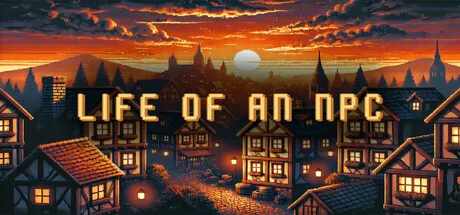
Life of an NPC
5 / 10
- Developer
- Max Loh
- Publisher
- Max Loh
- Released
- 3 March 2025
- Platforms
- Windows
- Genre
- AI Town Simulator
- Monetisation
- One-time purchase, no in-game store, requires the player's own AI model access
- Players
- Single-player only
The short version
Life of an NPC is a top-down AI-directed town simulator from solo developer Max Loh, entering Early Access 3 March 2025 for NZ$21.99. Its premise is genuinely unusual for this library: each NPC's goals, reactions and behaviour are generated by a language model the player connects themselves, local or via API, rather than by hand-authored scripts. It holds a Mixed rating — 11 of 21 all-language reviews positive — and this review reads every single one, since the corpus is small enough to cover completely. What emerges is a genuinely fascinating technical experiment several reviewers call unlike anything else available, undercut by a starvation bug that can kill NPCs outright, thin content beyond its initial novelty, and a real, unusually candid complication documented directly on the game's own store page: the developer maintains three separate AI-driven projects and openly states he prioritises whichever one currently shows the most promise, a message last updated in July 2025 that names a different game as his current focus.
Biggest strengths
- The core concept draws real, specific praise as something reviewers say they haven't seen elsewhere — NPCs that form their own goals and react to events and each other using genuine language-model reasoning rather than scripted behaviour trees
- Several reviewers describe genuinely funny, unscripted emergent moments arising from the simulation, one describing an asylum scenario where NPCs developed their own escalating behaviours entirely from the AI's interpretation of the setup
- The developer has responded to specific technical problems when he has returned to the project, including a June 2026 update aimed specifically at the starvation bug several reviewers flagged
Biggest weaknesses
- A starvation bug is a specific, recurring complaint: NPCs can fail to feed themselves and die as a result, reported as recently as May 2026, undermining the "watch a society simulate itself" premise the game is built around
- Content is thin beyond the initial novelty, with multiple reviewers across 2025 and 2026 describing little to do once the first few sessions of watching NPC behaviour wear off
- The game's own store page states plainly, in a message last updated July 2025, that continued updates "are not guaranteed" and that the developer currently prioritises a different one of his three AI-driven projects — a rare degree of upfront honesty worth crediting, but also a real signal about the risk of buying in
Who it's for: Players specifically curious about language-model-driven emergent simulation as a concept, comfortable connecting their own local or API-based AI model; a poor fit for anyone wanting a polished, content-rich town sim or guaranteed ongoing development.
Our recommendation: A genuinely interesting technical curiosity rather than a recommendable game in its current state — worth the price only for readers specifically fascinated by LLM-driven NPC behaviour, and only with clear eyes about the developer's own stated uncertainty about its future.
5 / 10
Introduction
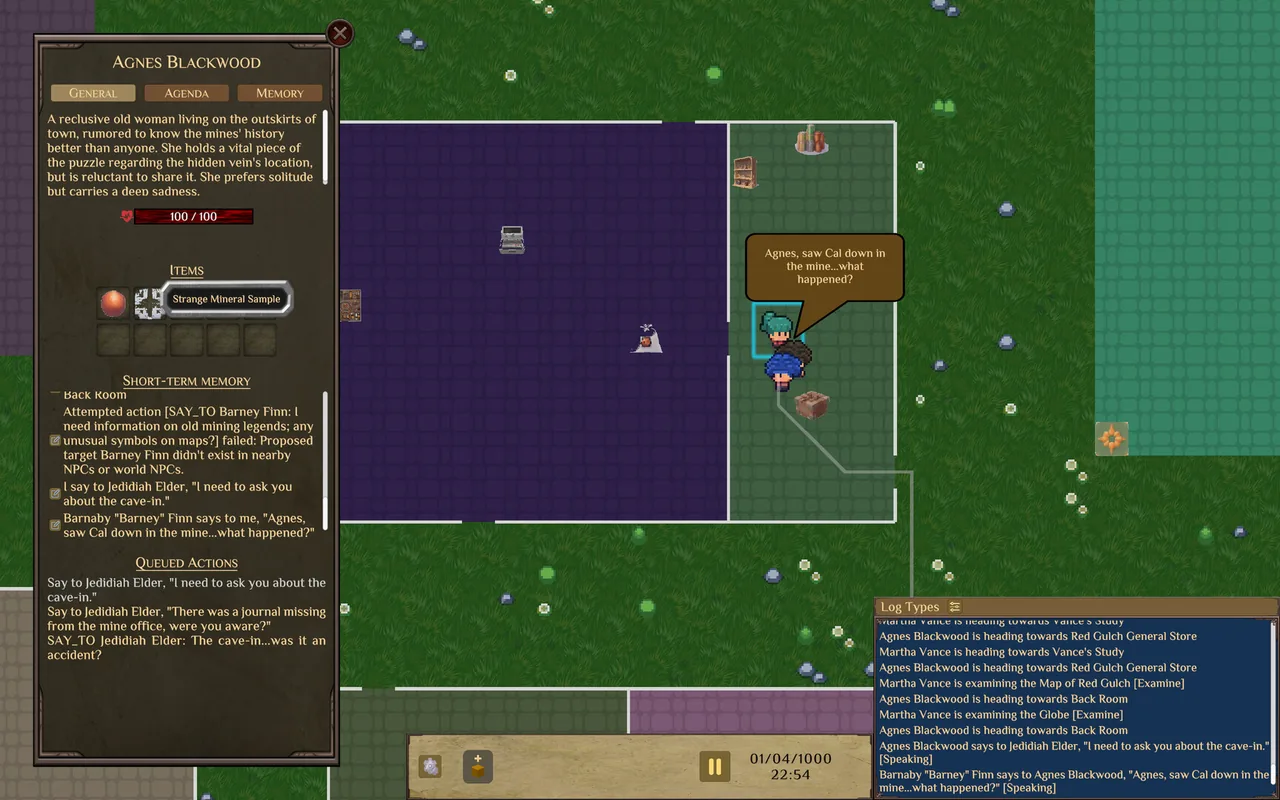
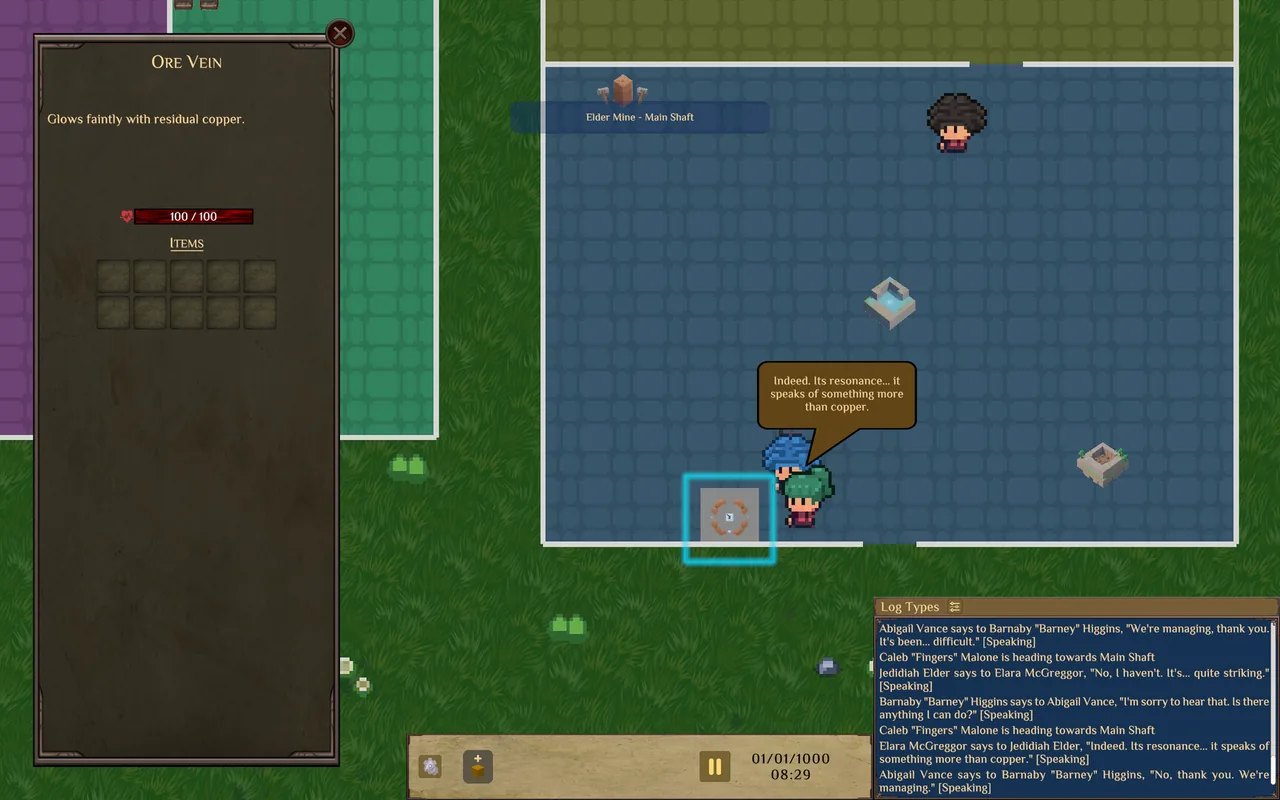
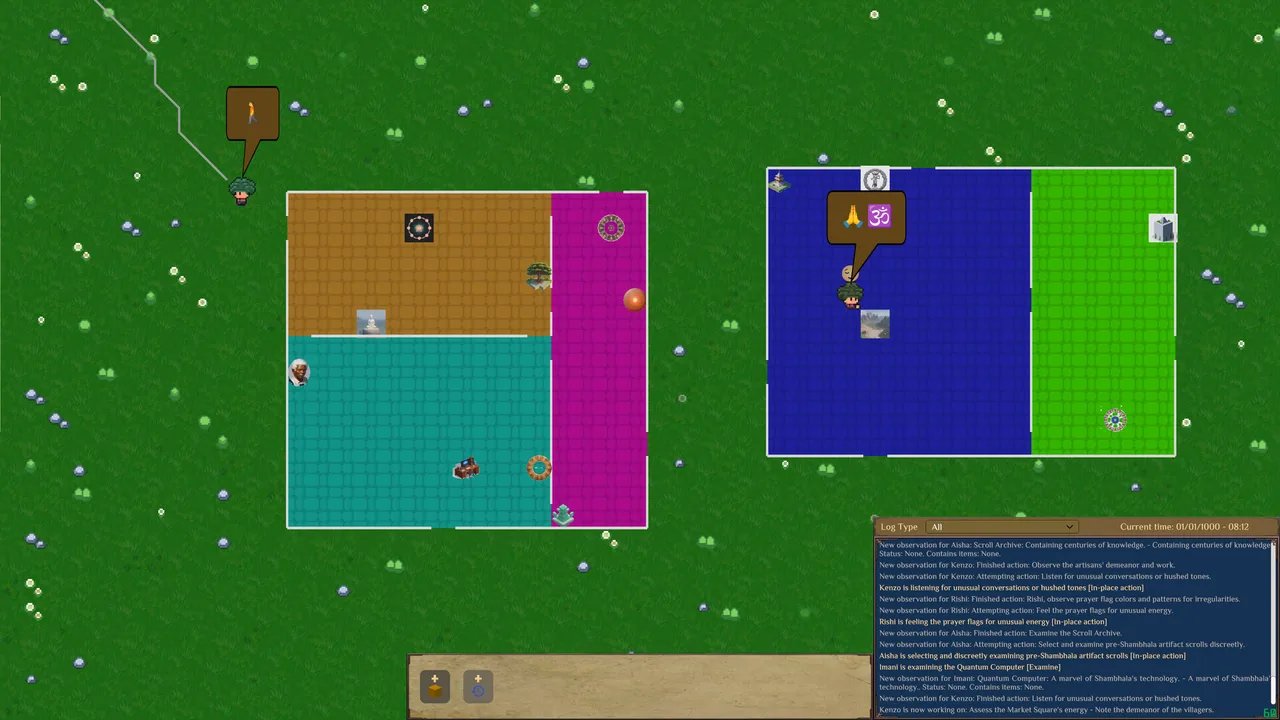
Life of an NPC asks a genuinely unusual question for a colony sim: what happens if every character's goals, decisions and reactions come from a language model rather than a hand-authored behaviour tree? Solo developer Max Loh entered it into Early Access 3 March 2025 for NZ$21.99, and the premise is exactly as literal as it sounds — the player connects their own AI model, local or via API, and watches a procedurally generated town of NPCs pursue their own goals, interact with objects, and respond to whatever the player introduces into their world. It holds a Mixed rating from a genuinely tiny public record — 11 of 21 all-language reviews positive — small enough that this review reads every single one rather than sampling, which this outlet flags explicitly whenever a corpus is small enough to allow it.
A genuinely novel experiment
Read the full review record and the praise, where it exists, is specific rather than generic. "Very interesting and in-depth concept of a AI colony simulator," reads one, while another compares it to "the foundation of the AI Dungeon/AI roguelike setup," crediting genuine emergent depth from the underlying language-model reasoning. The funniest account in the whole corpus describes building an asylum scenario where "the doctor conducted experiments, and the patients were constantly drawing symbols and suffering from five mental debuffs at the same time" — a genuinely unscripted outcome the reviewer clearly didn't engineer directly, which is exactly the kind of emergent behaviour the concept promises. Several reviewers frame the whole thing less as a finished game and more as a fascinating tech demo worth experiencing on those terms specifically.
Real, specific problems
Set against that, this review's full read of the negative sample finds concrete, reproducible complaints rather than vague disappointment. A starvation bug recurs across multiple reviews, including one from as recently as May 2026: NPCs can fail to feed themselves and simply die as a result, which undercuts the core "watch a society sustain itself" premise directly. Content beyond the initial novelty is thin — several reviewers, across a wide date range from 2025 into 2026, describe running out of things to do once the first sessions of watching NPC behaviour wear off. And setup itself is a real barrier: one reviewer specifically notes that players who aren't comfortable downloading and running AI models locally will struggle before the simulation even starts, since the free hosted AI options are described as noticeably slower than a self-hosted or paid alternative.
An unusually honest complication
Here's the detail that makes this review's job more straightforward than most: Life of an NPC's own store page states its situation directly, in the developer's own words, in a message dated July 2025. Max Loh maintains three separate AI-driven projects — AI Roguelite, AI Roguelite 2D, and Life of an NPC — and says plainly that he "will always prioritize whichever game seems to have the most potential to become great," naming AI Roguelite (the original) as his current focus at the time of writing. That's not evasive marketing language; it's about as candid a statement of real risk as a developer can put on a storefront, and it corroborates directly what several reviewers independently concluded — one flatly calling the project "abandoned" as of a September 2025 review, another in April 2026 saying the same. This review found that characterisation slightly too strong: Steam's news feed shows a further update in June 2026, specifically targeting the starvation bug several reviewers had flagged, meaning the project isn't fully static even during its long quiet stretches. But the underlying honesty holds either way — this is explicitly a side project competing for its own developer's attention, and buyers should treat that as a real, stated fact rather than reading too much promise into any single update.
Final Verdict
Life of an NPC is a genuinely interesting proof of concept — language-model-driven NPCs producing real, unscripted emergent behaviour is something this review's full read of its tiny public record confirms multiple independent reviewers found fascinating, sometimes even funny, in ways scripted simulations rarely manage. It is not, in its current state, a recommendable game for anyone wanting sustained content or confidence in its future: a real starvation bug undercuts its central premise, there's little to do once the novelty passes, and the developer has said as plainly as a store page allows that this project competes with two others for his limited time and currently isn't winning. Buy it as what it is — a curiosity worth the price specifically for readers fascinated by what an LLM can do when handed a small simulated society — and not as a game with a guaranteed road ahead.
Pros and cons
Pros
- The core concept draws real, specific praise as something reviewers say they haven't seen elsewhere — NPCs that form their own goals and react to events and each other using genuine language-model reasoning rather than scripted behaviour trees
- Several reviewers describe genuinely funny, unscripted emergent moments arising from the simulation, one describing an asylum scenario where NPCs developed their own escalating behaviours entirely from the AI's interpretation of the setup
- The developer has responded to specific technical problems when he has returned to the project, including a June 2026 update aimed specifically at the starvation bug several reviewers flagged
- No hidden monetisation beyond the purchase price — the game requires the player's own AI model access rather than selling AI usage as an in-game service
Cons
- A starvation bug is a specific, recurring complaint: NPCs can fail to feed themselves and die as a result, reported as recently as May 2026, undermining the "watch a society simulate itself" premise the game is built around
- Content is thin beyond the initial novelty, with multiple reviewers across 2025 and 2026 describing little to do once the first few sessions of watching NPC behaviour wear off
- The game's own store page states plainly, in a message last updated July 2025, that continued updates "are not guaranteed" and that the developer currently prioritises a different one of his three AI-driven projects — a rare degree of upfront honesty worth crediting, but also a real signal about the risk of buying in
- Setup friction is real for players without existing AI infrastructure — connecting a local model or paid API key is a genuine technical barrier one reviewer specifically flags as a non-trivial requirement before the game does anything at all
Screenshots
-
Life of an NPCImage: Max Loh via Steam -
Life of an NPCImage: Max Loh via Steam -
Life of an NPCImage: Max Loh via Steam -
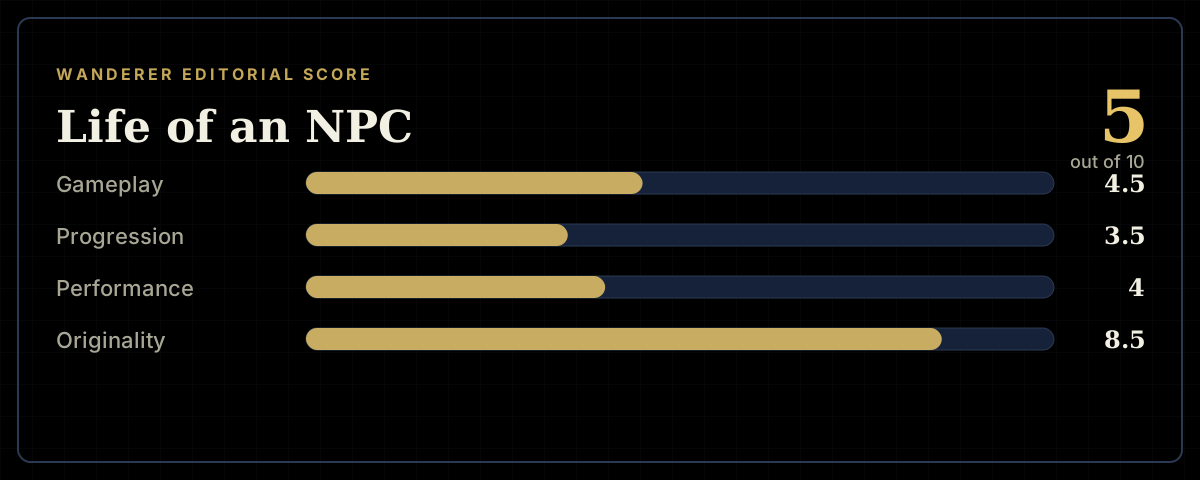
How the review scores each part of the gameWanderer Editorial -
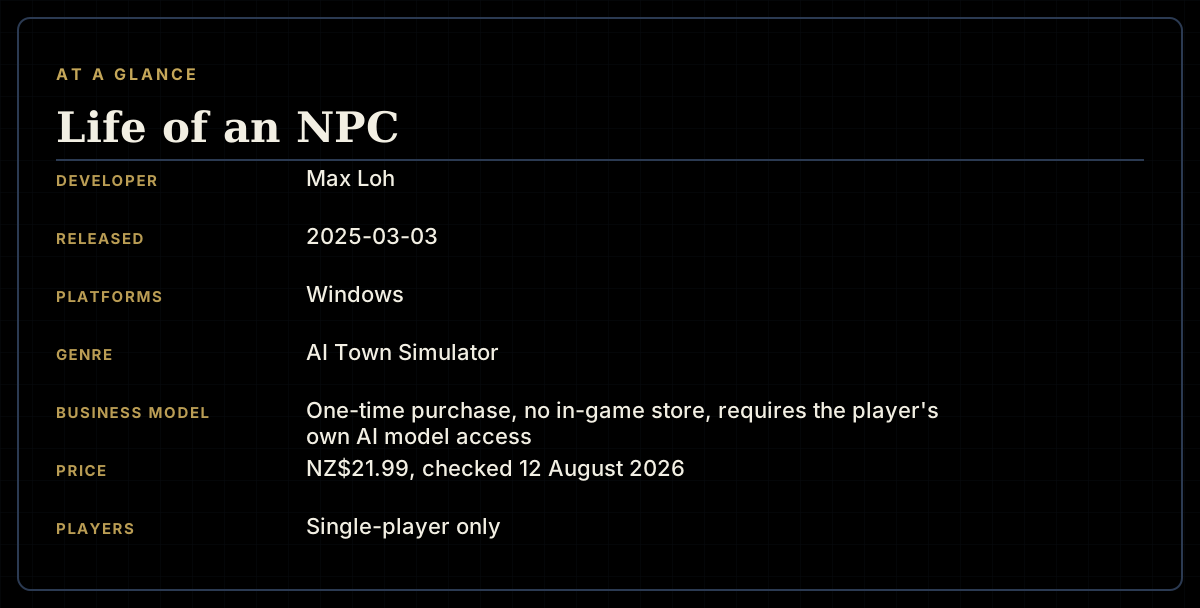
The essentials at a glanceWanderer Editorial -
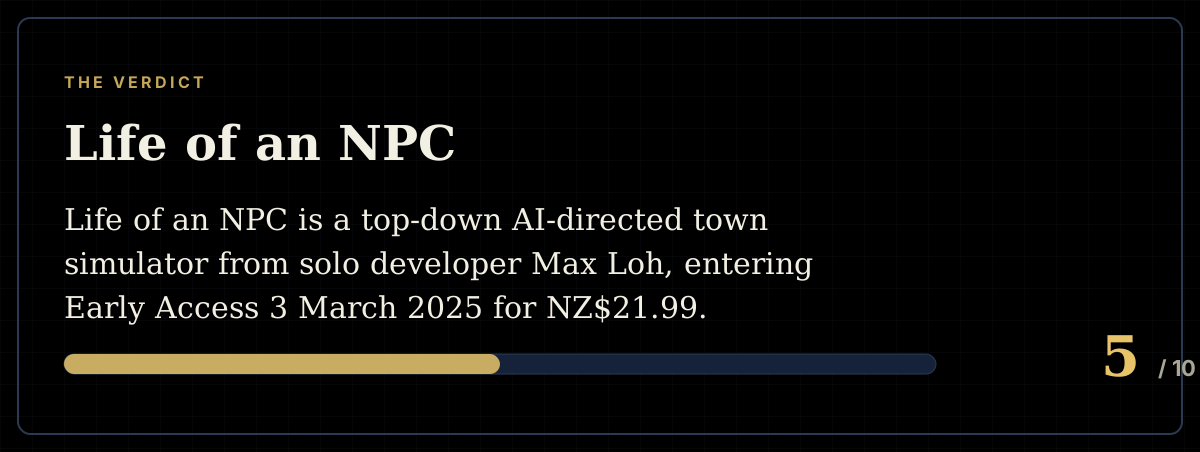
The short versionWanderer Editorial