Game review
Lazy Galaxy
5.5 / 10
- Developer
- Coldwild Games
- Publisher
- Coldwild Games
- Released
- 15 December 2017
- Platforms
- Windows, macOS, Linux
- Genre
- Idle/RTS hybrid
- Monetisation
- One-off purchase, no in-game currency, ads or gameplay-affecting purchases
- Players
- None; single-player only
The short version
Lazy Galaxy's pitch — an idle clicker crossed with light RTS fleet management, played out by a cast of lazy conquest-minded space octopi — is distinctive enough to stand out in a crowded genre, and the developer's own Early Access patch history shows a real, responsive effort to fix the game's most obvious gap: a Steam-page complaint about the game lacking any completable ending drew a New Game+ and hard-reset system within a month of launch, added specifically to answer that exact feedback. What that patch didn't fully resolve, based on later reviews, is a deeper thinness underneath the fix — a resource curve that several reviewers say "peters out" well before the credits, a full-planet rebuild required on every reset that turns prestige into busywork, and a ship-selection meta shallow enough that "pick the strongest" is the whole strategy for more than one reviewer. At its usual steep discount it's an honest, cheap way to spend a few idle hours; at full price the thinness shows through faster than the charm can cover for it.
Biggest strengths
- A distinctive sci-fi comedy theme — lazy, conquest-minded alien octopi — gives it real personality relative to generic clicker reskins
- The developer directly and quickly answered a "no way to actually finish the game" complaint during Early Access with a New Game+/hard-reset system, confirmed via the patch's own stated reasoning
- Progress continues while the game is closed, the standard idle-genre courtesy, letting it work well as a background or second-monitor game
Biggest weaknesses
- Multiple detailed reviews independently describe the game "petering out" once the resource curve slows, with nothing but effectively unreachable "gain one million of X" achievements left to chase past that point
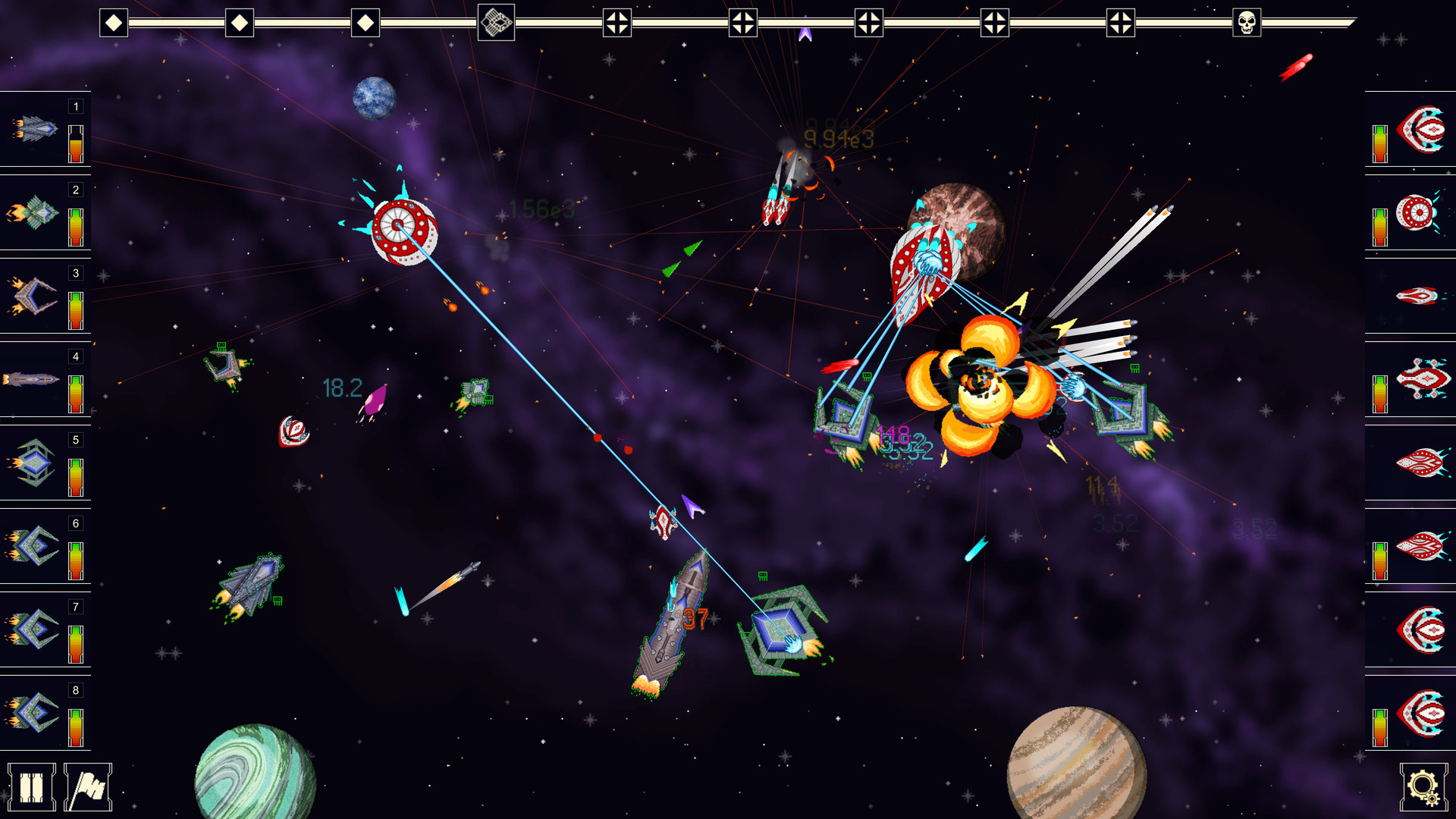
- Ship selection in combat is described by more than one reviewer as a solved, one-note choice ("just pick the strongest") rather than a meaningful strategic decision
- The prestige/reset loop requires rebuilding the entire planet from scratch each time, which several reviewers single out as the specific source of the game's repetitiveness
Who it's for: Idle-game newcomers or budget-conscious clicker fans who want a light RTS wrapper and a sense of humor around their number-watching, ideally picked up on sale. Less suited to genre veterans looking for meaningful strategic depth in fleet composition or a long-tail endgame that doesn't lean on repeating the same reset loop.
Our recommendation: A reasonable cheap pickup on sale for the theme and the responsive early patch history; skip at full price, since the amount of genuine long-term content doesn't fully match what several detailed reviews describe as a game that runs out of ideas partway through.
5.5 / 10
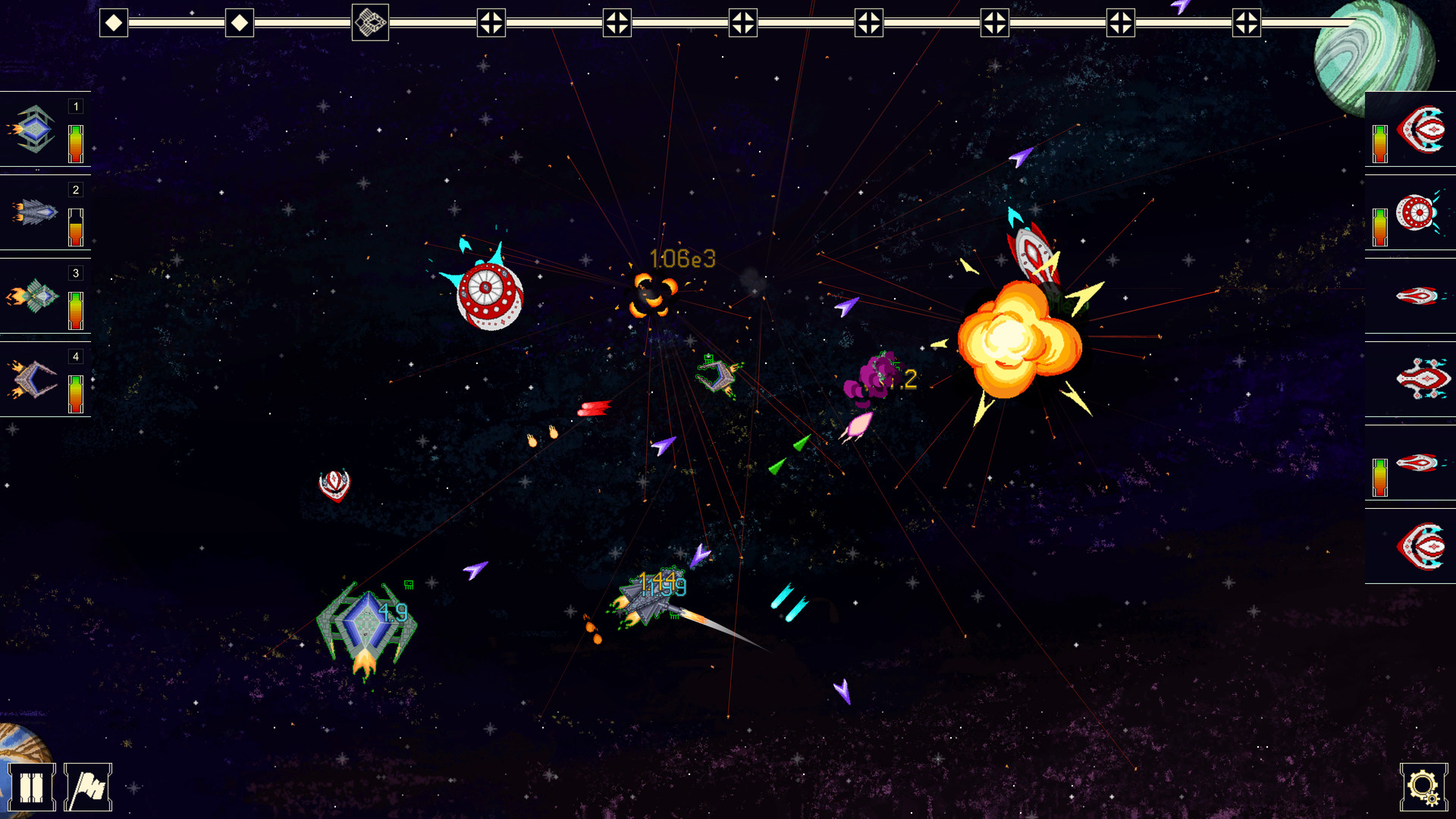
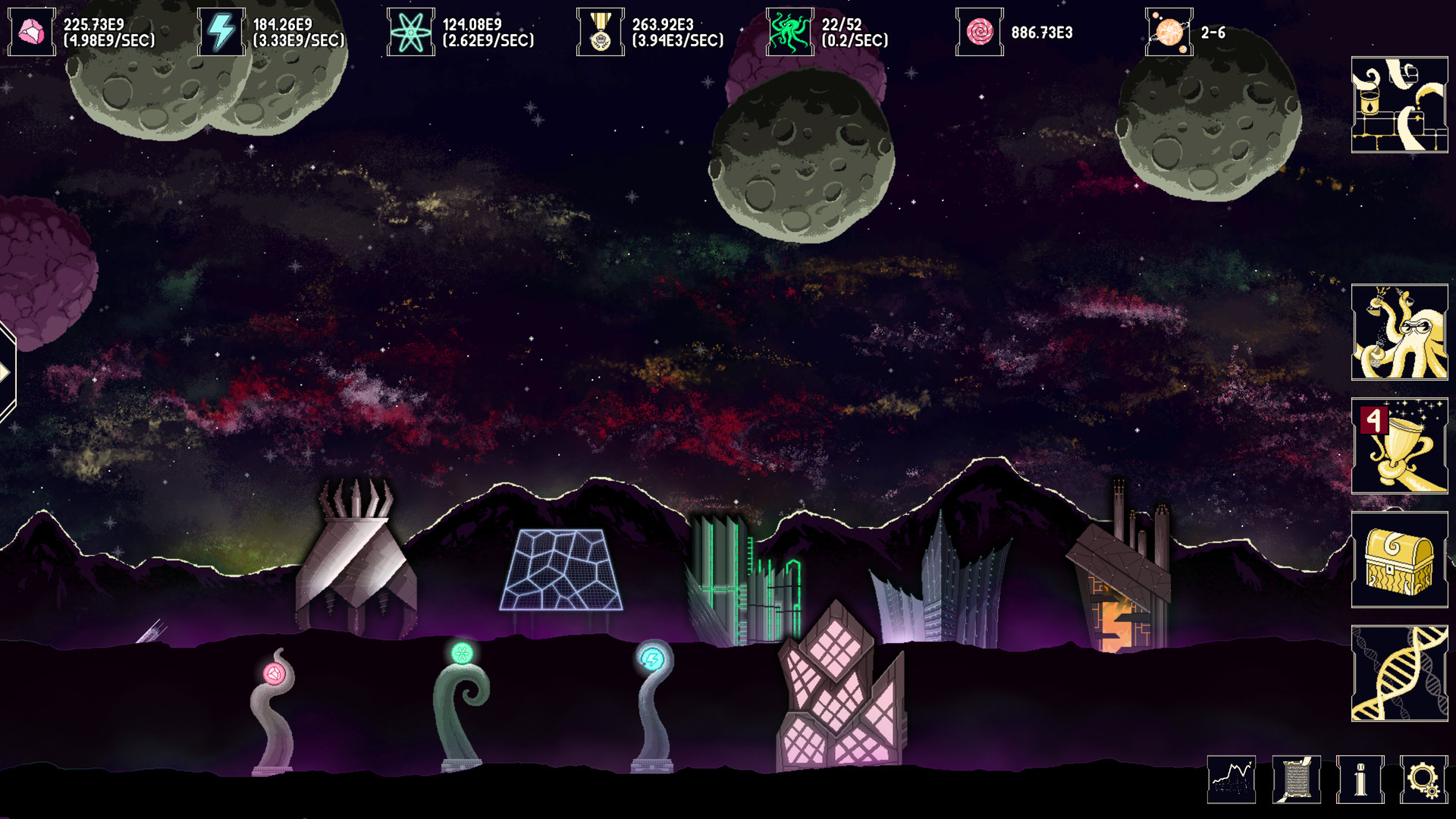
Lazy Galaxy asks players to lead a race of comically indolent alien octopi to conquer the universe purely because they're bored — a sci-fi comedy wrapper around a genre hybrid that's more interesting on paper than most: an idle/clicker core with a light RTS layer of base-building, item crafting, and fleet combat you can either direct manually or let play itself. It entered Early Access on 15 December 2017 and reached 1.0 in March 2018, a distinction worth stating plainly because the storefront's own metadata reports only the later date — the developer's partner-events feed confirms the true original release, and its own December 2017 Early Access announcement, is what actually places this game in its lane. What follows that launch is a genuinely responsive development period and a review sample that, once the novelty wears off, splits fairly evenly on whether there was ever quite enough game underneath the theme.
A real answer to a real complaint
The clearest evidence of the developer actually listening to its Early Access audience is dated and specific. Patch 1.2, released about a month after Early Access launch, directly cites player feedback about resource gain slowing to a crawl and the absence of any way to meaningfully finish the game, and answers it with a New Game+ mode and a hard-reset system that lets a full playthrough actually conclude with a permanent bonus. The patch notes state the intent outright: "You can actually complete the game now!" That's a textbook example of a small studio responding to concrete criticism quickly and specifically rather than leaving a structural gap unaddressed, and it's worth crediting the same way this review credits any developer who ships a fix that matches the shape of the complaint that prompted it.
The fix didn't fully solve the underlying thinness
What that patch didn't do, based on reviews written well after it shipped, is give the game a deeper well of content to draw on once a full playthrough or two is complete. One detailed negative review, from a player with over 2,400 hours logged, describes the core problem plainly: "once you reach a certain point it just sort of peters out because the devs did not bother to include any sort of end game, just a bunch of virtually unreachable 'gain 1000000 of [resource]' achievements." That's a harsher read than the patch 1.2 announcement anticipated, and it points to a gap between adding a way to finish the game and giving players a reason to keep engaging once they have. A second recurring complaint sharpens the same point: several reviewers describe the prestige loop as requiring a full planet rebuild from scratch on every reset, turning what should be a rewarding restart into repetitive busywork, and more than one review notes that ship selection in combat resolves to simply picking the strongest option available rather than any real tactical choice.
A claim this review can't confirm
One specific, high-playtime review raises a claim serious enough to report directly, alongside an honest limit on how far it can be verified: the reviewer states that the developers "figured out the simple change your computer's time trick and programmed it into the game," describing a shift from what had been "a good idle clicker" to something that felt manipulative once they noticed it. This review searched the available Early Access and 1.0 patch notes for any corresponding change to how offline or time-skip progress is calculated and found nothing matching that specific description. It's reported here as one detailed reviewer's account, not as an independently confirmed mechanic.
What the numbers say about who sticks around
Global achievement data gives a useful, more measured read on the "peters out" complaint than any single review can. Early milestones sit high — 82.6% of the playerbase has destroyed a meteor, a basic first-hour action — while mid-game goals tied to the game's three research trees (trading, science, and scavenging) cluster together in the 44-52% range, suggesting a substantial share of buyers do push well past the opening and engage with more than one of the game's systems. The achievements this review would expect to see cratering if the "no endgame" complaint applied universally instead land in a more moderate 22-40% band — "offline veteran," "zero hero," and a pair of completionist-flavored achievements ("weird patterns," "OCD") — numbers consistent with a real, if not enormous, population of players who finish at least one full playthrough loop rather than abandoning en masse the moment resource gains slow. That doesn't erase the specific thinness complaints raised above, but it does suggest the "peters out" experience describes a later stage of engagement than the harshest reviews imply, not an immediate wall most buyers hit right away.
A first attempt its own sequel improved on
Coldwild Games didn't stop with this game — a same-universe spinoff (Lazy Galaxy: Rebel Story) followed within a year, and a full sequel, Lazy Galaxy 2, launched in Early Access in 2021 and reached 1.0 in March 2022, four years almost to the day after this game's own 1.0 release. That's useful context for judging the original today: several of the specific gaps reviewers describe here — thin ship variety, a prestige loop built around repetition rather than reinvention — read less like a permanently unsolved design problem and more like a first attempt a small studio kept iterating on across two further releases. Judged purely on its own terms rather than against what came after it, Lazy Galaxy holds up as a competent, if unambitious, example of the idle/RTS hybrid it helped establish for this developer, without quite matching the depth its own later games would go on to add to the same formula.
Verdict
Lazy Galaxy is a real, distinctively themed idle/RTS hybrid whose developer demonstrably listened to early feedback and shipped a fix that matches the complaint that prompted it — a better track record than plenty of similarly-priced budget idle games manage. What it hasn't fully solved, according to a meaningful share of its own later reviews, is a shallowness that survives the fix: a resource curve that goes quiet before the game does, a reset loop that repeats rather than reinvents, and combat decisions thin enough to reduce to picking the biggest number. At its usual steep discount, that's a fair trade for a few idle hours with a good sense of humor about itself; at full price, the thinness shows through before the charm can cover for it.
Sources: Steam store page and appdetails API (release date, pricing, platform data); Steam's aggregate review data (query_summary totals, English-language sample); individually read user reviews, both positive and negative, sorted by helpfulness and recency; Steam's global achievement statistics API; Coldwild Games' own partner-events feed, including Early Access launch and patch announcements from December 2017 through the 1.0 release in March 2018.
Pros and cons
Pros
- A distinctive sci-fi comedy theme — lazy, conquest-minded alien octopi — gives it real personality relative to generic clicker reskins
- The developer directly and quickly answered a "no way to actually finish the game" complaint during Early Access with a New Game+/hard-reset system, confirmed via the patch's own stated reasoning
- Progress continues while the game is closed, the standard idle-genre courtesy, letting it work well as a background or second-monitor game
- Achievement data shows a reasonably healthy mid-game completion curve (roughly 40-50% for several milestones), suggesting the core loop holds attention for a real share of buyers
- Extremely affordable at its frequent discounted price relative to the hours several reviewers report getting out of it
Cons
- Multiple detailed reviews independently describe the game "petering out" once the resource curve slows, with nothing but effectively unreachable "gain one million of X" achievements left to chase past that point
- Ship selection in combat is described by more than one reviewer as a solved, one-note choice ("just pick the strongest") rather than a meaningful strategic decision
- The prestige/reset loop requires rebuilding the entire planet from scratch each time, which several reviewers single out as the specific source of the game's repetitiveness
- One detailed, high-playtime review makes a specific claim that the developers effectively built a system-clock-manipulation shortcut into expected play rather than discouraging it — this review could not independently confirm that claim through the available patch notes
- The moment-to-moment interaction is limited enough that several reviewers describe the entire game accurately in one sentence: click asteroids, upgrade buildings, repeat
Screenshots
-
Lazy GalaxyImage: Coldwild Games via Steam -
Lazy GalaxyImage: Coldwild Games via Steam -
Lazy GalaxyImage: Coldwild Games via Steam -
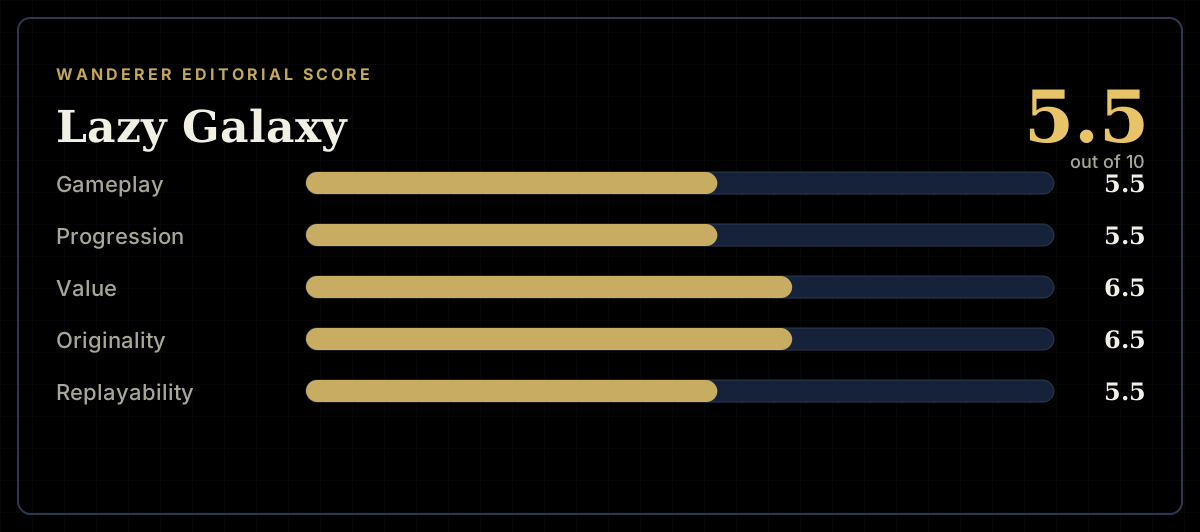
How the review scores each part of the gameWanderer Editorial -
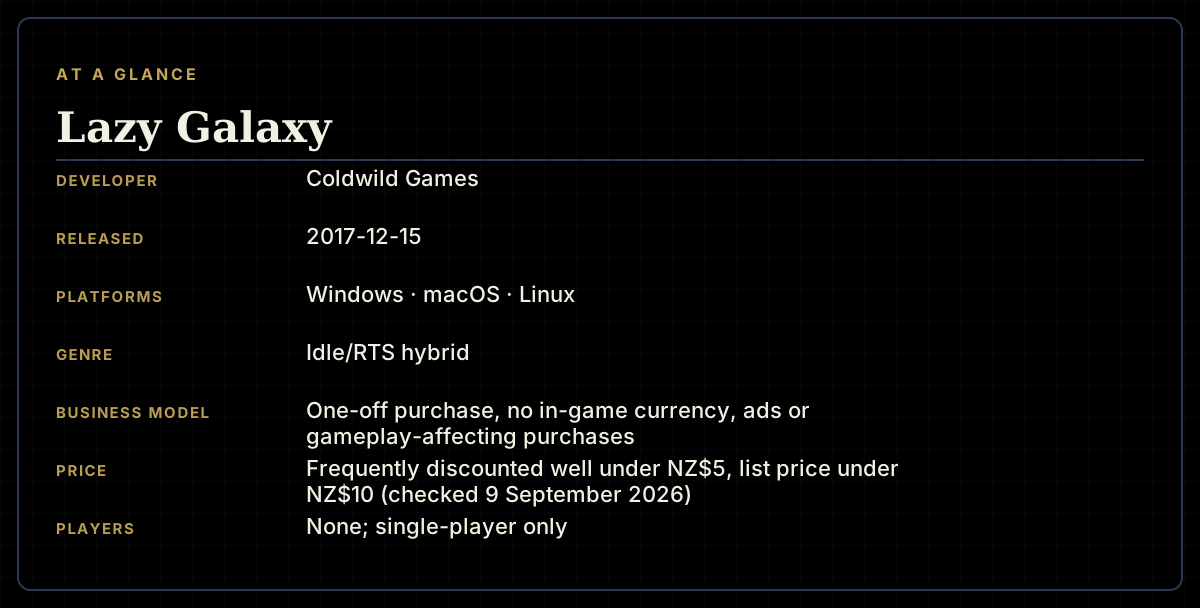
The specsWanderer Editorial -
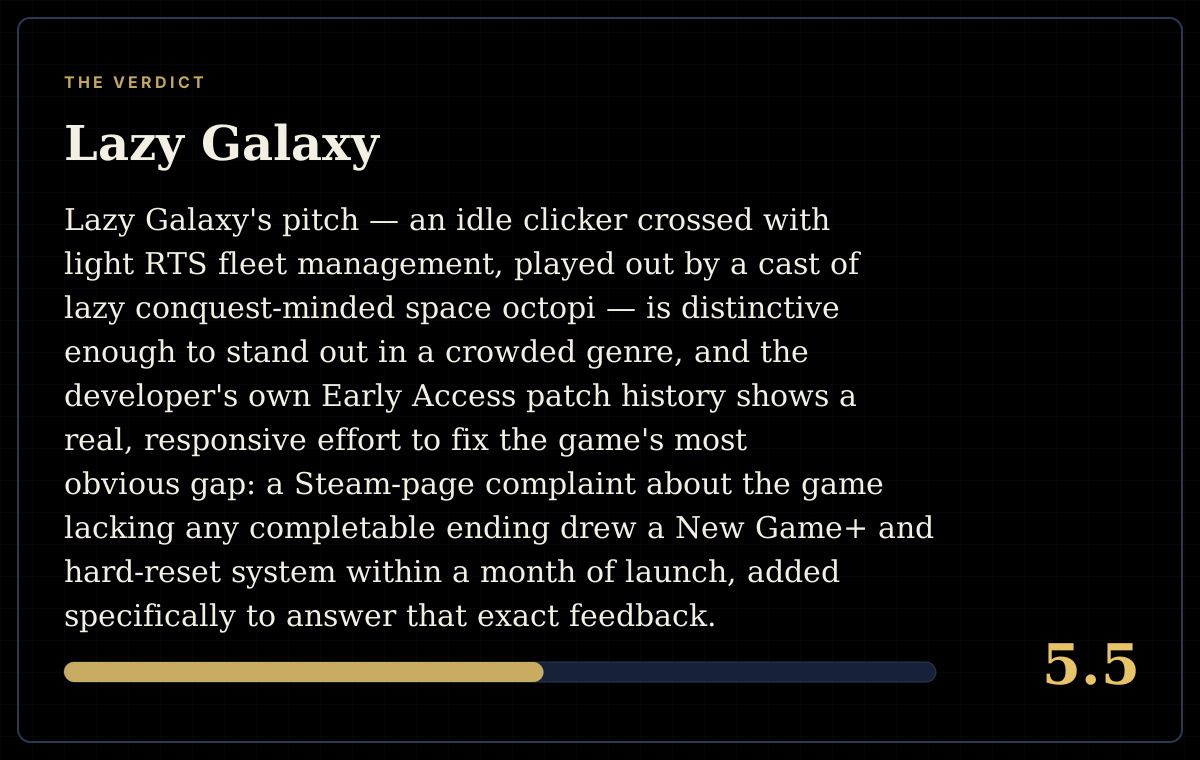
The short versionWanderer Editorial