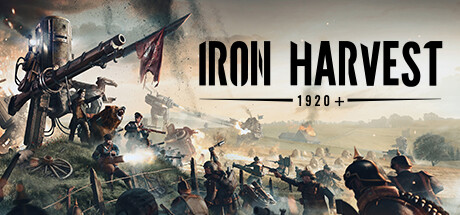
Game review
Iron Harvest
6.5 / 10
- Developer
- KING Art
- Publisher
- Deep Silver, Prime Matter
- Released
- 31 August 2020
- Platforms
- Windows
- Genre
- Real-Time Strategy
- Monetisation
- Premium one-time purchase with paid campaign expansion DLC, plus an in-game cosmetics store with a premium currency for unit skins and portrait borders
- Players
- Online skirmish and ranked multiplayer with no peer-to-peer hosting fallback; reviewers report official servers were switched off roughly four years after launch
The short version
Iron Harvest's world is genuinely special — a diesel-punk alternate 1920s built from Jakub Różalski's paintings, with a campaign story reviewers consistently call gripping — wrapped around Company of Heroes mechanics that a large share of its own players say never quite matched that inspiration's polish. Years on, that mixed picture is compounded by real, checkable disappointments: a confusing multi-edition launch, a cosmetics store bolted onto a premium-priced RTS, official multiplayer servers switched off without an announcement, and Kickstarter backers still describing pledges that were never fulfilled.
Biggest strengths
- The dieselpunk alternate-1920s setting, drawn directly from Jakub Różalski's paintings, is described as one of the most visually distinctive worlds in the RTS genre
- The three-faction campaign story is repeatedly called gripping, with reviewers saying they genuinely cared about the characters enough to push through to the end
- KING Art shipped a steady, multi-year cadence of dev blogs, balance patches and a major post-launch Campaign Map mode that several reviewers say substantially improved replayability over the base release
Biggest weaknesses
- Multiple detailed reviews describe unit micro, pathing and AI responsiveness as noticeably looser than the Company of Heroes games it's directly modeled on, including units taking cover on the wrong side or not reacting to nearby enemies
- Several reviewers report campaign missions that shipped bugged, either trivially exploitable or unfairly difficult, alongside AI enemies that appeared to spawn units without paying the same resource costs players do
- The game's edition structure confused buyers at launch — reviewers specifically warn that the standalone listing and the bundle including the Operation Eagle content cover different amounts of campaign material
Who it's for: RTS fans drawn to a strong single-player campaign and a genuinely distinctive art style, who can accept rougher unit micro than the Company of Heroes games it's modeled on and who aren't buying primarily for long-term competitive multiplayer.
Our recommendation: Worth it on a deep sale for the campaign and setting alone; go in expecting dead official multiplayer, and check exactly which edition you're buying before paying full price, since reviewers report the base listing and the "complete" bundles cover different amounts of campaign content.
6.5 / 10
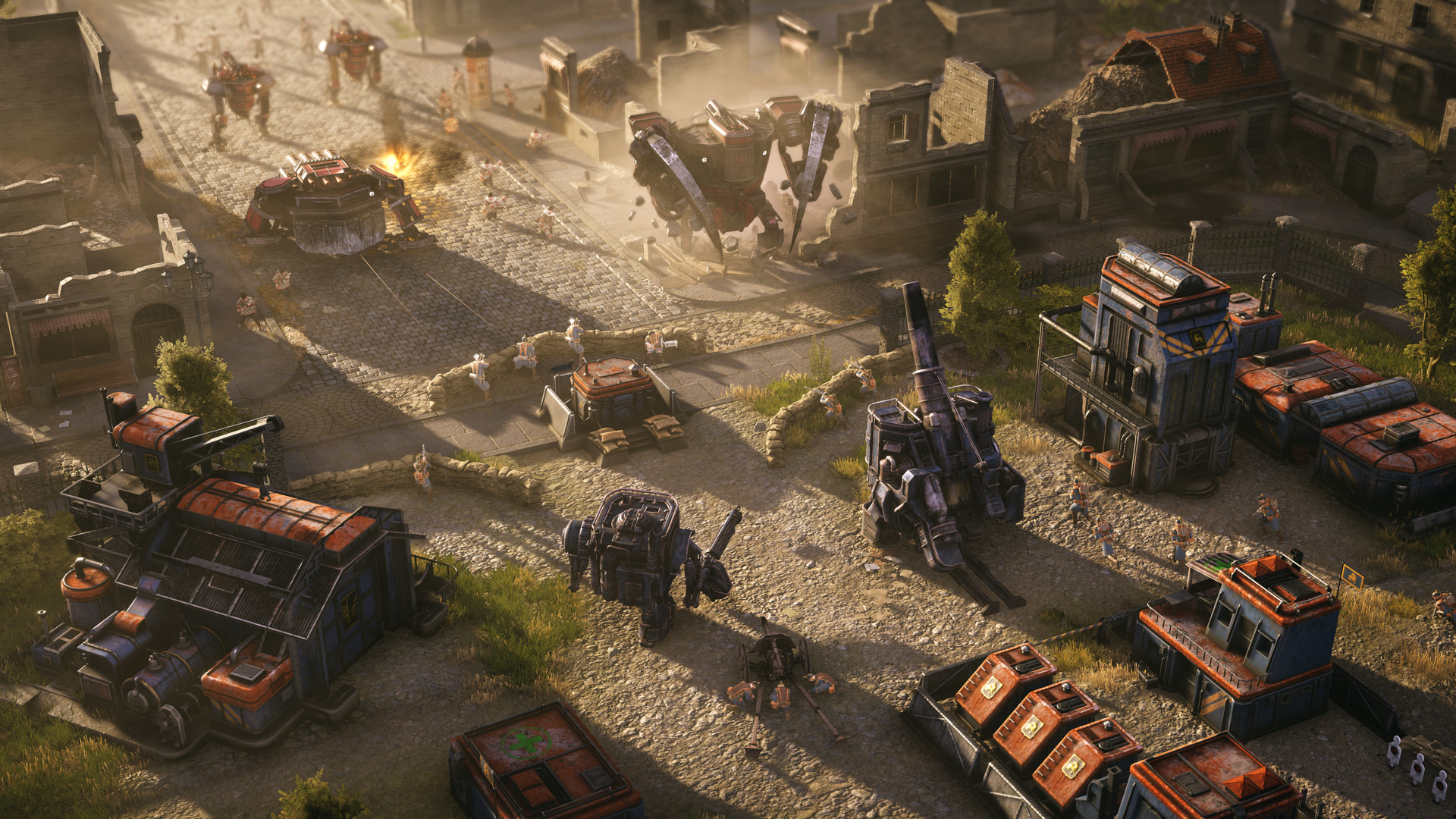
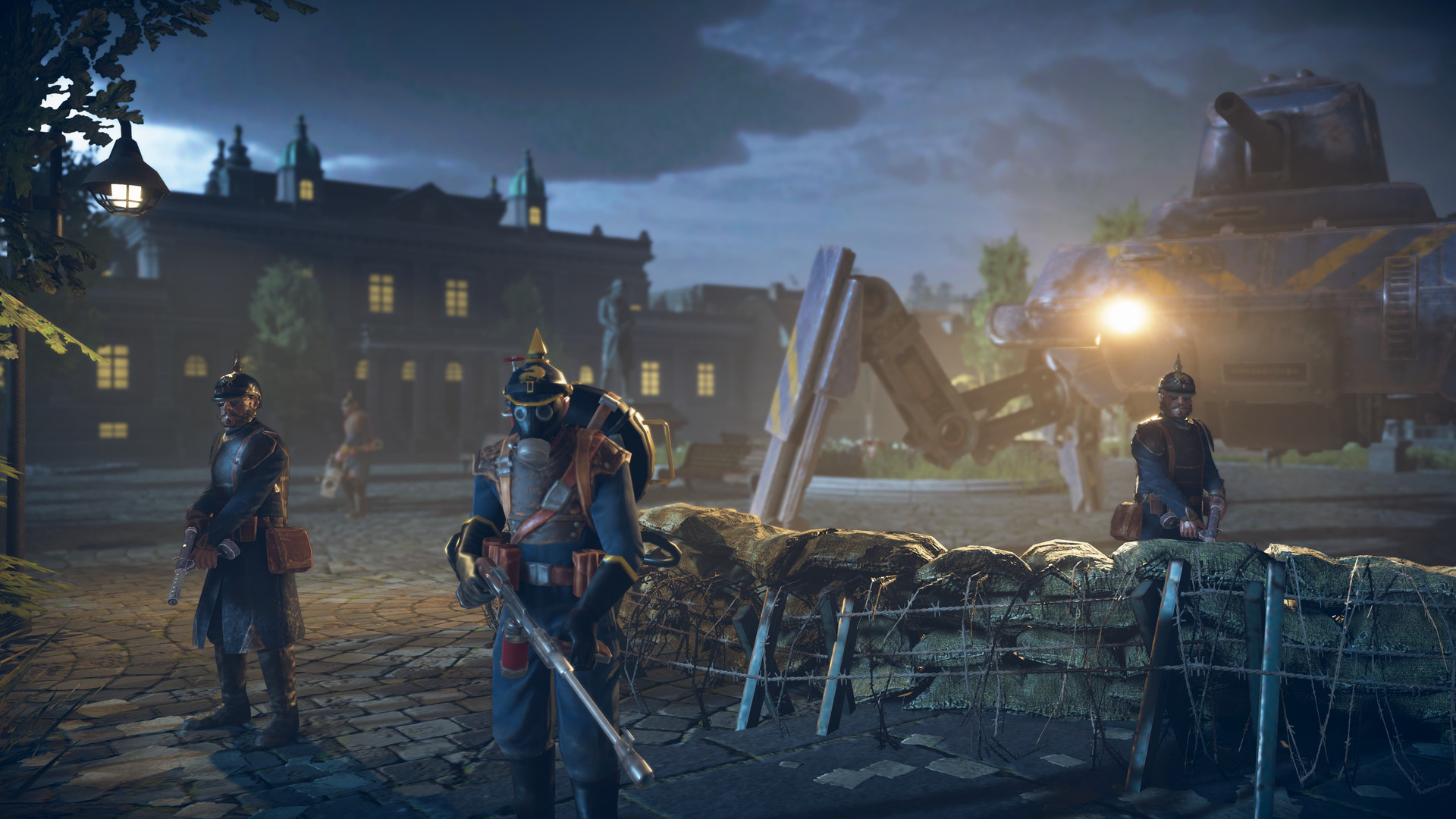
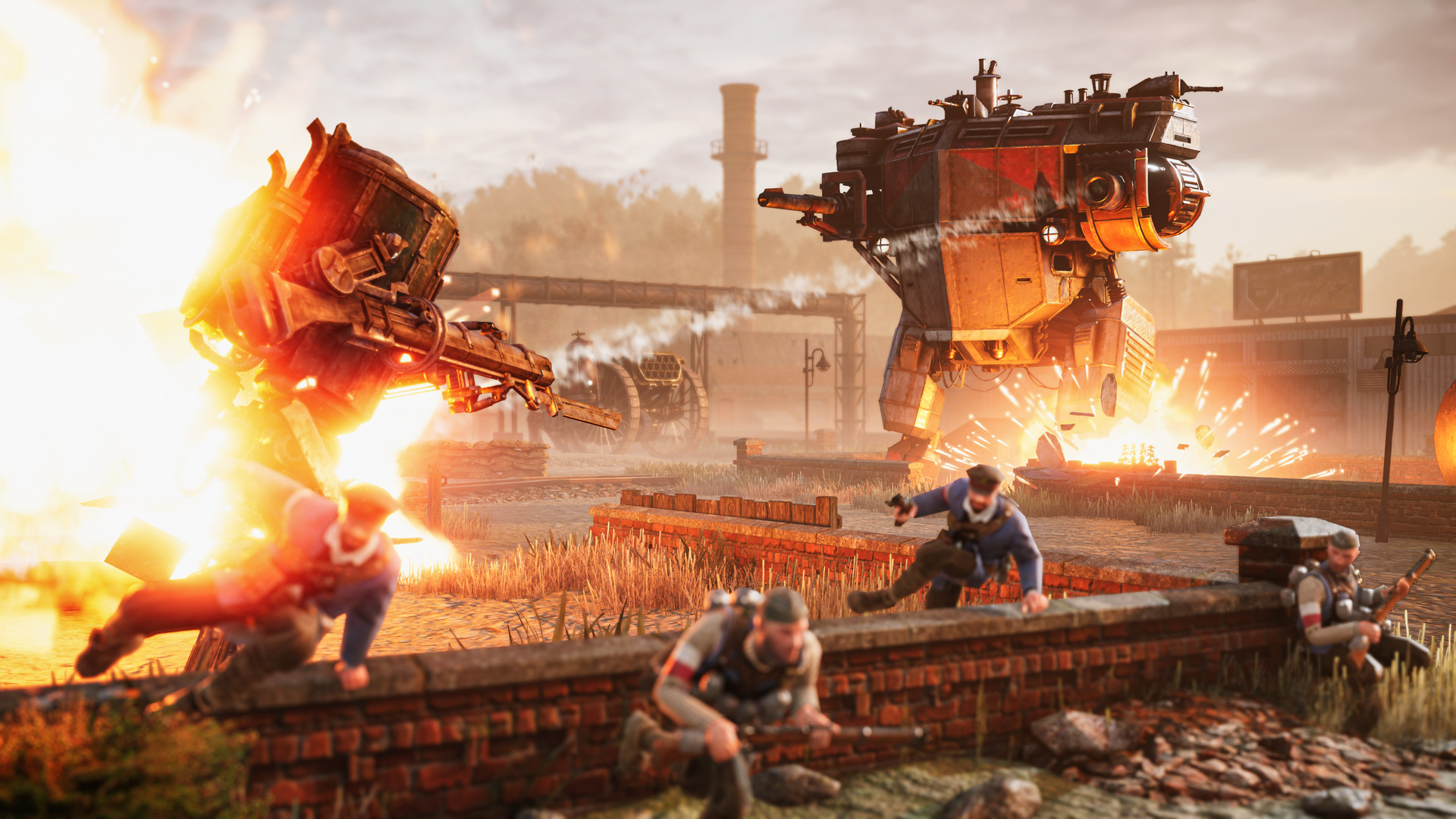
Iron Harvest's world is the easiest thing about it to sell: an alternate 1920s Europe where the Great War ended differently and towering diesel-powered mechs walk alongside cavalry and infantry, all drawn directly from Polish artist Jakub Różalski's paintings. Reviewers across the sample, positive and negative alike, agree the setting is one of the most distinctive things the RTS genre has produced in years. What they don't agree on is whether KING Art built a game worthy of that world, and the review sample's genuinely split verdict — 73% positive, well short of the near-unanimous scores this list usually covers — reflects a real, specific set of disappointments layered under real, specific strengths.
A campaign worth finishing, mechanics that don't quite match Company of Heroes
The obvious comparison, made independently by dozens of reviewers, is Company of Heroes: squad-based infantry, cover mechanics, capturable resource points, and mechs standing in for that series' vehicles. Reviewers who like Iron Harvest generally frame it as a legitimate, distinctive take on that formula rather than a straight clone, and the three-faction campaign draws consistent, specific praise — multiple detailed reviews say they genuinely cared about the characters and kept playing because they wanted to see the story through, a rarer thing to hear about an RTS campaign than it should be.
The mechanics carrying that story are where the complaints concentrate. Multiple independent reviewers describe unit micro and pathing as noticeably looser than the games it's modeled on — infantry taking cover on the wrong side of an obstacle, units failing to react to nearby threats without direct orders, and escort missions where an AI-controlled unit walks straight into enemy fire. Several reviews go further and describe campaign missions that shipped genuinely bugged, either trivially exploitable or frustratingly close to unfair, alongside an AI opponent some reviewers accuse of spawning units without paying the same resource costs a human player has to.
A launch edition structure reviewers warn you about directly
A specific, practical complaint recurs often enough to flag directly for anyone considering a purchase: the game's editions weren't clearly differentiated at launch, and multiple reviews warn that the standalone base listing and the bundle including the Operation Eagle content cover different amounts of campaign material. This isn't a matter of taste — it's a concrete buyer-beware finding independently reported by more than one reviewer, and worth checking directly against the current storefront listing before paying full price.
Layered on top of that is a cosmetics store selling unit skins and portrait borders through a premium currency, inside a roughly NZD 50 premium-priced game. Several reviewers single this out specifically as feeling out of place — a monetisation model normally associated with free-to-play games, attached to a full-price RTS with a single-player campaign as its main draw.
What happened to the multiplayer, and to the backers
Two further findings deserve to be reported plainly because they're specific, dated and corroborated rather than vague dissatisfaction. First, multiple reviewers report that official multiplayer servers were switched off roughly four years after launch, without a public announcement and with no peer-to-peer hosting option to fall back on — a real loss for anyone who bought the game specifically for its online skirmish or ranked modes, and one the game's own partner-events feed indirectly supports, since substantive development updates stop appearing years before this review was written after running steadily since well before the game's 2020 launch.
Second, Iron Harvest was funded through a Kickstarter campaign, and the developer's own announcement history confirms this review can verify part of the story directly: a May 2022 dev blog states physical backer rewards had finally begun shipping, alongside a full list of digital rewards the studio said were already available. That's a genuine, documented step toward making things right. But it doesn't fully resolve the picture — multiple backers, in reviews posted well after that announcement, separately describe pledges of over a hundred dollars or euros for which they say they never received physical or digital rewards despite repeated follow-up attempts. This review can't adjudicate individual fulfillment cases, but the pattern of more than one independent, specific complaint persisting after the studio's own public claim to have resolved it is worth reporting exactly as it appears in the record, rather than assuming either side's account fully closes the matter.
A genuine post-launch improvement, and what the achievement data says about who stuck around
Not every post-launch change was disappointing. A Campaign Map mode, added well after release, lets players replay the war across a strategic map with variable starting positions and scenarios — multiple reviewers directly compare it to Dawn of War: Soulstorm's map layer and credit it with giving the game a genuine long-term structure the base skirmish and campaign modes couldn't offer on their own. It's a real example of the sustained dev-blog cadence translating into a substantive feature rather than just balance tweaks.
Global achievement data gives a useful, honest picture of where the playerbase actually settled once the dust cleared: a large majority cleared early single-player goals, but achievements tied to sustained multiplayer play — winning a hundred skirmish matches, playing five hundred matches total — sit under half a percent of the total playerbase. That's a normal shape for an RTS where most owners are there for the campaign rather than competitive online play, but it also puts the later server shutdown in useful context: whatever the announcement (or lack of one) around it, the active online population it affected was likely already a small fraction of total owners by that point.
Verdict
Iron Harvest built one of the most visually distinctive worlds strategy gaming produced in 2020 and paired it with a campaign story reviewers genuinely connect with — that's real, and it's worth experiencing on those terms alone. But the mechanical execution never fully matched its Company of Heroes inspiration, the launch was rockier than a premium-priced release should have been, and the years since have brought a cosmetics store, quietly abandoned multiplayer servers, and Kickstarter backers still asking where their pledges went. Buy it for the setting and the campaign, on a deep sale, and treat any multiplayer plans as a bonus you may not actually get.
Pros and cons
Pros
- The dieselpunk alternate-1920s setting, drawn directly from Jakub Różalski's paintings, is described as one of the most visually distinctive worlds in the RTS genre
- The three-faction campaign story is repeatedly called gripping, with reviewers saying they genuinely cared about the characters enough to push through to the end
- KING Art shipped a steady, multi-year cadence of dev blogs, balance patches and a major post-launch Campaign Map mode that several reviewers say substantially improved replayability over the base release
- Reviewers who stuck with the game past its rocky launch report that many early missing-feature complaints were genuinely addressed by later updates
- The core capture-and-hold, cover-and-flank mechanics borrowed from Company of Heroes give experienced RTS players a familiar, legible foundation to build on
Cons
- Multiple detailed reviews describe unit micro, pathing and AI responsiveness as noticeably looser than the Company of Heroes games it's directly modeled on, including units taking cover on the wrong side or not reacting to nearby enemies
- Several reviewers report campaign missions that shipped bugged, either trivially exploitable or unfairly difficult, alongside AI enemies that appeared to spawn units without paying the same resource costs players do
- The game's edition structure confused buyers at launch — reviewers specifically warn that the standalone listing and the bundle including the Operation Eagle content cover different amounts of campaign material
- A cosmetics store with its own premium currency for unit skins and portrait borders drew real, specific backlash for appearing in a roughly NZD 50 premium-priced RTS rather than a free-to-play game
- Multiple reviewers report official multiplayer servers were switched off roughly four years after launch with no announcement and no peer-to-peer fallback, and at least two independent Kickstarter backers describe pledges in the hundreds of dollars/euros that were never fulfilled despite repeated follow-up, even after the developer's own 2022 announcement that backer reward shipping had begun
Screenshots
-
Iron HarvestImage: Deep Silver via Steam -
Iron HarvestImage: Deep Silver via Steam -
Iron HarvestImage: Deep Silver via Steam -
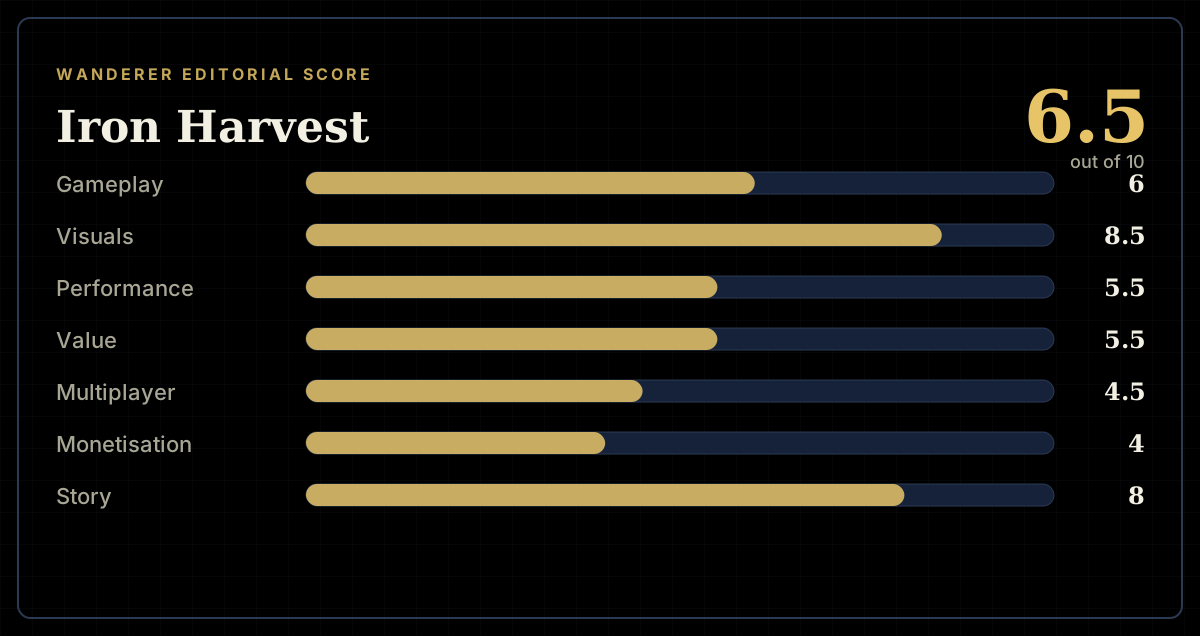
How the review scores each part of the gameWanderer Editorial -
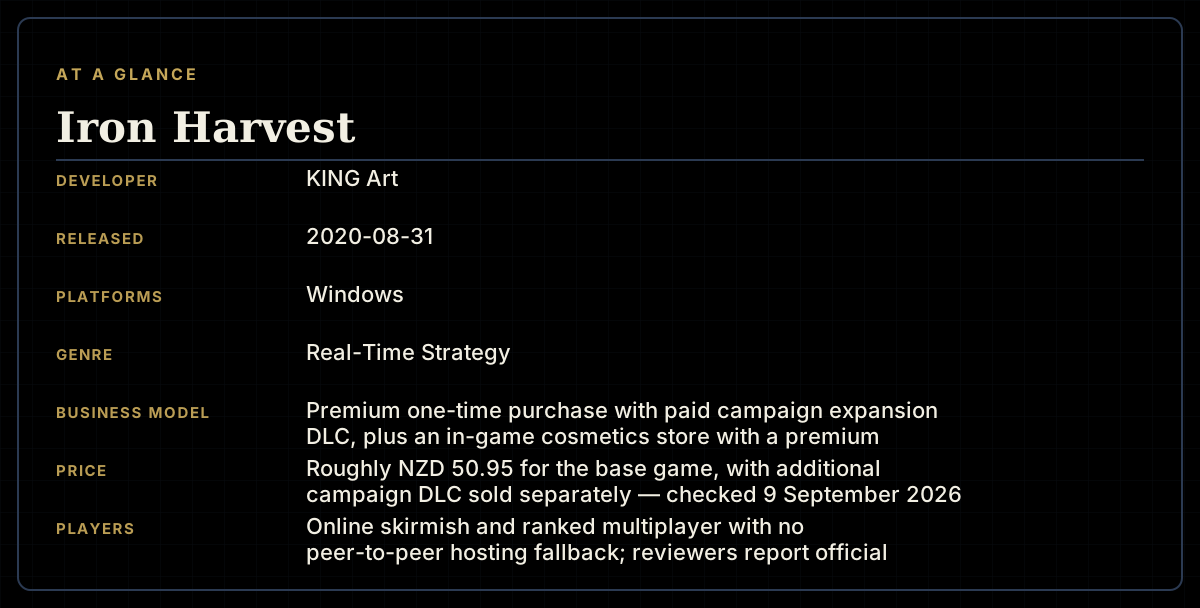
At a glanceWanderer Editorial -
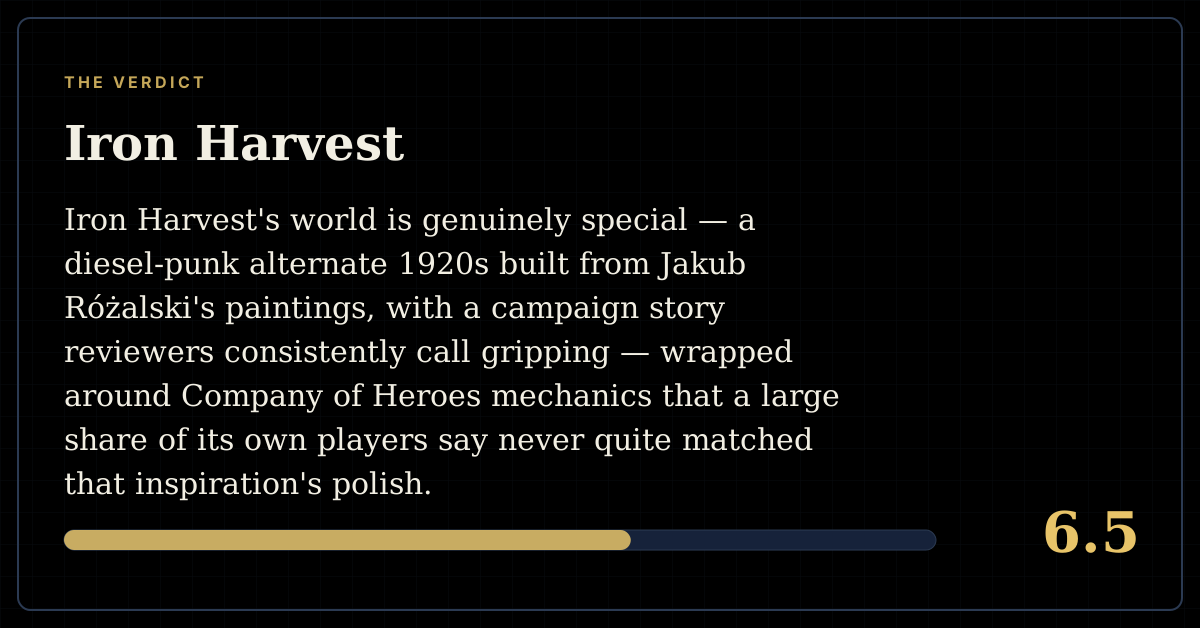
The short versionWanderer Editorial