
Game review
The DioField Chronicle
5.5 / 10
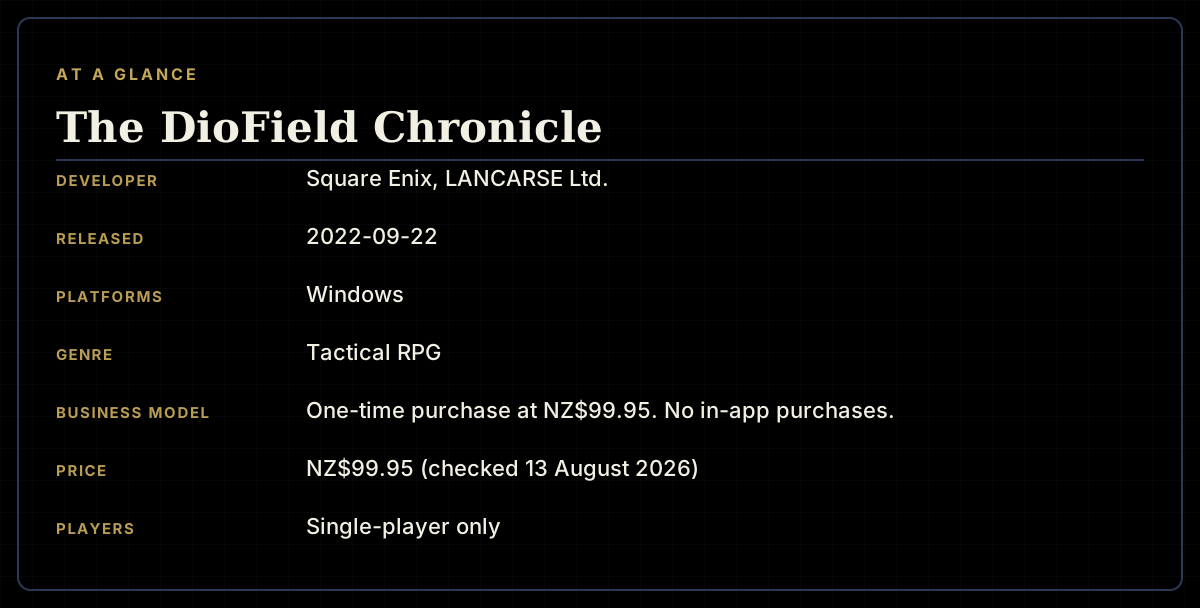
- Developer
- Square Enix, LANCARSE Ltd.
- Publisher
- Square Enix
- Released
- 22 September 2022
- Platforms
- Windows
- Genre
- Tactical RPG
- Monetisation
- One-time purchase at NZ$99.95. No in-app purchases.
- Players
- Single-player only
The short version
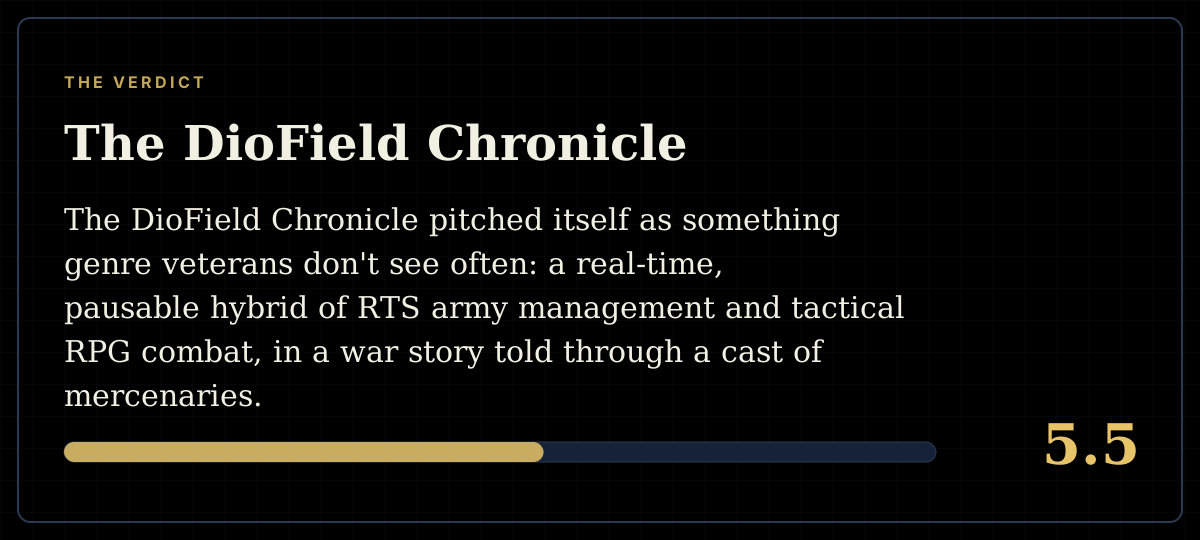
The DioField Chronicle pitched itself as something genre veterans don't see often: a real-time, pausable hybrid of RTS army management and tactical RPG combat, in a war story told through a cast of mercenaries. Reviewers were excited for exactly that combination, and its most-upvoted review — 466 votes, posted the week of release — captures where it fell short: "it promises a unique take on the tactics game but what you actually get is pause-based combat akin to Baldur's Gate, with less complexity and less difficulty."
It sits at Mixed — 59.8% of 403 English reviews — and reading the negative corpus in full turns up a specific, repeated pattern: once a player finds one workable squad composition, that build clears most remaining content, undercutting the strategic depth the marketing promised. Story and characters are the single most-discussed element in the negative sample (mentioned in 86 of 100), almost always unfavourably.
Biggest strengths
- A genuinely distinctive real-time, pausable combat structure that stands out in a genre dominated by turn-based systems, and draws real enthusiasm from reviewers who wanted exactly that kind of hybrid
- Strong presentation -- gorgeous maps and battle cutscenes draw consistent visual praise even from otherwise critical reviewers
- The developer continued supporting the game post-launch with a free scenario update and a harder difficulty mode, addressed directly in at least one review as evidence it wasn't abandoned
Biggest weaknesses
- Once a workable squad build is found, which happens early for most reviewers, remaining content becomes repetitive and undemanding -- the single most common structural complaint, described by multiple reviewers as "a mile wide and an inch deep"
- Story and characters are the most-discussed element of the negative corpus by a wide margin (86 of 100 negatives), with several reviewers who otherwise liked the combat revising their opinion downward specifically because of the writing
- The demo is repeatedly cited as fully representative of the whole game, meaning the opening hours don't meaningfully undersell or oversell what follows -- a red flag for anyone hoping it opens up later
Who it's for: Tactics fans curious about a genuinely different combat structure, and Square Enix completionists. Less suited to anyone expecting a genuinely deep RTwP system with lasting challenge, or anyone prioritising story and characters in their tactical RPGs.
Our recommendation: Worth trying the free demo before buying, which several reviewers specifically recommend as representative of the whole experience -- what you see in the opening hours is largely what you get for the rest of the game. Best picked up on a deep sale given how consistently reviewers call the NZ$99.95 asking price steep for the depth on offer.
5.5 / 10
The most-upvoted review of The DioField Chronicle has 466 votes and was posted the week of release, and it identifies the exact gap between pitch and product that would come to define this game's reputation: "The actual gameplay loop of Diofield is pretty grim — it promises a unique take on the tactics game but what you actually get is pause-based combat akin to Baldur's Gate, with less complexity and less difficulty." Square Enix marketed a genuine hybrid — RTS army positioning fused with tactical RPG combat, in a real-time-with-pause structure the genre rarely attempts. Reviewers were excited for exactly that idea. Most of them still are, in principle. What they got underneath it is where the disagreement starts.
A distinctive structure, a familiar ceiling
Battles play out in real time across open maps, pausable to issue commands to a small squad of units drawn from a larger mercenary roster, with base management and research layered between missions. The presentation draws near-universal praise — gorgeous maps, strong battle cutscenes, visuals that hold up in the screenshots regardless of a reviewer's overall verdict. What draws the most consistent, specific criticism is depth: once a player settles on a workable squad composition, which reviewers report happening early, that build tends to clear most of what follows without much further adaptation required. "A mile wide and an inch deep," reads one review, describing total autopilot on Hard difficulty by the mid-game. Another, more detailed: "This game is honestly one step away on every system of being really interesting... it takes the risk of applying RTS to SRPG — succeeds and stops right there."
Notably, several reviewers specifically recommend the free demo as an honest preview rather than a misleading slice — what you see in the opening hours is, by wide account, largely what the rest of the game delivers. That's unusual to see stated so plainly and so often; it means buyers have an unusually reliable way to judge fit before spending, which several reviewers frame as almost a kindness even while recommending against the purchase.
The story problem
Set combat depth aside, and the largest single thread in the negative corpus — 86 of the 100 most-helpful English negatives — concerns the story and characters, almost always unfavourably. One reviewer's score dropped sharply after finishing: "3/10 — After 40 hours of gameplay and finishing the game I am adjusting my review to 3/10. The decrease is because of the story." Another frames the whole cast problem structurally: you meet far more characters than you ever actually control, with little sense of why the roster is so much larger than the four-unit squads you actually field. A more measured critical review calls the story "standard SRPG filler with decent characters," which reads almost as praise against the harsher entries in the sample — this isn't a game most reviewers call actively offensive on narrative grounds, just persistently underwritten for its scale.
Completion data that backs up the fade
Global achievement stats support the pattern the reviews describe: early milestones sit comfortably (77.4%, 73.6%), but "CompleteTheGame" itself sits at just 19.8% of the tracked population — a low finishing rate for a story-driven RPG, and consistent with the "lost interest partway through" shape several reviews describe directly. The developer did keep supporting the game post-launch, with a free scenario expansion and a harder difficulty mode reviewers credit as a genuine, if partial, response to the "too easy" complaints.
5.5 out of 10. The DioField Chronicle's core idea — real-time tactical combat with genuine RTS positioning — is a legitimately interesting swing for a major publisher to take, and its presentation backs that ambition up visually. But the systems underneath don't sustain the pitch once a workable build is found, and the story never gives players a reason to stick around for its own sake. Try the demo first; by this game's own reviewers' account, it won't mislead you either way.
Pros and cons
Pros
- A genuinely distinctive real-time, pausable combat structure that stands out in a genre dominated by turn-based systems, and draws real enthusiasm from reviewers who wanted exactly that kind of hybrid
- Strong presentation -- gorgeous maps and battle cutscenes draw consistent visual praise even from otherwise critical reviewers
- The developer continued supporting the game post-launch with a free scenario update and a harder difficulty mode, addressed directly in at least one review as evidence it wasn't abandoned
- A relatively short, manageable campaign for reviewers who want a complete Square Enix tactics game without a huge time commitment
Cons
- Once a workable squad build is found, which happens early for most reviewers, remaining content becomes repetitive and undemanding -- the single most common structural complaint, described by multiple reviewers as "a mile wide and an inch deep"
- Story and characters are the most-discussed element of the negative corpus by a wide margin (86 of 100 negatives), with several reviewers who otherwise liked the combat revising their opinion downward specifically because of the writing
- The demo is repeatedly cited as fully representative of the whole game, meaning the opening hours don't meaningfully undersell or oversell what follows -- a red flag for anyone hoping it opens up later
- Only 19.8% of tracked players have the "complete the game" achievement, a low completion rate for a story-focused RPG that corroborates reviewer reports of losing interest partway through
Screenshots
-
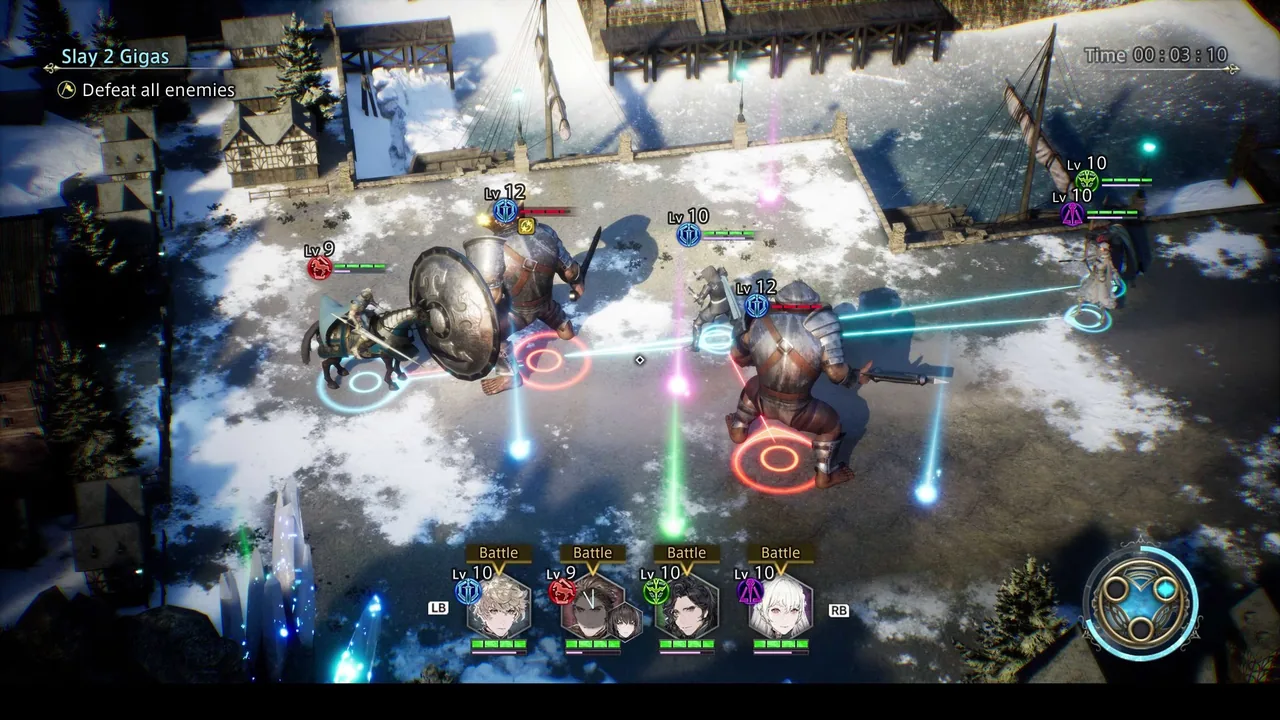
The DioField Chronicle's presentation draws consistent praise even from its harshest criticsImage: Square Enix via Steam -
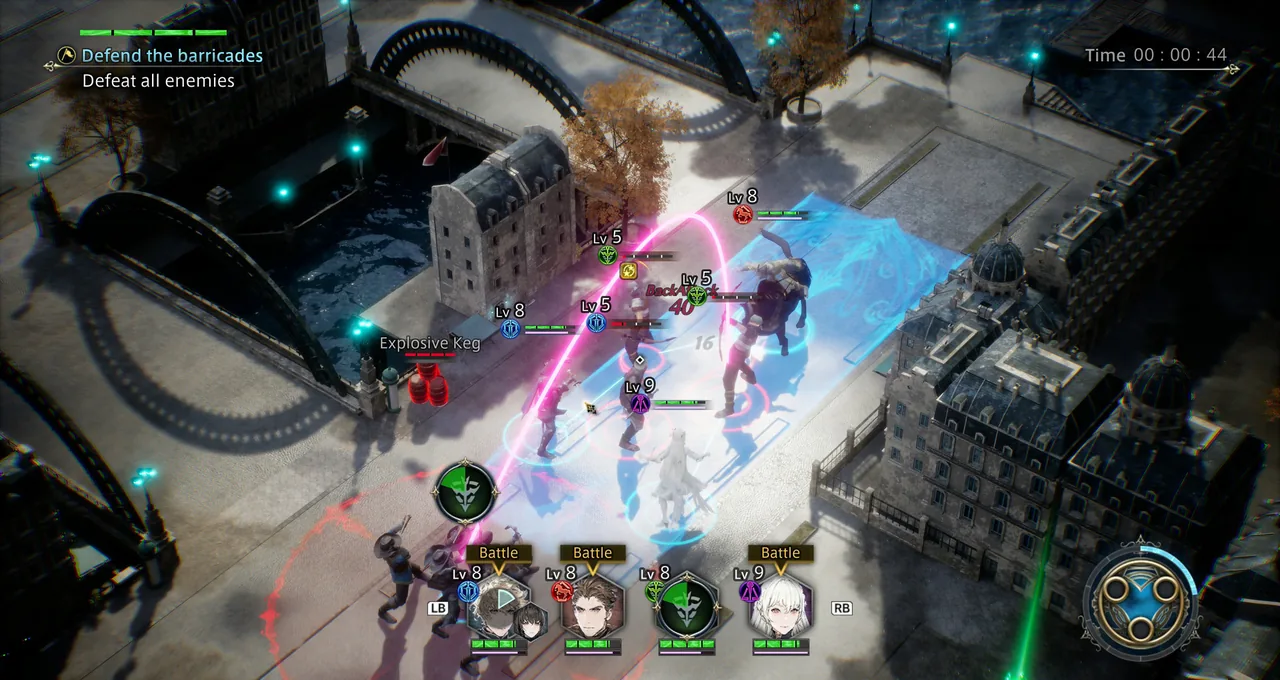
The DioField ChronicleImage: Square Enix via Steam -
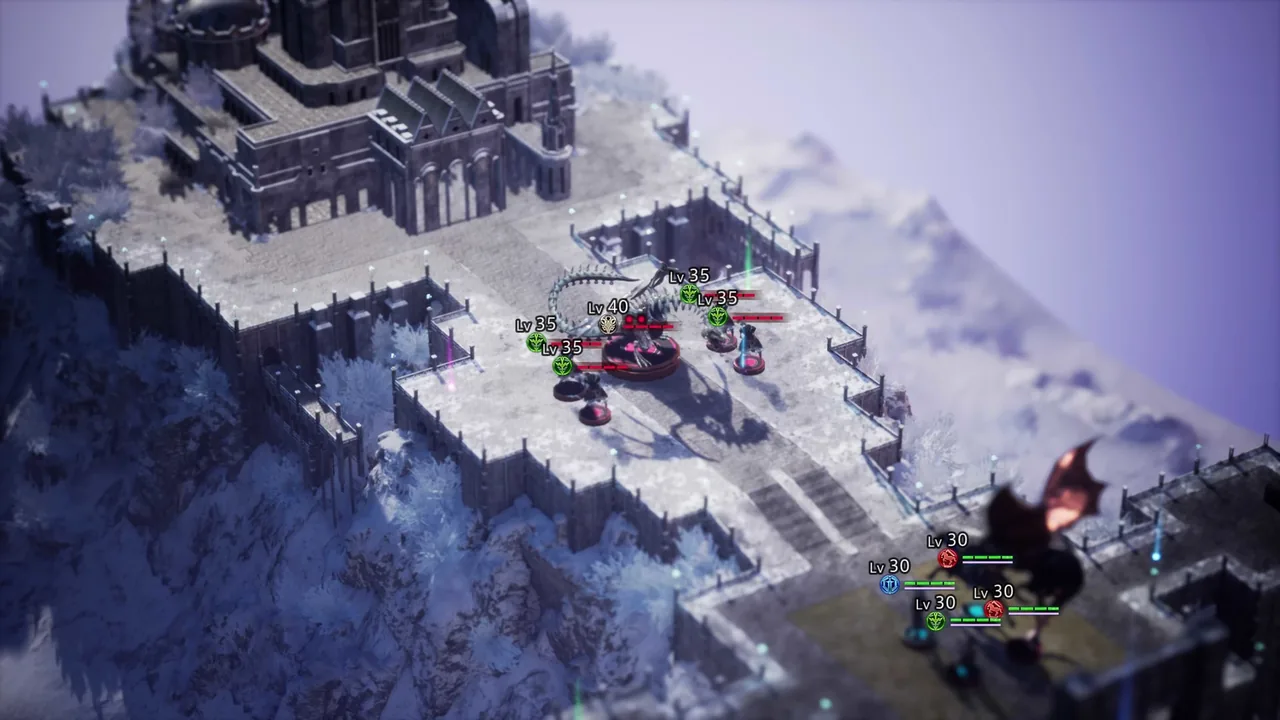
The DioField ChronicleImage: Square Enix via Steam -
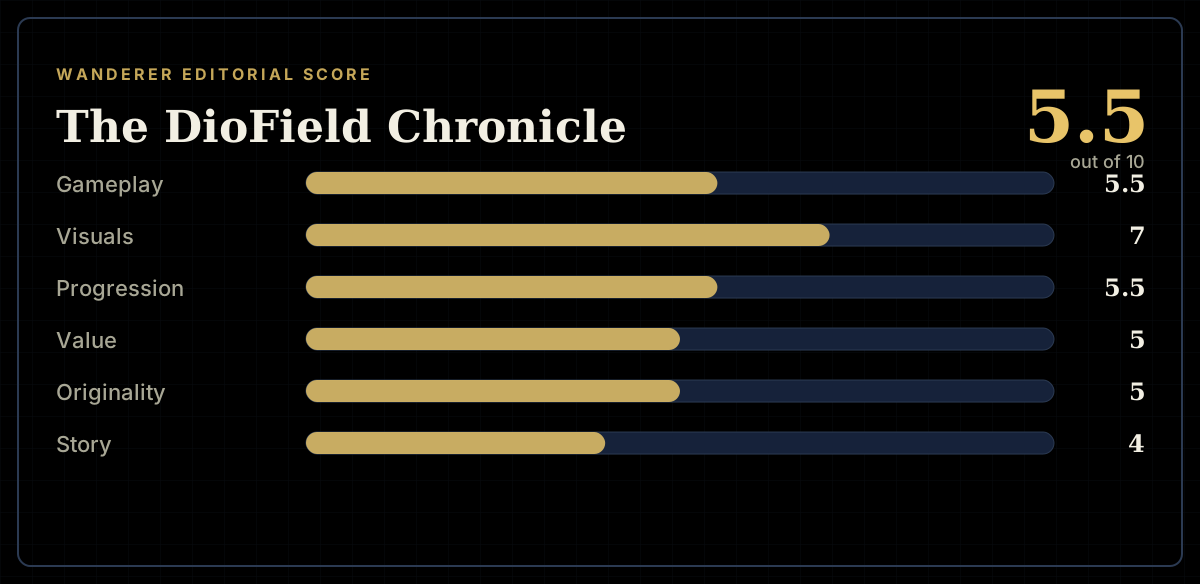
How the review scores each part of the gameWanderer Editorial -
The essentialsWanderer Editorial -
The short versionWanderer Editorial