
Game review
Homicide Desk
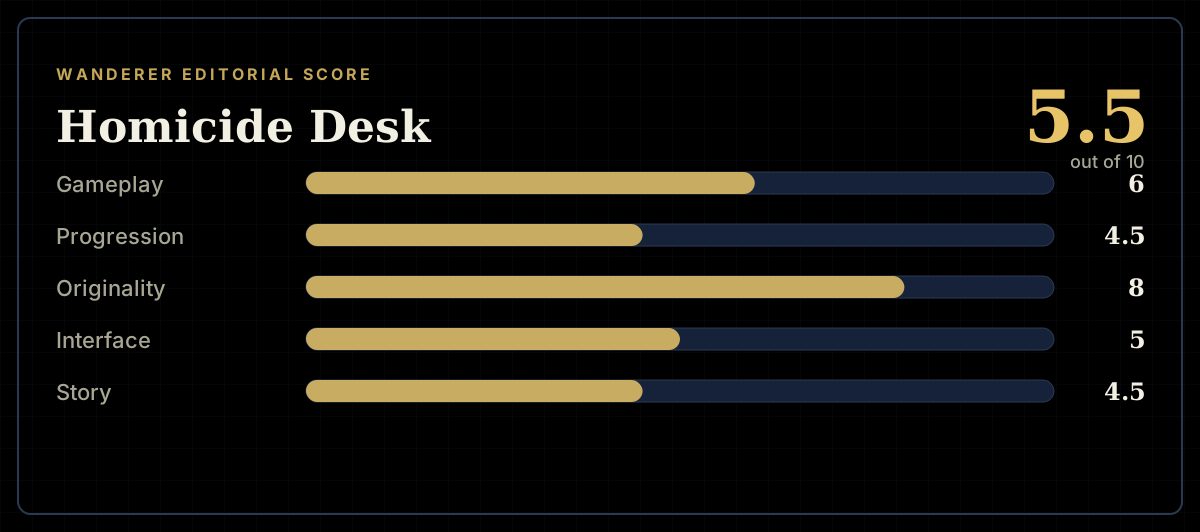
5.5 / 10
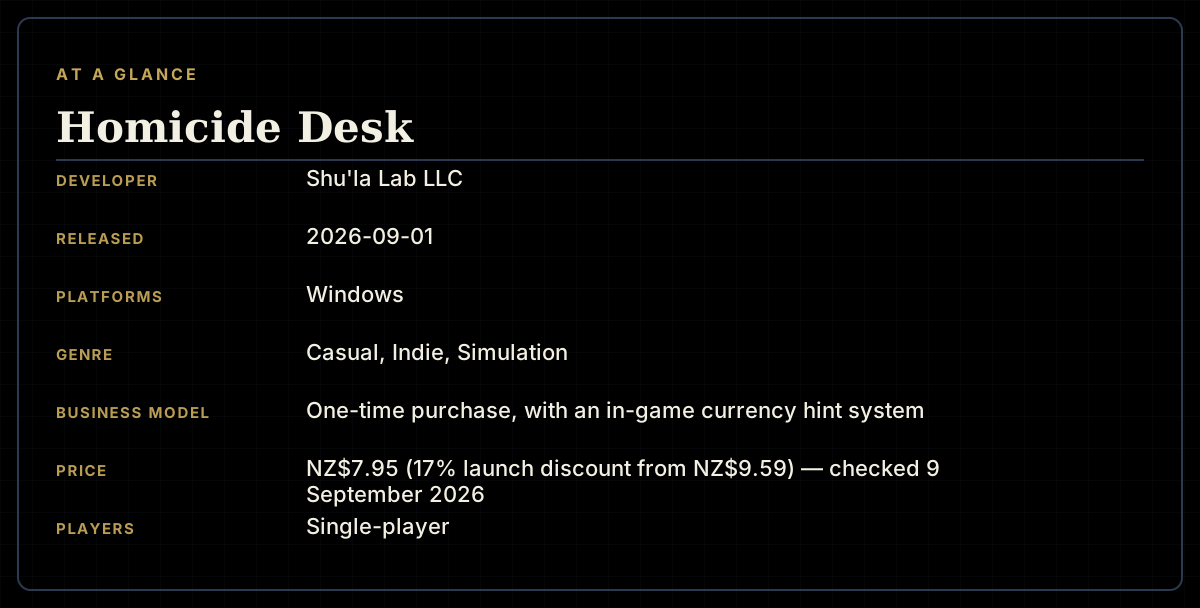
- Developer
- Shu'la Lab LLC
- Publisher
- Shu'la Lab LLC
- Released
- 1 September 2026
- Platforms
- Windows
- Genre
- Casual, Indie, Simulation
- Monetisation
- One-time purchase, with an in-game currency hint system
- Players
- Single-player
The short version
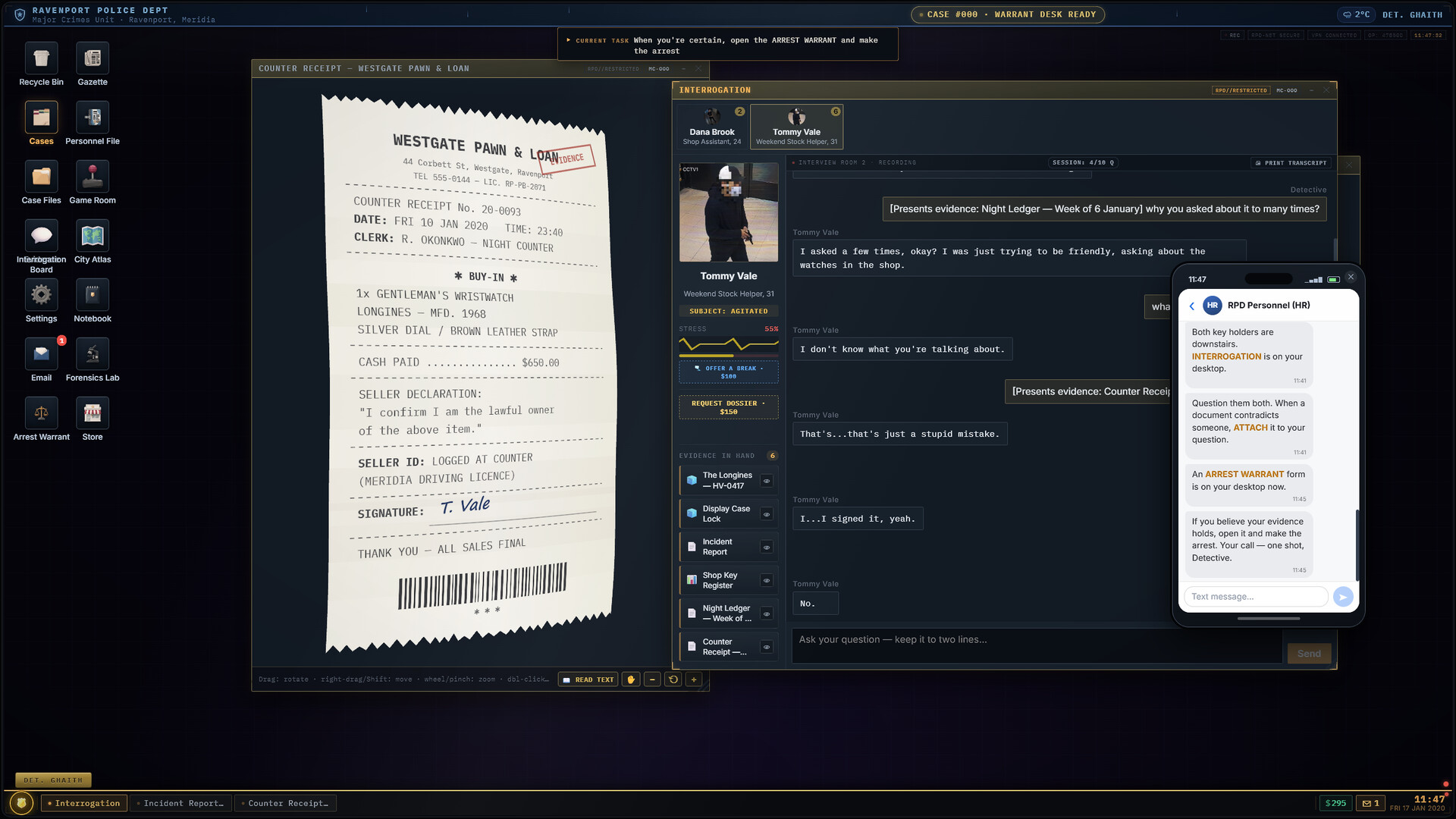
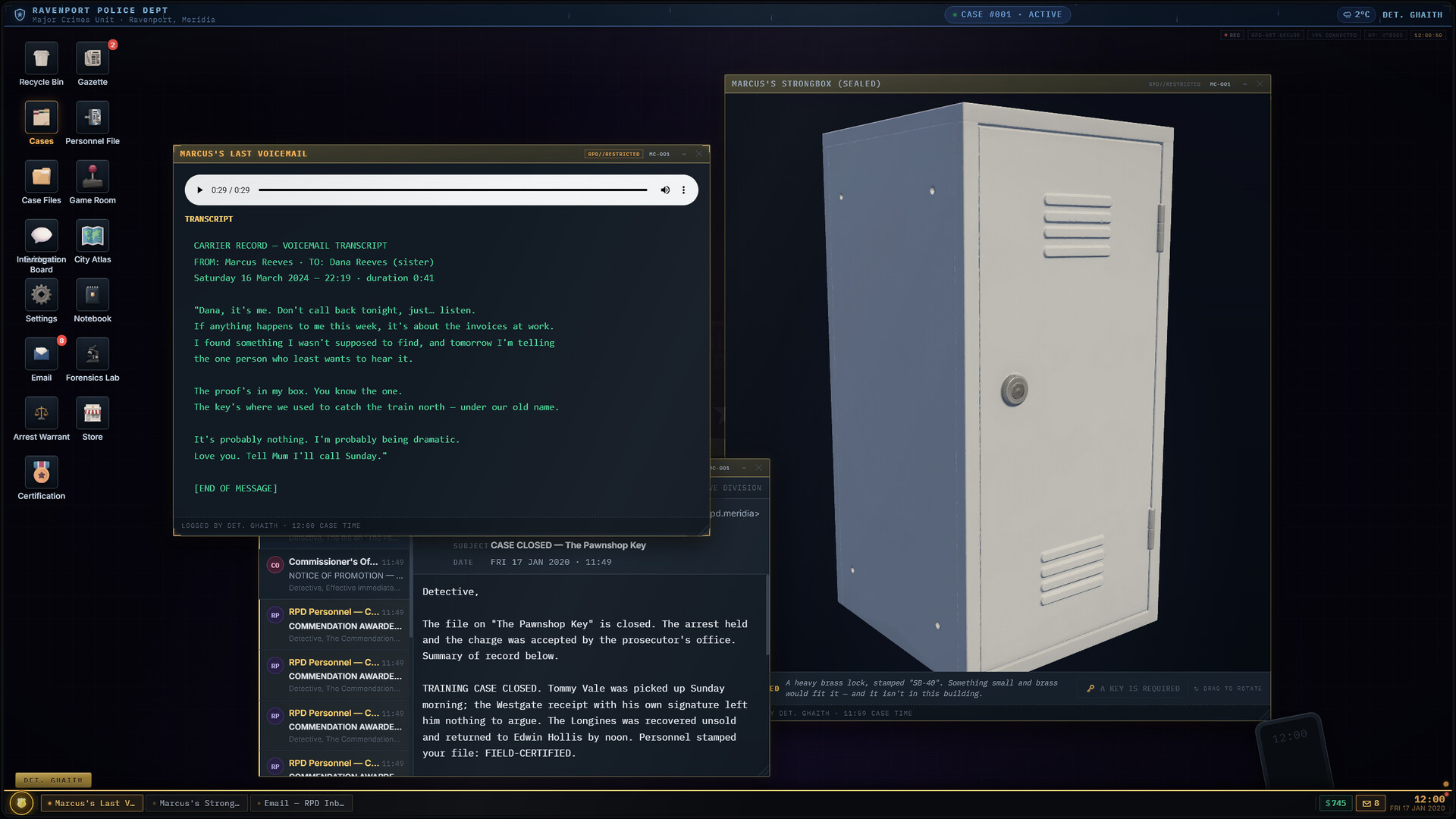
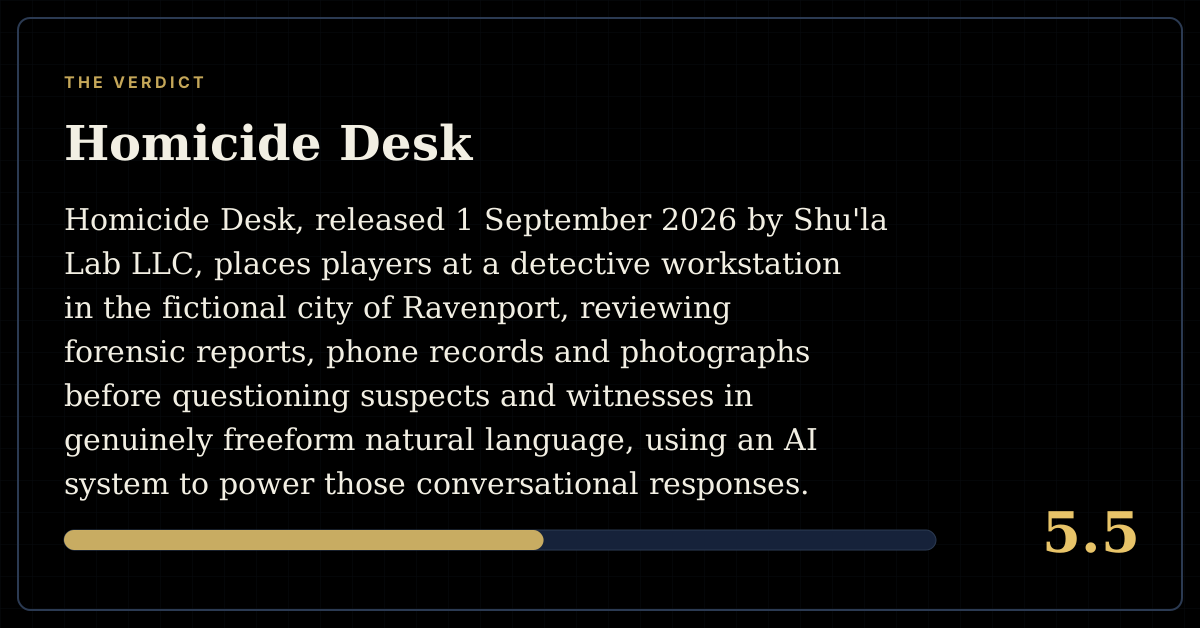
Homicide Desk, released 1 September 2026 by Shu'la Lab LLC, places players at a detective workstation in the fictional city of Ravenport, reviewing forensic reports, phone records and photographs before questioning suspects and witnesses in genuinely freeform natural language, using an AI system to power those conversational responses. It sits Mixed with a sample of 45 reviews, and reading widely through it reveals a concept reviewers describe as something they've long wanted from the detective genre, sitting alongside specific, well-corroborated execution problems this review found serious enough to weigh heavily. Reviewers consistently praise the freedom to type genuinely open-ended questions rather than selecting from pre-written dialogue options, and multiple reviewers specifically credit the game's evidence-based case-building structure with offering something meaningfully different from typical crime-scene-walking detective games. Set against that praise, this review found extensive, specific complaints about AI response quality, with reviewers describing suspects ignoring or misinterpreting direct questions, contradicting themselves within the same conversation, and inventing details not present anywhere in the game's own evidence. Multiple reviewers separately and independently report every case shares an identical underlying murder motive, undermining mystery variety across the current content. This review also found a specific, pointed complaint about a $250 in-game currency cost to access a hint system that several reviewers describe as barely functional, and at least one detailed reviewer reporting specific visual assets, including a garbled cassette tape label and an inconsistent cable model, appear AI-generated despite the game's official disclosure only covering AI use in suspect and witness dialogue.
Biggest strengths
- The freeform, AI-driven interrogation system draws consistent, enthusiastic praise as a genuinely novel mechanic, with reviewers describing real excitement being able to type exactly the questions they want rather than choosing from pre-written dialogue trees
- Multiple reviewers specifically praise the evidence-based, case-building structure as a meaningful departure from typical detective games built around walking through crime scenes, describing genuine satisfaction connecting disparate pieces of evidence into a coherent case
- At least one technically-minded reviewer specifically verified, using network monitoring software, that the game's AI model runs entirely locally without an internet connection, addressing a reasonable privacy concern directly through independent testing
Biggest weaknesses
- Reviewers extensively and specifically report inconsistent AI response quality during interrogations, describing suspects ignoring or misinterpreting direct questions, contradicting themselves within a single conversation, and inventing specific details not present anywhere in the game's own evidence
- Multiple reviewers independently report every case in the current roster shares an identical underlying murder motive, specifically undermining mystery variety and making the culprit identifiable almost immediately in each case, which several reviewers find disappointing given the genre's traditional whodunit appeal
- This review found a specific, pointed complaint about a $250 in-game currency cost to access a hint system, which multiple reviewers describe as providing vague, low-value guidance that barely qualifies as a genuine hint for that price
Who it's for: Detective and mystery fans specifically curious about freeform AI-driven interrogation as a genre mechanic, who can tolerate real inconsistency in AI response quality and a currently thin, repetitive case roster.
Our recommendation: Worth trying at this low price specifically for the novelty of the interrogation system if that idea excites you; temper expectations around mystery variety, AI reliability, and be aware of the specific hint-paywall and asset-disclosure concerns documented here.
5.5 / 10
Introduction
Homicide Desk, released 1 September 2026 by Shu'la Lab LLC, places players at a detective workstation in the fictional city of Ravenport, reviewing forensic reports, phone records and photographs before questioning suspects and witnesses in genuinely freeform natural language, using an AI system to power those conversational responses. It sits Mixed with a sample of 45 reviews, and reading widely through it reveals a concept multiple reviewers describe as something they've long wanted from the detective genre, sitting alongside specific, well-corroborated execution problems this review found serious enough to weigh heavily against that genuine novelty.
A genuinely novel interrogation mechanic
The clearest, most consistent praise across this sample concerns the core interrogation system itself. Reviewers repeatedly describe real excitement at being able to type exactly the questions they want to ask a suspect, rather than selecting from a limited menu of pre-written dialogue options, with multiple reviewers specifically framing this as something they'd personally wished existed in detective games for years. Beyond the interrogation mechanic, reviewers separately praise the game's broader evidence-based, case-building structure, describing genuine satisfaction connecting disparate pieces of forensic evidence, phone records and testimony into a coherent case rather than simply walking through a crime scene collecting glowing objects.
AI responses reviewers describe as genuinely inconsistent
Set against that praise, this review found extensive, specific complaints about the quality and reliability of the AI system powering those interrogations. Reviewers repeatedly describe suspects ignoring or misinterpreting direct questions, contradicting themselves within a single conversation, and inventing specific details, a fabricated former job, an invented relationship to the victim, not present anywhere in the game's own evidence. This last pattern is particularly significant, since a detective game's entire premise depends on evidence and testimony remaining internally consistent for players to actually solve anything through deduction; when the AI-driven suspects introduce information unmoored from the game's own established facts, it undermines the core investigative loop the game is built around.
Every case, the same motive
A separate, specific and independently corroborated complaint concerns mystery variety across the current case roster. Multiple reviewers independently report every case shares an identical underlying murder motive, generally describing a pattern where one character kills another specifically to prevent being exposed for some earlier wrongdoing. Reviewers describe this repetition as making the culprit identifiable almost immediately in each case, shifting the actual challenge away from "who did it" and toward "how do you build an admissible case," which several reviewers find a reasonable but ultimately underwhelming substitute for genuine whodunit mystery.
A specific, criticised hint paywall
This review found a pointed, specific complaint concerning monetisation: accessing an in-game informant hint system costs 250 units of in-game currency, and multiple reviewers describe what that purchase actually provides as vague and barely useful, offering more confusion than genuine guidance. Given the game's otherwise modest, one-time purchase price, this specific paywall reads to several reviewers as disproportionately punishing relative to the value it delivers.
A specific, well-corroborated gap in the AI disclosure
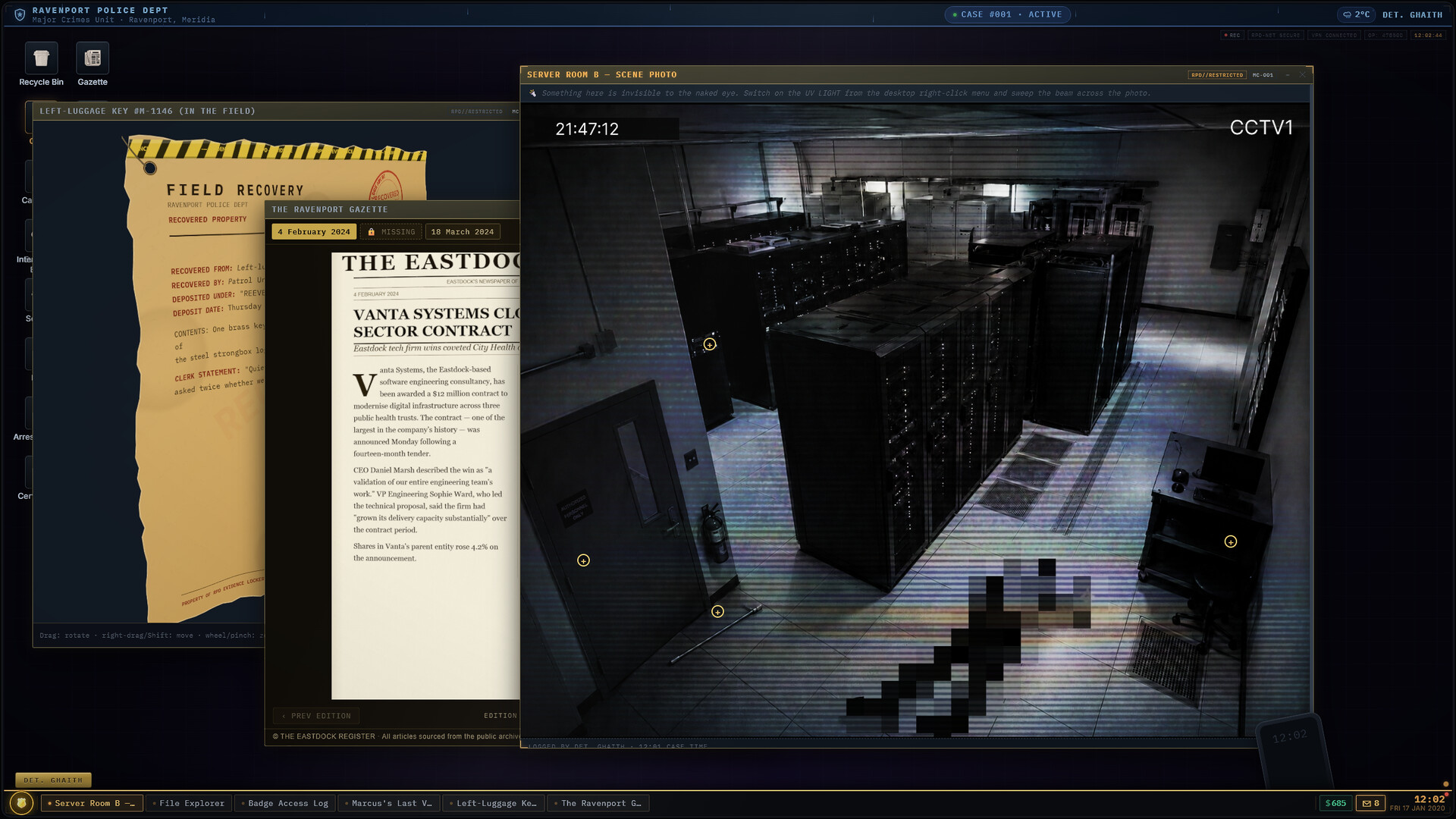
This review found a genuinely serious complaint worth reporting in detail: at least one detailed reviewer reports specific visual assets within the game, including a cassette tape label with garbled, unreadable text and a cable model with an unexplained second cable extending toward nothing, appear AI-generated, despite the game's own official AI disclosure stating AI is used specifically and only for suspect and witness dialogue during interrogations. A separate, independent reviewer corroborates this general pattern, reporting a distinct visual artifact of their own, two identical door openings positioned in the same corner of a different case's scene. Given that these are two independent reviewers reporting different specific examples of the same underlying category of discrepancy, this review treats the pattern as a credible, well-corroborated gap between the game's stated AI disclosure and its actual asset production, similar in kind to disclosure discrepancies this lane's research has documented in other 2026 releases.
Structural frustrations beyond the headline complaints
Beyond the issues above, this review found several smaller but specific structural complaints. Multiple reviewers report interrogations are capped at only ten questions before ending, and separate reviewers report forensic analysis results don't automatically become usable evidence within interrogations, requiring extra, seemingly unnecessary steps to connect information the game already possesses. Long real-time wait periods, up to around ten minutes, before a suspect can be re-interviewed draw further specific frustration.
Why local-model verification matters here
It's worth dwelling on one specific, genuinely useful piece of independent verification this review found within the sample: at least one technically-minded reviewer specifically used network monitoring software to confirm the game's AI model runs entirely locally, without connecting to any external service or transmitting player data over the internet. Given how central AI technology is to this specific game's core pitch, and given legitimate, widespread concerns players reasonably have about privacy and data handling in AI-powered products generally, this review treats that independent technical verification as a genuinely valuable data point distinct from marketing claims alone. It doesn't resolve the separate quality and disclosure concerns documented above, but it does meaningfully address a different, equally reasonable category of concern a prospective buyer might have before purchasing.
Weighing genuine novelty against genuine inconsistency
Taken as a whole, this review reads Homicide Desk as a case where a genuinely fresh, well-conceived core idea is currently let down by execution quality that hasn't caught up to its own ambition. The freeform interrogation system is real, and reviewers who praise it aren't exaggerating an otherwise ordinary detective game — the ability to ask a suspect literally anything and receive an in-character response is a meaningfully different experience from the genre's traditional dialogue-tree structure. But that same freedom is precisely what exposes the AI's current inconsistency most directly, since players aren't limited to questions the developer anticipated and pre-scripted a good answer for. That tension, between genuine mechanical ambition and the current reliability of the technology powering it, is the central story this sample tells, and this review's moderate score reflects both halves of that story rather than collapsing it into either simple praise or simple dismissal.
Final Verdict
Homicide Desk delivers a genuinely novel, freeform interrogation mechanic that reviewers consistently describe as something the detective genre has long needed, paired with a satisfying evidence-based case-building structure distinct from typical crime-scene-walking design. What holds this score down is extensive, specific evidence of AI response inconsistency undermining the core investigative loop, a repetitive shared motive across every current case, a punishing hint-system paywall, and a credible, independently-corroborated gap between the game's AI disclosure and the actual scope of its AI-generated content. Worth trying at this low price specifically for the interrogation system's novelty; go in with tempered expectations for mystery variety and AI reliability.
Pros and cons
Pros
- The freeform, AI-driven interrogation system draws consistent, enthusiastic praise as a genuinely novel mechanic, with reviewers describing real excitement being able to type exactly the questions they want rather than choosing from pre-written dialogue trees
- Multiple reviewers specifically praise the evidence-based, case-building structure as a meaningful departure from typical detective games built around walking through crime scenes, describing genuine satisfaction connecting disparate pieces of evidence into a coherent case
- At least one technically-minded reviewer specifically verified, using network monitoring software, that the game's AI model runs entirely locally without an internet connection, addressing a reasonable privacy concern directly through independent testing
- Value draws some specific praise given the low asking price, with reviewers describing genuine engagement across multiple cases and expressing hope for continued content updates
Cons
- Reviewers extensively and specifically report inconsistent AI response quality during interrogations, describing suspects ignoring or misinterpreting direct questions, contradicting themselves within a single conversation, and inventing specific details not present anywhere in the game's own evidence
- Multiple reviewers independently report every case in the current roster shares an identical underlying murder motive, specifically undermining mystery variety and making the culprit identifiable almost immediately in each case, which several reviewers find disappointing given the genre's traditional whodunit appeal
- This review found a specific, pointed complaint about a $250 in-game currency cost to access a hint system, which multiple reviewers describe as providing vague, low-value guidance that barely qualifies as a genuine hint for that price
- At least one detailed reviewer reports specific visual assets, including a cassette tape label with garbled, unreadable text and a cable model with an unexplained second cable extending nowhere, appear AI-generated despite the game's official AI disclosure only covering suspect and witness dialogue; a separate reviewer independently reports a similar asset-generation artifact, two identical door openings positioned in the same corner of a scene
- Multiple reviewers report structural frustrations, including interrogations capped at only ten questions before ending, forensic analysis results not automatically becoming usable evidence in interviews, and long real-time wait periods before a suspect can be re-interviewed
Screenshots
-
Homicide DeskImage: Shu'la Lab LLC via Steam -
Homicide DeskImage: Shu'la Lab LLC via Steam -
Homicide DeskImage: Shu'la Lab LLC via Steam -
How the review scores each part of the gameWanderer Editorial -
The essentials at a glanceWanderer Editorial -
The short versionWanderer Editorial