
Game review
Cleaning Up The Puzzle Gallery
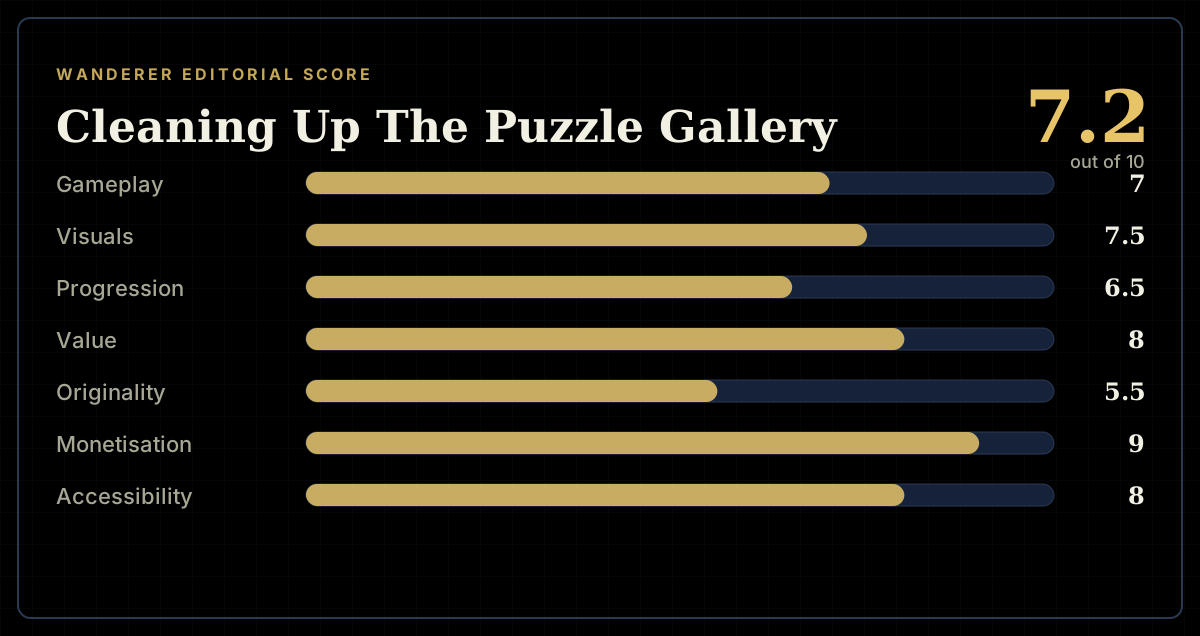
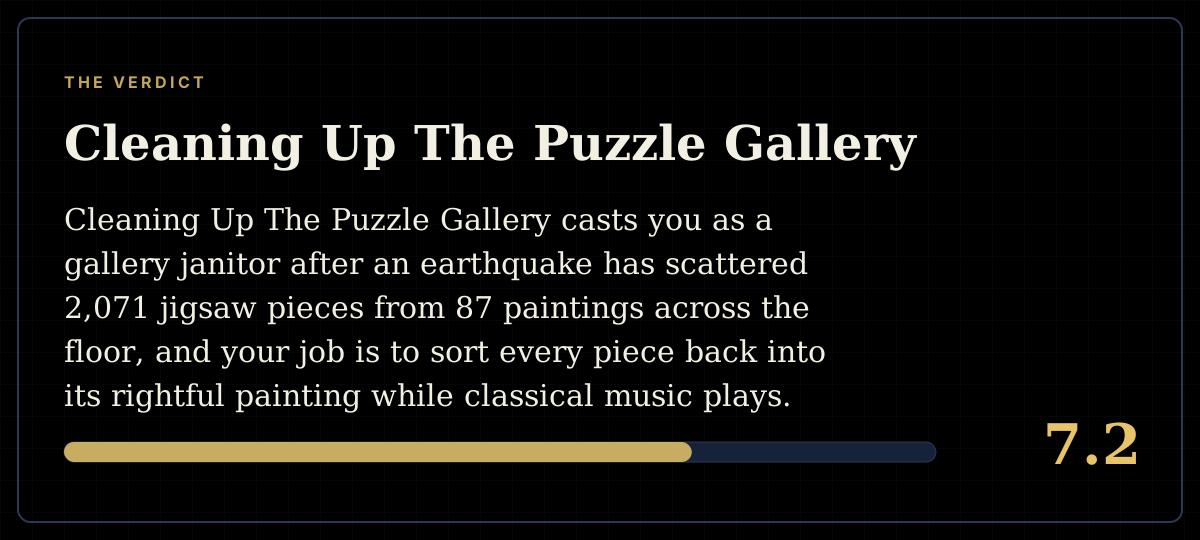
7.2 / 10
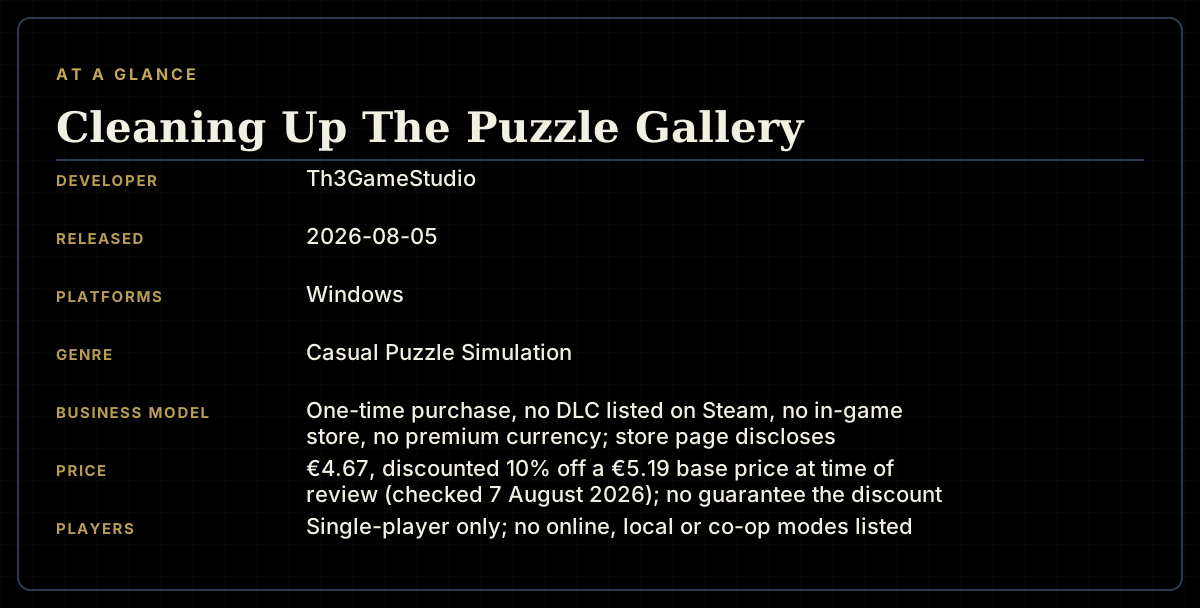
- Developer
- Th3GameStudio
- Publisher
- Th3GameStudio
- Released
- 5 August 2026
- Platforms
- Windows
- Genre
- Casual Puzzle Simulation
- Monetisation
- One-time purchase, no DLC listed on Steam, no in-game store, no premium currency; store page discloses AI-assisted code only, no AI-generated art (all artwork is public-domain paintings)
- Players
- Single-player only; no online, local or co-op modes listed
The short version
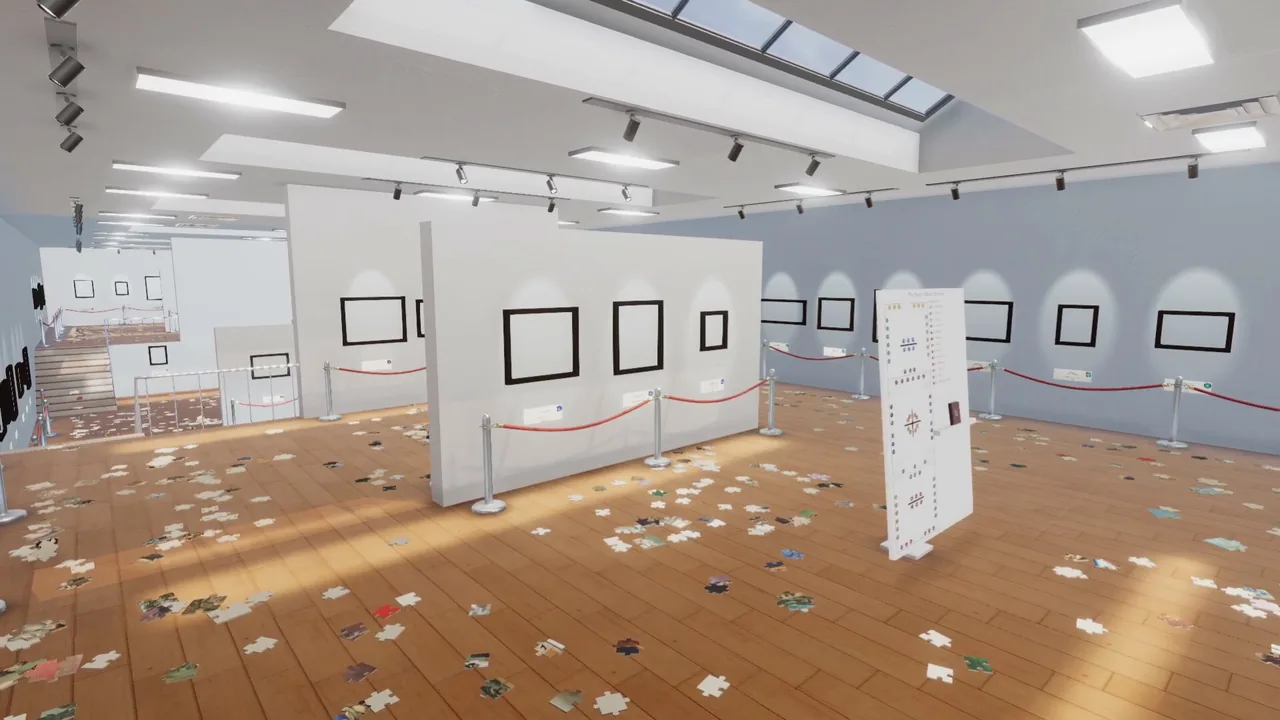
Cleaning Up The Puzzle Gallery casts you as a gallery janitor after an earthquake has scattered 2,071 jigsaw pieces from 87 paintings across the floor, and your job is to sort every piece back into its rightful painting while classical music plays. It is, structurally, an unmistakable entry in the tidying-sim wave kicked off by Librarian: Tidy Up the Arcane Library! — pick pieces up off the floor, slot them into place, spend points on brain-themed skill upgrades that make you faster at doing it — and a vocal minority of its early negative reviews call that out directly as a copy that plays worse than the original. What separates it from a lazy reskin is that the content underneath is genuinely hand-curated rather than templated: all 87 paintings are sourced from real public-domain museum scans across 13 named historical artists, from Monet to Hokusai, and a "My Puzzles" mode lets you upload up to 83 of your own images and turn any of them into a puzzle of whatever size you like. Two days after launch it sits at 91.7% positive across 109 reviews — comparably strong to Librarian's own 94.6% across a far larger sample — and the developer has already shipped two patches addressing specific player feedback.
Biggest strengths
- All 87 paintings are sourced from real public-domain museum scans across 13 named historical artists (Monet, Van Gogh, Hokusai among them), giving the game a distinct, hand-curated identity rather than generic stock art
- The "My Puzzles" custom mode lets you upload up to 83 of your own images and turn any of them into a puzzle of variable size, extending play well past the roughly three-to-four-hour base campaign several reviewers independently report
- Priced and scoped honestly against the genre's biggest name — the €5.19 base price sits at roughly half of Librarian's €9.59, and multiple reviewers independently call the price fair for what's delivered
Biggest weaknesses
- Structurally, it is the same "pick up scattered pieces, sort them into slots, spend points on skill upgrades" loop as Librarian: Tidy Up the Arcane Library, and a vocal minority of negative reviewers call it a blatant copy that plays worse than the game it's modelled on
- Placed pieces are highlighted as correct or incorrect the instant you set them down, and several reviewers want the option to turn that assistance off entirely; there is currently no toggle for it outside the separate, harder challenge modes
- One reviewer reported a movement bug (the character intermittently jolting forward while walking) severe enough to withhold a recommendation over it; no one else in the sample corroborated it and neither patch's notes mention a fix
Who it's for: Fans of the tidying/organisation-sim wave (Librarian, Supermarket-style cleanup games) who want a shorter, cheaper entry with a genuine art and history hook, plus anyone who wants an easy on-ramp into jigsaw puzzling with an escape hatch into harder, opt-in challenge modes.
Our recommendation: At €4.67 for a roughly three-to-four-hour base campaign, several harder challenge modes, and a custom-image mode that can extend play indefinitely, the price matches the scope honestly. It won't surprise anyone who has already played the genre's bigger hit, and it plays it safe rather than risky, but it is real, hand-curated content rather than an asset-flip, and the reception so far backs that up.
7.2 / 10
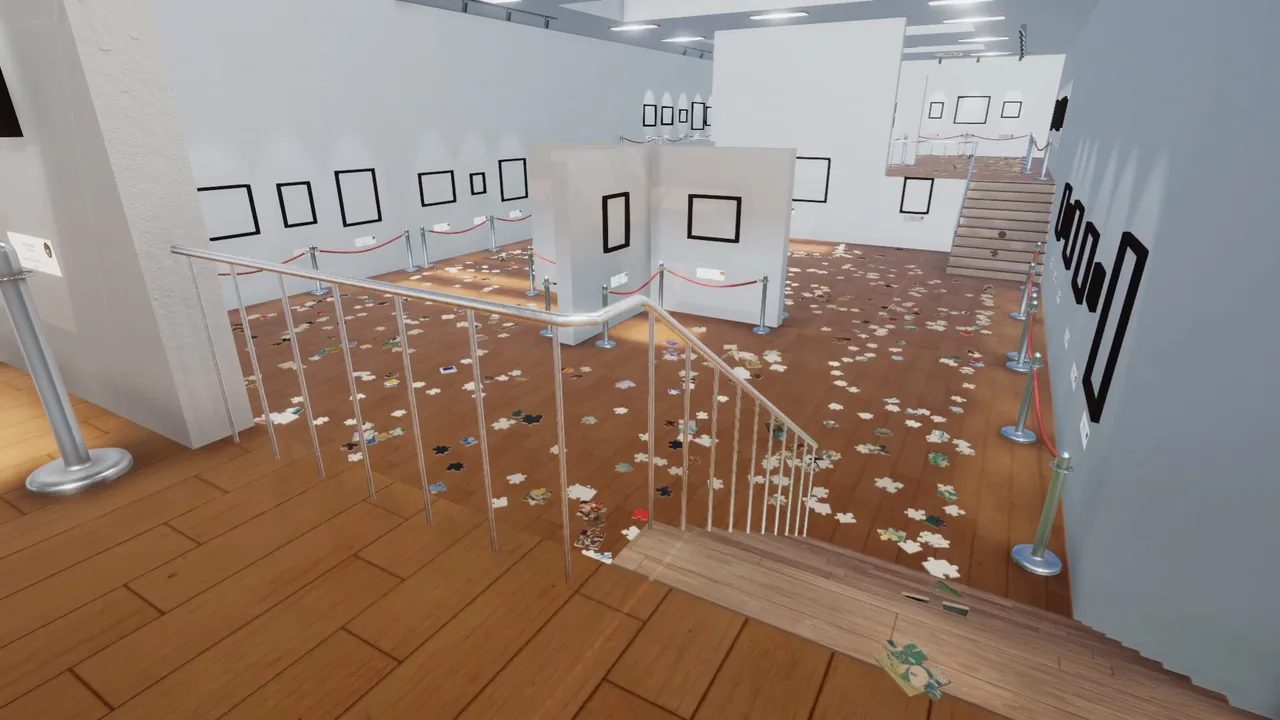
Most entries in the sudden wave of "pick things up off the floor" tidying sims borrow their whole skeleton from whichever one got there first, and Cleaning Up The Puzzle Gallery doesn't pretend otherwise. You play a gallery janitor after an earthquake has knocked 2,071 jigsaw pieces loose from 87 paintings, and the job is exactly what it sounds like: walk around picking pieces up, figure out which painting each one belongs to, and slot it into place while classical music plays in the background. Multiple reviewers name the genre's current biggest hit, Librarian: Tidy Up the Arcane Library!, in the same sentence as this game — some as a compliment ("scratches the itch"), a few as an accusation. Both readings are fair, and the honest version of the review sits between them.
What's actually in the box
The core content is 2,071 pieces across 87 paintings pulled from 13 named historical artists — Monet, Van Gogh and Hokusai among the ones Steam's own description calls out — sourced from public domain museum scans rather than generated or licensed stock art. Several reviewers who finished the base campaign in one sitting clock it at roughly three to four hours, which by itself is a short package for the price, but the base campaign is not the whole game. Beating it unlocks Black & White Mode and "The Big White," a single 1024-piece puzzle made entirely of white pieces with no colour to sort by, alongside a no-powers challenge run that strips out every skill upgrade you've earned. One reviewer who tried the no-powers run first, before finishing a normal playthrough, posted a specific warning about it in their review — it is meant to be brutal, not a victory lap.
On top of that sits "My Puzzles," a mode that lets you upload up to 83 of your own PNG or JPG images and turn each one into a jigsaw puzzle of whatever size you choose, from a 50-piece easy solve up to a 1,000-piece landscape, and either work through them one at a time or fill the entire gallery with your own curated set. That mode is uncapped by design, so the honest ceiling on playtime isn't the 87 paintings the developer chose — it's however many images you're willing to feed it. Set against a base price of €5.19 (currently €4.67 with a 10% launch discount), and against Librarian's own €9.59 asking price for a bigger, more established package, several reviewers independently describe the price as fair for what's here, and one calls it "a good step-in for the cleanup sim genre" precisely because it's smaller and cheaper than its rivals.
A hand-curated gallery, not a generic asset pack
The originality question the genre invites is really two separate questions: is the structure copied, and is the content copied. On structure, the answer is close to yes — pick up scattered pieces, sort them into slots, spend earned points on a skill tree that speeds up finding and placing pieces, exactly the loop Librarian popularised. The single most upvoted negative review in the sample says it plainly: "if you're going to copy and paste a game so blatantly it at least needs to be better than the original." That reviewer found it too easy and too tedious by comparison, and they are not alone — a second negative and one Chinese-language negative echo the "cheap knockoff" framing directly.
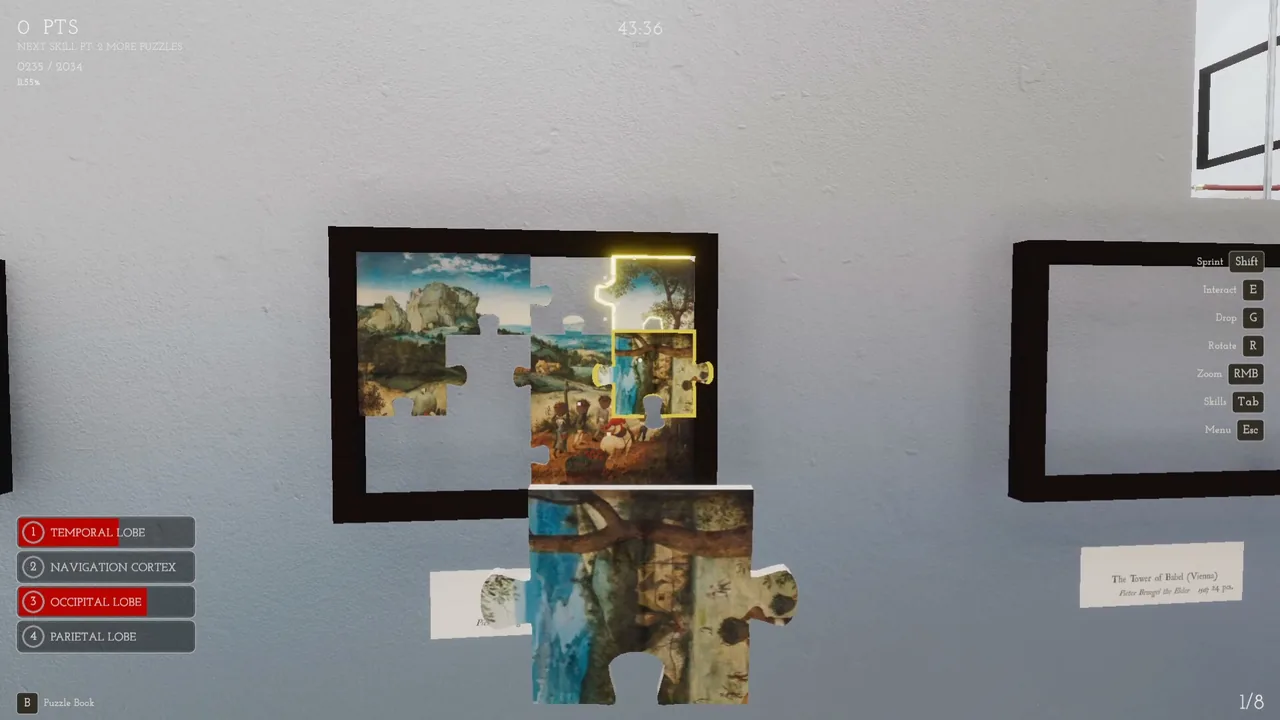
On content, though, the picture is different. The paintings are a real, named, curated selection rather than a placeholder set stretched to fill a shelf, and the skill system is built around a distinct conceit — upgrades named after regions of the brain (an ability called Occipital handles visual highlighting, one called Frontal Lobe automates piece-flipping) that ties the "using your puzzling skills" pitch to something more specific than a generic ability list. The achievement names lean the same way: The Thinker, The Venus, The Skull, The Bracelet — titles that read as a wink at famous sculptures and artworks rather than arbitrary trophy names. None of that erases the structural resemblance to Librarian, and the review shouldn't pretend it does, but "derivative structure, original content" is a meaningfully different verdict from "asset flip," and the evidence here points at the former. The custom-image mode is the clearest single differentiator: it turns the game from a fixed, curated gallery into a tool a player can point at anything they own.
Whether there's anywhere to go
There is real, if shallow, progression here. Completing puzzles earns skill points that upgrade brain-themed abilities, one achievement is specifically tied to spending 50 of them, and a Day 1 patch note confirms those upgrades apply across both the base game and challenge modes (though not the custom "My Puzzles" mode, which stays deliberately unranked). A more consequential change shipped in the second patch: challenge modes, originally gated behind finishing the base campaign, are now all unlocked as soon as you finish it once — a small but telling adjustment that suggests the developer watched how quickly people were burning through the main content and responded by loosening the gate rather than padding it.
Steam's global achievement data gives a concrete shape to how far most players actually get: the easiest achievement sits at 18.3% of tracked players, and it falls steeply from there — 14.2%, 13.3%, then a cluster in the low-to-mid single digits, bottoming out at 0.2% for the hardest. That's a normal curve for a game two days old rather than evidence of a design failure, but it does confirm what the reviews already suggest: most buyers are here for one relaxed campaign run, and the harder challenge content is a niche pursuit even among people who liked the base game enough to keep playing.
The rough edges
The most consistent structural complaint is about the default hint system: placed pieces are marked correct or incorrect the instant you set them down, which several reviewers say removes any real puzzle-solving in favour of trial-and-error placement, and more than one specifically asks for a toggle to turn it off outside of the dedicated challenge modes. That's a fair complaint about difficulty tuning for the default experience, distinct from the "it's a clone" argument — it's possible to like the concept and still want the training wheels to be optional rather than load-bearing.
On the technical side, one reviewer reported a movement bug — the character periodically jolting or "porting" forward while walking — serious enough that they withheld a recommendation until it's fixed. No one else in the sample mentions anything similar, and it doesn't appear in either patch's notes, so it reads as an isolated report rather than a widespread issue, but it's also not confirmed fixed. Separately, Steam's own store page discloses that AI tools were used in writing the game's code, while stating plainly that no AI-generated images, music, audio or models are present — the art is public-domain, not generated — which is worth knowing rather than assuming either way.
Accessibility is a genuine strength for a debut this size: full controller support with native DualShock and DualSense button prompts, a Day 1 fix for Switch Pro controller trigger registration, camera comfort settings, custom volume controls, an invert-look toggle added within a day of launch requests, and a store-listed "playable without timed input" design that keeps the puzzle-solving untimed by default. For a solo or two-person studio's first release, that's a more complete accessibility pass than many bigger launches manage.
Final verdict
Cleaning Up The Puzzle Gallery earns a 7.2 for delivering exactly what it promises at a fair price: a short, relaxing tidying sim built on real, hand-curated public-domain art rather than a generic asset pack, backed by an uncapped custom-puzzle mode that extends its value well past the base campaign's three-to-four hours. It doesn't score higher because the core loop is an unmistakable, openly-acknowledged descendant of Librarian: Tidy Up the Arcane Library, and the default difficulty — thanks to an always-on correctness hint with no toggle — leaves the base game feeling closer to sorting than to puzzling for anyone who doesn't opt into the harder modes. Two days and 109 reviews is a small sample, but it's an honestly positive one, comparable in shape to the genre's biggest name, and the developer's two rapid post-launch patches suggest a studio that's still actively listening. If you've already played Librarian and want more of the same idea for half the price with a real art-history hook and the option to feed it your own photos, this delivers; if you're hoping for the genre reinvented, it isn't that.
Pros and cons
Pros
- All 87 paintings are sourced from real public-domain museum scans across 13 named historical artists (Monet, Van Gogh, Hokusai among them), giving the game a distinct, hand-curated identity rather than generic stock art
- The "My Puzzles" custom mode lets you upload up to 83 of your own images and turn any of them into a puzzle of variable size, extending play well past the roughly three-to-four-hour base campaign several reviewers independently report
- Priced and scoped honestly against the genre's biggest name — the €5.19 base price sits at roughly half of Librarian's €9.59, and multiple reviewers independently call the price fair for what's delivered
- Clean one-time-purchase monetisation with no DLC, no in-game store, no premium currency and nothing else left to evaluate
- Strong accessibility coverage for a solo or two-person debut studio: full controller support with native DualSense/DualShock prompts, camera comfort options, custom volume controls, an invert-look toggle and a store-listed "playable without timed input" design
- The developer shipped two patches within roughly 36 hours of launch, visibly responding to specific bug reports and quality-of-life requests rather than going quiet after release
Cons
- Structurally, it is the same "pick up scattered pieces, sort them into slots, spend points on skill upgrades" loop as Librarian: Tidy Up the Arcane Library, and a vocal minority of negative reviewers call it a blatant copy that plays worse than the game it's modelled on
- Placed pieces are highlighted as correct or incorrect the instant you set them down, and several reviewers want the option to turn that assistance off entirely; there is currently no toggle for it outside the separate, harder challenge modes
- One reviewer reported a movement bug (the character intermittently jolting forward while walking) severe enough to withhold a recommendation over it; no one else in the sample corroborated it and neither patch's notes mention a fix
- The achievement curve falls off fast — 18.3% of tracked players have earned the easiest achievement, down to 0.2% for the hardest — consistent with a game whose deeper challenge content only a small slice of buyers ever reach
- Windows only, with no Steam Deck, macOS or Linux support recorded, and only two days and 109 total reviews of evidence to judge the reception on
Screenshots
-
Cleaning Up The Puzzle GalleryImage: Th3GameStudio via Steam -
Cleaning Up The Puzzle GalleryImage: Th3GameStudio via Steam -
Cleaning Up The Puzzle GalleryImage: Th3GameStudio via Steam -
How the review scores each part of the gameWanderer Editorial -
The game at a glanceWanderer Editorial -
The short versionWanderer Editorial